
Favorite Finds

Favorite Finds ~ June 12, 2018

Here are a few of my favorite recent online finds…

I honestly teared up a couple of times listening to the Get Up and Eat! with Rachel Jankovic episode of Sheologians. Sometimes I feel like the lone voice in the wilderness crying out for women to ditch the canned Bible studies and simply pick up the Bible and study it for themselves. It was nice to hear somebody else saying it.

 

I love the designs Scripture Type creates for Bible verses and Christian quotes. They have lots of lovely items you can purchase, and they also have a Freely Given page where they post designs that are free to download for use as wallpapers, lock screens, and printable coloring pages. It’s a great way to help you memorize verses!

 

If you found helpful the put off – renew your mind – put on concept for changing behavior from my recent article The Christian Introvert: Putting Off Social Anxiety, Putting On Serving Others, then you’re really going to like Clint Archer’s recent article series over at The Cripplegate. In his Just Stop It articles, he applies the same biblical concept to various sins you might be struggling with:

Just Stop It: Instructions on how to repent

Just Stop it, Part 2: How To Repent Of Lying

Just Stop it, Part 3: How To Repent Of Anger

Just Stop it, Part 4: How to Repent of Stealing

Be sure to subscribe to or follow The Cripplegate for any future installments Clint might write.


Are you a Southern Baptist (or a curious onlooker) who couldn’t make it to the annual meeting in Dallas this year? Keep up with what’s going on via live stream or at your convenience on demand. And please don’t forget to fervently pray for the SBC. We are facing some serious issues in these days. The Southern Baptist Convention annual meeting is being held today and tomorrow (June 12-13).

 

One of those serious issues we’re currently dealing with in the SBC is that a vocal few are pushing the idea of electing a female president (Beth Moore’s name has been floated). Pastor Tom Buck has written a phenomenal series of articles dealing with this issue from Scripture. Even if you’re not Southern Baptist, you will find Pastor Buck’s careful exposition of 1 Timothy 2:11-15 extremely helpful in his articles Will the Next SBC Resurgence Include a Redefining of Complementarianism?
Part 1     Part 2     Part 3     Part 4 

Women of Genesis Bible Study

The Women of Genesis: Lesson 25

Previous Lessons: 1, 2, 3, 4, 5, 6, 7, 89, 10, 11, 12, 13, 14, 15, 16, 17, 18, 19, 20, 21, 22, 23, 24

📖📖📖📖📖

Read Genesis 32-33

📖📖📖📖📖


Questions to Consider

1. Briefly review lesson 24 (link above). What events precipitated the journey we see Jacob and his family taking in today’s passage?

2. Examine 32:3-21. How had Jacob and Esau left things the last time they had seen each other that would have caused Jacob to act this way? Approximately how many years had it been since they had seen each other? How was Jacob expecting Esau to act? (6-7) Why do you think Jacob arranged/organized his present (14-15) to Esau the way he did (16)?

3. In what ways was the “wrestling with God” incident (32:22-32) a turning point in Jacob’s life? What was the significance of God re-naming Jacob? What phase of his life was Jacob turning from, and what phase was he turning to? Think about the land he was coming from and the land he was entering (33:18). How does this serve not only as a reminder of Abram leaving his homeland to go to the Land of Promise, but also hint ahead to the Israelites leaving Egypt and entering the Promised Land? How do both of these things reinforce that God is keeping His promises in the Abrahamic Covenant?

4. How did God answer, in chapter 33, Jacob’s prayer from chapter 32? What does this answer to prayer teach us about God’s character and nature? In what ways have you seen these attributes of God when He has answered your own prayers?

5. Examine the words and behaviors of Jacob and his servants, wives, and children in chapter 33. What can we learn about the customs and culture of that time and place from this passage?

6. What are some specific ways Jacob demonstrates humility and dependence on God in chapters 32-33?

7. Compare 32:1-2 with Genesis 28:10-12,19, and 32-33 with 28:10-22. In what ways has Jacob come full circle? How has God kept his promises to Jacob? How has Jacob kept his vow to God?

8. What does 33:20 tell us Jacob did to bring closure to all that has transpired in his life? Using your footnotes, what does the name of the altar mean? Who is Jacob focusing on? Why is worship always an appropriate response to God’s work in our lives, whether that work brings joy or suffering? What is God doing in your life right now that should lead you to worship Him?


Homework

Analyze Jacob’s prayer in 32:9-12. Write down the purpose (ex: praise, request, etc.) of each of the statements he makes. What are some spiritual characteristics (ex: faith, humility, etc.) we can see in Jacob through this prayer? In verse 12, Jacob recites back to God a promise God made to Him. What is the purpose of praying God’s promises back to Him? Spend some time in prayer about an issue in your own life, using Jacob’s prayer as a model. What are some of God’s promises that you can pray back to Him demonstrating that you trust Him and believe His Word? (Hint: Make sure it’s a promise directly from rightly handled, in context Scripture, and make sure it’s a promise to Christians, not to Israel, a specific Bible character, etc.)


Suggested Memory Verse

There he erected an altar and called it El-Elohe-Israel.
Genesis 33:20

Women of Genesis Bible Study

The Women of Genesis: Lesson 24- Rachel and Leah

Previous Lessons: 1, 2, 3, 4, 5, 6, 7, 89, 10, 11, 12, 13, 14, 15, 16, 17, 18, 19, 20, 21, 22, 23

📖📖📖📖📖

Read Genesis 30:25-31:55

📖📖📖📖📖


Questions to Consider

1. What are some things you remember about Jacob’s, Leah’s, and Rachel’s personalities and family dynamics that can give you some insight for today’s lesson? Briefly review lesson 23 (link above) or other previous lessons if necessary.

2. Carefully examine 30:25-34, and summarize the dialog and negotiation between Jacob and Laban in your own words. What does Jacob want to do? Why does he want to go? What does he initially ask for from Laban? Does Laban want him to go? Why or why not? What offers are made? What do they eventually settle on?

3. What does the name “Jacob” mean? (use your footnotes) In which incidents in today’s passage did Jacob live up to his name? In which incidents were the tables turned and Jacob became the deceived instead of the deceiver? (A little trivia for you: In Hebrew, Laban’s name means “white.” Is he wearing the good guy’s “white hat” in this passage?)

4. What’s this crazy stuff Jacob is doing with the sticks and breeding the sheep and goats (30:37-43)? Research time! Check out these links from the MacArthur Study Bible, CCEL Commentaries, and Bible Hub commentaries. How does Jacob’s success (30:43) demonstrate that God provides for His people’s needs?

5. Imagine that you are Rachel or Leah listening to what Jacob has to say in 31:4-13. How was it a show of respect and dignity to his wives that Jacob sat them down and explained all of this before uprooting them from the only home they had ever known? Were they hearing more about how Laban did Jacob wrong or how God did Jacob right? What was Jacob teaching them about God? Make a list of the attributes of God (ex: kindness, provider, etc.) that are showcased in this passage. After making this list, write down some ways you have seen each of these attributes of God in your own life.

6. How did Rachel and Leah respond to the news that they were moving? (31:14-16) What motivated this response – their desire to be godly, submissive wives, or another reason?

7. Considering Jacob’s and Laban’s words and actions in 31:17-43, how do you think Rachel and Leah felt about their father? What do you think would have happened if Laban had found the idols Rachel stole? (31:29,32) The passage doesn’t specifically say, but what are some of the reasons Rachel might have stolen the gods?

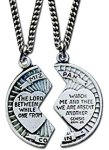
8. Carefully examine 31:44-54 in the context of all that has transpired between Jacob and Laban in this passage. Have you ever seen a set of Mizpah necklaces? They are usually shared by best friends, close loved ones, or boyfriends and girlfriends on the occasion of an impending temporary absence as a fond blessing that anticipates a happy reunion in the future. Knowing what you now know about the Mizpah (31:49) is this the correct usage and context of this verse? What is the correct understanding of this verse?

9. How does Jacob’s redeeming and rescuing of Rachel and Leah from Laban point to Christ as Redeemer and Rescuer? In what ways does it point further ahead to Christ taking Christians Home at the second coming?


Homework

Review the meaning of Jacob’s name from question 3. Write down your observations about the meaning of Jacob’s name as it compares to his statement in 30:33, and to Proverbs 22:1. Think about your own reputation – is it godly? Honest? Ethical? Why is it important for Christians to have an honest reputation? Examine 2 Corinthians 5:20, and consider how your reputation impacts your representation of Christ to others. What are some other New Testament Scriptures that address the importance of a godly reputation?


Suggested Memory Verse

Then the Lord said to Jacob, “Return to the land of your fathers and to your kindred, and I will be with you.” 
Genesis 31:3

Women of Genesis Bible Study

The Women of Genesis: Lesson 23- Rachel and Leah

Previous Lessons: 1, 2, 3, 4, 5, 6, 7, 89, 10, 11, 12, 13, 14, 15, 16, 17, 18, 19, 20, 21, 22

📖📖📖📖📖

Read Genesis 29:31-30:24

📖📖📖📖📖


Questions to Consider

1. Briefly review lesson 22 (link above), recalling the events that transpired to bring Jacob, Leah, and Rachel into this marriage. In what ways did this marriage start off on the wrong foot?

2. Read these passages. Did God design marriage to be polygamous or monogamous? What do these passages tell us are the theological reasons for this? What are the practical and interrelational problems with polygamy that Jacob’s marriage to Leah and Rachel demonstrates in Genesis 29-30?

3. Compare Leah’s and Rachel’s experience with infertility, subsequent pregnancies, and use of surrogates with Sarah’s experience (see lesson 11, link above). How were their experiences similar? Different?

4. Consider how Abraham (see lesson 11, link above) and Jacob both responded to their wives’ giving their maidservants to them as surrogates. How could these men have responded to their wives in a godly way? How would this have been a good opportunity for Jacob to instruct Leah and Rachel in trusting the Lord, especially in light of 30:2? What are some examples of God’s faithfulness and trustworthiness in Jacob’s own life that he could have shared with his wives?

5. In Rachel’s and Leah’s culture, the main way women achieved status, and were viewed as blessed and successful by society, was by bearing children, particularly sons. How does this piece of cultural information help you understand the competitive attitude between Rachel and Leah and the emotional pressure of the situation? How would understanding God’s sovereignty over conception have helped both Rachel and Leah to be at peace in their hearts, with each other, and with Jacob?

6. Make a list of Leah’s comments after the birth of each of her sons, then make the same list of Rachel’s comments. What can we learn about the desires of their hearts from these comments? What can we learn about their relationships with each other, with Jacob, and with God? In what ways might each of them have been tempted to sin in their hearts (ex: coveting)? What Scriptures can you think of that address these sins?

7. Imagine that you’re working on a degree in biblical counseling and you’re assigned Jacob’s, Leah’s, and Rachel’s situation as a case study. Using what Scripture says about marriage, children, sin, the fruit of the Spirit, God’s attributes, etc., pinpoint at least two issues in this family that need biblical correction.

8. Now imagine you’ve graduated and are working as a biblical counselor. Jacob, Leah, and Rachel come to you for help in making their family more godly and getting along better. How do you advise each of them individually and/or as a family unit about the two issues you’ve pinpointed? What are some Scriptures that tell them what they should not be doing or believing? What are some Scriptures that tell them what they should be doing or believing?

9. Rachel and Leah were focused only on their own family and their personal desire to bear children, but what was God’s larger purpose for their sons? How does today’s passage demonstrate that God’s plans cannot be thwarted by the actions of man?


Homework

Go back to the lists you made for question 6. Do you have a heart attitude about something that’s similar to one Rachel or Leah had? For example: Are you coveting something? Envious of someone? Willing to use ungodly methods to get what you want? Resentful? Prideful? Unable to be peaceful and content where God has placed you? Write out some specific Scriptures that address this sin of the heart – both why you should not sin this way, and the godly action you should take or attitude you should have instead. Be sure to spend some time in prayer asking God to forgive you and to help you do what is right.


Suggested Memory Verse

Then God remembered Rachel, and God listened to her and opened her womb.
Genesis 30:22

Women of Genesis Bible Study

The Women of Genesis: Lesson 22- Rachel and Leah

Previous Lessons: 1, 2, 3, 4, 5, 6, 7, 89, 10, 11, 12, 13, 14, 15, 16, 17, 18, 19, 20, 21

📖📖📖📖📖

Read Genesis 29:1-30

📖📖📖📖📖


Questions to Consider

1. Briefly review lesson 18 (link above). Compare the account of Abraham’s servant finding a wife (Rebekah) for Isaac to Jacob finding Rachel in today’s passage. What are some similarities? Differences? Compare both of these accounts to the story of Jesus meeting the woman at the well. How do Abraham (via his servant) and Jacob point ahead to Christ through these incidents? How do Rebekah and Rachel point ahead to the woman seeking the Living Water?

2. God doesn’t put extraneous information in Scripture; everything was written for a purpose. Why do you think God explains so much detail about shepherding practices in the first part of chapter 29?

3. Jacob has traveled several hundred miles to arrive at this destination. Compare verses 4-5 with Genesis 27:43-44. How is this the first confirmation of the fulfillment of the journey his parents had sent him on? Compare verses 6 and 10 with Genesis 28:2. Who had Isaac told Jacob to marry? How was this the second confirmation of the fulfillment of his journey? How were both of these meetings and the subsequent events part of God keeping his promises to Jacob? Do these confirmations of God’s leading and work in his life help shed some light on Jacob’s emotional reaction in 9-12?

4. Try to picture Jacob’s interaction with the shepherds in verses 4-8. What is Jacob’s immediate reaction (7) to seeing Rachel coming? Is it just me or is he trying to get those guys to vamoose so he can spend some time with Rachel? :0) Do they leave? (8)

5. What can we infer from verse 15 that Jacob had been doing for the month (14) he had been staying with Laban’s family?

6. Write character sketches of Rachel and of Leah based on the information in this passage. What were some temptations each of them may have faced? Knowing what you know about Rachel and Leah and their relationship, how might Leah have felt about Jacob asking for Rachel’s hand, offering to work seven years for her, and observing Jacob’s love for Rachel? (15-20)

7. Look closely at verse 21. Notice that the phrase is worded: “go in to her”, not “go into her.” The phrase “go in to her” means that the husband would enter the bed chamber where the wife was waiting for him (for consummation of the marriage). (Judges 15:1 makes this clearer.) I recently spoke with a young lady who had read this phrase as “go into her” all her life and thought the Bible was referring crassly to intercourse. Just wanted to bring a little clarity for anyone else who might have been stumped by that phrase.

8. Read 21-30 imagining you’re Leah. How do you react to your father’s attitude that the only way he’ll ever marry you off is to trick some poor guy who doesn’t want you? How would your new husband Jacob’s anger have made you feel, as well as the fact that once he married Rachel, he loved her more than you? Now imagine you’re Rachel. How do you react to your father giving your sister to the man you love and have waited seven years for? How did this wedding start out as Rachel’s big day and ended up as Leah’s big day?

9. One of the questions that always comes up about verses 21-30 is, “How did Jacob not know it was Leah?”. Let’s look at some of the factors at play:

a) How was the wedding celebrated? (22) What type of beverage is typically consumed freely at such events?

b) What time of day was the marriage consummated? (23) What impact would this have had on visibility? Remember, “he went in to her”. Leah was already in the (probably dark) bedchamber waiting for Jacob.

c) Think about the way women of that time period dressed. How might Leah’s clothing have hidden her identity?

d) Think about the structures people lived in and the proximity to others, since family tended to stay close together, and since many of the wedding guests may have been spending the night. Being quiet and whispering during marital relations might have been a normal way to protect a couple’s privacy from eavesdroppers, and thus, could have kept Jacob from recognizing Leah’s voice.

e) The Holy Spirit has been known to prevent people from seeing things He doesn’t want them to see.

Can you see how some or all these factors may have worked together to keep Jacob from recognizing Leah?

10. Make a list of all of the cultural and hospitality customs this passage teaches us.


Homework

God leading Jacob to men from Haran and then to Rachel was part of God keeping his promises to Jacob. God’s promises to Christians are written down in the New Testament. Think about some ways God has fulfilled His promises in your life. Write down the verse(s) that contain that promise along with the way God fulfilled that promise in your life. Take some time in prayer to thank Him for keeping His promises.


Suggested Memory Verse

So Jacob served seven years for Rachel, and they seemed to him but a few days because of the love he had for her.
Genesis 29:20