 Read Ezekiel 3:16-5:17

Questions to Consider
1. Review your notes from last week’s lesson and be reminded of the things that transpired in 1:1-3:15 that lead into, and set the stage for, this week’s passage. According to 3:16, how long after the events of 1:1-3:15 do the events of 3:16ff take place?
2. Read 3:16-21. What was the purpose of a (literal) watchman in Ezekiel’s day? Explain God’s charge to Ezekiel in this passage. Who was he to warn, and what was he to warn them about? What would be the consequences for Ezekiel for not warning the people as God commanded? What would be the result for him if he did obey God’s command to warn them?
Are there any general principles we can draw from this passage about our responsibility to share the gospel with the lost? What about confronting sin in a fellow Christian or warning the church against false teachers? Are the consequences Ezekiel faced for warning/not warning the same for Christians warning/not warning against sin and unbelief? Which New Testament Scriptures can you think of that would seem to be in line with, or would indicate a difference from, 3:16-21 for Christians?
What does this passage teach us about God’s perspective on sin and repentance?
3. Read 3:22-27.
What does 3:23 refer back to (hint- use your cross-references)? How did it benefit Ezekiel (in ch.1 and ch.3) to experience God’s glory right before God called him to do something difficult? How does immersing ourselves in the glory of God through His Word, prayer, and worship prepare us to do the difficult things He calls us to do?
What did God do to Ezekiel in 3:26-27? If Ezekiel was supposed to speak God’s word to the people, why would God make him mute? Why might God withhold His word or His truths from people? (3:26-27)
4. Read Ezekiel 4:1-5:17*.
If you’re unfamiliar with the Old Testament battle concept of siege and what siegeworks would have looked like, do some research as you consider chapter 4 (especially 4:1-3). It will give you a better understanding of the illustrations God was asking Ezekiel to set up and carry out in this passage. Sketch out or visualize what Ezekiel’s little diorama in 4:1-3 would have looked like. What did the iron wall and Ezekiel turning his face toward it represent?
Explain the message God is conveying to His people in 4:4-8. Using cross-references, commentaries, your Bible’s study notes, etc., what do the 390 years and 40 years represent? How does Ezekiel symbolically “bearing the punishment” and “laying down” his life for his people’s sin point toward Christ literally bearing the punishment and laying down His life for His people’s sin?
What part of the siege was God warning about in 4:9-17? What did the illustration of the bread mean? (4:16-17) Explain the concept of “uncleanness” for the Israelites and how horrifying and humiliating this part of God’s judgment should have been to them. Compare Ezekiel’s aversion to uncleanness to Peter’s. How is the concept of uncleanness an illustration of the holiness of God and His aversion to sin?
What was God’s message to the people in 5:1-4? (5:10b,12)
How did Israel’s sin compare to the sin of the pagan nations around them? (5:5-7) Make a list of the words and phrases in 5:5-17 that impress upon you just how deadly serious God is about sin and how intense is His wrath against sinners. When you finish making your list, read back through it and consider this wrath that God poured out on Christ on the cross as well as His mercy and grace in salvation toward you, a sinner.
As we continue on in Ezekiel, we will see other instances of God instructing Ezekiel to communicate His message through illustrations, dioramas, or a dramatic presentation rather than through a sermon or other direct verbalization. Why might this be God’s preferred method of communication with His people in these instances?
Homework
• *(Homework is usually optional, but I’d really like you to do this one.) Ezekiel 5:13 is the first of 72 times in the book of Ezekiel that we will see the phrase (or some variant of it), “And they shall know that I am the Lord.” As we study through Ezekiel, keep a running list of each time you see this phrase, and write down who will know that He is the Lord, what will cause them to know He is the Lord, and why God wants them to know He is the Lord.
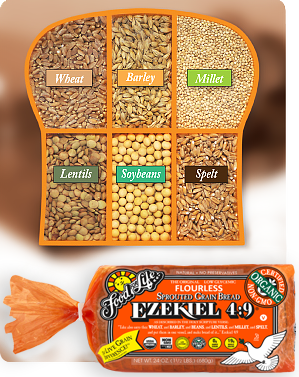
• Are you familiar with Ezekiel 4:9 Bread? Explain why their use of this Scripture is out of context for marketing their bread. Did God tell Ezekiel to make his bread from a combination of grains “to ensure unrivaled honest nutrition and pure, delicious flavors”? Think about the context of chapter 4 as you answer. Are you sinning if you eat this bread just because you happen to like it?
Suggested Memory Verse