Christmas, Holidays (Other)

Have Yourself an Awesome Little Advent 2025: Advent Devotionals, Activities, Resources… and more!

Is your family getting ready for Advent? Loosely defined, Advent is the period of time leading up to Christmas when we commemorate Christ’s first coming and anticipate His second coming. And what better way to do so than by making Bible study and worship part of your family tradition? Here are some awesome Advent resources1 for young and old alike. Most of them are free, but the ones that aren’t, I’ve marked with a 💰.
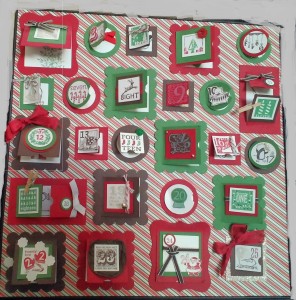
December Advent!– Here’s an advent calendar, craft, and devotional all rolled into one! Naomi’s Table is a women’s Bible study resource that I highly recommend for sound doctrine and right handling of God’s Word. Have a listen to their daily Advent podcasts and make the Advent calendar that goes with them!

Need a good Advent playlist? I’ve created one on YouTube. Your favorite Advent (not Christmas) song isn’t included? Leave a comment and I’ll add it if appropriate.
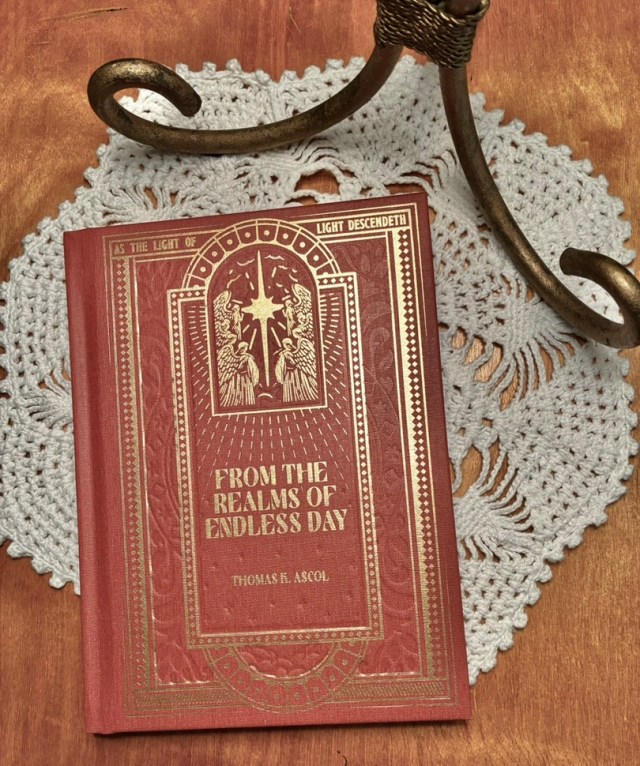
From the Realms of Endless Day by Dr. Tom Ascol. “This little book is meant to be used as a daily devotional guide throughout the Christmas season. It is broken into five sections of five devotions. Each section focuses on one passage of Scripture that is considered verse-by-verse.” Designed for family or individual use, with Scripture memory passages in each section and study questions at the end of each of the 25 lessons. Encouraging Christmas poetry from Dr. Tom Nettles is also sprinkled throughout the book.💰
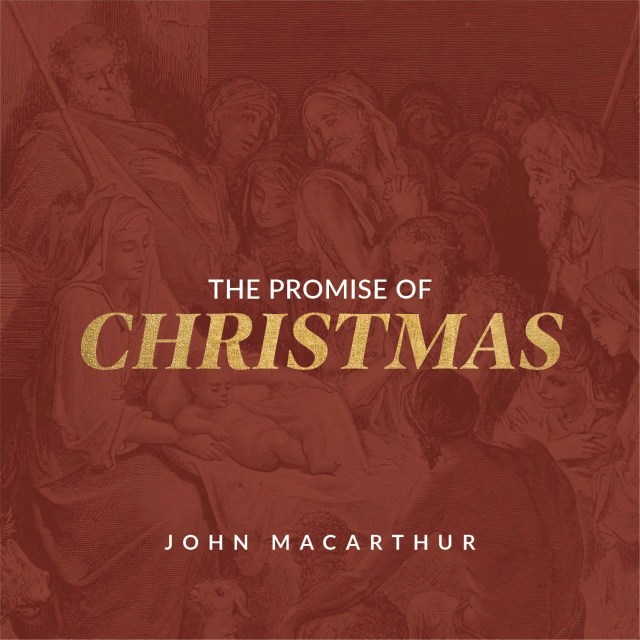
The Promise of Christmas by John MacArthur. “…What would it have been like to be in Bethlehem for the very first Christmas? Would you have been waiting for Jesus? What would you have been anticipating? Would you have expected the Savior, King, and deliverer promised in Scripture to arrive unheralded by men—born in a lowly stable, surrounded by animals and society’s outcasts?…In The Promise of Christmas, John MacArthur answers those questions and more as he takes you back in time to first-century Israel.” A series of six sermons.
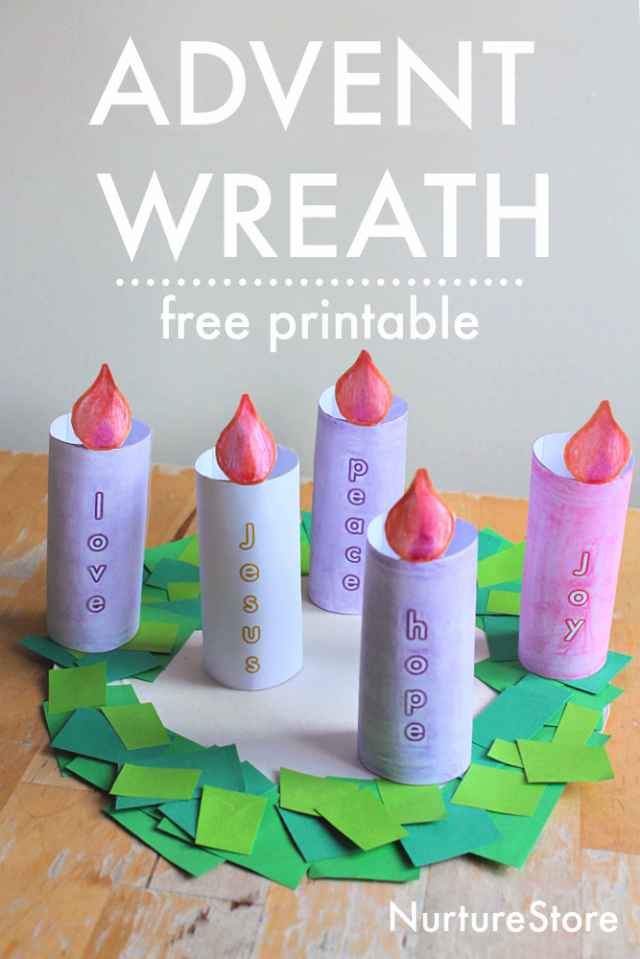
Is observing Advent new for your family? Children are often “hands on” learners, and this Advent wreath craft could be a great way to explain the significance of Advent, the wreath, and each candle as they create it. Follow the step-by-step instructions here, using your own design, or subscribe to the email list to download the free printables.
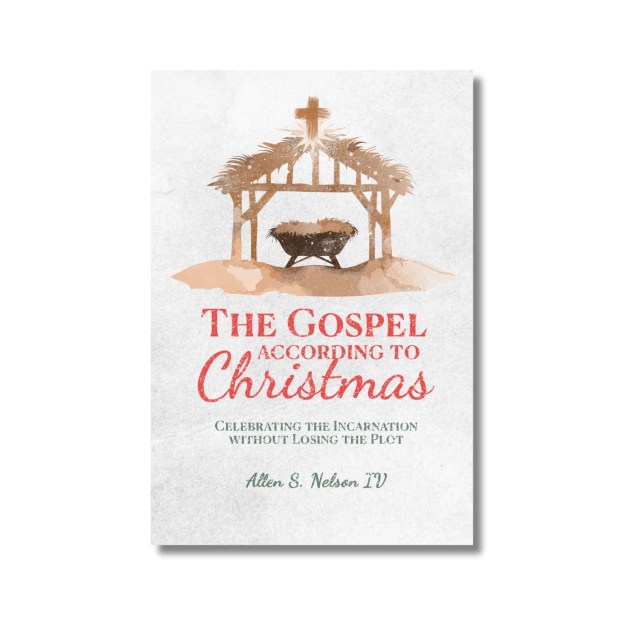
The Gospel According to Christmas by Allen Nelson. In a world where Christmas is often reduced to twinkling lights and fleeting sentiments, The Gospel According to Christmas is a clarion call to rediscover the holiday’s true heartbeat: the gospel of Jesus Christ. With pastoral warmth, Allen Nelson IV guides readers through 1 Peter 2:24 to unveil the staggering reality of Christ’s incarnation and sacrifice…Read it, share it, and let it rekindle your love for the Christ of Christmas. Reflection questions in each chapter make this book a perfect fit for group study or family devotions.”💰

The Jesse Tree– A charming precursor to the Advent calendar, the Jesse tree traces the story of Jesus from Creation to His birth. Using your Christmas tree or a crafted tree, hang an ornament each day that represents the Bible story for that day. This site has a free Jesse Tree tool kit with ideas for making your own Jesse Tree, the Scripture references for each day, and printable ornaments. (They also offer a family devotional and a individual devotional. If you’re considering using them, please do so carefully and discerningly. I read several of the family devotions and they seemed OK, but the Reformed Church in America {which sponsors this site} appears to have struggled with progressivism in their theology.)

Manger in Danger– This charming family devotional and game centering on the incarnation of Christ was created by Pastor Grant Castleberry and his wife, GraceAnna. “Manger in Danger is a fun, interactive family tradition that brings the Christmas story from the Bible to life in 25 days of family devotionals!”💰
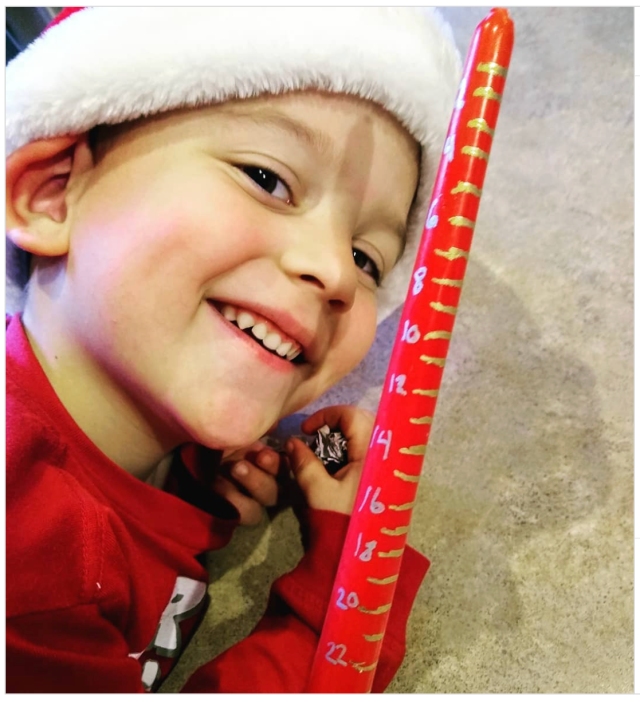
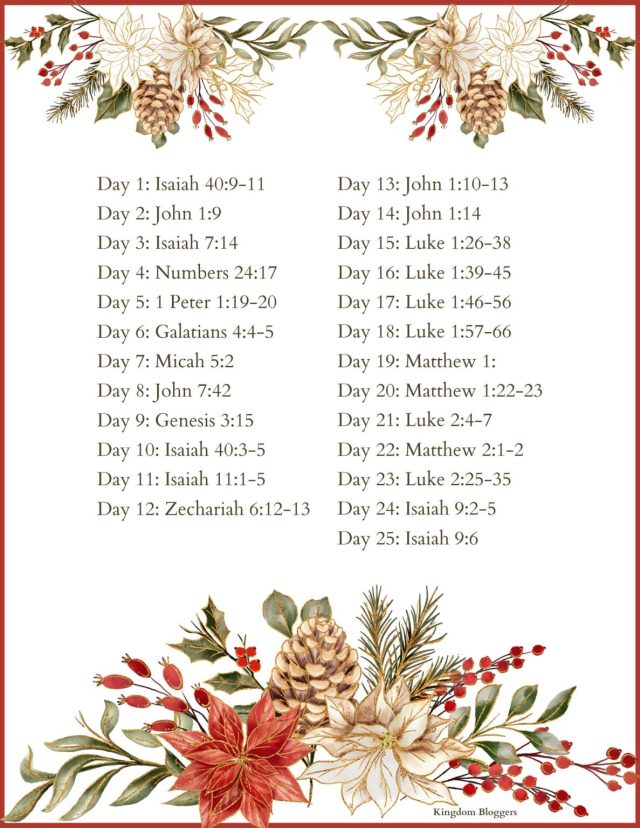
I thought this was a cute idea – an Advent Countdown Candle. Just grab a taper, make 25 marks down the side of it, and each night burn away one more day. Simple! You might even like to read one of these Advent Scriptures

…every night by candlelight. Or use my Advent playlist above, and sing one of the hymns there as each day burns away.
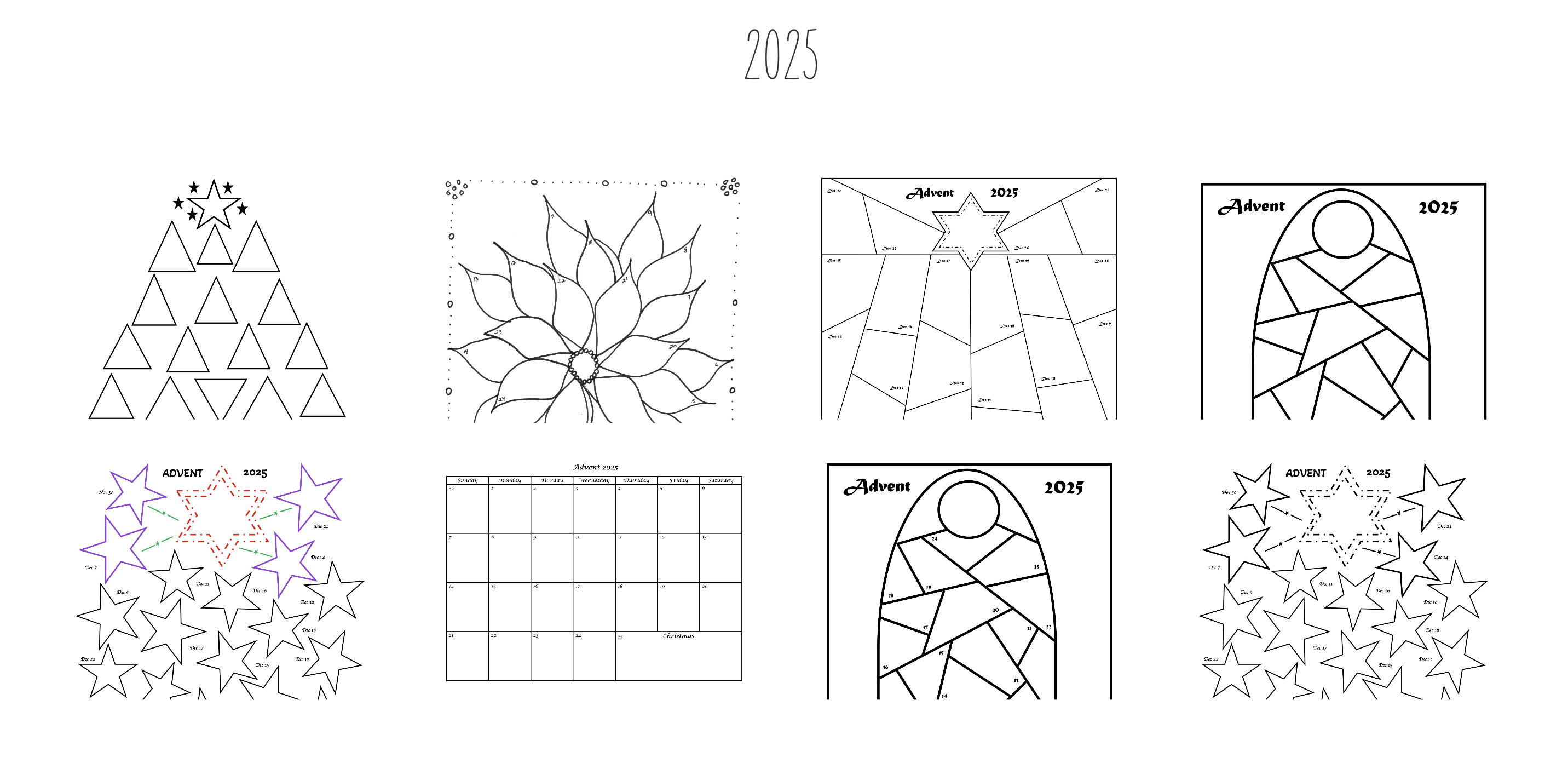
How about combining Advent and prayer with an Advent Prayer Calendar? Choose from dozens of designs, print out the one you like best, and color, decorate, or fancy it up any way you like. Each day, simply fill in the name of the person or ministry you’re praying for and spend a few minutes interceding for them. It’s a great way to start a habit of family prayer and count down to Christmas at the same time!

(This is a site1 where you’ll want to grab only the printable and leave everything else behind.)
Christmas Messages by R.C. Sproul- “In this set of Christmas sermons, Dr. R.C. Sproul examines the account of the Magi in the gospel according to Matthew and the relationship of David and Saul in order to unfold the significance of Christmas and the incarnation of Christ. With theological insight and attention to scriptural detail, Dr. Sproul demonstrates how these events and relationships contribute to our understanding of the person and role of Christ.”
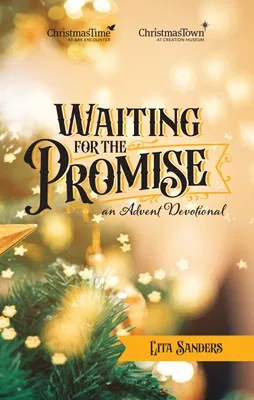
Waiting for the Promise from Answers in Genesis. “As you reflect through this devotional on the promises of God for 4,000 years before the birth of Christ, be reminded of his great love for you that he would send his only Son to offer salvation for sinners!”💰(Free sample chapters available)

What’s your favorite Advent resource?


1I do not endorse anything on any of these sites nor any of these creators who deviate from Scripture or conflict with my beliefs as outlined in the “Welcome” or “Statement of Faith” tabs at the top of this page.

Bible Study, Mailbag

The Mailbag: How can I get started studying the Bible itself?


Where would you recommend someone start if they really wanted to read the Bible for themselves?

I love this question so much. I wish more women were asking this question.

If you’ve hung around the blog for practically any amount of time, you’ve probably heard me say that next to “Is ______ a false teacher?”, the question I’m most often asked is, “Can you recommend a good women’s Bible study?“. I give the same answer to that question every time: no.

First of all, it’s easier to find a needle in a haystack than a doctrinally sound study at a Christian retailer. But, second, why would you rob yourself of the joy of holding the actual words of God in your hands and studying them for yourself? I can’t bring myself to recommend something that would be less – less joy, less growth in Christ, less depth, less knowledge of the Word – than the best. I recommend that you study God’s Word itself, not the gleanings from somebody else’s study of God’s Word.

When I first received this question, I wasn’t sure whether the reader wanted to know which book of the Bible she should start with or which method to use, so I’ll cover both.

📖 Fear not. Let’s take just one step backwards from this reader’s question for a moment. Sadly, some women have never been introduced to the idea that they can study the Bible for themselves, without using a pre-packaged (I call them “canned”) study (book, workbook, DVD, etc.). If this Mailbag article is the first time you’ve ever heard of such a thing, and you’re intrigued but apprehensive, don’t be afraid to give it a try. Until some time around the latter part of the 20th century, when people wanted to study the Bible, they just picked up the Bible itself and started studying. And it worked. People – usually with far less education than you have – grew in their faith to godly maturity just fine. There’s no reason you can’t do that, too.

📖 Go into it with the right mindset. Bible study is a skill just like anything else. You’re not going to be perfect at it the first time you try, just like you didn’t ride a bicycle perfectly the first time you tried. You may try a method of studying that just isn’t a fit for you. You might choose a book of the Bible that’s not as suited for beginners as another book might be. That’s OK. There’s going to be some trial and error. Stick with it and don’t give up.

📖 Commit I always encourage women to commit to putting aside all of the workbooks and devotionals for a year. It takes a while to get out of the habit of relying on somebody else to do the heavy lifting for you and into the habit of diligently digging in to God’s Word for yourself. If you have a little hiccup in your studying, don’t quit and go back to the canned studies, assuming you can’t handle studying God’s Word on your own. Yes, you can. Just pick yourself up, dust yourself off, and start again.

📖 “Training wheels” If you need a little help getting started, choose one of the studies I’ve written at the “Bible Studies” tab at the top of this page. My studies are designed to train you to study the Bible for yourself. You’ll learn about context, cross-references, culture, the storyline of redemption from Old Testament to New, the kinds of questions you should be asking of the text, and more. They are “teach a woman to fish” studies rather than “give a woman a fish” studies. I fully expect that you will be able to bait your own hook in no time.

📖 Structure If structure and schedules and plans are your jam, you might want to choose a Bible reading plan. It’s become my New Year’s Day tradition to publish an annual round up of super Bible reading plans. You can find this year’s list of plans at the Bible Studies tab at the top of this page. There are plans that range in length from seven days to indefinite. Some will take you through a biblical topic, others through one or two books, others through the whole Bible. If you’re a beginner, I would recommend starting with one of the shorter ones (90 days or less) to get your feet wet. And, when you’re ready to read through the whole Bible (which you really need to do at some point), I highly recommend the chronological plan.

📖 Freestyle If you’re more of a “set your own schedule” kind of person, just choose a book of the Bible – maybe one you’ve had your eye on – start at the beginning, and read a bit each day until you reach the end of the book. Then choose another book and start again. Not really familiar with the layout of the Bible? Try choosing one of the shorter (less than 20 chapters) books if this is your first try and you’re taking a shot in the dark. Enjoy reading stories? You might want to start with Genesis or one of the gospels (Matthew, Mark, Luke or John). Looking for instruction instead? Try one of the epistles (basically anything between Acts and Revelation). You will probably want to save the longer and more complicated books (ex: the major and minor prophets, Revelation, Leviticus) for when you get a bit more experience with studying Scripture. As you get more confident in studying the Bible, make it your goal to study through every book at least once. 

📖 How to? There are a variety of methods and techniques you can learn for studying the Bible, and whatever method enables you to rightly handle God’s Word and works best for you is fine. I like to keep things simple. Before I start studying, I spend some time in prayer. I confess my sins, ask God to speak to me through His Word, and ask Him to help me correctly understand, obey, and apply His Word. After that, I have a spiral notebook and a pen, and I simply take notes on the text. (If you want to see the kinds of things I write down when I take notes, read through the questions in one of the studies I’ve written at the “Bible Studies” tab. I write those studies the same way I take notes during my personal study time.) As a beginner you may wish to simply read the text and build up to taking notes as you become more comfortable with reading.

📖 Get some help. You don’t have to do this all by yourself. Maybe your husband, a godly friend, one of the older ladies at church, or your pastor could offer you some pointers on studying your Bible or help you out with any questions you might encounter along the way. Never be afraid to ask for help. That’s what brothers and sisters in Christ are for.

I’ve also got a number of resources on how to study the Bible under the “Bible Studies” tab at the top of this page. Click on the link and scroll through, or you might wish to start with one of these.

You’re Not as Dumb as You Think You Are: Five Reasons to Put Down that Devotional and Pick Up the Actual Bible

Nine Helps for Starting and Sticking to Daily Bible Study

10 Bookmarkable Biblical Resources for Christian Women

10 Simple Steps to Plain Vanilla Bible Study

Rightly Dividing: 12 Do’s and Don’ts for Effective Bible Study

Bible Book Backgrounds: Why You Need Them and Where to Find Them

As a newly doctrinally sound Christian, should I stop journaling?

(More details on taking notes on the text of Scripture.)


If you have a question about: a Bible passage, an aspect of theology, a current issue in Christianity, or how to biblically handle a family, life, or church situation, comment below (I’ll hold all questions in queue {unpublished} for a future edition of The Mailbag) or send me an e-mail or private message. If your question is chosen for publication, your anonymity will be protected.

Bible, Bible Study, Christian women, Women

You’re Not as Dumb as You Think You Are: Five Reasons to Put Down that Devotional and Pick Up the Actual Bible

Bible Five Reasons

As a women’s Bible study author and teacher, I have the unique privilege of talking to women from all kinds of backgrounds about their spiritual lives. I can’t tell you how many times I’ve had women share with me that they didn’t grow up in church, or they grew up in a church that “didn’t allow” them to read the Bible, and now they have to use a Bible study or devotional book in their quiet time or they’re afraid they won’t be able to understand the Bible. My heart goes out to these ladies because they desperately want to learn from God’s word, but somewhere along the way, someone or something has convinced these perfectly intelligent women–I haven’t met a dumb one, yet– that they’re not good enough or smart enough for God’s word.

As Colonel Potter used to say:

ColPotter MM

Ladies, you are not dumb. God created you smart enough to understand the Bible, and He created the Bible to be understandable. He loves you and wants you to read, embrace, and apply His word to your life. So don’t be afraid to throw that Daily Bread out the Open Windows of your Upper Room and read a chapter out of your Bible instead. Why?

1. Because you need spiritual nutrition, not mind candy.
The other day I was asked my opinion of a popular women’s daily devotional web site. I read a few of the devotions, and the basic format of what I found was a Bible verse (or worse, part of a Bible verse) followed by an inspiring or poignant personal story. Frequently, the Bible verse had little or nothing to do with the story. There’s nothing wrong with reading a good story, but that’s not the same thing as studying God’s word. Other “Bible” studies are built largely on the author’s opinions. You’ll find that I think… or I believe… far outnumber God’s word says… (quoted verbatim, in context, and with a chapter/verse reference). Still others are basically advice or “life tips” books.

Don’t let the fact that a book, magazine, or website bills itself as a “Bible study” or a “devotional” fool you. If all you’re reading is the author’s unsubstantiated opinions, advice, or anecdotes from her (or someone else’s) life, you are studying her story, not God’s story.

There are many good, doctrinally sound studies out there that can be a fine supplement to your regular study of God’s word, and there are many more “Bible studies” and devotionals that are merely feel-good stories, or worse, contain teaching that actually conflicts with the Bible. But how will you know the difference if you don’t know what God’s word says by reading it?

If you don’t know enough of what God’s word says to use it as your measuring stick for other books, you’ll end up doing the same thing a child would do when offered anything in the world that he wants to eat. He’ll choose what looks and tastes good (which might be candy or it might be poison) instead of what’s good for him. When you pick up a Bible study or devotional, you might not know what you’re getting, but when you pick up your Bible, you can be sure you’re getting the very words of God, and that’s what your spirit needs to feed on to grow up healthy.

2. Because King James has been dethroned.
No disrespect intended. The King James Version of the Bible is a good translation, and the language is beautiful, but if you have trouble with 1611 English, it’s not the only game in town anymore. Some of our modern translations (please note: that’s translations not paraphrases) are actually more accurate than the KJV because thousands more biblical manuscripts have been discovered since it was first published, allowing translators to be more precise. Two of these, which I highly recommend, are the New American Standard Bible (NASB) and the English Standard Version (ESV).

If you can read books, recipes, magazines, instructions, and Facebook (good heavens– if you can decipher certain Facebook posts, you can comprehend anything), and understand them, there is a Bible translation out there that you can understand. You can even check most of them out for free at BibleGateway.com.

3. Becase the Holy Spirit promised to help you.
I always find it heartwarming to hear someone say, “Before I was saved, I read the Bible, but it didn’t make any sense to me. But now when I read it, I get it!” What changed? The Holy Spirit now lives inside that person. He convicts us of sin, leads us to love the things of God, and shapes us to be more like Christ. One of the ways He does that, according to 1 Corinthians 2:14-15, John 14:26, and 1 John 2:27 and other passages, is that He helps us understand and apply God’s word to our lives.

Before you start reading your Bible, take a moment to pray, confess and repent of your sin, and ask the Holy Spirit to help you understand and obey His word. He’ll do it, because He keeps His promises.

4. Because you can get by with a little help from your friends.
 
While the Holy Spirit illumines our understanding of the Scripture, it’s both immediate and a process, so sometimes, you’ll run across a verse that stumps you, a word you don’t understand, or passages that seem to conflict with each other. Fortunately, the Holy Spirit is/was at work helping other godly men and women to understand the Scriptures, too, and one of the ways He can help you is through their study and hard work.

Cross References:
Take a look at your Bible. See any little superscript numbers or letters in the text? Find the corresponding letter/number, and you’re likely to see the reference for another related Bible verse. Look it up. Clear passages of Scripture interpret unclear passages, and it will probably shed some light on what you’re finding confusing.

Study Bibles:
I almost hesitate to recommend study Bibles because there are so many shoddy ones out there, but if you can find a good one they are extremely helpful. Good study Bibles contain the entire text of the Bible plus notes and explanations on most of the verses. They also often contain historical, cultural, and background information on each book and author, maps, charts, glossaries, etc. As to the shoddy ones, generally speaking, stay away from “theme” Bibles (the Bible for teachers, for athletes, for petroleum engineers who eat waffles for breakfast–yes, I’m kidding– the environmental Bible, the NASCAR Bible, the Duck Dynasty Bible– no, I’m not kiding), and from any Bible whose title contains a televangelist’s name (such as the Bibles T.D. Jakes, Joyce Meyer, and Joel Osteen have put out).

For my “hard copy” Bible, I use and strongly recommend the MacArthur Study Bible. It is my understanding that the Lutheran Study Bible and the ESV Study Bible are also very good, although I have not personally had a chance to check them out myself. And there are some phenomenal (and free!) study Bible apps out there. I absolutely LOVE the Faithlife Study Bible and the Bible study app from Olive Tree. And check out this article from Tim Challies: What Makes a Really Good Study Bible?.

Commentaries, Dictionaries, and Bible Study Helps
Commentaries are a Bible scholar’s written explanation of Scripture. Bible dictionaries will help you with definitions of certain words and phrases. And there are many other notes, outlines, and other Bible study helps you can use to better your understanding of Scripture. The resources page at BibleGateway.com contains several of these, including Matthew Henry’s commentary (my favorite). The Christian Classics Ethereal Library (CCEL) has a treasure trove of thousands of resources to help you study. And Logos Bible Software has a great free app that has dozens of resources.

5. How badly do you really want this, anyway?
Nobody ever won a medal at the Olympics by practicing her sport for five minutes a day. Edison didn’t invent the light bulb by messing around in his garage for a few hours on the weekend. And, despite the titles of some Christian books, nobody ever grew to spiritual maturity by spending five minutes a day reading a devotional.

Think about the things you spend your time on. Work, cooking, cleaning, TV, social media, novels… If asked, we would probably all say that our relationship with Christ is more important than any of these things, but do our day planners reflect that?

Anything worth having is worth investing time and effort into. It’s worth working at it and sharpening your skills. And nothing–nothing–is more worthwhile than growing closer to Christ. Is Christ worth some time and effort to you?

So, ladies, this is probably going to sound strange coming from a women’s Bible study author, but you don’t need my book, or anybody else’s, to study the Bible. Just pick up the Scriptures, pick a book, start reading at the beginning, and keep going until you get to the end. People did that for thousands of years before Bible studies hit the scene. They did just fine, and you can too.