Book

GIVEAWAY! GIVEAWAY! GIVEAWAY!

MH900440274Wooohooo! Time for giveaway!

Since it’s time for Mother’s Day and Teacher Appreciation Day, I’ll be giving away TWO copies of Jacob in e-book format this Saturday, May 11. Keep it for yourself or give it away to your favorite mom or teacher.

Jacob is available for Kindle, Nook, and a variety of other electronic devices, including your computer, smart phone, and tablet. Don’t let not having an e-reader stop you from entering!

And just how do you enter? There are two ways, so you get two chances to win!

1. Leave a comment below telling me your E-MAIL ADDRESS and who would get your copy of Jacob if you win. Don’t forget the E-MAIL ADDRESS, or I won’t have a way to contact you if you win.

2765031309_f90228b1f6

2. Like me on Facebook and come play Family Feud with us on Friday, May 10.   The name of everyone who answers at least one question will be entered in the draw.

Invite your friends, too!

Godspeed! :0)

Book, Uncategorized

E-BOOK SUPER SALE!!!

Image

All e-versions of “Jacob” are on sale! Get a Kindle or Nook copy for just 99 cents, or other e-version at CBD for just 79 cents! (Click the hyperlinks here, or click on the “Books” tab above.)

You can give “Jacob” as a GIFT, too! At these prices, you can get one for all the women on your list for Mother’s Day or Teacher Appreciation Day!

And don’t forget your women’s Bible study group! You don’t have to have an e-reader or tablet. “Jacob” can be downloaded to your smart phone, computer, or tablet, too. This is a much less expensive way (especially for small churches on a limited budget) to do a women’s Bible study than ordering a $15 workbook for everybody. It’s a great time to start thinking about a summer Bible study!

Order your copies today– this is a limited time offer!

Bible, Types and Shadows

Types and Shadows: Study Notes on Exodus 1-2

Image

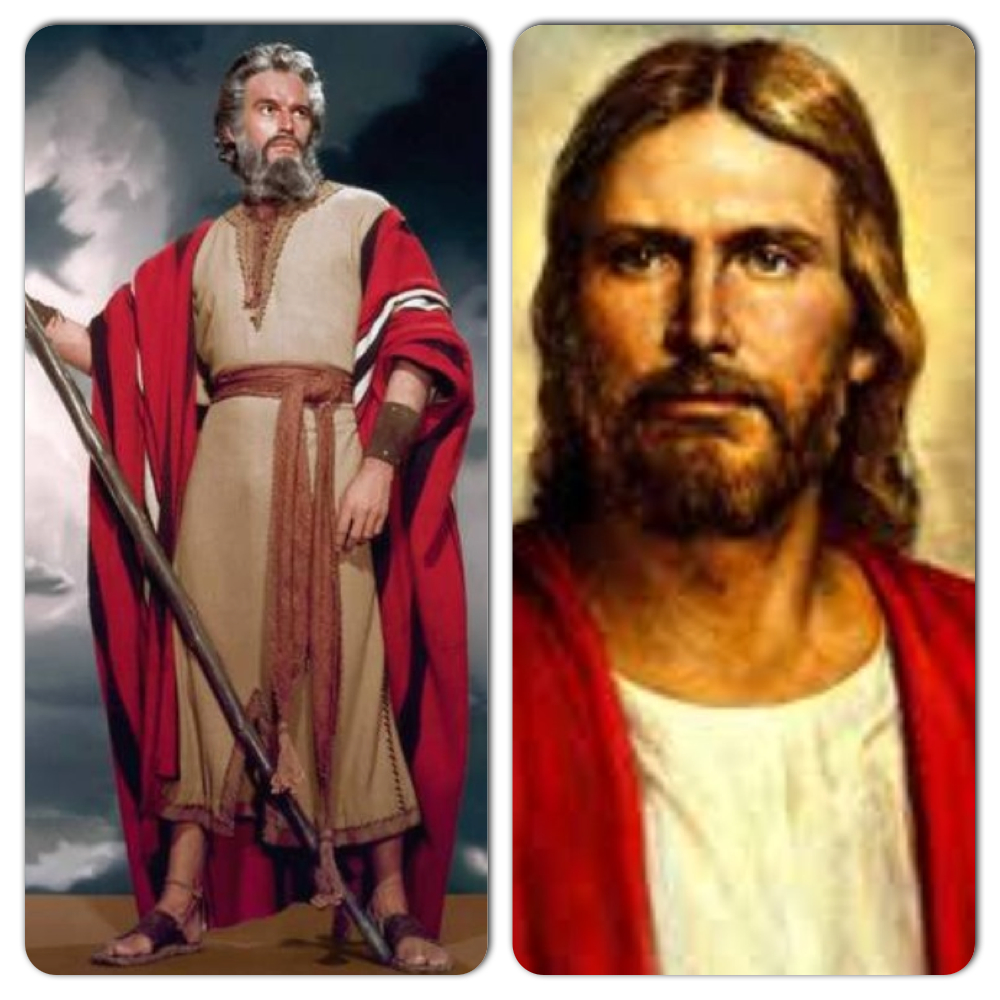
Do you know what types and shadows are? To put it simply, it’s when we take a look at an Old Testament character and notice things in his life that are similar to, and foreshadow, the life and ministry of Jesus. I really enjoy studying types and shadows. For me it’s like Twilight Zone meets a treasure hunt meets the Bible.

This morning I was studying the first two chapters of Exodus, and I noticed several instances of Moses foreshadowing the life of Jesus. I have a couple of friends who enjoy types and shadows, and I figured there might be a few more of you who get as geeked up about this stuff as we do, so I thought I’d share my study notes with y’all.

A few of caveats: these are just “off the top of my head” study notes, so think of this as a rough draft rather than a polished article. Also, I didn’t consult any commentaries or other resources, so I’m sure I missed a lot of things that others have picked up on. Finally, this pretty much covers only Exodus 1 and 2, which ends before the burning bush episode, before Moses even returns to Egypt, so there are tons of things in Moses’ later life that I haven’t covered. There are many more examples of types and shadows after chapter 2, I just haven’t gotten to them yet.

MH900014974

Types and Shadows in Exodus 1-2

  • Moses and Jesus were both born under oppressive kings who feared a takeover by the Hebrews and ordered a mass infanticide of Hebrew baby boys.
  • Moses and Jesus were both “adopted” by a parent who raised them as their own children: Moses, by Pharaoh’s daughter; Jesus, by Joseph.
  • Moses left the glory of his throne and palace and his position of royalty to “become” one of his own people, whom he delivered out of bondage to slavery. Jesus left the glory of Heaven and emptied himself of His royal position as King to become one of His own people, whom He delivered out of bondage to sin.
  • Rejection of Moses’ and Jesus’ reign/authority by their own people:
    “Who made you a prince or a judge over us?” (Moses)
    “We do not want this man to reign over us.” (Jesus)
    “We have no king but Caesar.” (Jesus)
  • Moses and Jesus both sat down by a well (Ok, this is less type/shadow and more of a common thing for Israelite shepherds to do. Wells were communal gathering places for shepherds.) And speaking of shepherds…
  • Moses was a shepherd. Jesus is the Good Shepherd.
  • Moses and Jesus both escaped from leaders who were trying to kill them.
  • Moses and Jesus were both “sojourners in a foreign land.” 
  • God heard Israel’s groaning and sent them a deliverer at just the right time: after 400 years. He sent Moses after 400 years of slavery and Jesus after 400 years of silence during the intertestamental period (between the end of the Old Testament and the beginning of the New Testament).
  • Both Jesus and Moses returned to their homelands after the kings who wanted to kill them had died. God called Moses back to Egypt. God called Jesus out from Egypt.

Well, what did I miss? What other types and shadows do you see in Exodus 1 and 2?

Evangelism, Gospel, Homosexuality, Salvation, Sin

Cancer: A Love Story

cancer love story

Cancer.

The dreadfulness of the word hung heavy in the air between Jana and her friend Denise.

“The doctor says it’s terminal,” Denise choked, “I’m so confused. I don’t know what to do.”

Jana’s heart broke as she envisioned the difficult emotional road ahead for Denise and watched the tears streaming down her face.

“I’d do anything to take that pain away,” thought Jana. “Anything.

For days after they parted, Jana’s thoughts were consumed with how she could help Denise accept and feel better about her condition. By the weekend, when they met for coffee, Jana was ready.

“Denise,” she began, “I’ve been giving it a lot of thought, and I think I know why you’re so uncomfortable with having cancer.”

“Oh? Why?” asked Denise.

“Well, first of all, you shouldn’t be fighting against the idea of having cancer. It’s a completely natural biological event. In fact, you were probably born genetically predisposed to cancer. It’s part of who you are. Accept it and embrace it as something that makes you unique and wonderful!”

Denise seemed skeptical, but Jana plunged ahead.Girlfriends Enjoy A Conversation

“You’re also worried about what other people will think of you. Maybe they’ll think you’re weak and try to help you with things that you’d rather do for yourself.”

“But maybe I’ll need some help,” Denise suggested quietly.

“Nonsense!” Jana retorted, “Having cancer doesn’t make you different from anybody else. It’s exactly the same as not having cancer. What we need to do is show that to the world. Maybe we should have a rally for cancer equality!”

“Jana, that’s great and all,” Denise whispered somberly, “but I’m going to die. That makes all the stuff you’re talking about seem a lot less important.”
Jana seems like a very loving and kind person, but does the “help” she was offering Denise seem…well…helpful?

What if I told you that during this entire scenario, Jana personally knew a doctor who had a proven cure for Denise’s type of cancer, and was giving it away, yet Jana never told Denise? How loving and kind does Jana seem now?

Now read back through this story and substitute homosexuality for cancer.

We live in a culture that tells Christians that we are to “love” our homosexual friends and loved ones by embracing homosexuality as good and natural. We even hear people who claim to be Christians saying this. But is this how the Bible defines love? Is this how Jesus loved people?

In this is love, not that we have loved God but that he loved us and sent his Son to be the propitiation for our sins. Beloved, if God so loved us, we also ought to love one another.
1 John 4:10-11

Think back over the encounters Jesus had with people, from the woman at the well, to Zaccheus, to Nicodemus, to the woman caught in adultery, to the rich young ruler, to anybody else Jesus ever interacted with.

Did Jesus ever “love” someone by telling him it was OK to stay in his sin?

No, He didn’t.

Jesus loved sinners by calling them to repentance, forgiveness, and a new life in Christ.

Why? Because it isn’t love to help the slave to embrace his chains. It’s love to set him free.

Christ loved us by going to the cross and becoming the propitiation –satisfying God’s wrath—for our sins. He laid down His life for our freedom.

And, Christian, if God so loved us, we also ought to love one another. We must lay down our opinions, our politics, our ideas of what we’d like the Bible to say, maybe even our actual lives, in order to help people know freedom in Christ. We have the cure for their spiritual cancer—the gospel—and it is not “love” to knowingly misdiagnose them or keep that cure from them.

Greater love has no one than this, that one lay down his life for his friends.
John 15:13

blurry-sky-cross
But as important as it is to rescue the perishing, there’s an even greater issue at stake here for those of us who claim the name of Christ.

For our sin, our Savior endured wrongful conviction, ridicule, mockery, and bullying.

For our sin, our Savior was slapped, punched, spit on, had His beard yanked out, and thorns and brambles mashed into His skull.

For our sin, our Savior had the skin flayed off His back, buttocks, and legs, whipped nearly to death until He was a bloody mess.

For our sin, our Savior, beaten, bloody, and broken of body, hoisted a heavy, splintery cross onto His shoulders and carried it through town and up the hill to His execution.

One nail.

Two nails.

Three nails.

For your sin. For my sin. For our neighbors’ sin.

How dare you, or I, or anyone spit in the face of our bleeding, dying Savior by saying that the sin that put Him on the cross is OK?

How dare we?

How can any of us claim to love Christ while celebrating the nails, the spear, the crown of thorns?

By this we may know that we are in him: whoever says he abides in him ought to walk in the same way in which he walked.
1 John 2:5b-6

Jesus walked the way of leading people to repentance from sin and to the beauty, the freedom of a glorious new life through faith in Himself. Will we, who say we abide in Him, love Jesus and our homosexual neighbor enough to walk in the same way in which He walked?
Mostloving

Bible, Entertainment, Movies, Television

Six Thoughts on History’s “The Bible” ~ Part 3

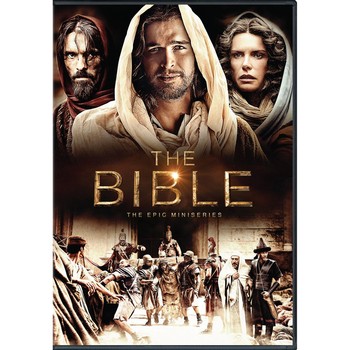
This is the third of a three part series on The History Channel’s The Bible miniseries*. You can find Part 1 here and Part 2 here.

5. The faulty theology of “The Bible’s” theological advisors is influencing and slanting the way God’s word is being presented.

Rick Warren’s twisting of Scripture to fit his “Purpose Driven” overview of God’s nature and character, Joel Osteen’s self esteem boosting and positive thinking, T.D. Jakes’ prosperity gospel and modalism (an unbiblical doctrine of the Trinity), and Roma Downey’s New Age spiritual psychology degree have crept into The Bible’s stories and subtly shifted the Scriptures’ real focus on sinful man’s need of God’s redemption to a “follow the leader and together we’ll change the world” paradigm.

Go back to the beginning of the series and watch it again, counting the number of times the word “leader” is used. Every major Old Testament character has been cast as a “leader,” and Israel’s prosperity or demise is portrayed as contingent on whether the leader was good or bad and whether or not Israel followed his leadership. This is not the message of God’s word. When Israel was obedient to God, she flourished. When she rebelled and chose idolatry, she crashed and burned. Kings, judges, and prophets had influence on the people, but it was Israel’s obedience to God Himself that was the hinge on which the nation swung.

0bc90ac98e8e3d20a24be1f335b5966aIt was especially disturbing to hear prophets such as Jeremiah and Daniel being cast as “leaders.” The prophet’s job was not to lead the people. The prophet’s job was to speak the words of God to the people and exhort them to submit to Him, just as pastors are supposed to do today. Leaders say, “Follow me.” Prophets say, “Follow God.”

Further, nowhere in God’s word does it say that Jesus came to “change the world,” or “change people’s lives,” nor does the Bible teach that Christians are to do these things. Jesus came to seek and to save the lost (Luke 19:10), to serve, and give His life as a ransom for many (Mark 10:45). Christians are exhorted, not to the lofty goal of “changing the world,” but to the abasing role of denying ourselves, taking up our crosses daily (Luke 9:23), being persecuted (2 Tim. 3:12), and making disciples (Matt 28:19-20).

Jesus did change the world, and He does change our lives, but this was a side effect of His life, death, and resurrection, not His goal. He was here to carry out God’s plan of redemption. The movie’s “change the world” mentality puts the focus on us. Scripture puts the focus on God’s sovereign redemptive purposes.


6. The glory has departed from “The Bible.”

From the beautiful picture of Jesus’ sacrificial death for us in the story of Abraham’s sacrifice of Isaac, to the overwhelming mercy and forgiveness of God after David’s sin with Bathsheba, to the awe-inspiring, God given faith in Shadrach, Meshach, and Abednego’s refusal to bow to an idol, the glory of God, which fairly drips from the Scriptures, is achingly absent from The Bible. To be fair, I don’t think any movie could ever completely capture the same revelation of God’s magnificence that a Christian experiences when he sits down and interacts with the Bible as the Holy Spirit moves in and among the living and active words. But there are movies that have come much closer than this one has. The Scriptures are not just a collection of stories meant to inspire us to emulate their heroes. Rather, they reveal to us who God is; a different facet of His glorious nature and character in each story we read.


As I conclude these six observations about History’s The Bible, it is my hope and prayer that the overall effect of the series having been telecast will be a positive one for the Kingdom. For those of us who belong to Christ, may we use it as a springboard to share the gospel with the lost and encourage discernment and study of God’s word for our brothers and sisters in Christ and for ourselves.


*Just a note for future readers: This article was written during the week between episodes 3 and 4 of the miniseries. Episode 3 wrapped up the Old Testament and introduced the New Testament, covering Jesus’ birth through the calling of Peter. As I write, I have not seen episode 4 or 5.