Mailbag

The Mailbag: God saved me out of a false “church” … what do I do now?

God recently saved me out of __________ “church” / religion. I’m not sure what to do next. I’m scared to start looking for a new church because I don’t know what to look for in a good church, and I’m afraid I’ll choose another bad one. And how do I “do” this whole Christianity thing, anyway?

I’ve received some variant of this question dozens of times, and it makes me so happy every time I do. God is still saving people, y’all! Doesn’t that thought just encourage your socks off and fill you with joy?

Whether it’s someone coming out of the New Apostolic Reformation, Mormonism, Catholicism, a liberal/progressive “church,” or the New Age, walking through the doors of biblical Christianity is thrilling, but can also be a bit daunting.

As someone who has been in church since my parents brought me home from the hospital, it’s difficult to wrap my mind around being new to the church and the things of Christ as an adult. It must be like landing on Mars, or at least in a foreign country where you don’t know the customs and don’t really speak the language.

When you’re doing something new, it’s always best to start by reading the directions. So here are a few basic directions that might be of help to you if you find yourself newly saved out of an unbiblical system and you’re not quite sure what to do next:

1.
Believe the biblical gospel.

The first priority is making sure you understand and believe the biblical gospel. I know you’re saying you’re saved, but, considering your background and my limited knowledge of where you are spiritually, and considering the fact that sooooo many churches and professing Christians do not know or rightly teach the gospel according to Scripture, I’m not sure what you’ve been told about how to be saved, or “become a Jesus follower,” or however it was put to you, but here’s the truth:

What must I do to be saved?

I strongly urge you – even if you’re 100% positive you’re saved – to take your time and slowly and prayerfully work your way through everything on this page to make sure you understand and believe what the Bible says about how to be saved.

Once you’ve done that, if you still need some reassurance that you’re saved, you might want to work your way through my Bible study Am I Really Saved?: A First John Check-Up.

There are two reasons nailing down your belief in the biblical gospel is the first and most important priority:

  1. If you’re not genuinely saved, you need to be, or you’ll die in your sins and spend an eternity in Hell. Even if you think you’re a Christian.
  2. If you’re not saved, you’re not going to understand or accept the things of Christ, and pretty much everything in Christianity and the church is going to rub you the wrong way. First Corinthians 2:14 says: The natural [unsaved] person does not accept the things of the Spirit of God, for they are folly to him, and he is not able to understand them because they are spiritually discerned.

2.
Find a church.

The next most important thing is getting you into a doctrinally sound church where you can be taught God’s Word properly.

For Christians, membership in and faithful attendance at a doctrinally sound church is not optional, and is non-negotiable. The Bible knows nothing of “Lone Ranger” Christians. For 2000 years, even in places of harshest persecution, like first century Rome or current day North Korea, the church has found a way to meet together, even if it had to be in secret.

And yes, this means physically attending worship service and other gatherings, not watching it on Zoom, assuming you are physically/medically able to do so and a decent church within achievable driving distance is open. (If not, you’ll have to find another way to meet together with fellow Christians.)

(Notice, I did not say, “If you’re not afraid to go,” or “a church that’s nearby”. There are Christians in the world today who, every time they meet together, are risking imprisonment, torture, and execution. And some of them travel for hours in very primitive modes of transportation just to meet with the church. Prayerfully consider, just between you and the Lord, if you might need to sacrifice your fear or drive a bit longer for the privilege of meeting with His people. Jesus didn’t promise us a bed of roses. He promised us a cross. It’s time to pick it up and carry it. This is what we signed on for.)

Go to my Searching for a new church? tab in the blue menu bar at the top of this page. Start your search for a church by reading all of the resources under What to look for in a church including all of the links contained in those resources.

When you’re finished with that, go back to the top of that page and use the search engines to find a good, solid church in your area. Personally, I would recommend starting with the Founders search engine first, then the The Master’s Seminary search engine, then the others.

When you’ve found a church, start visiting it. Set up an appointment with the pastor to ask any questions you might have. Prayerfully consider whether or not this church is a fit for you – a place where you can learn, grow, and serve. If it is, join it. If not, go back to the search engines and find another church to start visiting.

Helpful hint: You’re not going to find a perfect church. Churches are made up of imperfect saints who still sin and make mistakes. Find the best one you can and help make it better.

3.
Get plugged in.

Don’t just sneak in to the back of the sanctuary just as the Sunday morning worship service is starting and sneak back out during the final prayer.

Get invested in the life of your new church. Find a Sunday school / Bible study / small group class to join. Go to midweek services or prayer meeting. Go to fellowships and special events. Get to know people. Find a place to serve.

Be faithful in your attendance. Don’t just go only when you feel like it. Be there at least every Sunday morning unless you’re unavoidably detained. If you wanted to learn chemistry or math or underwater basket weaving, you’d show up for class, right? Well, if you want to learn and grow as a Christian, you’ve got to show up for church.

And if you ever have any questions, never be afraid to ask your pastor, elders, or teachers.

4.
Study up / Pray up

Bible study and prayer are crucial for the Christian. They help you grow, and they foster sweet fellowship with the Lord. Don’t let them loom as some big, scary, new thing that you don’t know how to do. They’re both very simple.

Prayer is simply talking to God. Tell Him what’s on your heart. Ask Him to help you and provide for you. Ask Him to help others. Thank Him for all He’s done for you. Confess your sins to Him and ask Him to forgive you. You might find some of my articles on prayer or my Bible study on prayer to be helpful.

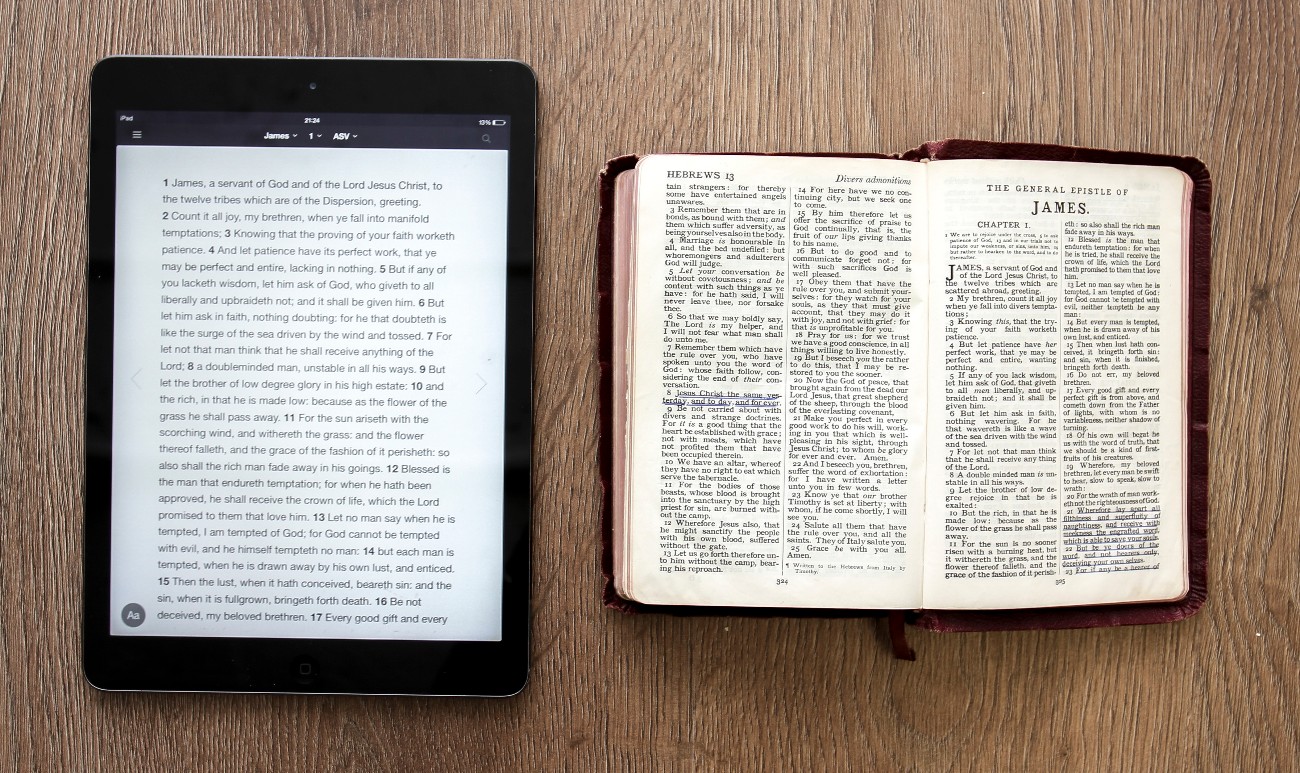
Studying your Bible isn’t as hard as it sounds, either. Start by making sure you have a good translation. Then, pick a book of the Bible. Start at chapter 1, verse 1, and make your way through the book, verse by verse until you get to the end. Then start over again with another book. A few tips:

  • Many Christians find that about a chapter a day is a good amount to study, but take your time and study the amount of Scripture that seems to be a fit for you.
  • You might want to have a notebook and pen handy for jotting down any notes or thoughts that occur to you about the text as you’re studying.
  • If you’re new to studying the Bible, I would recommend starting by reading one (or maybe all four) of the gospels (Matthew, Mark, Luke, and John – the first four books of the New Testament). Genesis is also a good book to read as you’re getting your bearings in Bible study.
  • If you need help studying your Bible, click the Bible Studies tab in the blue menu bar at the top of this page. There are lots of resources to help you learn how to study the Bible, plus all the Bible studies I’ve written. My studies are designed to help you learn how to study the Bible in a “learn by doing” sort of way. Maybe you’d like to work through one of them until you get the hang of studying your Bible on your own.

In addition to Bible study and prayer, I would suggest reading the articles in my Basic Training series. This is sort of a “Christianity 101” series of articles. If you’re new to Christianity and the church, this should help explain some of the things we do, why we do them, and the proper biblical way they should be done.

I would also recommend that women read my Rock Your Role series of articles. This series explains what the Bible says about the role of women in the church.

Welcome to the family, and may God richly bless you as you seek to grow in Him.


If you have a question about: a Bible passage, an aspect of theology, a current issue in Christianity, or how to biblically handle a family, life, or church situation, comment below (Iโ€™ll hold all questions in queue {unpublished} for a future edition of The Mailbag) or send me an e-mail or private message. If your question is chosen for publication, your anonymity will be protected.


Sermon on the Mount Bible Study

The Sermon on the Mount ~ Lesson 12

Previous Lessons: 1, 2, 3, 4, 5, 6, 7, 8, 9, 10, 11,

Matthew 7:15-23

Questions to Consider

1. Briefly review the “middle parts” (ex: merciful, poor in spirit) of the Beatitudes, the “salt and light” passage, and the “heart of the law” passage in Matthew 5:1-12, 13-16, 14-20. Now read 7:15-23 in light of those passages.

2. In the Beatitudes, Jesus lists the traits that define Christian character. In much of the rest of the Sermon on the Mount He fleshes out what many of these character traits look like when walked out in “real life”. Which of the traits (the “middle parts” – there could be several) listed in the Beatitudes is Jesus expanding on in today’s passage?

How do false teachers and false converts bland the saltiness of the church? (5:13-16) How do doctrinally sound teachers and genuinely regenerated Believers make the church saltier and brighter? Is it even possible for an individual false teacher or false convert to be true salt and light?

3. Review from our previous lessons (links above) the idea that the Sermon on the Mount is to the New Testament / new covenant what the Ten Commandments were to the Old Testament / old covenant.

Though they are not specifically mentioned in the Ten Commandments (false teachers/prophets are addressed elsewhere in the law), which of the Ten Commandments could be connected to false teachers and false converts?

Despite having dropped the “You have heard it said…but I say to you…” framing of His teaching in chapter 6, how is Jesus still shifting the people’s focus from outward obedience to the letter of the law to zeroing in on the attitude of their hearts and the spirit of the law? How must being a genuinely regenerated Believer and/or being a doctrinally sound teacher be at the heart of our obedience to God’s laws?

4. Think back to Jesus’ emphasis on hypocrisy in 7:1-5, and in the first part of chapter 6 (lesson 9, link above). How is being a false convert or a false teacher the ultimate hypocrisy? How does this demonstrate why hypocrisy is such a big deal to Jesus? Which attributes of God does hypocrisy contrast with?

5. Review 7:1-5, recalling that some people believe this passage to mean no one is to judge anyone, ever. How would you explain 1-5 to someone in light of 15-20, and 15-20 in light of 1-5?

6. Recall that when Scripture was originally written, there were no chapter and verse markings. The whole text was one continuous flow. How does 7:13-14 flow into or introduce 15-23?

7. In 15-20, who or what are represented by the imagery of…

  • sheep
  • wolves
  • fruits
  • grapes
  • thorn bushes
  • figs
  • thistles
  • healthy trees
  • good fruit
  • diseased trees
  • bad fruit
  • fire

Explain the contrast between…

  • sheep and wolves
  • grapes and thorn bushes
  • figs and thistles
  • healthy trees with good fruit and diseased trees with bad fruit

8. Who or what is the fruit of a false teacherโ€™s ministry? (16-20) Many of the Pharisees considered Jesus to be a false prophet. Think about Jesus’ ministry in light of what he is saying in this passage. What has been the fruit of Jesusโ€™ ministry, from the beginning of His earthly ministry until now? What should be the fruit of a doctrinally sound teacherโ€™s ministry?

Notice how Jesus says in 16 and 20 โ€œyou will recognize them by their fruits” and how that statement bookends this passage of instruction. Then, as now, teachers use repetition for emphasis- to stress the importance of what are they teaching. Why is it so important to Jesus that we recognize false teachers?

Also notice that he doesnโ€™t say โ€œsometimes you will recognize them,” or โ€œyou might be able to recognize them”. He says unequivocally, not once but twice, โ€œyou will recognize themโ€. How is this not only a statement of the clear recognizability of false teachers, but also an implicit command? (i.e. not just โ€œyou will be able to recognize them,โ€œ but โ€œyou are to proactively look for, mark, and avoid themโ€œ.)

9. According to verse 19, what is the eternal destiny of a false teacher who does not repent? What does this tell us about the spiritual condition of unrepentant false teachers – are they saved, or lost?

Many evangelicals are reluctant to say that a false teacher who claims to be a Christian is lost. Explain how 15-20 gives us not only the right, but the responsibility, to treat a false teacher as an unbeliever and why this does not conflict with 7:1-5. Why is it important, for the sake of the false teacher’s own spiritual condition (19, 21-23) to regard him or her as an unbeliever?

10. What is the difference between “saying ‘Lord, Lord‘” and doing Godโ€™s will? (21)

How does 21-23 refute the common misconceptions that..

  • if someone says sheโ€™s a Christian, and even outwardly acts like a Christian, she is a Christian?
  • being a โ€œgood personโ€ will get you to heaven?

What does Jesus call these people at the end of verse 23? Compare the phrase “workers of lawlessness” with the “many mighty works” in verse 22 and the Scriptures linked above (in the first sentence of question 10). Explore the concept of a slave of the devil working for her master, versus a slave of Christ working for her Master.

Reflect on the word โ€œmanyโ€ in verse 22 along with your previous thoughts about false teachers and false converts. Had you previously thought false teachers and false converts were rare?

What does it mean for Christ to “know” us? (23)


Homework

  • Are you hesitant to think of a false teacher as unsaved when she claims to be a Christian? Do we have to know whether or not a certain teacher is definitely a Christian before we can deal with her biblically (such as warning others against her)? Examine what the Scriptures say in my article Can a False Teacher Be a Christian?
  • A false convert is someone who either a) (rarely) knows she’s not saved but is trying to fool others, or b) (much more commonly) thinks she’s saved, but – you can tell by her “bad fruit” and/or the things she says she believes – isn’t. These people are just as lost as any other lost person. How do you witness to someone who thinks she’s already saved?
    • Be in constant prayer for her.
    • Make sure she has heard a clear presentation of the biblical gospel.
    • Discuss the biblical gospel with her if, and whenever, she’s willing.
    • If she isn’t willing, and she continues to bear bad fruit while claiming to be saved, continue to pray for her, and set a godly example.

Often, doing these things leaves us feeling like we’re not doing enough. We so desperately want that person to be saved that it can be tempting to try to nag or argue her into “making a decision” for Christ. That’s not how evangelism and salvation work. Our job is to pray, present the gospel, and trust God with the results. God’s job is to use that gospel we’ve presented in His timing and for His purposes.

Do you know someone who’s a false convert? Apply the above to that person (especially praying for her) this week.


Suggested Memory Verse

Guest Posts

Guest Post: The Importance of Knowing the Rules

If your theology pretty much matches up with mine (as outlined in my โ€œWelcomeโ€ and โ€œStatement of Faithโ€ tabs in the blue menu bar at the top of this page) and youโ€™d like to contribute a guest post, drop me an e-mail, and letโ€™s chat about it.

The Importance of Knowing the Rules
by Robin Self

Most people who read my blogs probably know me best as being “the preacher’s wife”. But what they may not know is that for a lot of years I was another kind of wife.

I was an official’s wife.

Not “official” as in an important “government official” who rides in limousines and has “people”. But the kind who spends hundreds of hours a year in a minivan, eating gas station food, traveling to various sports complexes and gymnasiums, for very little money, in order to be yelled and cursed at by outraged fans.

Yes, for over 2 decades, my husband Jeff was a high school and college basketball official and umpire. I don’t have many photos to share from back in those days, since that was an era when you actually had to have film in a camera. But I have a few digital ones from his last seasons of umpiring, after his knees no longer allowed him to run on the hardwood for 3 hours a night. (Did I mention I LOVE a man in uniform??)

I gleaned a LOT throughout those memorable years. I can say without boasting, that I probably knew the rules better than anyone in the stands, and probably most coaches. It was I who would drill Jeff for hours so that he could pass the yearly 100 question official’s exams. I knew the intricacies of basketball. I understood that the INTENT of the rule was what mattered when making a call. Looking back, I can see that those years as the official’s wife taught me a few things that are relatable now to my life as the preacher’s wife.

Knowing the Rules Helps You Make the Correct Call


I see this all too often today in Christianity. People within the church will be confused about something that is said or taught because they don’t know “the rules”. Similar to how a basketball rules manual is the final authority in a basketball game, the Scriptures are our “rule book”. They are the ultimate and final authority over everything in our lives.

I can’t tell you how many times my husband had to bring out the rule book to show an irate coach where he was misunderstanding a call that was made. He could turn right to the page where that particular rule applied. How? Because he KNEW the book by heart.

As Christians, we must be able to do the same with Scripture. We need to know the Scriptures so well that when we hear teaching that is in error we recognize it, or so that when someone is wrongly arguing a biblical point, we can show them, in love, where they are misunderstanding or misusing it. When someone invariably tells us “not to judge” sinful behavior, we need to know the INTENT of the Scripture so that a solitary phrase being quoted out of context can’t be used against us.

Are we studying the Scriptures so diligently that they are imprinted on our hearts? Just reading the Bible every so often and knowing a few verses isn’t enough. We must study it in context, so we have the actual truth and INTENT in our hearts. Not just a bunch of verses we can pull out at random so we can argue our narrative.

One example that comes to mind is when those in the social justice movement use Revelation 7:9 to tell churches that their congregations need to be more ethnically diverse, because that’s what heaven is going to look like. This is a clear manipulation of the text used to try to convince believers that their churches are guilty of racism if multiple skin tones aren’t represented. And sadly, masses of people in the church are falling for this nonsense hook, line, and sinker!

We MUST be able to recognize a lie like this when it is presented to us. Deception has a way of coming across as convincing to those who haven’t put in the time to recognize it. But anyone who consistently studies and puts the truth of the Word in their heart won’t fall for this mumbo jumbo. Knowing the rules is imperative!

Knowing the Rules Helps You Be Objective


I can’t count the times I would be sitting in the stands watching Jeff referee a game, blissfully anonymous to those around me, listening to fans yell about a “bad call” that had been absolutely correctly made. It always amused me that two teams’ fans would see the same incident two completely different ways. One side would see an offensive charge, while the other side would see a defensive foul. They couldn’t both be right. But the reason the same situation was seen two different ways was because neither side was seeing what happened objectively.

If there is anything I remember distinctly when attending those many ball games, it’s that, because I knew the rules, I could see clearly if Jeff had made a call correctly, or if he had blown it. (Of course that was an extremely rare occurrence!) I could be objective about what happened on the court because I had no skin in the game. The outcome didn’t matter to me. My judgement wasn’t clouded because of my bias.

In the same way, we can’t allow our biases to cloud our judgment when we need to be corrected, or when our favorite Bible teacher is being pointed out as teaching error. As difficult as it may be for us, we should welcome loving biblical correction when we are acting or believing wrongly. Our end goal should be to walk in truth. If we are doing things right, we are in a continual learning process throughout our Christian lives. We will never know it all, and when we come to the knowledge that something we’ve always believed isn’t correct, we should be willing to give up that belief or tradition in favor of what is biblically sound. Sometimes it isn’t easy to say, “I was wrong”. But it’s necessary for growth.

We also can’t be so enamored with our favorite Bible teachers or conference speakers that we are unwilling to listen to any criticism of them. I used to be the biggest Beth Moore fan ever. At one time I wouldn’t listen to any criticism of her because I didn’t WANT to hear it. At that time my love for Beth was more important to me than hearing the truth.

But then I began to look at the issue OBJECTIVELY. I decided to, with an open mind, research and study the information that was out there and let the chips fall where they may. If the things that were being said were true I didn’t want to keep foolishly defending her. I am thankful that God opened my eyes to be able to see the gross error of what she was teaching. He allowed me to see how my bias had overshadowed the truth. I also discovered how important it is to make sure I know what the Bible actually says rather than just trusting what I believe to a “Bible teacher” who has a convincing way with words.

As a preacher’s wife, I even do this when my husband is preaching. If I have a question about something he says, I go search it out myself and we will talk about it. While I believe he is faithful to the text, it doesn’t mean that he can’t get something wrong. What’s wonderful is, he WANTS me point it out if I have questions. He has also been able to clarify things for me that I had wrong. Once pride is out of the way, and we become objective learners, we will want the truth no matter what.

When we have the “skin in the game” of loving and supporting certain Bible teachers, especially publicly, we can be blinded to what may be right in front of us: the fact that they may be teaching falsely. It can become more important to us to preserve the idol we’ve created than to care about the truth. But when we are willing to be objective and are passionate about our “rule book” we can’t help but want others to be just as passionate. And knowing our Maker’s book can affect someone’s eternal outcome of either accepting a false gospel or believing the only true saving gospel of Christ. And that’s a game outcome we care about!


Robin is an SBC pastor’s wife who enjoys doing ministry life alongside her husband Jeff. They have served in churches from urban Long Island, New York, to the woods of Southeast Georgia. They are now back home in their native Oklahoma where they have been for the past 13 years. They are new empty-nesters, with 3 grown children, Jordan, Jarrett, and Jonah. Follow Robin’s blog, A Worthy Walk, and connect with her on Twitter.

Sermon on the Mount Bible Study

The Sermon on the Mount ~ Catch Up Week

Previous Lessons: 1, 2, 3, 4, 5, 6,ย 7,ย 8,ย 9,ย 10

Iโ€™m out of pocket this week, so you get a catch up week!

Catch up on any lessons you might be behind on, go back and do any of the homework you may not have had time for, review your memory verses, or if youโ€™re already caught up, you could even read ahead in the Sermon on the Mount a little. Itโ€™s your week to use as you see fit. Happy studying!

Mailbag

The Mailbag: Potpourri (Kids’ devotionals, The Chosen- Season 2, Methodist apostasy)

Welcome to another โ€œpotpourriโ€ edition of The Mailbag, where I give short(er) answers to several questions rather than a long answer to one question.

I like to take the opportunity in these potpourri editions to let new readers know about my comments/e-mail/messages policy. Iโ€™m not able to respond individually to most e-mails and messages, so here are some helpful hints for getting your questions answered more quickly. Remember, the search bar (at the very bottom of each page) can be a helpful tool!

Or maybe I answered your question already? Check out my article The Mailbag: Top 10 FAQs to see if your question has been answered and to get some helpful resources.


Just found out that Sarah Young is a false teacher. My kids were doing a Jesus Calling one year long devotional book, so now Iโ€™m scrambling to find a new one that is Biblically sound! Any recommendations on writers/teachers that have written devotions for children? They are 4, 9, and 11.

Good for you for finding out about Sarah Young and protecting your kids from her false teaching! That’s awesome!

I don’t recommend what I call “canned” (books, workbooks, DVDs, etc.) Bible studies and devotionals. I recommend that women study, and teach their kids (or other women or children), straight from the text of Scripture itself. And you’ve just experienced in real life the number one reason why I have adopted this policy. The majority of “Bible” study/devotional materials out there – especially the ones aimed at women and children – are written by false teachers.

Here’s how I handled this situation with my kids. Maybe it would be something you’d want to try:

I homeschooled my kids, and every morning before we started school, I would lead them in a brief time of Bible reading. We would pick a book of the Bible, and I would read them about a chapter out of it, asking age appropriate questions along the way. Proverbs or one of the gospels might be easiest to start with.

Here are some examples of questions you might want to ask as you read together:

  • Who is this passage about?
  • What is the main idea of this passage?
  • Why did God โ€“ the author of the Bible Who saysย all Scripture is usefulย โ€“ put this passage in the Bible?ย 
  • What can I learn about God from this passage?
  • Is this passage tellingย meย to do/not to do something? How can I obey it?
  • Is there something in this passage I need to pray about?

If you’re still a little nervous to “fly solo” just yet, you could also look through the Bible studies I’ve written and work through one or two of them with your kids, simplifying the questions for them. You’ll get the hang of it in no time, and soon you won’t need them any more.

When you use this approach of teaching directly from the Bible, you’re not only avoiding false teachers, you’re also training your kids to study straight from Scripture themselves, and how to do so, so they’ll learn how to have their own private Bible study time.

I know it might feel a little daunting at first if you’ve never done it this way before, but think of it this way: you can’t possibly do any worse than Sarah Young. :0)

Additional Resources:

The Mailbag: Can you recommend a good Bible study for women/teens/kids?

The Mailbag: Potpourri (NBCS, Homeschool resources, Piperโ€ฆ) (section 3)


I noticed that season 2 of The Chosen recently premiered. What do you think of it? Should I watch?

This section contains a minor spoiler.

Last year, when season 1 of The Chosen – an online “TV” series on the ministry of Jesus – premiered, I wrote a detailed review of each of the eight episodes, which you can read in my article The Mailbag: Overview/Review of โ€œThe Chosenโ€ (An Online TV Series on the Ministry of Jesus). This article also includes background on creator/director Dallas Jenkins and some theological issues with him.

I’ve watched the first three episodes of season 2 (the only episodes which have been released as of today) and, so far, it seems like the same basic issues (good and bad) from season 1 are at play, so, at the moment, I’m not planning to write a review of season 2.

I didn’t watch episodes 1-3 of season 2 quite as carefully as I watched all of season 1, but again, nothing grossly heretical jumped out at me. I’m disappointed to see that they’ve doubled down on elevating Jesus’ women followers to the same level as the Twelve by adding an additional female “disciple”.

My thoughts? Read my review of season 1 and take all the same information and caveats to heart when deciding whether or not to watch season 2.


Is the Methodist church now considered a false church because they allow women as pastors?

Methodists, like Baptists, Presbyterians, Lutherans, etc., come in a variety of “flavors”. There’s the United Methodist Church, the African Methodist Episcopal Church, the Free Methodists, and a bunch of others. The United Methodist Church (UMC) is the largest Methodist denomination in the U.S., and I think that’s the one you’re probably talking about.

The UMC started ordaining women to the pastorate in 1956, so that’s nothing new. So, yes, as a denomination, it was and is sinful for them to initiate and maintain that policy. And that’s one of the reasons I don’t add UMC churches to my list of reader recommended churches.

But there are other, higher order theological issues with the UMC that would cause me to warn people away from it way before women pastors. They are Arminian. They believe genuinely saved Christians can lose their salvation. They believe in prevenient grace, sinless perfection, evolution, and they are pro-abortion (per UMC policy). They are also very involved in social issues and take the liberal (unbiblical) side on most of those. Currently, the UMC is on the verge of a split over homosexual “marriage” and clergy.

All of this to say, the UMC is apostate over a ton of theological issues. Women preaching is only one of them, and not necessarily even the most important one.

If you’d like to do more research on Methodists and what they believe (including further details on their beliefs mentioned above) check out the resources here and here.


If you have a question about: a Bible passage, an aspect of theology, a current issue in Christianity, or how to biblically handle a family, life, or church situation, comment below (Iโ€™ll hold all questions in queue {unpublished} for a future edition of The Mailbag) or send me an e-mail or private message. If your question is chosen for publication, your anonymity will be protected.