Bible Study

The Word on Wednesdays

Hi ladies! I hope you’ve been enjoying The Word on Wednesday Bible study lessons and resources, and that you’re looking forward to our new study as much as I am.

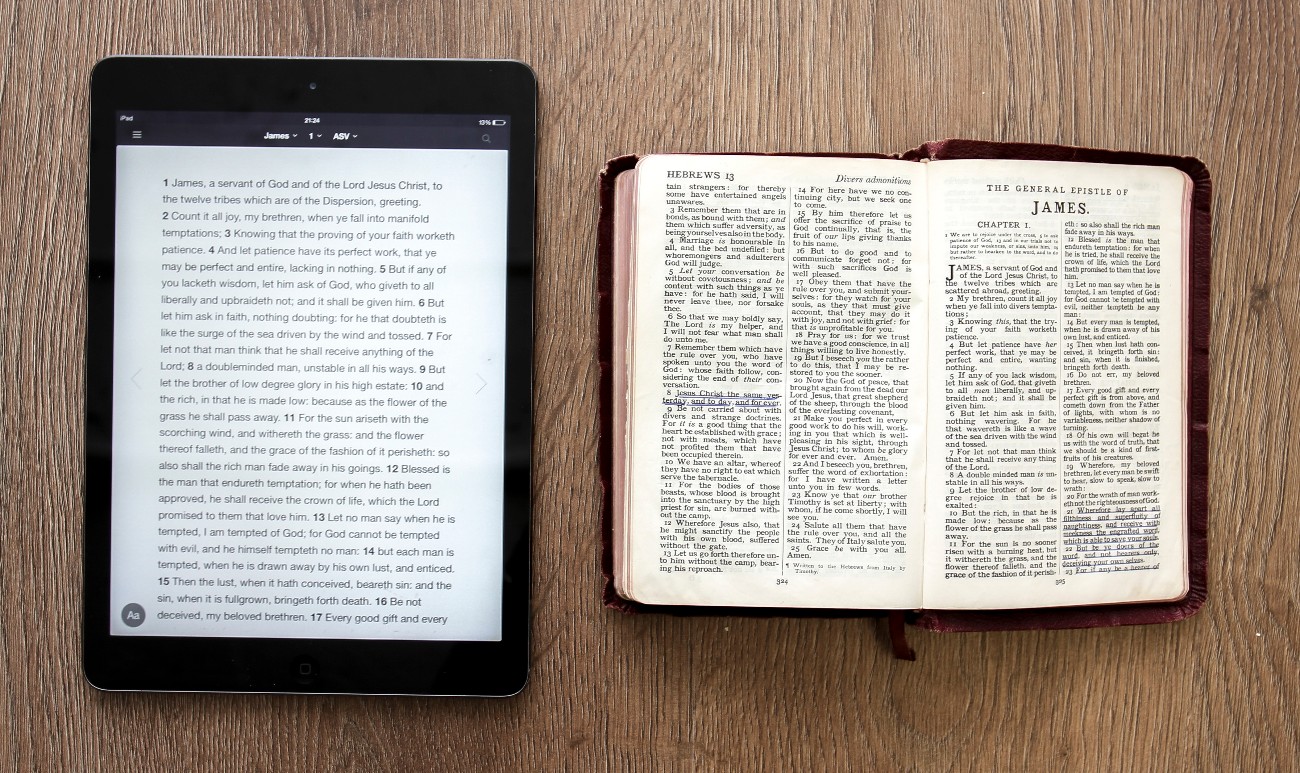
I’ve been taking a break on Wednesdays getting ready for our new study. I hope youโ€™ll enjoy it and that it will edify you as you seek to grow in Christ and His Word. (The picture above does not mean we will be studying James. :0)

Some may find the book of the Bible we’ll be studying to be an exciting challenge (a challenge I know you’re up for!), so I wanted to give you a heads up to start thinking about reference materials. You don’t have to buy or use any of these materials, but you may find them handy as you study.

If you have been considering investing in a good study Bible, this would a great time to do so, not just for our next study but to use for years to come. I personally use and highly recommend the MacArthur Study Bible (the ESV and NASB are good translations), and, although I haven’t tried it out myself, I understand the ESV Study Bible is also very good. (You might want to shop around for the best price. These are both available on Amazon and probably other retail sites as well.) If free is more in keeping with your budget, the Faithlife Study Bible app is phenomenal. It not only has very good and copious study notes, it also has maps, Bible dictionaries, articles, videos, pictures, and more. In fact I would recommend you download it as a supplementary resource even if you decide to get one of the aforementioned study Bibles – it’s that good.

If you have a good set of Old Testament commentaries, you may find those to be useful in our study. There are also a number of sites that offer free, online commentaries, Bible dictionaries, encyclopedias, and other study resources (most of these are available as apps):

Bible Gateway          Blue Letter Bible          Bible Hub

Bible Study Tools         StudyLight.org

And finally, you can always find great articles, sermons, devotions and other materials to aid your understanding of various topics and passages of Scripture at Grace to You and Ligonier.


I hope you’ll find these resources helpful as we begin our new study.

What is your favorite
study Bible, commentary, or other Bible study resource?
Share with others in the comments below!

Bible Study

The Word on Wednesdays

Hi ladies! I hope you enjoyed our most recent Bible study, The Sermon on the Mount.

Iโ€™m going to take a little break before starting our next study, so for the next several Wednesdays, youโ€™ve got some options:

๐Ÿ“– You can finish up The Sermon on the Mount or any of my other studies youโ€™re currently working on.

๐Ÿ“– You can choose a book(s) of the Bible to work through on your own.

๐Ÿ“– You can choose one of my studies to work through at the Bible Studies tab at the top of this page. (I would choose one of the shorter ones, like Colossians or Ruth rather than one of the longer ones if you’re only trying to fill the space between now and the beginning of our next study.)

๐Ÿ“– You can follow along with the sampling of “re-run” lessons and resources I’ll be posting here on the blog each week.

Here’s today’s “re-run”:

Bible Study Articles and Resources

Did you know that there are lots of resources here on the blog to help you out as you study the Bible? Below are a few favorites. Click on the link above for more.

The Mailbag: Which Bible Do You Recommend?

The Mailbag: How can I get started studying the Bible itself?

Nine Helps for Starting and Sticking to Daily Bible Study

10 Simple Steps to Plain Vanilla Bible Study

Rightly Dividing: 12 Doโ€™s and Donโ€™ts for Effective Bible Study

Bible Book Backgrounds: Why You Need Them and Where to Find Them

The Mailbag: As a newly doctrinally sound Christian, should I stopย journaling? (Taking notes on the text of Scripture.)

Uncategorized

The Word on Wednesdays

Hi ladies! I hope you enjoyed our most recent Bible study, The Sermon on the Mount.

I’m going to take a little break before starting our next study, so for the next several Wednesdays, you’ve got some options:

๐Ÿ“– You can finish up The Sermon on the Mount or any of my other studies you’re currently working on.

๐Ÿ“– You can choose a book(s) of the Bible to work through on your own.

๐Ÿ“– You can choose one of my studies to work through at the Bible Studies tab in the blue menu bar at the top of this page. (I would choose one of the shorter ones, like Colossians or Ruth rather than one of the longer ones if you’re only trying to fill the space between now and the beginning of our next study.)

๐Ÿ“– You can follow along with the sampling of “re-run” lessons and resources I’ll be posting here on the blog each week.

And speaking of re-runs, here’s the first one!

Did you miss Bible Reading Plans for the New Year – 2021 when I posted it last December? Or maybe you’re new to the blog since then? There are all kinds of Bible reading plans here, including some that are only a few days or weeks in length.

If you’re just looking for a plan that fills the time between now and the beginning of our next study, #5, #12, #18, or #20 might be a good choice. Also be sure to check the links under Need more suggestions? for shorter plans. Or, you might wish to modify or just do part of, one of the longer plans. Go exploring and choose the plan that works best for you!

You can always find the link to the current year’s “Bible Reading Plans for the New Year” at the “Bible Studies” tab in the blue menu bar at the top of this page.

Want to take a guess on which book of the Bible we’ll be studying next? Comment below!

Sermon on the Mount Bible Study

The Sermon on the Mount ~ Lesson 14- Wrap Up

Previous Lessons: 1, 2, 3, 4, 5, 6, 7, 8, 9, 10, 11, 12, 13

Questions to Consider

1. Was there anything new God taught you in this study that particularly impacted you? What was it, and why was it so significant?

2. How is your walk with the Lord different after this study than it was before?

3. Which of the โ€œmiddle partsโ€ (ex: merciful, poor in spirit) of the Beatitudes do you seem to be maturing in? Which are areas of weakness for you? How did this study help you come to those conclusions?

4. What have you learned from this study about what it means to be salt and light in the world, and how, practically, to be saltier and brighter in your own life?

5. What did this study teach you about the posture of the heart as the motivator for our obedience to the commands of Scripture?

6. Have there been any passages or concepts in this study that God used to convict you of disobedience and lead you to repentance? How will you walk differently in this area from now on?

7. What have you learned about God and His nature and character from this study?


Homework

Spend some time in prayer this week asking God to show you how to put into practice one thing you learned from this study.

Recite all of your memory verses from this study. Which one is most meaningful to you right now?

Sermon on the Mount Bible Study

The Sermon on the Mount ~ Lesson 13

Be sure to come back next week for our “wrap up” lesson!

Previous Lessons: 1, 2, 3, 4, 5, 6, 7, 8, 9, 10, 11, 12

Matthew 7:24-29

Questions to Consider

1. Briefly review the “middle parts” (ex: merciful, poor in spirit) of the Beatitudes, the “salt and light” passage, and the “heart of the law” passage in Matthew 5:1-12, 13-16, 14-20. Now read 7:24-29 in light of those passages.

2. In the Beatitudes, Jesus lists the traits that define Christian character. In much of the rest of the Sermon on the Mount He fleshes out what many of these character traits look like when walked out in “real life”. Which of the traits (the “middle parts” – there could be several) listed in the Beatitudes is Jesus expanding on in today’s passage?

How do: being wise, obedient, “building your house on the rock,” and extolling Jesus’ authority make you salty and bright? (5:13-16)

3. Review from our previous lessons (links above) the idea that the Sermon on the Mount is to the New Testament / new covenant what the Ten Commandments were to the Old Testament / old covenant.

Zoom out and think “big picture” about the Sermon on the Mount and the Ten Commandments. How do they both reinforce the concept of God’s/Jesus’ authority (29) to direct our lives? How do they both impart the idea that we are to submit to Him and obey Him? How do they both demonstrate that God blesses our submission and obedience?

Despite having dropped the “You have heard it said…but I say to you…” framing of His teaching in chapter 6, how is Jesus still shifting the people’s focus from outward obedience to the letter of the law to zeroing in on the attitude of their hearts and the spirit of the law? How must being a genuinely regenerated Believer – being wise, building our lives on the rock of Christ, and bowing to the authority of Christ – be at the heart of our obedience to God?

4. Explain the parable in verses 24-27- What do the…

  • wise and foolish
  • the house
  • the rock and the sand
  • rain, floods, wind
  • the foundation

…represent?

5. How does 24-27 flow out of 21-23? In verse 24, how does the introductory phrase, โ€œeveryone thenโ€ function similarly to โ€œtherefore,โ€ and other summarizing or “pivot” words/phrases? How is 24-25 the remedy for 21-23? What are โ€œthese words of Mineโ€? (24) Compare 24-27 to these verses. What similarities do you see? Compare verse 23 with verse 27. What is the main idea both of these verses convey?

6. Consider the concepts of โ€œwise and foolishโ€ here in this passage in light of other Scriptures about wisdom and foolishness that you’re familiar with. (If you’re not familiar, start with these, and use your cross-references.) How do the wise man and foolish man in this passage fit in with Scripture’s overall teaching about wisdom and foolishness? Where does wisdom come from?

Compare the wisdom of the wise man in verses 24-25 to the amazing wisdom Christ displayed throughout the Sermon on the Mount.

7. When Jesus originally preached this sermon, did He mean verses 24-27 in a “big picture” way (believing / disbelieving the gospel) or a “little picture” way (trusting Christ / not having Christ to trust through the “storms of life”)? Is it reasonable, and rightly handling Scripture, for today’s Believer to understand and apply this passage both ways? Why or why not?

Big picture: What is the end result of a life founded on Christ versus a life founded on anything else (i.e. “all other ground is sinking sand”)?

Little picture: How do Believers weather the storms of life compared to unbelievers? What assurances and comforts do we have during difficult times? What are some of the temporal benefits and blessings of believing the gospel and obeying Christ?

8. In verses 28-29, explain the difference between Jesusโ€™ authoritative teaching and the scribesโ€™ non-authoritative teaching. Where did Jesus’ authority in teaching come from? Think about the people Jesus was speaking to, and try to put yourself in their shoes. Why would His speaking authoritatively have been โ€œastonishingโ€? (Don’t forget to use your cross-references.)


Homework

  • Imagine youโ€™re an average, first century Jew, trying to live faithfully while waiting for the Messiah to come. Youโ€™ve just finished listening to the Sermon on the Mount. Think back over everything youโ€™ve heard Jesus say in chapters 5-7. What are your 4-5 most important takeaways? Whatโ€™s your impression of Jesus?
  • You knew it was coming… :0)
When I was a kid, we only had the first two verses of this song.
I like the verses that have been added!

Suggested Memory Verse