
1&2 Peter Bible Study

Living Stones: A Study of 1 & 2 Peter ~ Lesson 3

Previous Lessons: 1, 2,

Read 1 Peter 2:1-12

Questions to Consider

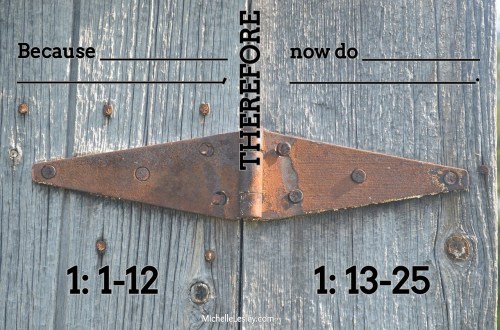
1. What word does verse 1 start with? Review lesson 2 (link above) #7. What does the pivot word “so” mean in this verse? You may find it helpful to summarize chapters 1-2 in a “hinge sentence” (chapter 1 on the left, chapter 2:1-12 on the right, and the “So” in 2:1 as the hinge).

2. Peter uses several metaphors in this chapter. Can you identify each of them and explain the point he’s trying to make with each?

3. Read verses 1-3. One of the themes of the New Testament epistles is growing from spiritual immaturity as a new Christian to spiritual maturity in Christ. Consider verses 1-3 in light of these passages. What do verses 1-3 explain to us about growing toward maturity in Christ? What do these verses tell us to do? What does Peter mean by “if indeed you have tasted…” (3)? (hint)

4. Examine verses 4-8, focusing on what these verses say about Jesus. Who is “him” in verse 4a, and how is He described in 4b? If you haven’t already done so in #2, explain the stone/rock metaphor in 4-8. Why would God choose to represent Christ as a “living stone” (4), a “cornerstone” (6,7), and “A stone of stumbling, and a rock of offense” (8)?

Now focus on what these verses say about Christians and our relationship to Christ. Why are we called living stones in v.4 as Jesus was in v.3? How does “being built up as a spiritual house” (5a) return to the theme of maturing in Christ? What is the purpose (“to be”) of this maturing? (5b)

Use your cross-references and think back to what you know about the Old Testament priesthood. Why does Peter say Believers are a “holy priesthood”? (5) What “spiritual sacrifices” do we offer, how do we offer them “through Jesus Christ,” and why are these sacrifices only acceptable to God when offered through Jesus Christ (e.g. Are things like prayer, praise, and worship acceptable to God if the person offering them isn’t a Believer? Why not?)? (5)

Explain the honor that comes with being a Believer. (7) Explain the unbeliever’s dishonor in rejecting, stumbling over, and taking offense at Christ. (7-8)

5. Study verses 9-10. Which characteristics, attitudes and actions of the Believer, and which attributes of God, would cause Peter to describe us as…

A chosen race-

A royal priesthood (And what’s the difference between a “royal” priesthood and a “holy” priesthood (5)?)-

A people for His own possession-

God’s people-

How do each of these descriptions indicate that Believers are consecrated (“set apart”)? What is the purpose (“that you may” – 9b) for which God sets us apart from the world?

6. Read verses 11-12. Why does Peter address his original audience as literal “sojourners and exiles”? In what way are all Christians spiritual sojourners and exiles?

In Scripture, the word “passion” does not always indicate sexual desire. It can simply mean strong feelings, emotions, or urges about anything, (the way someone today might say, “I am passionate about stamp collecting,” or “Hiking is my passion.”) as it does in verse 11. Bearing this in mind, how do passions of the flesh (about anything) wage war against our souls? How is abstaining from passions of the flesh a “spiritual sacrifice” (5), and why is it spiritually healthy to abstain from these passions? If we do not abstain from these passions of the flesh, but rather indulge them, what impact will that have on our ability to keep our conduct among the Gentiles (unbelievers) honorable? (12) What is the purpose (“so that” – 12) of holy living in an unbelieving world?

7. Explain how verse 1 and verse 12 are similar and serve as “bookends” for this passage (1-12).

8. Explain the connection God makes in this passage between holy living and evangelism.


Homework

Think about the various “spiritual sacrifices” you offer to God as a Christian. What is an additional sacrifice you could offer Him this week?


Suggested Memory Verse

(Every week of our study, you’ll see a suggested memory verse like the one above. You are welcome to grab the memory verse pic to use as your screensaver or wallpaper on your phone or computer, print it out and stick it somewhere you’ll see it frequently, or use it in any other way you wish to help you memorize the verse.)
1&2 Peter Bible Study

Living Stones: A Study of 1 & 2 Peter ~ Lesson 2

Previous Lessons: 1

Read 1 Peter 1

Questions to Consider

1. Briefly review the housekeeping/helpful hints section and “Introduction to 1 Peter” section from lesson 1 (link above). Pull up the link to the maps for 1 Peter in that lesson, and locate the areas mentioned in verse 1. Who were “the elect exiles of the Dispersion” (1) and why were they dispersed?

2. Is the end of verse 1 the end of Peter’s sentence? (Take note of where sentences begin and end in this book to make sure you’re understanding what Peter is saying in context. Have you noticed he sometimes uses very long sentences?). Read the remainder of the sentence in verse 2, and examine the phrases “according to,” “in,” and “for”. How is each member of the Trinity (2) connected back to “the elect exiles of the Dispersion” (1)? What do the words “foreknowledge,” “sanctification,” and “sprinkling” mean or signify?

3. A word to watch for: imperishable. Peter uses this word three times in this brief letter, two of which are in chapter 1. Identify the verses in chapter 1 containing the word “imperishable”. What is being described as imperishable, and why does Peter emphasize its imperishability? As we work through 1&2 Peter, be on the lookout for the theme of imperishability.

4. Read verses 3-9. Now let’s take a closer look at verses 3-5 (which is all one sentence). What does the phrase “born again” (3) mean, and how does the rest of 3-5 revolve around this phrase? Who has caused us to be born again? (3) How would you use this verse to explain to someone that salvation is all of God? That we do not “decide” to be saved nor play even the smallest part in saving ourselves? What are we born again “to” (3)? “Through” (3)? “To” (4)?

Now focus on 6-9. What does the word “this” in verse 6 refer back to? What does this passage teach us about trials and testing? (6-7) What is the purpose of trials/testing? (7a) What is the goal or anticipated result of trials/testing? (7b)

How do verses 3-9 encourage Christians to “keep our eyes on the prize,” and what is that “prize”? How does this passage explain that our eternity in Heaven is the culmination or “outcome” (9) of our faith, the fulfillment of our salvation (5,9). What circumstances in the life of his audience would cause Peter to keep directing their focus to eternity? How could focusing on your eternity with Christ help you to endure suffering or persecution?

5. Read verses 10-12, and compare the ideas in these verses to Hebrews 1:1-2 and 2 Timothy 3:16. Who are the prophets Peter refers to in verse 10? Explain in your own words the idea this passage conveys. What does “they were serving not themselves but you” (12) mean?

6. Read verses 13-25. In two words, what is the main idea of this passage? (15)

What does it mean to “prepare your mind for action” and “be sober-minded” (13) with regard to being holy and pursuing holiness?

How are we to “be holy”? Make a list of the ways these verses mention: 13-15, 17, 22

Why are we to “be holy”? List the reasons these verses describe: 16, 18-21, 23-25

7. Verse 13 starts with the pivot word “therefore,” which means, “Because of all that stuff I just told you, here’s what you need to do.” (“So,” or “So then” at the beginning of a passage mean basically the same thing. Always watch for transitional or pivot words at the beginning of a sentence to help you tie the first part of the passage to the subsequent part of the passage.) The old adage, “Whenever you see the word ‘therefore’ in Scripture, you need to find out what it’s ‘there for’,” is a great little hermeneutical rule of thumb.

Summarize chapter 1 in a “hinge sentence”:


Homework

Think about an area of your life in which you need to “be holy.” Spending more time in prayer? Cleaning up your language? Being patient with other drivers? Write out a plan for pursuing holiness in this area of your life this week (and beyond).

1. List 2-3 specific ways you can “prepare your mind for action” and “be sober-minded” (13) to lay a foundation for holy thoughts, attitudes, and actions.

2. How can you “be holy” in this area? Review verses 13-15, 17, 22, think about how they apply to your situation, and list 2-3 specific holy thoughts, attitudes or actions you can employ.

3. Why should you “be holy” in this area? Review verses 16, 18-21, 23-25, and explain why you should pursue holiness in this area of your life.


Suggested Memory Verse

(Every week of our study, you’ll see a suggested memory verse like the one above. You are welcome to grab the memory verse pic to use as your screensaver or wallpaper on your phone or computer, print it out and stick it somewhere you’ll see it frequently, or use it in any other way you wish to help you memorize the verse.)