
Idolatry, Old Testament, Salvation, Sunday School

The King and I(srael) ~ Sunday School Lesson ~ 4-13-14

sunday school

These are my notes from my ladies’ Sunday School class this morning. I’ll be posting the notes from my class here each week. Click here for last week’s lesson.

Through the Bible in 2014 ~ Week 14 ~ Apr. 6-12
Judges 19 – 1 Samuel 17
The King and I(srael)

Up until now, Israel has been under the leadership of Moses, Joshua, and a string of judges, including current prophet/judge, Samuel. But some of the elders have decided it’s time for a king. Why? Let’s take a look.

1 Samuel 8; 10:17-24

Why did Israel demand a king?

The cycle of the judges:
Israel was in a cycle in which: they would have a judge for several years and everything would go smoothly for them. throne1God would give them victory in battle (or peace), their harvests would be bountiful, etc. Then, the judge would die, Israel would get into idolatry again, things would go badly for several years, they would cry out to the Lord, the Lord would raise up another judge, and the cycle would start all over again.
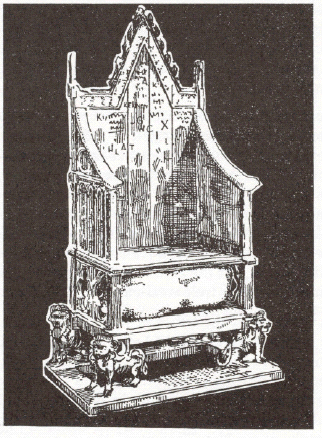
Israel likely thought it was the lack of succession from one judge to another that was the cause of all the turmoil, and that if they had a kingship (with built in succession) the chaotic years would cease, and things would go smoothly from there on out. What they failed to realize was that it was their obedience to God that brought peace during the lives of the judges, not a seamless changing of the guard.

The appearance of strength:
Another reason Israel may have wanted a king was that it gave the appearance of strength to other nations. Without a king, neighboring nations probably viewed Israel as weak and vulnerable, leading to more attacks. Of course, this would lead Israel to depend more on the Lord, and that’s exactly what He wanted.

“Everybody else is doing it”:
Finally (8:5), they wanted a king “like all the nations.” Whether this was because they admired the other nations’ structure of government, economy, large armies, etc., or, because Israel wanted to look more prestigious (or stronger- see above) in the eyes of other nations, they were blind to the fact that they would have had things so much better under God’s Kingship.


Why didn’t God want Israel to have a king?

God was already their king.
Israel didn’t need a human king. God was far more capable than any human king of winning battles, providing for them, ensuring a good economy, establishing and enforcing law and order, etc.

God wanted Israel to look to Him for everything.
We tend to look to the President and Congress for worshipgovernance, the grocery store for food, our jobs for paychecks, our doctors for healthcare. God wanted Israel to look to Him for every aspect of their lives: government, provision, health, food, everything. Because He is sovereign over all that happens on earth and in heaven, He wants us to recognize that we should be looking to Him for these things as well. He wants us to realize that we are completely dependent on Him.
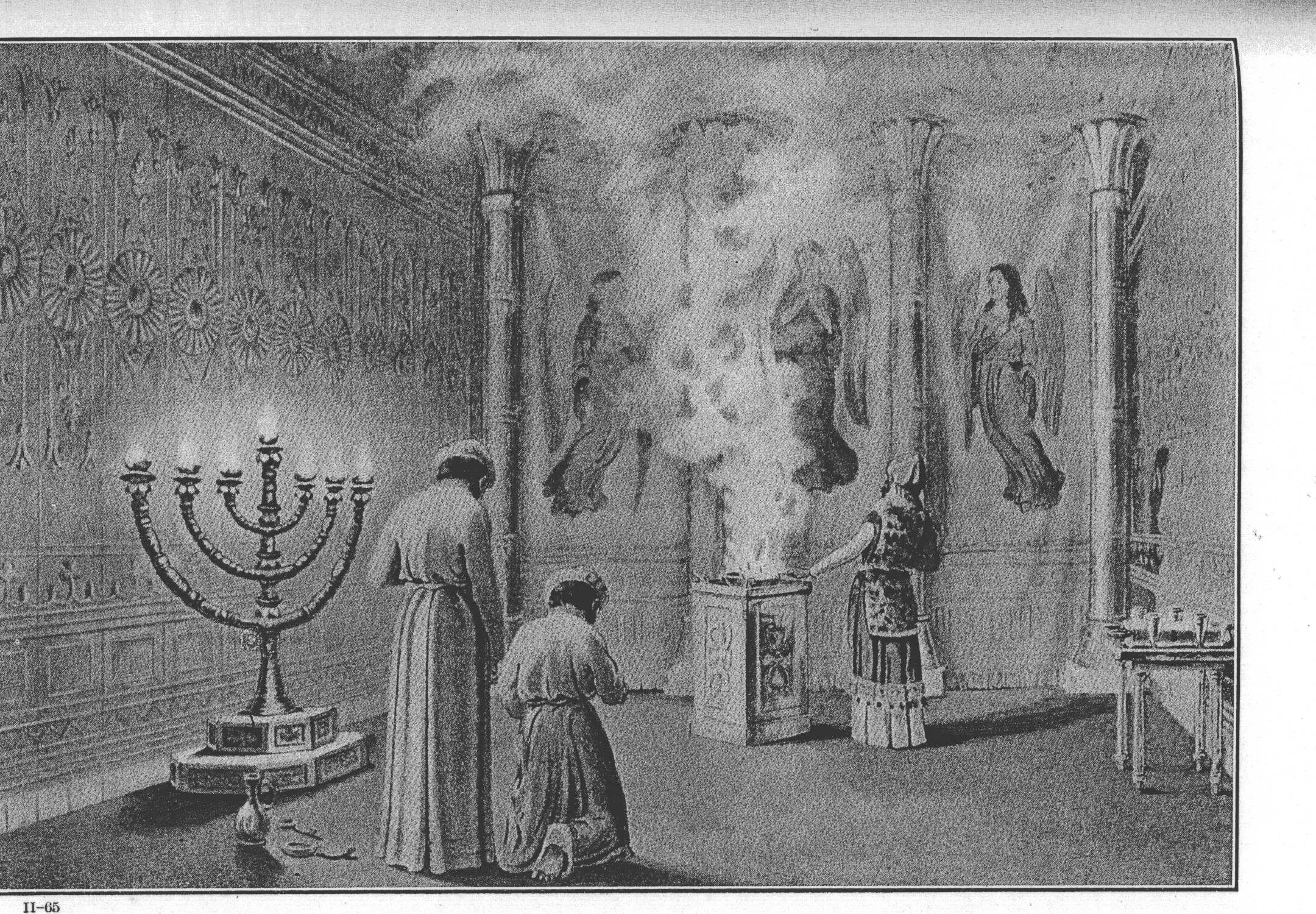
Israel’s desire for a king was another rejection of God, which brought Israel ever closer to severe judgment. (Isaiah 28:21, Ezekiel 18:23,32, 2 Peter 3:9)
Even though Israel deserved judgment for her many rebellions against God, judgment is a last, undesirable resort for Him. Isaiah tells us that judgment is God’s “strange work”. Ezekiel reminds us that God takes no pleasure in the death of the wicked. Peter writes that God is not willing that any should perish but that all should come to repentance.

Small rebellions can lead to bigger rebellions. A loving parent knows this and tries to keep this from happening by disciplining his child. With a small rebellion, we might start out with a small discipline, such as taking away dessert. As the rebellions get bigger or more frequent, bigger discipline, stock_scales_justice2such as spanking or grounding might be appropriate.

Most children learn to control their behavior through these moderate forms of discipline, but a few may eventually become so destructive, addicted, or abusive that parents have to go to the extreme end of “tough love” by throwing them out of the house or turning them over to the authorities. It’s all done in love and all in an effort to bring the child home. This is exactly what was happening with the Israelites.

This is why God did everything necessary to keep Israel from His severe judgment. He carefully and specifically laid out the Law, promised them blessings for obedience and described the consequences for disobedience in gory detail, made examples out of people who disobeyed, offered forgiveness for repentance, gave them (initially) good and godly leaders (Moses, Joshua, the judges), and performed miracles to help them believe in Him. All this in an effort to stop their slide into total rejection of Him and the consequence of final judgment.


One last chance (8:10-18)

Israel could never say she hadn’t been warned. In these verses God told them directly and specifically exactly what their new king would be like, how he would treat them, and the consequences that would follow: confiscation of private property, slavery, God turning a deaf ear to their pleas for help. But still they demanded a king. This king God had just described. They were at the point of no return, and they plunged ahead despite the warning. Why?


Hearts of Stone (Ezekiel 11:19, Romans 1:22-25)
Just as a small rebellion can lead to bigger and bigger rebellions, a small hardening of the heart can eventually lead to a complete hardening of the heart.

In the movie Frozen, Elsa (the snow queen), accidentally frozen-anna-elsashoots an icicle ray (or whatever you call it) at her sister’s (Anna) heart, which causes Anna’s heart to slowly begin freezing bit by bit. If Anna doesn’t receive “an act of true love” before her heart completely freezes, she will turn into an ice statue forever.

This is similar to what was happening with Israel. Their continual rebellion was hardening their hearts against God bit by bit, until they would eventually be completely hardened against Him. Romans tells us that when people persist in ungodliness despite the many opportunities for mercy, grace, and salvation God has offered them, He eventually “gives them over” to a hardened heart. He gives them what they want: life without Him.


What does all this have to do with me? (Isaiah 55:9)

Everything. We are just like Israel in so many ways. We’re born into this world having already been shot through the heart with Satan’s “icicle” of sin, the sin nature we inherited from Adam and Eve. We spend our lives rebelling against God, our hearts slowly hardening, bit by bit, looking for another king (usually ourselves), so we can be just like everybody else, because what the world has to offer looks desirable to us.

But God doesn’t want us to have another king, because He’s already THE King, and He’s far better and more capable than any other king we could put on the throne of our lives. He wants us to look to Him for salvation, provision, comfort, strength, everything. So, God extends grace and mercy to us in a variety of ways, some pleasant, some not, to turn us towards the cross and Christ for salvation. He does this so that we can repent and turn to Him instead of facing the final judgment of hell in eternity.

Sometimes, we also see a similarity to Israel’s demand for a king in our prayer lives. We can ask, beg, and plead with God for things He doesn’t want us to have, and even get mad at Him when He doesn’t give us what we want. We must always keep in mind that His ways are higher than our ways and that what He wants for us is always better than what we want. Let us never get to the point in our prayer lives where our will is more important to us than God’s will. Israel’s way was, “No! But there shall be a king over us!” Jesus’ way was, “Nevertheless, not my will, but yours, be done.” Let’s take our example, not from Israel, but from the the King of Israel, King Jesus.


Easter, Gospel, Salvation

Check Out My New Post at Satisfaction Through Christ!

Starting today, I’m a contributing blogger at Satisfaction Through Christ. It’s a great Christian women’s blog covering Christian living, home making, marriage and family, ministry, crafts, DIY, reviews and giveaways, recipes, and more!

Head on over to STC and subscribe via e-mail. Be sure to check out our social media links: like STC on Facebook, follow on Twitter, Pinterest, Instagram, and all our other outlets!

Check out my shiny new post: The Daily Wonder of Easter

easter3


But, see, the thing is, Christians never move past our need for
hearing the gospel again and again. Young or old. Newly saved or seasoned saint.

We need the gospel…


Christian women, Faith, Old Testament, Salvation, Sunday School, Women

Rahab: From Floozy to Faithful ~ Sunday School Lesson ~ 3-30-14

sunday school

These are my notes from my ladies’ Sunday School class this morning. I’ll be posting the notes from my class here each week. Click here for last week’s lesson.

Through the Bible in 2014 ~ Week 13 ~ Mar. 23-29
Joshua 1-24
Rahab: From Floozy to Faithful

rahab-scarlet-thread

By faith Rahab the prostitute did not perish with those who were disobedient,
because she had given a friendly welcome to the spies.
Hebrews 11:31


Background- Joshua 1
Joshua 1 sets the stage for the story of Rahab and the spies. Moses had recently died, and God “promoted” Joshua to take his place. It was finally time for the Israelites to enter and take possession of the Promised Land. As God “installed” Joshua into his new position, He reminded Him:

  • Stay true to My word and you’ll be successful in what I command you to do.
  • Be strong and courageous (4 times in ch. 1); I will never leave you nor forsake you.
  • Here is the extent of the land I promised. I will keep my promise.

Cities had to be conquered, and first on the agenda was Jericho. Joshua began planning for the conquest by readying the people and by gathering intelligence about the city.

Joshua 2

Gathering Intel (1-2, 9-11, 24)
Do you remember one of the first stories we studied in which Joshua played a major role? He was one of the two spies in Numbers 13-14 who brought back a good report about taking the land of Canaan. I wonder if Joshua was thinking about that incident here, forty years later.

Joshua sent two spies, compared to the twelve who went to spy out Canaan, of which he was a part. Jericho was a much smaller area than Canaan, only two were needed, and a larger group would have been more easily discovered. Interestingly, unlike the story of Joshua and Caleb, we never discover the names of these brave spies who risked their lives and their reputations to bring back a good and faithful report. What did they find out and report back to Joshua about Jericho? (v. 9-11,24)

The Hiding Place (1-6)
Why would two nice, godly Jewish boys hide out in a prostitute’s house? Why not a nice, clean hotel? Well, first of all, they generally didn’t have hotels as we know them back then. When people traveled, they brought tents with them and camped out, stayed with friends or relatives, spent the night in the town square (Gen. 19:2), etc. And, sometimes, if it was immoral men traveling without their families, a prostitute’s house was a preferred option for a night’s lodging.

Rahab’s house would have been the perfect place for the spies 212wall_sketchto hide. They were foreigners, they were travelers, and it wouldn’t have been abnormal for them to be surreptitious (covering or disguising themselves) when entering and leaving her house. Plus, Rahab had men arriving and departing at all hours. Since she was a prostitute, many of the townspeople may have avoided her and her clientele, so it was probably the best option available for the spies.

Rahab’s house was built into the city wall. At that time, kings of various cities/countries would regularly attack each other, so many cities were built like fortresses with tall, thick walls around them and gates that could be opened or closed. The back wall of Rahab’s house was also the city wall and had a window the spies could escape from. After the gates had been shut, there would have been no other way to get out of the city.

The Faith of the Spies (24)
The main focus of this story is, rightfully, on Rahab’s faith. But, what about the faith of the spies? These men, out of faithfulness to God, and loyalty to Joshua and Israel could have been tortured and killed had they been discovered. They stayed in the home of an unclean prostitute, which was a BIG deal. (Think back over all the clean/unclean laws we just studied.) They followed the instructions of someone who was: a) a woman, b) a prostitute, c) an enemy and an pagan, and d) had no military/spy experience of her own that we know of. (Although, perhaps, in her profession, she was skilled in hiding men who were being hunted down by people on the warpath). They found an impossibly heavily fortified city. There was no human way to successfully attack it. And still, they were confident in their trust that God would somehow keep them safe and give Israel the city.

The Faith of Rahab (9-13, Romans 1:19-20, 2:14-15)
Rahab was a pagan. How could she have had faith in God? How did she even know about Him? The Bible tells us that ALL human beings have a basic knowledge of God in two ways: through creation (Rom.1) and through our consciences (Rom.2).

But Rahab knew some other things, too. She knew how God treated His children and His enemies. She had heard what God had done at the Red Sea (10)—how God had protected His children and destroyed the Egyptians. She knew how God had defeated the kings of Sihon and Og (10). She knew that out of all the gods she had ever heard of, this One was the real thing- God of heaven and earth. She knew, and she was afraid. Her fear and her defection prove her faith. If she had not believed in who God was, and that He was able to do all these things she would have had no reason to be afraid, nor would she have helped the spies and aligned herself with them against her own people.

Rahab became so convinced in her mind that God was indeed who He had shown Himself to be that she gambled everything on it. Think of what the king would have done to her if she had turned out to be wrong and had gotten caught. At the very least, she would have been killed. but as a traitor, she certainly would have been made and example of. She probably would have been publicly tortured to death, and maybe her family too. This was no small thing she did. She bet her life on a God she didn’t know. That’s the faith that saved her and led her to hide the spies and her other actions. The actions did not save her, it was the overwhelming belief in God which drove those actions.

Two Different Faiths Then (John 4:22, Luke 10:21, Deuteronomy 32:39)
There is a qualitative difference between the faith of the spies and the faith of Rahab. As Jesus said to the woman at the well, “You worship what you do not know; we worship what we know, for salvation is from the Jews.” (John 4)

The spies were God’s people. They knew Him personally. They were born into God’s house and grew up as obedient sons. They were chosen by Him and belonged to Him. They had seen Him work as eyewitnesses. They had, and knew, His word. They would have been like the older brother in the prodigal son story if he had been faithful.

Rahab, on the other hand, had none of that. She was the prodigal. She did not know God personally, but only, as an outsider, by reputation. She likely knew nothing of God’s love and promised blessings for obedience, but only of His wrath towards sinners. She was not born into God’s house; she was a pagan. She was not an obedient son; she was a woman, and as sinful a woman as she could be. She was not chosen by God and did not belong to Him. She was an outcast. She had no idea what God might do next. All she knew was that she didn’t want to die.

The spies knew. God had laid it all out for them. They were obeying God, not out of fear, but out of love.

Two Different Faiths Now
Rahab’s faith versus the spies’ faith reminds me of unchurched people coming to Christ versus churched people coming to Christ. We “spies” who were raised in church by Christian families grew up knowing all the Bible Stories, all the whys and wherefores of Jesus and salvation. It is the blessing of a godly heritage.

Rahab, like the unchurched, lived her whole life not knowing God, just doing what sinners do. When she finally heard about Him, all she had was the basics, and, knowing only that He was “Lord of Heaven and earth” (Luke) and “able to kill and make alive” (Deut.), she flung herself unashamedly on His mercy—which, at the time, she probably wasn’t sure would catch a woman like her—all because she wanted to live instead of die.

The Object and Outcome of Our Faith (Joshua 6:17, 22-25, Matthew 1:5, James 2:25)
But no matter our background or how we come to faith in Christ—Rahab or spies, unchurched or churched—the object of our faith is what matters, and the object of our faith is Christ. And because the object of our faith is the same, the outcome of our faith is also the same.

What was the outcome of this whole scenario for the spies? For Rahab? They were saved despite the destruction all around them. After it was over, they all lived in the Promised Land together. Rahab and her family became part of God’s family just like the spies were. She even got to be one of Jesus’ great, great…grandmothers (Matt.), was commended in the “Hall of Faith” (Heb. 11, above), and was cited as an example of good works giving evidence of our faith (Jas.).

God loves the prostitute just like He loves the good little girls. He sent His precious Son to save both of us and to display us as trophies of His grace.

Additional Resources
The Walls of Jericho by Answers in Genesis

Gospel, Homosexuality, Salvation, Sin

An Apology, A Request for Forgiveness, and Some Clarifications

Dear Readers-

I need to say I’m sorry for something, ask forgiveness from some of you, and clarify a few things.

I’ve gotten a lot of good feedback from the article I wrote yesterday on World Vision’s announcement/reversal along with my commentary about unrepentant homosexuality (and other sins) precluding salvation. And when I say “good feedback,” I don’t mean that it was all positive and affirming. In fact, nearly all of it was negative. I got called a lot of names and accused of a lot of things, and it’s never a viscerally pleasant experience when that happens.

But It’s good when that happens, because I always want to take the time to pray about it and consider whether the observations people have made about what I wrote are right, biblically speaking. Because I want everything I write to line up with God’s word. And it doesn’t always line up, and sometimes I need other people to help me see that. Hey, I’m a sinful human being. I mess up. Often.

So here’s where I need to say I’m sorry to some of you and ask your forgiveness.

First, I’d like to clarify what I am apologizing for:

1. Anything I said that was not in line with Scripture. I have read and re-read my article and do not see anything that is in conflict with Scripture, but if anyone can point me to any Scripture I have violated, I would be most grateful. As I said, I want everything I write to line up with God’s word.

2. My tone. I am deeply and sincerely sorry that my tone was offensive to some of you. I know that many of you, as do I, have friends and loved ones being held captive by Satan in the sin of homosexuality. When you’re walking through the pain of losing someone you love to Satan’s clutches, even the gentlest reminder of that loss can be excruciating. Please believe me when I tell you I know how that feels from personal experience. It hurts. A lot. However, my tone was not nearly as gentle, sensitive, or compassionate as it should have been to those of you who are grieving over your homosexual loved ones. Where I perceived that I was simply being direct, I came off as unkind and unloving. That was not my intent at all, and I am sincerely sorry.

3. My lack of clarity. I am extremely sorry for my failure to be completely clear in what I wrote in yesterday’s article. I did not communicate clearly enough on two points: a.) Whether or not people who are homosexuals can be saved, and, b) whether or not people who are genuinely saved can continue to struggle with homosexual temptation and sin. Let me take another shot at it.

a) Let me state unequivocally that any unbeliever who repents of (turns away from, abandons) his sin (all sin, not just homosexuality), asks God to forgive his sin, believes in the physical death, burial, and resurrection of Christ for his sin, and trusts that in that death, burial, and resurrection Christ paid the penalty for his sin, may be saved. Anyone. Homosexual or heterosexual. There is no sin a person can commit, physically or mentally, that prevents him from repenting and being saved.

What cannot happen is for a person to be saved apart from repentance. Scripture is very clear about this. Just a few examples:

“Repent, for the kingdom of heaven is at hand… Bear fruit in keeping with repentance.” Matthew 3:2,8

John the Baptist said that, and Jesus said of him, “Truly, I say to you, among those born of women there has arisen no one greater than John the Baptist.” (Matthew 11:11)

 “Now after John was arrested, Jesus came into Galilee, proclaiming the gospel of God, and saying, “The time is fulfilled, and the kingdom of God is at hand; repent and believe in the gospel.” Mark 1:14-15

Jesus himself said that. Repent and believe in the gospel.

To the woman caught in adultery,

“Jesus stood up and said to her, “Woman, where are they? Has no one condemned you?” She said, “No one, Lord.” And Jesus said, “Neither do I condemn you; go, and from now on sin no more.” John 8:10-11


If we say we have fellowship with him while we walk in darkness, we lie and do not practice the truth.

If we say we have not sinned, we make him a liar, and his word is not in us.

Whoever says “I know him” but does not keep his commandments is a liar, and the truth is not in him,

but whoever keeps his word, in him truly the love of God is perfected. By this we may know that we are in him: whoever says he abides in him ought to walk in the same way in which he walked. 1 John 1:6,10, 2:4-6

This was written by John, “the disciple whom Jesus loved” (John 13:23, etc.), one of Jesus’ “inner circle” of disciples.

The Bible knows nothing of a willfully unrepentant conversion to Christ or life in Christ (what we used to call a ‘carnal Christian’ in the old days). It is a contradiction in terms and simply does not exist. Every time I have ever heard or read the term “gay Christian,” (including in the announcement by World Vision) it has been in reference to people who stubbornly, proudly, and unrepentantly continue to practice homosexual behavior despite knowing that the Bible says it is sin. That is why I said “there is no such thing as a ‘gay Christian,’ because that is the way the term is most commonly used. If people are using the term “gay Christian” to mean someone who used to be a homosexual and God graciously saved them out of homosexuality, or if they are using that term to mean someone who is truly saved but is tempted by, and sometimes even falls into homosexual sin, but then genuinely repents and strives to live a Christlike life, there’s a more accurate term for that: Christian. That is not the group of people to whom I was referring when I said, “there is no such thing as a ‘gay Christian’,” because that is not how the term is commonly used. I apologize for not explaining that issue more clearly.

b) I thought that when I said, “There are people who repent of those things, are graciously saved by God, and who may continue to struggle against those sins” (in my original article) I was being clear that, yes, people who are genuinely saved can be tempted by, and even give in to, any number of sins, including homosexual sin, and then repent of those sins and be forgiven. But I think I was wrong in not expanding on that thought, because it caused some misunderstandings. That’s my fault, and I’m sorry.

Christians sin. I sin. You sin. Everybody sins. Daily. Hourly. Minute-ly. Being a sinner, one thing I’ve learned is that Satan is not terribly creative with temptation, but he is efficient. Once he’s successful in getting me to commit a particular sin, he continues to come at me with temptation to that particular sin because he knows that’s where I’m weak. (Why bother experimenting with other temptations when he already has one (or several) that works, right?) So, while I’ve heard of people who were saved out of homosexuality or drugs or thievery or whatever, and from the moment of conversion were never again tempted to do those things, I think it’s far more common for Satan to continue to tempt people in their weakest areas, particularly a sin as powerful and consequential as homosexuality.

The difference between a “gay Christian,” (as I described above in point a) and a genuinely regenerated Christian who is tempted by and might give in to homosexual sin is, again, repentance. One of the hallmarks of people who are genuinely saved is that they hate their sin. They don’t want to sin. They do their best to avoid sin. They look at it with disgust and are disgusted with themselves when they give in to it. And when they do sin, they confess it to God and ask for His forgiveness, which He kindly and lovingly pours out. Yes, genuinely saved Christians, especially brand new ones, may fall into even a “big” sin, like homosexual sin, many times, but as God continues to work in their lives, they grow up into Christ, and they begin to look and act more like Him. They, and people who have known them over a long period of time can see the progress God is making in their lives little by little.

There are many, many people who claim to be Christians. I think the most recent statistic I read was that over 80% of Americans claim to be Christians. I think if that were true, America would look very different. It is not what people say with their mouths that shows or determines whether or not they are actually born again. It is the fruit of their lives that is the evidence. Jesus said in Matthew 7:21:

“Not everyone who says to me, ‘Lord, Lord,’ will enter the kingdom of heaven, but the one who does the will of my Father who is in heaven.”

And in John 3:36:

“Whoever believes in the Son has eternal life; whoever does not obey the Son shall not see life, but the wrath of God remains on him.”

If we have friends or loved ones who claim to be Christians, but have shown little or no progression towards Christlikeness, proudly embrace their sin, and show no signs of repentance over a long period of time, it may be time, as painful as it might be, to consider that, while they may have prayed a “sinner’s prayer,” made a profession of faith, or been baptized, it’s possible they were never genuinely saved. It might be time to begin praying for their salvation and offering them the hope and forgiveness that can only be found through true repentance and faith in Christ.

So, again, I am sincerely sorry for anything I said that conflicts with Scripture, for coming off as harsh or unloving instead of using a more compassionate tone, and for not explaining things clearly enough. If I offended you in any of those ways, would you please forgive me?
For the sake of clarity, though, I need to make sure I explain what I am not apologizing for, because I don’t want anyone to think I am apologizing for biblical truth. (And, in fairness and appreciation to the Christians who wrote to me, none of them asked me to, and all of them agreed with what the Bible says on this subject.)

I am not apologizing for the Bible’s stance that homosexual thoughts and behavior are sins that require repentance, nor for my agreement with the Bible about that, nor for writing about it.

I am not apologizing for sharing the gospel in a “law, first; gospel, second” format. This is the proper format for sharing the gospel. Repentance is required for salvation, but in order to repent, people must first understand why they need to repent and what they need to repent from. We cannot just assume that people already know this.

I am not apologizing for the content of any of the remarks I made which are in line with Scripture, though, again, I do apologize for any instance in which the way I made those remarks was unnecessarily offensive.

I am not apologizing for temporarily holding off on taking World Vision’s reversal decision at face value. While I rejoice that they quickly changed their policy back to one that conforms to biblical standards, and I was glad to read the statements they made in the reversal decision, there are still major problems with Richard Stearns’ theology as evidenced by his remarks in the original announcement. Problems that major don’t change overnight, and Richard Stearns is still at the helm. Furthermore, in subsequent information that has come to light, there is a question about whether or not World Vision actively and verbally shares the gospel with the people they serve. If you’d like to read an excellent article about why it can be prudent to watch for the fruit of repentance for a period of time, click here.


Finally, if you are reading this and you are a homosexual (interestingly, the people I usually hear from on these types of articles are heterosexuals), please know that there is hope. If you call out to Christ in repentance and faith, He has promised to set you free from your sin. All of your sin, not just homosexuality. You can find freedom, cleansing, peace, forgiveness, comfort, and a brand new life in Him. I hope you’ll trust Him today.

Thanks to all of you faithful readers who bear with me, a sinner saved by grace.

Michelle

Gospel, Homosexuality, Salvation, Sin

The Hole in World Vision’s Gospel: UPDATE #2

Update #2: Some readers wrote me with some concerns about this article. I have done my best to address those concerns here.

Update: World Vision released this statement today (March 26) reversing its earlier decision. It’s my prayer that this decision is born of genuine repentance (which would truly be cause for rejoicing!) rather than a reaction to negative PR and loss of donors. 

th

Earlier this week, World Vision’s U.S. President, Richard Stearns, publicly announced that the relief organization would change its employment policy and begin hiring practicing, unrepentant homosexuals who are legally “married.” Understandably, many in the evangelical community (including me) are shocked and saddened that this Christian organization would decide to bow its knee to the world instead of to God’s word.

But all Stearns’ bloviating about “unity,” whether or not World Vision now endorses homosexual “marriage” in the political arena, and uniformity of hiring practices is gnat straining. The camel is in the headline: “gay Christians.” And ever since World Vision opened up its throat wide enough to swallow that dromedary, it’s been gulping down the gnats as a chaser.

There is no such thing as a “gay Christian.”

There just isn’t. When a person comes to Christ for salvation, he doesn’t cling to, rationalize, or defend his sin, whatever it may be. He abandons it and flees to the cross for mercy and forgiveness. That’s why there’s no such thing as a “Christian prostitute” or a “Christian murderer” or a “Christian thief” or a “Christian hatemonger,” and there’s no such thing as a “Christian homosexual.”

There are people who repent of those things, are graciously saved by God, and who may continue to struggle against those sins:

Or do you not know that the unrighteous will not inherit the kingdom of God? Do not be deceived: neither the sexually immoral, nor idolaters, nor adulterers, nor men who practice homosexuality, nor thieves, nor the greedy, nor drunkards, nor revilers, nor swindlers will inherit the kingdom of God. And such were some of you. But you were washed, you were sanctified, you were justified in the name of the Lord Jesus Christ and by the Spirit of our God.
1 Corinthians 6:9-11

You see, the good news of the gospel is not that Jesus accepts you the way you are. Because the way you are -whether you’re a homosexual, an idolater, a thief, a drunk, or the average Jane down the street- is a putrid, rotten, decomposing corpse. Dead. That’s what you are: dead. I’m talking Lazarus in the tomb, dead. “Lord, he stinketh,” dead. D-E-A-D, dead in your trespasses and sins.

Now, just who is this puny little so-called “Jesus” Stearns (and many others) speaks of who just leaves people in that awful condition? Not any Jesus that’s found in the Bible, that’s for sure.

The good news of the gospel is that Jesus loved you enough to go to the cross to take the punishment for your sin so He could raise you from the dead and give you life. Holy life. Forgiven life. Peaceful life. Joy-filled life. Jesus isn’t in the business of holding the hands of cadavers. He’s in the resurrection business. And Christians are supposed to be about the business of carrying the deceased to the feet of Christ so He can do His mighty and miraculous work.

But, I guess World Vision isn’t, anymore.

And it’s both shameful and abominable that an organization that claims the name of Christ would spinelessly cave to Satan’s twisting of God’s word about salvation, because, ultimately, people’s eternities are at stake here. When someone has the life-giving truth of the gospel, refuses to extend it to people, and tells them lies that keep them in bondage to sin, that someone has blood on his hands.

Soteriology is the foundation of ecclesiology, even for para-church ministries. And World Vision’s foundation has a huge crack in it.