


These are my notes from my ladies’ Sunday School class this morning. I’ll be posting the notes from my class here each week. Click here for last week’s lesson.
Through the Bible in 2014 ~ Week 10 ~ Mar. 2-8
Numbers 16-32
Tackling Tough Issues: Genocide in the Old Testament
Genocide: It’s defined (by dictionary.com) as, “the deliberate and systematic extermination of a national, racial, political, or cultural group.” This week in our reading, we dealt with a passage in which God commanded the Israelites to kill nearly all of the Midianites, even those we might consider “innocent.” Was God being cruel or capricious? How could a loving God command such a thing?
Numbers 31:1-18
This is the first time (but won’t be the only time) we’ve seen God command Israel to wipe out a certain nation or people group. How do we make sense of this?
1. Hermeneutics principle: Clear passages interpret unclear passages. (2 Timothy 2:15)
Simply put, biblical hermeneutics is the proper application of 2 Timothy 2:15- a systematic and careful way of diligently studying God’s word so as to rightly understand and handle it. One of the principles of hermeneutics is that when you have a passage that’s confusing or could possibly be interpreted in more than one way, you dig into other biblical passages that address the same issue, but more clearly. In Numbers 31 we see a situation that is confusing because it seems like God is being cruel or unfair. We need to take a look at some clearer passages to help us understand this one.
2. What do we know about the nature and character of God?
On the surface of this passage, God seems to be acting in a way that goes against what we know about Him from the rest of the Bible. That thought itself tells us that the rest of the Bible describes God in certain ways, and that “cruel” and “unfair” are not among those certain ways. We also know that, because God is perfect, He never goes against His own character. How does the Bible describe God?
God is good. (Psalm 100:5)
Some people go so far as to declare that (because God has commanded genocide) God is evil. But God’s word clearly states in many places that He is good.
God is love. (1 John 4:8)
As parents, it’s easy to understand that there are many different ways our love for our children plays out. We smile and hug our children to express our joy in them. We cuddle and comfort them when they’re hurt. We play and celebrate with them. We sacrificially provide for them. But we also love them in “tough” ways sometimes. We discipline them when they’ve disobeyed. We yank them out of harm’s way to protect them. We take them for vaccinations to prevent them from getting sick. We lock the doors to keep bad guys from getting to them. God’s love for us is similar. He loves His children in many ways, some of them, “tough love” ways.
God is patient. (Romans 2:4, 1 Peter 3:20, Psalm 103:14)
God made people, so He understands that we are “dust,” weak, and completely vulnerable to sin. He extends patience and kindness to people over and over again to lead them to repentance and faith in Him. He exhibits patience for a very long time before He executes judgment.
God takes no pleasure in the death of the wicked. (Ezekiel 18:23,32, 2 Peter 3:9)
Going back to the parent/child analogy, no good parent gets joy out of punishing her children. We would much rather the child obey so that we can be at peace with each other, love them in the “non-tough” ways, and because obedience is what’s best for the child. God’s love for people is infinitely deeper than our love for our children. He never wants to punish people for their sin, but rather wants them to repent and turn to Him. He has even mercifully provided us a way to be rescued from the punishment for our sin: He punished His own Son on the cross in our place! God is patient with disobedience and rebellion, but eventually, as any good parent would, He has to punish it.
God is just. (Genesis 18:25, 1 Peter 2:23)
God is the only completely just judge because of His omnipresence (He’s present everywhere, always) and His omniscience (all knowingness). He sees every action, even those where there is no other witness, and He knows every secret motive and intent of the heart. Because of this, all of His “verdicts” are always right.
3. How do these character traits fit in with and explain God’s command to destroy most of the Midianites?
Genocide is evil. Doesn’t that make God evil? (Deuteronomy 32:39)
No. Genocide is evil when unjust, sinful men take it upon themselves to kill people for evil and selfish reasons. God is, by definition, good, so if He initiates the judgment of genocide, it cannot be evil. As mentioned above, He is abundantly patient before He exercises judgment, and, due to His omniscience and omnipotence, His verdicts are always just. Therefore, when God uses genocide, it is not evil, nor is He.
What had the Midianites done to be worthy of God’s judgment? (Numbers 31:16, 22:6-7, Revelation 2:14, Isaiah 14:12-15)

Note– 31:3 makes clear this is God’s judgment on Midian, not Israel deciding on its own to annihilate them. God used Israel to carry out his sentence of judgment.
King Balak of Moab and the leaders of Midian conspired to pay Balaam to curse Israel (22:6-7). When Balaam couldn’t curse them, he instructed Balak to entice Israel into idolatry instead (Rev. 2:14).
Moab and Midian worshiped Baal. According to mythology, Baal was son of the chief god, El, but rose to power above El, who was considered weak and impotent. (This is very similar to the story we read in Isaiah about how Satan fell.) Baal was a fertility god, so “worship” consisted of sexual perversion including prostitution, and, often, the sacrifice of the first born 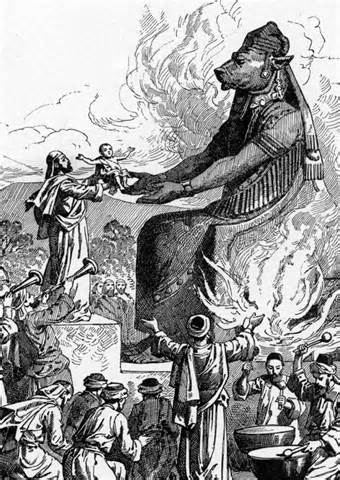 son. The religion of Baal took everything good and holy from God’s story (God’s name- El-elyon, El-shaddai, Satan’s attempt to overthrow God, Satan’s contempt for God, and God’s sacrifice of His firstborn Son) and turned it inside out for Satan’s glory. This is what the Midianites were strategically drawing Israel into so that they could either defeat them or turn them into allies.
God showed His goodness by deciding to put an end to evil. He showed His love for Israel by protecting them from both Midian’s schemes and from idolatry and its consequences. God showed His justice by punishing the rebellion of Midian.
Why didn’t God just warn Midian and Israel to stop their evil ways? (Numbers 25, Exodus 20:2-6, Leviticus 26:30, Deuteronomy 4:3)
He did. And, he started with Israel, not Midian. Israel knew better. God had repeatedly told them idolatry was a gross sin (1st and 2nd Commandment) and that it was punishable by death (Lev. 26:30). He had all the Israelite chiefs impaled who had led the people into idolatry. He sent a plague that  destroyed the 24,000 people who had bowed the knee to Baal. And, He showed, graphically, through Phinehas that God would not tolerate Israel joining itself to Midian. Finally, he gave the Midianites a taste of what was to come when He had Israel attack (but not annihilate) them at the end of chapter 25.
God would have much preferred both Israel and Midian repent of their idolatry than to put any of them to death here or in chapter 31. He was patient with them and continued to let them live and experience common grace in order that they might repent and turn to Him.
Why did God command Israel to kill “innocent” women and children? (Psalm 51:1, Romans 3:10, 6:23, Samuel 12:22-23)
Note– Those women and children were not innocent. Every human is born in sin and rebellion against God.
The married women would have been adults, just as responsible for their sin of idolatry as the adult males who were killed. Had they been permitted to live, they would have continued to train their children in the ways of Baal worship, and the problem would have remained.
Though the male children may have suffered for a moment, we believe that they are in Heaven with Christ. Had they lived, they would have grown up (trained by their mothers) to be Baal worshipers, and as heads of their households, would have re-instituted Baal worship in Midian. Midian would have remained a threat (even more so because of the desire for revenge on Israel) militarily and in tempting Israel to idolatry.
The unmarried, young girls were allowed to live and marry Israelite men (even though they, too, were supposed to have been killed 31:15) because they would have had to conform to their husbands’ religion, the worship of Yahweh.
God showed His goodness in protecting the Israelites from Midian, in taking the male children to Heaven, and in sparing the young girls and allowing them to come to know Him through their marriage into Israel.
God’s exercising genocide on a people is a difficult issue to come to terms with. And, if it’s difficult for us, we can only imagine how difficult it must be for God. He created these people. He loves them and desires to save them so much that He sent His Son to rescue them from His wrath. Genocide is not a flippant decision by a God who kills people casually, but a heart rending last resort for putting an end to evil so rampant that the people will not turn back from it.
Additional Resources:
What is Biblical Hermeneutics? by GotQuestions.org
Who Was Baal? by GotQuestions.org
