What’s really going on behind the scenes in the pro-life movement? Why incrementalism instead of abolition? What’s the real solution to the tragedy and outrage of abortion?
Recently released from Apologia Studios, Babies Are Still Murdered Here is the follow up documentary to Babies Are Murdered Here (see below – you may want to watch it first if you haven’t already seen it). It explores the inner workings of pro-life politics, explains more efficient ways to work through the system to end abortion, and demonstrates why the gospel is the real solution to abortion. You’ll hear from pastors and politicians, parents and practitioners, as they point us to the urgent need to do away with abortion altogether, now.
Babies Are Murdered Here was released almost six years ago. It is an overview of abortion culture, BAMH clinic ministry, and a biblical response to abortion.
(For those like me who have a more sensitive nature, there are no visual images of aborted children in these films. There are a few, very brief verbal descriptions of abortion technique and a brief news clip of the Kermit Gosnell story.)
To find out more about these films and how you and your church can get involved in helping to completely end abortion in your community, visit End Abortion Now.
Ready to schedule your spring, summer, or fall 2026 women’s event? I’d love to come share with the ladies of your church or organization. Clickherefor more information, or to find an upcoming event near you!
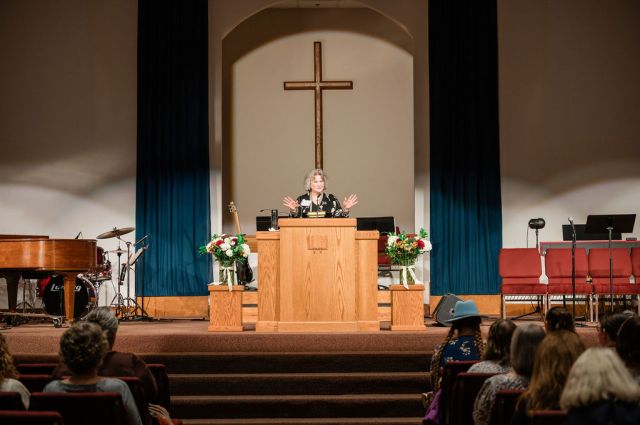
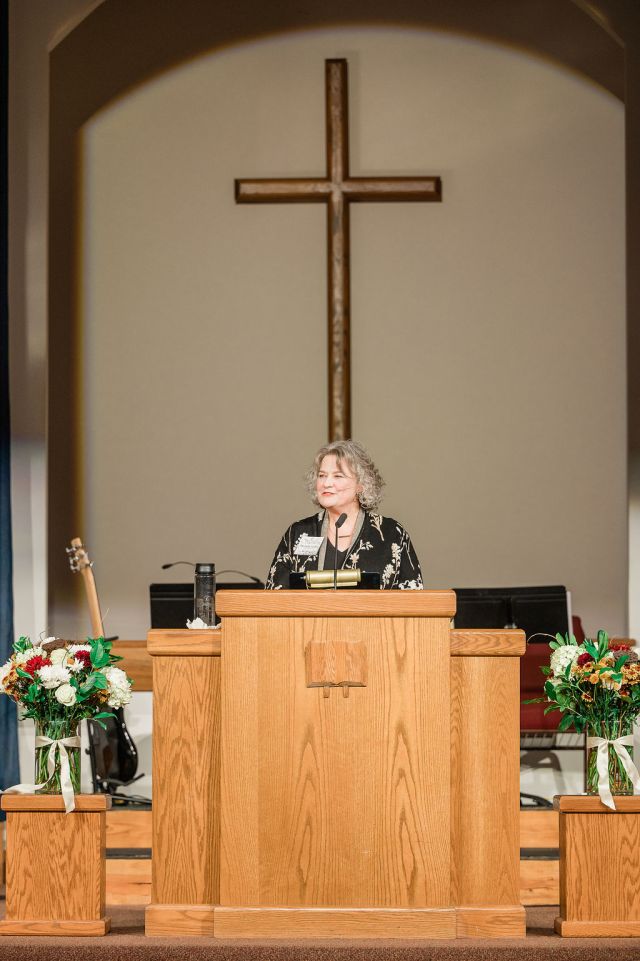
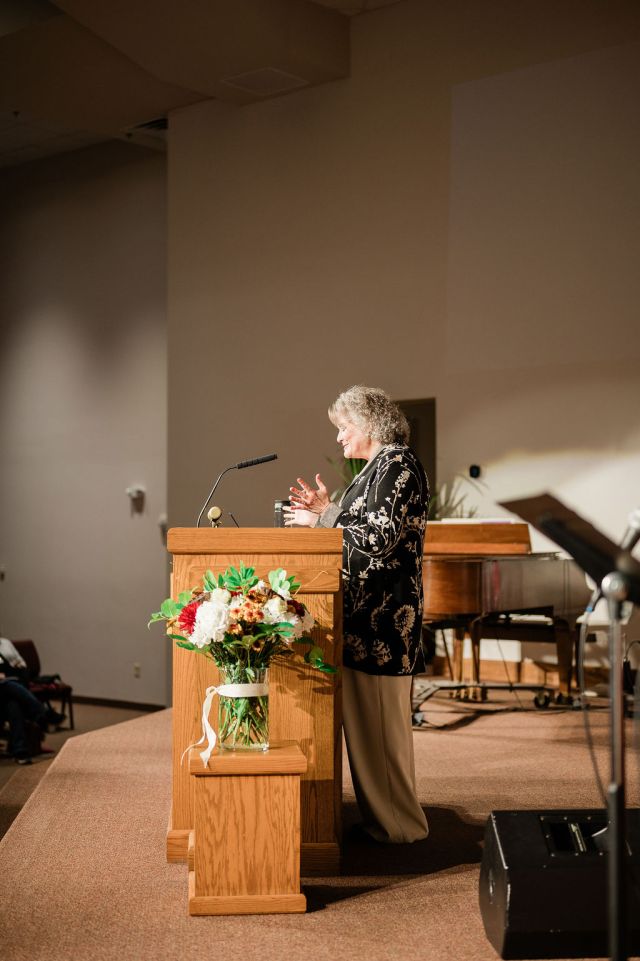
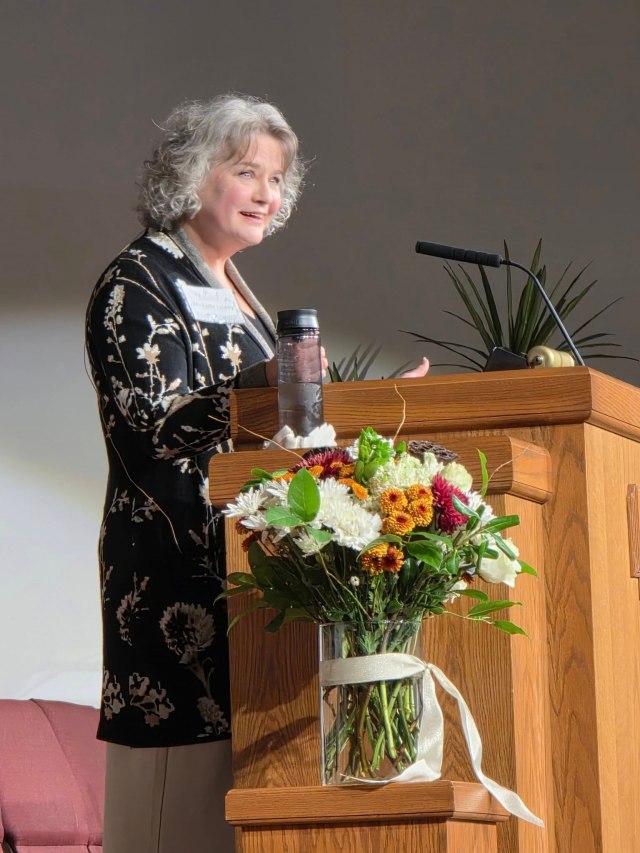
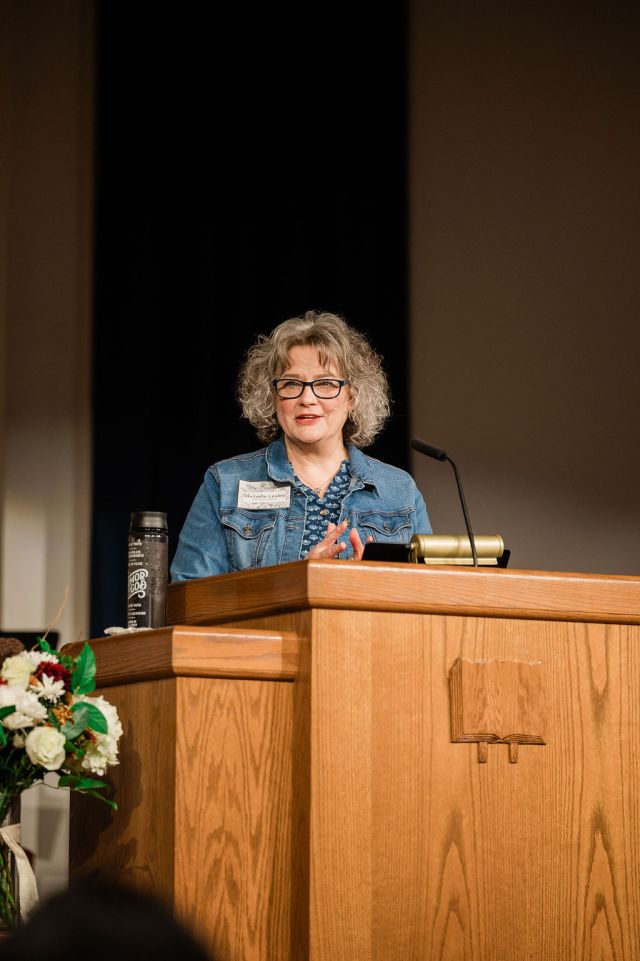
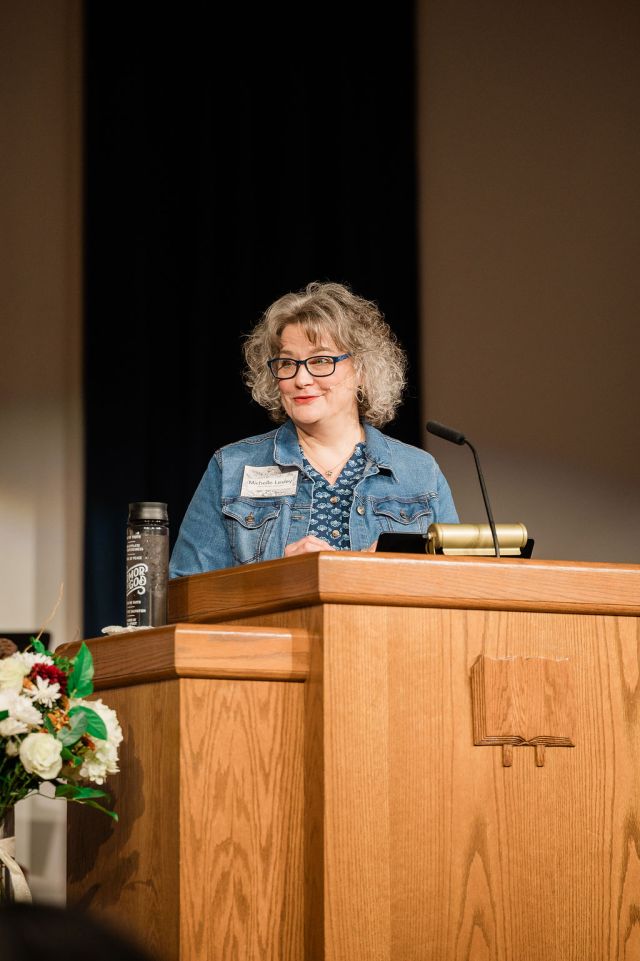
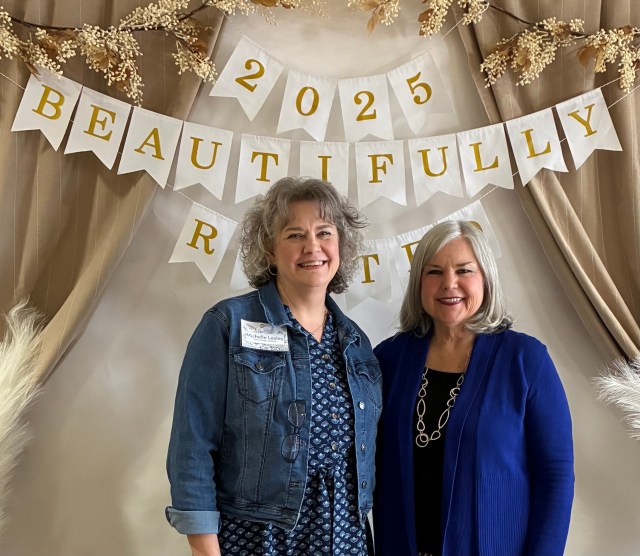
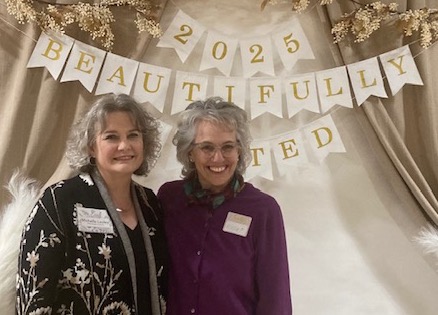
Images courtesy of Beautifully Rooted conference.
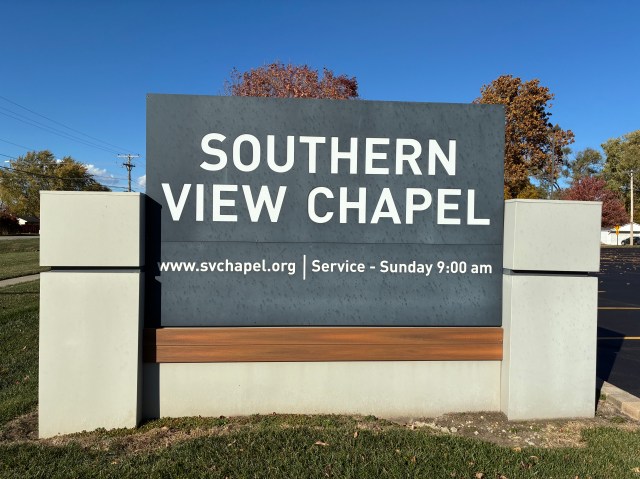
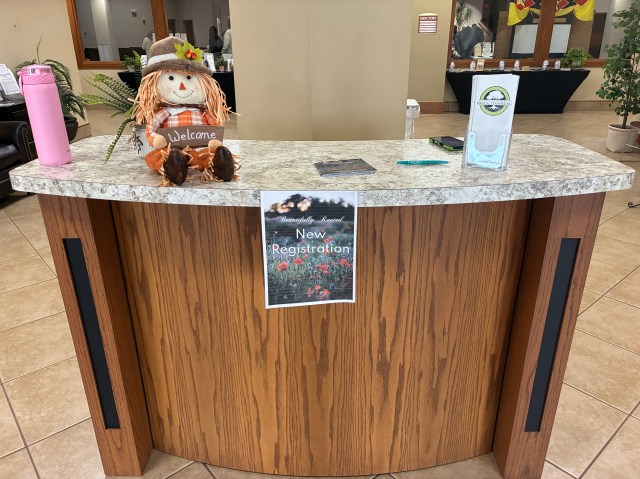
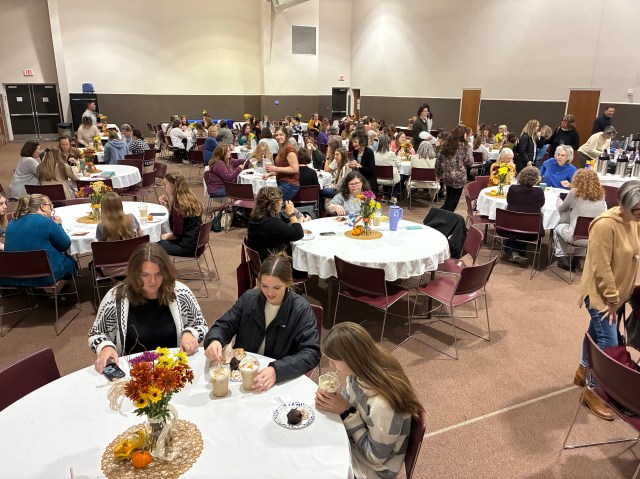
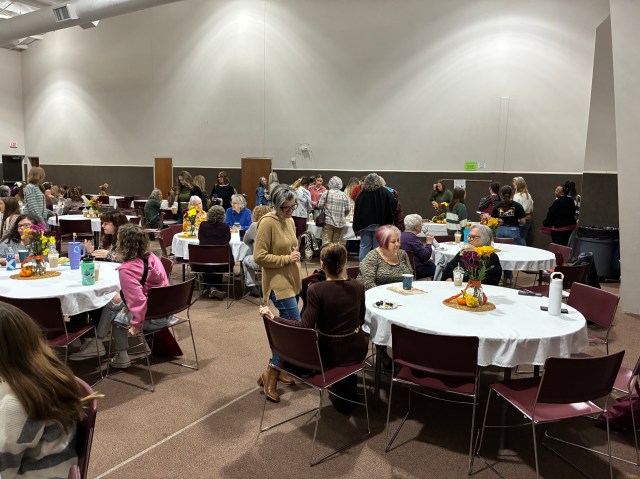
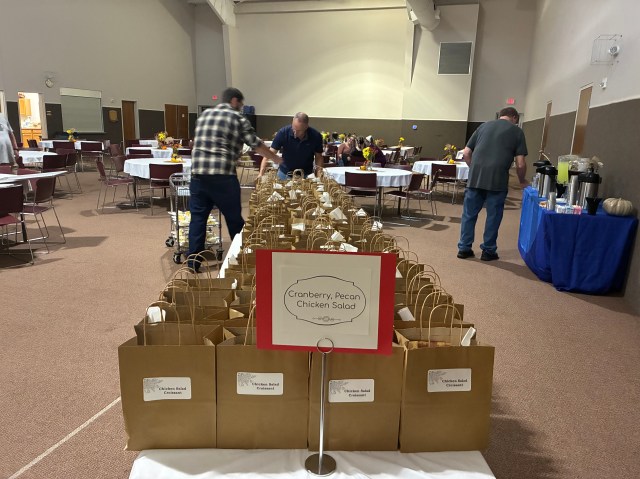
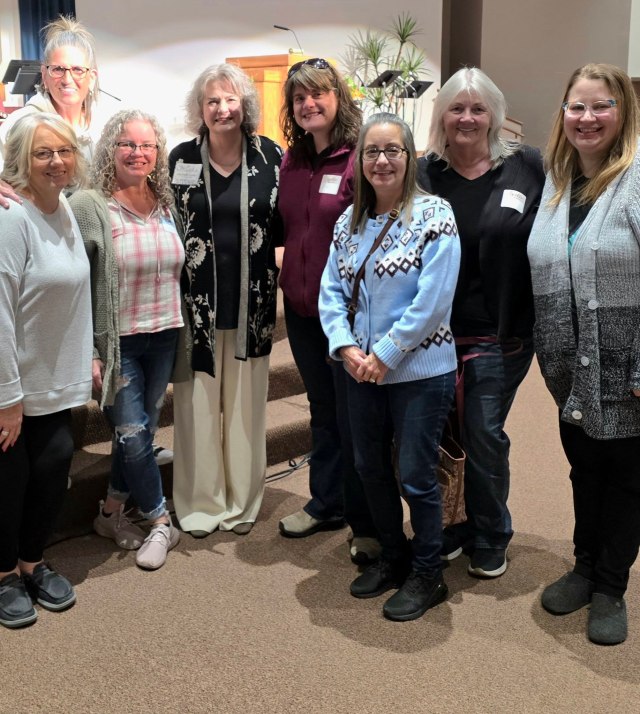
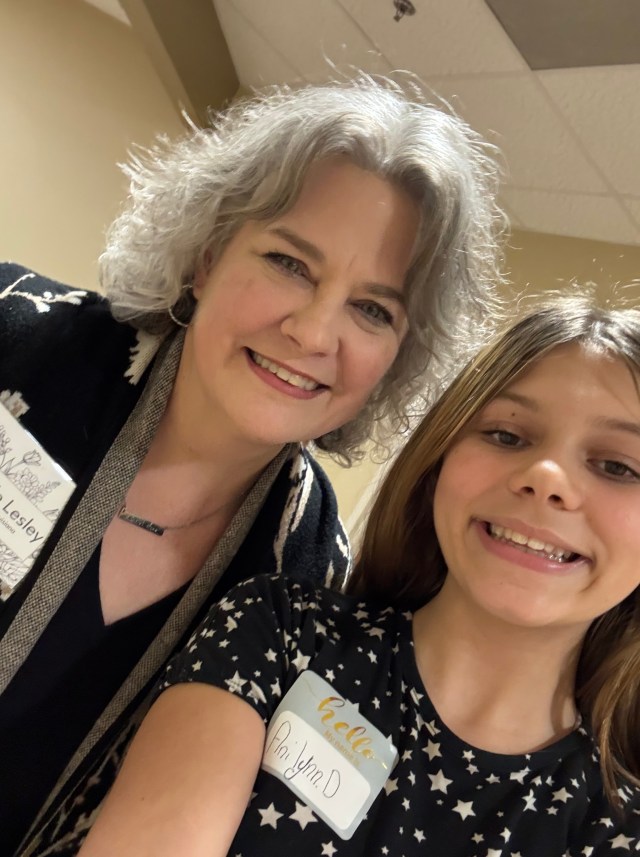
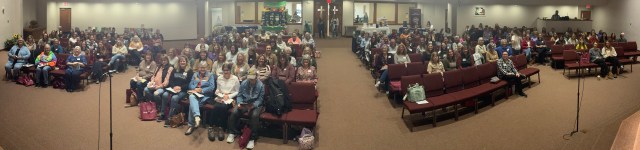
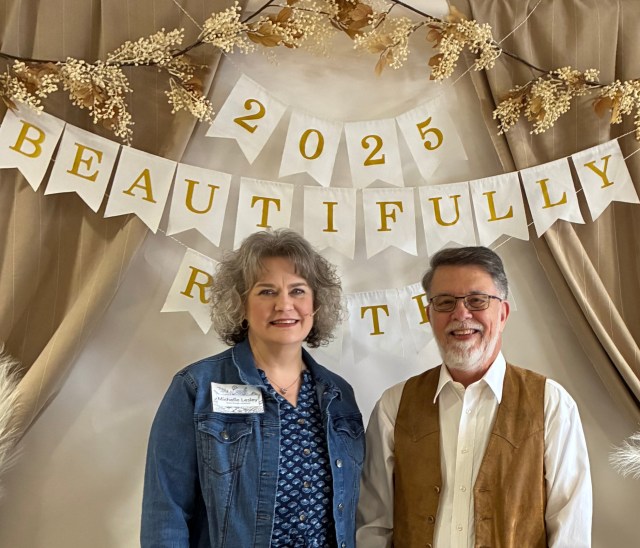
In early November, I had the privilege of speaking at the Beautifully Rooted conference at Southern View Chapel in Springfield, Illinois. I had a wonderful time fellowshipping with the ladies of Springfield and the surrounding area.
Sadly, this lovely photographic mural in the St. Louis airport was pretty much the extent of my sightseeing in the area. It was a quick trip, flying up Friday and flying home Saturday, but I wanted to be home for the birth of a new grandbaby who was due in a few days!
I got settled in at my hotel Friday afternoon…
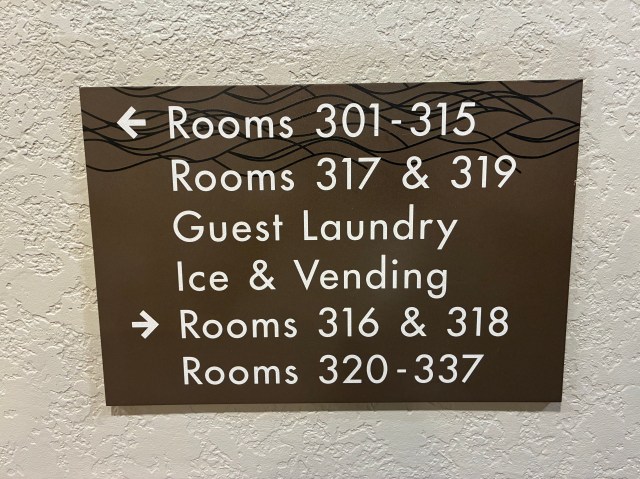
Always a fan of funny hotel numbering systems!
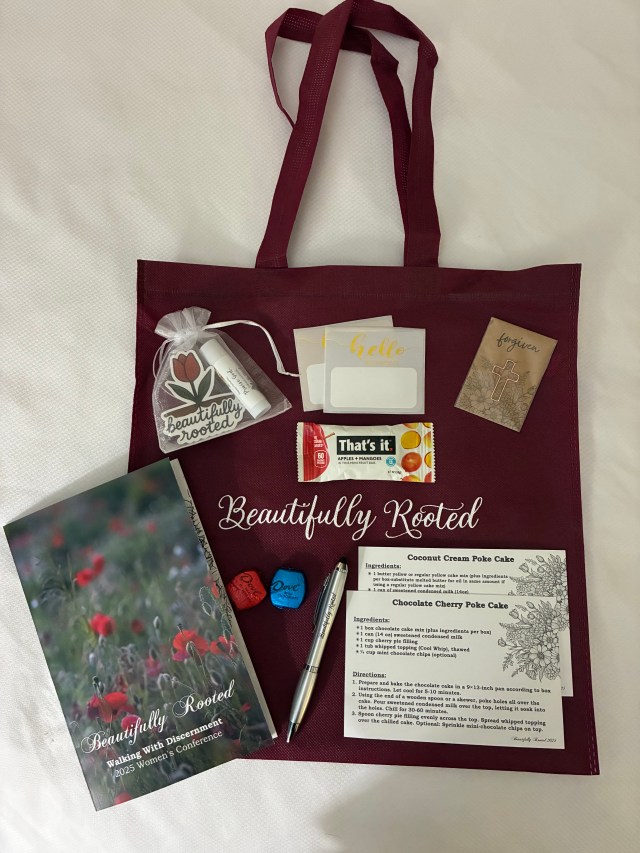
A lovely gift bag from my hostesses!
We got things kicked off Friday night with Foundations of Discernment, which dealt with building a solid foundation of prayer, study of the Word, and faithfulness to the local church as the basis of discernment.
On Saturday, Discernment 101: Learn to Discern was first on the agenda. This session covers some practical aspects of how to determine whether or not someone is a false teacher, who some of today’s most prolific false teachers are, and popular forms of false doctrine in the church.
Rounding out the day, Saturday, was Hooked on a Feeling. So often, we, as Christian women are led around by the nose by our feelings. We talked about why this is unbiblical, and some practical ways of avoiding temptations to sin.
There were also some wonderful breakout sessions taught by ladies of the church, and by my friend Susan Heck. She is a delight, and I always love catching up with her.
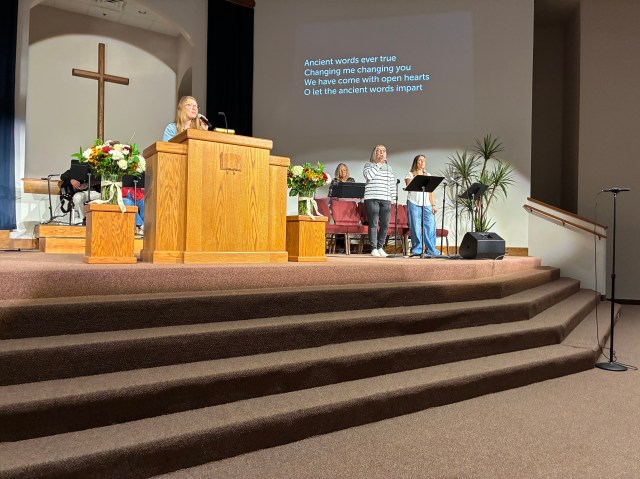
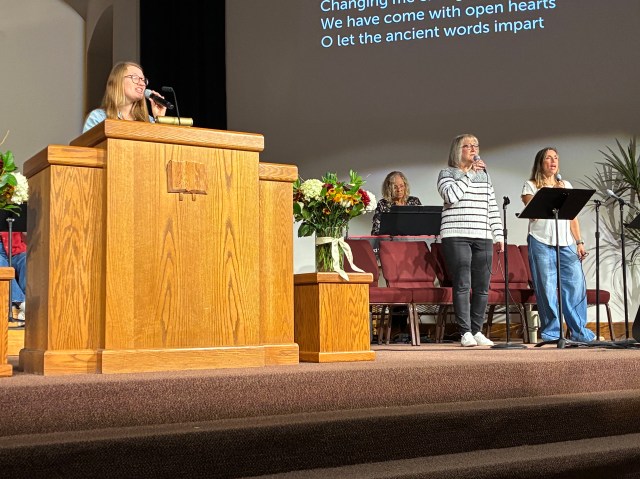
And, of course, we had a wonderful time of worship led by these sweet and talented ladies of SVC…
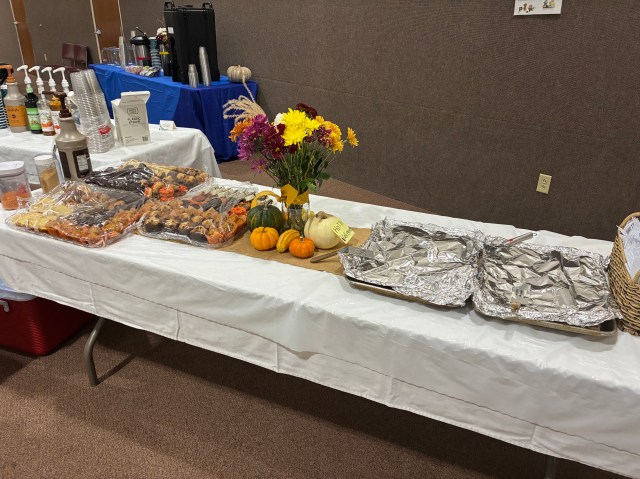
Breaking bread and spending time together around the table is such an integral part of events like this. It’s one of the ways God designed women to build each other up in Christ. The food was delicious and the fellowship was even sweeter!
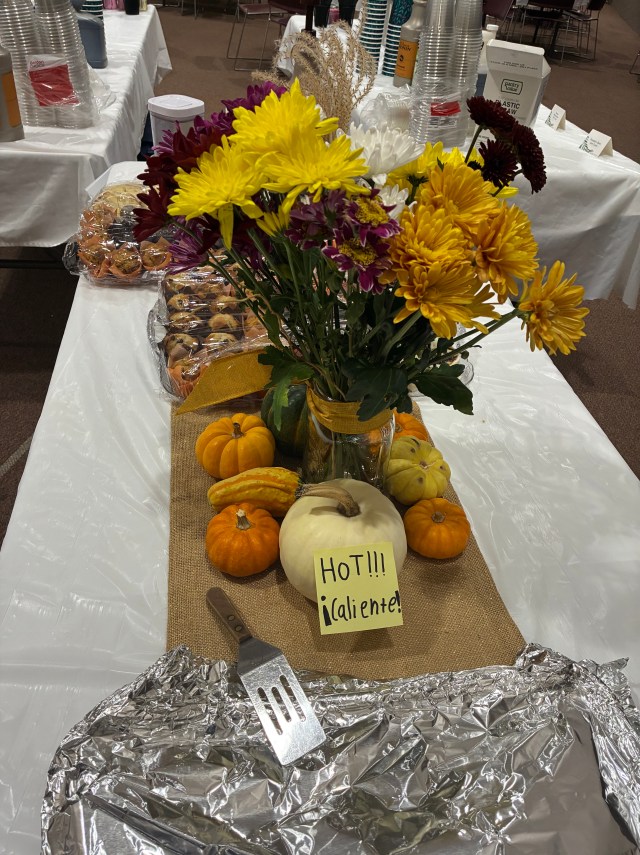
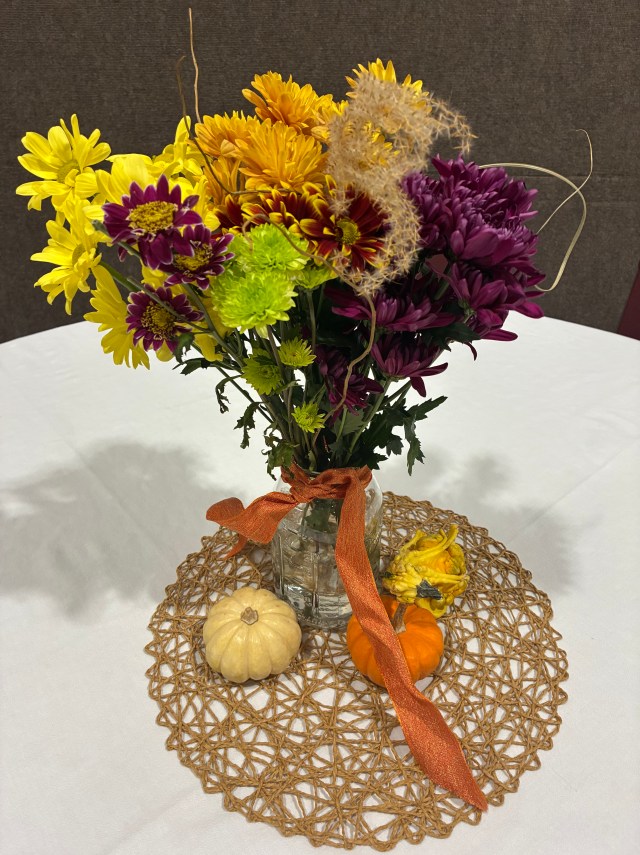
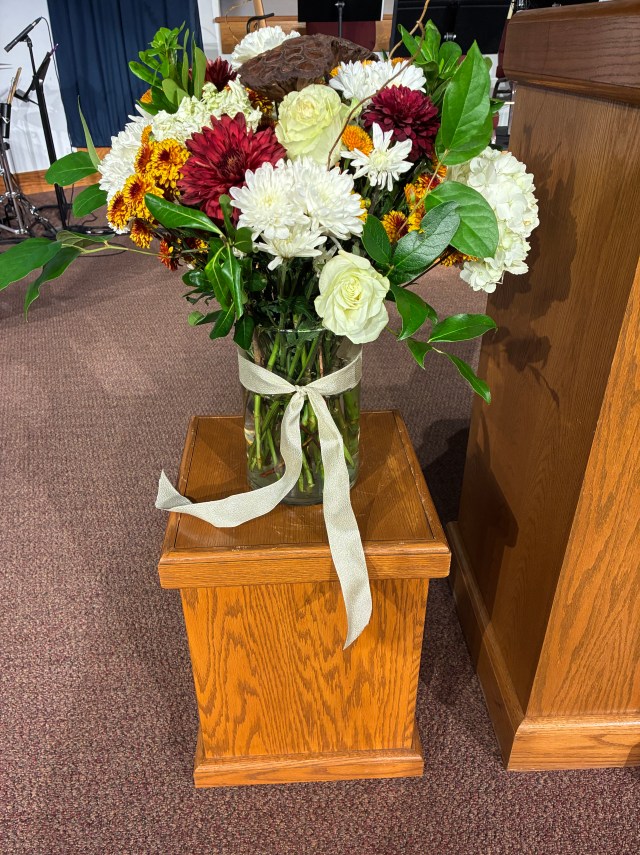
Delightful decor and door prizes!
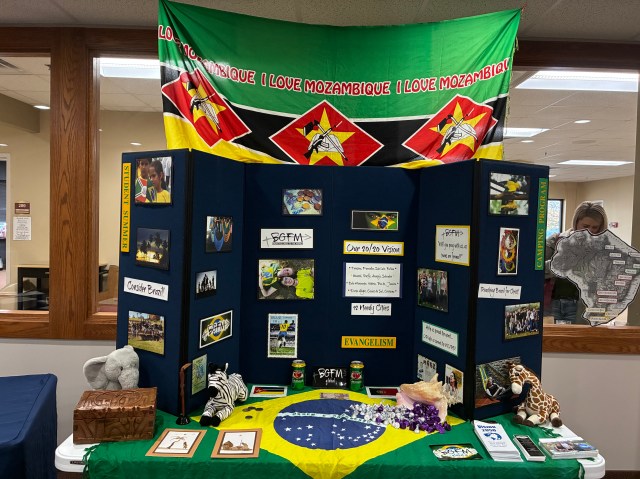
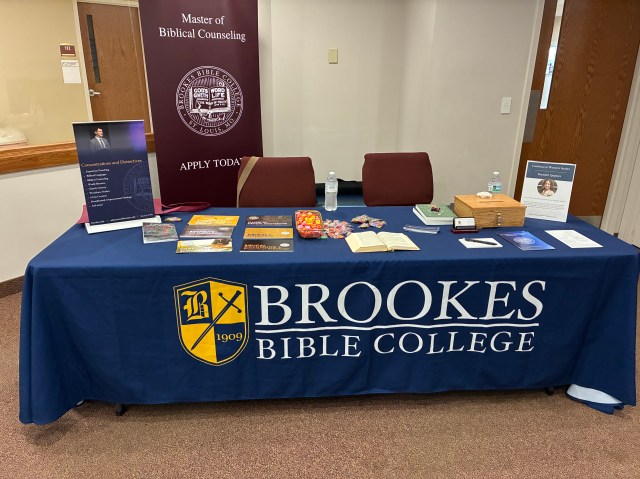
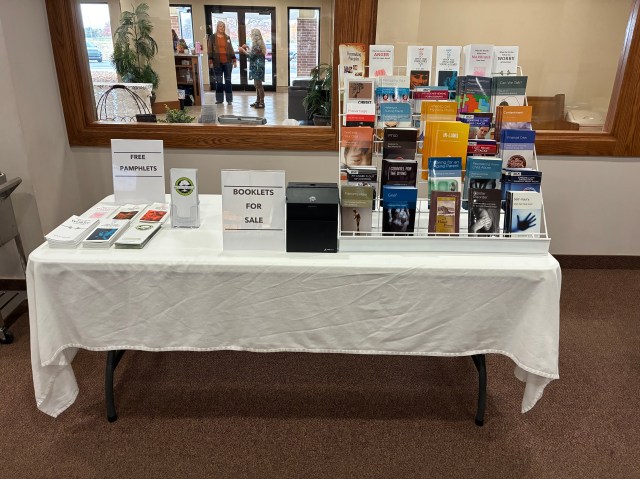
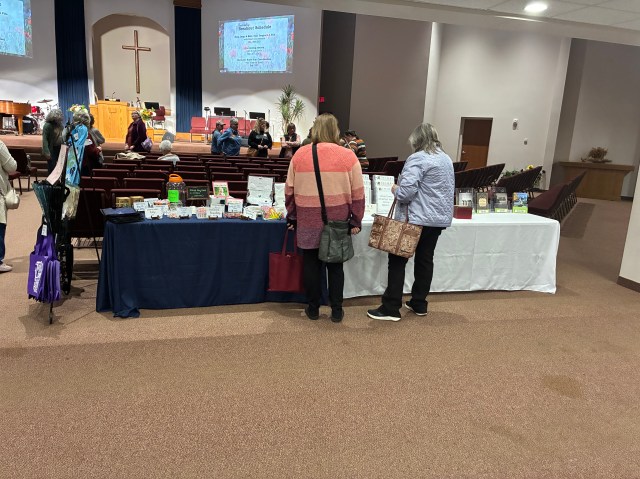
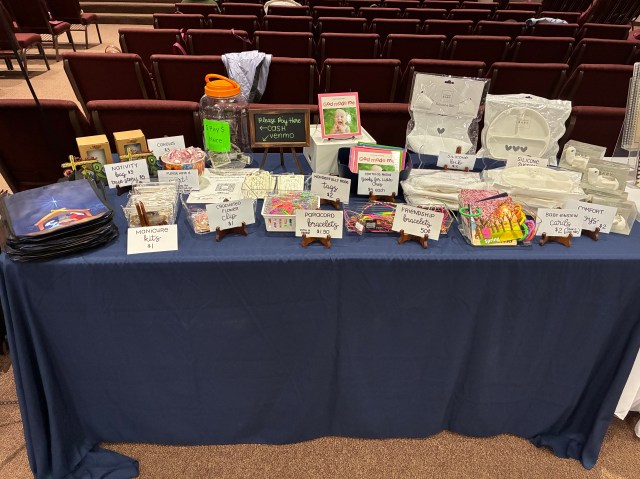
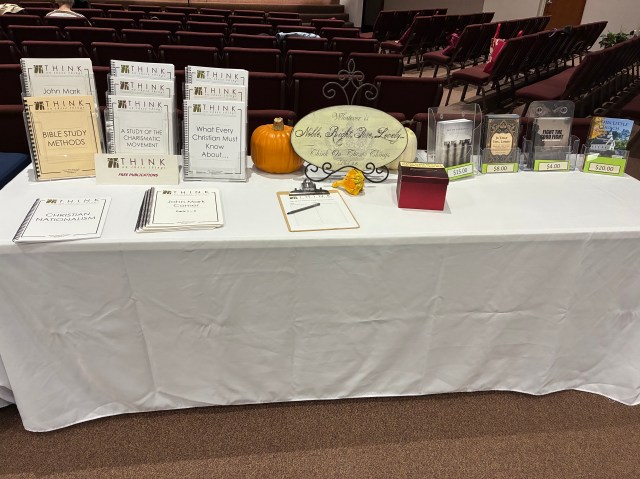
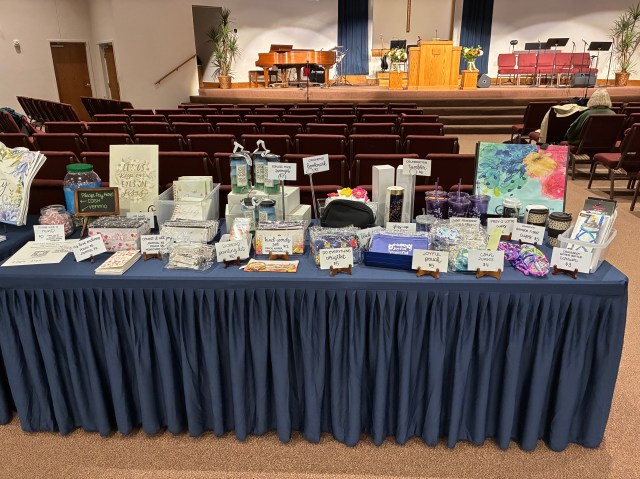
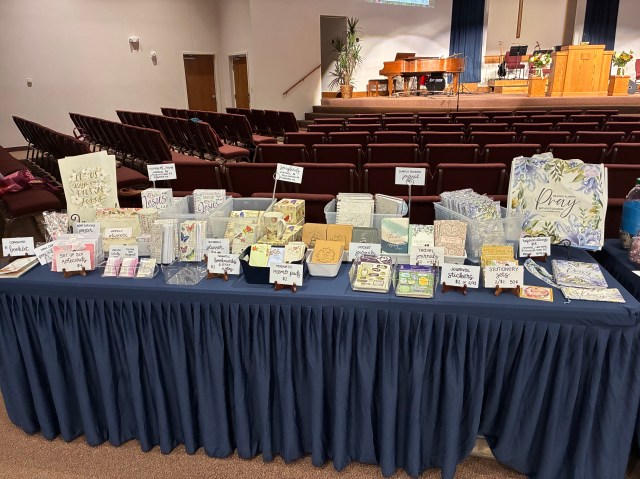
Lots of great exhibit tables!
Merch!
I love meeting the ladies!
Especially the young ladies!
I was so glad to meet Bro. Gary Gilley who not only pastors at SVC, but also has a wonderful discernment ministry, Think on These Things. (Bro. Gary has done extensive work on John Mark Comer {whom many of you have asked me about}, which I’ve linked up at the Popular False Teachers & Unbiblical Trends tab in the blue menu bar at the top of this page. I’ve also added Bro. Gary as a discernment resource here.)
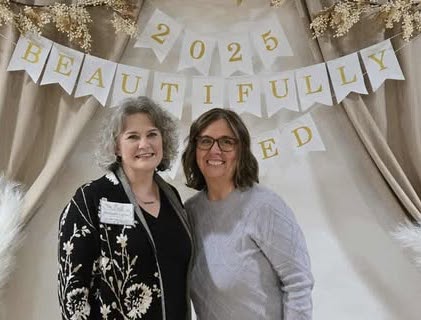
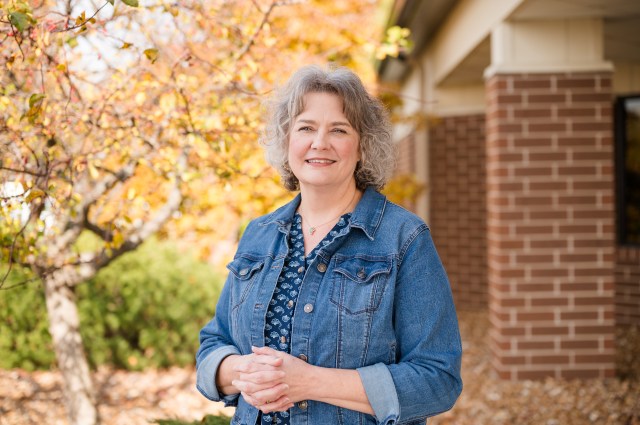
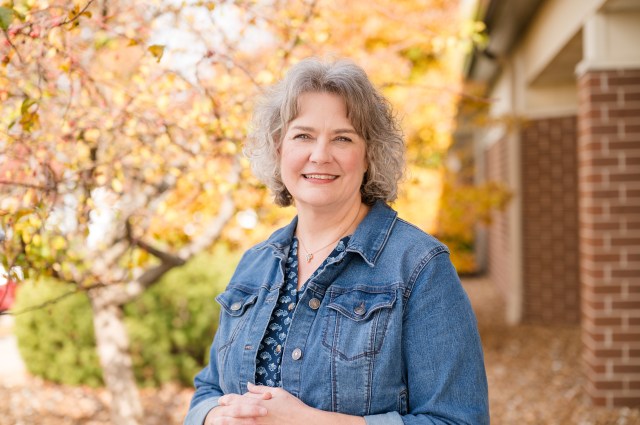
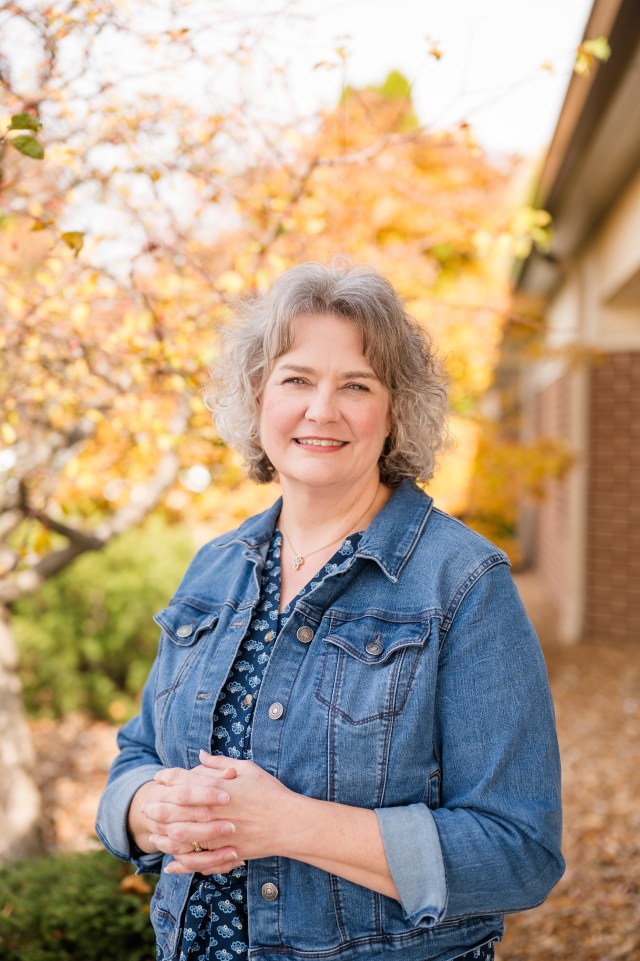
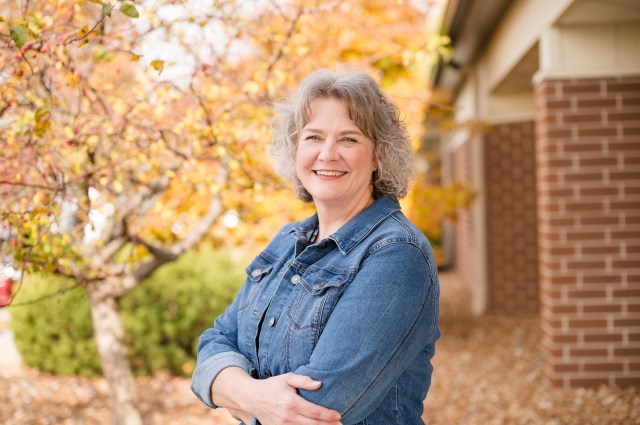
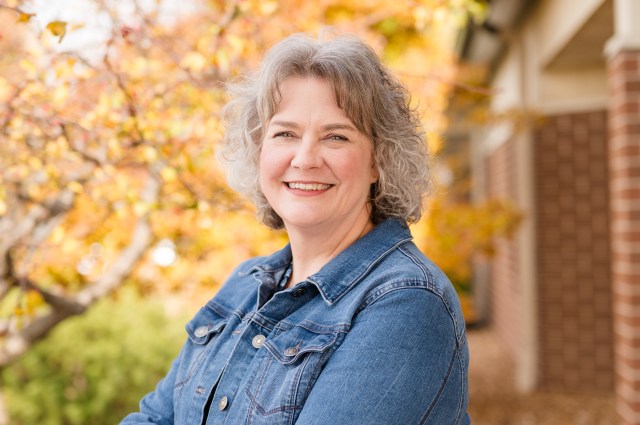
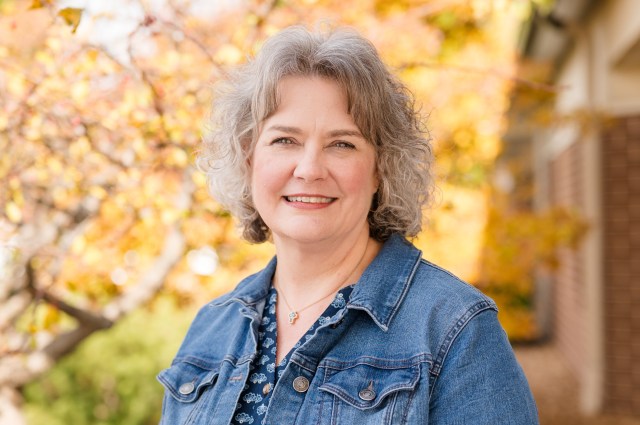
Before I left, one of the pastors’ wives, Priscila Gilley, blessed me with an unbelievable and invaluable gift – new publicity photos (which I desperately needed, since mine were about five years old). Priscila is an incredibly talented photographer (you pretty much have to be to make me look this good!), and I would highly recommend her if you live in the Springfield area. Check out her website and the lovely photos she took at the conference.
And yes, despite a flight delay that forced me to spend the night in the DFW airport on the way back, I got home with plenty of time to spare to welcome Baby A into the world!
It was such a fantastic day with the ladies of Southern View Chapel. Thanks so much to Pastors Gary Gilley and Brian Gilley for trusting me to teach these incredible women. Thanks to Dawn, Susan, and all the other ladies for making me feel right at home and working so hard to host a fantastic conference. If you’re ever in the area and need a good church to visit, make plans to spend the Lord’s Day with these wonderful brothers and sisters.
If your church or organization is ever in need of a speaker for a women’s event, I’d love to come share with your ladies as well. Click here for more information, or to find an upcoming event near you!
Photo Credits
All photos by Michelle Lesley and other conference attendees except those credited to Priscila G. Photography and Beautifully Rooted Conference.
Every year, in early January, I receive and answer a lot of questions about whether or not Tara Leigh Cobble and/or The Bible Recap are doctrinally sound, and whether or not I recommend them. The short answer is NO. Keep reading for a re-post of the longer answer (which can always be found at the Popular False Teachers & Unbiblical Trends tab in the blue menu bar at the top of this page).
If you’re looking for a good Bible reading plan, click here, and see the “Additional Resources” section at the end of this article.
If you are considering commenting or sending me an e-mail objecting to the fact that I warn against certain teachers, please click here and read this article first. Your objection is most likely answered here. I won’t be publishing comments or answering emails that are answered by this article.
This article is kept continuously updated as needed.
I get lots of questions about particular authors, pastors, and Bible teachers, and whether or not I recommend them. Some of the best known can be found above at my Popular False Teachers tab. The teacher below is someone I’ve been asked about recently, so I’ve done a quick check (this is brief research, not exhaustive) on her.
Generally speaking, in order for me to recommend a teacher, speaker, or author, he or she has to meet three criteria:
a) A female teacher cannot currently and unrepentantly preach to or teach men in violation of 1 Timothy 2:12. A male teacher or pastor cannot allow women to carry out this violation of Scripture in his ministry. The pastor or teacher cannot currently and unrepentantly be living in any other sin (for example, cohabiting with her boyfriend or living as a homosexual).
b) The pastor or teacher cannot currently and unrepentantly be partnering with or frequently appearing with false teachers. This is a violation of Scripture.
c) The pastor or teacher cannot currently and unrepentantly be teaching false doctrine.
I am not very familiar with most of the teachers I’m asked about (there are so many out there!) and have not had the opportunity to examine their writings or hear them speak, so most of the “quick checking” I do involves items a and b (although in order to partner with false teachers (b) it is reasonable to assume their doctrine is acceptable to the false teacher and that they are not teaching anything that would conflict with the false teacher’s doctrine). Partnering with false teachers and women preaching to men are each sufficient biblical reasons not to follow a pastor, teacher, or author, or use his/her materials.
Just to be clear, “not recommended” is a spectrum. On one end of this spectrum are people like Nancy Leigh DeMoss Wolgemuth and Kay Arthur. These are people I would not label as false teachers because their doctrine is generally sound, but because of some red flags I’m seeing with them, you won’t find me proactively endorsing them or suggesting them as a good resource, either. There are better people you could be listening to. On the other end of the spectrum are people like Joyce Meyer and Rachel Held Evans- complete heretics whose teachings, if believed, might lead you to an eternity in Hell. Most of the teachers I review fall somewhere in the middle of this spectrum (leaning toward the latter).
If you’d like to check out some pastors and teachers I heartily recommend, click the Recommended Bible Teachers tab at the top of this page.
Tara-Leigh Cobble, The Bible Recap, & D-Group Not Recommended
Tara-Leigh Cobble, or “TLC” as she likes to be called, “began her ministry as a singer-songwriter, performing her own songs and leading worship around the globe. After her first book was published, she added speaking to her repertoire. As a musician, writer and speaker, she spent more than a decade touring internationally before creating D-Groups and finding a home and community for herself in Dallas, Texas.”
More from Tara-Leigh’s bio: “I started D-Group (Discipleship Group) [with] a handful of college students in 2009 and it has grown into 250+ groups around the world…I love to speak to audiences about God and His Word, and I’ve written a few books with an aim to point others toward Him through my story as well as their own. I also write and host a daily podcast called The Bible Recap, which aims to keep people connected to reading the Bible when they’re tempted to quit for lack of understanding, as well as a daily radio show called The God Shot.”
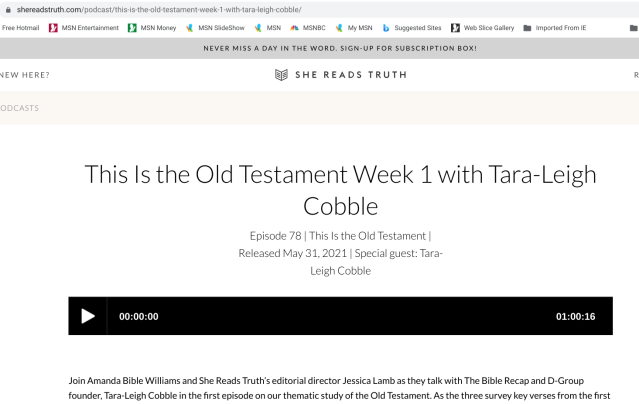
In late 2021 / early 2022, requests started flooding in for me to review Tara-Leigh, mainly due to the fact that many were preparing to begin a “read through the Bible in a year” plan in January. They wanted to know if the suddenly popular program, The Bible Recap (TBR) – Tara-Leigh’s brief daily podcast “recapping” each day’s reading in a one-year chronological reading plan – was doctrinally sound and whether or not they should use it. To that end, I began listening to TBR and researching it, Tara-Leigh, and D-Group.
The Bible Recap (TBR)
I listened to about two dozen of the first 60 episodes of the “year 4” TBR season, making notes along the way. In each 5-10 minute episode, Tara-Leigh briefly summarizes that day’s reading and adds a few comments, ending with a “God Shot” – a point from the reading that stood out most to her, personally.
For the most part, I didn’t hear much that was biblically problematic in the TBR episodes I listened to. But someone spending eight minutes basically reiterating the primary facts from a passage of Scripture and getting it mostly right isn’t an automatic indicator that she’s doctrinally sound. False teachers can do that. Atheists can do that. Perfectly doctrinally sound pastors and teachers can do that. People everywhere on the spectrum between those two extremes can do that.
There were several times I thought that the way Tara-Leigh worded something wasn’t necessarily wrong, but also wasn’t as clear or precise as it should have been, and that people who were new to reading the Bible (a significant portion of her target audience) could have easily misunderstood. I didn’t make any notes on those instances because they didn’t rise to the level of false doctrine, and we’ve all had times when we could have worded something better.
I did make some notes on several other points. Here are just a few:
Day 002 episode: “We don’t want to scream where Scripture whispers.“ An unfortunate choice of words, or was she echoing the sentiment from J.D. Greear – “We ought to whisper about what the Bible whispers about and we ought to shout about what it shouts about.” – that Southern Baptists in the know are all too familiar with? (TBR does include resources from Greear.)
“God let Noah know that this was only the beginning of their relationship.“ (Referring to Genesis 6:18). This is probably just a poor choice of words meant to indicate that this was the beginning of the Noahic covenant, or that God was reassuring Noah that he wasn’t going to die, but this is technically incorrect. Noah alreadyhad a relationship with God. That’s indicated by the fact that God had a conversation with Noah in 6:13-22, and it’s also why God found Noah to be the only righteous person on earth.
Day 003 episode: After the flood, the earth was not “muddy and gross“ as Tara-Leigh describes it. Genesis 8:13-14 is clear that the land dried up completely. Furthermore, in the flood, God re-created the earth. It may not have had the holy perfection of Eden since this was post-Fall, but the God who deemed His Creation “good” in Genesis 1 didn’t re-create a chaotic and disheveled world that looked like a natural disaster had just hit it, either.
Day 008 episode: “Are there times when God speaks to us? I believe God’s Spirit does give impressions to His children. After all, one of His names is ‘Guide’…Saying, ‘God told me X,’ carries a lot of certainty with it. I’d be more likely to say it this way, ‘I feel like God was saying X,’ or, ‘I feel like God was impressing this on my heart.’.”
Tara-Leigh is teaching extra-biblical revelation here because she’s a continuationist (more below). Extra-biblical revelation undermines the doctrine of the sufficiency of Scripture. Of course, God guides us. And the way He guides us is through His all-sufficient written Word, as He tells us Himself. Reading, believing, following, and obeying the written Word God the Holy Spirit breathed out is being led, or “guided,” by God.
Furthermore, all throughout Scripture, when God spoke, there was absolute, stake your life on it certainty. If you weren’t certain it was God speaking to you, you’d better keep your mouth shut or risk execution. If you were certain it was God speaking to you, you’d better open your mouth and boldly proclaim exactly what He said, or risk execution. If the holy God of the universe is speaking to you, you dare not mealy mouth or equivocate. And if He’s not, you dare not say He is. There’s no fence-sitting on this one.
Finally, this “I feel” language again undermines the sufficiency of Scripture, and reinforces an all too common false doctrine in the church: believing, trusting, and obeying our subjective feelings and personal experiences over God’s written Word. And because that is a place and position only Scripture should occupy, that false doctrine, believed and practiced by so many, is idolatry. (Hear me clearly: I’m not saying that Tara-Leigh believes in, practices, or holds to this form of idolatry herself, only that this type of “I feel” language reinforces this sort of idolatry that others cling to.)
Day 043 episode: Tara-Leigh talks about the glory of God filling the tabernacle as a cloud, and the fact that Moses could not go into the tabernacle because of that glory cloud. She says there was a “density“ to God‘s glory, and gives the example that she has never been in a plane that had to fly above a cloud because it could not physically pass through the cloud.
This passage does not mean that God’s glory was a tangibly impassable barrier, like a brick wall. It means that God’s manifest glory was so magnificent and intensely powerful that it was too overwhelming for Moses to go into the tabernacle. It’s possible Tara-Leigh didn’t mean to convey that God’s glory was physically tangible, but I think that’s what most people are going to take away from what she said.
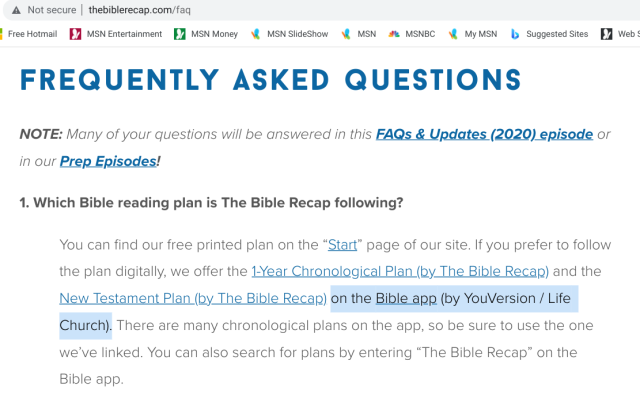
TBR recommends and partners with the YouVersion app. Although many people do not realize that YouVersion was created by and is maintained by false teacher Craig Groeschel’s LifeChurch.tv (it also features devotions and other materials by numerous false teachers), Tara-Leigh apparently does, and has partnered with YouVersion by platforming TBR there:
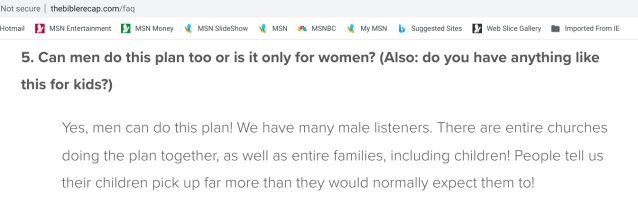
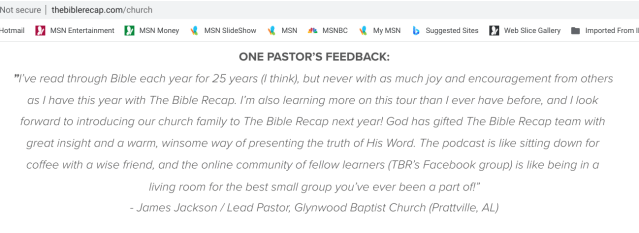
Tara-Leigh teaches the Bible to men, without reservation, through TBR. It is one thing for a woman to have a Bible teaching program or materials specifically for women available to the public and not be able to control who uses it. It is another thing all together to welcome and encourage men to be taught by a woman, especially in the gathering of the church body. This just validates and encourages the sin of women violating Scripture by teaching men.
TBR frequently features The Bible Project videos and podcast episodes in its episode show notes as supplementary materials, and TBP overviews of each book of the Bible are used exclusively. To be fair, many supplementary materials from doctrinally sound sources are provided, but they’re provided right alongside materials from false and/or problematic sources like Tim Keller (Day O16), Kay Warren (Day 038), J.D. Greear (Days 050, 323, 352), The Village Church (Matt Chandler’s church, Days 125, 291- Sam Alberry, 317), The Gospel Coalition (Days 133- Article: Did David Rape Bathsheba? answer: “David was a rapist.”, 213, 260, 277 & 352- Thabiti Anyabwile, 286, 315, 322, 323, 336, 345, 363) Skye Jethani (341).
D-Group
“D-Group = Discipleship Group. We are men’s and women’s discipleship and Bible study groups that meet weekly in homes around the world.” D-Groups are gender specific and meet for eight sessions of study per year. Each session lasts six weeks and centers around a different book or curriculum. (D-Group is discrete from The Bible Recap, related only by the fact that Tara-Leigh heads up both.)
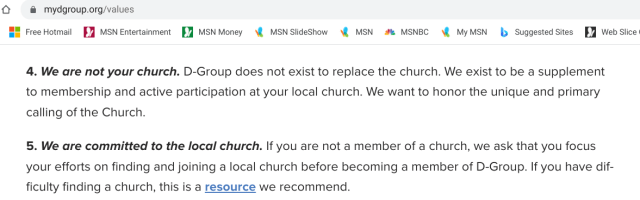
D-Group exists in three venues: church groups, home groups not connected to churches, and online groups. Commendably, in policy, D-Group requires that participants be members of, or actively seeking membership in a local church, and discourages participants from treating D-Group as a substitute or replacement for the local church…
…but the very fact that it establishes and encourages home groups and online groups not connected to a local church undercuts this commitment in practice. No doubt there are many online and home group members who eschew or are lax about membership in a solid local church, considering D-Group to be their church instead. Indeed, the Why D-Groups page of the website says that one of the results of being involved in a D-Group is: “And those who lack rich relationships with other Christians have found a place of encouragement and challenge.” Although it’s certainly not wrong to be encouraged and challenged by Christian friends outside your local church, the primary “place” this sort of thing should be happening is in the context of your local church. Additionally, group leaders are trained by the D-Group organization, not by the local church. Again, this sort of training should be taking place in the local church and under the authority of the pastors and elders there.
It’s an unbiblical structure and methodology. Discipleship proper is to take place within the context of and under the authority of the local church, not in parachurch ministries or groups, and certainly not in online “groups”. There is no provision, allowance, or instruction for parachurch discipleship in the New Testament. And if D-Group is Reformed, and as committed to “living out the truths revealed by God in Scripture” as they claim to be, they should already know this and work through local churches exclusively.
D-Group holds to continuationism (which explains Tara-Leigh’s aforementioned stance on extra-biblical revelation, and TBR resources from continuationists such as John Piper, The Village Church, etc.), and cites The Village Church’s position paper on continuationism as part of their Beliefs.
D-Group claims to be complementarian, but, apparently, they mean – without clearly saying so – so-called “narrow” or “soft” (essentially: anything goes except women as senior pastors) complementarianism. As I’ve explained in the past, so-called “soft/narrow complementarianism” is not complementarianism, but functional egalitarianism.
Under the Beliefs section of D-Group’s Resources page, two of the resources cited on complementarianism are from The Village Church and Mary Kassian. TVC is where Jen Wilkin, who preaches to men at conferences and other events is on staff as the director of family and student ministries, and where pastor Matt Chandler has publicly praised women who preach to men, like Beth Moore. The short TVC article cited isn’t very substantive, and merely states that they don’t allow women to be elders. I briefly reviewed the Mary Kassian article when it first came out in 2016. Long story short, she believes it’s OK for women to preach to and teach men except in the Sunday worship service (unless it’s Mother’s Day or another special event, then it’s OK).
Tara-Leigh herself preaches to and teaches men in person at her speaking engagements (see below).
D-Group is governed by women. Of the 36 members of D-Group’s “team,” all but four are women. These four men are under the authority of – among other women – founder and CEO Tara-Leigh, of course, as well as a female “Theology + Content Director”. This is not a direct violation of Scripture, since the D-Group organization is not a gathering of the church, but this does align with and point to their “soft complementarianism” posture.
D-Group recommends many of the same false and/or biblically problematic teachers and resources as The Bible Recap, and more:
In the Diversity and Racial Reconciliation section of D-Groups Beliefs page, resources are cited from woke and racialist sources such as Eric Mason, Latasha Morrison’s Be the Bridge, and The Witness, a list of theological works by black theologians and pastors, including Jarvis Williams, Anthony Bradley, Thabiti Anyabwile, and Raphael Warnock, the horrifyingly liberal “pastor” and Democrat senator who endorses the torture and murder of unborn children. (TheWitness also includes a book on homiletics written by a woman.)
The LGBTQIA section includes resources from Living Out founder, Sam Allberry, and Jackie Hill-Perry.
I don’t want to overstate this point, but it’s worth noting. Are worldly terms and constructs like “diversity,” “racial reconciliation,” and “LGBTQIA” congruent with a doctrinally sound Christian ministry? Where does the Bible use these terms or teach such constructs?
Tara-Leigh Cobble
As founder and leader of TBR and D-Group, Tara-Leigh’s theology concerning continuationism, functional egalitarianism, extra-biblical revelation, and social justice issues is evident.
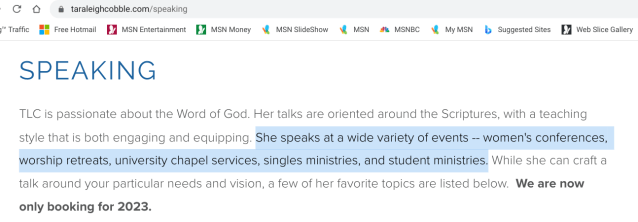
In addition to her organizations holding to a functional egalitarianism position, Tara-Leigh personally teaches men via her speaking engagements.
The following two videos are currently featured on her website’s “Speaking” page, as exemplars of her teaching.
Unfortunately, Tara-Leigh also has an affinity for false teachers and false doctrine.
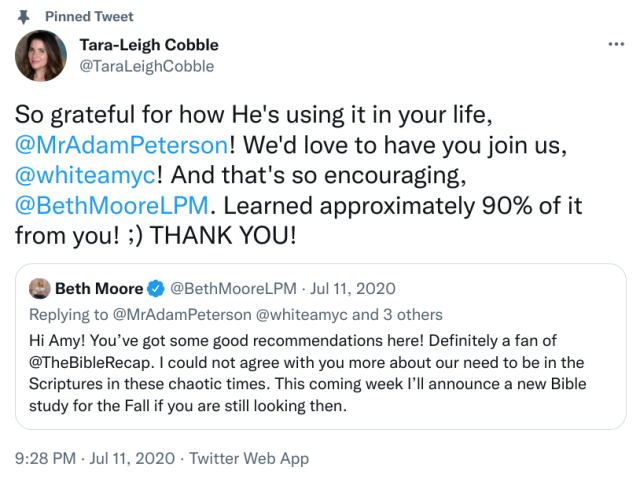
This is the pinned tweet – the first thing you see – on Tara-Leigh’s Twitter account. Apparently, Beth is a “fan” of TBR and Tara-Leigh “learned approximately 90%” of her Bible teaching from Beth Moore.
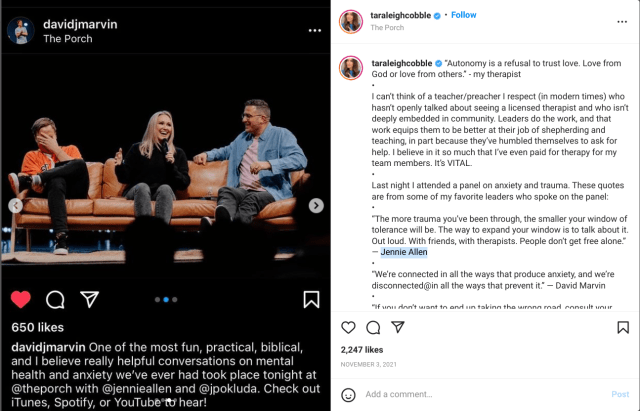
Here, she calls Jennie Allen one of her “favorite” leaders.
And since she brought it up in this post, I’d like to address another issue here. Tara-Leigh refers to her own “therapist” and also says, “I can’t think of a teacher/preacher I respect (in modern times) who hasn’t openly talked about seeing a licensed therapist…I believe in it so much that I’ve even paid for therapy for my team members. It’s VITAL.”
While everyone faces difficulties from time to time, and some of those difficulties are intense enough that a time of pastoral or biblical counseling is needed, routine or ongoing “therapy” from a “licensed therapist” (which, in the common vernacular, and at “trauma” events like this one, usually refers to a secular psychiatrist, psychologist, or other mental health professional) is no more “VITAL,” or even indicated, for normal, healthy individuals – even for non-Christians – than a weekly trip to the doctor for someone who isn’t sick.
The idea that Christians, across the board, need to be in therapy on a regular basis as though that’s normal or vital is found nowhere in Scripture, and undermines the Bible’s teaching that Scripture alone is sufficient for life and godliness.
Tara-Leigh’s notes from a “conversation” with “black and white Christian leaders and pastors” about “what the church’s role might look like in the midst of our current civil rights movement.”. You’ll notice the concepts of white privilege, systemic or “covert” racism, that white people need to “just listen,” etc. (Several pages. You’ll need to scroll through.)
Tara-Leigh seems like a very nice person with a sweet heart and genuine motives. She has some good ideas, and I’d like to be able to heartily recommend her to you. But unfortunately, even though she’s much closer to the “Nancy Leigh DeMoss Wolgemuth / Kay Arthur” end of the spectrum than the “Joyce Meyer / Rachel Held Evans” end of the spectrum that I mentioned in the introduction, I can’t proactively recommend her or any of her ministries or materials to you either. There are better people you could be listening to.
Additional Resources:
☞ Since the original publication of this article, a number of readers have asked if there is a program similar to TBR that takes followers through a chronological Bible reading plan with a daily recap of each day’s reading. I am not aware of any other program or podcast exactly like that, but let me give you a couple of resources.
In 2014, I led my ladies’ Sunday School class through the chronological plan and taught a weekly lesson selected from that week’s reading. If that’s of interest, you can always find those lessons at the Bible Studies tab in the blue menu bar at the top of this page (at the very end under “Miscellaneous”).
My friend, Pastor David Schrock, has recorded a podcast for daily readings through the New Testament called Via Emmaus on the Road (also on Spotify and Apple Podcasts). It’s in canonical (Matthew – Revelation) order, but God arranged the New Testament canon much more chronologically than the Old Testament. (Plus, if you want to, you can follow a chronological plan and just look up the podcast for each day’s passage.). (David wants you to know that he plans to re-record the episodes on Matthew to improve the sound editing, but if you listen “as is” the sound does get better after the first month.)
☞ Other readers have said they were listening to TBR, but stopped when something seemed “off” to them. Now, they just use the TBR podcast episode titles to tell them which passage to read for the day. There’s certainly nothing wrong with that, but if you’d like something that’s a little less cumbersome, I’ve got a printable of the entire year’s readings for you. Every year around New Year’s I publish a “round up” of Bible reading plans. The chronological plan is always first on the list because I recommend it so highly. Go to the Bible Studies tab and click on “Bible Reading Plans,” then click the link on #1, and print it, bookmark it, screenshot it, etc.
Good news: book nerd is in. And these days, that doesn’t just mean you have your nose stuck in a book all the time. No, you’ve really got your nerd on – you’ve got a reading goal for the year.
Whether it’s merely a certain number of books you want to read, total, or you’ve got it broken down into goals for various genres of literature, feeding your mind by reading is a worthy pursuit, especially if you’re feeding it good theology. (You might even want to join other Christians in a reading challenge such as this one from G3.)
Finally, brothers, whatever is true, whatever is honorable, whatever is just, whatever is pure, whatever is lovely, whatever is commendable, if there is any excellence, if there is anything worthy of praise, think about these things.
Philippians 4:8
But, as always, you’ve got to be discerning about the books you choose. In years past, I’ve seen some of my friends posting about book reading goals for the new year and asking for suggestions of Christian books. And I’ve seen some of the suggestions that have been made. Yikes. Some of those “Christian” books your friends are suggesting are written by false teachers.
Yikes. Some of those “Christian” books your friends are suggesting for your reading goals are written by false teachers. Here are 5 ways to exercise discernment about the books you choose.
May I offer some help for being discerning about the books you choose?
1.
Stay immersed in your Bible. That way, if you come across false doctrine in a book you’re reading, you’ll know it conflicts with Scripture. Need help? Check out my Bible reading plans and Bible studies.
2.
If you’re not already a faithful member of a doctrinally sound local church, find one, join it, and sit under good preaching and teaching every chance you get. This will also help you detect false doctrine when you’re reading. (Use my Searching for a new church?resource if you need help locating a good church in your area.)
3.
Vet the author of every book you read prior to reading it. Here are some quick and easy resources that can help:
There’s just something about the beginning of a new year that brings with it a yen for getting a fresh start. We think back over the past year, evaluate what we’ve spent our time and efforts on – or what we should have spent our time and efforts on – and, invariably, there’s a desire to make this year better.
Lots of people make lots of resolutions on January 1: to lose weight, to stop smoking, to exercise more. And by mid-February, some 80% of those people will have failed and given up on their resolutions.¹ Why? Partly because (statistically speaking) most of those people are lost and the flesh is exceedingly hard to tame by sheer “pull yourself up by your own bootstraps” willpower. Even Holy Spirit-indwelt Believers can testify to the pull of the flesh.
Should we, as Christians make New Year’s resolutions? Is it OK to set a goal to get a certain area of our lives under better control? Sure, there’s nothing wrong with that. But, is it possible there’s a bigger picture we need to take a look at?
Should we, as Christians make New Year’s resolutions? Sure, there’s nothing wrong with that. But, is it possible there’s a bigger picture we need to take a look at?
The Christian life is not one of putting out fires via resolutions. We don’t tackle one problem, get it under control and then move on to each of the other five problems that popped up while we were working on the first one. It’s more like fire prevention. We get up every day and hose down the house and yard by resting in Christ, communing with Him through prayer and the Word, and seeking to obey Him throughout the day. Sanctification is not mainly reactive, it’s proactive. And it doesn’t come by our own outward effort and striving, but by Christ growing us, changing our hearts, and enabling us to obey Him from the inside out.
Sanctification is not mainly reactive, it’s proactive.
And guess what? Along the way as Christ is conforming you to His image, you’re going to fail. You’re going to give in to temptation, and you’re going to sin against your Master. But here’s what biblical sanctification offers you that New Year’s resolutions cruelly withhold:
If we confess our sins, he is faithful and just to forgive us our sins and to cleanse us from all unrighteousness. 1 John 1:9
The steadfast love of the Lord never ceases; his mercies never come to an end; they are new every morning; great is your faithfulness. Lamentations 3:22-23
You don’t just get a fresh start once a year. You get a fresh start every time you confess your sin, repent, and receive Christ’s cleansing and forgiveness. You get the mercy of Christ, the grace of God, and the empowerment of the Holy Spirit to move forward in submission to God’s Word. You get the steadfast, never ceasing love of the Father who is out for your good rather than the unfeeling “do more, try harder, be better” taskmaster of New Year’s resolutions.
So, bearing all that in mind, how might God be trying to grow you in Christlikeness this year? What are some ways you can get up each day and proactively rest in, and obey Christ? Let’s prayerfully consider the following aspects of our walk and ask God to sanctify us and help us submit our will to His as we follow Him in this new year.
Growing in the Word
1. Daily personal Bible study. Do you set aside daily time for the personal study of God’s Word? Have you ever read the Bible from cover to cover? Have you considered, maybe just for this year, putting away all of the Bible study books and materials authored by others and using only the Bible during the next 365 days of your personal study time? Evaluate your daily time in God’s Word. Here are some resources you might find helpful:
2. Scripture memorization. This is something God got a hold of me about several years ago. It’s important to store up God’s Word in our hearts as a weapon against temptation, for comfort, for prayer, and to encourage others. Try starting with verses you’re already somewhat familiar with. Many find it easier to memorize Scripture in song form, or by typing it out. If your pastor is preaching through a certain book, memorize a verse or passage out of each chapter as he comes to it. I’ve found it helpful to recite my verses in my head in bed at night. It helps me fall asleep faster, and there’s actually research that shows retention is improved if you study right before bed.
3. Daily prayer time. Of course we should be talking to the Lord throughout the day as we go about the routine of life and work, but that’s not a substitute for having a daily block of time set aside for focusing all of our attention on communicating with God. Jesus set this example for us, and we should follow it. Do you have a daily time of prayer? Do you know how to pray in a way that’s pleasing to God and helps you grow in Christ?
4. If you don’t have a solid church, find one. Physically gathering with the Body of Christ for worship, teaching, fellowship, prayer, baptism, the Lord’s Supper, giving, serving – and so much more – is not optional. It’s vital to your growth in Christ.
5. Faithful church attendance. At a minimum, Christians should be at Sunday morning worship and Sunday School/Bible study class/small group every week unless Providentially hindered (circumstances beyond your control: illness, emergency, the rare out of town trip, occasionally having to work). That’s not legalism, that’s loving the Bride of Christ and having your priorities in line with Scripture. Contrary to popular metrics, habitually missing Sunday worship twice or more a month (when you could be there if you made it a priority) is not faithful attendance. If you’re lackadaisical in church attendance, examine your heart. What’s going on in your spiritual life that’s keeping you from wanting to gather with your brothers and sisters in Christ? (And if it’s a problem with the church itself, see #4.)
6. Don’t just “go to church,” invest yourself in it. Are you serving your church in some capacity? Do you regularly and fervently pray for your church, your fellow church members, and your pastors, elders, and teachers? Have you poured yourself into personal relationships with others at church for fellowship, care, and discipling? Do you regularly, sacrificially, and joyfully give offerings? Are you sharing the gospel with the lost? As with anything else, you get out of it what you put into it. God loves you and wants you to invest yourself in His Bride for His glory and for your joy.
How might God want to conform you more to the image of Christ this year? Could it be in one of these areas? Maybe another area? New Year’s resolutions are often about how you want to shape your life. Sanctification is about how God wants to shape your life. Not just for the new year, but for eternity.
New Year’s resolutions are often about how you want to shape your life. Sanctification is about how God wants to shape your life. Not just for the new year, but for eternity.