Sermons

Romans 13:1-7

Title image courtesy of Woodlawn Baptist Church

It used to be that John 3:16 was the most well-known Bible verse around. Then it was dethroned by Matthew 7:1. Nowadays, Romans 13:1-7 is giving them both a run for their money.

Christians are to obey the governing authorities, but what exactly does that mean? Just how far does the government’s authority extend? And when, if ever, is it biblically good and right to disobey the government?

I’d like to share with you today one of the best expositions and explanations of Romans 13:1-7 I’ve heard since this whole COVID thing began. It was preached by my own pastor, Lewis Richerson. He has been preaching through Romans for a while, and on October 3, we arrived at chapter 13. I found his sermon helpful and clarifying, and I hope you will too.

A few words about the sermon itself before you dive in: In my experience, this is a very atypical sermon format for Lewis, so, like it or hate it, you need to know it’s not the norm for him. This one is almost twice as long as his usual sermons, although, honestly, it flew by for me. Also, he includes a significant amount of historical information and a number of quotes in this sermon whereas he usually just preaches straight exposition of the text. It is probably more akin in style to what you’re used to hearing at a Christian conference rather than on a Sunday morning at church.

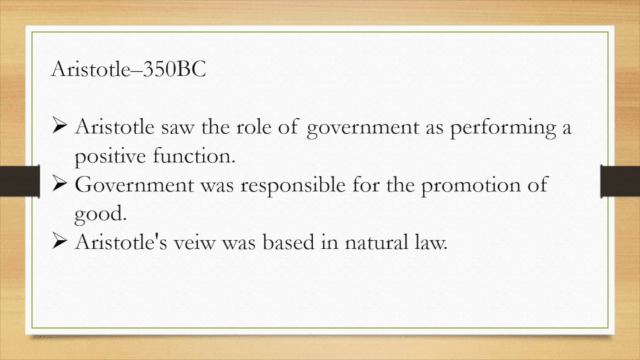
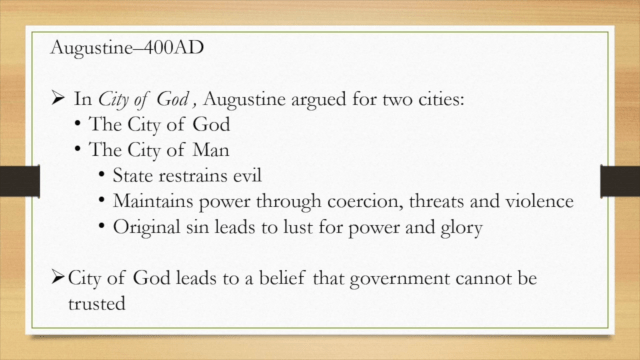
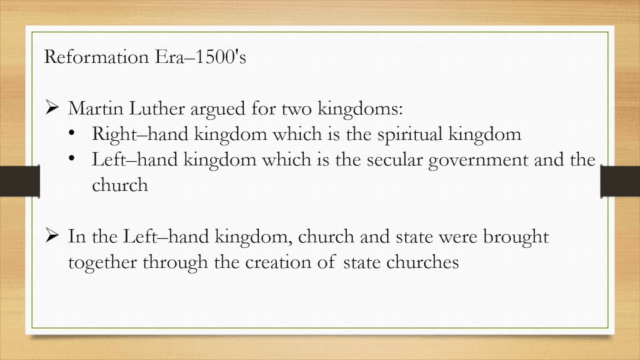
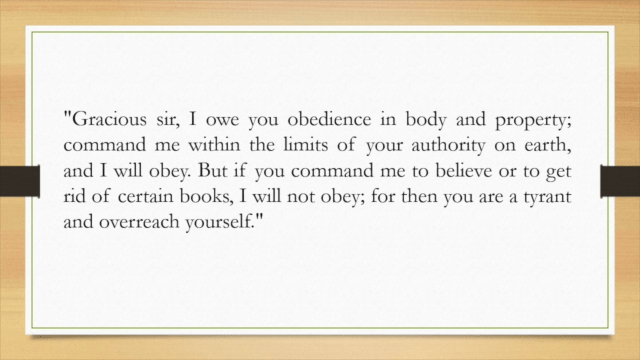
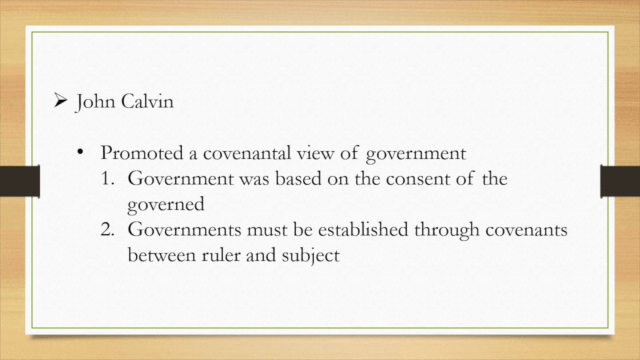
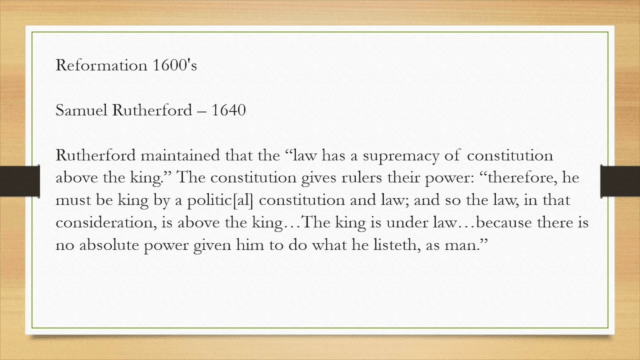
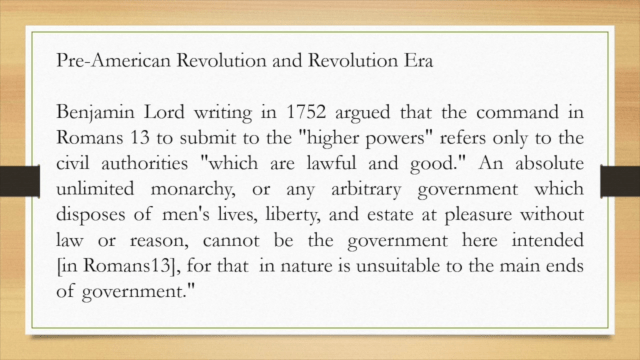
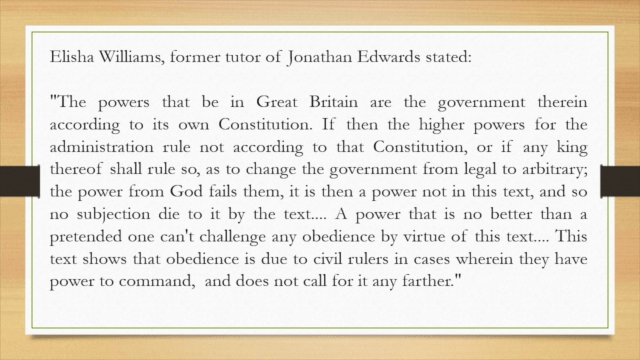
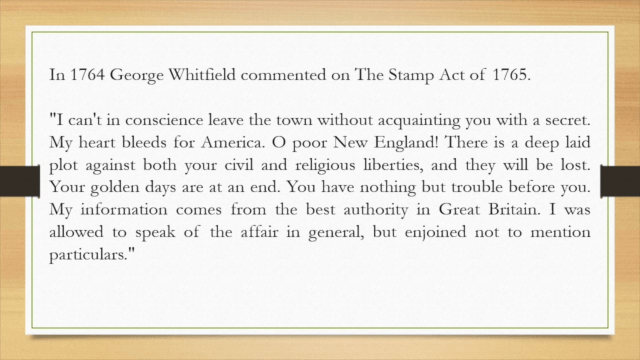
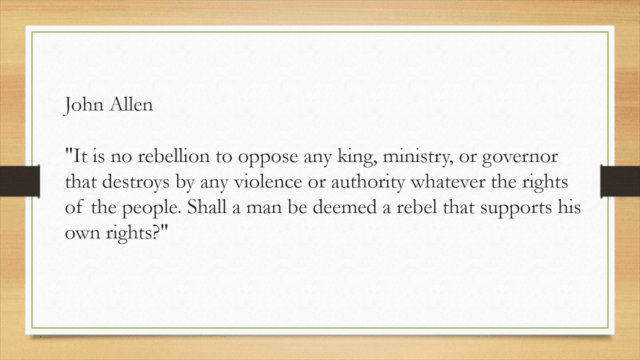
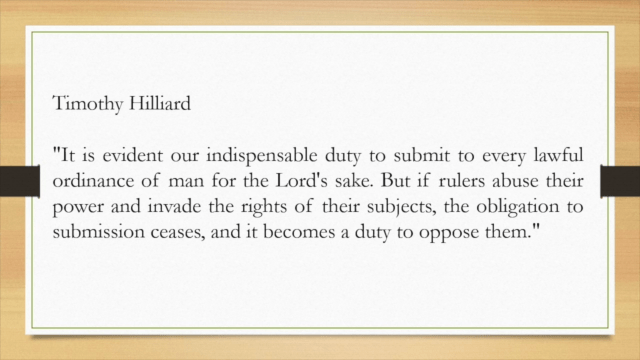
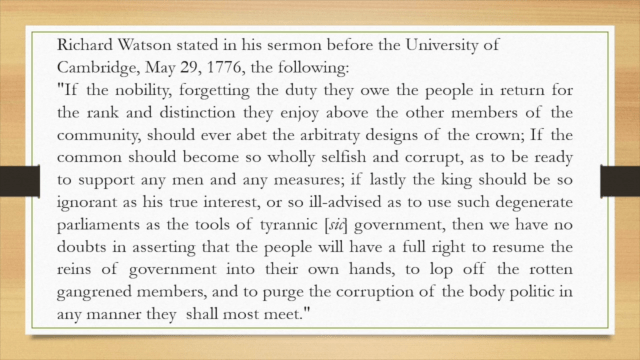
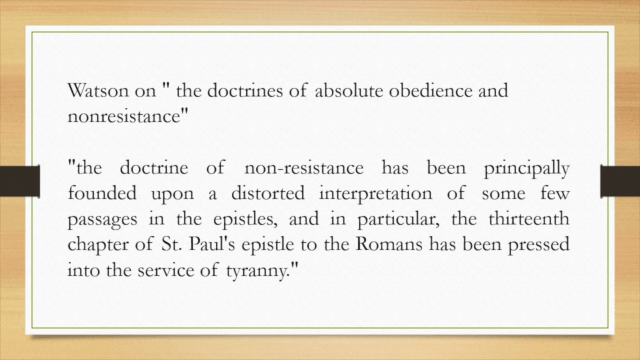
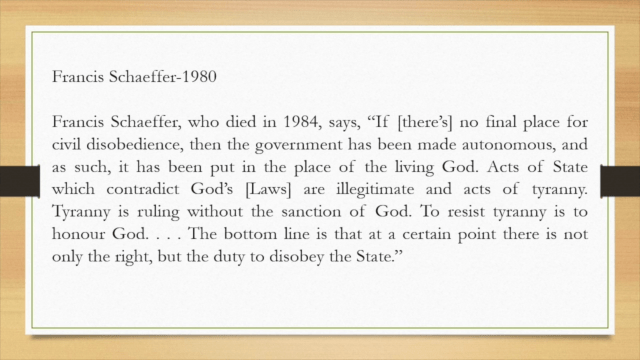
Toward the end(ish), Lewis references a number of slides that were projected on the screens. I’ve added those below the audio (in order, I hope!) so you can refer to them.

Church

Throwback Thursday ~ Church Leadership Qualifications: Biblical or Pragmatic?

Originally published February 21, 2017

leadership-1959544_1280

When it comes to leadership positions in the church we often get ourselves into unnecessarily sticky situations because we put practical considerations – who is available, who is most talented, who is willing, etc. – above biblical qualifications.
When we fill a position of leadership or responsibility at church we first go to Scripture to find out if the person we’re considering for the position is biblically qualified to hold it. Practical considerations come second. A few examples:

1.

An elder or deacon just died and the church needs someone to replace him. The first place you go is 1 Timothy 3 and Titus 1, and you start by weeding out the men who don’t fit those qualifications. It doesn’t matter how willing they are or how great of a job they would do or what kind of connections they have or how much money they could bring into the church, they have to meet the biblical qualifications first.

2.

Your church is located near a neighborhood full of Chinese immigrants, most of whom don’t speak English. Someone comes up with the commendable, Great Commission-honoring idea to start a Bible study to reach out to the men and women of this community. The only person in your church who speaks Chinese is a woman, so she’s the natural choice to teach the class, right?

Wrong. We start with the biblical qualifications for teachers, and one of them (1 Timothy 2:12) is that women are not to teach men. She could certainly teach (assuming she is able to teach – language alone doesn’t make someone a good teacher) a women’s class, or a male could teach the class in English and she could translate, or a man could take the time to learn Chinese before the church begins offering the class, or if there is a Chinese man in the class who is able to teach, he could teach the men and she could teach the women. But the woman doesn’t teach a co-ed class herself because Scripture forbids this.

3.

A young couple starts attending your church. After a few months, they step up and say they’d like to sing on the worship team. They’ve both got great voices and would radically improve the quality of the music on Sunday mornings. As you chat with them about joining the team, you find out they’re living together (unmarried). They’re both well aware that this is sin, but disagree with what the Bible says about adultery and fornication and have no intention of repenting, marrying, or moving out. Matthew 18:15-17 and 1 Corinthians 5:11-13 are quite clear that people who continue in rebellion after being called to repent are not even to be members of the church, let alone lead in worship.

Remember that the practical way is not always God’s way. Remember that God’s ways are higher than our ways (Isaiah 55:9). Remember that “There is a way that seems right to a man, but its end is the way to death.” (Proverbs 14:12). Remember when Saul did what was good in his own eyes instead of obeying God’s word (1 Samuel 15). Remember what happened to Nadab and Abihu when they conducted worship their own way instead of God’s way (Leviticus 10:1-6).

Obeying God’s word is not always easy, practical, or convenient, but it is always best, biblical, and blessed.

Judges Bible Study

Judges ~ Lesson 12

Previous Lessons: 1, 2, 3, 4, 5, 6, 7, 8, 9, 10, 11

Read Judges 14-15

Questions to Consider

1. Go back to lesson 3 (link above) and review your answer to the first part of question 5, Israel’s pattern of sin and repentance in 2:16-23. How does today’s passage fit this pattern? How does today’s passage fit the theme verse of Judges (21:25), “In those days there was no king in Israel. Everyone did what was right in his own eyes.”?

2. Read 14:1-4. Compare this passage to Deuteronomy 7:1-4 and 2 Corinthians 6:14-18. Why did God command Israel not to intermarry with these pagan nations, and why does God command Christians not to be unequally yoked with unbelievers? Were the Philistines among the nations God commanded Israel not to intermarry with? Is it fair to say Samson was obeying the letter of the law but not the spirit of the law? Why or why not?

Compare Samson’s statement at the end of verse 3 and verse 7 to the theme verse of Judges (21:25).

In verse 4, does “he” refer to Samson or the Lord? Examine the cross references for verse 4. Did God think Samson’s marriage to a Philistine was a good and godly union, or was He using Samson’s foolishness for His own purposes?

3. Read 14:5-20. What does it mean that “the Spirit of the Lord rushed upon” Samson? (14:6,19, 15:14) What does the fact that this happened several times in this brief passage (along with many other discrete instances of the Holy Spirit suddenly coming upon a person in the Old Testament), indicate about the indwelling of the Holy Spirit in the Old Testament compared to the Holy Spirit permanently indwelling all Believers in the New Testament?

Why was it important to Samson to keep secret from his parents where the honey (9) came from? (Hint: Think back to the requirements of the Nazirite vow from lesson 10 – link above.)

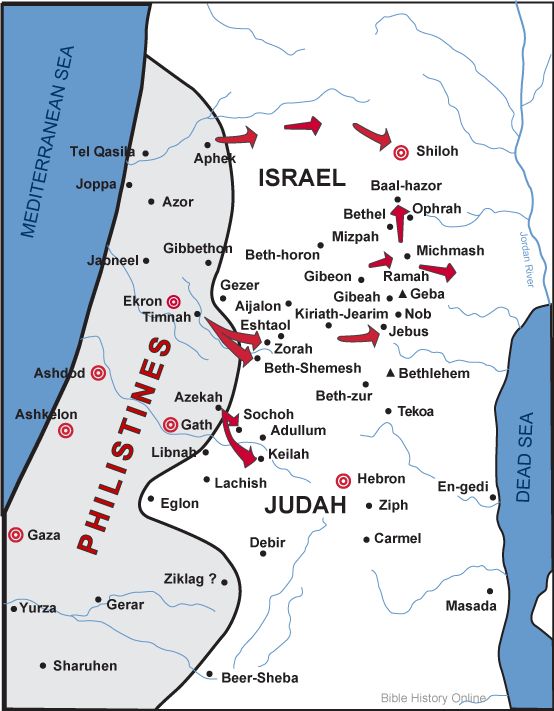
4. On the map below, locate Zorah and Eshtaol (Judges 13:2, 25), where Samson and his family were from, in relation to Timnah and Ashkelon where the action in today’s passage takes place (disregard the arrows). Describe how Samson’s actions in chapter 14 functioned as sort of a stealth, small-scale invasion of Philistia and sheds light on our earlier examination of 14:4. How does the “one man invasion” strategy we see God using here with Samson compare to the “small army” strategy He used with Gideon (see lesson 7 – link above). Consider the actions of the 3000 men in 15:13-15 as you answer.

5. Read 15:1-20. Describe the cowardice of the men of Israel in 13-15. Think about all of the places in Scripture where God tells His people to stand firm, fear not, cry out to Him for help, and trust Him. What should these 3000 men have done instead? Compare their fear of the enemy to Gideon’s fear of the enemy (lessons 6&7 – links above), and their response to the enemy to his response to the enemy.

Are there any ways in which 11-13 pre-figures Judas’ betrayal of Jesus, our perfect Judge, and the high priests handing Jesus over to the Roman officials?

How was Samson’s defeat of the enemy (14-16) different from Jesus’ defeat of the enemy at His first coming? How could “You have granted this great salvation by the hand of your servant,” (18) be said of Jesus centuries later?

6. Consider Samson’s motives for each of his attacks on the Philistines in today’s passage, his “hot anger” in 14:19, and his apparent posture of personal vengeance in 15:7. Now compare these to his statement in 15:18: “You have granted this great salvation by the hand of your servant,” and recall what the angel told Manoah and his wife (see lesson 11 – link above) about Samson’s mission and what they probably told Samson about all of that. Is it reasonable to infer that Samson viewed his attacks on the Philistines in today’s passage as consciously carrying out his mission of “he shall begin to save Israel from the hand of the Philistines,” (13:5) or was he just a hot head getting personal revenge?

If someone came to you and said that Samson’s aforementioned motives, anger, and apparent posture of personal vengeance conflict with James 1:20: “the anger of man does not accomplish the righteousness of God,” (because God’s righteous purpose of pushing back the Philistines was accomplished here) and Romans 12:19: “Beloved, never avenge yourselves, but leave it to the wrath of God, for it is written, ‘Vengeance is mine, I will repay, says the Lord,'” how would you answer that person? (Hint: Be sure you’re reading all of these verses and passages in context.)


Homework

  • Recall from lesson 10 (link above) Samson’s parents’ wisdom and godliness, and the wise and godly counsel they gave him in today’s passage. Consider their good counsel in light of these passages. Why is godly counsel important? How can you tell the difference between counsel that is wise and godly and counsel that is unwise, fleshly, or merely pragmatic? Who would you go to for wise, godly counsel if you needed it? What can you do to prepare yourself to give wise, godly counsel to someone who comes to you asking for it?

Suggested Memory Verse

Speaking Engagements

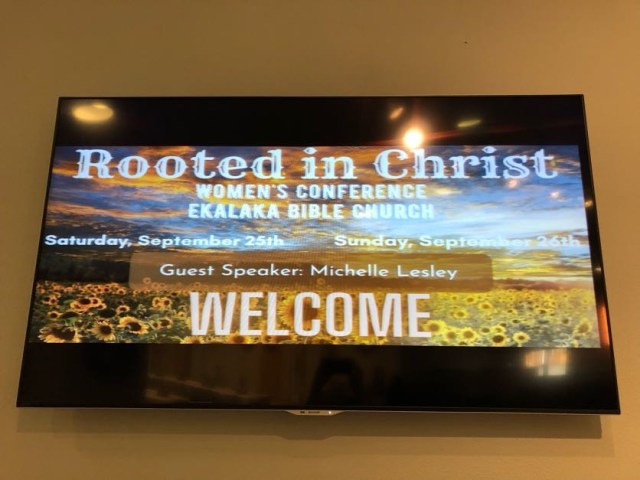
Report Back: Rooted in Christ Conference

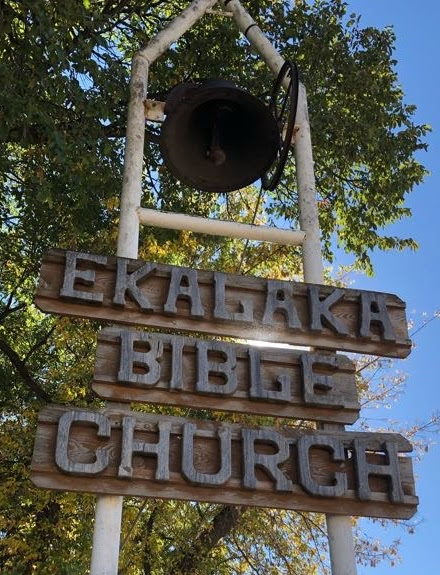
What a pleasure it was to share with the wonderful ladies of Ekalaka Bible Church in beautiful Ekalaka, Montana, for the Rooted In Christ Conference.

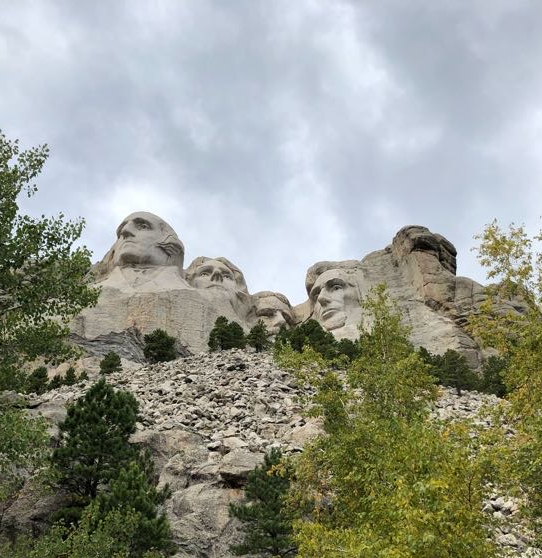
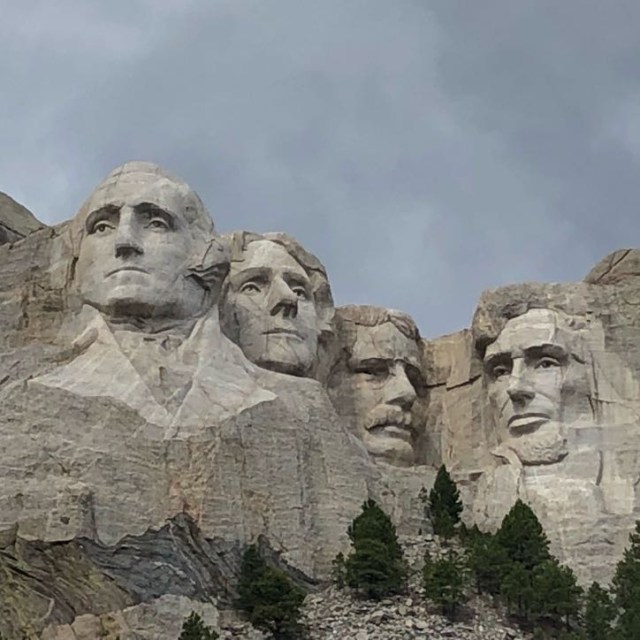
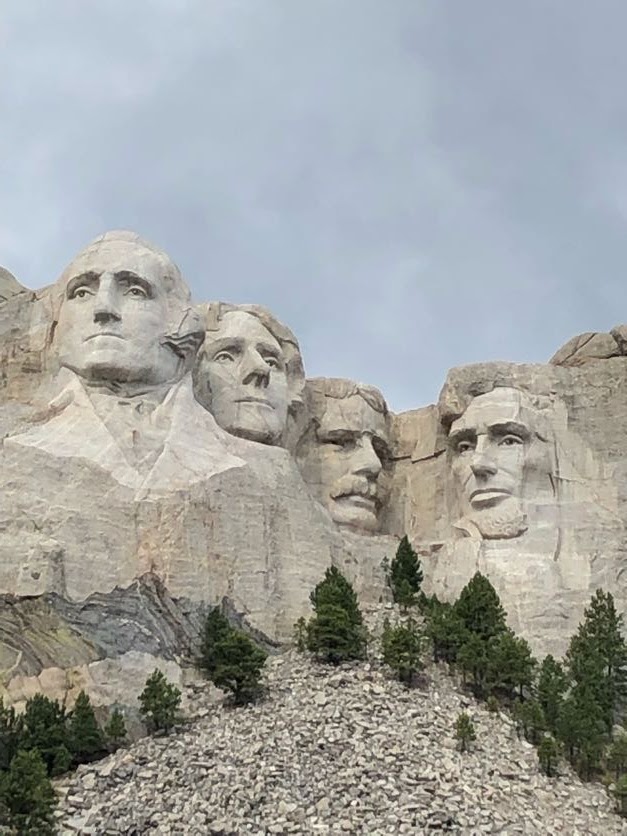
I flew into Rapid City, South Dakota, which is just down the road from Mt. Rushmore. Since I had never been there before, Pastor Jon, his lovely wife Kati, and their super sweet kiddos, Liam and Evangeline, were kind enough to take me there for a quick tourist stop before we headed north for Ekalaka.

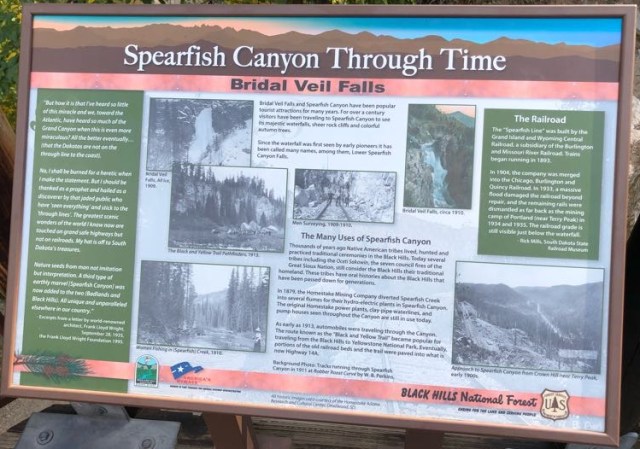
As if taking me to Mt. Rushmore weren’t gracious enough, they also drove me up into Black Hills National Forest where we saw Spearfish Canyon and Bridal Veil Falls. I was there a little too early in the year for the full fall color “leaf peeping” experience, but one species of tree (no idea which one) had already turned an eye-popping yellow, and those were absolutely exquisite.

As we headed up toward Ekalaka, we passed through Belle Fourche, South Dakota, where the geographic center of the United States is located, as well as Sturgis, South Dakota, home of the annual Sturgis Motorcycle Rally. Along the way, it was fun to see small herds of deer and antelope roaming the open fields. And have you ever seen such a beautiful sunset?

The natural beauty of Montana is stunning. Kati has quite a way with flowers. Look at these beauties at her house:

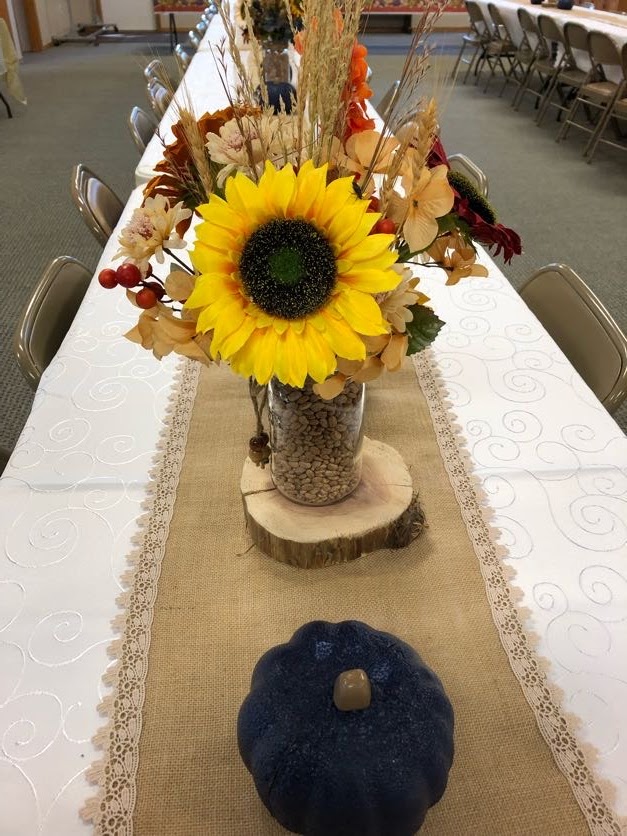
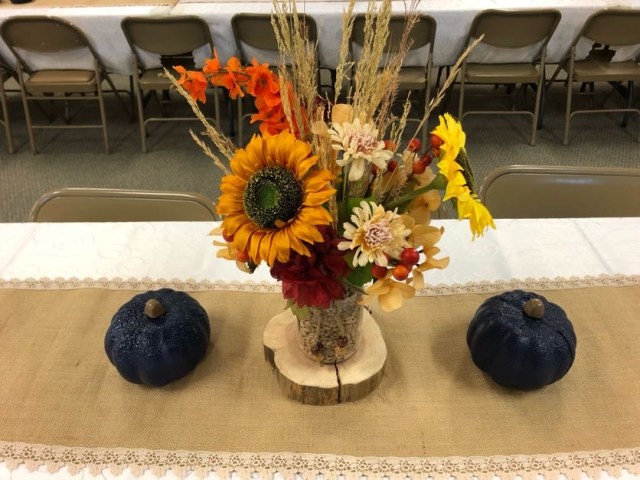
Saturday afternoon was day one of the conference, and the ladies of EBC had things looking spiffy. Check out these charming decorations:

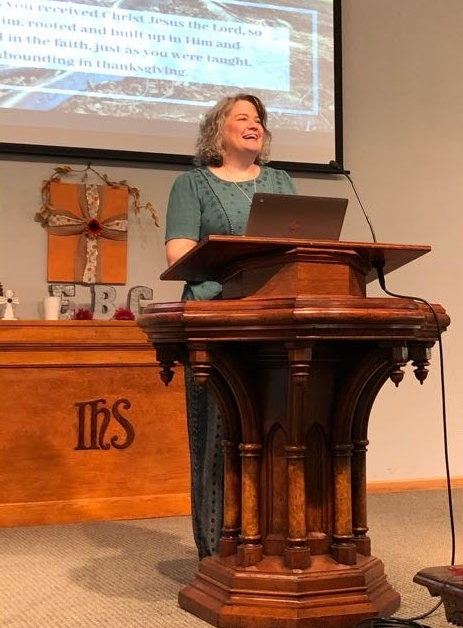
Session one was Walking in Biblical Womanhood. We took a look – mostly from Genesis – at God’s perfect creative design for womanhood. After a delicious homemade lasagna supper, it was time for session two: Walking In Biblical Womanhood. God wants us to fill out Creation with godly womanhood, not buy into the feminist narrative that we have to be exactly like men to have any value.


Do I laugh at my own jokes? It’s a dirty job,
but somebody’s got to do it! :0)
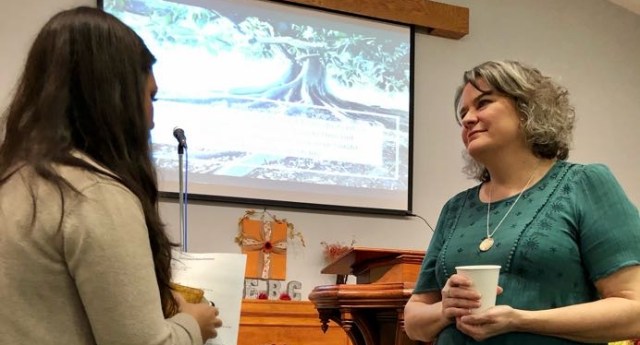
Chatting after the conference

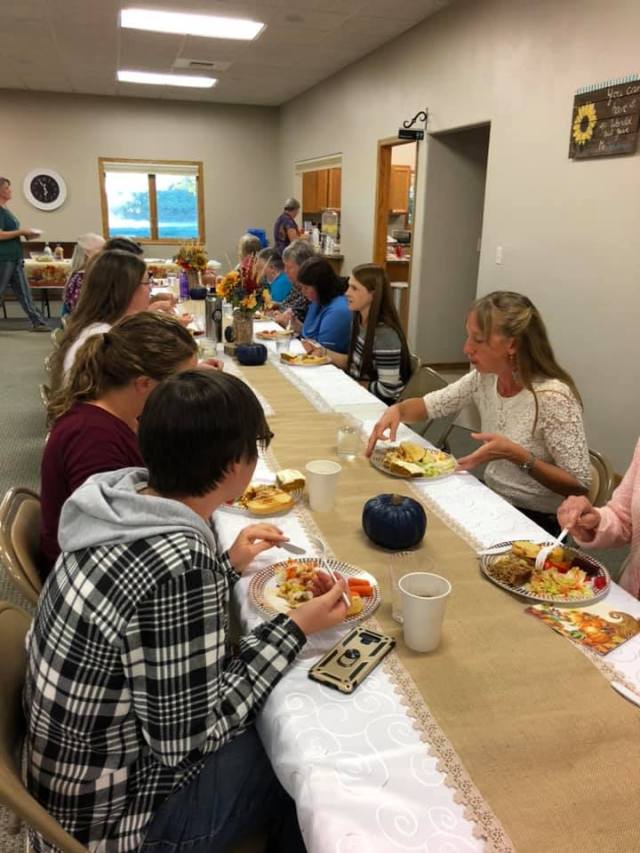
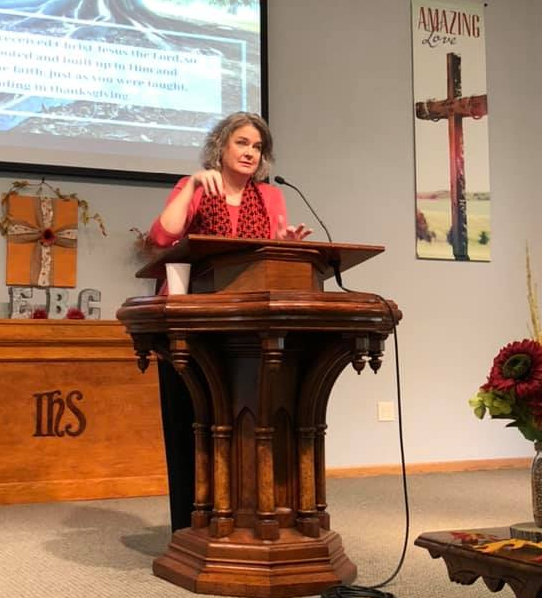
After a warm time of worship with the EBC branch of the family Sunday morning, it was time for day two of the conference that afternoon. Our first session was a stimulating Q&A with lots of insightful questions. Following another hearty supper of homemade soups and sandwiches, our final session was Discernment 101: Learn to Discern. How can we tell the difference between the biblical and the cheap, unbiblical knock off? We looked at some scriptural and practical ways.

Door prizes
My lovely hostess gifts from the ladies of EBC. The pendants each have a line from a hymn in them. Kati picked out this water bottle before she even knew I was going to be speaking on the Armor of God passage! Providence!

Bright and early (well, actually, it was really early so it wasn’t bright yet) Monday morning, I had to say goodbye to the delightful town of Ekalaka and wing my way back home. On my first flight I had the pleasure of sitting next to a very nice lady named Jodie. She and her husband were flying home from visiting some of the same sites I had seen in South Dakota, and she was kind enough to show me her pictures. Some of the pictures were of the crafts she creates and sells in her Etsy shop, and they were just so adorable and well crafted that I had to share them with you. Head on over and do some early Christmas shopping at Jodieshappyhill. (And I believe she might add some more items, so you may want to check back every now and then.)

Many thanks to Pastor Jon, Kati, the kind ladies I had lunch with on Saturday and Sunday, and all of the conference attendees and members of EBC for your warm hospitality and for making my trip so memorable. If you ever find yourself in rural southeastern Montana, I highly recommend you make it a point to visit with the fine brothers and sisters of Ekalaka Bible Church.


If your church or organization is ever in need of a speaker for a womenโ€™s event, Iโ€™d love to come share with your ladies as well. Click here for more information.


Photo Credits

Photos of Michelle speaking / chatting, conference dinner by Kati Champlin.

Sunset photo by Tina Brady.

All other photos by Michelle Lesley.

Mailbag

The Mailbag: Potpourri (Christian online platforms…Home church…”I lost my temper”…Send in your pix!)

Welcome to another โ€œpotpourriโ€ edition of The Mailbag, where I give short(er) answers to several questions rather than a long answer to one question.

I like to take the opportunity in these potpourri editions to let new readers know about my comments/e-mail/messages policy. Iโ€™m not able to respond individually to most e-mails and messages, so here are some helpful hints for getting your questions answered more quickly. Remember, the search bar (at the very bottom of each page) can be a helpful tool!

Or maybe I answered your question already? Check out my article The Mailbag: Top 10 FAQs to see if your question has been answered and to get some helpful resources.


I wanted to ask your opinion on which web host would be suitable to use for an online business? I have an online store and I currently use WIX, however, I recently found out they monetarily fund and support LGBTQ events and such. I don’t want our money going to support that. I did a lot of research and prayed, but I can’t for the life of me find a provider that is conservative. I know there will most likely be things I don’t agree with with pretty much any worldly web hosting company, but where do I draw the line? Is God okay with paying a web host who uses their funds to support anti-Biblical issues? I’m convicted of continuing to use WIX and I don’t want to continue with them. I originally left ETSY for the same reason. I just don’t know where to move my website! I would need an e-commerce provider too since I sell stuff. If you don’t mind me asking, who do you use? I see your website is Word Press, but I know you need a host for that too.

(Readers, if you have any suggestions of conservative and/or Christian blog or e-commerce platforms, please leave a comment at the end of this article.)

I completely sympathize with your dilemma. I don’t like my money going to support sinful causes like perversion, abortion, liberal politics, etc., either. You’re right, I do use WordPress for the blog, but they host it themselves. I don’t have a separate host, and I don’t do e-commerce, so I’m afraid I don’t have any practical suggestions there.

You’re correct, pretty much everything you pay for, whether it’s an online platform, the gas you put in your car, your pooch’s favorite dog food, even the device you’re reading this on right now, is owned or produced by a secular company that’s donating to or financing something that’s biblically objectionable. Even most so-called “Christian” companies probably support people or ministries that aren’t doctrinally sound. In practical terms, finding a company to patronize that doesn’t contribute to something unbiblical is almost as unlikely as finding a mermaid or a unicorn.

I can’t tell you where to draw the line – that’s a conclusion you (and your husband, if you’re married) will have to come to through prayer and listening to your biblically informed conscience – with each company you consider, but I think you may find some of the principles in my article The Mailbag: Should Christians Participate in Boycotts? to be helpful.

“Is God okay with paying a web host who uses their funds to support anti-Biblical issues?” Well, consider this – It’s not precisely the same thing as buying a product or service from a private company, but Jesus paid the temple tax, and we know from His clearing of the temple, His many rebukes of the scribes and Pharisees, and the fact that the temple leadership had Jesus crucified that He was well aware of the evil that tax money ended up supporting. And when the Pharisees asked Jesus, “Is it lawful to pay taxes to Caesar or not?” while their motive was to trap Jesus, the basis of this particular question they chose was probably similar to the basis of your question (not saying you’re a Pharisee – please don’t misunderstand): “Should God’s people give money to a pagan who does ungodly things?”. And Jesus’ answer was that they should pay their taxes. Like I said, it’s not exactly the same thing because taxes are an obligation and blog platforms are not, but it is something to study and consider.

Pray about it, trust God to guide you, and don’t sin against your conscience. You may also want to take a look at the principles for decision-making in my article Basic Training: 8 Steps to Finding Godโ€™s Will for Your Life.


My husband and I live in Canada. When the government placed our small town under lockdown due to COVID, not one church here remained open. Now that things have opened back up slightly, we are hesitant to join ourselves to a church that might, at any given time, close their doors at the whim of our government officials. Additionally, there are very few churches in our area and we have doctrinal concerns about all of them. But this leaves us without a church home.

We have started meeting together on the Lord’s Day with nearly 30 other like-minded brothers and sisters. We fervently seek the Lordโ€™s wisdom and guidance and do not want to be disobedient in any way. We want to please the Lord in our worship together. My husband and I never conceived of starting a church, we just wanted to obey our Lord in continuing to gather as the church body when the โ€œchurch institutionโ€ failed us. Iโ€™m desperate for guidance and have no idea where to turn to for help.

Well, sister, I’ve got good news for you. You do have a church home. You have a home church church home. When the church started out in the book of Acts, it existed in the form of groups of like-minded believers who met together in homes, often in secret, hiding from a persecutory government. The church is not the building, but the body of Believers meeting together in person for the study and preaching of the Word, baptism, the Lord’s Supper, prayer, worship, fellowship, and practicing the “one anothers”. In many parts of the world home churches are still the normal expression of the church due to persecution, and as persecution continues to increase, so will the underground church.

I’ve never started a church either, but let me see if I can point you to some resources that can help:

First, go to the Searching for a new church? tab in the blue menu bar at the top of this page. Next:

  • Carefully comb through every single church search engine listed there to make absolutely sure you haven’t overlooked a doctrinally sound, established church within achievable driving distance of your house. (Home churches can be very susceptible to false doctrine, so you want to make every effort to join yourself to an established, doctrinally sound church if at all possible.)
  • If there simply does not exist an established, doctrinally sound church you can get to (even if it may not be terribly convenient) each week, scroll down to the “Church Planting” section, get in touch with Grace Advance, explain your situation, and ask them for help. Church planting is what they do, and I’m certain they can give you better guidance than I can.
  • As you’re going through this process of getting in touch with Grace Advance and following their counsel, read through all of the information under What to look for in a church (especially the links in the second paragraph of Six Questions for a Potential Church), so the men leading your home church understand, and perhaps can begin codifying a doctrinal statement on these issues for your home church. It may also be helpful to visit the websites of churches you know to be doctrinally sound and read through their statements of faith (sometimes called “doctrinal distinctives,” “what we believe,” “what we teach,” “constitution and by-laws,” etc.).

May God richly bless you and your church.


I recently lost my temper with a store employee and made a scene over something very stupid. It is a large corporate store and not one I frequent often, but this young woman is most likely from my surrounding area, and thus, I feel like I did not treat a neighbor well. I have prayed and asked God to forgive me for shaming His name and for treating another person badly for something that was not her fault. What else can I do? I feel terrible. I let my emotions overcome me, and it was completely unbecoming of a Christian woman.

Wow, praise God.

No, seriously…this is something to praise God for. Praise God that He convicted you of this sin. That’s one of the evidences that you’re a Believer and that the Holy Spirit is working in your life. Praise God that your heart is tender to that conviction and you want to do what’s pleasing to Him. Another evidence that you’re a Believer. Praise God that through Christ’s sacrifice on the cross, He has indeed forgiven you for this sin and you stand righteous before Him. (You do need to accept and believe His forgiveness if that’s part of the reason you’re still feeling terrible.)

I would suggest you go back to the store, locate the employee, repent to her and ask her forgiveness. I would also suggest taking a small “peace offering,” like a gift card to a local coffee shop or maybe a batch of brownies you’ve made. You could also include a tract or a small gospel booklet. Frame your apology to her in a gospel-centered way, and, hopefully, this will turn into a witnessing encounter.


This last one isn’t a question submitted by a reader, but rather a request from me! :0)

If you or your women’s Bible study group are working through one of my Bible studies, I’d love it if you’d send me a picture of yourself or the group studying or discussing it. And if you could somehow include the title image for the study (see below) in the picture – maybe with everybody gathered around the image on a screen, or everybody holding it up on their phones, or print out a copy of the image and hold it up, or something like that – that would be fantastic. (These pictures will probably be shared on my blog and/or social media, so make sure everybody in the picture is OK with that.)

You can email the pictures to me here.

These are the title images from some of my studies. You can find them at the top of each lesson:

You can always find all of my Bible studies at the Bible studies tab in the blue menu bar at the top of this page.

Thank you!


If you have a question about: a Bible passage, an aspect of theology, a current issue in Christianity, or how to biblically handle a family, life, or church situation, comment below (Iโ€™ll hold all questions in queue {unpublished} for a future edition of The Mailbag) or send me an e-mail or private message. If your question is chosen for publication, your anonymity will be protected.