Sermons

Gathered 2021: Family Worship Conference Teaching

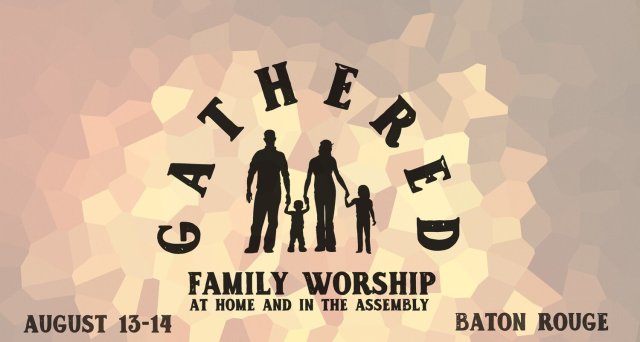
I recently had the exciting opportunity to attend the Gathered conference here in Baton Rouge.

The topic of the conference was family worship in the context of the local church – how parents must disciple their children in conjunction with the church body, and how the church body can, in turn, support those parents and help them disciple their children.

There were four plenary sessions by Dr. Scott Aniol. Currently a professor at Southwestern Baptist Theological Seminary, Scott was recently named Executive Vice President and Editor-in-chief of G3 Ministries. And you’ll definitely want to check out his website, Religious Affections Ministries, a wonderful resource for churches, families, and individuals.

Other presenters included Andrew Pressley, Associate Pastor at First Baptist Church, Lindale, Texas (Tom Buck’s church), and Matt Sikes, Pastor of Discipleship and Worship at Pray’s Mill Baptist Church (Josh Buice’s church).

You’ll find all of the main sessions and men’s breakout session (be sure to share them with your husband!) linked, but I wanted to feature the two women’s breakout sessions taught by Scott’s wife, Becky Aniol, who, among other fine pursuits, is a stay at home, homeschooling mom of four. She gave us a lot of biblical precepts and practical tips for family worship in her two part session A Family Worship Toolbox: Resources and Routines for Monday – Sunday. You’ll find them helpful with your children, grandchildren, or the children you minister to at church. I’m sure you’ll enjoy her sessions as much as I did.

Plenary Session 1: The Goal of Family Discipleship

Plenary Session 2: Practice Makes Perfect

Plenary Session 3: Q&A
(Scott and Becky Aniol, Matt Sikes, Andrew Pressley, and Laramie Minga)

Plenary Session 4: From Integration to Segregation

Men’s Breakout: The Father’s Responsibility in Family Worship Part 1

Men’s Breakout: The Father’s Responsibility in Family Worship Part 2

Church

Throwback Thursday ~ Axiom Questions, I’ll Tell You No Lies

Originally published May 1, 2015

axioms

Why do churches do church the way churches do church?

Ever thought about that? Moreover, have you ever thought about why churches take for granted that they have to do certain things or do things a certain way? Is there an unspoken assumption at your church that you have to have a sermon outline in the bulletin (or for that matter, that you have to have a bulletin), that Vacation Bible School is a non-negotiable event, or that the deacons absolutely must wear ties when serving the Lord’s Supper? Has it gone on for so long that now “it goes without saying”?

Don’t get me wrong- sermon outlines and bulletins can be very helpful, VBS is a great outreach, and I’m in favor of more men wearing ties to church, period. And I’m not talking about irrefutable biblical truths, either, such as, “faith in Christ is the only way of salvation,” or “God created the world,” or “women are not to instruct or hold authority over men in the church.” What I’m trying to get at here is that there are lots of church practices, preferences, and philosophies that we take as axiomatic. We never question them. We just assume they’re true. We act on them as though they’re immutable laws of physics or something. And every once in a while, somebody notices this and wants to change things up.

When it’s an axiom that’s been around for a few decades, the people who hold to that particular ideal are often chided (sometimes deservedly, sometimes not) by those who are pressing for changes. They’re called “inflexible” or “enslaved to tradition.” They’re labled as the “We’ve never done it that way before,” or “We’ve always done it this way,” people.

But have we ever stopped to think that, in many cases, the changes people seek to make today are the outmoded preferences of tomorrow? Often, we’re not making the church better or more biblical, we’re just adding a new premise here or trading one axiom for another there. Like rearranging deck chairs on a cruise ship. Or the Titanic.

Let’s take a look at some of those new axioms that have materialized over the last couple of decades and are now assumed to be a “given” when it comes to ecclesiology.

1. Pastors need to “cast vision,” and churches need a vision/mission statement.
No, they don’t. Christ is the head of the church, the CEO, if you will. Therefore, He is the only one whose place it is to have a vision for the church and to set a mission statement for it. And He has already done that for us. It was one of the last items on His agenda before leaving earth. It’s called the Great Commission:

And Jesus came and said to them, “All authority in heaven and on earth has been given to me. Go therefore and make disciples of all nations, baptizing them in the name of the Father and of the Son and of the Holy Spirit, teaching them to observe all that I have commanded you. And behold, I am with you always, to the end of the age.” Matthew 28:18-20

2. Churches have to be attractional.
Should you invite people to church? Absolutely. Should you be kind and welcoming to visitors? Of course. But that’s not what “attractional” means these days. Attractional means assimilating church into the culture so that lost people will think it’s a cool and groovy place and will flock through the door in droves. That’s why you see pastors coming out onto a stage and giving a Tonight Show-esque monologue while dressed like a teenager at a concert, churches playing music that sounds like what you hear on the radio (sometimes music that is on the radio) accompanied by bands that mimic whichever artist is popular at the moment, no choirs, no pews, no crosses, no pulpits, no hymnals, but a Starbucks in the lobby. Everything a sinner is used to in his daily life. Everything that will make him perfectly comfortable.

Where is this model of doing church found in the Bible? If you answered, “nowhere,” you’d be correct. The church, by definition, is made up of believers. Christ Himself is what is attractional to people who have genuinely been born again. And when we meet together, we have one purpose: to worship and grow in Him. The Bible never tells the church to make itself look like the world to bring lost people into the church. Christ tells us, believers, the church, to go out and make disciples, to go out into the highways and byways and urge the lost to trust Christ so that His house might be filled…with believers.

3. Church should be fun.
Nope, not going to find that one in the Bible either. Worshiping Christ should bring us the deepest joy we can fathom, but that’s not the same thing as rock concert, bouncy house, stand up comedian, outlandish props and gimmicks, music video back up dancers, cash and prizes giveaway, “fun”. Church should be joyful, welcoming, warm, and pleasant. It should also be reverent, solemn, and, often, serious. Worshiping Christ, handling and learning His word, partaking of communion and baptism– these are not frivolous things, and the climate of the church should reflect that.

4. When it comes to the size of a local church, bigger is not only better, but more spiritual.
I see articles from denominational leaders and church growth gurus all the time that start with the presupposition that if your church isn’t constantly growing until you’ve reached thousands in attendance and have to go multi-site, you need to get on that problem, pronto. Or that if your attendance numbers are “stuck” around the 200 or 300 mark, it’s a crisis that needs to be addressed. Pastor, you need to do something about that. It’s assumed that you want to do something about that.

Says who? Says people who have made a lot of money selling church growth materials and want to make more, that’s who. The fact of the matter is, mega churches are the exception, not the rule. The average size of a church in the U.S. is 186 people, and 94% of church goers attend a church of under 500 members.

There are many perfectly legitimate and biblical reasons why a local church might be small. Smaller churches foster intimacy in fellowship, accountability in discipleship, and make it easier for pastors to shepherd individuals and small groups. Certainly, a church should welcome any newcomers wishing to join and should seek to minister to the surrounding community, but if zeal for the gospel is in place, there is no shame in being a small church.

5. Our worship music has to be contemporary.
Why? No, really. Why does it have to be pop-contemorary style? Because we’ll lose or fail to attract young people? First of all, there are plenty of young people who, believe it or not, like hymns and traditional worship music. Why aren’t we concerned about alienating them? What about the older people who like hymns? What about the young people who like country music, or classical music, or rap, or screamo, or death metal, or opera? How come we don’t cater to any of their musical preferences (assuming that’s the basis on which you choose the genre of worship music) during the worship hour?

Up until the early ’80’s or so, when you went to church, you expected to sing hymns out of a hymnal. There’s nothing wrong with adding new songs here and there to the church’s repertoire, but there is something wrong with trying to replicate what’s going on in the world in order to entice lost people into the church. When people go to a funeral they expect to hear funeral music. When they go to a fais do do they expect to hear Cajun music. And have you seen how incensed people get when somebody tries to put a fresh spin on the National Anthem? It’s perfectly all right for church music to sound churchy. We don’t need to apologize for that.

6. Leaving a church (or deciding not to join one) because you don’t like contemporary worship music is selfish, petty, and reeks of spiritual immaturity.
Really? I thought you just said we had to use contemporary music to get young people to join and keep them from leaving. Are they selfish, petty, and spiritually immature for having their music preference catered to? Why don’t they have to suck it up and sing hymns? Would you go to a church that used only a genre of music you hate, like rap or opera? Does that make you selfish, petty, and spiritually immature?

It’s time we stopped shaming people for wanting to leave a church that has changed to a genre of music or a worship style that they hate. There will be times in every church when a particular song (or maybe even several) is sung that you don’t like. That’s normal no matter which genre your church uses. But music is a huge part of our worship services, and if, even after making an effort to embrace the music, you are so distracted by the genre that you’re incapable of focus on Christ, you need to go to a church- a doctrinally sound one, mind you – where you can worship.

We make a lot of assumptions about the way we should do church. Maybe it’s time to start questioning some of them.

What are some other church axioms you’ve noticed?

Sermons, Worship

Sermon: Biblical Worship

It’s not often you get to hear a great sermon out of Leviticus, so I wanted to share this one with you, preached by my friend Laramie Minga, Pastor of Worship and Discipleship at Woodlawn Baptist Church, Baton Rouge, Louisiana.

If you’re a new Christian or maybe you’re just coming out of an unbiblical “church” and you’re not quite sure what biblical worship in a doctrinally sound church is supposed to look like, this sermon will help. And even if you are in a solid church with biblical worship, Laramie’s sermon will be an encouragement to you. The worship pastor at your own church might even enjoy giving it a listen.

The text for the sermon is Leviticus 10:1-11.

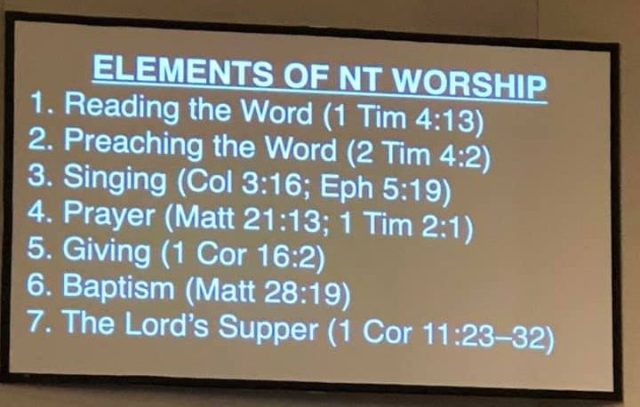
Here’s the visual for the elements of worship around the 37:34 mark:

I hope you’ll enjoy this great teaching from God’s Word as much as I did!

Church, Worship

Throwback Thursday ~ Rolling Out the Welcome Wagon

Originally published August 25, 2010

The LORD said to him, “I have heard your prayer and your supplication, which you have made before Me; I have consecrated this house which you have built by putting My name there forever, and My eyes and My heart will be there perpetually. I Kings 9:3

As Golden Girl Sophia would say, “Picture it:”

After church one Sunday, a friend says, “Why don’t you come over to my house tomorrow night for dinner?”

So, the appropriate time comes on Monday evening, and you drive over to her house. The door is standing open because she is expecting you, and you’re familiar enough with each other that you feel comfortable just walking on in.

As you’re walking in, you see your friend standing there, and you say to her, “I invite you into this house! You are welcome here!”

Anything seem a little off about that?

Well, of course that seems strange. It’s her house.

But that’s what is taking place in churches all over America every Sunday morning. I saw it in a televised local church service last week. The worship leader stood up to lead the first song and said, “God we welcome you into this place!” I’ve heard others say things like, “Lord, we invite you into this house this morning!” We sing songs like Holy Spirit, Thou art Welcome and Lord, we Invite You.

‘Scuse me? Isn’t the church God’s house?

Of course, it isn’t God’s house in the same way the temple was God’s house, in that there isn’t a holy of holies where the actual presence of God resides. On the other hand, I wouldn’t go so far as to say that it’s only a building, like the post office or a doughnut shop.

At some point, way back when, or maybe even recently, a body of Believers got together and asked God to give them a place where they could worship Him. God saw fit to answer that prayer. He provided the land, the permits, and every brick, nail, and piece of sheetrock. He allowed His name to be placed there when we decided to call it “Grace Fellowship”, “St. Luke’s”, or “First Baptist”. He protects that building and allows it to stand as a testimony to the community: God, and God’s people, can be found here.

It’s not your church. It’s not my church. It’s God’s church. And it exists for His glory.

But somewhere along the way, we’ve forgotten that. Somewhere along the way, we gave God an eviction notice and became squatters on His property. How arrogant have we become that we strut into church as though we own the place, and dare to invite Him, to welcome Him into His own house as though He were a guest? How dare we?

Maybe it’s partly because we no longer have a holy of holies that we don’t see God’s house as sacred. “Ah,” you may say, “but that’s Old Testament thinking. Now we understand that when we gather together in His name, He is with us.”

Really?

When it’s my church, my comfort, my pew, my ministry that nobody else better touch, my style of music, my opinion about how long the sermon should be, my feelings that got hurt, my idea of how things should operate, what I got out of the service, are we really gathering in His name?

Welcome, Lord. Are You sure You want to come in?

Worship

In My Humble Opinion…The One with the Modernized Hymns

I don’t often share my personal, completely subjective opinions with y’all. I figure there’s enough of that in the world and what’s sorely lacking is unambiguous biblical truth. So that’s what I try to share instead.

But today, I have an opinion. I’m sure it’ll be wildly unpopular and generate a bunch of hate mail, but that’s in my wheelhouse, so here goes:

I don’t really like most modernizations of hymns.

I didn’t say, “I don’t like modern hymns.” There are several of those I like, and contemporary hymn writers like the Gettys are doing a bang up job of writing lovely new, doctrinally sound hymns. Frankly, we need more theologically rich contemporary hymns.

What I mean is that I don’t like some well-meaning hipster to pick up How Great Thou Art and go, “Hey, those words – most of them anyway…or…at least a few of them – are cool, but that melody, harmony, tempo, and syncopation? Haul out the mothballs! We can’t be singing THAT in church! It’s gotta sound like something on CCM radio! Relevant! Fresh! Cutting edge!”. And then they proceed to put their grubby little paws all over someone else’s hard work and mangle it into something barely reminiscent of the work of art it once was.

It’s kind of the same reason I hate modern remakes of movies of yesteryear. It takes something that was great the way it was and ends up diminishing it to make it palatable and marketable to today’s consumer.

Hymn modernizers are often melody driven. They take a melody they like and force the original hymn lyrics to fit it – leading to awkward phrasing or the need to change words – rather than letting the lyrics lead and crafting a melody around them.

What’s wrong with the original music? I mean it. What on earth is wrong with the original music to the hymn? Nobody’s clamoring for the modernization of Gregorian chant or classical music or big band or 50’s rock, or 60’s folk music, or disco. People listen to those genres and appreciate them for what they are, and if they want to listen to a different genre, they switch genres, they don’t play musical Silly Putty with the current genre. If every generation of people had taken the hymn modernizers’ approach, we’d currently be listening to the 21st century version of Nebuchadnezzar’s horn, pipe, lyre, trigon, harp, and bagpipe.

To me, it’s functionally musical plagiarism even if it doesn’t fit the technical legal definition. They take an existing piece of someone else’s work, change at least 50% of it (sometimes more if they change some of the lyrics in addition to the music) and popularize it under their own name. Whatever happened to “Keep your eyes on your own paper and do your own work.”?

Most of the hymns now being modernized were written at a time when people sang like normal human beings, which nobody seems to know how to do any more. Today, when listening to modernized hymns, you have two choices of “artists”: the wispy, breathy ones who sound like a stiff breeze would knock them over, or the moany, growly ones whose vocalizations are more fit for a Barry White ditty (let the reader understand) than a hymn.

But…but…but…

Yes, I know all the exceptions to everything I’ve just said. I know various hymns have been modernized from time immemorial. I know lyrics of songs are often changed to fit existing melodies. I know some people like modernized hymns and growly or wispy singers.

But that’s kind of the point of why I posted an opinion today. This is my personal preference. I get to like what I like and dislike what I dislike as long as I’m within the confines of Scripture. So do you. So does everybody in the Body. And that’s OK.

Varied personal opinions and preferences – not biblical truth, mind you; we have to know the difference – are not things to divide over. We need to make sure we’re listening to each other, understanding each other, and valuing the unique quirks and characteristics God created in each other. God put each of us together differently for His glory. Those differences show the kind of creativity and diversity He is capable of.

So you have your subjective opinion and I’ll have mine, and we’ll love each other and have those opinions to the glory of God.

Just keep your mitts off How Great Thou Art, if you please.