Uncategorized

The Word on Wednesdays


As you read this, I’m winging my way across the country to speak at a conference, so our next regular weekly Bible study won’t start until after I return home and get my household back in order (I’m thinking probably mid-April-ish, but don’t quote me on that.). :0) I have a study in mind, but will keep thinking and praying about it for a few more weeks.

So anyway, for the next few Wednesdays, you’ve got some options:

đź“– You can finish up Imperishable Beauty or any of my other studies you’re currently working on.

đź“– You can choose a book(s) of the Bible to work through on your own.

đź“– You can choose one of my studies to work through at the Bible Studies tab at the top of this page. (I would choose one of the shorter ones, like Colossians or Ruth rather than one of the longer ones if you’re only trying to fill the space between now and the beginning of our next study.)

đź“– You can follow along with the sampling of “re-run” lessons I’ll be posting here on the blog each week.

Here’s today’s “re-run”:

sunday school

Sunday School: Chronological Study Lessons

During 2014, I led my ladies’ Sunday School class in a chronological read-through of the entire Bible. Each week I taught a lesson from that week’s reading and posted it here on the blog.

If you’re using the chronological one year Bible reading plan this year, here’s the lesson that roughly corresponds with this week’s reading. (And even if you’re not, I hope you’ll enjoy this lesson anyway.)

Through the Bible in 2014 ~ Week 13 ~ Mar. 23-29
Joshua 1-24
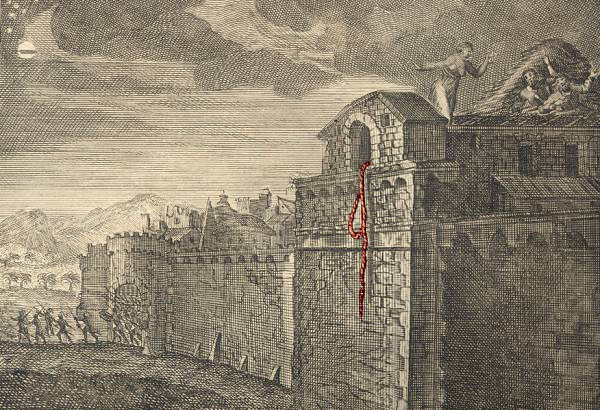
Rahab: From Floozy to Faithfulrahab-scarlet-thread

By faith Rahab the prostitute did not perish with those who were disobedient,
because she had given a friendly welcome to the spies.
Hebrews 11:31


Background- Joshua 1
Joshua 1 sets the stage for the story of Rahab and the spies. Moses had recently died, and God “promoted” Joshua to take his place. It was finally time for the Israelites to enter and take possession of the Promised Land. As God “installed” Joshua into his new position, He reminded him… Continue reading.

Uncategorized

The Word on Wednesdays


For the next several weeks, I’ll be making preparations to speak at a conference, so our next regular weekly Bible study won’t start until after I return home and get my household back in order (I’m thinking probably mid-April-ish, but don’t quote me on that.). :0) I have a study in mind, but will keep thinking and praying about it for a few more weeks.

So anyway, for the next several Wednesdays, you’ve got some options:

đź“– You can finish up Imperishable Beauty or any of my other studies you’re currently working on.

đź“– You can choose a book(s) of the Bible to work through on your own.

đź“– You can choose one of my studies to work through at the Bible Studies tab at the top of this page. (I would choose one of the shorter ones, like Colossians or Ruth rather than one of the longer ones if you’re only trying to fill the space between now and the beginning of our next study.)

đź“– You can follow along with the sampling of “re-run” lessons I’ll be posting here on the blog each week.

Here’s today’s “re-run”:

Wednesday’s Word

Wednesday is Bible study day here on the blog. In my Wednesday’s Word study, you’ll find miscellaneous, one lesson Bible studies from each book of the Bible. One chapter of Scripture followed by study questions. This sampler series demonstrates that there’s nothing to be afraid of when approaching those “lesser known” books and that every book of the Bible is valuable and worth studying.

Wednesday’s Word ~ Zechariah 7

zech 7 13

In the fourth year of King Darius, the word of the Lord came to Zechariah on the fourth day of the ninth month, which is Chislev. 2 Now the people of Bethel had sent Sharezer and Regem-melech and their men to entreat the favor of the Lord,3 saying to the priests of the house of the Lord of hosts and the prophets, “Should I weep and abstain in the fifth month, as I have done for so many years?” Keep reading…

Uncategorized

The Word on Wednesdays


Hi ladies! I hope you enjoyed our most recent Bible study, Imperishable Beauty, which we wrapped up at the end of February.

For the next several weeks, I’ll be making preparations to speak at the Reliance on God and His Word conference (Need a speaker for your next women’s event or podcast? Click the Speaking Engagements tab at the top of this page.), so our next regular weekly Bible study won’t start until after I return home and get my household back in order (I’m thinking probably mid-April-ish, but don’t quote me on that.). :0) I have a study in mind, but will keep thinking and praying about it for a few more weeks.

So anyway, for the next several Wednesdays, you’ve got some options:

đź“– You can finish up Imperishable Beauty or any of my other studies you’re currently working on.

đź“– You can choose a book(s) of the Bible to work through on your own.

đź“– You can choose one of my studies to work through at the Bible Studies tab at the top of this page. (I would choose one of the shorter ones, like Colossians or Ruth rather than one of the longer ones if you’re only trying to fill the space between now and the beginning of our next study.)

đź“– You can follow along with the sampling of “re-run” lessons I’ll be posting here on the blog each week.

Here’s today’s “re-run”:

During 2014, I led my ladies’ Sunday School class in a chronological read-through of the entire Bible. Each week I taught a lesson from that week’s reading and posted it here on the blog.

Are you using the chronological plan this year? If so, you can find my weekly lessons here (in reverse chronological order, ironically – you’ll have to scroll back to get to the beginning) if you’d like to supplement your reading plan with them. And even if you’re using another reading plan or simply studying through a book of the Bible, maybe you’d like to match up what you’re reading with my lesson that corresponds to the passage you’re currently studying.

Here’s a lesson that goes with this week’s reading in the chronological plan:

Through the Bible in 2014 ~ Week 10 ~ Mar. 2-8
Numbers 16-32
Tackling Tough Issues: Genocide in the Old Testament

Genocide: It’s defined (by dictionary.com) as, “the deliberate and systematic extermination of a national, racial, political, or cultural group.” This week in our reading, we dealt with a passage in which God commanded the Israelites to kill nearly all of the Midianites, even those we might consider “innocent.” Was God being cruel or capricious? How could a loving God command such a thing? Click here to keep reading…

Bible Study

You Have What it Takes to Lead a BIBLE Study?

I am so sick of women’s ministry/discipleship/”Bible” study that centers around narcissistic navel-gazing, I could vomit. My hurts, my feelings, my opinions, my self image.

Newsflash- You’re not the only person on the planet who’s ever been hurt or had problems.

And wallowing in the hurt and your emotions has never been the way to heal and feel better. Healing from the hurt comes from taking your focus off yourself and placing it on Christ: studying the actual Bible, obeying His commands, walking in holiness, praying, worshiping, serving others.

These canned “Bible” studies that masquerade as teaching the Bible – maybe even have the name of a book of the Bible in the title – yet all the “study” questions are about you, your preferences, and how you feel, are doing you no favors, ladies. They are keeping you enslaved to your hurts and self idolatry so you’ll continue to buy more and more of these books. Don’t be naive. LifeWay, CBDÂą, and all the major “Christian” publishers know that there’s no money to be made in telling you to study your Bible. If you study your Bible you might actually grow in Christ, learn to glorify Him instead of your own opinions, heal from your hurts, and learn to handle your problems in a biblical way. And then all these divangelistas – whose main function in life seems to be exegeting stories from their own lives and telling you all about their pain- will be out of a job because you won’t need them, their books, their DVDs, their conferences, their simulcasts, or their merch, any more.

The Christian retail machine doesn’t make money when you follow what the Bible says to do: sit under good preaching and teaching at your own church, disciple women in your own church, be discipled by godly older women in your church, serve your church, attend your church like your life depends on it (because your spiritual life does), study your Bible every day, live in obedience to Christ. 

You’re being played and you’re being used by Big Christian Retail, ladies. Stop clinging to the pretty little gilded shackles they have locked around your wrists. Break free and experience the freedom in Christ that can only come from walking faithfully with Him in His Word.

I’m no prophet, nor a son of a prophet, but sometimes I think I might have a tiny inkling of how Jeremiah felt when he said:

If I say, “I will not mention him,
or speak any more in his name,”
there is in my heart as it were a burning fire
shut up in my bones,
and I am weary with holding it in,
and I cannot.
Jeremiah 20:9

When I see the way so many professing Christian pastors, leaders, and teachers in the public eye damage the spiritual lives of their followers by adulterating God’s Word, biblical anger wells up inside me. And sometimes, the pressure gets to be too much and it finds a way to escape, like it did the other day when I tweeted the remarks above.

I hate with a holy, biblical hatred what the Christian retail machine, overall, has done to Christians, particularly Christian women, by feeding them fluff and false doctrine.

Go back and read the robust theological thoughts and writings of some of the women who helped usher in the Reformation. And then go stick your head in the door of the average women’s “Bible” study at the church down the street and listen to the teaching and comments. We didn’t get to where we are today without somebody poisoning the water hole.

So it was with no small sense of irony that two days after I had let the fire loose on Twitter, I found myself clicking – with much trepidation – on an article from LifeWay Women that popped up in my feed: You Have What It Takes to Lead a Bible Study.

It was written by a darling young lady named Mickey who made several very good points and was charming and encouraging. I’m certain she wanted the article to be helpful and edifying, and I have no points of contention with her personally. This article was a work product. It expresses LifeWay’s position, not necessarily Mickey’s personal thoughts and opinions. (I wrote for a LifeWay publication once. Believe me, if what you’ve written doesn’t match what they’re trying to convey, they edit it until it does. Which, as a business, they certainly have a right to do.)

“What might LifeWay Women think qualifies someone to lead² a Bible study?” I wondered, as I waited for the page to load. “I have what it takes? What does it take in their eyes?”

The first point of the article was to address women’s feelings of inadequacy about leading a Bible study and reassure them. Feelings. Not what the Bible says about teaching God’s Word, or the qualifications for doing so, or even the need other women have to be taught Scripture. Feelings. For LifeWay, the major obstacle to overcome for a woman who’s on the fence about teaching a Bible study is her feelings of inadequacy.

And how did LifeWay address those feelings of inadequacy and offer reassurance? Again, not with Scripture (indeed, no Scriptures are quoted or even referenced in the article), but by exegeting a personal anecdote from the author’s life. “I felt inadequate too, but then I gave it a try and I was successful. So if you’re feeling inadequate to lead, just give it a try. You’ll be successful, too.” It may be an oversimplification, but that’s the take away.

If this methodology sounds familiar to you, maybe it’s because you’ve worked through one of LifeWay’s most popular women’s “Bible” studies. Generally speaking, this is the core of the majority of LifeWay’s women’s “Bible” study products: your feelings and the exegesis of personal stories from the author’s life to relate to and address those feelings.

The article went on to quote a recent LifeWay Women survey which asked women,

“What is the biggest obstacle keeping you from leading a Bible study?”

Know what the number one answer was? “I don’t feel like I know enough to lead.” (Again with the feelz.)

Is it any wonder, when, for decades now, evangelical women have been fed a steady diet of nothing but girlfriend stories that they feel inadequate to teach the Bible? Of course they feel inadequate! They don’t know their Bibles because the materials they’ve been getting from LifeWay all this time haven’t taught them the Bible. They likely know more about their favorite author than they do about Jesus. Most of them probably correctly feel inadequate because they don’t know enough to lead.

Feelings of inadequacy aren’t wrong simply because they make you feel bad. Sometimes your feelings of inadequacy are wrong because you’re neurotic or unrealistically anxious, and sometimes they’re right because you don’t have the skills to handle the task you’re attempting. We’ve all watched enough American Idol auditions to know that.

Our feelings need to be informed, molded, and submitted to the facts of God’s written Word. And what does God’s written Word have to say about whether or not you have what it takes to lead a Bible study?

Not many of you should become teachers, my brothers, for you know that we who teach will be judged with greater strictness.
James 3:1

Where LifeWay issues a blanket “anybody can do it” encouragement to the hundreds of women (whom LifeWay has never laid eyes on and has no idea whether or not they’re biblically qualified to teach God’s Word) reading this article – “…trust me, friend, you have what it takes, too” – the Bible says that teaching Scripture is a solemn, weighty ministry fraught with the burden of responsibility of imparting God’s Word correctly. And precisely because of that, “not many” should become teachers.

Do your best to present yourself to God as one approved, a worker who has no need to be ashamed, rightly handling the word of truth.
2 Timothy 2:15

What does LifeWay think qualifies someone to lead a Bible study? “…a willing spirit, an open heart for new friendships, and thirst for more of God.” Is that what the Bible says about qualifying for the lofty responsibility of teaching God’s Word? No. The Bible says we need to work hard at studying, understanding, and rightly handling God’s Word so that we don’t end up twisting it or teaching something that conflicts with it. We need to be able to stand before God unashamed to say, “I worked hard, and studied long, and did my very best to teach your Word accurately.”

And the Lord’s servant must not be quarrelsome but kind to everyone, able to teach, patiently enduring evil, correcting his opponents with gentleness.
2 Timothy 2:24-25a

LifeWay seems to think getting over your feelings of inadequacy means you have what it takes to lead a Bible study. The Bible says there’s a much higher standard. Are you even able to teach – to accurately explain what God’s Word says, in a way women can understand, and help them correctly apply it to their lives? Are you quarrelsome? Kind? Able to endure evil patiently? Do you know and can you handle Scripture well enough to correct someone who makes an unbiblical argument, and can you do it gently?

Older women likewise are to be reverent in behavior, not slanderers or slaves to much wine. They are to teach what is good, and so train the young women to love their husbands and children, to be self-controlled, pure, working at home, kind, and submissive to their own husbands, that the word of God may not be reviled.
Titus 2:3-5

LifeWay doesn’t address the character needed to teach the Bible. The Bible says you’re to be mature and behave reverently, you’re not to gossip and slander others, and you’re not be controlled by alcohol.

While one of LifeWay’s tips for leading a small group is to choose a study that fits the “interests, preferences, and characteristics” of the women in your group, the Bible doesn’t really care what they’re interested in or prefer to learn. It prescribes what they need to learn. Do you know “what is good” according to Scripture? You have to know that if you’re going to teach it. And you also have to know what the Bible says about wives loving and submitting to their husbands, loving their children, being self-controlled, kind, and pure, and working at home, if you’re going to teach those things.


The Bible says you have to know your Bible to teach a women’s Bible study. You have to have certain skills, abilities, and character traits. Not just anybody can do it. Not just anybody should do it.

Do you have what it takes to lead a Bible study? If you want to know, don’t check with LifeWay. Check your Bible.


ÂąChristianbook.com – It used to be called Christian Book Distributors. Old habits die hard. :0)

Additional Resources:

Bible Studies

Basic Training: Bible Studies and Sermons

McBible Study and the Famine of God’s Word²
After I finished writing today’s article, I noticed that the LifeWay article exclusively used the phrase “lead a Bible study” rather than “teach a Bible study.” This is likely due to the fact that many LifeWay studies do not require the leader to teach so much as to play a DVD of a popular LifeWay author teaching. It is probably also intentional – to encourage women to lead without that pesky little need to be biblically qualified to teach. However, most people still rightly understand “leading a Bible study” to mean teaching the Bible, thus the survey response of “I don’t feel like I know enough to lead,” and Mickey’s own fear that “I don’t know enough about the Bible to lead…”. You don’t need to know much about the Bible to push a button on a DVD player. McBible Study and the Famine of God’s Word addresses this harmful practice and the need for the church to have trained teachers teaching the Bible.

4 Ways We’re Getting Women’s Discipleship Wrong, and How We Can Get it Right!

The Mailbag: “We need to stop relying on canned studies,” doesn’t mean, “We need to rely on doctrinally sound canned studies.”.


Basic Training, Bible Study, Sermons

Basic Training: Bible Studies and Sermons

For more in the Basic Training series, click here.

When I started the Basic Training series, I thought I’d be writing about foundational theological concepts and practices in Christianity. You know, like baptism or the sufficiency of Scripture. It never occurred to me that I might someday need to explain something so basic that most lost people could define it as well as (sometimes better than) many professed Christian leaders.

But the more “Bible” studies and sermons I take in, the more I think a remedial course in exactly what those things are supposed to consist of might be very beneficial to the church at large, and an unfortunate necessity for many pastors, teachers, and Christian celebrities.

I could be way off base here, but I’d almost bet that if you went up to ten random people on the street and asked them what a Bible study class is supposed to do, at least nine out of ten of them would answer, “Study the Bible.” If you asked those same people what a sermon is, you might get more varied answers, “It’s when the preacher explains what the Bible says,” or “It’s a pastor telling you how to be a good person,” (remember these are random, probably unsaved, people) or “A sermon tells you about God.” But I’m guessing none of them would answer, “It’s when a preacher gives a stand up comedy routine,” or “A sermon is mostly stories about the preacher, his family, and other people,” or “A sermon is when you watch a movie and then the preacher adds a few remarks at the end about what you can learn about God or life from the movie.”

Yet, that’s pretty much where way too many churches are these days.

So let’s take a look at what Bible studies and sermons are and aren’t supposed to be.

It’s All About The Bible

This is supposed to be a “duh” moment for Christians, pastors, teachers, and churches. If someone is teaching a Bible study or a pastor is preaching a sermon, the first thing he should reach for is his Bible. He is to be preaching or teaching God’s written Word. It’s right there in black and white in 2 Timothy 4:1-2:

I charge you in the presence of God and of Christ Jesus, who is to judge the living and the dead, and by his appearing and his kingdom: preach the word; be ready in season and out of season; reprove, rebuke, and exhort, with complete patience and teaching.

That’s a very solemn and weighty charge to pastors. In today’s vernacular, it’s almost like placing your right hand on the Bible, raising your right hand, and saying, “As God is my witness, I swear to God I will ______.” (and actually understanding the gravity of that and meaning it). God is witnessing this charge to you pastor – you’d better take seriously your duty to preach His Word.

And notice, there are only two times when a pastor is supposed to preach the Word: in season and out of season. When his people want to hear it and when they don’t. When he feels like it and when he doesn’t. When he’ll be persecuted and when he won’t. When it’s easy and when it’s hard. When it’s a pleasant, encouraging passage, and when it’s a passage that offends people. Pastors, and, by extension teachers, are to preach and teach the written Word of God in every sermon and teaching opportunity. Always.

It’s Not About the Preacher/Teacher/Author

There are a lot of awesome pastors, teachers, and authors out there who labor faithfully to rightly teach God’s Word to His people. I am unspeakably grateful to them and for them.

But let’s face it, there are also a lot of narcissistic gas bags out there who use the pulpit and the pages to pump up their already over-inflated egos by endlessly blathering on and on about themselves, their families, their friends, and their experiences. You can tell by the ratio of personal stories to Scripture who they love best and are most interested in.

I’ve read books and heard sermons that I walked away from thinking, “I know more about that pastor or author, his family, his trips, the charity work he does, and who his important friends are than I do about God and His Word.” (I’ll tell you this, he’s received his reward.)

Pastors, teachers, authors aren’t to preach themselves, they’re to preach the Word.

It’s Not About Gimmicks and Entertainment

A sermon series based on movies. A pastor riding a motorcycle into church. Ziplining during the sermon. Rock concerts and light shows. Raffles and giveaways of cars and other big ticket items. The pastor and his wife promoting a sermon series on sex. On the news. From a bed. On the roof of the church.

Pastors and teachers aren’t charged to entertain people or get them in the doors of the church and keep them there by any means necessary. Pastors and teachers are charged – with God as their witness – to faithfully preach and teach His written Word. Jesus said shepherds who love Him will feed His sheep, not entertain them.

Newsflash – the world isn’t going to find that interesting enough to get out of bed for on Sunday morning. Newsflash – That’s fine. The gathering of the church isn’t for the world. The gathering of the church is for the church – the people who have been saved out of the world and into the body of Christ – to give them an opportunity to worship the Savior they love with their brothers and sisters, to disciple them in God’s Word, and to equip them with God’s Word to go out and share the gospel with the world.

It’s Not About You, Either

The flip side of “it’s all about the Bible” is, it’s not about you. What does that mean? The sermon or the Bible study lesson should not teach us to look down in narcissistic navel-gazing, it should teach us to look up at God, who He is, what He has done, and what He says in His written Word.

Over the years, I’ve had the discouraging duty of reviewing various women’s “Bible” studies. Though some have been better than others, the theme running through the majority of them is “it’s all about you” – your feelings, your hurts, your ego, your opinions, your personal experiences. It’s evident in the way authors insert long stories about their own lives and base their ideas, agendas, and assertions on those personal experiences rather than on Scripture. It’s evident in the questions the reader is supposed to answer at the end of each lesson: “Have you ever experienced _____?” “How does ____ make you feel?” “If you could ____, how would you do it?” “What do you think others’ opinion of you is?”

Good Bible studies give you rightly handled, in context Scripture until it’s coming out of your ears, and then they ask questions like, “What are the attributes of God listed in this passage?” “Verse 3 talks about lying. What are some other verses that talk about lying, and how can we tell from these verses how God views lying and why?” “How does this passage point us to Christ?”

Is there a need for introspection during Bible studies and sermons? Sometimes. But the focus is not you and your feelings and experiences. The focus is on reflecting on the glory of God in the passage you’ve just heard, repenting of the sin the passage you’ve just read has convicted you about, obeying the command in the passage you’ve just heard, and things like that. It’s Bible-focused, driven, and governed, not me-focused, driven, and governed.

Context, Context, Context

It’s not just important to preach and teach the Bible, it’s important to handle the text of the Bible correctly and in context.

You’ve probably heard the old joke about the guy who wants God to tell him what he should do with his life. So he opens up the Bible to a random spot, closes his eyes, puts his finger down on the page, and looks at the verse he’s pointing at. It’s a New Testament verse: “Judas went and hanged himself.” “Hmm,” he thinks, “that doesn’t make much sense.” He shuts his Bible and tries the process again. This time, it’s an Old Testament verse, “Go and do thou likewise.”

We laugh at the silliness of this little story, but it hits frighteningly close to home for far too many pastors and teachers.

Perhaps you’ve read a devotional that quotes a Bible verse (or maybe even just part of a verse) at the top of the page. The author then goes on to teach on that verse or tell a personal story. When you look up the verse and read a little more of the chapter it’s in, you discover it has nothing to do with the author’s story or doesn’t mean what the author was teaching.

Or maybe you’ve sat in a church service where the pastor reads a verse or two at the beginning of the sermon and then basically closes his Bible and shares personal thoughts and stories for the rest of the sermon time that have nothing to do with the verses he read at the beginning. Or a sermon in which the pastor hopscotches all over the Bible (often using a myriad of translations) reading a verse here, half a verse there, in an effort to prove his homespun thesis or support the agenda he’s crafted.

Yes, technically, there’s Bible in all of those teachings, but none of those methods handle Scripture properly or in context. That’s called eisegesis, and it basically means reading your own ideas into the text of Scripture, or twisting Scripture to get it to say what you want it to mean.

The proper method of teaching Scripture is exegesis. Exegesis is taking a passage of Scripture in context, and “leading out” of it- teaching what the passage means. That’s nearly always going to require reading several verses from the passage to catch the reader or listener up on what’s going on in the story she’s just parachuted into.

Good pastors and teachers read and teach the biblical text in an organized way. When you sit down to study, say, a history book, you start at the beginning of the book and you work your way through to the end. You don’t start by reading two paragraphs out of the middle of chapter 7, then move on to the last three sentences of chapter 49, then the first half of chapter 1. That’s how people preach, teach, and “study” the Bible sometimes, and it’s just as crazy to read the Bible that way as it would be to study a history book, or math book, or science book that way, or even to read a novel or a magazine using that helter-skelter method.

Expository vs. Topical

This section is a brief, modified excerpt from my article The Mailbag: Expository or Topical Preaching: Which is better?.

For readers who might not be familiar with the terms, expository preaching and teaching is basically when a pastor preaches (or a teacher teaches) through books of the Bible from beginning to end carefully explaining what each passage means. (Ezra is an example of an expository Bible study.)

Topical preaching can have a couple of different meanings depending on who you’re talking to and what she understands the term to mean. Some people understand “topical preaching” to mean a sermon series, usually in a seeker driven church, that centers around something in pop culture. (For example, popular movies or the Olympics.) Normally, these sermons are very shallow, biblically – sometimes nothing more than a pep talk or self-help tips. This type of preaching and teaching is unbiblical, and if it makes up the bulk of the teaching at your church, I’d recommend finding a new church.

There is, however, a biblical form of topical preaching and teaching that can be very helpful, occasionally. If a doctrinally sound pastor sees an issue in the church that needs to be addressed, or a biblical topic to explore, there is nothing wrong with his taking a break from preaching through a certain book (or when he’s between books) to teach on this issue from the pulpit. (Imperishable Beauty: A Study of Biblical Womanhood is an example of a biblical, topical Bible study.)

In my opinion, the majority of a pastor’s preaching and a Bible study’s teaching should be expository with occasional breaks for (biblical) topical preaching and teaching as needed. There are a variety of reasons for this (more in the linked article):

• Expository preaching models for the congregation the proper, systematic way they should study the Bible at home.

• Expository preaching helps a pastor better preach the whole counsel of God.

• Expository preaching pushes pastors to tackle hard and unfamiliar passages as they come up in the text.

• Expository preaching should keep the Old Testament and certain books of the Bible from being neglected as much as they usually are.

• Expository preaching gives the congregation a better grip on the overall story arc of the Bible and the culture of the period being studied.

Expository and topical preaching are both helpful in their own ways, but the most important thing is that the pastor is “rightly handling the word of truth.”


There’s a lot of lousy preaching and teaching out there these days, but if you’ll look for good, solid biblical preaching and teaching (check the Recommended Bible Teachers and Bible Studies tabs above for ideas) God can use it mightily in your spiritual life to grow you to greater Christlikeness.