
Bible, Entertainment, Movies, Television

Six Thoughts on History’s “The Bible” ~ Part 3 ~ REDUX

thWith the movie Son of God releasing in theaters tomorrow, February 28, for the past two Thursdays I’ve been rerunning a three part series I wrote on last year’s History Channel miniseries, The Bible. This is the final installment. Son of God is Roma Downey’s and Mark Burnett’s movie about Jesus that is drawn from The Bible’s scenes pertaining to His life and ministry, as well as deleted scenes that did not make it into the miniseries.

Also see: Should Christians Boycott ‘Son of God’? Three Things to Consider


Six Thoughts on History’s “The Bible” ~ Part 3

This is the third of a three part series on The History Channel’s The Bible miniseries*. You can find Part 1 here and Part 2 here.

5. The faulty theology of “The Bible’s” theological advisors is influencing and slanting the way God’s word is being presented.

Rick Warren’s twisting of Scripture to fit his “Purpose Driven” overview of God’s nature and character, Joel Osteen’s self esteem boosting and positive thinking, T.D. Jakes’ prosperity gospel and modalism (an unbiblical doctrine of the Trinity), and Roma Downey’s New Age spiritual psychology degree have crept into The Bible’s stories and subtly shifted the Scriptures’ real focus on sinful man’s need of God’s redemption to a “follow the leader and together we’ll change the world” paradigm.

Go back to the beginning of the series and watch it again, counting the number of times the word “leader” is used. Every major Old Testament character has been cast as a “leader,” and Israel’s prosperity or demise is portrayed as contingent on whether the leader was good or bad and whether or not Israel followed his leadership. This is not the message of God’s word. When Israel was obedient to God, she flourished. When she rebelled and chose idolatry, she crashed and burned. Kings, judges, and prophets had influence on the people, but it was Israel’s obedience to God Himself that was the hinge on which the nation swung.
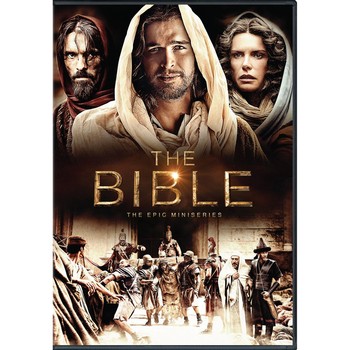
0bc90ac98e8e3d20a24be1f335b5966aIt was especially disturbing to hear prophets such as Jeremiah and Daniel being cast as “leaders.” The prophet’s job was not to lead the people. The prophet’s job was to speak the words of God to the people and exhort them to submit to Him, just as pastors are supposed to do today. Leaders say, “Follow me.” Prophets say, “Follow God.”

Further, nowhere in God’s word does it say that Jesus came to “change the world,” or “change people’s lives,” nor does the Bible teach that Christians are to do these things. Jesus came to seek and to save the lost (Luke 19:10), to serve, and give His life as a ransom for many (Mark 10:45). Christians are exhorted, not to the lofty goal of “changing the world,” but to the abasing role of denying ourselves, taking up our crosses daily (Luke 9:23), being persecuted (2 Tim. 3:12), and making disciples (Matt 28:19-20).

Jesus did change the world, and He does change our lives, but this was a side effect of His life, death, and resurrection, not His goal. He was here to carry out God’s plan of redemption. The movie’s “change the world” mentality puts the focus on us. Scripture puts the focus on God’s sovereign redemptive purposes.

6. The glory has departed from “The Bible.”

From the beautiful picture of Jesus’ sacrificial death for us in the story of Abraham’s sacrifice of Isaac, to the overwhelming mercy and forgiveness of God after David’s sin with Bathsheba, to the awe-inspiring, God given faith in Shadrach, Meshach, and Abednego’s refusal to bow to an idol, the glory of God, which fairly drips from the Scriptures, is achingly absent from The Bible. To be fair, I don’t think any movie could ever completely capture the same revelation of God’s magnificence that a Christian experiences when he sits down and interacts with the Bible as the Holy Spirit moves in and among the living and active words. But there are movies that have come much closer than this one has. The Scriptures are not just a collection of stories meant to inspire us to emulate their heroes. Rather, they reveal to us who God is; a different facet of His glorious nature and character in each story we read.

As I conclude these six observations about History’s The Bible, it is my hope and prayer that the overall effect of the series having been telecast will be a positive one for the Kingdom. For those of us who belong to Christ, may we use it as a springboard to share the gospel with the lost and encourage discernment and study of God’s word for our brothers and sisters in Christ and for ourselves.

*Just a note for future readers: This article was written during the week between episodes 3 and 4 of the miniseries. Episode 3 wrapped up the Old Testament and introduced the New Testament, covering Jesus’ birth through the calling of Peter. As I write, I have not seen episode 4 or 5.

Calvinism/Arminianism, Celebrity Pastors, Cessationism/Continuationism, Church, Complementarianism, Homosexuality

Keep On Keeping Up: 5 Issues Christians Need Guidance About from Our Pastors ~ Part 1

14333566699421

Read Part 2 of this article, “Keep On Keeping Up: 6 More Issues Christians Need Guidance About From Our Pastors” here.

"Ignorance? Of Benny Hinn? A man in Brown’s position claiming ignorance of Benny Hinn would be tantamount to an Olympic swimmer claiming ignorance of Michael Phelps or for a high level employee of Microsoft claiming ignorance of Bill Gates."
“Ignorance? Of Benny Hinn? A man in Brown’s position claiming ignorance of Benny Hinn would be tantamount to an Olympic swimmer claiming ignorance of Michael Phelps or for a high level employee of Microsoft claiming ignorance of Bill Gates.”

Last week, I read a great article by Justin Peters entitled “Ignorance Is Not An Option.” In the article, Dr. Peters addresses a recent incident in which “charismatic theologian, author, and radio host Dr. Michael Brown” claimed not to know about the reputation and heresy of Benny Hinn, one of the most notorious false teachers in the Word of Faith movement. I know about him. You probably know about him. How could someone in Dr. Brown’s position not know at least the basics about Benny Hinn and why no Christian should endorse him?

It got me thinking- “ignorance is not an option” applies to far more than this one, isolated incident. We church members desperately need our pastors to keep up with at least the basics of current trends and thought in evangelicalism, and in theology and doctrine.

Why? There is a tsunami of materials, ideas, and personalities out there, and church members- even though we should seek to keep abreast, ourselves -need help sorting through it all. What’s biblical? What’s not? Also, pastors need to be informed about who and what they endorse (even tacitly), lest they encourage their church members to follow a person or doctrine that is not in line with God’s word.

So, what, specifically, are some of those current trends that we folks in the pew need our pastors to keep up with? Here are a few, along with some great resources to spare pastors some leg work:

Celebrity Pastors and Christian Authors: Do you know who Joyce Meyer, Matt Chandler, Rick Warren, Joel Osteen, John Piper, John MacArthur, Andy Stanley, Steven Furtick, Beth Moore, Mark Driscoll, Tony Campolo, David Platt, and Rachel Held Evans are (just to name a few)?

Do you know why your people should or shouldn’t be listening to/reading them? What about any controversies surrounding them? Do you have a general awareness of whether they have a track record of, and are currently teaching, sound doctrine or false doctrine?

Church members may not know the answers to these questions, but they’re walking into Christian bookstores and buying their books, re-tweeting them, and listening to their podcasts. If a church member comes and asks you about one of these pastors/authors, what will your recommendation be? We church members need our pastors not to go by the pastor/author’s popularity, whether what they write or say sounds pleasing to the ear, how many books they’ve sold, that their stuff is sold at a store you think is trustworthy, or how big their church is. Whether we know it or not, we need your deciding factor to be: Does what they teach consistently match up with God’s word (in context)?

*Resources:
Fighting for the Faith: Listen regularly, or make good use of the search box. Chris Rosebrough has analyzed the teaching of nearly all of the people in the list above as well as many others.
Apprising Ministries: While I sometimes feel Ken Silva’s tone is too sharp, his posts are saturated with links to articles and videos of questionable teachers (plus tons of other resources) that you can check out for yourself.

Complementarianism vs. Egalitarianism: In a nutshell, complementarianism is the view that God’s roles for men and women in marriage and in the leadership of the church are different, yet equally important. Wives are to submit to their husbands, and husbands are to lovingly lead their wives and children. The roles of pastor and elder are reserved to men, and women are not to teach the Bible to men or hold authority over men in the church.

Egalitarianism basically says that there are no gender restrictions on any positions in the church, including that of pastor, and that husbands and wives are to be “mutually submissive” to one another, removing any distinctive definition of headship.

The church, and women, especially, have been heavily influenced by culture on this issue, but what does God’s word say about it?

Resources:
Complementarianism vs. Egalitarianism- Which View Is Biblicaly Correct? by GotQuestions.org
The Council on Biblical Manhood and Womanhood

Cessationism vs. Continuationism: Did the “miracle” or “sign” gifts such as speaking in tongues/other languages, healing, visions, direct revelation from God, raising the dead, etc., come to an end with the closing of the canon or death of of the last apostle, or do these gifts continue in the same way today?

Resources: 
Strange Fire Conference audio from John MacArthur
Continuationism and Cessationism: An Interview With Dr. Wayne Grudem- Part 1 and Part 2 by Tim Challies

Calvinism vs. Arminianism:  I don’t think I could boil down the tenets of Calvinism or Arminianism to a brief paragraph in any sort of way that wouldn’t have people on both sides hot under the collar. This has been a strenuously debated topic, particularly for Southern Baptists, for the last several years.

So, let me just say, and I’m sure everyone on both sides can agree, it is extremely important to know what the Bible says about our sin nature, free will, election and predestination, and whether or not a person can lose his salvation. These are weighty issues with eternal consequences that shouldn’t be dealt with lightly or in a way that seeks to reinforce our own opinions at the expense of what God’s word says.

Resources: 
Calvinism and Arminianism by Theopedia.com

Homosexuality In the Church: Homosexuality is certainly not the only sin out there, but it’s the sin that’s the hottest topic right now. Do you know the Scriptures that address homosexuality? Do you know how to answer the canard: “Christians say that homosexuality is against God’s law, yet they eat shellfish and wear garments of mixed fabrics, which is also against God’s law,”? What would you tell a church member who thinks it’s not loving to call homosexuals to repent of their sin and trust Christ or that godly “love” means we should validate their sin? Do you know how to help Christians who are former homosexuals deal with temptation to their old sins? Is it biblical to allow unrepentant, practicing homosexuals to serve in leadership positions in the church? Things like this may be going on in your own denomination, so it’s important for church members to be trained in what God’s word actually says.

Resources: 
Homosexuality by CARM.org
How Can We Help Christians Who Are Struggling with Homosexual Desires? by John Piper
Homosexuality and the Modern Church by Robert Gagnon and Tony Reinke

*The resources given are obviously not an exhaustive list. For the most part, they are resources I have used myself, found to be helpful, and trust to be generally doctrinally sound. There are many other wonderful resources out there, but, naturally, our most important resource is to compare all things to God’s word in context.


Read Part 2 of this article, “Keep On Keeping Up: 6 More Issues Christians Need Guidance About From Our Pastors” here.