
False Teachers

Karen Kingsbury

If you are considering commenting or sending me an e-mail objecting to the fact that I warn against certain teachers, please click here and read this article first. Your objection is most likely answered here. I won’t be publishing comments or answering emails that are answered by this article.


This article is kept continuously updated as needed.
I get lots of questions about particular authors, pastors, and Bible teachers, and whether or not I recommend them. Some of the best known can be found above at my Popular False Teachers tab. The teacher below is someone I’ve been asked about recently, so I’ve done a quick check (this is brief research, not exhaustive) on her.

Generally speaking, in order for me to recommend a teacher, speaker, or author, he or she has to meet three criteria:

a) A female teacher cannot currently and unrepentantly preach to or teach men in violation of 1 Timothy 2:12. A male teacher or pastor cannot allow women to carry out this violation of Scripture in his ministry. The pastor or teacher cannot currently and unrepentantly be living in any other sin (for example, cohabiting with her boyfriend or living as a homosexual).

b) The pastor or teacher cannot currently and unrepentantly be partnering with or frequently appearing with false teachers. This is a violation of Scripture.

c) The pastor or teacher cannot currently and unrepentantly be teaching false doctrine.

I am not very familiar with most of the teachers I’m asked about (there are so many out there!) and have not had the opportunity to examine their writings or hear them speak, so most of the “quick checking” I do involves items a and b (although in order to partner with false teachers (b) it is reasonable to assume their doctrine is acceptable to the false teacher and that they are not teaching anything that would conflict with the false teacher’s doctrine). Partnering with false teachers and women preaching to men are each sufficient biblical reasons not to follow a pastor, teacher, or author, or use his/her materials.

Just to be clear, “not recommended” is a spectrum. On one end of this spectrum are people like Nancy Leigh DeMoss Wolgemuth and Kay Arthur. These are people I would not label as false teachers because their doctrine is generally sound, but because of some red flags I’m seeing with them, you won’t find me proactively endorsing them or suggesting them as a good resource, either. There are better people you could be listening to. On the other end of the spectrum are people like Joyce Meyer and Rachel Held Evans- complete heretics whose teachings, if believed, might lead you to an eternity in Hell. Most of the teachers I review fall somewhere in the middle of this spectrum (leaning toward the latter).

If you’d like to check out some pastors and teachers I heartily recommend, click the Recommended Bible Teachers tab at the top of this page.
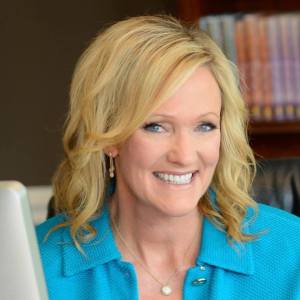

Karen Kingsbury
Not Recommended

Karen Kingsbury is in a bit of a different category when it comes to her works of fiction. I asked about her in a group of theologically sound women I’m a member of. Here’s what they said:

“Her books are very ‘evanjellyfish’. Lots of personal words from God. Jeremiah 29:11 is quoted and misapplied several times per book. Ask Jesus into your heart. All the usual stuff.”

“There are absolutely problems with KK’s theology. Her latest series is about angels sent by God to earth to direct the lives of four chosen people and keep them alive so that one of the couples can bear a child named Dallas Garner who will turn the hearts of people back to God.”

“I actually saw The Bridge Part 1 and 2 on Hallmark that is based on her books. I would no way look to her for theology, but the movies were decent for a Christmas feel good movie. But that’s as far as I’d ever go with her stuff.”

“I really enjoyed the Baxter family series. As fiction. Not for theology. I’m pretty sure I rolled my eyes quite a bit at those parts. But – it’s fiction. I don’t hold fiction to the same standard that I would a theological book.”

“The angels series is way out there and could lead to very bad theology. If you read those books, you might want to compare it with a study of angels in Scripture.”

I would echo the respondent who said she does not hold fiction to the same level of doctrinal purity as non-fiction Bible studies, Christian living, or theology books. If you are a new Christian or not very knowledgeable of the Bible, it would probably be a good idea for to stay away from Karen Kingsbury books until you’re more mature in Christ and can spot and reject the theological problems in the books.

That being said, though Karen is mainly still a fiction author, she has been branching out a bit in recent years.

Karen has written several “Bible” studies, including The Family of Jesus and The Friends of JesusIn this promo article for The Family of Jesus Karen explains:

“The Family of Jesus allows me to take a fictitious look at Joseph, Zechariah, John the Baptist, Elizabeth, James, and Mary in stories anchored by Scripture and cultural relevance – but with storytelling between those points. These stories will make you feel for the precious family members of Jesus. They will make you feel connected to Him in a way you may not have felt before.

So, this is a “Bible” study in which you will be studying fictitious stories about Jesus’ family members. Because the Bible itself isn’t good enough to make you feel connected to Jesus. (Lots of emphasis on feelings, of course.)

Karen has also begun speaking at Christian conferences. If she were only speaking on topics such as how to be a good fiction writer, or finding a publisher, or things like that which have little to do with theology, it wouldn’t be much of an issue. However it appears that she is speaking on theological topics at least sometimes as well as speaking before co-ed audiences.

Karen is one of the main session speakers at the 2019 North Carolina Baptist Missions Conference. The topic of her talk is not listed, but missions is a biblical topic, and both the promo video and the conference brochure clearly indicate that she will be speaking to a co-ed audience.

Karen will be speaking at three different Women of Joy events in 2019. As I’ve noted in other articles, WoJ frequently employs false teachers such as Christine Caine, Sheila Walsh, and Jennie Allen at these events, and indeed, Karen will be speaking with Sheila at one of her WoJ events and Jennie at another.

Mixing fiction with Bible study and partnering with false teachers are both dangerous and unbiblical.

Mailbag

The Mailbag: Christian Fiction Recommendations

This article is kept updated as needed.

I love to read Christian fiction but find that it can be a bit of a minefield. It can get off course theologically and may reflect the world more than biblical Christianity. Have you ever given recommendations on Christian fiction writers?

Great question! We all need a little mind candy now and then, but we don’t want it to be a vehicle for delivering bad theology to our brains.

First, let me sort of set the stage for what’s in my mind when I think of “Christian fiction.” Other people might have other definitions of this book genre, and that’s absolutely no problem, but, to me, Christian fiction has an overtly biblical message or theme and maybe even a blatant presentation of the gospel. When I think of “Christian fiction” I’m not thinking merely “family friendly” (a good clean story with nothing biblical in it), or a novel with a character in it who happens to attend church or be a Christian but there’s nothing else biblical in the book, or a fiction book on a non-biblical topic that’s written by someone who’s a Christian. So the books I’ll be recommending below will fit this definition of “Christian fiction.”

Next, I know the bulk of Christian fiction marketed to women is romance and Amish romance. And, in keeping with the “stick out like a sore thumb” weirdness that is Michelle Lesley, it’s not a genre (Christian or secular) I personally enjoy. There’s nothing wrong with it if you can find a good one and you like romances, but the books below aren’t romances simply because that’s not what I read. I tend toward biblical history novels and – I don’t know if there’s a particular name for this type – “real life scenario” contemporary Christian lit.

A few final points:

•I don’t hold Christian fiction to quite as high a theological standard as I do Christian non-fiction (theology, Bible studies, “Christian living” books, etc.). Some of the books below may have a few theological “cow pies” you’ll have to step around and ignore, but, for the most part they’re in line with biblical theology.

•My personal standard for recommending a biblical historical fiction book (a fictionalized account of a true Bible story, such as Lynn Austin’s and Chris Skates’ books below) is that the book has to stay true to what the Bible actually says took place including the dialogue, details, and chronology, and any of the fictionalized parts have to comply with biblical principles, theme, history, and culture of the time period.

•I haven’t checked any of these authors (as I would non-fiction Christian authors) to see where they stand on the role of women in the church, and I haven’t researched any of them to discover whether they associate with false teachers.

That said, here are a few recommendations:

Karen Kingsbury– Although her older works of fiction may not be too problematic, she is not someone I’d encourage you to read because of her recent theological trajectory.

Lynn Austin– Here’s a “book report” I wrote on Lynn Austin’s Chronicles of the Kings series. I read that entire series and loved it. It was VERY good and theologically strong.

Chris Skates– Chris’ biblical historical fiction rendition of the story of Noah and his family in The Rain was a fun read.

Those are the only ones I’ve actually written about. Here are some others I’ve read and enjoyed over the years. (Quoted excerpts courtesy of Amazon.com)

Hank “The Bible Answer Man” Hannegraaff:

The Last Disciple– “As the early church begins to experience the turbulence Christ prophesied as the beginning of the last days, an enemy seeks to find John’s letter, Revelation, and destroy it. Meanwhile the early Christians must decipher it and cling to the hope it provides as they face the greatest of all persecutions.”

(Update: A few months after the original publication of this article, Hank Hannegraaff decided to join the Greek Orthodox church. Though I read and enjoyed this fictional book of his, I would no longer recommend his non-fiction work or ministry as biblically trustworthy.)

Paul Maier:

A Skeleton in God’s Closet– “Dr. Jonathan Weber, Harvard professor and biblical scholar, is looking forward to his sabbatical year on an archaeological dig in Israel. But a spectacular find that seems to be an archaeologist’s dream-come-true becomes a nightmare that many fear will be the death rattle of Christianity.”

The Constantine Codex– “While touring monasteries in Greece, Jon and his wife Shannon—a seasoned archaeologist—uncover an ancient biblical manuscript containing the lost ending of Mark and an additional book of the Bible. If proven authentic, the codex could forever change the way the world views the holy Word of God.”

Kathi Macias:

People of the Book– “Farah lives in Riyadh, Saudi Arabia, with her family, and wants nothing more than to develop a deeper devotion to her Muslim faith. She sees the month of Ramadan as her chance to draw nearer to Allah, and pursues that goal. All goes well until the prophet Isa—Jesus—appears to her in a dream and calls her to Himself.”

Joy DeKok:

Rain Dance– “What happens when a Christian woman facing a childless future and a woman seeking an abortion are waiting to see the same doctor? What if after that “chance” encounter they are unable to forget each other?”

Randy Alcorn: I’ve read and enjoyed most of Randy’s fiction books. Off the top of my head, I don’t recall any I wouldn’t recommend. Two of my favorites were:

Safely Home– “Is this the day I die? Li Quan asks himself this question daily, knowing that he might be killed for practicing his faith. American businessman Ben Fielding has no idea what his brilliant former college roommate is facing…But when they are reunited in China after twenty years, both men are shocked at what they discover about each other.”

Edge of Eternity– I would call this book a modern day Pilgrim’s Progress. “Imagine Being Pulled Into the Hereafter. While You’re Still Alive. A disillusioned business executive whose life has hit a dead-end, Nick Seagrave has lost loved ones to tragedy and his family to neglect. Now, at a point of great crisis, he unbelievably and inexplicably finds himself transported to what appears to be another world.”

Frank Peretti: Years ago, I was a big Frank Peretti fan and read most of his novels. I don’t remember any overt heresy in his work, but it’s been well over a decade since I’ve read anything by him, so that could just be my faulty memory. Most of his novels deal with spiritual warfare, so there’s the potential for some errant theology there. Read discerningly. Two of my Peretti favorites are:

This Present Darkness and Piercing the Darkness (a two book series)- “The small town of Ashton is the unexpected setting for an epic clash between good and evil as a Christian preacher and a news reporter unearth a plot to take over their small community, and eventually the world.”

There are also some books that would fall under the category of Christian fiction which I would strongly recommend against:

The Shack (or any other book) by William Paul Young: While I mentioned that I don’t hold Christian fiction to as high a theological standard as Christian non-fiction, I definitely don’t recommend any Christian fiction fraught with blatant heresy or whose main goal is to teach heresy, and that’s what Young himself has stated is one of the objectives of this book (although he doesn’t consider his views heresy). The movie based on this book releases next month (March 2017). Here are some resources that will explain the theological problems in The Shack in more detail.

Redeeming Love (the book or the movie) by Francine Rivers

The Chosen (any books or materials): Yes, it’s fiction. If you want the non-fiction version, read your Bible.

Inappropriate/Unbiblical Content: In an effort, I guess, to be cutting edge, cool, or gritty, there are novels marketed under the Christian fiction genre which contain profanity, graphic sex scenes, and glorification of other sinful behavior. I would not recommend those books regardless of the reason these types of things are included in the book.

Girl “Porn”: This is really more about what’s going on in the reader’s heart than the book itself. It’s been said that romance novels can be a form of literary “pornography” for women. I mentioned graphic sex scenes above, but I would also caution women away from non-graphic Christian romances if they cause you to create an idol in your heart of the “ideal” man that no real life man can measure up to. If you’re married, read a lot of romances, and find yourself increasingly dissatisfied (in any way) with your husband because he can’t hold a candle to the leading men in the books you’re reading, you need to put those books down and walk away from them. That’s coveting.

False Teacher Fiction: There are a few false teachers who have branched out into the fiction genre. Beth Moore and Priscilla Shirer have both recently released novels, T.D. Jakes has written some fiction, and I believe there are a few others. Even though these books may be fiction and might not even contain any false doctrine, I could not, in good conscience recommend a fiction book that could serve as a “gateway drug” to their non-fiction books.


If you have a question about: a Bible passage, an aspect of theology, a current issue in Christianity, or how to biblically handle a family, life, or church situation, comment below (I’ll hold all questions in queue {unpublished} for a future edition of The Mailbag) or send me an e-mail or private message. If your question is chosen for publication, your anonymity will be protected.