Faith, Old Testament, Parenting, Prayer, Sunday School, Trust

Meet the Parents (of Samson) ~ Sunday School Lesson ~ 4-6-14

sunday school

These are my notes from my ladies’ Sunday School class this morning. I’ll be posting the notes from my class here each week. Click here for last week’s lesson.

Through the Bible in 2014 ~ Week 14 ~ Mar. 30-Apr. 6
Judges 1-18
Meet the Parents (of Samson)

In this week’s reading, we said goodbye to Joshua and met up with a variety of Israel’s lesser known judges. We also read about three better known characters in Israel’s history, judges Deborah, Gideon, and Samson. Often, when we come to passages like this, it’s like a treasure hunt. We focus on the valuables that are in plain sight. But, if we dig just a little, we can find more gems just beneath the surface. Today, we’re taking a look at two godly people who had a profound impact on Samson’s life: his parents.

Judges 13-14

Mr. and Mrs. Manoah
It’s always interesting to me that, just as we saw last week with the two spies, some of the most faithful of God’s servants are ordinary people like you and me serving God as they go about their daily tasks. And, just as with the two spies, in many cases, we never find out their names.  Samson’s mother was just this kind of nameless, faithful servant. Though we know little about her husband, Manoah, the most important thing about him—his faith—comes through loud and clear.

Barrenness (13:2-3)
Mrs. Manoah was barren. Have you ever noticed how many “big names” in the Bible had mothers who were previously barren or who conceived miraculously? Joseph (Rachel), Samuel (Hannah), John the Baptist (Elizabeth), even Jesus (Mary), just to name a few. Things are different today, but, in manoah-wife-angel-offering the Bible, a miraculous conception was often a sign that the child would grow up to be a mighty man of God.
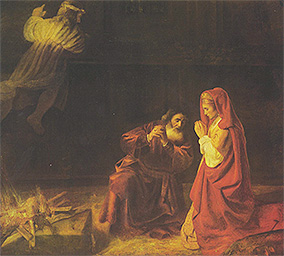
Barrenness was usually seen by others in the community as a curse by God or a punishment for sin (and sometimes it was: 2 Samuel 6:23). During that time in history, the only way for women to achieve status and be considered successful was by marrying and having children- particularly sons. A woman’s entire self-worth—in her own eyes, her husband’s eyes, and the eyes of her community—was at stake. So it’s easy to see why women and their husbands would have spent a great deal of time crying out to the Lord in prayer and seeking to be obedient to Him in hopes that He would grant their request for a child. We see this most clearly in the case of Hannah (1 Samuel 1), and it’s reasonable to surmise that this was likely also the case for Manoah and his wife.

Belief, Not Doubt (13:3-8)
It’s interesting that both times the angel of the Lord appeared to deliver His message, He initially appeared, not to the man, Manoah, but to the woman, his wife. Was it because she was praying at the time, or because her faith was stronger than her husband’s? This passage doesn’t tell us, so we don’t know. But, notice Mrs. Manoah’s reaction to the news that she would conceive. Did she laugh in disbelief like Sarah and Abraham did (Genesis 17:17,18:12)? Did she doubt like Zechariah (father of John the Baptist: Luke 1:18)? No, Mrs. Manoah believed. And, as a godly wife should, the first person she shared the news with and sought direction from was her husband.

Now let’s consider the reaction of Manoah to his wife’s news. Did he think her desire for a child had sent her over the edge or that she was making this up? No. He believed her without question. What does this tell us about the character, faith, and influence on her husband of Mrs. Manoah? “The heart of her husband trusted in her” (Proverbs 31:11) because she was a godly, trustworthy woman.

A Household of Faith (13)
In addition to spending time praying for a child, Mr. and Mrs. Manoah probably prayed regularly, like many other faithful Israelites, for deliverance from the Philistine oppressors, and here, we find them in prayer again.

Manoah not only trusted his wife, he had faith that the Lord would fulfill His promise. His first reaction was to believe and ask God the best way to obey Him. “And God listened to the voice of Manoah…” and answered his prayer of faith. He came back—to Manoah’s wife. Again, Manoah believed her without question and followed her out to meet the angel of the Lord.

When they met up with the angel, we see further evidence of this couple’s godliness. Though the angel had appeared and spoken twice with Mrs. Manoah, she, as a godly wife, does not take control of the situation or assert superiority over her husband. She takes a step back and, as a godly husband and leader of his home, Manoah steps up to the plate to assume the responsibility for his family and receive God’s instructions.

Manoah’s conversation with the Lord is fraught with faith. He doesn’t ask how or why they’re suddenly being blessed with a miracle child even though they’re just ordinary people. He simply accepts that it will happen. Manoah is confident that God is telling the truth and will keep His promise when he says, “When [not if] your words come true…” (12, 17). He believes God’s word that Samson will “begin to save Israel from the hand of the Philistines,” (5) when he asks about “the child’s manner of life, and…his mission” (12) so that he and Mrs. Manoah could prepare him to do so. He trusted in the www-St-Takla-org--12-Angel-Visits-Manoah-and-His-Wifecharacter of God, “the one who works wonders,” (19) and worshiped Him as such. He and Mrs. Manoah feared and trusted in God’s holiness as they fell on their faces at His departure (20).
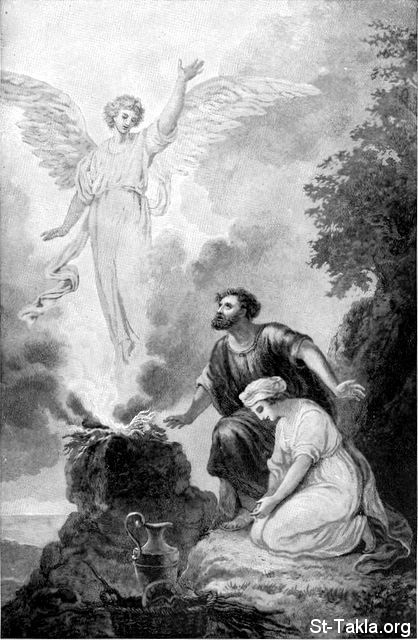
Without a total grasp of the situation (22), Manoah believed God’s word that, “no man can see Me and live” (Exodus 33:20). Only later (21) did Manoah understand that He had been speaking with the angel of the Lord (Jesus – theophany: an appearance of the pre-incarnate Christ – {“My name…is wonderful” (18)- see Isaiah 9:6}—this is how people could “see God and live” even though God had said, “you cannot see Me and live.” They could not live through seeing God the Father, but they could live through seeing God the Son. Also a piece of supporting evidence for the Trinity). Jesus, the true deliverer and judge came personally to announce the birth of this temporal deliverer and judge who would point ahead to Christ.

Finally, we come full circle to Mrs. Manoah’s quiet trust in the Lord. Even with a strong faith like Manoah had, there can be moments of confusion. How could God say to Moses –the greatest leader Israel had ever known, the friend of God!—“you cannot see My face, for man shall not see me and live,”—yet here he and his wife were, having seen Him, but somehow still unscathed? How could anyone understand this?

But Mrs. Manoah shows us that faith means trusting God’s word even when we don’t fully understand His actions. Yes, it was true that God had said that people couldn’t live through seeing Him, but it was also true that He had visited them and told them they were going to have a son who would be a deliverer for Israel. How could both of those things be true at the same time? She probably couldn’t understand it either, but she encouraged her husband to trust God even in their confusion (23). And God kept His promise (24-25)

Trusting Despite the Circumstances (14:1-10)
Kids grow up, and as broken, sinful human beings, they sometimes make foolish decisions despite being raised in a godly home. That’s what Samson seems to have done here. While the Philistines were not one of the seven nations the Israelites were specifically forbidden to intermarry with, the principle behind God’s forbidding of intermarriage with those other nations was the same for the Philistines: they were idolaters and enemies of God and His people.

As godly parents, Mr. and Mrs. Manoah tried to steer their adult son to a godly choice of a wife. They reminded him that he was one of God’s people, and surely wanted him, as a leader in Israel, to set a good example for the people. Once again, they were seeking to be faithful to God.
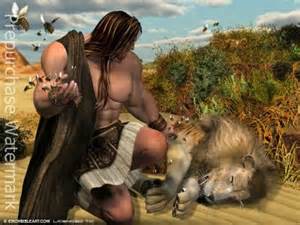
thInstead of honoring his parents, Samson chose poorly. Or so it seemed. Either Samson was operating solely on lust and God sovereignly used the situation to His own advantage, or Samson, moved by God, was intentionally trying to infiltrate the Philistines by marrying in. The passage doesn’t make this precisely clear to us.

And, it wasn’t clear to Samson’s parents, either. So, perhaps thinking that they could influence the girl’s family or hoping Samson would change his mind, they went along with his decision and accompanied him to meet the new in laws. Once again, though the circumstances were worrisome and hard to understand, Mr. and Mrs. Manoah trusted that the God who had already worked so many wonders in their lives could handle this situation. They had faithfully obeyed what God had asked them to do and raised Samson in a godly home. Now, they had to sit back and watch God take care of the rest. And He did. Again, God kept His promises.

And we know that for those who love God all things work together for good,
 for those who are called according to his purpose. Romans 8:28
Christian women, Faith, Old Testament, Salvation, Sunday School, Women

Rahab: From Floozy to Faithful ~ Sunday School Lesson ~ 3-30-14

sunday school

These are my notes from my ladies’ Sunday School class this morning. I’ll be posting the notes from my class here each week. Click here for last week’s lesson.

Through the Bible in 2014 ~ Week 13 ~ Mar. 23-29
Joshua 1-24
Rahab: From Floozy to Faithful

rahab-scarlet-thread

By faith Rahab the prostitute did not perish with those who were disobedient,
because she had given a friendly welcome to the spies.
Hebrews 11:31


Background- Joshua 1
Joshua 1 sets the stage for the story of Rahab and the spies. Moses had recently died, and God “promoted” Joshua to take his place. It was finally time for the Israelites to enter and take possession of the Promised Land. As God “installed” Joshua into his new position, He reminded Him:

  • Stay true to My word and you’ll be successful in what I command you to do.
  • Be strong and courageous (4 times in ch. 1); I will never leave you nor forsake you.
  • Here is the extent of the land I promised. I will keep my promise.

Cities had to be conquered, and first on the agenda was Jericho. Joshua began planning for the conquest by readying the people and by gathering intelligence about the city.

Joshua 2

Gathering Intel (1-2, 9-11, 24)
Do you remember one of the first stories we studied in which Joshua played a major role? He was one of the two spies in Numbers 13-14 who brought back a good report about taking the land of Canaan. I wonder if Joshua was thinking about that incident here, forty years later.

Joshua sent two spies, compared to the twelve who went to spy out Canaan, of which he was a part. Jericho was a much smaller area than Canaan, only two were needed, and a larger group would have been more easily discovered. Interestingly, unlike the story of Joshua and Caleb, we never discover the names of these brave spies who risked their lives and their reputations to bring back a good and faithful report. What did they find out and report back to Joshua about Jericho? (v. 9-11,24)

The Hiding Place (1-6)
Why would two nice, godly Jewish boys hide out in a prostitute’s house? Why not a nice, clean hotel? Well, first of all, they generally didn’t have hotels as we know them back then. When people traveled, they brought tents with them and camped out, stayed with friends or relatives, spent the night in the town square (Gen. 19:2), etc. And, sometimes, if it was immoral men traveling without their families, a prostitute’s house was a preferred option for a night’s lodging.

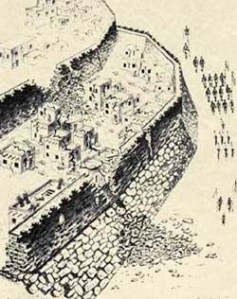
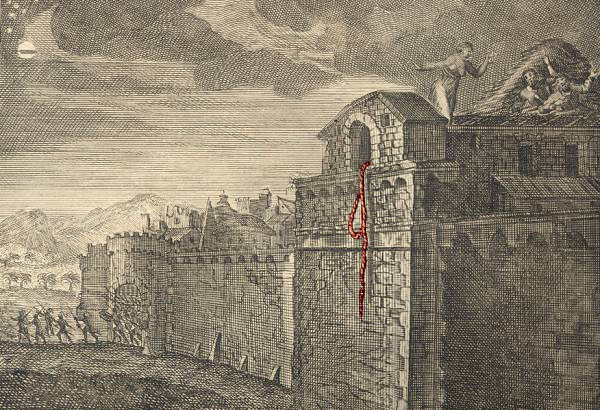
Rahab’s house would have been the perfect place for the spies 212wall_sketchto hide. They were foreigners, they were travelers, and it wouldn’t have been abnormal for them to be surreptitious (covering or disguising themselves) when entering and leaving her house. Plus, Rahab had men arriving and departing at all hours. Since she was a prostitute, many of the townspeople may have avoided her and her clientele, so it was probably the best option available for the spies.

Rahab’s house was built into the city wall. At that time, kings of various cities/countries would regularly attack each other, so many cities were built like fortresses with tall, thick walls around them and gates that could be opened or closed. The back wall of Rahab’s house was also the city wall and had a window the spies could escape from. After the gates had been shut, there would have been no other way to get out of the city.

The Faith of the Spies (24)
The main focus of this story is, rightfully, on Rahab’s faith. But, what about the faith of the spies? These men, out of faithfulness to God, and loyalty to Joshua and Israel could have been tortured and killed had they been discovered. They stayed in the home of an unclean prostitute, which was a BIG deal. (Think back over all the clean/unclean laws we just studied.) They followed the instructions of someone who was: a) a woman, b) a prostitute, c) an enemy and an pagan, and d) had no military/spy experience of her own that we know of. (Although, perhaps, in her profession, she was skilled in hiding men who were being hunted down by people on the warpath). They found an impossibly heavily fortified city. There was no human way to successfully attack it. And still, they were confident in their trust that God would somehow keep them safe and give Israel the city.

The Faith of Rahab (9-13, Romans 1:19-20, 2:14-15)
Rahab was a pagan. How could she have had faith in God? How did she even know about Him? The Bible tells us that ALL human beings have a basic knowledge of God in two ways: through creation (Rom.1) and through our consciences (Rom.2).

But Rahab knew some other things, too. She knew how God treated His children and His enemies. She had heard what God had done at the Red Sea (10)—how God had protected His children and destroyed the Egyptians. She knew how God had defeated the kings of Sihon and Og (10). She knew that out of all the gods she had ever heard of, this One was the real thing- God of heaven and earth. She knew, and she was afraid. Her fear and her defection prove her faith. If she had not believed in who God was, and that He was able to do all these things she would have had no reason to be afraid, nor would she have helped the spies and aligned herself with them against her own people.

Rahab became so convinced in her mind that God was indeed who He had shown Himself to be that she gambled everything on it. Think of what the king would have done to her if she had turned out to be wrong and had gotten caught. At the very least, she would have been killed. but as a traitor, she certainly would have been made and example of. She probably would have been publicly tortured to death, and maybe her family too. This was no small thing she did. She bet her life on a God she didn’t know. That’s the faith that saved her and led her to hide the spies and her other actions. The actions did not save her, it was the overwhelming belief in God which drove those actions.

Two Different Faiths Then (John 4:22, Luke 10:21, Deuteronomy 32:39)
There is a qualitative difference between the faith of the spies and the faith of Rahab. As Jesus said to the woman at the well, “You worship what you do not know; we worship what we know, for salvation is from the Jews.” (John 4)

The spies were God’s people. They knew Him personally. They were born into God’s house and grew up as obedient sons. They were chosen by Him and belonged to Him. They had seen Him work as eyewitnesses. They had, and knew, His word. They would have been like the older brother in the prodigal son story if he had been faithful.

Rahab, on the other hand, had none of that. She was the prodigal. She did not know God personally, but only, as an outsider, by reputation. She likely knew nothing of God’s love and promised blessings for obedience, but only of His wrath towards sinners. She was not born into God’s house; she was a pagan. She was not an obedient son; she was a woman, and as sinful a woman as she could be. She was not chosen by God and did not belong to Him. She was an outcast. She had no idea what God might do next. All she knew was that she didn’t want to die.

The spies knew. God had laid it all out for them. They were obeying God, not out of fear, but out of love.

Two Different Faiths Now
Rahab’s faith versus the spies’ faith reminds me of unchurched people coming to Christ versus churched people coming to Christ. We “spies” who were raised in church by Christian families grew up knowing all the Bible Stories, all the whys and wherefores of Jesus and salvation. It is the blessing of a godly heritage.

Rahab, like the unchurched, lived her whole life not knowing God, just doing what sinners do. When she finally heard about Him, all she had was the basics, and, knowing only that He was “Lord of Heaven and earth” (Luke) and “able to kill and make alive” (Deut.), she flung herself unashamedly on His mercy—which, at the time, she probably wasn’t sure would catch a woman like her—all because she wanted to live instead of die.

The Object and Outcome of Our Faith (Joshua 6:17, 22-25, Matthew 1:5, James 2:25)
But no matter our background or how we come to faith in Christ—Rahab or spies, unchurched or churched—the object of our faith is what matters, and the object of our faith is Christ. And because the object of our faith is the same, the outcome of our faith is also the same.

What was the outcome of this whole scenario for the spies? For Rahab? They were saved despite the destruction all around them. After it was over, they all lived in the Promised Land together. Rahab and her family became part of God’s family just like the spies were. She even got to be one of Jesus’ great, great…grandmothers (Matt.), was commended in the “Hall of Faith” (Heb. 11, above), and was cited as an example of good works giving evidence of our faith (Jas.).

God loves the prostitute just like He loves the good little girls. He sent His precious Son to save both of us and to display us as trophies of His grace.

Additional Resources
The Walls of Jericho by Answers in Genesis

Faith, Justice, Tough Passages

Shall Not the Judge of all the Earth Do What Is Just?

Now therefore, kill every male among the little ones, and kill every woman who has known man by lying with him.

Numbers 31:17

That’s a pretty tough verse, isn’t it?

Married women. Widows. Little boys.

When I read that verse, I think of somebody like me. Or, somebody like my ten year old. It’s hard for me to put myself in a Midianite woman’s sandals and imagine the Israelites coming for my son. My son, who’s basically a good kid, and certainly hasn’t done anything worthy of an army coming after him to execute him.

Do you ever follow criminal trials in the news? With 24-hour news channels and courtroom TV channels, we’ve probably all watched for the verdicts of a few. Have you ever been surprised by a jury’s verdict or a judge’s sentence? Maybe you were certain the defendant was guilty, but the jury acquitted him. Or, you figured a life sentence was a sure thing but only a few years were handed down.

It’s easy to lambaste a judge or jury for making what we consider to be the wrong decision. But, think about it: that judge and jury sat through hours of testimony, legal arguments, instruction on the law, and presentation of evidence. They know much more about the case and all the players in it than we do. They know things we don’t know. And those things we’re ignorant about are likely the very things that led them to make a different decision than we, with our limited knowledge of the case, would have made.

What if your spouse, parent, or best friend had been a juror in one of those cases in which you were appalled at the verdict, and he had voted opposite the way you thought he should have? What if he told you, “Look, I’ve been told not to discuss the case, but, trust me, this was the right decision.”? Would you trust him?

It’s the same way with God.

We come to passages like this one, and our first reaction is righteous indignation. How could God make a decision like this? It seems so unjust. An arbitrary, capricious, and callous verdict. It’s easy to throw stones thousands of years later.

But, if God is God, He is, by definition, absolutely perfect in justice, perfect in love, perfect in mercy, perfect in patience, perfect in wisdom, and perfect in His knowledge of every detail of every situation on earth, ever, including people’s thoughts and intentions. He never makes a wrong decision. If He were lacking one iota in any of these areas, He would cease to be God, and there would be no reason to trust Him.

But He isn’t. So we can.

We generally trust human judges and juries to carry out justice in the cases they’re assigned, despite the fact that we know of cases of judges who have been bribed, juries that have been tampered with, defendants who have been framed, and jurors who vote guilty based on race, sex, status, or some other irrelevant condition.

But God doesn’t fall into any of those categories. He is the perfect Judge, able to mete out perfect justice, because He’s also the perfect eyewitness. He knew everything about the case of the Midianites because He saw each of them, and everything that was going on in the world around them, inside and out.

I can’t say that about my knowledge of this case. Can you?

God’s not discussing the case of the Midianites with us, but, “Trust Me,” He says, “This was the right decision.”

He’s got a pretty good track record of being right. I’m going to trust Him on this one since I don’t know all the details. How about you?

Far be it from you to do such a thing, to put the righteous to death with the wicked, so that the righteous fare as the wicked! Far be that from you! Shall not the Judge of all the earth do what is just?”

Genesis 18:25
Faith

God’s Cartography

MH900405652

Are you “directionally challenged”?

I am.

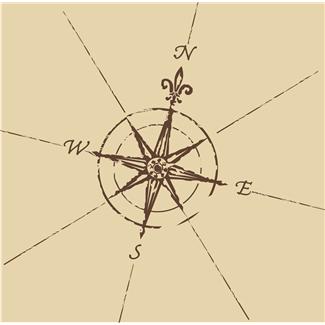
I mean, I can read and follow a map, but if I make some wrong turns or get distracted, I tend to get disoriented. And don’t even try to tell me to “go north” or “turn south” when you’re giving me directions. I just don’t have that internal compass some people have. Heck, our church has had an “east campus” and a “west campus” for over a year, and I still can’t figure out which one is which. Thank goodness for map apps. Without those step by step directions, I’d probably still be wandering around out there somewhere.

But, you know what? I did really well in geography when I was in school.

MH900403129

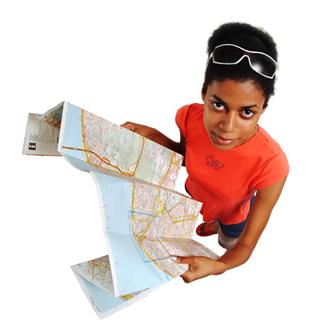
When I can see the big picture, the whole map at once, the beginning, middle, and end of the journey, it’s a piece of cake. I never get confused about which direction is southeast or northwest. I don’t get distracted by twists or turns in the road. If I could just have this perspective when I’m trying to get somewhere, I’d never get lost again.

But life isn’t like that.

We live inside the road trip where it’s easy to get confused and go the wrong way. Where we can get distracted by the twists and turns of circumstances. Where we sometimes deliberately choose to turn off the right road and take a side trip that takes us farther than we wanted to go.

We can’t step “outside the map” and see the big picture of our life’s journey from beginning to end.

But God can. That’s where He lives.

…in your book were written, every one of them,
the days that were formed for me,
when as yet there was none of them.
Psalm 139:19

And since He alone can see the big picture, He’s the only One who’s really qualified to give us direction. And that perfect direction can only be found in His word.

MH900438423


Just like my map app, He tells us our starting point:

And you were dead in the trespasses and sins in which you once walked, following the course of this world, following the prince of the power of the air, the spirit that is now at work in the sons of disobedience—among whom we all once lived in the passions of our flesh, carrying out the desires of the body and the mind, and were by nature children of wrath, like the rest of mankind. Ephesians 2:1-3

He tells us the detour we need to take:

…repent and believe in the gospel. Mark 1:15b

He shows us the right direction to go:

…what sort of people ought you to be in lives of holiness and godliness…
2 Peter 3:11

And he reveals our ultimate destination:

Then we who are alive and remain will be caught up together with them in the clouds to meet the Lord in the air, and so we shall always be with the Lord. 1 Thessalonians 4:17

Not using “God’s Positioning System”?

Recalculate.

(Don’t groan and roll your eyes. You should have seen that one coming :0)

Faith, Gospel, Ministry, Women

It’s OK To Be Ordinary

Older women likewise are to be reverent in behavior, not slanderers or slaves to much wine. They are to teach what is good, and so train the young women to love their husbands and children, to be self-controlled, pure, working at home, kind, and submissive to their own husbands, that the word of God may not be reviled.
Titus 2:3-5

Love our husbands and children.

Be self-controlled, pure, and kind.

Work at home.

Be submissive to our own husbands.

Image

In other words: ordinary. 

I didn’t see anything in there about changing the world or living out great big enormous dreams, did you? I think, often, as 21st century Christian women, the evangelical culture can make us feel like we are failures if we don’t have some sort of huge ministry or preach the gospel on the street corner every day. In Titus’ day that sort of thing would have been unbecoming for women. In our culture, women have more opportunities to be involved in various ministries than back then, but we have to remember that God calls us to faithfully serve Him in whatever life circumstances He has put us in. And He has not called the vast majority of us to be ministry superstars or Christian celebrities.

Image

He has called most of us to be ordinary.

Staying home and pouring the gospel into our families or being a gospel influence to others at work or teaching Sunday school or sharing the gospel through volunteer work, and so on, though it may not amount to much in the world’s eyes, is success and faithfulness in God’s eyes. And that’s all that matters.

You’re not failing God if you’re ordinary.