Judges Bible Study

Judges ~ Lesson 16

Previous Lessons: 1, 2, 3, 4, 5, 6, 7, 8, 9, 10, 11, 12, 13, 14, 15,

Read Judges 20

Questions to Consider

1. Go back to lesson 3 (link above) and review your answer to the first part of question 5, Israel’s pattern of sin and repentance in 2:16-23. How does today’s passage fit this pattern? How does today’s passage fit the theme verse of Judges (21:25), “In those days there was no king in Israel. Everyone did what was right in his own eyes.”?

2. Chapter 20 is a continuation of the story that began in chapter 19. Briefly review lesson 15 (link above) to refresh your memory.

3. Read 1-6. What does it mean that the men of Israel assembled “to the Lord”? (1) Why had the Levite dismembered his concubine and sent her body parts to each of the tribes of Israel?

No doubt what the men of Gibeah did to the concubine was heinous (5), but how did they have access to her in the first place? (Notice the Levite leaves out that part of the story.) What has the Levite’s sin of using his concubine – someone vulnerable and weaker than himself, someone he should have been protecting – as a piece of expendable property to protect himself led to? Trace this story back to its roots: explain how this entire story would have turned out differently if the Levite had played the man and defended and protected the concubine. Go even further back: would this story have even taken place if the Levite had followed God’s plan for marriage and was the husband of one wife instead of committing adultery with the concubine? How does this demonstrate the principle that sin begets sin?

Contrast the way the Levite treated this woman with a) the way God loves and values women and b) the way God wants men, especially husbands, to treat, love, and value women / their wives.

4. Read 8-17. Consider all the evil and sin we’ve seen one or more of God’s people commit in the book of Judges thus far. Has it been mostly “vertical” (directly against God) sin or mostly “horizontal” (directly against other people) sin? Which is worse? We’ve reached the climax of the book of Judges. Israel at long last sees the depravity of sin and is moved to action. What sin finally moves them – their own vertical sin of idolatry or someone else’s horizontal sin against the concubine, the Levite, and the community? Why is it easier to see and rightly respond to someone else’s sin rather than our own sin? Why do we often see horizontal sin as worse than vertical sin? How did the Israelites not see that their outrage and grief over the men of Gibeah’s sin was nothing compared to God’s outrage and grief over their sin of idolatry? How is it God’s grace to us to show us our sin against Him by letting us see one person’s sin against another?

Did Israel immediately go in and destroy the whole tribe of Benjamin? What was Israel’s initial demand? (13a) What was Benjamin’s response? (13b) What happened – how did things escalate – as a result of Benjamin’s covering for the men of Gibeah’s sin, refusing to hold the men accountable, and refusing to deal with sin in the camp in a biblical way? How does this compare to church discipline situations today? What effect does it have on a church when sin in the camp is ignored, covered up, and not dealt with in a biblical way? In what ways do we often put practical concerns ahead of doing things God’s way in situations like these?

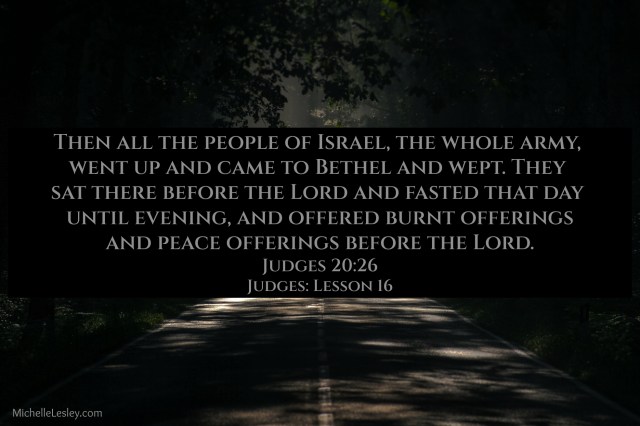
5. Read 18-28. How many times did Israel inquire of the Lord in this passage? Compare their first (18), second (23), and third (26-28) inquiries. Why and how did each inquiry intensify? Were they demonstrating a worldly sorrow or a godly sorrow over their sin? Does this scenario remind you of this passage? How?

Verse 18 is the first place we’ve seen God present (see question 4 in lesson 15, link above) with His people in quite a long time. What has been standing between Israel and God, and what is the first thing He deals with when He “shows up”? Explain why sin is always the first thing that has to be dealt with and biblically resolved in any church’s or individual’s relationship with God.

Consider what happens to Israel in 18-28 in light of what Hebrews 12:5-11 says about discipline. How did God apply painful discipline to Israel in 18-28? Were they “trained by it,” and did this discipline “yield the peaceful fruit of righteousness” for them?

6. Read 29-48. Revisit the second part of question 4. What did Benjamin lose – practically / temporally and spiritually – by covering for the men of Gibeah’s sin, refusing to hold the men accountable, and refusing to deal with sin in the camp in a biblical way? Who actually defeated Benjamin? (35)

7. What did this chapter teach you about sin, sinners, and the nature and character of God?


Homework

Think about the most outrageous sin someone has committed against you or that you’ve seen committed against another person. Now compare that sin, and your grief and outrage over it to your own sin against God. How is it God’s grace to us to show us our sin against Him by letting us see or experience one person’s sin against another? How is our sin against God exponentially worse than one person’s sin against another? List three ways this should inform how you think about your own sin against God, and three ways this should inform how you think about others’ sin against you. Is there any way you’ve been sinning against God that you need to repent of? Is there anyone you need to forgive for sinning against you?


Suggested Memory Verse
Holidays (Other), Mailbag

The Mailbag: Halloween vs. Yoga?

I read your article Should Christians Participate in Halloween? and I am hoping to get a point cleared up in my head. I donโ€™t want to be legalistic, and hope not to come across that way. I am just very confused about it. I agree with you on every other theological point. But I donโ€™t see this as [adiaphora] in the same way I donโ€™t see practicing yoga as [adiaphora]. I asked you this same question last year and did not get a reply. Maybe I asked in an offensive way. Honestly want clarity on this issue. How is partaking in any way with a pagan practice any different than practicing yoga? Thanks in advance.

This is a really great question. I appreciate how you’re thinking this through and wanting to be biblically consistent. I want to be biblically consistent, too, so let’s dig into this:

I asked you this same question last year and did not get a reply. Maybe I asked in an offensive way.

Let me quickly address this point of policy first. Although I don’t respond to people who come after me in an angry, argumentative, attacking way, that isn’t the only reason I don’t respond to emails, messages, comments, etc. In fact, it’s not even the main reason, because that’s a very small percentage of the correspondence I receive. So it’s very unlikely that’s the reason I didn’t respond to your question. (I apologize, but I don’t remember receiving the question.)

The main reason I don’t respond to most of the correspondence I receive is that I simply don’t have time. If you’d like a longer explanation about that, click here.

How is partaking in any way with a pagan practice any different than practicing yoga?

It isn’t. “Partaking in a pagan practice” is the reason yoga is unbiblical.

But that’s not what my Halloween article said nor what it was about. I know you actually read the article, and I really appreciate that, but a lot of people either didn’t read the article and only responded (vehemently) to the title of it, or they skipped, missed, or didn’t understand these very clear statements in the opening paragraphs:

…Halloween activities available to you that do not violate scriptural principles or your conscience or cause you to become a stumbling block to someone weaker in the faith…

Please understand that when I say [should Christians participate in?] โ€œHalloween-related activities,โ€ I am including things like handing out candy and tracts to your neighborhood trick-or-treaters, participating in your churchโ€™s trunk or treat {assuming no sin is being committed and the gospel is being shared}, etc.

The article in no way suggests that it’s OK for Christians to take part in paganism or sin. It just doesn’t. In fact, the Scriptures I quote in the article as well as my commentary on them, and all of the additional resources at the end of the article explicitly say that Christians are not to take part in those kinds of things.

But sharing the gospel with the children who come to your door, the acquaintances you talk with in your yard, the neighbors your kids trick-or-treat from, or the families who drop by your church’s candy-fest because it’s safe and non-scary is not, in any conceivable way, sinful, demonic, unChristian, celebrating Satan, or any of the other epithets that come my way every year when I run that article. And it certainly isn’t participating in paganism. How could sharing the gospel in any circumstance be demonic or any of those other things? It’s blasphemous to say such a thing.

Dear sister who sent in the question, I know you didn’t mean it that way, but please indulge me a tangent for a moment: I think some of the others who commented on the article didn’t think things through enough to realize this is what they were inadvertently saying with their broad brush remarks – that sharing the gospel in the midst of evil is itself evil.

Do we not remember that Jesus was a guest in the homes of prostitutes, tax collectors, and sinners – as evil an environment to the “Christians” of His day as Halloween is to Christians today? Do we not remember it was the Pharisees who rebuked Him for doing so and for (supposedly) defiling Himself?

Jesus didn’t defile Himself by going into those homes because He wasn’t participating in, nor approving of, any sin which took place there. He met those people where they were, called them to repentance, and planted the seeds of the gospel. And that’s exactly what many Christians do on Halloween. (And they often receive from their fellow Christians the same Pharisaical judgment Jesus received.)

And this is the crux of the answer to your question, my sister. Participating in dark, evil, pagan, or debaucherous aspects of Halloween is just as wrong as participating in yoga. How is participating in non-sinful aspects of Halloween different from participating in yoga?

Think of it this way: A kid rings your doorbell on Halloween. You hand him a tract and some candy. That tract is the good news that the celebration of death, evil, and darkness all around him is wrong and that Jesus is the light of the world and the Lord of life. You’re leveraging the good news of the gospel against the evil, pagan, and sinful aspects of Halloween. When you do yoga, you’re taking part in paganism, cooperating with it, and tacitly approving of it – not fighting against it.

I donโ€™t see [Halloween] as [adiaphora] in the same way I donโ€™t see practicing yoga as [adiaphora].

That’s good, because while participating in non-sinful aspects of Halloween, such as the aforementioned, is an issue of adiaphora (Christian liberty), participating in the pagan (Hindu) worship ritual of yoga is not, so you shouldn’t see them the same way.

All of this, of course, is not to say that you can’t avoid Halloween altogether if it makes you uncomfortable. You don’t have to take part in your church’s fall fest or hand out tracts at your door. You can go out to dinner, go to a Reformation Day worship service, go to bed early, or whatever you like. But what you can’t do is bind the consciences of your brothers and sisters in Christ who want to do something on Halloween that isn’t sinful and might even be evangelistic. You cannot unbiblically judge them by your personal convictions. And you certainly can’t call them names or question their salvation as I’ve had the misfortune of seeing some professing Christians do. You have to follow your biblically-informed conscience on issues of Christian liberty. Your brothers and sisters have to follow their own consciences. You will answer to God for your decisions. They will answer to God for theirs.

Additional Resources:

Christian Liberty at A Word Fitly Spoken

Christian Liberty with Michelle Lesleyย at Echo Zoe Radio


If you have a question about: a Bible passage, an aspect of theology, a current issue in Christianity, or how to biblically handle a family, life, or church situation, comment below (Iโ€™ll hold all questions in queue {unpublished} for a future edition of The Mailbag) or send me an e-mail or private message. If your question is chosen for publication, your anonymity will be protected.

Judges Bible Study

Judges ~ Lesson 15

Previous Lessons: 1, 2, 3, 4, 5, 6, 7, 8, 9, 10, 11, 12, 13, 14,

Read Judges 19

Questions to Consider

1. Go back to lesson 3 (link above) and review your answer to the first part of question 5, Israel’s pattern of sin and repentance in 2:16-23. How does today’s passage fit this pattern? How does today’s passage fit the theme verse of Judges (21:25), “In those days there was no king in Israel. Everyone did what was right in his own eyes.”?

2. Read 19:1. (You may wish to briefly review lesson 14 for these questions, link above.) Which “days” does “in those days” refer to? What is a concubine? What is the position of the man in this verse? Why is it significant to the theme of Judges that this man was a Levite? Where else have we recently seen a Levite as a central character in a story in Judges?

Notice the repetition (see lesson 14, link above) of the phrase and the concept โ€œwhen there was no king in Israel”. Who is traditionally considered the author of Judges (see lesson 1, link above)? How does this phrase explain to the author’s contemporaries a) that the events in Judges took place prior to the monarchy (the period of the kings of Israel – Saul, David, etc.) they were currently living in, b) that the anarchy of Judges necessitated the monarchy, and c) the contrast between the anarchy during the time of Judges and the law and order during the monarchy? For us as readers, how does this phrase and concept lay the groundwork, and introduce us to the need for the monarchy?

3. Read 19:2-30. Compare and contrast the genuine hospitality of the Levite’s father-in-law (3-9) with the hypocritical hospitality of the old man (20-21, 22-24) with the anti-hospitality of the worthless fellows (22,25). In what ways does this display of various degrees of hospitality inform your view of what Christian hospitality should look like in your life? Which man/men best points us to the way God welcomes us strangers in? Why?

How does the concubine’s unfaithfulness, and the husband going to bring her back, paint a picture of Israelโ€™s unfaithfulness and God as Redeemer? How does it point us to our own sin and straying and God sending Christ to pursue us, redeem us, and restore us to Himself? Continuing this line of thought, how does the fact that the unfaithful woman in this story is a concubine impact or reflect on the fact that the church – Believers – are the bride of Christ? What is the difference in status, rights, and privileges between a concubine and a wife as it relates to our standing in Christ?

How does this passage move from the Levite (recall from lesson 14, link above, the duties of the Levites) being a picture of God as Redeemer of His Bride in 1-21 to a picture of what God would never do to His Bride in 22-30?

How are the actions of the Levite, the old man, and the worthless fellows in 22-30 reflective of the theme of Judges and the opening concept of this chapter “there was no king in Israel”?

God reveals throughout Scripture a special love, care, and compassion for the most vulnerable, such as women and children, widows and orphans, the sojourner, and the poor. He teaches us that the strong are to protect and provide for the weak. Explain how the Levite’s (especially as a “man of God”) (25), the old man’s (24), and the worthless fellows’ (22,25) behavior toward a sojourner (22) and women (24,25) demonstrates just how far their hearts were from the heart of God. Did they protect and provide for these vulnerable people, or did they sacrifice the vulnerable to protect and provide for themselves?

Think about how “there was no king in Israel” allowed for the behavior of these men, and how there was, functionally, “no King of Kings in Israel,” which led to the heart attitude of these men (which resulted in their behavior). How does what we believe inform what we do?

What are some modern day examples – inside and outside the visible church – of the strong sacrificing the weak and vulnerable to protect or provide for themselves, and how does this demonstrate just how far the heart of the “strong” is from the heart of God? How would these passages apply? How does what we believe inform what we do?

What do you think was the Levite’s purpose in dismembering and disseminating his concubine? (29-30) (Check your answer in lesson 16 next week, or peek ahead to chapter 20.)

4. In most passages of Scripture, God is present with His people. Heโ€™s giving a command, speaking through a prophet, the passage describes His thoughts and actions, etc. Weโ€™ve even seen God present in this way in previous passages in Judges. Where is God in Judges 19? Do you feel the weight of His absence in this passage? Are the false beliefs and sinful actions we see in this passage the cause or the result of God taking a step back from these people?

5. Think about the motif of light versus darkness in the Bible. How does the depth of sin and darkness in today’s passage starkly contrast the brilliance of the light of Christ?


Homework

Who established the system of judges over Israel? Was the system of judges successful (i.e. Israel flourished in her faith in God, her economy, victory over her enemies, agricultural bounty, etc.)? Whose fault was it that the system of judges failed and needed to be replaced? Think of some other systems and scenarios throughout the Bible that God set up as good, but were ruined by man’s sin. (Hint to get you started.) Does the failure of these systems mean that God was a failure or that He did not foresee what would happen when He established these systems? How do you know this? How do all of these failed systems point to the one system that has not failed and will not fail? What is that system and why will it not fail? How does the infallibility of this system help us understand that those who are genuinely saved cannot lose their salvation?


Suggested Memory Verse

Judges Bible Study

Judges ~ Lesson 14

Previous Lessons: 1, 2, 3, 4, 5, 6, 7, 8, 9, 10, 11, 12, 13,

Read Judges 17-18

Questions to Consider

1. Go back to lesson 3 (link above) and review your answer to the first part of question 5, Israel’s pattern of sin and repentance in 2:16-23. How does today’s passage fit this pattern? How does today’s passage fit the theme verse of Judges (21:25), “In those days there was no king in Israel. Everyone did what was right in his own eyes.”?

2. Read chapter 17. Was this the same Micah who wrote the book of Micah? How do you know?

Remember the old “What’s wrong with this picture?” puzzles? This chapter seems like the Bible version of that. How many sins can you spot in this passage? Which of the Ten Commandments are being broken?

Is it possible to dedicate something to the Lord and simultaneously dedicate that thing to idolatry? (17:3) To worship the one true God via idol worship? How is this an example of syncretism? Explain why “syncretism” is just a fancy word for “idolatry”. How does syncretism violate the first two Commandments?

Explain the syncretism taking place in 17:7-13. Imagine you’re Micah’s godly, doctrinally sound friend and he says 17:13 to you. How would you correct his false theology from Scripture? (Challenge yourself: First try correcting him using any applicable Old or New Testament Scripture. Then try correcting him using only the Old Testament Scriptures/events/teachings he would have had access to or should have known (Genesis 1 – Judges 16).)

Why do you think 17:6 was inserted into this story?

3. Read 18:1-6. How is the purpose of 18:1 different from the purpose of 17:6 in today’s passage?

Carefully examine the interaction between the Levite and the men from Dan in 18:3-6. Generally speaking, what were the duties of the Levites? Was this Levite doing his job as Scripture commanded? Did the men from Dan know this? (18:3) What should they have done to the Levite (and Micah, for that matter)? What did they do instead (18:5)?

Explain how enlisting the priest of an idol to inquire of the Lord was also an example of syncretism. How does this compare to professing Christians of today who consult false teachers for a “word of knowledge” or “prophecy” over their lives, attend “churches” headed up by false teachers, “worship” God using music created by heretics, etc.?

4. Read 18:7-31. Examine and summarize the actions and beliefs of the men of Dan throughout chapter 18.

  • What did they do in 18:5?
  • What did they believe in 18:6, 10?
  • What did they believe in 18:14-20 and what did they do 18:14-20 as a result of that belief?

Explain how idolatry and unbiblical theology led the men of Dan, and lead us, to sinful actions. How does what we believe about God impact what we do?

Do you think the men of Dan and the Levite were consciously, proactively, and objectively choosing to do wrong (idolatry), or do you think they were deceived and spiritually blind, thinking that their syncretism was good and pleasing to the Lord? Perhaps a mix of both? Ultimately, does it matter? Either way, they were sinning, right? How does this apply to professing Christians today who think they are actually worshiping the one true God, the God of the Bible, through false and unbiblical “Christian” systems like Catholicism, Mormonism, Word of Faith (prosperity gospel), and New Apostolic Reformation?

Really let Micah’s statement in 18:24 sink in. Compare it to these verses. What was Micah’s heart, hope and faith set on? Who were Asaph’s and Peter’s heart, hope, and faith set on?

5. Notice how idolatry not only permeates, but bookends (17:3-4, 18:30-31) today’s passage. How did the idolatry snowball from one woman purposing to make a household idol to an entire tribe of Israel worshiping that idol? Think about this in terms of how your own personal sin and unbiblical beliefs can impact not only you, but your family, friends, church, workplace, and community.

6. If Micah, the Levite, and the men of Dan had been committed to God and His Word, in what ways would this story be different?

7. In most passages of Scripture, God is present with His people. He’s giving a command, speaking through a prophet, the passage describes His thoughts and actions, etc. We’ve even seen God present in this way in previous passages in Judges. Where is God in Judges 17-18? Do you feel the weight of His absence in this passage? Are the false beliefs and sinful actions we see in this passage the cause or the result of God taking a step back from these people?


Homework

Can you think of any modern day examples of syncretism? What about churches offering yoga or “Christian yoga” classes? Churches that participate in Kwanzaa? Churches that use music from heretical sources? Christians who consult psychics, use horoscopes, or practice mindfulness? Think about the way you worship God and walk out your Christianity, both at church and as an individual. Is there any way in which you’re syncretizing Christianity and another religion, or Christianity and worldly methods?


Suggested Memory Verse
Speaking Engagements

Report Back: Waterford, California Conference

I had a super time last week sharing with the wonderful ladies of Waterford, California, at First Southern Baptist Church’s women’s conference.

This was my first time traveling to northern California, and I’m indebted to everyone who took the time to show me around and tell me all about the things that make this area of the country so special, especially Pastor Greg, and the delightful couple who hosted me in their home, Lisa and Curt.

The Waterford area is covered with almond and walnut groves. This is a picturesque almond grove across the street from Curt and Lisa’s house.

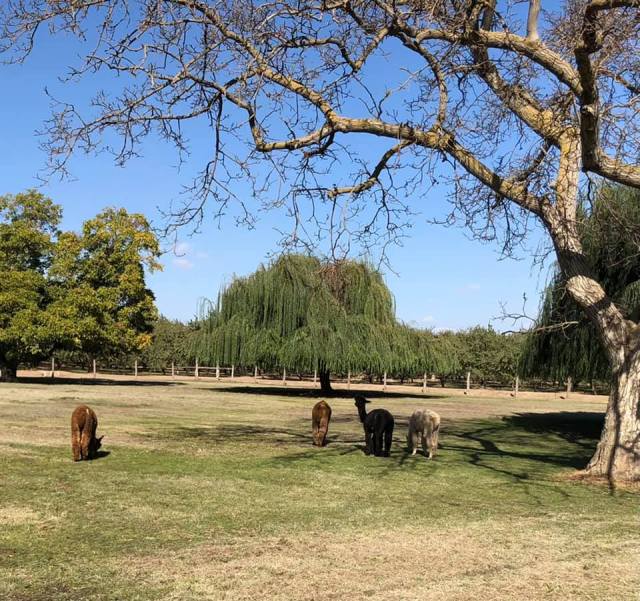
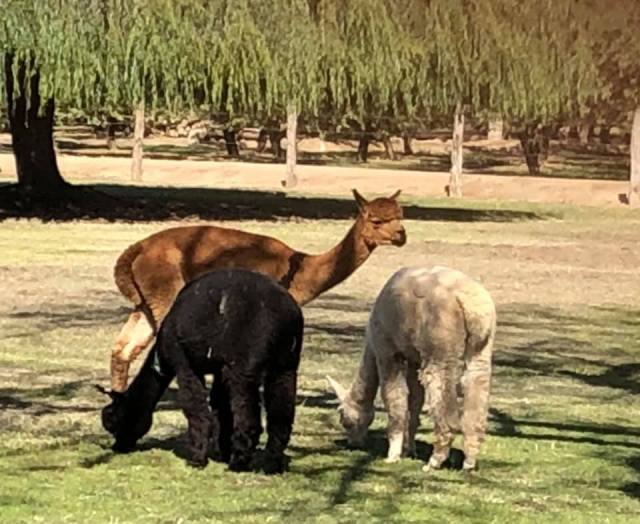
Another of Curt and Lisa’s neighbors has recently acquired a few llamas. Aren’t they cute! Don’t worry, we didn’t get close enough for them to spit on us. (When I posted one of these pictures on social media, several folks corrected me that these are alpacas, not llamas. I’m no expert, and that may very well be, but here’s what I read that led me to the llama label. If I’m wrong, I stand corrected! :0)

Curt is the head of South Blossom Designs. He crafts phenomenal cutting boards, chopping blocks, serving boards, and other specialty artisan wood items. Go get a jump on your Christmas shopping!

These are some of the awesome hostess gifts and snacks from the ladies of FSBC. Those walnuts are straight from a local grove and were so fresh! And, of course, Cheerwine is my favorite, and is hard to come by where I live.

Friday night of the conference kicked off with a delicious steak dinner grilled by the fantastic men of FSBC. I also want to put a word in for one of the drink options, which was a cocktail of cranberry juice, Hawaiian Punch, and Sprite. That was super good.

And check out these lovely decorations:

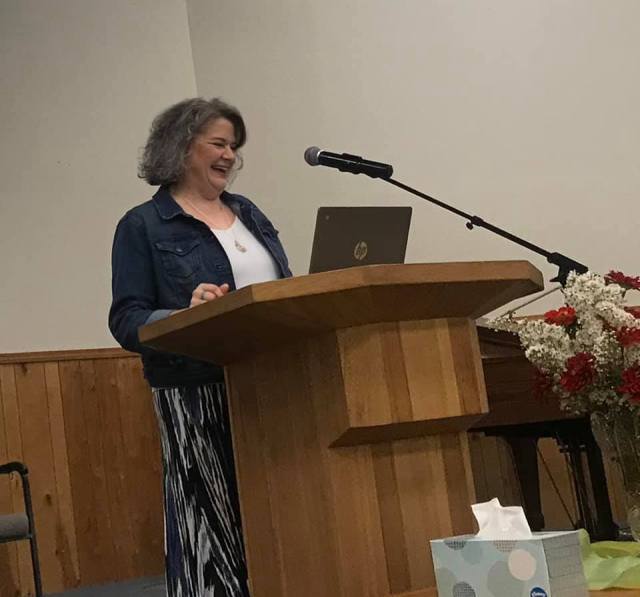
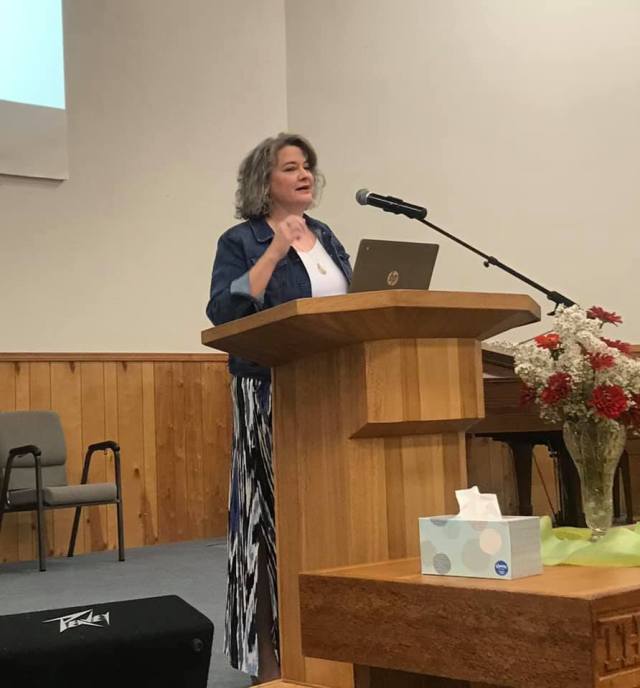
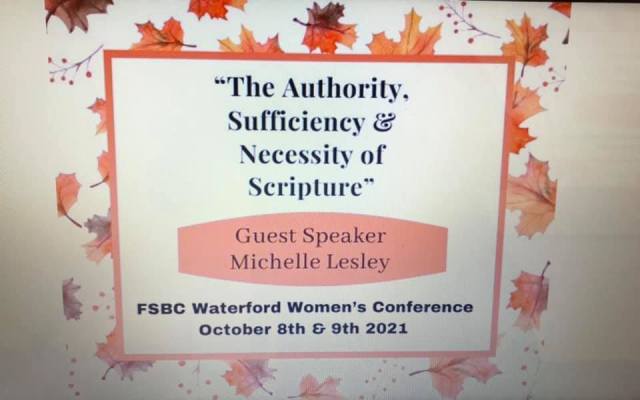
Next up was our first teaching session: The Authority, Sufficiency, and Necessity of Scripture. God’s Word is vital to our lives as Christian women, sufficient to instruct us in the ways of life and godliness, and we are beholden to Scripture as the ultimate authority over our lives.

Saturday morning, after the ladies were treated to breakfast, it was time to get down to business with session two of the conference: Discernment 101: Learn to Discern. How can we tell the difference between the biblical and the cheap, unbiblical knock off? We looked at some scriptural and practical ways.

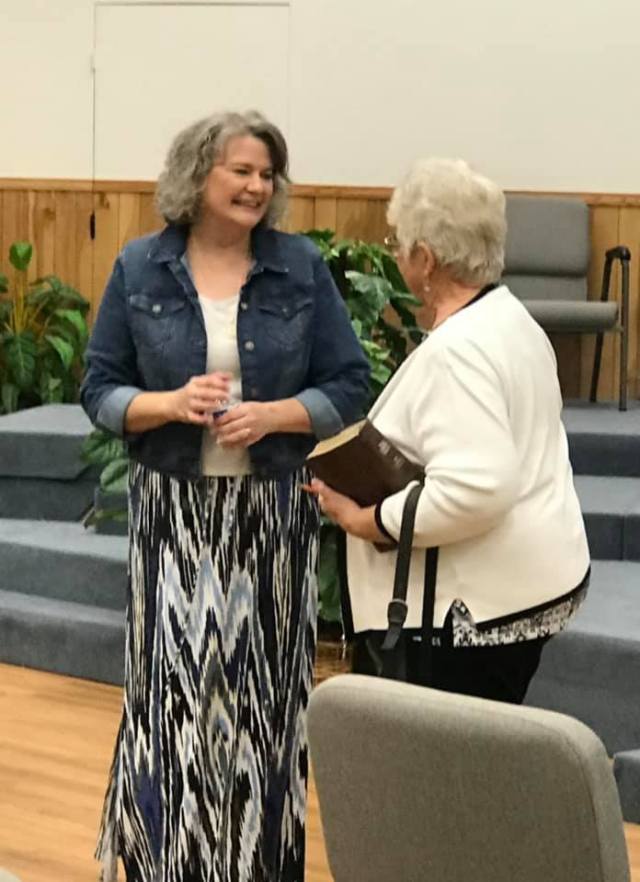
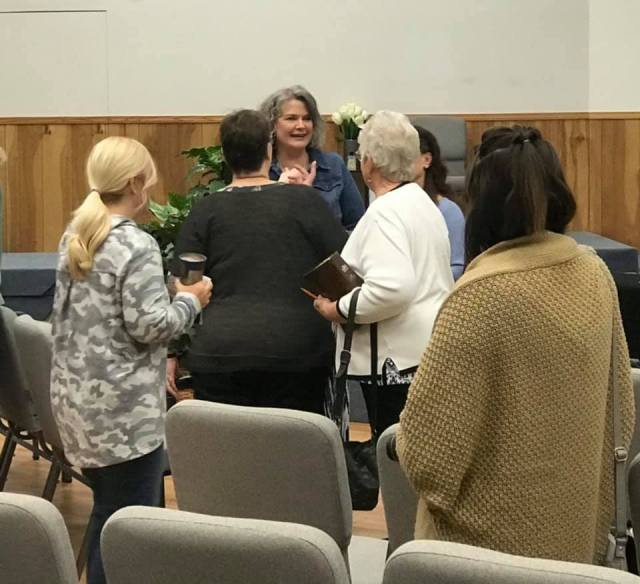
Our final session was a stimulating Q&A with lots of insightful questions. These ladies know their stuff! Afterward, it was fun getting to chat with several of the attendees:


When I travel, instead of buying souvenirs, I like to try whatever food is iconic to that area (clam chowder in Cape Cod, Chicago-style pizza, etc.). California doesn’t really have a specific iconic food, but In-N-Out is pretty close for me because I always see people raving about it online, and we don’t have In-N-Out here in Louisiana. So, for a special post-conference treat, Lisa took me to In-N-Out so I could see what all the fuss was about.

My verdict (the short version): It was good, but 5 Guys (which we do have here) is just as good. (You can check out the slightly longer version here.)

I also got to try some northern California style Mexican food (which is different from the southern New Mexico style Mexican food I grew up on and the Tex-Mex Louisiana offers), which was excellent, and a delectable Latin dish called Chipotle Milanesa at Cafe Bravo in Oakdale.

All too soon, it was time to head back home. I even got a few good pictures from the plane:

Looks like some of the mountains already got a light dusting of snow.

Considering our flight plan, I’m almost sure this is part of the Grand Canyon. It’s kind of hard to tell from the pictures, I guess. And, I didn’t get a picture of it, but I saw a dam that sure looked like it was the Hoover Dam, which also would have been in keeping with our flight plan. Besides Tiger Stadium all lit up at night at LSU, those are the coolest things I’ve ever seen from a plane.

Nothing special, and the lighting is terrible, I just really like the geometric pattern of these circular, square and triangular fields.

Many thanks to Pastor Greg, Lisa, Curt, and all of the ladies and gentlemen of FSBC who worked so hard to put on a great conference and made me feel so at home. If you’re ever in the Waterford, California, area, be sure to stop by and visit First Southern Baptist Church of Waterford.


If your church or organization is ever in need of a speaker for a womenโ€™s event, Iโ€™d love to come share with your ladies as well. Click here for more information.


Photo Credits

Photo of chopping block courtesy of South Blossom Designs.

All photos and videos of Michelle by Lisa Cowan.

All other photos by Michelle Lesley.