Idolatry, Old Testament, Salvation, Sunday School

The King and I(srael) ~ Sunday School Lesson ~ 4-13-14

sunday school

These are my notes from my ladies’ Sunday School class this morning. I’ll be posting the notes from my class here each week. Click here for last week’s lesson.

Through the Bible in 2014 ~ Week 14 ~ Apr. 6-12
Judges 19 – 1 Samuel 17
The King and I(srael)

Up until now, Israel has been under the leadership of Moses, Joshua, and a string of judges, including current prophet/judge, Samuel. But some of the elders have decided it’s time for a king. Why? Let’s take a look.

1 Samuel 8; 10:17-24

Why did Israel demand a king?

The cycle of the judges:
Israel was in a cycle in which: they would have a judge for several years and everything would go smoothly for them. throne1God would give them victory in battle (or peace), their harvests would be bountiful, etc. Then, the judge would die, Israel would get into idolatry again, things would go badly for several years, they would cry out to the Lord, the Lord would raise up another judge, and the cycle would start all over again.
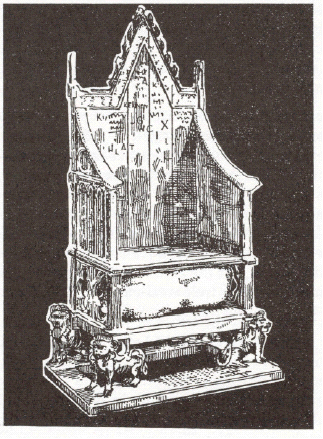
Israel likely thought it was the lack of succession from one judge to another that was the cause of all the turmoil, and that if they had a kingship (with built in succession) the chaotic years would cease, and things would go smoothly from there on out. What they failed to realize was that it was their obedience to God that brought peace during the lives of the judges, not a seamless changing of the guard.

The appearance of strength:
Another reason Israel may have wanted a king was that it gave the appearance of strength to other nations. Without a king, neighboring nations probably viewed Israel as weak and vulnerable, leading to more attacks. Of course, this would lead Israel to depend more on the Lord, and that’s exactly what He wanted.

“Everybody else is doing it”:
Finally (8:5), they wanted a king “like all the nations.” Whether this was because they admired the other nations’ structure of government, economy, large armies, etc., or, because Israel wanted to look more prestigious (or stronger- see above) in the eyes of other nations, they were blind to the fact that they would have had things so much better under God’s Kingship.


Why didn’t God want Israel to have a king?

God was already their king.
Israel didn’t need a human king. God was far more capable than any human king of winning battles, providing for them, ensuring a good economy, establishing and enforcing law and order, etc.

God wanted Israel to look to Him for everything.
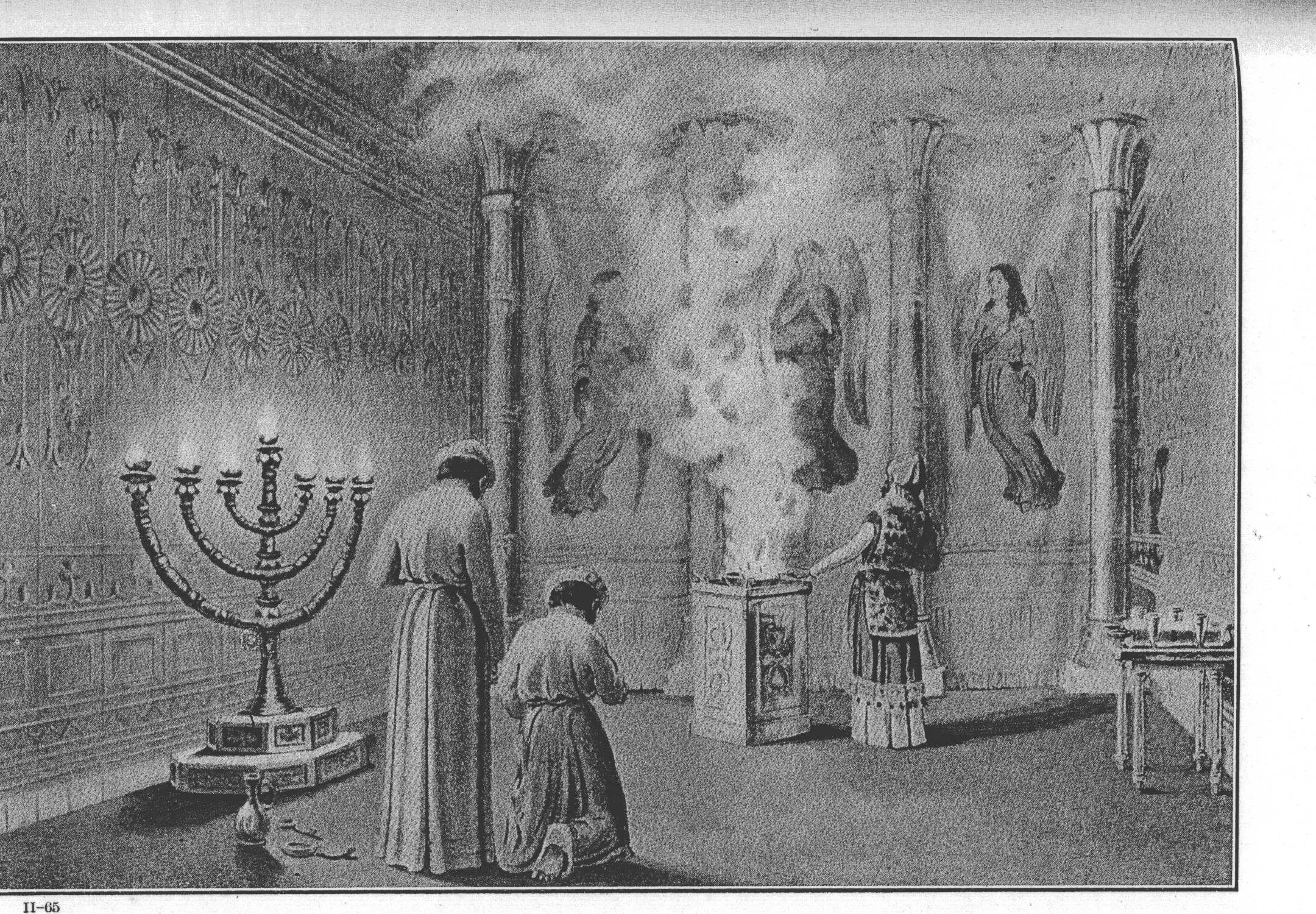
We tend to look to the President and Congress for worshipgovernance, the grocery store for food, our jobs for paychecks, our doctors for healthcare. God wanted Israel to look to Him for every aspect of their lives: government, provision, health, food, everything. Because He is sovereign over all that happens on earth and in heaven, He wants us to recognize that we should be looking to Him for these things as well. He wants us to realize that we are completely dependent on Him.
Israel’s desire for a king was another rejection of God, which brought Israel ever closer to severe judgment. (Isaiah 28:21, Ezekiel 18:23,32, 2 Peter 3:9)
Even though Israel deserved judgment for her many rebellions against God, judgment is a last, undesirable resort for Him. Isaiah tells us that judgment is God’s “strange work”. Ezekiel reminds us that God takes no pleasure in the death of the wicked. Peter writes that God is not willing that any should perish but that all should come to repentance.

Small rebellions can lead to bigger rebellions. A loving parent knows this and tries to keep this from happening by disciplining his child. With a small rebellion, we might start out with a small discipline, such as taking away dessert. As the rebellions get bigger or more frequent, bigger discipline, stock_scales_justice2such as spanking or grounding might be appropriate.

Most children learn to control their behavior through these moderate forms of discipline, but a few may eventually become so destructive, addicted, or abusive that parents have to go to the extreme end of “tough love” by throwing them out of the house or turning them over to the authorities. It’s all done in love and all in an effort to bring the child home. This is exactly what was happening with the Israelites.

This is why God did everything necessary to keep Israel from His severe judgment. He carefully and specifically laid out the Law, promised them blessings for obedience and described the consequences for disobedience in gory detail, made examples out of people who disobeyed, offered forgiveness for repentance, gave them (initially) good and godly leaders (Moses, Joshua, the judges), and performed miracles to help them believe in Him. All this in an effort to stop their slide into total rejection of Him and the consequence of final judgment.


One last chance (8:10-18)

Israel could never say she hadn’t been warned. In these verses God told them directly and specifically exactly what their new king would be like, how he would treat them, and the consequences that would follow: confiscation of private property, slavery, God turning a deaf ear to their pleas for help. But still they demanded a king. This king God had just described. They were at the point of no return, and they plunged ahead despite the warning. Why?


Hearts of Stone (Ezekiel 11:19, Romans 1:22-25)
Just as a small rebellion can lead to bigger and bigger rebellions, a small hardening of the heart can eventually lead to a complete hardening of the heart.

In the movie Frozen, Elsa (the snow queen), accidentally frozen-anna-elsashoots an icicle ray (or whatever you call it) at her sister’s (Anna) heart, which causes Anna’s heart to slowly begin freezing bit by bit. If Anna doesn’t receive “an act of true love” before her heart completely freezes, she will turn into an ice statue forever.

This is similar to what was happening with Israel. Their continual rebellion was hardening their hearts against God bit by bit, until they would eventually be completely hardened against Him. Romans tells us that when people persist in ungodliness despite the many opportunities for mercy, grace, and salvation God has offered them, He eventually “gives them over” to a hardened heart. He gives them what they want: life without Him.


What does all this have to do with me? (Isaiah 55:9)

Everything. We are just like Israel in so many ways. We’re born into this world having already been shot through the heart with Satan’s “icicle” of sin, the sin nature we inherited from Adam and Eve. We spend our lives rebelling against God, our hearts slowly hardening, bit by bit, looking for another king (usually ourselves), so we can be just like everybody else, because what the world has to offer looks desirable to us.

But God doesn’t want us to have another king, because He’s already THE King, and He’s far better and more capable than any other king we could put on the throne of our lives. He wants us to look to Him for salvation, provision, comfort, strength, everything. So, God extends grace and mercy to us in a variety of ways, some pleasant, some not, to turn us towards the cross and Christ for salvation. He does this so that we can repent and turn to Him instead of facing the final judgment of hell in eternity.

Sometimes, we also see a similarity to Israel’s demand for a king in our prayer lives. We can ask, beg, and plead with God for things He doesn’t want us to have, and even get mad at Him when He doesn’t give us what we want. We must always keep in mind that His ways are higher than our ways and that what He wants for us is always better than what we want. Let us never get to the point in our prayer lives where our will is more important to us than God’s will. Israel’s way was, “No! But there shall be a king over us!” Jesus’ way was, “Nevertheless, not my will, but yours, be done.” Let’s take our example, not from Israel, but from the the King of Israel, King Jesus.
Faith, Old Testament, Parenting, Prayer, Sunday School, Trust

Meet the Parents (of Samson) ~ Sunday School Lesson ~ 4-6-14

sunday school

These are my notes from my ladies’ Sunday School class this morning. I’ll be posting the notes from my class here each week. Click here for last week’s lesson.

Through the Bible in 2014 ~ Week 14 ~ Mar. 30-Apr. 6
Judges 1-18
Meet the Parents (of Samson)

In this week’s reading, we said goodbye to Joshua and met up with a variety of Israel’s lesser known judges. We also read about three better known characters in Israel’s history, judges Deborah, Gideon, and Samson. Often, when we come to passages like this, it’s like a treasure hunt. We focus on the valuables that are in plain sight. But, if we dig just a little, we can find more gems just beneath the surface. Today, we’re taking a look at two godly people who had a profound impact on Samson’s life: his parents.

Judges 13-14

Mr. and Mrs. Manoah
It’s always interesting to me that, just as we saw last week with the two spies, some of the most faithful of God’s servants are ordinary people like you and me serving God as they go about their daily tasks. And, just as with the two spies, in many cases, we never find out their names.  Samson’s mother was just this kind of nameless, faithful servant. Though we know little about her husband, Manoah, the most important thing about him—his faith—comes through loud and clear.

Barrenness (13:2-3)
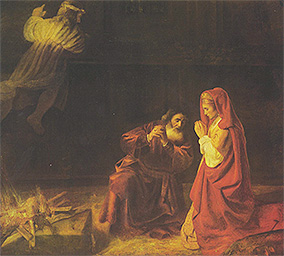
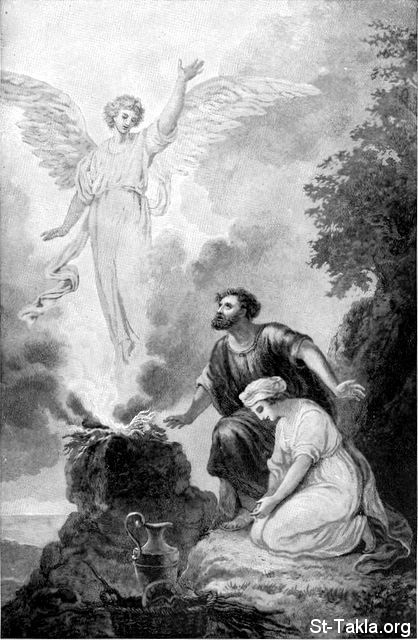
Mrs. Manoah was barren. Have you ever noticed how many “big names” in the Bible had mothers who were previously barren or who conceived miraculously? Joseph (Rachel), Samuel (Hannah), John the Baptist (Elizabeth), even Jesus (Mary), just to name a few. Things are different today, but, in manoah-wife-angel-offering the Bible, a miraculous conception was often a sign that the child would grow up to be a mighty man of God.

Barrenness was usually seen by others in the community as a curse by God or a punishment for sin (and sometimes it was: 2 Samuel 6:23). During that time in history, the only way for women to achieve status and be considered successful was by marrying and having children- particularly sons. A woman’s entire self-worth—in her own eyes, her husband’s eyes, and the eyes of her community—was at stake. So it’s easy to see why women and their husbands would have spent a great deal of time crying out to the Lord in prayer and seeking to be obedient to Him in hopes that He would grant their request for a child. We see this most clearly in the case of Hannah (1 Samuel 1), and it’s reasonable to surmise that this was likely also the case for Manoah and his wife.

Belief, Not Doubt (13:3-8)
It’s interesting that both times the angel of the Lord appeared to deliver His message, He initially appeared, not to the man, Manoah, but to the woman, his wife. Was it because she was praying at the time, or because her faith was stronger than her husband’s? This passage doesn’t tell us, so we don’t know. But, notice Mrs. Manoah’s reaction to the news that she would conceive. Did she laugh in disbelief like Sarah and Abraham did (Genesis 17:17,18:12)? Did she doubt like Zechariah (father of John the Baptist: Luke 1:18)? No, Mrs. Manoah believed. And, as a godly wife should, the first person she shared the news with and sought direction from was her husband.

Now let’s consider the reaction of Manoah to his wife’s news. Did he think her desire for a child had sent her over the edge or that she was making this up? No. He believed her without question. What does this tell us about the character, faith, and influence on her husband of Mrs. Manoah? “The heart of her husband trusted in her” (Proverbs 31:11) because she was a godly, trustworthy woman.

A Household of Faith (13)
In addition to spending time praying for a child, Mr. and Mrs. Manoah probably prayed regularly, like many other faithful Israelites, for deliverance from the Philistine oppressors, and here, we find them in prayer again.

Manoah not only trusted his wife, he had faith that the Lord would fulfill His promise. His first reaction was to believe and ask God the best way to obey Him. “And God listened to the voice of Manoah…” and answered his prayer of faith. He came back—to Manoah’s wife. Again, Manoah believed her without question and followed her out to meet the angel of the Lord.

When they met up with the angel, we see further evidence of this couple’s godliness. Though the angel had appeared and spoken twice with Mrs. Manoah, she, as a godly wife, does not take control of the situation or assert superiority over her husband. She takes a step back and, as a godly husband and leader of his home, Manoah steps up to the plate to assume the responsibility for his family and receive God’s instructions.

Manoah’s conversation with the Lord is fraught with faith. He doesn’t ask how or why they’re suddenly being blessed with a miracle child even though they’re just ordinary people. He simply accepts that it will happen. Manoah is confident that God is telling the truth and will keep His promise when he says, “When [not if] your words come true…” (12, 17). He believes God’s word that Samson will “begin to save Israel from the hand of the Philistines,” (5) when he asks about “the child’s manner of life, and…his mission” (12) so that he and Mrs. Manoah could prepare him to do so. He trusted in the www-St-Takla-org--12-Angel-Visits-Manoah-and-His-Wifecharacter of God, “the one who works wonders,” (19) and worshiped Him as such. He and Mrs. Manoah feared and trusted in God’s holiness as they fell on their faces at His departure (20).

Without a total grasp of the situation (22), Manoah believed God’s word that, “no man can see Me and live” (Exodus 33:20). Only later (21) did Manoah understand that He had been speaking with the angel of the Lord (Jesus – theophany: an appearance of the pre-incarnate Christ – {“My name…is wonderful” (18)- see Isaiah 9:6}—this is how people could “see God and live” even though God had said, “you cannot see Me and live.” They could not live through seeing God the Father, but they could live through seeing God the Son. Also a piece of supporting evidence for the Trinity). Jesus, the true deliverer and judge came personally to announce the birth of this temporal deliverer and judge who would point ahead to Christ.

Finally, we come full circle to Mrs. Manoah’s quiet trust in the Lord. Even with a strong faith like Manoah had, there can be moments of confusion. How could God say to Moses –the greatest leader Israel had ever known, the friend of God!—“you cannot see My face, for man shall not see me and live,”—yet here he and his wife were, having seen Him, but somehow still unscathed? How could anyone understand this?

But Mrs. Manoah shows us that faith means trusting God’s word even when we don’t fully understand His actions. Yes, it was true that God had said that people couldn’t live through seeing Him, but it was also true that He had visited them and told them they were going to have a son who would be a deliverer for Israel. How could both of those things be true at the same time? She probably couldn’t understand it either, but she encouraged her husband to trust God even in their confusion (23). And God kept His promise (24-25)

Trusting Despite the Circumstances (14:1-10)
Kids grow up, and as broken, sinful human beings, they sometimes make foolish decisions despite being raised in a godly home. That’s what Samson seems to have done here. While the Philistines were not one of the seven nations the Israelites were specifically forbidden to intermarry with, the principle behind God’s forbidding of intermarriage with those other nations was the same for the Philistines: they were idolaters and enemies of God and His people.

As godly parents, Mr. and Mrs. Manoah tried to steer their adult son to a godly choice of a wife. They reminded him that he was one of God’s people, and surely wanted him, as a leader in Israel, to set a good example for the people. Once again, they were seeking to be faithful to God.

thInstead of honoring his parents, Samson chose poorly. Or so it seemed. Either Samson was operating solely on lust and God sovereignly used the situation to His own advantage, or Samson, moved by God, was intentionally trying to infiltrate the Philistines by marrying in. The passage doesn’t make this precisely clear to us.

And, it wasn’t clear to Samson’s parents, either. So, perhaps thinking that they could influence the girl’s family or hoping Samson would change his mind, they went along with his decision and accompanied him to meet the new in laws. Once again, though the circumstances were worrisome and hard to understand, Mr. and Mrs. Manoah trusted that the God who had already worked so many wonders in their lives could handle this situation. They had faithfully obeyed what God had asked them to do and raised Samson in a godly home. Now, they had to sit back and watch God take care of the rest. And He did. Again, God kept His promises.

And we know that for those who love God all things work together for good,
 for those who are called according to his purpose. Romans 8:28

Christian women, Faith, Old Testament, Salvation, Sunday School, Women

Rahab: From Floozy to Faithful ~ Sunday School Lesson ~ 3-30-14

sunday school

These are my notes from my ladies’ Sunday School class this morning. I’ll be posting the notes from my class here each week. Click here for last week’s lesson.

Through the Bible in 2014 ~ Week 13 ~ Mar. 23-29
Joshua 1-24
Rahab: From Floozy to Faithful

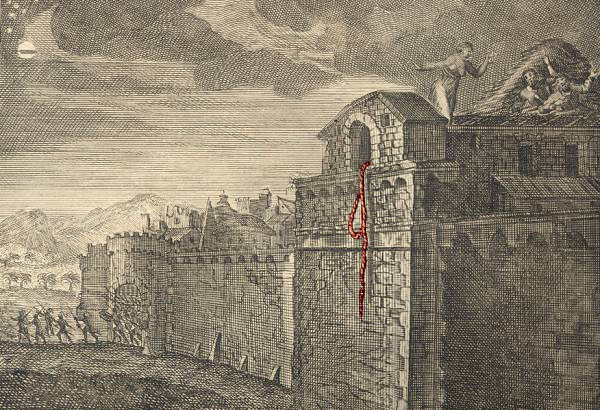
rahab-scarlet-thread

By faith Rahab the prostitute did not perish with those who were disobedient,
because she had given a friendly welcome to the spies.
Hebrews 11:31


Background- Joshua 1
Joshua 1 sets the stage for the story of Rahab and the spies. Moses had recently died, and God “promoted” Joshua to take his place. It was finally time for the Israelites to enter and take possession of the Promised Land. As God “installed” Joshua into his new position, He reminded Him:

  • Stay true to My word and you’ll be successful in what I command you to do.
  • Be strong and courageous (4 times in ch. 1); I will never leave you nor forsake you.
  • Here is the extent of the land I promised. I will keep my promise.

Cities had to be conquered, and first on the agenda was Jericho. Joshua began planning for the conquest by readying the people and by gathering intelligence about the city.

Joshua 2

Gathering Intel (1-2, 9-11, 24)
Do you remember one of the first stories we studied in which Joshua played a major role? He was one of the two spies in Numbers 13-14 who brought back a good report about taking the land of Canaan. I wonder if Joshua was thinking about that incident here, forty years later.

Joshua sent two spies, compared to the twelve who went to spy out Canaan, of which he was a part. Jericho was a much smaller area than Canaan, only two were needed, and a larger group would have been more easily discovered. Interestingly, unlike the story of Joshua and Caleb, we never discover the names of these brave spies who risked their lives and their reputations to bring back a good and faithful report. What did they find out and report back to Joshua about Jericho? (v. 9-11,24)

The Hiding Place (1-6)
Why would two nice, godly Jewish boys hide out in a prostitute’s house? Why not a nice, clean hotel? Well, first of all, they generally didn’t have hotels as we know them back then. When people traveled, they brought tents with them and camped out, stayed with friends or relatives, spent the night in the town square (Gen. 19:2), etc. And, sometimes, if it was immoral men traveling without their families, a prostitute’s house was a preferred option for a night’s lodging.

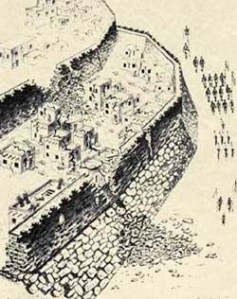
Rahab’s house would have been the perfect place for the spies 212wall_sketchto hide. They were foreigners, they were travelers, and it wouldn’t have been abnormal for them to be surreptitious (covering or disguising themselves) when entering and leaving her house. Plus, Rahab had men arriving and departing at all hours. Since she was a prostitute, many of the townspeople may have avoided her and her clientele, so it was probably the best option available for the spies.

Rahab’s house was built into the city wall. At that time, kings of various cities/countries would regularly attack each other, so many cities were built like fortresses with tall, thick walls around them and gates that could be opened or closed. The back wall of Rahab’s house was also the city wall and had a window the spies could escape from. After the gates had been shut, there would have been no other way to get out of the city.

The Faith of the Spies (24)
The main focus of this story is, rightfully, on Rahab’s faith. But, what about the faith of the spies? These men, out of faithfulness to God, and loyalty to Joshua and Israel could have been tortured and killed had they been discovered. They stayed in the home of an unclean prostitute, which was a BIG deal. (Think back over all the clean/unclean laws we just studied.) They followed the instructions of someone who was: a) a woman, b) a prostitute, c) an enemy and an pagan, and d) had no military/spy experience of her own that we know of. (Although, perhaps, in her profession, she was skilled in hiding men who were being hunted down by people on the warpath). They found an impossibly heavily fortified city. There was no human way to successfully attack it. And still, they were confident in their trust that God would somehow keep them safe and give Israel the city.

The Faith of Rahab (9-13, Romans 1:19-20, 2:14-15)
Rahab was a pagan. How could she have had faith in God? How did she even know about Him? The Bible tells us that ALL human beings have a basic knowledge of God in two ways: through creation (Rom.1) and through our consciences (Rom.2).

But Rahab knew some other things, too. She knew how God treated His children and His enemies. She had heard what God had done at the Red Sea (10)—how God had protected His children and destroyed the Egyptians. She knew how God had defeated the kings of Sihon and Og (10). She knew that out of all the gods she had ever heard of, this One was the real thing- God of heaven and earth. She knew, and she was afraid. Her fear and her defection prove her faith. If she had not believed in who God was, and that He was able to do all these things she would have had no reason to be afraid, nor would she have helped the spies and aligned herself with them against her own people.

Rahab became so convinced in her mind that God was indeed who He had shown Himself to be that she gambled everything on it. Think of what the king would have done to her if she had turned out to be wrong and had gotten caught. At the very least, she would have been killed. but as a traitor, she certainly would have been made and example of. She probably would have been publicly tortured to death, and maybe her family too. This was no small thing she did. She bet her life on a God she didn’t know. That’s the faith that saved her and led her to hide the spies and her other actions. The actions did not save her, it was the overwhelming belief in God which drove those actions.

Two Different Faiths Then (John 4:22, Luke 10:21, Deuteronomy 32:39)
There is a qualitative difference between the faith of the spies and the faith of Rahab. As Jesus said to the woman at the well, “You worship what you do not know; we worship what we know, for salvation is from the Jews.” (John 4)

The spies were God’s people. They knew Him personally. They were born into God’s house and grew up as obedient sons. They were chosen by Him and belonged to Him. They had seen Him work as eyewitnesses. They had, and knew, His word. They would have been like the older brother in the prodigal son story if he had been faithful.

Rahab, on the other hand, had none of that. She was the prodigal. She did not know God personally, but only, as an outsider, by reputation. She likely knew nothing of God’s love and promised blessings for obedience, but only of His wrath towards sinners. She was not born into God’s house; she was a pagan. She was not an obedient son; she was a woman, and as sinful a woman as she could be. She was not chosen by God and did not belong to Him. She was an outcast. She had no idea what God might do next. All she knew was that she didn’t want to die.

The spies knew. God had laid it all out for them. They were obeying God, not out of fear, but out of love.

Two Different Faiths Now
Rahab’s faith versus the spies’ faith reminds me of unchurched people coming to Christ versus churched people coming to Christ. We “spies” who were raised in church by Christian families grew up knowing all the Bible Stories, all the whys and wherefores of Jesus and salvation. It is the blessing of a godly heritage.

Rahab, like the unchurched, lived her whole life not knowing God, just doing what sinners do. When she finally heard about Him, all she had was the basics, and, knowing only that He was “Lord of Heaven and earth” (Luke) and “able to kill and make alive” (Deut.), she flung herself unashamedly on His mercy—which, at the time, she probably wasn’t sure would catch a woman like her—all because she wanted to live instead of die.

The Object and Outcome of Our Faith (Joshua 6:17, 22-25, Matthew 1:5, James 2:25)
But no matter our background or how we come to faith in Christ—Rahab or spies, unchurched or churched—the object of our faith is what matters, and the object of our faith is Christ. And because the object of our faith is the same, the outcome of our faith is also the same.

What was the outcome of this whole scenario for the spies? For Rahab? They were saved despite the destruction all around them. After it was over, they all lived in the Promised Land together. Rahab and her family became part of God’s family just like the spies were. She even got to be one of Jesus’ great, great…grandmothers (Matt.), was commended in the “Hall of Faith” (Heb. 11, above), and was cited as an example of good works giving evidence of our faith (Jas.).

God loves the prostitute just like He loves the good little girls. He sent His precious Son to save both of us and to display us as trophies of His grace.

Additional Resources
The Walls of Jericho by Answers in Genesis

Homosexuality, Law- Old Testament, Old Testament, Sunday School

Law and Order: CVI (Christians Vs. Israel) ~ Sunday School Lesson ~ 3-23-14

sunday school

These are my notes from my ladies’ Sunday School class this morning. I’ll be posting the notes from my class here each week. Click here for last week’s lesson.

Through the Bible in 2014 ~ Week 12 ~ Mar. 16-22
Deuteronomy 14-34, Psalm 91
Law and Order: CVI (Christians Vs. Israel)

th

About a month ago we took a look at the Law in the Old Testament, and talked about why God gave the Law to Israel in the first place. Christians are often accused of “picking and choosing” which laws to obey (like the prohibitions against homosexuality) and which not to obey (laws about clothes, food, etc.), so, today, we’ll be talking about why Israel had to obey all the laws but Christians can’t and shouldn’t.

Deuteronomy 31:9-13
Did God consider His Law to be important? How can you tell from this and the rest of the book of Deuteronomy, Leviticus, and other passages we’ve read? Why did God consider His Law to be important?

All Laws Are Not Created Equal
While all laws are equally holy because they were all set forth by a holy God, there are different kinds of laws and different penalties for breaking various laws. The three main categories of Law are: civil, ceremonial, and moral.

Civil Law (22:1,8; 23:19; 24:5-6; 21:15-17; 14:28-29)
At this time in history, Israel had a unique form of civil government: theocracy. This meant that, while they had human leaders such as Moses, elders, and tribal leaders, God was their king and lawgiver. This included civil or societal “law and order” types of laws as well as inheritance laws, property regulations, taxes, etc. These laws were similar to the laws our local, state, and federal governments make for us today. All citizens of Israel were bound by them, and violation of these laws required punishment and/or restitution.

Christians and the Civil Law (Romans 13:1-2)
Which country are we citizens of? Are citizens of other nations bound by U.S. law (in their own nations)? Are we, living in the U.S., bound by the laws of other nations? This is why Christians are not bound by OT Israel’s civil laws, and it is not a problem for us to wear clothes made of two types of fabric, or build houses without parapets around the roofs (unless our own government decides to make these things law). Those laws were for the citizens of that nation at that time in history. We are bound by our city, parish, state, and federal laws at this time in our history.

After Christ’s ascension, the gospel was opened up to people of all nations and God’s people –Christians – began to spread all over the earth. We are no longer under a theocracy, but various forms of government in various nations. This is why Romans 13 tells us to obey those in authority over us, not to obey OT civil law. We are to obey the laws of our own country as long as they do not conflict with anything God has stated in His word.

Ceremonial Law (16:1-17; 26:1-2)
The ceremonial laws mostly had to do with making sacrifices, feasts, “unclean” laws, and who could or could not serve in God’s house. Again, all of these laws applied to Old Testament Israelite Jews (many of them also applied to sojourners in Israel, especially those who wanted to embrace Judaism). They did not apply to other religions, other nations, or non-Israelites outside of Israel. All of these laws, regulations, and practices pointed to the coming of the Messiah, who would fulfill them. Ceremonial law was always intended to be temporary and limited.

Christians and the Ceremonial Law (Hebrews 10:1, 11-14)
Christians are not OT Jews under the Mosaic Covenant. We are NT Christians under the covenant of grace (which is also why the blessings for obedience and curses for disobedience in Deut. 28 do not apply to us). All of the ceremonies, sacrifices, even the temple itself, were a picture and foreshadow of what was to come: Christ. Because Christ was the perfect, once for all, sacrifice for our sin, we no longer need to make sacrifices. If we did, it would almost be like preferring to read the menu than actually eat the steak, or preferring to stand out in the theater lobby looking at movie posters instead of going in and watching the movie.

Actually, it would be a slap in God’s face for Christians to go back to the OT ceremonial laws and ways of worship because it would be like saying, “I prefer the imperfect blood of bulls and goats covering my sin to the perfect sacrifice of Your precious Son which can take away my sin.”

Moral Law (Exodus 20:1-17; Leviticus 11:45, Romans 2:14-15)
The moral portion of the law covers behaviors, thoughts, and attitudes that are intrinsically right or wrong: lying, murder, coveting, adultery, helping the disadvantaged, etc. Because God is good and holy, His people are to portray His goodness and holiness to a watching world. We constantly see God telling Israel, “Be holy for I am holy.” The moral laws reflect the nature and character of God. God is truth, so do not lie. God is loving, so do not hate. God is faithful, so do not be unfaithful. God is generous and giving, so do not steal.

Moral Law is “transcendent,” which means that it applied even before it was codified (Remember when Cain killed Abel? Murder was still wrong then even though the Law would not be given until Exodus 20.), and will continue to apply until Christ returns. Moral Law applies to all people everywhere. God says this Law is written on our hearts; we know basic right from wrong by our consciences. As we discussed last week, the first and highest moral law was to love God only, and love Him above all else. When God holds first place in a person’s life, obedience to His moral law is a natural overflow of the heart.

Christians and the Moral Law (1 Peter 1:14-16; 1 John 2:4-6)
While Christians cannot and should not obey the OT ceremonial or civil laws, we are to obey the moral laws, most of which are restated somewhere in the NT. Often, Jesus reminds us that God is not after behavior modification, rather, He’s after our hearts. It’s not enough to restrain yourself from murdering someone; Jesus says to love our enemies and pray for those who persecute us. It’s not enough to refrain from adultery; Jesus tells husbands to love their wives to the point of laying down their lives for them and wives to respect and submit to their husbands. This kind of selfless love for God and others was always the intent behind the OT moral laws. It becomes clearer in the NT through the teaching and sacrificial example of Jesus. We follow His example of love for God, obedience to God, laying down His life for others, and serving others.


Jesus and the Law (Matthew 5:17-18)
Jesus Himself said that He did not come to abolish the Law, but to fulfill it. He did this by perfectly obeying the civil, ceremonial, and moral law. He further fulfilled the ceremonial law by concluding it. When Jesus said, “It is finished,” it was. The final sacrifice had been made, once for all. When Jesus died, the veil of the temple that separated people from the Holy of Holies—the very presence of God—was split in two, signifying that, through the final sacrifice, Jesus, we may now enter into God’s presence and be reconciled to Him.


Additional Resource:
The Gospel by Numbers by Ligon Duncan at the 2014 Together for the Gospel conference (This is one of the best sermons I’ve ever heard. I encourage everyone to take the time to listen to it.)

Idolatry, Old Testament, Sunday School

For the Love of God, Flee Idolatry ~ Sunday School Lesson ~ 3-16-14

sunday school

These are my notes from my ladies’ Sunday School class this morning. I’ll be posting the notes from my class here each week. Click here for last week’s lesson.

Through the Bible in 2014 ~ Week 11 ~ Mar. 9-15
Numbers 33- Deuteronomy 13
For the Love of God, Flee Idolatry

What is idolatry? What did idolatry mean in OT times, and what does it mean now? Does an idol have to be tangible? Do we have to physically bow down to an object or do outward acts of worship to it for it to be an idol? Can our wishes, opinions, behaviors, or even other people be idols?

Old Testament Idolatry (Deuteronomy 4:15-19, Genesis 31:19ff, 1 Samuel 5:1-5, Daniel 3:1ff)
In the OT (NT, too), the word “idolatry” would have brought to mind the ideas outlined in 4:15-19: the worship of a carved figure in the likeness of a created being, or the worship of the heavenly bodies. Many idols/gods are mentioned in the OT, including Baal, Ashera, Molech, and Dagon, among others. Some of them were figures small enough to be kept in the home (Gen. 31). Some were larger statues in their own temples (1 Sam. 5). Some were enormous outdoor statues (Dan. 3). People physically bowed down to them, prayed to them, brought them sacrifices, served them, and did other things to try to appease them, get what they wanted out of them, and steer clear of their anger. Idolatry was simply to worship, serve, and love a created thing instead of, or more than, God.

“Pay no attention to that man behind the curtain!” (Deuteronomy 32:16-17, 1 Corinthians 8:4-6, Isaiah 44:14-17)
Was there really a pantheon of gods out there, independent of God, but with similar powers? No. 1 Cor. clearly declares that this cadre of gods does not exist. Is. 44 focuses on the ridiculousness of worshiping something made by man’s own hand, and out of the same material he uses for building a fire.

In The Wizard of Oz, Dorothy saw an image on a screen, but there was no real “wizard” behind the image. It turned out to be her friendly neighborhood computer nerd. So, who’s “the man behind the curtain” when it came to OT idols? Deut. 32 says it’s not some fictional “god”; demons are pulling the strings. Satan draws people away from God, then, he and his demons continue to pull them down further and further into sin, degradation, and ungodliness as they worship “idols.”

What is idolatry today? (Colossians 3:5, 1 Corinthians 2:16, Matthew 4:9-10)
Col. 3 tells us that covetousness- wanting anything we’re not supposed to want- is idolatry. Since “we have the mind of Christ” (1 Cor. 2), desiring that doesn’t conform to what Christ thinks and says is idolatry. In other words, any sin. Some type of idolatry is at the root of every sin. In Matt. 4, Jesus says we’re to worship and serve only God, so anything we put our trust in, make ungodly sacrifices for, serve, or allow to control us is an idol.

What are some of our idols today? Do they have to be tangible to be idols? While there are certainly religions that worship tangible gods (Buddha, third world idols), idolatry today is much subtler. For any non-Christian, his idol is ultimately himself, regardless of his religion or lack thereof. Even Christians (or people who claim to be Christians) can be guilty of idolatry.

What about constantly missing church in order to do something else we prefer? How about “loving” our children more than God (Ex: Staying home from church because your child doesn’t want to go, or so your child can play sports. Choosing to disbelieve or twist what Scripture says about homosexuality because your child becomes a homosexual.). What about giving more attention to Facebook, TV, a hobby, or a club than we do to God or to the other things He has told us to do?

What about worshiping a false “Jesus” we carve out with our minds, one who doesn’t match up with the biblical Jesus? (“The Jesus I worship would never send people to hell, want IMG_2618Christians to be sick or poor, say that X, Y, or Z is a sin, etc.”) What about our opinions and philosophies that conflict with Scripture? (“I don’t believe homosexuality is a sin.” “Women should be pastors.”) What about any area of our lives we refuse to have Christ conform to His likeness? (“I refuse to stop swearing, going out to the boats, submit to my husband, etc.”)

Any practice, opinion, or philosophy we cling to, despite what God’s word says about it, is an idol.

Where and how does idolatry start? (Psalm 14:1, Matthew 12:33-35)
Is idolatry merely an outward act, or does it go deeper? What causes the outward worship of idols? (Ps. 14) says, “The fool has said in his heart there is no God.” Jesus said (Matt. 12) it’s our hearts that map the course for our actions. Idolatry, like any other sin, starts with the bent of the heart. Are our hearts bent towards God or away from God? Our actions will follow. Godly actions follow a godly heart, and sinful actions follow an idolatrous heart.

For the Love of God: The Commandment (Deuteronomy 5:6-21, 6:4-6; Mark 12:28-30)
Because God knows that idolatry begins with the condition of the heart, His primary Commandment to Israel and to us is not about our outward behavior, but about our hearts. It’s not a “don’t” but a “do.” Love (Deut. 6). What did Jesus say about this Commandment? (Mark 12). We are to set all of our affections on God and exalt Him above everything else.

This is why God’s first Commandments in the 10 Commandments (as well as the Great Commandment) deal with idolatry. If our hearts are God’s alone, the other 8 Commandments will fall into place. But if our hearts love anything instead of or more than God:

We will revere something else more than God’s name and will take it in vain (11)

Whatever we love more than God will be more important to us than worshiping God (12)

Whatever we love more than God, we will naturally love more than our parents, spouses, and neighbors, so what would be the big deal about dishonoring our parents, murdering, committing adultery, stealing, lying, or coveting what someone else owns? (12-21)

Our actions follow our hearts.

What’s the solution to our idolatry? (Galatians 3:2-3, Hebrews 13:20-21, Philippians 2:13)
Since some form of idolatry is at the root of every sin, we’re all guilty of idolatry multiple times a day. What can we do about it? Nothing. Not a thing. We can’t just make a decision not to commit idolatry anymore. It doesn’t work. We’re going to keep sinning.

The ONLY one who can do anything about our idolatry is Christ. He died for our sin of idolatry and set us free from its power to enslave us. We are saved by His grace, and it is His grace that sanctifies us (makes us more like Him). While we can cooperate with Him by obeying what His word tells us and resisting temptation as we are empowered to do so by the Holy Spirit, we cannot “pull ourselves up by our bootstraps” and clean ourselves up from our idolatry and do better next time by our own effort. But as Christ works in us, He conforms us to His likeness.

When we commit idolatry, we must run to the one true God, throw ourselves on His mercy in repentance, and receive His forgiveness and cleansing.