Politics, Prayer, Throwback Thursday

Throwback Thursday ~ Not Gonna Bow: 5 Reasons Prayer in School Isn’t the Magic Bullet Christians Think It Is

Originally published August 29, 2014Prayer In School
“We need to put prayer back in school!” It’s a well worn mantra that many Christians have been shouting from pulpits, in PTA meetings, and now on social media since the early 1960s when it was outlawed. No, we don’t need to put prayer back in public schools, and I think if Christians who think that the United States would revert to some idyllic 1950’s utopia by reinstituting classroom prayer would give it five minutes of serious thought, they would run as far as they could from the idea of prayer in public schools.

Now, just so there are no misunderstandings, when I say “prayer in public schools,” I’m not talking about things like a child saying the blessing over his own lunch, or a group of kids who want to pray together during free time, or an after school club that wants to include prayer. Those are all voluntary, private things that should, by all means, be allowed. When I say “prayer in public schools,” I’m talking about a teacher or a student or someone over the loudspeaker leading the entire class in prayer during class time. And we definitely do not want that. Why?

1. What’s good for the Christian goose is good for the Muslim/Mormon/Atheist gander.
There is no way in the current cultural climate –none whatsoever- that any court in this land will reinstitute Christian prayer, and only Christian prayer, in the classroom. And even if some well meaning judge did manange to do so, his decision would be overturned faster than you could say “amen.” You want prayer in the public school classroom? You might get Christian prayer, but you’re also going to get Muslim prayer, Mormon prayer, atheist prayer, Hindu prayer, Satanist prayer, and any other sect that comes along and wants to do prayer in the classroom. Do you really want your six year old faced with the choice of participating in a Satanic prayer or trying to get permission to abstain? Neither do I.

2. Why is it so important that we have prayer in schools?
Assuming you don’t work at a church or ministry, does your workplace gather all the employees at the beginning of the day and start with prayer? No? Has that been deeply detrimental to you personally or to your workplace? No? Then why is it so important that schools have prayer?

3. Post hoc ergo propter hoc.
This nifty little Latin phrase means “after this, therefore, because of this.” It refers to the faulty reasoning people sometimes use by assuming that because two events occurred near the same time or seem to be related, one of them must have caused the other.

Time and time again, I have heard Christians bemoan the moral state of this country and wail, “It all started when they took prayer out of schools!”

Post hoc ergo poppycock.

If the moral state of this country was so perfect before 1962, then how in the world did prayer ever get taken out of schools in the first place? No, things started going downhill in this country long before prayer was removed from schools. It was as a result of that moral decay that prayer was taken out of schools.

Saying that the removal of prayer from public schools created the mess our country is in today would be like someone sixty years from now saying, “When the Supreme Court legalized gay marriage nationwide, that’s when things started going bad for America.”

Because things are just so morally peachy right now.

4. It isn’t biblical.
It is not the job of a secular governmental institutition or employee to monitor or lead our children in prayer, and no one could make the case from God’s word that it is. Scripture tells us that leading in prayer is the job of Christian parents and the church.

Neither would it be biblical for the sake of unsaved children in your child’s class that you’re hoping will somehow get saved by someone leading a prayer every morning. That’s not how people get saved. If you’re concerned about lost children, teach your child how to share the gospel. Befriend the children’s parents and share the gospel with the parents yourself. It’s free, it can be done immediately, without waiting for court decisions (that won’t be coming anyway) and it’s biblical.

5. It’s hypocritical.
It is often Christians who exclaim the loudest, and rightly so, that the government should back off and stop trying to control, regulate, and meddle in every square inch of our lives. Yet with regard to prayer in schools, Christians talk out of the other side of their mouths and practically beg the government to insinuate itself into an issue it has no business touching. (Not to mention that the government does such a bang up job of handling things like this.)

Will those very Christians complain if the government reinstitutes prayer and then tries to regulate it just like they do everything else? And what about depending on the government for a handout of prayer when we are the ones who should be doing the work of teaching prayer and sharing the gospel? Isn’t that a sort of prayer “welfare” system?
Putting prayer back in public schools would be a nightmare of false religions and government regulations.

We don’t need prayer in schools. We need prayer in homes and in churches. We need people sharing the gospel with their friends, fellow students, neighbors, and co-workers. We need Christians to be the salt and light Jesus called us to be in the world we actually live in rather than pining away for an imaginary ideal that will never come to fruition.

Gospel, Homosexuality, Politics, Salvation, Sin, Throwback Thursday

Throwback Thursday ~ SoteriObamaGigliology and You

Originally published January 12, 2013

Disclaimer: This article should not be viewed as an endorsement of Louie Giglio or any unbiblical theology he currently holds to.
soteriobamagigliology

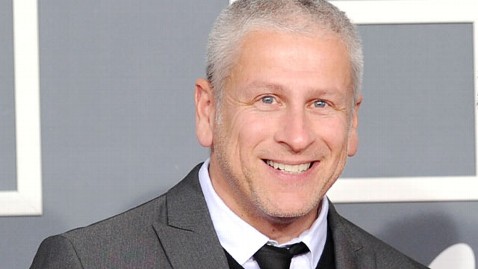
Is Louie Giglio a living martyr or a coward? What do you think of our shiny new state church here in the U.S.? If you haven’t heard about The Giglio Imbroglio, allow me to bring you up to speed.gty_rev_louie_giglio_jef_130110_wblog

Pastor Louie Giglio was invited to say a prayer at President Obama’s inauguration ceremony later this month. Being a Christian pastor, it should have been expected that he would have preached at some point on what the Bible says about the sin of homosexuality. Someone with a pro-homosexuality group dug up a sermon  from decades ago in which he had done just that, and, yada yada yada, Pastor Giglio – pressured, or not, by the Inaugural Committee (that’s a little murky at the moment)— decided not to do the prayer. Ok, are ya with me? Good.

I’ve read a bit about this debacle over the past few days (though I have a few disagreements with some points, all of the articles hyperlinked above are excellent) and most of what I’ve read seems to be focused on Louie Giglio. But Louie Giglio isn’t alone on the stage of this little drama.

There’s another player. Our President.

Although all the details and communiqués were being handled by the Presidential Inaugural Committee, as President Truman used to say, “The buck stops here.” Right at the feet of President Obama. Ultimately, he is responsible for the “unvitation.” If he felt that the Committee was out of line in their statements or actions, he could have intervened. Instead, he has been silent, which implies consent.

Our President consented to the press release from the Inaugural Committee which said in part:

“As we now work to select someone to deliver the benediction, we will ensure their beliefs reflect this administration’s vision of inclusion and acceptance for all Americans.”

Translation: Louie Giglio’s Christian beliefs about homosexuality, which come straight from the Bible, do not “reflect this administration’s vision.”

Let me say that again. Christian beliefs about homosexuality, which line up with what the Bible clearly says, are opposed by our President.

Why is that important?

obama-in-church-2004-b654b48e648853dc_largeBecause our President believes he is a Christian.

And so do a lot of other people who share his beliefs on things like homosexuality and abortion.

If that describes you, before you get mad and stop reading, in fairness, hear me say something:

Sanctification (progressively becoming more and more Christlike) is a process. People who get saved, especially as an adult, bring a lot of entrenched opinions and thought processes with them to the cross.

Am I saying you have to become pro-life and anti-homosexuality (notice, I did not say anti-homosexual) before, or in order to, get saved?

No.

Am I saying that five minutes or a week after you get saved, you’ll be pasting “Choose Life” and “One Man, One Woman” bumper stickers on your car?

No.

What I am saying is that a person who has genuinely been born again has a God-created desire to know, trust, and obey God’s word.

Even if it’s hard.

Even if you don’t like it, initially.

Even if you don’t completely understand it.

The desire, inextricably interwoven with your love and affection for Christ, born in your heart when you were born again, exists.

Therefore if anyone is in Christ, he is a new creature; the old things passed away; behold, new things have come. II Corinthians 5:17

Do you have that desire?

Do you wrestle with the things in God’s word that are difficult for you –perhaps things like homosexuality- in order to understand, embrace, and obey them?

Or, do you war against the things you find in the Bible that you don’t like- rebelling against their inherent truth, rejecting them, twisting their meanings to suit your own opinions, and refusing to accept them?

If it’s the latter, you need to be afraid.

Be VERY afraid.

Because the Bible makes it clear that you aren’t saved.

By this we know that we have come to know Him, if we keep His commandments. The one who says, “I have come to know Him,” and does not keep His commandments, is a liar, and the truth is not in him; but whoever keeps His word, in him the love of God has truly been perfected. By this we know that we are in Him: the one who says he abides in Him ought himself to walk in the same manner as He walked. I John 2:3-6

But a natural man does not accept the things of the Spirit of God, for they are foolishness to him; and he cannot understand them, because they are spiritually appraised. But he who is spiritual appraises all things, yet he himself is appraised by no one. For who has known the mind of the Lord, that he will instruct Him? But we have the mind of Christ.  I Corinthians 2:14-16

You adulteresses, do you not know that friendship with the world is hostility toward God? Therefore whoever wishes to be a friend of the world makes himself an enemy of God.  James 4:4

Christians desire to keep God’s word, just like Jesus did. Christians lovingly call sinners to repentance from their sin and to faith in Christ, just like Jesus did. Christians think like Jesus did. Christians reject the world’s values rather than promoting them, just like Jesus did.bible

My dear friend, if you find yourself constantly battling against God’s word, I urge you, please examine your affections and the fruit of your life, thoughts, and behavior in the mirror of God’s word. It doesn’t matter if you’ve repeated a prayer, filled out a card, been baptized, taken communion, faithfully attended church, served as a teacher, deacon, elder, or pastor, had someone assure you of your salvation, or even if you just “feel saved”. If your life and heart don’t match up with what Scripture says is true of a Christian, you are not genuinely born again.

Please, turn away from your sin- all of your sin -and put your faith in Christ’s finished work on the cross, and in His bodily resurrection, as payment for that sin. If Cain taught us anything, it’s this: you can’t come to God on your own terms. You have to approach Him on His terms.

Or, to borrow from a mantra oft repeated by some in the homosexual community:

If you’re going to accept Him, you have to accept everything about Him.

Christian women, Politics, Throwback Thursday

Throwback Thursday ~ How Should Christians Vote?

Originally published October 6, 2008

10730205_864190773621858_7293920273710529598_n

Election day, November 4, is right around the corner. How should Christians vote?

First things first. Christians, especially Christian women, should vote. Not voting would not only be an insult to the sacrifice of the dedicated men and women who have given their lives in the cause of freedom and suffrage over the years that we might have the luxury of having a voice in our governance, but voting is a gift from God. Should we treat this gift lightly by failing to exercise it?

If you have never had the opportunity to visit a country, such as those in the Middle East, in which basic freedoms and women’s rights are limited if in existence at all, I urge you to do so if at all possible. After I returned to the U.S. from a visit to the Middle East a few years ago, I realized just how much we take for granted what an enormous blessing it is that God has seen fit to place us in a land of liberty, abundance, and opportunity. When I vote, I see it as a way of returning thanks to God for the gift of freedom, and honoring those who have made the ultimate sacrifice to secure our liberties.

For whom should Christians vote? The Bible says in I Corinthians 10:31 that whatever we do, we should do all things for the glory of God. “Whatever” and “all things” includes voting. Christians should vote for the person they believe will bring the most glory to God. Considering the candidate options with which we’re often presented, this, at times, seems an impossible task.

How do we know which candidate to vote for? Like all other decisions in a Christian’s life, this one should be governed by God’s leading through prayer and Biblical principles. Ask God for wisdom (James 1:5) to make a Godly decision.

Study the candidate’s platform and where he stands on each issue. Is he a proponent of anything that clearly conflicts with Scripture? Would he push to legalize or undergird things God calls sin? Can we, as Christians– whose goal in life is supposed to be turning from sin and pursuing holiness –knowingly and intentionally disregard the fact that a candidate would stand in favor of sin rather than fighting against it, and give him our support?

Sometimes we lean towards voting for the candidate who would benefit us the most personally. Perhaps he has promised a tax cut for our particular bracket, or said he would improve the roads we use for traveling to work. In and of themselves, those are good things, but does his platform also include favoring things which would hurt others or be detrimental to the fabric of our society in general? In other words, should a Christian vote for something or someone who will benefit herself at the expense of harming others?

I don’t believe we can do that and remain true to Biblical principles such as:

Do nothing from selfishness or empty conceit, but with humility of mind regard one another as more important than yourselves; do not merely look out for your own personal interests, but also for the interests of others. Philippians 2:3-4

Now we who are strong ought to bear the weaknesses of those without strength and not just please ourselves. Each of us is to please his neighbor for his good, to his edification. For even Christ did not please Himself; Romans 15:1-3a

As is frequently the case these days, the person we vote for, believing he will make the most Christ-like decisions, loses the election. I don’t know about you, but I’m usually pretty disappointed when this happens.

I try to keep it in perspective, though. It’s within the realm of possibility that the person who won the election will get radically saved after taking office and make even more Godly decisions than the other candidate would have made. It’s also possible that he will unintentionally make the decisions God wants him to make for other reasons, such as political expediency or pleasing a particular special interest group. The Bible says in Proverbs 21:1, “The king’s heart is like channels of water in the hand of the LORD; He turns it wherever He wishes.

Not only should we pray before we vote, but we have a Biblical mandate to pray for the winner after the election is over:

First of all, then, I urge that entreaties and prayers, petitions and thanksgivings, be made on behalf of all men, for kings and all who are in authority, so that we may lead a tranquil and quiet life in all godliness and dignity. This is good and acceptable in the sight of God our Savior, who desires all men to be saved and to come to the knowledge of the truth.
I Timothy 2:1-4

Above all, we must remember that, while the upcoming elections may determine who will sit in the White House, the Congress, or the State House, they do not, nor will they ever, determine who sits on the throne of the universe as King.

Politics, Prayer

Not Gonna Bow: 5 Reasons Prayer in School Isn’t the Magic Bullet Christians Think It Is

Prayer In School

“We need to put prayer back in school!” It’s a well worn mantra that many Christians have been shouting from pulpits, in PTA meetings, and now on social media since the early 1960s when it was outlawed. No, we don’t need to put prayer back in public schools, and I think if Christians who think that the United States would revert to some idyllic 1950’s utopia by reinstituting classroom prayer would give it five minutes of serious thought, they would run as far as they could from the idea of prayer in public schools.

Now, just so there are no misunderstandings, when I say “prayer in public schools,” I’m not talking about things like a child saying the blessing over his own lunch, or a group of kids who want to pray together during free time, or an after school club that wants to include prayer. Those are all voluntary, private things that should, by all means, be allowed. When I say “prayer in public schools,” I’m talking about a teacher or a student or someone over the loudspeaker leading the entire class in prayer during class time. And we definitely do not want that. Why?

1. What’s good for the Christian goose is good for the Muslim/Mormon/Atheist gander.
There is no way in the current cultural climate –none whatsoever- that any court in this land will reinstitute Christian prayer, and only Christian prayer, in the classroom. And even if some well meaning judge did manange to do so, his decision would be overturned faster than you could say “amen.” You want prayer in the public school classroom? You might get Christian prayer, but you’re also going to get Muslim prayer, Mormon prayer, atheist prayer, Hindu prayer, Satanist prayer, and any other sect that comes along and wants to do prayer in the classroom. Do you really want your six year old faced with the choice of participating in a Satanic prayer or trying to get permission to abstain? Neither do I.

2. Why is it so important that we have prayer in schools?
Assuming you don’t work at a church or ministry, does your workplace gather all the employees at the beginning of the day and start with prayer? No? Has that been deeply detrimental to you personally or to your workplace? No? Then why is it so important that schools have prayer?

3. Post hoc ergo propter hoc.
This nifty little Latin phrase means “after this, therefore, because of this.” It refers to the faulty reasoning people sometimes use by assuming that because two events occurred near the same time or seem to be related, one of them must have caused the other.

Time and time again, I have heard Christians bemoan the moral state of this country and wail, “It all started when they took prayer out of schools!”

Post hoc ergo poppycock.

If the moral state of this country was so perfect before 1962, then how in the world did prayer ever get taken out of schools in the first place? No, things started going downhill in this country long before prayer was removed from schools. It was as a result of that moral decay that prayer was taken out of schools.

Saying that the removal of prayer from public schools created the mess our country is in today would be like someone sixty years from now saying, “When the Supreme Court legalized gay marriage nationwide, that’s when things started going bad for America.”

Because things are just so morally peachy right now.

4. It isn’t biblical.
It is not the job of a secular governmental institutition or employee to monitor or lead our children in prayer, and no one could make the case from God’s word that it is. Scripture tells us that leading in prayer is the job of Christian parents and the church.

Neither would it be biblical for the sake of unsaved children in your child’s class that you’re hoping will somehow get saved by someone leading a prayer every morning. That’s not how people get saved. If you’re concerned about lost children, teach your child how to share the gospel. Befriend the children’s parents and share the gospel with the parents yourself. It’s free, it can be done immediately, without waiting for court decisions (that won’t be coming anyway) and it’s biblical.

5. It’s hypocritical.
It is often Christians who exclaim the loudest, and rightly so, that the government should back off and stop trying to control, regulate, and meddle in every square inch of our lives. Yet with regard to prayer in schools, Christians talk out of the other side of their mouths and practically beg the government to insinuate itself into an issue it has no business touching. (Not to mention that the government does such a bang up job of handling things like this.)

Will those very Christians complain if the government reinstitutes prayer and then tries to regulate it just like they do everything else? And what about depending on the government for a handout of prayer when we are the ones who should be doing the work of teaching prayer and sharing the gospel? Isn’t that a sort of prayer “welfare” system?
Putting prayer back in public schools would be a nightmare of false religions and government regulations.

We don’t need prayer in schools. We need prayer in homes and in churches. We need people sharing the gospel with their friends, fellow students, neighbors, and co-workers. We need Christians to be the salt and light Jesus called us to be in the world we actually live in rather than pining away for an imaginary ideal that will never come to fruition.
Gospel, Homosexuality, Politics, Salvation, Sin

SoteriObamaGigliology and You

soteriobamagigliology

Is Louie Giglio a living martyr or a coward? What do you think of our shiny new state church here in the U.S.? If you haven’t heard about The Giglio Imbroglio, allow me to bring you up to speed.gty_rev_louie_giglio_jef_130110_wblog

Pastor Louie Giglio was invited to say a prayer at President Obama’s inauguration ceremony later this month. Being a Christian pastor, it should have been expected that he would have preached at some point on what the Bible says about the sin of homosexuality. Someone with a pro-homosexuality group dug up a sermon  from decades ago in which he had done just that, and, yada yada yada, Pastor Giglio – pressured, or not, by the Inaugural Committee (that’s a little murky at the moment)— decided not to do the prayer. Ok, are ya with me? Good.

I’ve read a bit about this debacle over the past few days (though I have a few disagreements with some points, all of the articles hyperlinked above are excellent) and most of what I’ve read seems to be focused on Louie Giglio. But Louie Giglio isn’t alone on the stage of this little drama.

There’s another player. Our President.

Although all the details and communiqués were being handled by the Presidential Inaugural Committee, as President Truman used to say, “The buck stops here.” Right at the feet of President Obama. Ultimately, he is responsible for the “unvitation.” If he felt that the Committee was out of line in their statements or actions, he could have intervened. Instead, he has been silent, which implies consent.

Our President consented to the press release from the Inaugural Committee which said in part:

“As we now work to select someone to deliver the benediction, we will ensure their beliefs reflect this administration’s vision of inclusion and acceptance for all Americans.”

Translation: Louie Giglio’s Christian beliefs about homosexuality, which come straight from the Bible, do not “reflect this administration’s vision.”

Let me say that again. Christian beliefs about homosexuality, which line up with what the Bible clearly says, are opposed by our President.

Why is that important?

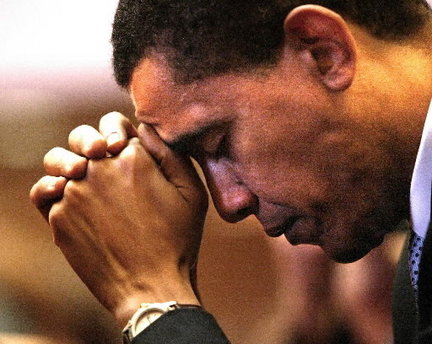
obama-in-church-2004-b654b48e648853dc_largeBecause our President believes he is a Christian.

And so do a lot of other people who share his beliefs on things like homosexuality and abortion.

If that describes you, before you get mad and stop reading, in fairness, hear me say something:

Sanctification (progressively becoming more and more Christlike) is a process. People who get saved, especially as an adult, bring a lot of entrenched opinions and thought processes with them to the cross.

Am I saying you have to become pro-life and anti-homosexuality (notice, I did not say anti-homosexual) before, or in order to, get saved?

No.

Am I saying that five minutes or a week after you get saved, you’ll be pasting “Choose Life” and “One Man, One Woman” bumper stickers on your car?

No.

What I am saying is that a person who has genuinely been born again has a God-created desire to know, trust, and obey God’s word.

Even if it’s hard.

Even if you don’t like it, initially.

Even if you don’t completely understand it.

The desire, inextricably interwoven with your love and affection for Christ, born in your heart when you were born again, exists.

Therefore if anyone is in Christ, he is a new creature; the old things passed away; behold, new things have come. II Corinthians 5:17

Do you have that desire?

Do you wrestle with the things in God’s word that are difficult for you –perhaps things like homosexuality- in order to understand, embrace, and obey them?

Or, do you war against the things you find in the Bible that you don’t like- rebelling against their inherent truth, rejecting them, twisting their meanings to suit your own opinions, and refusing to accept them?

If it’s the latter, you need to be afraid.

Be VERY afraid.

Because the Bible makes it clear that you aren’t saved.

By this we know that we have come to know Him, if we keep His commandments. The one who says, “I have come to know Him,” and does not keep His commandments, is a liar, and the truth is not in him; but whoever keeps His word, in him the love of God has truly been perfected. By this we know that we are in Him: the one who says he abides in Him ought himself to walk in the same manner as He walked. I John 2:3-6

But a natural man does not accept the things of the Spirit of God, for they are foolishness to him; and he cannot understand them, because they are spiritually appraised. But he who is spiritual appraises all things, yet he himself is appraised by no one. For who has known the mind of the Lord, that he will instruct Him? But we have the mind of Christ.  I Corinthians 2:14-16

You adulteresses, do you not know that friendship with the world is hostility toward God? Therefore whoever wishes to be a friend of the world makes himself an enemy of God.  James 4:4

Christians desire to keep God’s word, just like Jesus did. Christians lovingly call sinners to repentance from their sin and to faith in Christ, just like Jesus did. Christians think like Jesus did. Christians reject the world’s values rather than promoting them, just like Jesus did.bible

My dear friend, if you find yourself constantly battling against God’s word, I urge you, please examine your affections and the fruit of your life, thoughts, and behavior in the mirror of God’s word. It doesn’t matter if you’ve repeated a prayer, filled out a card, been baptized, taken communion, faithfully attended church, served as a teacher, deacon, elder, or pastor, had someone assure you of your salvation, or even if you just “feel saved”. If your life and heart don’t match up with what Scripture says is true of a Christian, you are not genuinely born again.

Please, turn away from your sin- all of your sin -and put your faith in Christ’s finished work on the cross, and in His bodily resurrection, as payment for that sin. If Cain taught us anything, it’s this: you can’t come to God on your own terms. You have to approach Him on His terms.

Or, to borrow from a mantra oft repeated by some in the homosexual community:

If you’re going to accept Him, you have to accept everything about Him.