Church

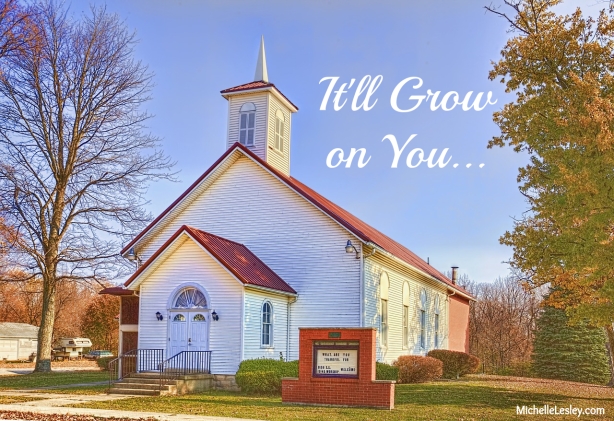
Throwback Thursday ~ It’ll Grow on You…

Originally published April 22, 2009

Have you ever wished your church would grow? Maybe your pastor talks about church growth from time to time? What should a church do if it wants to grow?

Before a church starts thinking about publicity, programs, attention-getters, etc., it should take some things into consideration:

1.

Is this a Bible-believing, Bible-preaching/teaching church? Do we stick to Scripture and preach the Truth, the whole Truth, and nothing but the Truth even if it makes people uncomfortable or (in a biblically appropriate way) offends them?

Since the Bible is God’s Word, it would make no sense for Him to want to grow a church that either doesn’t believe what He has said, or twists what He has said to fit what the people want to hear. Scripture is clear, our churches are to be focused on correctly handling and proclaiming God’s Word.

2.

How do we know God wants us to focus on growth right now? The church belongs to God, and we are to obey Him in all things. Have we as a congregation spent time in prayer both individually and corporately to seek His direction for the church? There could be any number of things God wants to do in the church before bringing a whole slew of new people in. He may want to do some pruning of the membership or the doctrine being taught. He may want to root out some corporate sin that needs to be dealt with. He may want to concentrate on building unity for some period of time. There could be a number of biblical things that are a higher priority to God for our church than growth.

3.

People can grow an organization, club, colloquy or group, but only God can grow a church. If you have a group of people that is growing strictly by man’s efforts and/or in violation of Scriptural principles, it is one of the former, not the latter. The question is, do we want to grow an organization here, or do we want God to grow a church?

4.

How did Jesus grow a church? After all, we’re to be about the business of following and imitating Him, right? If we take a look at how Jesus’ own following developed while He was on Earth as well as how the first century church grew, we don’t find that they had to go out and drag people in. They didn’t send out fliers, have space walks, barbecues, concerts and all that kind of stuff that so many churches do today just to try to draw people in. That’s a “top down” approach. Jesus and the first century church took a “bottom up” approach. They studied the Scripture, prayed, ministered to people as they had needs, and preached and taught the Word, and the people who truly wanted to know God and hear the Word came out and joined them.

Now, there’s nothing intrinsically wrong with barbecues and space walks. Indeed, if a church is following Christ rightly and praying for God’s direction, they might decide to do some sort of outreach event that includes some fun activities. But the thrust of drawing people in should be the lifting up of Jesus in the church.

Want your church to grow? Make sure the church is completely in line with what the Bible teaches. Seek God’s direction for the church through corporate and individual prayer. Recognize that God is the only one who can cause a church to grow, and that growth – always in spiritual maturity, sometimes in numbers – is a natural by-product of an obedient, prayerful, true to Scripture church.

Church

Throwback Thursday ~ All Word and No Play: The Importance of Fun and Fellowship in the Doctrinally Sound Church

Originally published November 10, 2017

The mingled aromas of cakes and cookies, chips and dips and pasta salads, wafted from the kitchen into the living room and wove its way through the the quiet din of treble voices and joyful laughter sharing stories and recipes and tales of the work week.

Sunday School ladies were in the house.

I had invited them over for a time of fellowship and a brief discussion to gauge their interest in a women’s Bible study class I’d been hoping to start. Would any of them want to attend a weekly women’s Bible study? Which day of the week would be best? Morning or evening? Which book of the Bible or biblical topic would they like to study? My questions were met with a few polite and perfunctory answers until one of the ladies bravely ventured, “You know, we have good, solid preaching at our church, and we get great Bible study every week in our Sunday School class, but we never get to just sit around and visit and get to know each other better like we’re doing tonight. I think we need that more than another Bible study class.”

If I still had a hoop and could remember how to make a French knot, I’d embroider that on a pillow. Or maybe a pew cushion. She was right.

In recent years we’ve been privy to numerous churches who seem to be on mission to transform themselves into Six Flags Over Jesus. Pastors who deliver stand up comedy routines instead of preaching the Word. Helicopters dropping Easter eggs for the annual hunt. Disney-designed fire truck baptistries, video games, and bubble machines in the children’s department. Car, sports tickets, and vacation pacakge giveaways. Over the top Christmas variety shows. The evangeltainment force is strong on the high places.

But while churches need to be careful not to fall into the ditch of foolish fluff and worldliness, neither should doctrinally sound churches jump into the ditch on the other side of the road of turning every single church get together into a Bible study, worship service, or outreach project.

Some of you ladies are gasping in holy horror. (Don’t try to deny it. I can hear you.)

Please don’t hear what I’m not saying. Please. I am by no stretch of the imagination suggesting that churches should turn into amusement parks like the ones cited above. I’m not saying we shouldn’t hold copious numbers of worship services and Bible studies and outreach projects. We absolutely should. Preaching, teaching, discipleship, and evangelism should be the main focus of the church.

What I’m saying is that – in the hustle and bustle of studying and serving – we need to make sure we’re also leaving space for brothers and sisters in Christ to simply spend unprogrammed time together. Growing to know one another more intimately. Sharing our little everyday joys and sorrows. Laughing together. Deeply loving one another. Blowing off steam and having a little fun.

Those things don’t happen while we’re listening to a sermon, paying attention to a Sunday School lesson, or busily working on an outreach task. But they’re a vital part of growing in Christ together. As a family.

One of the many reasons local church membership isn’t optional for Christians is that it places us in the required environment for practicing the “one anothers” found throughout the New Testament. But how can we “through love serve one another” if we don’t know a sister well enough to know how best to serve her? How can we “Bear one another’s burdens, and so fulfill the law of Christ” if we never take the time to sit down with each other and find out what those burdens are?

If your church has solid biblical preaching, doctrinally sound Sunday School or Bible study classes, members who joyfully serve the Body when opportunities are presented, and who share the gospel with the lost, it’s OK to have the occasional event that doesn’t revolve around those activities, and instead provides the opportunity for simple fellowship between brothers and sisters in Christ. A church picnic. A men’s breakfast. A ladies’ night out. A potluck dinner on the grounds. A coffee klatch. A Christmas party.

And it’s not necessary to turn any of these events into a Bible study.

Why? Because when Christians get together, the talk invariably and organically turns to things of a spiritual nature.

I gave a lot of thought to what the lady from my Sunday School class said at our fellowship that evening. And instead of planning a weekly Bible study, I started planning the occasional ladies’ night out – a simple dessert fellowship at my house, or dinner at a restaurant. Every time we get together, we inevitably end up talking about spiritual matters. Once, we spontaneously gathered around and prayed for a sister who had shared some things she was struggling with. Another time, we brought up some Scriptures to encourage one of the ladies who was walking through a particular issue with her child. We’ve discussed and recommended good godly books (and warned against some poor ones) to each other. We’ve laughed a lot, and sometimes cried, but mostly, grown…together.

People talk about what they’re most passionate about. And Christians are most passionate about the things of God. We need to be sure we’re trusting and believing that, not fearing that if we don’t have a devotion at our dinner, or have our coffee in one hand while doing a missions project with the other, that church members will suddenly abandon Christ and start dancing around the Asherah pole. And we need to know God well enough to know that He is not somehow displeased when His people simply interact with each other over whatever comes to mind without a biblical outline and three commentaries on the table.

Also unbiblical and, thus, spiritually unhealthy, is the mindset that if we’re not meeting for organized preaching, teaching, or ministering, we have no reason for meeting at all. Not true. When I hear from women who attend doctrinally sound churches with that attitude, what I most commonly hear from them is that they’re lonely. They have no one they can call, or talk to, or pray with when they have a problem to sort out or joyful news to share because they don’t feel close enough to anybody in their church. That’s a crying shame. No healthy Christian in a doctrinally sound church should regularly feel isolated and lonely.

Good preaching, teaching, and outreach are imperative for every church. But so are the heart to heart relationships between Believers in the Body. So do the studying, listen to the preaching, and work your fingers to the bone serving, but don’t leave out fun and fellowship. All Word and no play makes for an unbalanced, unhealthy church.

Church, Obedience

Throwback Thursday ~ Neo-Pharisaism

Originally published May 3, 2019

Has anyone ever called you a Pharisee? I’ve lost count of the number of times I’ve been called that name by professing Christians from all walks of life. And let’s not try to sugar coat it, when somebody uses that term, it’s not meant as a compliment. It can be anything from rage-fueled “Christian profanity” to a well-intentioned but biblically misinformed attempt to quash perfectly scriptural words or actions  – but it’s a pejorative term, whatever the motive behind this name-calling might be.

The Bible first introduces us to the Pharisees in the gospels, during the ministry of John the Baptist, and right away, it’s clear that anybody who’s truly on God’s side of the aisle is going to have a problem with these dudes. “You brood of vipers!” is the first sentence spoken to or about the Pharisees.

But why? Why was this group of respected Jewish leaders and Bible scholars consistently painted in such a negative light by John, Jesus, and the Apostles?

Because the Pharisees were the false teachers of Jesus’ day. They were teaching the false doctrine of legalism – the idea that Jews could earn right standing with God by obeying His laws. And because they didn’t want to even come close to disobeying God’s law, they came up with their own man-made laws that were way more restrictive than God’s laws. The Pharisees required the people to obey those man-made laws and said people who broke them were sinning.

It was kind of like having a pool in your back yard with a fence around it. The pool was sin. The fence around it was God’s law. The Pharisees came along and put an additional fence around the perimeter of the property, keeping people out of the back yard altogether. Only God didn’t say we couldn’t use and enjoy the yard, He just said, “Stay out of the pool.”¹

And then Jesus arrived on the scene and put His foot down – God’s law reigns supreme, not man’s law. For those who follow God from the heart, His commands are not burdensomenot a yoke of slavery. And by burdening the people with laws God had not commanded, and setting those laws on equal footing with God’s laws, the Pharisees were the ones in sin.

But this just didn’t compute to the prideful, hypocritical, self-righteous Pharisees. They were so set in their ways and ensconced in their power and position that they doubled down on their false doctrine to the point that their self-deception led them to view simply obeying God’s law as written – nothing added, nothing taken away – as sin.

This is why we see the Pharisees losing their cotton-pickin’ minds over Jesus and the disciples plucking and eating (harvesting and threshing to the Pharisees) kernels of grain on the Sabbath, and Jesus healing (“working”) on the Sabbath, both of which – eating and doing acts of charity – were lawful.

The legalist Pharisees saw Jesus and His followers as antinomians – those who were a threat to the people of God by preaching license, disobedience, and “everybody can do what’s right in his own eyes.”

My, how the pendulum has swung in the other direction.

Today what we have is antinomians calling some of Jesus’ followers Pharisees because these modern-day antinomians believe that striving to obey God’s Word as written – nothing added, nothing taken away – is legalism.

Is it wrong to label everyone an antinomian who has called a brother or sister in Christ a Pharisee? After all, antinomianism is heresy. It’s a pretty serious charge – not one that should be casually and superficially flung around. Well, so is the charge of legalism, which these folks are leveling every time they call someone a Pharisee. If they’re going to dish out charges of heresy, they ought to be man or woman enough not to cry foul when that same charge is leveled against them.

But the truth is, among average Christians, there are very few actual full-blown legalists or full-blown antinomians. As with nearly every other aspect of Christianity, there’s a spectrum of antinomianism and legalism with heresy on either end, and the majority of Christians falling somewhere in the middle. Most genuinely born again Christians hover somewhere around that sweet spot in the middle that we would call obedience to Scripture, but we all have a general fleshly tendency toward legalism or antinomianism. And furthermore, we can tend toward one or the other in various issues in our lives. There are issues in my life in which I tend toward antinomianism out of fear of man, or because I want to give in to the desires of my flesh. And, there are issues in my life in which I tend toward legalism out of pride or a lack of trust in God. We can all fall into the ditch of antinomianism or legalism depending on the circumstances and our personal weaknesses and sins.

So when I say that Christians today who call their brothers and sisters in Christ Pharisees are antinomians, I don’t mean that the vast majority of them are full-on heretics who think Christians can go out and sin as much as they want and nobody has to obey Scripture. Honestly, I’ve never even met anybody like that. I’m talking about Christians who tend toward antinomianism when it comes to the specific area of ecclesiology. What does that look like in the life of the church? Often, it takes the shape of overlooking sin instead of dealing with it biblically in order not to make waves or hurt someone’s feelings. It can also find itself in those who get on the bandwagon of the latest Christian – or worldly – fad, method, celebrity, or worldview, and chiding those who rightly deem it unbiblical. A few examples I’ve experienced or been told of:

Do you expect Christians to be at church every week unless Providentially hindered? That’s legalism. You’re a Pharisee.

Dare to speak up against false teachers? That’s legalism. You’re a Pharisee.

Think worship should be reverent and orderly rather than evangeltainment hoopla? That’s legalism. You’re a Pharisee.

Do you believe it’s sin when women preach/teach the Scriptures to men or hold unbiblical authority over men in the gathered body of Believers? That’s legalism. You’re a Pharisee.

Have you ever asked why your church doesn’t practice church discipline? That’s legalism. You’re a Pharisee.

Do you warn your friends in apostate churches of the false doctrine they’re being taught? That’s legalism. You’re a Pharisee.

But who’s really the Pharisee today? Well, just like in Jesus’ day, it’s people who might (or might not) know Scripture, but they’re not handling it correctly. Sometimes, it’s well-known Christian leaders protecting their position and power. Sometimes it’s the people in the pew who like the status quo in evangelicalism, their church, or their family just fine, thank you very much, and they don’t want you bringing the Bible in and messing everything up.

Who’s today’s Pharisee? It’s often the person calling other Christians Pharisees.

As you might expect, the legalist Pharisees of Jesus’ day had hundreds of very specific, clearly defined laws you had to obey: You could only walk so many steps on the Sabbath. You had to wash your hands in a certain manner. You probably even had to fold your underwear a specific way.

Our modern-day antinomian-leaning “neo-Pharisees” have just a few nebulous, loosely defined rules of which they, not Scripture, are the final arbiters:

  • You can’t be unloving.
  • You can’t hurt people’s feelings.
  • You can’t rock the boat.
  • Why can’t we all just get along?

And though it was relatively easy to count the number of steps you took on the Sabbath or make sure your underwear stacked up at a 90° angle so you could stay on the right side of the legalistic Pharisees’ rules and regulations, it’s much harder to tell whether or not you’re obeying the neo-Pharisees’ laws.

Their laws, though few in number, are subjective, broadly interpreted and applied, and constantly changing. Charges of being “unloving,” for example, are not supported by Scripture passages in their proper context clearly defining biblical love, but are based on the personal feelings and opinions of the person leveling the charge. A “peace, love, and harmony” definition of “unity” is frequently prized over fidelity to Scripture. What was right last month could suddenly be wrong next week because it has upset someone.

It’s not easy to hit such a fast-moving target, and practically anything you say or do (even if it’s straight from Scripture) that rubs the neo-Pharisee the wrong way is going to break one of these rules – man-made rules that they insist other Christians keep or those other Christians either aren’t saved or are sinning. So while the quality of their rules is antinomian-ish, the application of their rules is legalistic. This is fleshing itself out in dozens of different ways in evangelicalism.

Case in point: progressive Christians who have taken up the social justice cause, particularly as it relates to race. One recent example – if you don’t see whiteness (whatever that means) as wicked and something you need to renounce, you’re not being loving to people who have darker skin than yours, and you’re hurting their feelings, and you’re refusing to get along with them. So because you’re breaking these laws the neo-Pharisees have made, you’re sinning at best and not saved at worst. But what is whiteness, precisely? How can I tell whether or not I’ve fully renounced it? What if I’ve fully renounced it in the eyes of one person but not another? Who is supposed to pronounce me absolved of this so-called sin? And daring to ask any of these questions or push back against these ideas can earn you the label of Pharisee.

Another example I’m hearing more and more people say they’ve been taken to task about is tone. For some neo-Pharisees, it doesn’t matter how gently, kindly, and patiently you state a difficult biblical truth, if it hurts someone’s feelings or rocks the boat, you’ve been unloving and said it in a harsh tone. And you’ll probably get called a Pharisee.

But who is the judge of my tone or yours? One person’s “harsh tone” is another person’s “matter of fact tone”. One person’s “loving tone” is another person’s “spineless tone”. I once wrote an article about a certain false teacher about which I was told my tone was too harsh by some and too nice by others – about the same article! We all have different personal, subjective opinions about tone. The problem is that the neo-Pharisee is elevating her opinion about what constitutes an acceptable tone to the level of Scripture. Because if you use what she thinks is the wrong tone, you’re sinning.

So what is the solution to this messy morass of legalism, antinomianism, and neo-Pharisaism we suddenly find ourselves in in evangelicalism?

The Bible.

We must become good students of the Bible so we know exactly what it says – and doesn’t say. The Bible doesn’t condemn anyone as wicked based on the shade of her skin. But it does tell me I’m to love my brothers and sisters in Christ. It tells me that God shows no partiality and I shouldn’t either. The Bible doesn’t qualify which tones of voice are harsh and which are acceptable. When it talks about speaking the truth in love, it’s talking about motivation of heart – which only I can know and only God can judge – not tone of voice. Am I motivated by love? Does the Bible say we need to be faithful to the gathering of Believers or not? Does it really say women can’t preach to men or not? Is that person actually a false teacher according to Scripture or not? We need to know Scripture, so we can rightly obey Scripture, so that no one will actually be a Pharisee.

We’ve all got to do our best to present ourselves to God “as one approved, a worker who has no need to be ashamed, rightly handling the word of truth.” (2 Timothy 2:15) When I lean too far toward legalism, I need Scripture to pull me back to that sweet spot of simple biblical obedience. When you lean too far toward antinomianism, you need the Bible to bring you back to center on diligent biblical obedience. We need to help each other, iron sharpening iron, not call each other names.

Let’s get rid of Pharisaism once and for all and simply spur one another on toward holiness and obedience to God’s Word.


Additional Resources:

Sacrificing Truth on the Altar of Tone

What Does it Mean to “Play the Pharisee Card”?

Basic Training: Obedience: 8 Ways To Stop Making Excuses and Start Obeying Scripture


¹Pool photo courtesy of Protect-A-Child Pool Fence Company
Church, Servanthood

The Servanthood Survey

The Servanthood Survey is a free resource for churches and individuals – a biblical alternative to spiritual gifts inventories and quizzes.

Originally published July 19, 2019

Over the last few months I’ve been asked more than once, “How can pastors help women find a biblical place of service in the church?”. And each time I’ve been asked, my heart’s desire to create a resource to help pastors get people serving in the church has increased, which resulted in The Servanthood Survey.

The Servanthood Survey takes church members desiring to serve through a brief study of the Scriptures describing what biblical servanthood is, the value of servanthood to God and to the church, following Jesus’ example and teaching on servanthood, the biblical parameters God has placed on certain roles in the church, and prayerful consideration of how God has designed and equipped the individual for service.

The survey can be used with men or women, and even teens or children desiring to serve their local Body. I envision it being sent home with a church member to work through and pray about, followed up by a meeting with the pastor (or whoever assigns positions of service in your church) to discuss the church member’s responses and potential place of service. But churches could also integrate the survey into their new member classes, create a mini (2-4 weeks?) class around the survey, work through it during midweek services, or whatever works best for that particular church.

The survey itself is also meant to be tweaked for use by each individual church. You may not like the way I worded something or you might like to add something (you’ll see at the end, you’ll need to add a sheet with a list of opportunities for service for your particular church). To that end, I’ve made the survey available as a Google Doc as well as providing the text below so you can copy, paste, and edit it in a way that works for your church.

You may notice that my name and website do not appear on the survey. That’s intentional. This is my gift to you to take, make your own, and use as a tool in your church. (I would ask that you please not credit me or include my website on the document if you modify the theology of the survey.)

I hope you’ll find this to be a useful tool for helping the men and women of your church to get plugged in and serve the Body.

The Servanthood Survey

Every Christian who’s able should be serving in the local church. This survey is designed to help you find a place of service in our church. It will help you understand the biblical concept of servanthood and to consider which place of service God may be leading you to as you think about the ways He has uniquely gifted and equipped you.

What is biblical servanthood?

Unfortunately, in Christian culture today, the concept of servanthood has been lost or abandoned in favor of the desire for notoriety. Our flesh wants to be recognized, applauded, and patted on the back for what we do in the church. But what does the Bible teach about serving?

Jesus is our ultimate and perfect example of servanthood:

Read Matthew 20:25-28

  • How does Jesus contrast His followers (26) with Gentiles (the lost) (25)?
  • What does Jesus say is the way to “greatness” in the Kingdom of God? (26-27)
  • What is the example Jesus set for us regarding servanthood, and how does He say we can follow His example? (28)

Read John 13:1-17

In a culture in which people often went barefoot or wore sandals and public sanitation was not what it is today, foot washing was a dirty, sometimes disgusting, task. Because it was a job nobody wanted, and considered beneath the dignity of more highly positioned servants, foot washing was usually assigned to the lowest ranked servant in the household.

  • Who took on the task and the position of lowest ranked servant in this passage? (3-4)
  • Why was Peter upset when Jesus tried to wash his feet? (6,8) How did Peter normally view and think of Jesus (see Matthew 16:15-16) that would have caused him to be appalled that Jesus would lower Himself in such a way?
  • What was the “example” (15) Jesus gave, and how should we carry out His example? (14)
  • Who do the “servant” and “messenger” represent in verse 16? The “master” and “the one who sent him”? What does verse 16 mean?
  • Look closely at verse 17. What is the difference between “knowing” and “doing” these things? What is the consequence “if you do them”?

Prayerfully examine and compare your heart attitude about serving in the church to what Jesus taught and demonstrated in these two passages:

  • Compare your willingness to Jesus’ willingness. His humility to your humility. What He taught about lowliness and serving in anonymity to your thoughts and attitudes about serving in lowliness and anonymity.
  • Is your heart’s desire to fill a “spotlight” position in the church because you crave recognition and praise from others?
  • Do you desire to be “first” and “great” in the eyes of others, or in the eyes of God?
  • Jesus’ regular ministry was teaching, not foot washing. Are you willing to pitch in and do whatever needs to be done at the moment even if it’s a thankless task, a dirty job, or “not your ministry”?

Knowing Our Roles

When Jesus came to earth, God had a special, well-defined role of service for Him. He was to live a sinless life, teach, perform miracles, die on the cross for our sins, and rise again. He was not to be a husband, father, chief priest, scribe, farmer, or soldier. One of the ways Jesus obeyed God was by staying within the parameters God had set for Him and joyfully and robustly fulfilling His role without coveting the roles of others or complaining about the role God had assigned Him.

God has also assigned certain roles of service in the church to certain people. We must be sure to follow Jesus’ example by joyfully embracing, and robustly fulfilling, the role He has given us and not coveting the roles of others. 

Read 1 Corinthians 12:12-31

  • What does this passage teach us about the value of each church member’s service to the Body?
  • Is it right for any church member to look down on anyone else’s role of service? (21) Is it right for us to look down on our own “lowly” role of service and be jealous of someone else’s more “prestigious” role of service? (15-17)
  • Who arranges members – and, consequently, their roles of service – in the Body? (18) Did He do so arbitrarily or with purpose? (18)  What does that tell us about the importance of obeying God by staying in the role He has assigned us?
  • What is the effect when we embrace the role God has assigned to us and encourage others in the role God has assigned to them? (25)

Most roles of service in the church are open to many Christians. But in the same way there are good reasons we wouldn’t allow a five year old to drive the church van or a man to chaperone the girls in their sleeping quarters at youth camp, God has good reasons that He restricts certain people from serving in a few specific roles, and that He requires certain people to step up and fill certain roles.

Read 1 Timothy 3:1-13, Titus 1:5-9, 1 Timothy 2:12-15, and Titus 2:3-5

God requires that certain biblically qualified men to step up and take on the leadership of the church as pastors, elders, and deacons. 

  • What are the qualifications for each of these offices in the 1 Timothy 3/Titus 1 passages?
  • Is every Christian man qualified to serve in these roles? What are some things from these passages that would disqualify a man from serving in one or more of these roles?
  • Must every man who is biblically qualified serve in one of these offices? (1 Timothy 3:1) What would be some reasons a biblically qualified man might not or should not serve in one of these offices? Should a man who is biblically qualified give serious prayerful consideration to serving in one of these offices?
  • Is a godly man’s service to the church any less valuable if he does not serve in one of these roles? (You may wish to review 1 Corinthians 12:12-31)

God requires that women who are mature in the faith train up younger women and children in godliness. However, as we have seen in the 1 Timothy 3/Titus 1 passages, He has restricted the offices of pastor, elder, and deacon to biblically qualified men. First Timothy 2:12-14 shows us that women are also restricted from carrying out two of the functions of these offices: preaching and teaching the Bible to co-ed/men’s groups in the church setting, and exercising teaching or non-teaching authority over co-ed/men’s groups in the church setting. This means that our church will place qualified men in any position of service which requires preaching or teaching the Bible to men, and/or holding authority over men.

  • Recalling 1 Corinthians 12:12-31, does God’s restricting these few church offices/functions to biblically qualified men mean that He values the service of women or men who don’t serve in these roles any less than He values the service of men who do serve in these roles? Should we value their service less?
  • What are some ways you see men and women serving in our church which do not require them to preach/teach the Bible to men or exercise authority over men? Explain the importance of a few of these roles of service and their value to the church.

Read Matthew 5:29-30

Everyone sins, and everyone deals with different temptations to sin. If there are certain roles of service in our church that would tempt you to sin, it is not wise for you to serve in that position of service. For example, if you struggle against the temptation to steal, we want to lovingly help you avoid that temptation by not making you our church treasurer.

  • What does Jesus say we should do with things that tempt us to sin?
  • Prayerfully consider your areas of weakness and temptation. Are there any areas in our church in which you feel it would be unwise for you to serve?
  • Have you ever been convicted of a crime? Are there any areas in our church in which it would be illegal or violate your probation/parole for you to serve?

If you’re struggling to embrace the role in the church that God has assigned to you, prayerfully examine your heart to discover why that might be. Compare the way Jesus embraced the role God assigned Him with your heart attitude about embracing the role God has assigned you.

Suited to Serve

God has created each human being with unique talents, abilities, and interests, and gives Christians spiritual giftings for service (see Romans 12:3-8). This is one of the ways He equips us for ministry in the church. While we should always be ready to pitch in and help whenever a need arises, most of the time, God does not assign people long term roles of service that go against the grain of the way He wired them. However, there are times when we serve in a capacity we think we’ll hate, and we end up loving it, discovering giftings and abilities we never knew we had!

Take some time to prayerfully consider your character traits, interests, abilities, experience, talents, and gifts that may help match you up with a place of service in our church:

  • Have you ever worked on a task or project that gave you the sense that, “This is what God put me on this earth to do,” or brought you great joy? Describe that task or project. Would others objectively look at the results and say you did a good job? Is there a way you could serve our church by doing that same thing or something similar?
  • What kinds of things do unbiased people (not close friends/family) tell you you’re good at and encourage you to pursue? 
  • Make a list of ten categories of work you enjoy and are good at (ex: organizing, working with children, repair work, writing, hospitality, etc.). Is there a way you could serve our church in one of these capacities?
  • Are you willing to give a role of service a try even if you’re inexperienced in that area or it’s not your favorite area?
  • When looking out across the landscape of our church, do you think, “Somebody needs to do something about _______,”? Pray about the possibility that God has put this need on your heart because He is moving you to do something about it, help someone else do something about it, or facilitate (provide finances, materials, a meeting place, etc.) someone else doing something about it.

Prayerfully look over the attached list of roles of service needing someone to fill them. Is there a certain role God seems to be leading you to or that you believe would be a good fit for the way God has created and equipped you? Is there a need you see in our church that’s not on the list that God has placed on your heart to fill? Make an appointment with the pastor, elder, or other appropriate leader and discuss the role of service you would like to take on.

(Pastors using the survey: You will need to attach your own list of specific opportunities for service available in your particular church HERE.)


Additional Resources

Servanthood
Let Me Count the Ways: 75 Ways Women Can Biblically Minister to Others

Rock Your Role: Jill in the Pulpit
Rock Your Role FAQs

Church

A Polling Place

There are so many heavy issues to deal with out there. I wanted to do something a little lighter today, so I thought we’d do some polls and let you share your thoughts. If you choose “other” on any of the questions and want to elaborate on your choice, you may do so in the comments section (it will be helpful if you tell us the number of the question you’re addressing).

Some questions are more serious, some are just for fun. Answer any or all. Let’s hear what you think!

Any more thoughts? Feel free to share them in the comments!