With all the hustle and bustle during November and December, it’s easy for the gospel to get lost in the shuffle. But the Great Commission never takes a vacation, and the holiday season provides some unique opportunities for sharing the gospel that we don’t always have during the rest of the year.
The Great Commission never takes a vacation, and the holiday season provides some unique opportunities for sharing the gospel!
If your family does the “let’s go around the table and say what we’re thankful for” thing at Thanksgiving, briefly express your thanks to Christ for His death, burial, and resurrection, and for saving you.
2.
If you’re hosting Thanksgiving, place a slip of paper with a Bible verse on it about giving thanks at each place setting . Go around the table and let each person read his verse before the meal. Here are a few to get you started, or if you like it artsy, try these. If you’d like some gospel-centered place cards for a Christmas dinner or party, check these out. (And send me a picture of your table setting! I’d love to see it!)
3.
Give God’s Word to those around the world who need to hear the good news of Jesus. Give to HeartCry Missionary Society, or help establish indigenous churches by giving to The Master’s Academy International. And if your church supports a certain missionary or doctrinally sound missions organization, consider showing them a little extra financial love, too!
4.
Invite an unchurched friend to church with you. Lots of people are more open to dropping in on a worship service or attending a special church event (like a potluck Thanksgiving dinner, a Christmas cantata, or a nativity play) during the holidays than they are the rest of the year.
5.
Get a group from church together and go Christmas caroling. Choose songs whose lyrics showcase the gospel (Hark the Herald Angels Sing, Joy to the World, and O Holy Night are good ones!) Take some tracts, Bibles, or small gift baskets (containing tracts or Bibles) with you to leave at each home (and don’t forget to invite them to church!).
6.
Donating to a toy drive? Tuck a tract inside your gift or consider donating a gospel-centered children’s book or Bible. These Bibles and The Biggest Story are great, doctrinally sound choices. Or how about The Mission Ball?
7.
Contact your local college campus ministry and find out how to invite an international student to spend the holidays with your family. International students can be curious about the way Americans celebrate the holidays. Additionally, dorms often close during school breaks leaving students far from home with no place to stay. Take advantage of the time with your student to take him to church with you and share the gospel with him.
Chat with your neighbors, even if you don’t know them well. Shoveling snow together? Exchanging baked goodies? Slow down and take the time to talk (and really listen) with your neighbors. It is amazing how people often open up if someone just takes the time to listen to them. Ask how you can pray for them, and, if the situation is conducive, do it right then. You might even find it turning into a witnessing encounter.
10.
Tuck in a tract (see #8) with your Christmas cards, or print a QR code inside that goes to a gospel presentation like this one or this one. Or, do you send out an annual Christmas newsletter? This year, instead of making it about your family’s accomplishments, how about focusing on what God accomplished through the incarnation, life, death, and resurrection of Christ? That’s the most important news your family could share.
*In this episode (as well as in previous editions of this article), suggestion #3 was to give to the Southern Baptist Convention’s Lottie Moon Christmas Offering (International Mission Board). Due to pervasive corruption of various sorts in the SBC, I no longer recommend donating to any SBC entity including the IMB or LMCO.
What’s your favorite way to share the gospel during the holidays?
Happy holidays! The three big ones – Thanksgiving, Christmas, and New Year’s – are right around the corner, and it’s time to celebrate- even here on the blog! So just to give you a heads up, here’s what that’s going to look like as I trade my regular blog schedule for a holiday schedule…
🦃 Starting next week and continuing through Thanksgiving, I’ll mainly be featuring articles to help you get into an attitude of gratitude. God has been so gracious to us. How can we limit the giving of thanks to Him to one day?
🕯 Looking for Advent devotionals and resources? Keep an eye out over the next couple of weeks for Have Yourself an Awesome Little Advent, my annual curation of awesome Advent activities, adornments, and adoration accessories, many of which are free!
🛍 If you’re a Black Friday shopper, stop by the blog on Thanksgiving evening (27th) before you hit the stores and check out my annual article, Holy Holidays: Christian-Owned Businesses to Support while You Christmas Shop. Last year I listed 142 businesses to shop. Over the next few weeks, I’ll be busily updating and adding even more shopping options for 2025! Why fight the lines and the traffic when you can curl up by the fire, shop online, and support your brothers and sisters in Christ?
If you know of a doctrinally sound Christian-owned business (they don’t have to sell Christian-themed items) you’d like to suggest for the list, please let me know (no MLMs like essential oils, Avon, Pampered Chef, etc., please). The business must have an online presence, and shoppers must be able to purchase gift items from the business’ site. If you were on the list last year, you’ll remain on this year’s list, so there’s no need to resubmit.
🎄December 1-24 – Merry Christmas!* I have so much to share with you that we’ll be going back to a 5 day per week blog schedule during the Christmas season! I’ll be featuring Christmas-themed articles – some old, some new, and, hopefully, some from you!
*I know there are a few of you who don’t like Christmas and don’t celebrate it for a variety of reasons. That is absolutely fine. You have the Christian liberty to do that and I’m not going to allow anyone on any of my platforms to judge you or cast aspersions on you for your choice… Please click here.
Got a Christmas-related question for The Mailbag? Comment below, or drop me a message on social media or via e-mail.
Were you saved at Christmas time or at a Christmas event? Did God answer a prayer, do something amazing in your life, or teach you something unforgettable during the Christmas season? How about writing it up for By the Word of Their Testimony? Drop me an e-mail and let’s chat about it.
Want to write a Christmas-related guest post? It would need to center on the Scriptures dealing with Jesus’ birth or discuss a “Christian living” type topic that has something to do with Christmas. (No anti-Christmas articles, please.) Drop me an e-mail and let’s chat about it.
(December is fast approaching, so keep in mind you’ll need to be able to write quickly.)
🎉 If Bible reading plans are your thing, ring in the New Year with my annual round up list! It’ll publish shortly after Christmas to give you plenty of time to consider your options and choose the plan that’s best for you so you can jump right in on January 1.
🎉 Between Christmas and New Year’s I’ll have some articles for you that look ahead to the new year. Then, depending on any holiday travel plans I might make, we should be back to a regular blog schedule sometime in early January.
(This article has been modified and updated since its original publication. Please read this entire article – especially the addendum section – before commenting.)
I lead the children’s ministry in our small rural church, and for years our children have participated in the Operation Christmas Child shoebox “ministry.” It has come to my attention that this program may be quite ineffective in spreading the gospel. In fact, I have read that many missionaries refuse the boxes because it causes such chaos and confusion. I would like recommendations of legitimate world mission organizations [we could donate to instead] that would allow our children to look past our sheltered life here to what God is doing in other parts of His creation.
Wait…what? Christmas? It’s only September!
Yep. Christmas will be here sooner than you think, and your church staff and committees are probably already planning for it. And if your church usually participates in Operation Christmas Child (OCC) but might decide to do something different this year because of the information in this article, they’re going to need some time to get their ducks in a row.
Operation Christmas Child is a ministry of Franklin Graham’s Samaritan’s Purse organization, an evangelistic “international relief” outreach. Each fall, churches across the U.S. encourage their members to fill an OCC shoebox with small gifts and hygiene items. OCC collects the boxes, tucks in a gospel booklet, and delivers the boxes to children in various locations around the world. At an OCC shoebox distribution event, an OCC representative shares the gospel with the assembled children and then distributes a box to each child.
There are two separate questions in this reader’s e-mail:
Should my church participate in Operation Christmas Child?
What are some other good international ministries my church could participate in instead?
Should you or your church participate in the Operation Christmas Child shoebox program? Some things to think about…
Should I/my church participate in Operation Christmas Child?
I want to clarify this question a little bit. I understand what the reader who sent this e-mail means when she mentions missionaries reporting “chaos and confusion” resulting from shoebox distribution, because prior to receiving her e-mail, I had already been reading reports (maybe the same ones she read) of exactly the same thing (more on that in a sec). So the main issue the reader is asking about is whether or not the shoebox distributions are the most efficient, effective, and biblical way to share the gospel and undergird missionary efforts.
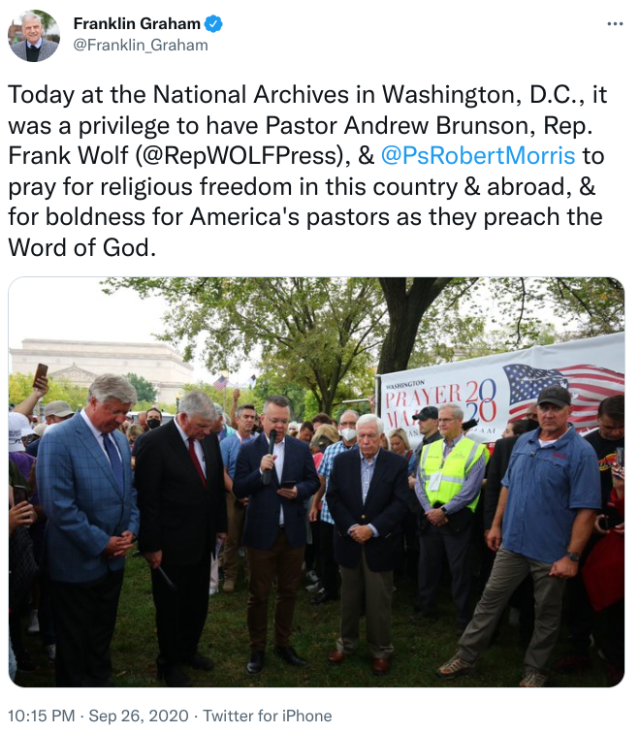
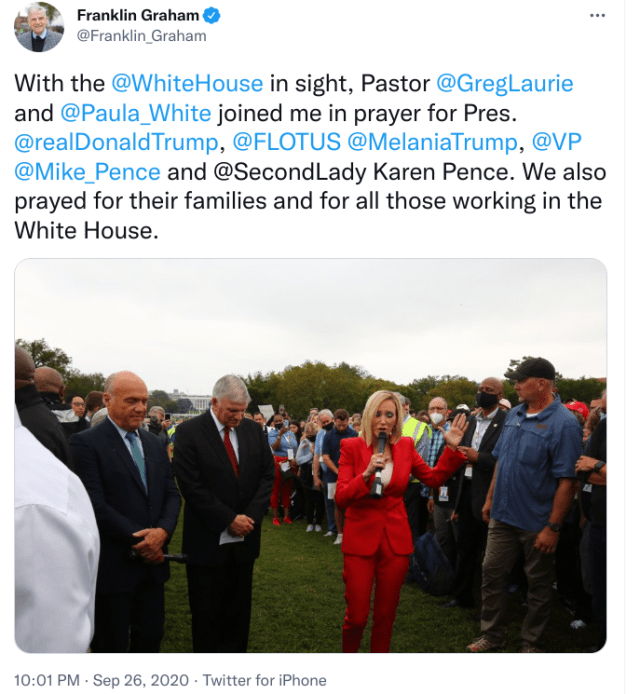
However, since I originally published this article in 2019, I’ve become aware of another issue with OCC that needs to be a weighty consideration when deciding whether or not to have anything to do with OCC, Samaritan’s Purse, or Franklin Graham, and that is the fact that Franklin Graham yokes in ministry with some of the worst false teachers out there.
(1screenshot, 2screenshot, 3screenshot 1, 2, 4screenshot, 5screenshot; The linked articles for Beth Moore and Priscilla Shirer have apparently been archived or scrubbed from the website.)
Franklin has featured Hillsong and Phil Wickham1 (close ties to Bethel) at his events. In 2020, he participated in the Hope Rising Benefit Concert, which featured, among others, modalist and prosperity preacher T.D. Jakes, Priscilla Shirer, and Lysa TerKeurst. All funds raised went to Samaritan’s Purse. (If you’re unclear on why these people are unbiblical, click here.)
He may be a really nice guy who’s on the right side of politics and important biblical issues like homosexuality and abortion, and he may do a lot of good charity work, and you may have a sentimental attachment to his father (Billy Graham), but none of that mitigates the fact that he’s defying Scripture – sinning – by yoking with some really egregious false teachers.
Until/unless Franklin Graham publicly repents of this sin, it is my recommendation that you not participate in or donate to Operation Christmas Child, nor have anything to do with Franklin Graham, nor either of the two organizations of which he is president and CEO: Samaritan’s Purse and the Billy Graham Evangelistic Association.
Now, to the reader’s question: Is the OCC shoebox program the wisest way to steward our church’s resources – could we get more gospel bang for our buck another way? Is this a biblical model for sharing the gospel? Do shoebox distributions cause problems for missionaries and the communities they serve in?
And for the answers to those questions, I would encourage every church and individual considering participating in OCC not only to heavily weigh the information above about Franklin Graham’s yoking with false teachers, but also to read all of the information at the OCC website and compare what you read to these missionaries’ first hand accountsA of how shoebox distributions were handled and how the distributions impacted their work and communities. Then, prayerfully consider choosing another, doctrinally sound evangelistic organization to support instead.
“What happens when the life-transforming gospel of Jesus Christ is associated with dollar-store trinkets from America?”
“In some places, we haven’t been well-received because the missionaries who went there before us presented gifts….and we have no gifts. When those missionaries left, their ‘converts’ also returned back to their old faith and were waiting for the next gift presenters.”
“When Saddam Hussein was terrorizing the Kurds…an American was in Baghdad meeting with the Minister of Health. The minister abruptly said “I have to go – do you want to come with me? I have to do something for our leader’s birthday.” The American goes with him. They go to a warehouse in Baghdad, and there sit piles and piles of Samaritan’s purse Christmas Shoe Boxes. The Minister of Health is supervising minions to deliver all of them to the Children’s Hospital as gifts from Uncle Saddam for his birthday….a bunch of Iraqi kids got wonderful gifts from Saddam by way of Franklin Graham at Samaritan’s Purse.”
…the Operation Christmas Child boxes had reached the warehouse in Ndola and…the Mansa churches needed to come up with eight kwacha per box for 5,000 boxes to receive their shipment. That’s $4,000USD…comments from the pastors ranged from, “We don’t have this kind of money,” to, “Aren’t these boxes supposed to be free?” to, “Next year, let’s just refuse the boxes all together!”
What are some other good international ministries I/my church could participate in instead?
Whether you’re looking for a ministry to donate to or a way to tangibly serve others, the first thing I would recommend is that you ask your pastor what the needs are in your own church (remember, we serve the needs of our own church members first before serving others). It’s not biblical to overlook the needs of the brother or sister down the pew from you in favor of strangers half a world away.
But if everyone in your church is taken care of, your pastor may be able to suggest a local or international ministry that could use your help. Many churches donate directly to various individual missionaries and local and international ministries, and I think you should support your church and its leadership by donating to the (doctrinally sound) ministries they have chosen before looking for other ministries to donate to.
But if your pastor doesn’t have any suggestions, may I make a few?
If your church has grown accustomed to participating in OCC over the years, one way to wean them off OCC could be for your church to host a Christmas party for local foster children and their families (which might even be families in your own church). You could set this up in a similar way to OCC events overseas with gifts and a gospel presentation. It won’t be international, but participants could still buy gifts for the children, and this way, they could attend the party and witness first hand the children opening the gifts and hearing the gospel. Contact foster parents you know and/or your local foster care agency for invitees and suggestions. And fire up your internet search engine for party ideas. (I found this, which you could borrow ideas from, but I’m not familiar with this organization or its theology, so don’t consider this link a recommendation for the organization.)
If you’re looking specifically for an organization with international reach, my suggestion would be to give what people need the most: the gospel and God’s Word:
Some of the articles I linked to earlier in this post include information on alternatives to OCC, and I’ve given a few more thoughts here.
Whichever ministry you choose to serve or donate to, make sure to vet its theology, and make sure they are sharing the gospel along with whatever relief or goods they are providing.
Addendum: After the original publication of this article, most of the feedback I received was thoughtful and positive. However, I was shocked at the number of nasty, enraged comments and e-mails I received – from professing Christians, mind you – that seemed to elevate participation in OCC to an idolatrous level. What you prayerfully decide to do about participating in OCC is between you and God, but if you are angered by the information in this article to the point that you strike out at me or one of the missionaries who has simply stated her honest experience with OCC, you need to check your heart against Scripture. You are idolizing OCC over loving your brothers and sisters in Christ, and you’re acting in a way unbecoming of a professing Christian.
If you are considering responding to this article with nastiness or rage, please save yourself some time and don’t bother. I will not publish comments like that anywhere on my blog or social media, and I will immediately delete (without reading, and certainly without responding) any such emails.
AThese specific articles are provided for their attestation to experiences with OCC, only. I do not endorse any of these sites which deviate from Scripture or my theology as outlined in the “Welcome” and “Statement of Faith” tabs in the blue menu bar at the top of this page.
If you have a question about: a Bible passage, an aspect of theology, a current issue in Christianity, or how to biblically handle a family, life, or church situation, comment below (I’ll hold all questions in queue {unpublished} for a future edition of The Mailbag) or contact me. If your question is chosen for publication, your anonymity will be protected.
If your theology pretty much matches up with mine (as outlined in my “Welcome” and “Statement of Faith” tabs in the blue menu bar at the top of this page) and you’d like to contribute a guest post, drop me an e-mail, and let’s chat about it.
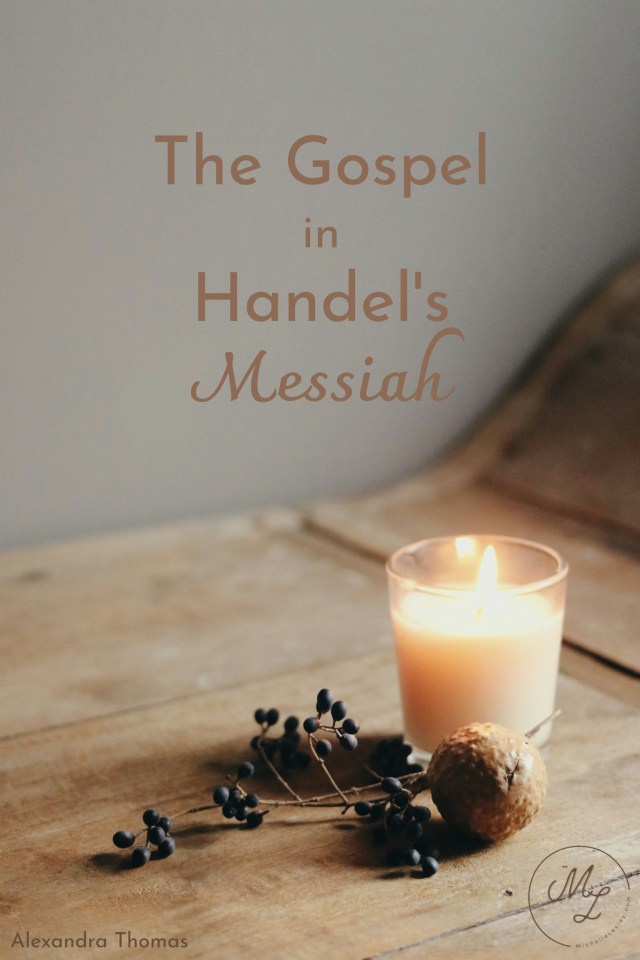
The Gospel in Handel’s Messiah by Alexandra Thomas
In early December 2017 I attended a performance of Handel’s Messiah with my parents. It was my first time experiencing the entire piece. I did not know it well, but I came home and listened to it during Advent with my Bible open. Did you know that Messiah is composed entirely of Scripture? Do you know that it tells the gospel from start to finish? Read on to be encouraged again by the gospel that saved you or to hear God’s heart for you if you have never heard the gospel before. May you be challenged to use what you learn to share the gospel this Christmas season.
Part 1: O Come O Come, Emmanuel
Part one of Messiah references Old Testament prophecies of the coming Messiah then tells the story of Jesus’ birth and early ministry. It opens with “Comfort ye, comfort ye my people, saith your God” (Isaiah 40:1) and goes on to the prophet to come before Jesus, John the Baptist (see Matthew 3:1-3).
The voice of him that crieth in the wilderness, prepare ye the way of the Lord; make straight in the desert a highway for our God (Isaiah 40:3; Matt 3:3)
Handel emphasizes God’s heart for the nations throughout the first part of Messiah. God said to Abraham in Genesis 22:18 that through him all the nations of the earth would be blessed. Handel highlights how the glory of the Lord will be revealed (Isaiah 40:5) and the desire of all peoples will be fulfilled in His coming (Haggai 2:6). The nations shall come to the light (Isaiah 60:3) and when this King comes He will speak peace to the nations (Zech 9:9-10).
Here comes the Christmas story! The coming King would be born through a virgin (Isaiah 7:14). God promised this coming King would bring light to people walking in darkness. He would be called Wonderful, Counselor, Mighty God, Everlasting Father, and the Prince of Peace (Isaiah 9:2,6). The “good news of great joy” was first told to shepherds by an angel of the Lord, and glory and praise were given to God (Luke 2:8-11,13-14).
The first section of Messiah ends with prophecies pointing to Jesus’ ministry (Isaiah 35:5-6) and a look at the character of this Messiah. We know from the Gospel accounts that Jesus healed those who were blind (Matt. 9:27-31), restored speech to those who were mute (Matt. 9:32-33), restored the bodies of those who were paralyzed (Matt. 9:1-7), and opened the ears of those who were deaf (Mark 7:31-37).
“…they brought Him all the sick, those afflicted with various diseases and pains, those oppressed by demons, those having seizures, and paralytics, and He healed them.” (Matthew 4:24)
In John 10:11 Jesus says, “I am the Good Shepherd. The Good Shepherd lays down his life for the sheep.” Handel returns to Isaiah 40, describing how God cares for His people like a shepherd feeding His flock, gathering the lambs in His arms, and gently leading those who are with young. Part one concludes the same as it began. “Comfort ye” of Isaiah 40:1 is seen fulfilled in Christ in the closing songs taken from Matthew 11:28-30:
Come unto Him, all ye that labor, that are heavy laden, and He will give you rest
Take His yoke upon you, and learn of Him; for He is meek and lowly of heart; and ye shall find rest unto your souls.
His yoke is easy and His burden is light.
Part Two: The Cross and the Empty Tomb
Part two of Messiah opens with the words of John the Baptist from John 1:29:
Behold the Lamb of God, that taketh away the sins of the world.
The music turns to more sorrowful melodies as Handel walks us through the sufferings of our Savior as prophesied in Isaiah 53:3-6, Psalm 22:7-8, Psalm 69:20, and Lamentations 1:2. You can read fulfillment of these prophecies in Luke’s account of Jesus’ arrest and crucifixion in Luke 22 and 23.
He was despised and rejected of men; a man of sorrows and acquainted with grief.
He hid not His face from shame and spitting.
He was wounded for our transgressions; He was bruised for our iniquities.
All they that see Him, laugh Him to scorn
He looked for some to have pity on Him, but there was no man; neither found He any to comfort Him
Behold, and see if there be any sorrow like unto His sorrow.
Why do we need our sins taken away? Why did our Savior need to suffer? This section includes Isaiah 53:6, which explains that “all we like sheep have gone astray; we have turned- every one- to his own way; and the Lord has laid on Him the iniquity of us all.” Though not every verse of Isaiah 53 is sung in Messiah, a close reading of this chapter tells us so much about the gospel. It was God’s will to allow Jesus to suffer (“to crush him” v.10). By this Jesus was made an “offering for guilt” (v.10) so that those who repent and put their trust in Him can be “accounted righteous” (v.11) because “He shall bear their iniquities” (v.11). These prophecies and their fulfillment are summarized so well by the Apostle Peter:
“When He was reviled, He did not revile in return; when He suffered, He did not threaten, but continued entrusting Himself to Him who judges justly. He Himself bore our sins in His body on the tree, that we might die to sin and live to righteousness. By His wounds you have been healed. For you were straying like sheep, but have now returned to the Shepherd and Overseer of your souls.” (I Peter 2:23-25)
Handel refers to Isaiah 58:8 to note Jesus’ death: “He was cut off out of the land of the living…” then introduces Jesus’ resurrection with Psalm 16:10: “But thou didst not leave His soul in hell; nor didst thou suffer thy Holy One to see corruption.” From here part two takes on brighter sounds with quicker tempos to paint a “sound picture.” The tide has turned from sorrow to celebration. He is victorious over sin and death!
Lift up your heads, O ye gates; and be ye lifted up, ye everlasting doors; and the King of glory shall come in.
Who is this King of glory? The Lord strong and mighty, the Lord mighty in battle.
The Lord of hosts, He is the King of glory. (Ps 24:7-8,10)
Part two has shown the suffering of our Savior and His glorious victory over sin and death. Before concluding the section, Handel includes a reminder that the news of the resurrection is meant to be shared.
How beautiful are the feet of them that preach the gospel of peace, and bring glad tidings of good things. (Rom 10:15)
Their sound is gone out into all lands, and their words unto the ends of the world. (Rom 10:18; Ps 19:4)
Finally, the most well known song from Messiah, the “Hallelujah Chorus.” It is written using Revelation 19:6,16 and Revelation 11:15. Traditionally the audience stands when this song is played. This began when England’s King George II stood during the song in 1743, and the custom continues today.
Hallelujah! for the Lord God omnipotent reigneth. The kingdom of this world is become the kingdom of our Lord, and of His Christ; and He shall reign for ever and ever.
Part Three: The “So What?” of Part Two
The final part of Messiah does not have the familiar tunes of the Christmas story or the iconic “Hallelujah Chorus.” I call this section the “So what?” because it dives into the impact of the cross and empty tomb. It begins with “I know that my Redeemer liveth” (Job 19:25-26) then spends considerable time in 1 Corinthians 15 to declare that:
Because Jesus died, we can be made alive in Him (1 Corinthians 15:20-22)
We who know Christ will not all sleep [die] but we shall be raised up again (1 Corinthians 15:51-54)
Because Christ is risen from the dead, death is swallowed up in victory (1 Corinthians 15:34)
O death, where is thy sting? O grave, where is thy victory? (1 Corinthians 15:55)
The next to last song of Messiah is one I consider a tender lullaby from God to His people. It summarizes the gospel: Jesus died and was raised, through Him we are no longer condemned, but He intercedes for us at the right hand of God. This song brings me great comfort in times of struggle as I meditate on these verses from Romans 8:31,33-34.
If God be for us, who can be against us? Who shall lay anything to the charge of God’s elect?
It is God that justifieth, who is he that condemneth?
It is Christ that died, yea rather, that is risen again, who is at the right hand of God, who makes intercession for us.
Messiah closes with a picture of the throne room of Heaven from Revelation 5:12-14. The cross and empty tomb lead God’s people here: reconciliation with God through Jesus Christ and an eternity in right relationship with our Maker, our Savior, and our God. Though King George II stood for the “Hallelujah Chorus,” this final song makes me want to stand and lift my arms and voice to sing:
Worthy is the lamb that was slain, and hath redeemed us to God by His blood, to receive power and riches, and wisdom, and strength, and honor, and glory and blessing
Blessing and honor, glory and power, be unto Him that sitteth upon the throne, and unto the Lamb, for ever and ever. Amen.
Share the Gospel with Handel’s Messiah
If you happen to come across Messiah this Christmas season, I would encourage you to use the opportunity to share the gospel. Here are some ways to refresh your heart with the gospel and use this musical work for gospel conversations:
1. Listen to Messiah during Advent with your Bible open. Remind yourself of the gospel and praise God for saving you through Christ.
2. Consider learning songs from Messiah to help you memorize Scripture.
3. If you hear the “Hallelujah Chorus” on the radio, use it as a chance to talk about the gospel in Messiah to anyone who is listening too.
4. If you have the chance to go to a Messiah performance, (1) share the gospel with those around you and (2) be sure to pray for the performers. I have met individuals who know the whole work from start to finish and never saw or responded to the gospel. Pray that as the performers sing, the Lord would use the scriptures to prepare them to respond in repentance and faith to the risen Lord Jesus.
I recall Philip’s question to the Ethiopian eunuch in Acts 8:30: “Do you understand what you are reading?” He replies, “How can I, unless someone guides me?” (Acts 8:31). Do you know what he was reading? Isaiah 53, which we saw in part two. It shows the suffering of our Savior and the marvelous work of salvation as Jesus took the punishment for our sins upon Himself. Many will hear the gospel through Messiah this season. Let the Apostle Paul’s words encourage you to share this Good News of great joy!
How then will they call on Him in whom they have not believed? And how are they to believe in Him of whom they have never heard? And how are they to hear without someone preaching? And how are they to preach unless they are sent? As it is written, “How beautiful are the feet of those who preach the good news!” (Romans 10:14-15)
Alexandra is a wife and mother to three boys (two of whom are twins). She spends her time caring for her family and home much of the week and works part time as a pediatric occupational therapist. Alexandra loves music, crafting, books, baking, and recently cake decorating. She and her husband regularly pray for opportunities to share the gospel and love encouraging others to do the same.
If your theology pretty much matches up with mine (as outlined in my “Welcome” and “Statement of Faith” tabs in the blue menu bar at the top of this page) and you’d like to contribute a guest post, drop me an e-mail, and let’s chat about it.
Mary’s “Unplanned” Pregnancy by Charlotte Staudt
Have you ever heard Jesus’s birth described as an “unplanned” or “unexpected pregnancy”? Unfortunately, I’ve heard that description several times, and it seems to be gaining traction among some conservative Christians. I first heard it when I worked for a Christian public policy group, but I’ve also seen it on Focus on the Family’s website, a pregnancy care center, and even on a car magnet. During this Christmas season, you may come across this description yourself, so I would like to offer a few points as to why this description is wrong and why we can’t use the Biblical account of Mary or any part of Luke 1 to form pro-life arguments.
Unhelpful, Cultural Euphemisms
In today’s culture, “unplanned” and “unexpected” are usually used as euphemisms for pregnancies resulting from illicit relationships. There are exceptions, of course, but for the most part, this is the case. Since those words are generally used to describe pregnancies resulting from sin, should we use them to describe Mary’s pregnancy with Jesus, the Son of God, by the Holy Spirit? Of course not! Using such descriptions is unhelpful to say the least, and it is certainly disrespectful of God’s sovereignty. While such disrespect is probably not intentional, it simply isn’t beneficial to use cultural euphemisms to describe a part of God’s perfect plan of redemption for His people, which had been planned since before the beginning of time.
Ignoring Biblical Context
When reading the Bible, we know that context matters. As we begin a book of the Bible, it’s important to ask and understand answers to some of the classic grade school questions of who, why, when, etc. For this point, I’d like to focus on Luke’s reason for writing, his “why.” He states this himself at the very beginning of his work: “to write an orderly account for you, most excellent Theophilus, that you may have certainty concerning the things you have been taught” (Luke 1:3-4). In other words, Luke is simply writing a complete account for a brother in Christ. He wants Theophilus to have “an orderly account” or a reliable record of the life of Jesus, and in this account, he starts at the beginning, first with the announcement of the coming of John the Baptist, and then the announcement of the coming of Jesus.
While using cultural euphemisms was merely unhelpful, using Luke 1 to argue a pro-life position is eisegetical, the practice of eisegesis. Merriam-Webster defines eisegesis as, “The interpretation of a text (as of the Bible) by reading into it one’s own ideas.” Costi Hinn expands on this idea, writing, “Eisegesis takes a specific passage from the Bible and isolates it from its original meaning, the author’s original intention, and God’s original purpose.” Thus, when reading this account, or any Bible passage, we can’t make the text say anything the original author didn’t. As we read about Mary, we can’t project our 21st-century ideas and emotions onto the text. That would be eisegesis. We can’t cast Mary as a scared young woman facing an “unplanned pregnancy” and wondering what to do about it. There is no indication of that in the text. In fact, the text indicates quite the opposite. She was “troubled” when the angel first appeared to her, but once she hears his message, she asks one question, and simply responds, “Behold, I am the servant of the Lord; let it be to me according to your word” (Luke 1:38).
Additionally, some pro-lifers will also cite Luke 1:41, “And when Elizabeth heard the greeting of Mary, the baby leaped in her womb,” to argue their position. In fact, Roland Warren, president and CEO of the pro-life ministry Care Net, states the following, “If you’re a pro-choice Christian, what this actually does in Scripture is it tells you that late-term abortion and early-term abortion are both killing a life.” Does the Biblical text give any indication of any of this? No. Remember, this is an account, a record of the life of Jesus. Thus, John the Baptist’s leap is simply an action, not a foundation for an argument.
Missing the Biblical Lessons
Since Luke 1:26-45 does not provide us with pro-life arguments, what does it teach us? What lessons can we glean from the text? First, everyone in this passage recognized Jesus as God. Gabriel tells Mary that Jesus “will be great and will be called the Son of the Most High” (Luke 1:32). In other words, Jesus was God. John MacArthur explains this by saying, “to identify Jesus as the Son of the Most High is to declare that He has the same essence as the Most High God.” He also states, “Gabriel’s announcement also affirms the deity of Christ.” According to Luke’s narrative, Mary asks no questions regarding this and simply takes the angel at his word. Elizabeth and an unborn John the Baptist also recognize Jesus as God. In verse 43, Elizabeth calls Mary, “the mother of my Lord,” meaning she realized the baby Mary was carrying was the Son of God. Elizabeth’s explanation of John the Baptist’s leap in verse 44 shows that he also recognized Jesus in Mary’s womb. How would they both know this? Verse 41 tells us that “Elizabeth was filled with the Holy Spirit.” Thus, her understanding “must be attributed to the illuminating work of the Spirit,” according to John MacArthur.1 Likewise, the response of John the Baptist was “supernaturally prompted by the Spirit of God.”2
The story of Mary also teaches us about trusting and submitting to God. Her reply, “Behold, I am the servantof the Lord; let it be to me according to your word,” shows complete submission to the will of God. John MacArthur uses “willingly” and “gracefully” to describe her submission. R. C. Sproul refers to it as “subjection,”3 which Merriam-Webster defines as, “one that is placed under authority or control.” In other words, Mary not only recognized God’s authority over her, but she also trusted it. She didn’t ask for a sign as Zechariah did (Luke 1:18), or doubt as many of us may struggle with from time to time. She understood Who God is and trusted Him because of it.
In conclusion, as we read and ponder Luke 1 this Christmas, that reading shouldn’t inspire us to pull verses out of context and argue our position. Rather, the accounts of Mary and Elizabeth should inspire us to glorify God for Who He is and what He has done. As we celebrate and enjoy the Christmas season, perhaps we would all do well to remember these words of R.C. Sproul, “We come at Christmastime, not to celebrate the birth of a baby. We come to celebrate the Incarnation of God.”
1-2 MacArthur, John. “Luke.” In the John MacArthur Bible Commentary, 1274. Nashville, TN: Thomas Nelson.
3 Sproul, R.C. “The Annunciation.” In Luke: An Expositional Commentary, 22. Sanford, FL: Ligonier Ministries. ePub.
Charlotte Staudt happily calls the South her home. On any given day, you’ll most likely find her reading and researching, with her calico cat and a cup of tea close at hand. She doesn’t have any social media to share, but she hopes you find her writing encouraging and helpful.