Bible Study, Mailbag

The Mailbag: Can you recommend a good Bible study for women/teens/kids?

Can you recommend a good women’s Bible study? 

Can you recommend a Bible study we can do with our teens/children?

Next to being asked whether or not a particular teacher is doctrinally sound, this question, or some variation of it, is the one I’m most often asked. And, to be honest, it’s a question I have a love-hate relationship with.

I love (LOVELOVELOVELOVE) that women ask me this question because it means two things: they want to study, or teach their children, the Bible and they want to be sure what they’re learning or teaching is doctrinally sound and in line with Scripture. That’s the central reason my ministry even exists- I want Christian women to be grounded in the Bible and sound doctrine, and it brings me unbelievable joy and encouragement when I see women seek that out.

The hate part has nothing to do with the people asking the question, but with the prevailing line of thought in evangelicalism that has led them to ask the question. Namely, that the people in the pew aren’t capable of studying and understanding the Bible for themselves- they need some Christian celebrity to tell them what it means.

This is scarily reminiscent of the pre-Protestant Reformation ideology that ruled Roman Catholic “Christianity.” The pope and the priests, not the Scriptures themselves, told Christians what to believe. Catholic rulers prohibited the people from having copies of the Bible in their own language and martyred many Bible translators and Reformers. Only the elite, those in leadership, were supposedly able to comprehend the Scriptures and dispense doctrine to the common Christian.

Twentieth and twenty-first century evangelicalism hasn’t taken that direct and violent route, but rather, has gradually brainwashed – whether intentionally or unintentionally – Christians into thinking that if they’re going to study or teach the Bible, they have to have a curriculum, book, or DVD study in order to do so. Teach straight from the Bible with no leader’s guide or student books? It’s practically unheard of in the average church, and hardly anyone is equipped to do so. Why? Because for the past several decades, that’s how Bible study has been presented to church members. You walk into Sunday School and you’re handed a quarterly. Somebody wants to teach a women’s Bible study? She’s sent to peruse the shelves of LifeWay for a popular author, not to her prayer closet and her Bible. Using teaching materials written by somebody else is just assumed.

Well in my opinion, it’s time for another reformation. A Bible study reformation. And, so, with hammer in hand, I have one resolution I want to nail to the door of Church As Usual:

I will no longer help perpetuate the stranglehold the pre-packaged Bible study industry has on Christians. If you are a 21st century believer with access to a Bible in your native language and doctrinally sound preaching and teaching I will not recommend a Bible study book or program to you. You need to pick up the actual Bible and begin studying the God-breathed text for yourself, and teach it to your children. 

“…my conscience is captive to the Word of God. I cannot and will not recant anything, for to go against conscience is neither right nor safe. Here I stand, I can do no other, so help me God. Amen.”1

Ladies, I know you may feel inadequate, but don’t give in to those feelings. Try. Pick a book of the Bible, start at the beginning, and read it through to the end, taking as much time as you need. You might just be pleasantly surprised at how well you grasp it. That’s because, if you’re a believer, the Holy Spirit resides within you and will help you to understand the Word He authored.

Read directly from the Bible to your children. Ask them simple questions about the passage: How was this Bible character obedient or disobedient to God? What can we learn about what God is like from this chapter? What does this passage teach us about prayer, forgiveness, loving each other, kindness, etc.? Explain any big words they might not understand, or look them up together.

Afraid you might get something wrong? Confused by a particular verse? That may happen from time to time, and that’s OK. Bible study is a skill just like everything else. Nobody ever tried a new task and was perfect at it the very first time. But God has not only given you the Holy Spirit who will never lead you into doctrinal error, He has given you a pastor, elders, teachers, and brothers and sisters in the Lord to help disciple you. Ask questions, trust God to illumine your understanding, and keep right on practicing.

There are also a myriad of reference materials that can hone your skills and help as you study your Bible (see the “Additional Resources” section below). And there are some fantastic, easy to read books on theology by trustworthy authors that can give you greater clarity on various points of doctrine. By all means, read as many as you can get your hands on.

But when it’s time for Bible study, study your Bible. When it’s time to teach your children, teach them the Bible. You can do this, ladies. Women with less education and fewer resources than you have access to have done it for centuries and have flourished in their walk with the Lord.

Trust God. Study hard. You can do this.


Additional Resources:

The Mailbag: We Want Bible Study Answers

Bible Study resource articles

Bible Studies by Michelle Lesley

10 Simple Steps to Plain Vanilla Bible Study

Youโ€™re Not as Dumb as You Think You Are: Five Reasons to Put Down that Devotional and Pick Up the Actual Bible

10 Bookmarkable Biblical Resources for Christian Women

Rightly Dividing: 12 Doโ€™s and Donโ€™ts for Effective Bible Study


ยนJust a little tribute to Martin Luther at the Diet of Worms


If you have a question about: a Bible passage, an aspect of theology, a current issue in Christianity, or how to biblically handle a family, life, or church situation, comment below (Iโ€™ll hold all questions in queue {unpublished} for a future edition of The Mailbag) or send me an e-mail. If your question is chosen for publication, your anonymity will be protected.

Bible Study

Bible Book Backgrounds: Why You Need Them and Where to Find Them

It’s time for your daily Bible study. You’ve decided to study Habakkuk or Philippians or Lamentations.

When you pick up a random book of the Bible to study it, how do you know…

…what’s going on in biblical history at the time the book was written
…when the book was written and by whom
…who the intended audience was
…where, geographically, the action takes place
…cultural aspects of the period that will help you better understand allusions and customs?

Unless you’ve done a considerable amount of study in the field of biblical history and the ancient Middle East, the answer is: you probably don’t know all of those things. And, as a result, your study of the book you’ve chosen probably isn’t going to be as fully-orbed as it could be.

Not having done any advanced study in those areas myself, I learned a while back to rely on those who have, and who have taken the time to share their knowledge with the rest of us. When I study, teach, or write a study on a book of the Bible, I always start out by delving into the “story behind the story.” How?

Macro Bible Study 

Reading every book of the Bible is the best way to get a good grip on the meta-narrative of Scripture. Because the books of the Bible aren’t always arranged in order of the events they contain and because many books overlap in their events and timing, I highly recommend a chronological read-through of the Bible at least every few years.

Pay Attention to the Text

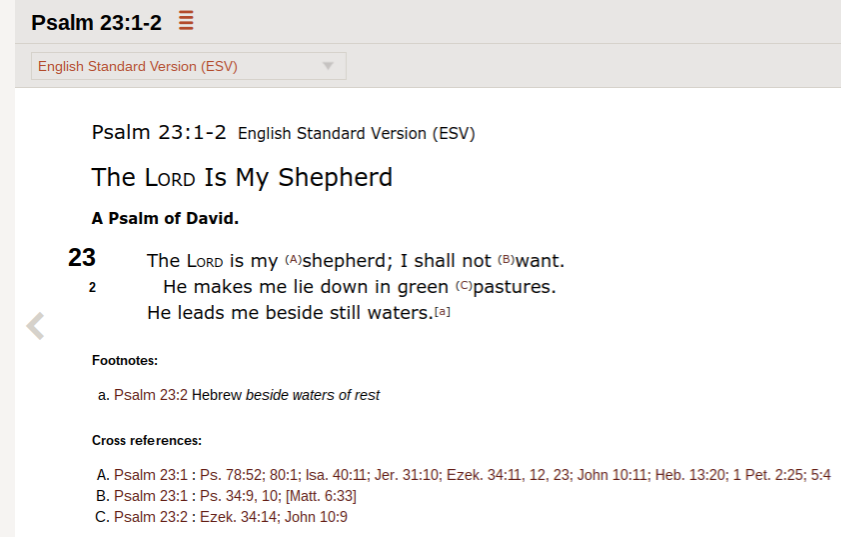
Sometimes the details you’re looking for are in the text itself. Perhaps a certain month and day are mentioned, or “during the reign of King ____.” If the text specifies a certain city or country, look it up on a good Bible map to get your bearings. Sometimes a particular custom or expression is explained as an aside, such as in 1 Samuel 9:9. Some books specify who they’re written to in the first few verses. Also be sure to use your Bible’s footnotes and cross reference notations, and look up any related verses that can bring clarity.

Footnotes explain wording.
Cross references suggest related passages.
(BibleGateway.com)

Study Bibles

There are some fantastic study Bibles out there (and also some duds you’ll want to avoid). Here are a few I highly recommend:

  • The MacArthur Study Bible Great theology, clear explanations. The only thing I would improve if I could is that I wish there were more notes on the Old Testament. (Also see “Bible Introductions” below.)
  • The Faithlife Study Bible app It’s free! Lots of great notes, articles, and diagrams, and because itโ€™s an app, itโ€™s got links, videos, and other great features.
  • The ESV Study Bible Super comprehensive. Itโ€™s like having a set of commentaries and the entire text of Scripture in one book.
  • The ESV Archaeology Study Bible This one is really good for getting a feel for what life, culture, and customs were like in biblical times – food, family, work, neighboring pagan nations, etc. It’s also very helpful with biblical geography.

“Bible Book Backgrounds”

This would be an overview, or survey, to read before you begin the book of Scripture you’ll be studying. I’ve found it’s helpful to use a survey of the book as a foundation and framework for subsequent study of the text.

While some commentaries contain an introduction to each book of the Bible, many do not. But I’ve found several online sites that provide helpful Bible Book Backgrounds:

Bible Introductions at Grace to You- A thorough overview of every book of the Bible, written by John MacArthur. These are the same introductions you’ll find in the MacArthur Study Bible.

Bible Book Overviews at Reformed Answers- Just put the name of the book you’re looking for in the search bar, followed by the word “overview.” You’ll also find overviews of the literary divisions of the Bible, such as an overview of the epistles, wisdom literature, etc.

Bible Surveys at Got Questions- Use the search bar to find the book survey you’re looking for. All surveys except the four gospels are entitled, “Book of ____ – Bible Survey.” You’ll find Matthew, Mark, Luke, and John as, “Gospel of ____.”

Helpful and (mostly) free Greek and Hebrew resources you might not know about at The Cripplegate- Sometimes getting some help with the original languages can also aid in your understanding of the book’s background and setting.

Dig in. Study. Search it out. Doing a “background check” on the book you’re studying is a great way to gain a deeper understanding and appreciation of God’s word.

Bible Study, Mailbag

The Mailbag: We Want Bible Study Answers


Why don’t you provide the answers to the questions you ask in your Bible studies?

If you’ve been around the blog for any length of time you’ve noticed (I hope) that Wednesday is Bible study day. We’ve been through several books, including Jonah, Colossians, Ezra, and our current study of Ruth. We’ve done two topical studies: one on the Ten Commandments (Exodus 20:1-17) and one on assurance (1 John). And there are 66+ (every book of the Bible and then some) one lesson stand-alone studies. If you’re looking for a Bible study for group or personal use, they’re allย here,ย and they’re all free (all I ask is that you don’t plagiarize).

The format I’ve developed for my studies is to present the biblical text, provide several study questions, and finish off with a homework assignment- action you can take to apply one of the truths of the passage to your own life.

But I intentionally refrain from providing a list of answers to the study questions. Why?

Because the purpose of my Bible studies is not for you to get the “right answers.” My goal is to demonstrate for you the kinds of questions you should be asking of any passage of Scripture you approach. The purpose is to teach you (or your small group)ย how to study the Bible on your own so you won’t need to depend on a “canned” study written by somebody else, even me.ย I’m trying to work myself out of a job. You know- teach a woman to fish rather than giving her a fish.

In my own private study time as well as in Sunday School classes and other small group Bible studies, I’ve found that diving into the text and studying it for myself – or with my group – is far more meaningful and memorable than looking at the passage through the eyes of a third party. Approaching Scripture without a “middle man” lends itself to an intimacy with God that just isn’t there otherwise. It’s the difference between a private, behind closed doors, conversation with your husband and a conversation with your husband while out on a double date with friends. You get that “double date conversation” every Sunday when your pastor preaches, but God is a personal God, and you need some time alone with Him during the week.

But I’m afraid that if I study on my own, I’ll get something wrong! What if I misunderstand Scripture and end up believing false doctrine?

Bible study is a skill. And just like every other new skill you learn, you’re probably going to make some mistakes when you’re first starting out. When you first learned to read, you pronounced some words incorrectly. When you were learning to ride a bike, you fell down a few times. But you didn’t let those mistakes stop you. You kept practicing until you learned the skill. Bible study is the same way. You probably will make some mistakes along the way. But God has provided a lot of “training wheels” to help you out:

His Goodness and Trustworthiness
God is a good God. Heย wants you to study His word, get to know Him, and grow in Christ. It would be evil and cruel of God to tell you this, and then lead you – His child, who wants to draw near to Him through the study of His word – into false doctrine. And God is not evil and cruel. He is good, He is a God of truth, and His word is truth. Trust Him as you open His word to study.

What father among you, if his son asks for a fish, will instead of a fish give him a serpent;ย or if he asks for an egg, will give him a scorpion?ย If you then, who are evil, know how to give good gifts to your children, how much more will the heavenly Father give the Holy Spirit to those who ask him!โ€
Luke 11:11-13

The sum of your word is truth, and every one of your righteous rules endures forever.
Psalm 119:160

Sanctify them in the truth; your word is truth.
John 17:17

The Holy Spirit
If you are a genuinely regenerated Believer, you are indwelt by the Holy Spirit, the author of Scripture. Because God does not contradict Himself and He does not lie, the Holy Spirit indwelling you will not lead you to believe what is contrary to the words of Scripture He inspired. Ask Him to give you wisdom and understanding as you study.

And I tell you, ask, and it will be given to you; seek, and you will find; knock, and it will be opened to you. For everyone who asks receives, and the one who seeks finds, and to the one who knocks it will be opened. What father among you, if his son asks for a fish, will instead of a fish give him a serpent; or if he asks for an egg, will give him a scorpion? If you then, who are evil, know how to give good gifts to your children, how much more will the heavenly Father give the Holy Spirit to those who ask him!โ€
Luke 11:9-13

When the Spirit of truth comes, he will guide you into all the truth, for he will not speak on his own authority, but whatever he hears he will speak, and he will declare to you the things that are to come. He will glorify me, for he will take what is mine and declare it to you.
John 16:13-14

Tools
God has blessed us with a number of helps for learning how to study His word, from instructions on handling the text to commentaries, Bible dictionaries, Bible atlases, and the like. Many are online and available for free. I’ve included some of those hereย (be sure to scroll down). And don’t forget your (doctrinally sound) pastor, elders, and Sunday School teachers as invaluable resources. I’ve never met one who wouldn’t be delighted to help someone understand a passage of Scripture.

Easter Eggs
If you’ve worked through any of my studies, you’ve probably noticed that, if you read carefully, Iย doย provide answers to some of the study questions.

Hyperlinks– If you see a hyperlink in a question, try answering the question on your own first. Then, click the link. It will take you either to related Scriptures that will help you answer the question or to an article or resource you can read for more information.

Follow Up Questions– Each study “question” is usually a series of questions. Try to answer them one at a time. But, if you’ll notice, I sometimes provide the answer to one question in a subsequent question. For example (from Ezra, Lesson 11):

What was Israelโ€™s hope? Compare Israelโ€™s hope for Godโ€™s mercy and forgiveness of sin in response to true repentance with 1 John 1:9.

God loves you and wants you to dive into the treasure chest of His word. Trust Him. Use the resources He has provided. And if you fall off your bike in the process, pick yourself up, dust yourself off, and keep practicing.


Additional Resources

Bible Study resource articles

Bible Studies by Michelle Lesley

10 Simple Steps to Plain Vanilla Bible Study

Youโ€™re Not as Dumb as You Think You Are: Five Reasons to Put Down that Devotional and Pick Up the Actual Bible

10 Bookmarkable Biblical Resources for Christian Women

Rightly Dividing: 12 Doโ€™s and Donโ€™ts for Effective Bible Study


If you have a question about: a Bible passage, an aspect of theology, a current issue in Christianity, or how to biblically handle a family, life, or church situation, comment below (Iโ€™ll hold all questions in queue {unpublished} for a future edition of The Mailbag) or send me an e-mail or private message. If your question is chosen for publication, your anonymity will be protected.

Basic Training, Bible, Bible Study

Basic Training: The Bible is Necessary

For more in the Basic Training series, click here.

Then Jesus was led up by the Spirit into the wilderness to be tempted by the devil. And after fasting forty days and forty nights, he was hungry. And the tempter came and said to him, โ€œIf you are the Son of God, command these stones to become loaves of bread.โ€ But he answered, โ€œIt is written, โ€œโ€˜Man shall not live by bread alone, but by every word that comes from the mouth of God.โ€™โ€
Matthew 4:1-4

I have not departed from the commands of His lips; I have treasured the words of His mouth more than my daily food.
Job 23:12

More to be desired are [the words of God] than gold, even much fine gold; sweeter also than honey and drippings of the honeycomb.
Psalm 19:10

I have a question for you. Try to answer it within three seconds.

Where’s your Bible? (Not the one on your phone or computer- your real Bible.)

Were you able to answer in three seconds because you read it today and remember where you left it when you were finished? Because it stays on your night stand and rarely gets opened? Did it take longer than three seconds because you frequently carry it around with you and can’t remember where you most recently left it?

The point of the question isn’t really where your Bible is in geographical relationship to you, but where you are in relationship to your Bible.

David said God’s word was more valuable to him than gold, even much fine gold.

Job said he treasured God’s word more than his daily food.

Jesus hadn’t eaten a bite in over a month, and He still valued every word that comes from the mouth of God over bread.

If someone put a stack of fine gold in front of you and said you could have it as long as you hardly ever read your Bible, would you take it?

What if you had gone without food for forty days and someone offered you a loaf of bread in exchange for your agreement to put your Bible away and open it only rarely? Could you withstand the temptation?

I’d like to believe I would choose God’s word over a stack of gold or even life-sustaining food. But when I think about all the lesser things I sometimes choose to do instead of setting aside time to study God’s word…

…television
…social media
…reading
…sleeping
…hobbies

…well, I can’t help but wonder:

Do I really value God’s word as deeply as He wants me to?

We need God’s word. It is more necessary to us, spiritually, than food is to us, physically. Yet many Christians unintentionally starve themselves spiritually, thinking a “meal” or two of Scripture at church every week (if they actually attend every week, that is) is enough to sustain them. It’s not. We need to feast on God’s written Word every single day.

We need to know who God is

Saved people are in a one-on-one, personal relationship with God. But how can you have a relationship with someone you don’t really know? How can you love Him, please Him, or enjoy spending time with Him if you know nothing about Him? His character, His attributes, His likes and dislikes, the way He operates – these are all integral to knowing this God who created and saved us. And in His infinite love, God has chosen to reveal all these things about Himself in a book we call the Bible.

We need to know who we are

Just as an employee can’t rightly relate to her employer if she doesn’t understand her role, her place, and her responsibilities, we can’t rightly relate to God unless we understand both who He is and who we are in relationship to Him. We need to understand that He is God and we are not. That He is perfect in holiness and righteousness and we are depraved from the womb. That we are sinners in need of a Savior, created for the purpose of bringing glory to God, servants of the most high King. The only place to learn all of this, and more, about who we are, and where we stand with God, is in the pages of His word.

We need to know what God wants from us

What does God want me to do with my money? How can I be a godly wife if my husband is unsaved? Does God think it’s important for me to go to church? Is it always a sin to lie? Is it wrong to watch pornography? In addition to being a revelation of the nature and character of God, the Bible is also an intensely practical book, instructing Christians on issues of every day life and helping us to understand how God wants us to think, act, and speak. God knows we have questions and in His kindness and mercy has provided all the answers we need in Scripture.

We need to hear from God

While the idea and practice of “hearing God’s voice” is unbiblical, the desire to commune with God- to visit with Him as a loved one – is not. We only have to look back to the Garden of Eden to see that God’s perfect design was for people to fellowship with Him. Because of the Fall, we can’t do that face to face this side of Heaven. For now, we talk to God through prayer and worship. He talks to us through His written Word. Constant communion with God deepens our love for Him and increases our Christlikeness.

More than daily food. More than gold. More than any earthly pleasure, wisdom, or experience, we need God’s word. And we need it every day, all the days of our lives.

Bible Study

10 Simple Steps to Plain Vanilla Bible Study

Iโ€™m working on a project Iโ€™ve got to get done this week (prayer appreciated!), so Iโ€™ll be re-running a few favorite articles from the archives in lieu of new content.

I sincerely apologize to those who were waiting for the last lesson of The Ten this week. Couldn’t be helped. We’ll have to do it next week. I hope you’ll enjoy this article from April 22, 2016 on studying your Bible.

plain vanilla

Baskin Robbins is one of my favorite places to get ice cream. Not only is their ice cream good, but they boast a plethora of flavors to choose from. I love to start at one end of the counter and work my way through all their offerings, getting a little “taste spoon” here and there if a particular flavor piques my interest.

Flavor_Enlarged_Peanutbutter'nChocolate2
Photo courtesy of BaskinRobbins.com.

Having a myriad of options is great when it comes to ice cream, but when it comes to studying the Bible, the tsunami of materials, methods, and other choices out there can be overwhelming. Where do I start? How do I know if a certain Bible study book or teacher is doctrinally sound? Is the study method I’m using in line with good hermeneutics?

It can be enough to make you throw your hands up in the air and head for your local Thirty One Flavors to drown your sorrows in Peanut Butter ‘N Chocolate.

Sometimes it can help to get back to plain old, simple, vanilla Bible study. I’ve been saying for a while now that Christian women should, for the most part, put all the “canned” Bible study books, workbooks, and DVDs aside and simply pick up their Bibles and study them in a systematic way. After all, up until somewhere near the latter half of the 20th century, that’s generally how people studied the Bible. And it worked. People grew in their faith to godly maturity just fine. So, why can’t it work today?

It can. It does. It will.

Unfortunately, the blessing of lots of options, methods, resources, and information, and the marketing of that blessing by celebrity Christians and Christian retailing, has bred a generation of Christian women who are fearful that they aren’t as smart or as capable of reading and understanding God’s word as all the “experts” out there. They look at the simplicity of picking up their Bibles and studying them like calves looking worriedly at a new gate.

“What does that mean?”

“How do I do that?”

“I’m scared I’ll get it wrong!”

It absolutely breaks my heart to hear this angst from women who, I’m certain, genuinely want to study God’s word correctly so that they can know Him better and grow in their faith. And it makes me livid at the churches who haven’t trained them properly, the plantation-style women’s “Bible study” marketing that has kept them ignorant and dependent slaves to Christian retailers, and whatever other forces have conspired to keep these precious ladies away from the pure milk of the word.

So let’s reboot, get back to basics, and get as many women digging into the Word as possible.

First, it’s important to start out with a biblical perspective:

1. God is kind, and He loves you.

Yeah, I know, that’s pretty basic. But it’s worth bringing to the forefront for this discussion. This is a God who loves you and wants you to know Him. He has revealed Himself to you through creation, through Christ, and through His written word. He has indwelt you as a believer with the Holy Spirit to help you understand Scripture. He has told you that you can ask for wisdom and promises to provide it. In His kindness God has bent over backwards to provide you with ways to know Him. He is not some mean ogre sitting up there just waiting for you to get something wrong so He can chastise you. He wants you to understand His word.

2. The Perspicuity of Scripture

There’s this really great, comforting, reassuring doctrine called the perspicuity of Scripture. The gist of it is that Scripture is, for the most part, clear and understandable, especially for believers, because of the aforementioned indwelling of the Holy Spirit. But even lost people tend to understand a lot of what Scripture says (that’s why you hear so many of them arguing against it – they couldn’t do that if they didn’t at least partially understand it).

So, by and large, if you’re reading the Bible in an orderly way you should be able to understand it fairly well. You don’t have to have a seminary degree or be an “expert.” There are dirt farmers and country preachers out there who have a better grasp of Scripture than some celebrity pastors in multi-million dollar churches with thousands of congregants, and a string of seminary degrees behind their names.

OK, now that we have a biblical perspective on studying the Bible, how do we do it in a systematic or orderly way?

3. Pray

Don’t see this as childish or unimportant and skip it. Start your Bible study time by asking God to help you understand His word, to learn what He wants you to learn from it, and to obey its instruction. Even if you’re pretty well versed in the Scriptures, praying like this before opening God’s word will remind you of its holiness and your proper place of humility and submission to it.

bible-1089968_12804. Read the Bible the way you would any other book.

When you pick up a novel, do you read one sentence out of the middle of chapter 4, followed, the next day, by a paragraph from chapter 37, and, the next day, a couple of lines from chapter 1? Of course not. You wouldn’t know what was going on and what the characters meant by what they were saying. If you wouldn’t read something as inconsequential as a novel this way, why would you read the Bible in such a haphazard manner? Yet this is precisely the way people often approach daily Bible study.

My pastor said something awesome about this in his sermon the other day:

The Bible isn’t Google for self-help.

And he’s so right. We don’t just parachute in to a random passage, hoping to glean a nugget of truth. Pick a book of the Bible (maybe Genesis or one of the gospels if you’re new to all this), start at the beginning, and read a little each day until you reach the end. It’s really that simple.

5. Context, context, context

It’s important to read and understand Scripture in its context: how a verse fits with the verses immediately surrounding it, within its chapter, within its book, and within the overarching narrative of the Bible. This is really the biggest key to comprehending Scripture. Fortunately, the main way to do this is by reading the Bible in an orderly way (see #4- You did already read #4, right?)

Another invaluable practice is to make use of the cross-references and footnotes in your Bible. Cross-references will help you get a better idea of how the passage you’re reading fits together with other, related passages. Footnotes are there to add a touch of clarity to particular words and passages.

6. Get a plan, Fran.

If structure helps you, choose a good Bible reading plan. For the beginner, start off with one of the shorter plans so you won’t get overwhelmed. When you’re ready, I highly recommend the chronological plan. It is extremely helpful for learning the big picture of Scripture.

If you decide to choose a reading plan, though, hold its schedule loosely and don’t be beholden to its time frame. Work through the readings at your own pace. Take the time to let the Scriptures sink in and spend as long as you need to on any given section. God doesn’t give gold stars for finishing the Bible in a year.

7. Understand the background and setting.

There are some passages in Scripture that are a little more difficult to understand if you don’t know the customs of the time or what was going on historically and politically. In these cases a good study Bible, commentary, and other resources can be beneficial. I’ve touched on the specifics of some of these resources here. Many of these helpful materials can be found on-line for free.

8. Take notes on the text.

Hmm…an orderly method of reading…footnotes…extra resources…taking notes…this is starting to sound like…well…studying! Yep, that’s the idea. Isn’t it interesting that we often take a more serious and scholarly approach to studying for a class or a test than we do to studying our Bibles?

If you were a better student than I was in high school and college, you probably took notes on your text books as you read them. You wrote down things you wanted to remember, things that seemed important, things you didn’t understand and wanted to work on more later, things that were especially meaningful, even questions that occurred to you. Those are all good things to write down as you study your Bible, as well.

presenter-1206345_12809. Listen to good preaching.

As a Christian, you should already be doing this at least weekly at the church you’re a member of. But try to sneak in some extra listening – to your own pastor or another doctrinally sound pastor – as often as you can during the week. Listening to someone rightly handle and explain God’s word helps you to understand it and trains you to rightly handle it yourself as you study.

I once read that children who read a lot are better spellers. Not because they study spelling more, but because they’re exposed to more words and have the correct spelling of words constantly in front of their eyes. They sort of soak up good spelling by osmosis, and when it’s time for the spelling test, they simply write down what they’ve absorbed. Listening to good, expository preaching can have the same kind of helpful impact on your Bible study skills.

10. Practice makes perfect.

Studying the Bible is just like any other skill. You’ll probably fumble around a good bit when you’re first getting started, but if you stick to it, you’ll find that it gets easier and you get better at it as time goes by. Don’t be afraid to start. Jump right in there and try. Nothing ventured, nothing gained, right?


Ladies, simply picking up the Bible and studying it each day is such a joy. I have been doing it for years, and I love it. The excitement of “digging for buried treasure” in God’s word and uncovering the truths of Scripture for myself has been far more meaningful to me and has grown me so much more than any workbook or curriculum I’ve ever used. I hope you’ll put aside your book studies and devotionals, and give it a try yourself!