“You are about to see a world where greed and deceit raise their ugly heads. Where lives have been needlessly lost. And where hope, the most precious gift of all, is peddled at a price. This is the wickedness in the world of faith healing.”
No, Derren Brown, the man behind the documentary Miracles for Sale, isn’t a watchblogger and he doesn’t head up a discernment ministry. He’s an atheist. And this project is proof in living color that – to our shame – lost people often see right through these types of blasphemies better than some so-called Christians do.
Several years ago, Derren Brown set out to expose the chicanery of faith healing. He chose to do so by taking an average man off the streets, teaching him the tricks of the trade, and passing him off as a legitimate faith healer, proving that God isn’t behind this movement – it’s all sleight of hand, fakery, and deceit.
Have you ever wondered how faith healers make it appear as though someone has actually been healed? Or how they can know personal things about someone in their audience whom they’ve never met? Miracles for Sale will show you.
WARNING:This movie contains a smattering of profanity (I tried counting. I believe it was about 5-6 words). It was made by an atheist and other non-Christians, and that’s how atheists and non-Christians talk sometimes (which, of course, is not to excuse this sin, merely to explain it). Additionally, since this movie was made by non-Christians, it does not contain a doctrinally sound theological response to the evil of faith healing. If these things would cause you to stumble or make you uncomfortable in any way, PLEASE DO NOT WATCH THIS VIDEO.
Ready to schedule your spring, summer, or fall 2025 women’s event? I’d love to come share with the ladies of your church or organization. Clickherefor more information, or to find an upcoming event near you!
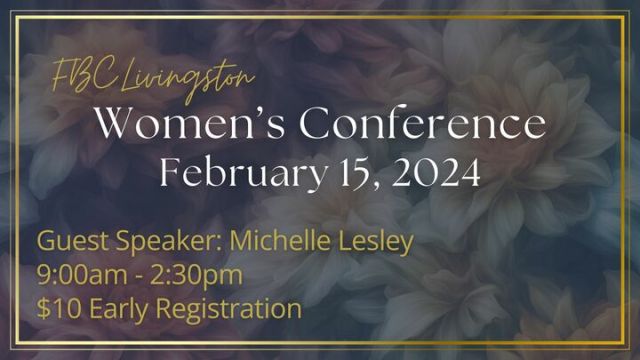
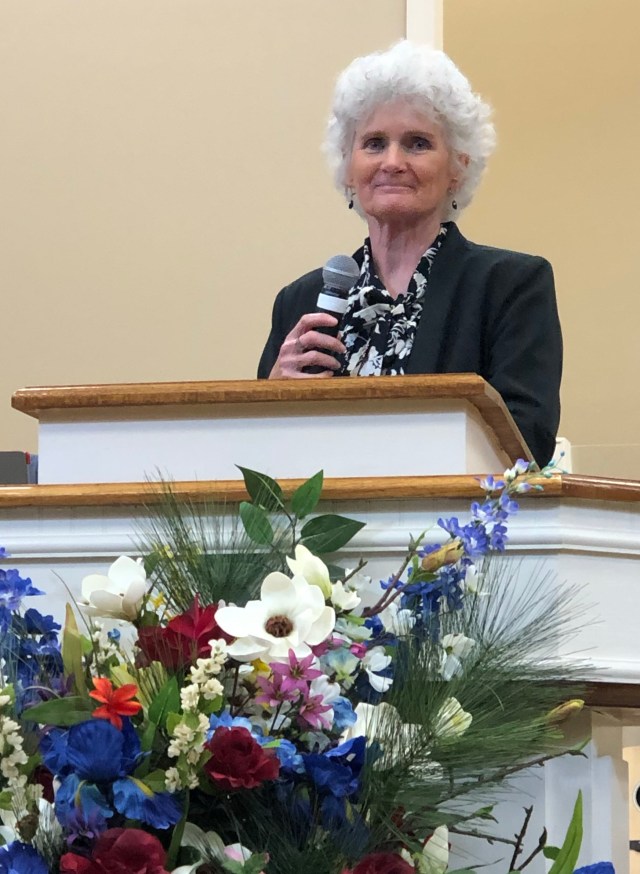
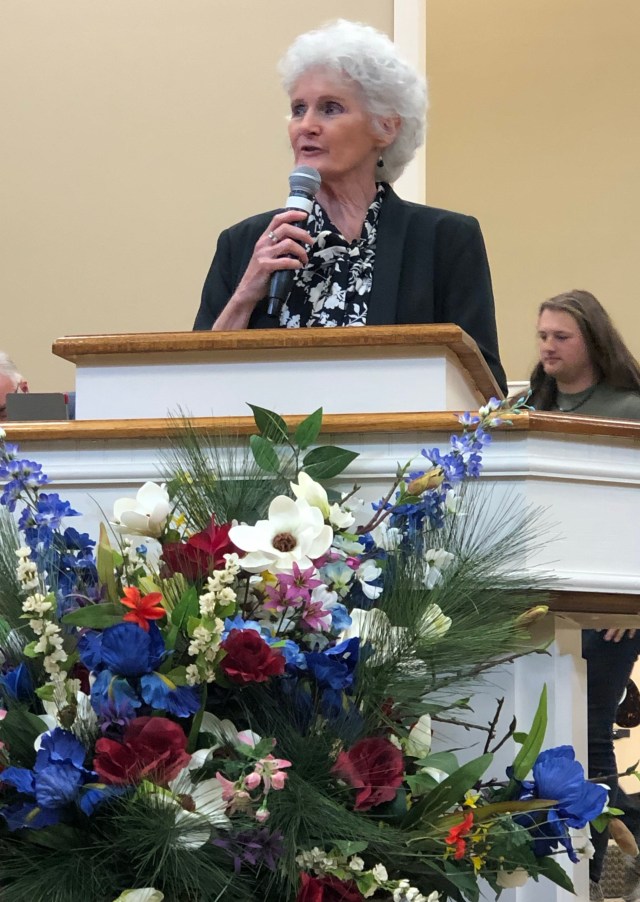
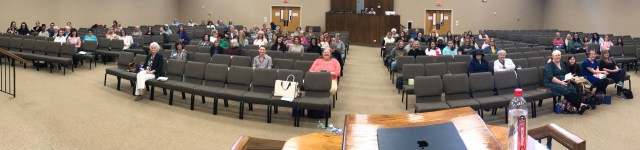
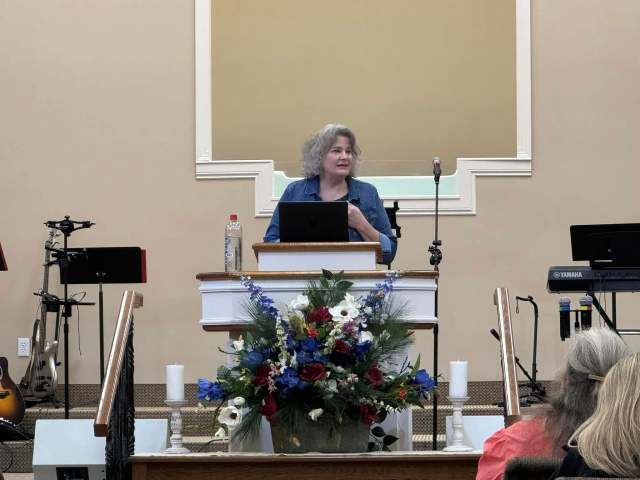
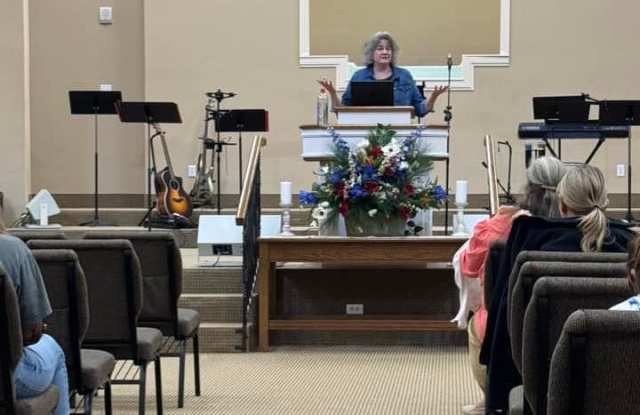
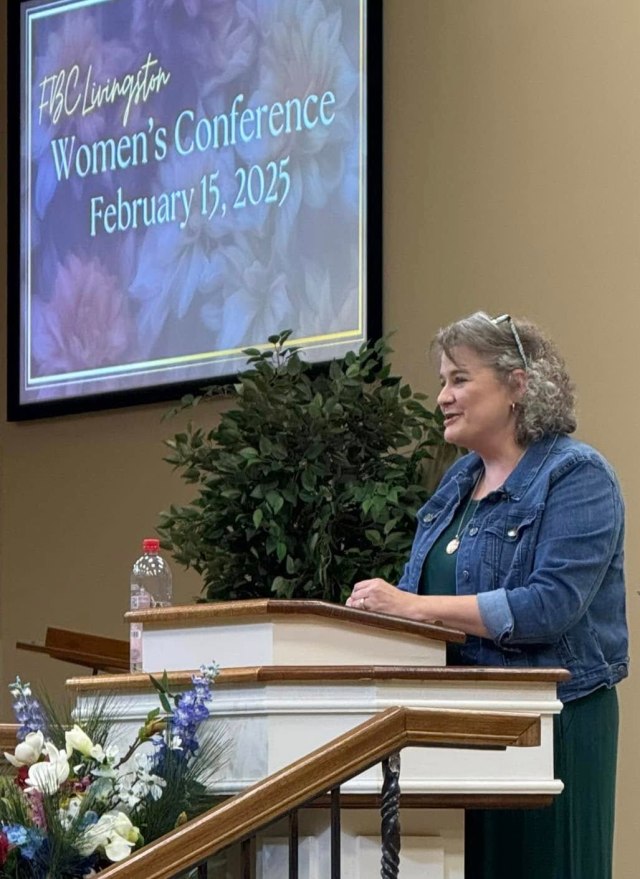
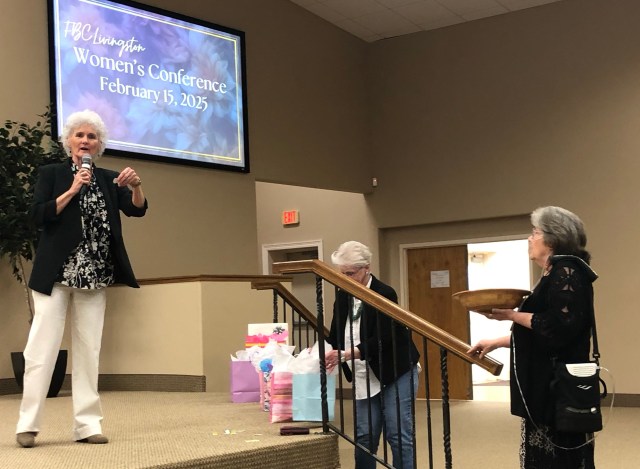
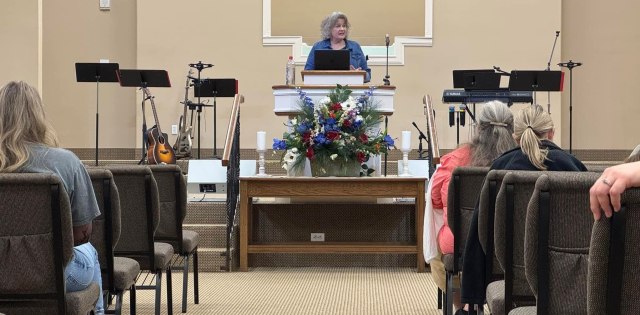
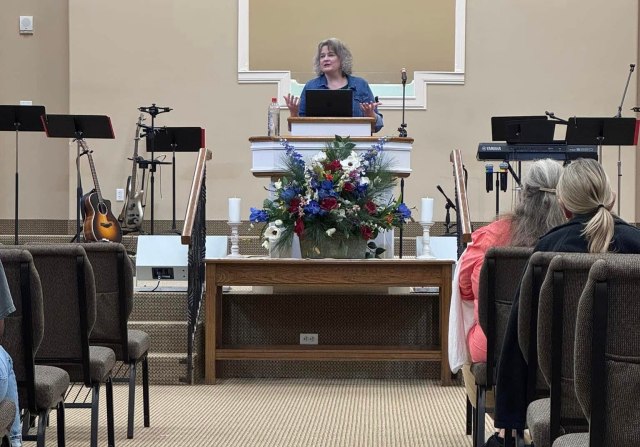
What a pleasure it was to teach at a wonderful sister church right in my own back yard, sleep in my own bed, and have a great group of dear sisters from my own church join me! I loved fellowshipping with the ladies of Livingston, Louisiana, and the surrounding area at First Baptist Church of Livingston’s annual women’s conference!
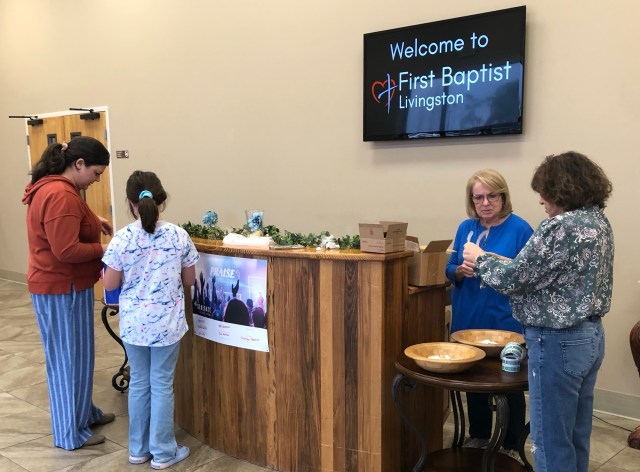
Attendees were warmly welcomed to the conference in the registration area with swag bags and helpful information.
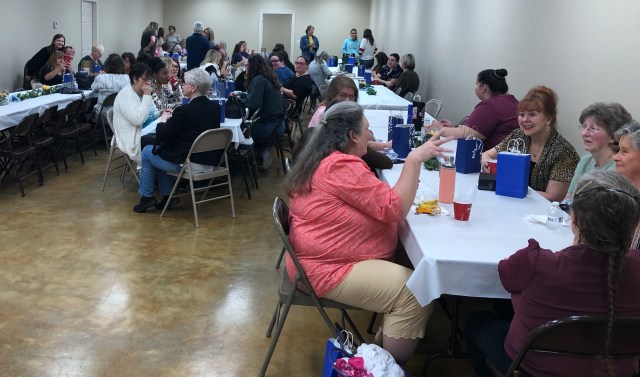
Next, it was time for an energizing breakfast, with plenty of time to visit.
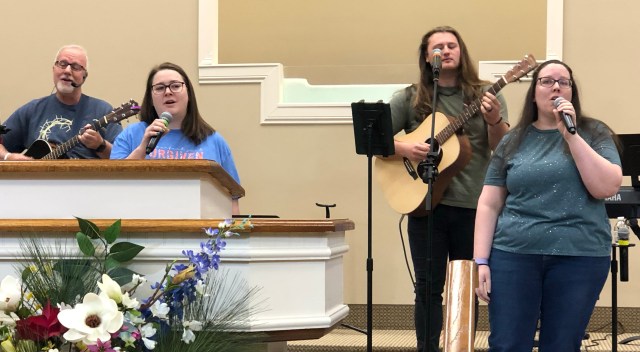
The conference proper started off with a worshipful time of singing led by these sweet brothers and sisters, and introductory remarks from Vickey, our emcee for the day.
Session 1 was God’s Word, Our Foundation. God’s Word is the very foundation of our lives as Christian women. It is all sufficient, our ultimate authority, and an absolute necessity for our growth in Christ and our wellbeing in life.
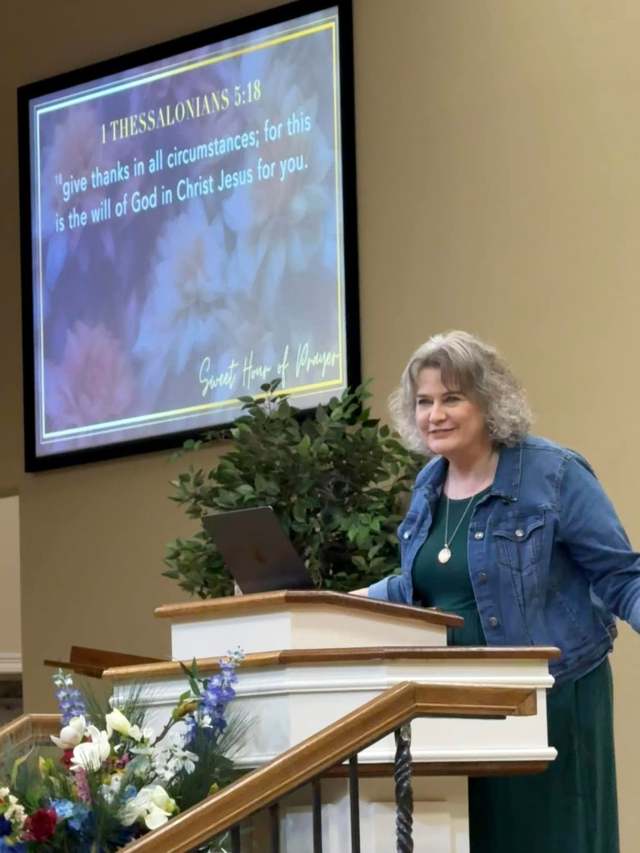
Session 2 was all about prayer. In Sweet Hour of Prayer, the ladies learned about biblical and unbiblical prayer practices, using the Lord’s Prayer as a model for our own prayers, praying Scripture and so much more!
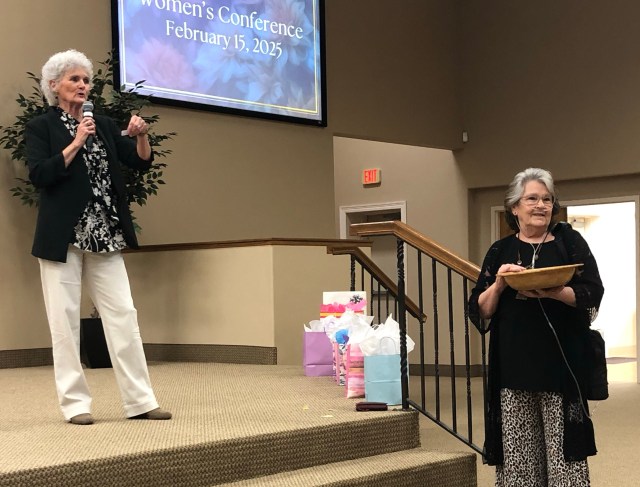
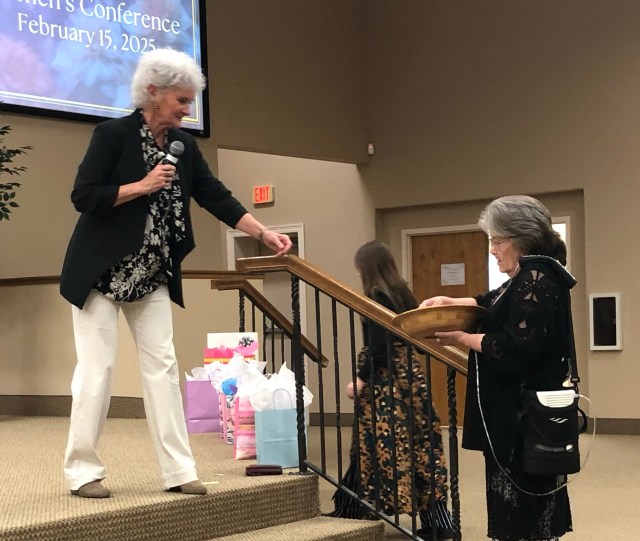
After a delicious lunch of deli sandwiches with all the trimmings, the afternoon session got off to a fun start with door prizes!
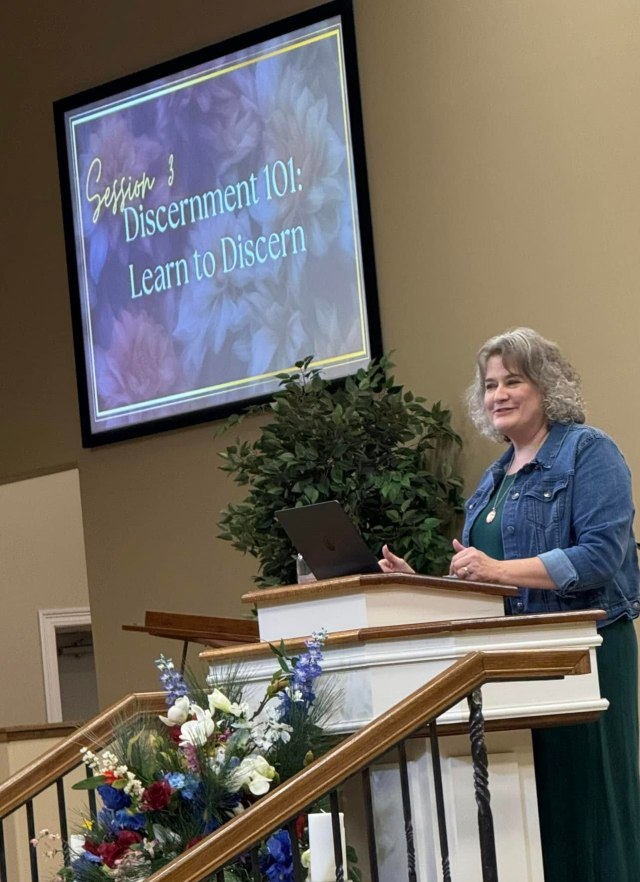
Discernment 101: Learn to Discern was our topic for session 3. What is discernment, and why is it important? What makes someone a false teacher? Who are some of today’s popular false teachers? It’s so important to be a good Berean.
Finishing up the day was our Q&A session. Wherever I go, I’m always so encouraged and sharpened by the questions my dear sisters ask, and these were no exception!
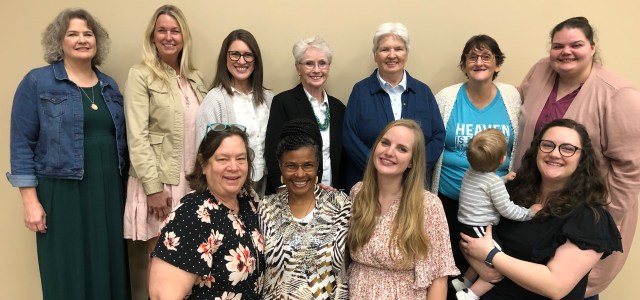
Big thank you’s to my precious sisters from my own church who took a day out of their busy lives to attend and support me at this event. It meant so much to me, and I deeply appreciate and love you all.
It was such a fantastic day with the ladies of FBC Livingston. Thanks so much to Pastor Brian for trusting me to teach these incredible women. Thanks to Joyce for being such a great event planner, and to all the other brothers and sisters of FBC for making me feel right at home and working so hard to host a fantastic conference. If you’re ever in the area and need a good church to visit, make plans to spend the Lord’s Day with these wonderful brothers and sisters.
If your church or organization is ever in need of a speaker for a women’s event, I’d love to come share with your ladies as well. Click here for more information, or to find an upcoming event near you!
Photo Credits
Thank you to Anna and Sarah for contributing several of these photos, including the ones of me.
I work in a Christian child care facility where the leadership is neck deep in false doctrine. Nearly a year ago, I stepped out of the classroom and into a management position so now I feel I’m more on the front lines. Most of the people believing all the false teaching (Bethel, Hillsong, Todd White, Sarah Young, etc.) are gone but the big boss is still in it. I’ve been bold to speak out against it to some of the young women who work there, but when it comes to my boss, I’m a lot less bold. So I guess my question is, am I wrong for not standing up to her and pointing out her error? I’m afraid I’ll get fired. What are your thoughts on this? Should I be bold and point out error? Should I even be working there?
Sounds like a sticky and uncomfortable spot to be in. Maybe we can sort things out a little.
Let’s start by remembering whose authority you’re under. First, you’re under God’s authority, so you need to make sure your highest priority is obeying Scripture regardless of the circumstances. If you’re married, your next authority is your husband. Make sure the two of you talk it through thoroughly and that you submit to any decisions he makes. You (and maybe your husband too) might want to bounce this situation off your pastor or elders and see what their counsel is. There’s wisdom in an abundance of counselors. Finally, at work, you are under your boss’s authority. She is not a friend or a co-worker, she is your boss. The two of you are not equals, you’re subordinate to her in the workplace. “Boldly” telling her she’s wrong about something (especially if it’s in regard to something that’s not work related) is not in keeping with God’s instruction to you to submit to her authority.
I’m not really clear on whether the false doctrine is a personal belief held by your boss that has no effect on the workplace, or whether the false doctrine is workplace policy. In other words, the false doctrine is part of the classroom curriculum you have to teach, or employees are required to take part in Word of Faith type devotions and contemplative prayer every morning, or in your role as administrator you have to do business with heretical “churches,” etc. So let’s take a look at it from both angles.
If the false doctrine is not affecting your work environment and is only a personal belief held by your boss, it is not necessary, and may not be wise, to proactively push the issue any more than you would be pushy about sharing the gospel with your boss if she were a garden variety lost person. It’s something that needs to be handled carefully and with wisdom about timing, how deep to go, etc. A good rule of thumb might be to address the issue only if she brings it up and asks for your opinion.
If it’s a situation where she’s constantly pushing the false doctrine on you and assuming you’re amenable to it, one way to handle it might be to say something like, “I’m kind of uncomfortable talking about this right now. Could I take you out to lunch and explain why?” At lunch, you’ll need to briefly, carefully, and biblically explain where you stand from the perspective of, “These are my personal beliefs,” helping her to grasp that when she pushes her personal beliefs (i.e. false doctrine) on you, you feel pressured and uncomfortable because you want to please her as your boss (the Bible teaches us that we’re to submit to those in authority over us and work hard for our employers), but you also don’t want to compromise your beliefs (“We must obey God rather than men.”) Hopefully she will get the message that she’s creating a hostile work environment and will tone it down. If she doesn’t, you’ll need to consider whether or not you want to keep working there.
If the false doctrine is part of workplace policy, you’ll need to figure out how pervasive it is and whether or not it’s something that can be worked around in accord with biblical principles and your conscience. If the false doctrine pretty much permeates your job (for example, if you were a teacher and it was interwoven into the curriculum you had to teach), it’s probably time to start looking for another job, and to make an appointment with you boss and politely explain why you’ll no longer be working there.
If it’s only a small part of your (otherwise doctrinally sound) job – for example, the aforementioned morning devotions – see if there’s a workaround. Employees are given all kinds of exemptions and accommodations these days, even for religious reasons. Perhaps you could be excused from the devotions or a co-worker could handle business with the heretical “churches” while you take on another task. “If possible, so far as it depends on you, live peaceably with all,” Romans 12:18 says. Be as cooperative and flexible as you can.
If you decide to stay at your job, the best way you can have an impact on your boss is by being a godly example. Pray fervently that God would open her eyes to the false doctrine she’s believing. Ask God to give you opportunities to slip in a doctrinally sound “word fitly spoken” in conversation from time to time. Be an “above and beyond” employee with a great attitude. Show kindness to your boss and co-workers, asking how you can pray for them, inquiring after their families, health, etc. Give doctrinally sound books as office Christmas gifts. Invite your boss and co-workers to an occasional event at your church. Suggest a doctrinally sound podcast you love if the topic comes up. There are lots of ways you can have a biblical influence on you boss. It doesn’t necessarily have to be “confront or quit.”
If you have a question about: a Bible passage, an aspect of theology, a current issue in Christianity, or how to biblically handle a family, life, or church situation, comment below (I’ll hold all questions in queue {unpublished} for a future edition of The Mailbag) or send me an e-mail or private message. If your question is chosen for publication, your anonymity will be protected.
On the show, we discussed how I got started in discipleship ministry, how women can develop better discernment, how to teach our children discernment, and more! Check it out!
Articles / resources mentioned or touched on in the episode:
Got a podcast of your own or have a podcasting friend who needs a guest? Need a speaker for a women’s conference or church event? Click the “Speaking Engagements” tab in the blue menu bar at the top of this page, drop me an e-mail, and let’s chat!
If you are considering commenting or sending me an e-mail objecting to the fact that I warn against certain teachers, please click here and read this article first. Your objection is most likely answered here. I won’t be publishing comments or answering emails that are answered by this article.
This article is kept continuously updated as needed.
Generally speaking, in order for me to recommend a teacher, speaker, or author, he or she has to meet three criteria:
a) A female teacher cannot currently and unrepentantly preach to or teach men in violation of 1 Timothy 2:12. A male teacher or pastor cannot allow women to carry out this violation of Scripture in his ministry. The pastor or teacher cannot currently and unrepentantly be living in any other sin (for example, cohabiting with her boyfriend or living as a homosexual).
b) The pastor or teacher cannot currently and unrepentantly be partnering with or frequently appearing with false teachers. This is a violation of Scripture.
c) The pastor or teacher cannot currently and unrepentantly be teaching false doctrine.
I recommend against any teacher or ministry who violates one or more of these biblical tenets.
I am not very familiar with most of the teachers I’m asked about (there are so many out there!) and have not had the opportunity to examine their writings or hear them speak, so most of the “quick checking” I do involves items a and b (although in order to partner with false teachers (b) it is reasonable to assume their doctrine is acceptable to the false teacher and that they are not teaching anything that would conflict with the false teacher’s doctrine). Partnering with false teachers and women preaching to men are each sufficient biblical reasons not to follow a pastor, teacher, or author, or use his/her materials.
Just to be clear, “not recommended” is a spectrum. On one end of this spectrum are people like Nancy Leigh DeMoss Wolgemuth and Kay Arthur. These are people I would not label as false teachers because their doctrine is generally sound, but because of some red flags I’m seeing with them, you won’t find me proactively endorsing them or suggesting them as a good resource, either. There are better people you could be listening to. On the other end of the spectrum are people like Joyce Meyer and Rachel Held Evans- complete heretics whose teachings, if believed, might lead you to an eternity in Hell. Most of the teachers I review fall somewhere in the middle of this spectrum (leaning toward the latter).
If you’d like to check out some pastors and teachers I heartily recommend, click the Recommended Bible Teachers tab at the top of this page.
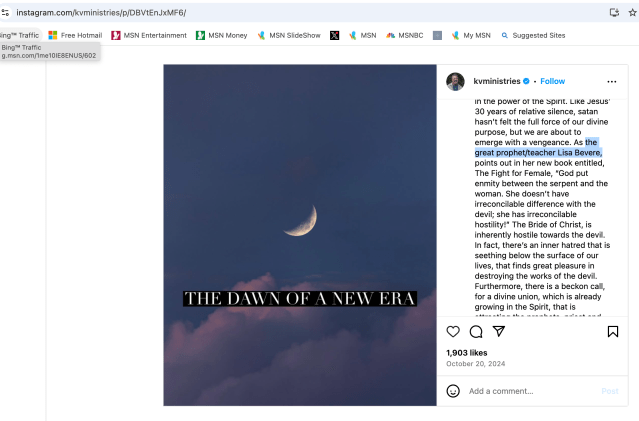
NAR false teaching: John and Lisa’s false teaching can be observed in the many videos linked under “Yoking in Ministry with Other False Teachers” (below). They teach a lot about so-called prophecy and extra-biblical revelation.
Preaching to men: Lisa can be observed preaching to men in most of the videos linked under “Yoking in Ministry with Other False Teachers” (below). Her speaking engagement calendar boasts a number of dates when she is preaching the Sunday services at various churches.
Lisa also advocates for women preaching/pastoring in her book Without Rival.
In her article, Women: The Great Commission is Your Permission, you can watch Lisa mercilessly twist Acts 4 and the Great Commission (from The Message, no less) in an attempt to make Scripture endorse women preaching. She even goes so far as to compare Christians who rightly understand that Scripture prohibits women from preaching to the council of Pharisees and Sadducees who imprisoned and “threatened” the apostles (and in the very next chapter, beat them) for preaching the gospel:
For more than two millennia religious leaders have limited and at times prohibited thousands of the church’s daughters from preaching and teaching in the sacred spaces under its governance. Read Acts 4:18 again: So they called them and charged them not to speak or teach at all in the name of Jesus. As I pondered this verse, I heard the Holy Spirit whisper, “Far too many of the daughters I called and gifted by my Spirit for ministry have been held back and denied their call by the church.” You might have heard religious leaders say, “Women can teach other women but not men.” Or, “Women can share, but there is to be no preaching.” And: “Women can lead, as long as it is outside the church.” These veiled threats appear to be more reasonable, but the result is the same: the gospel is contained…Yet the question before us is the same one raised by Peter and John. Is it right in the sight of God to listen to men rather than to obey God?
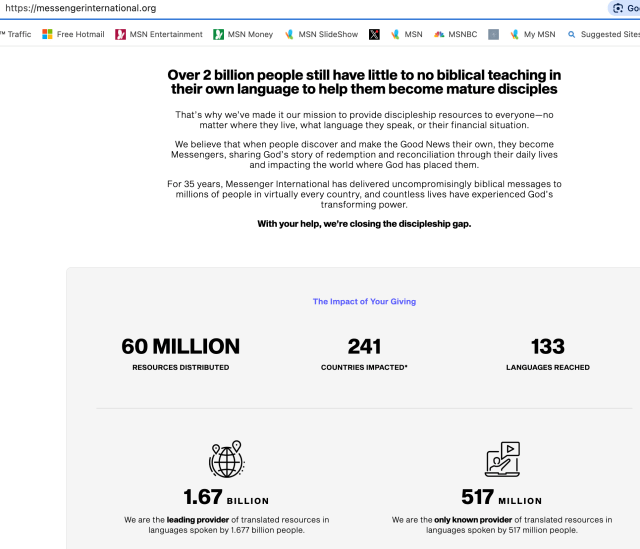
“Missions”: John and Lisa have a missions organization called Messenger International, through which they spread their heresy all over the world. Notice the word “resources” in the image below. It doesn’t mean “trustworthy translations of the Bible”. It means their own books.:
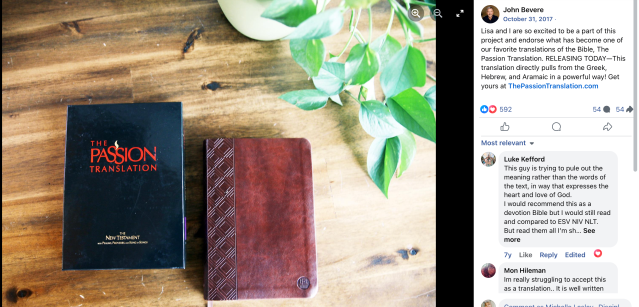
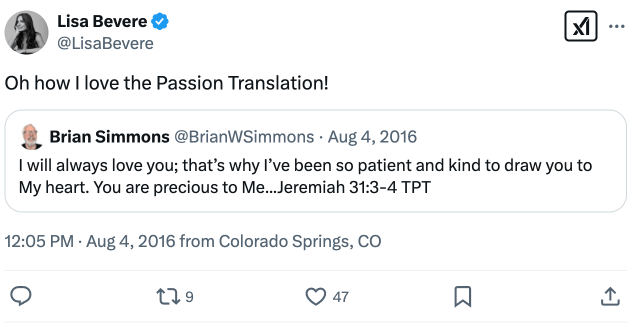
The Passion “Translation” is not a translation at all, but more like an NAR fanfic of the Bible, or the NAR’s dangerous and twisted re-write of the Bible. The Beveres not only frequently quote and teach from TPT (and The Message – also not a translation of the Bible, but an error-laden paraphrase from another false teacher, Eugene Peterson), they wrote a hearty endorsement on the TPT website (right alongside some of the worst of the worst NAR heretics alive today: Bill Johnson, Bobbie Houston, Lou Engle, James Goll, Patricia King, Heidi Baker, Banning Liebscher, Che Ahn, Chuck Pierce, Lana Vawser, and Bianca Olthoff.)
John also wrote a devotion for the TPT blog, and Lisa wrote two. And John and Lisa have both gushed over TPT on social media.
Yoking in Ministry with Other False Teachers
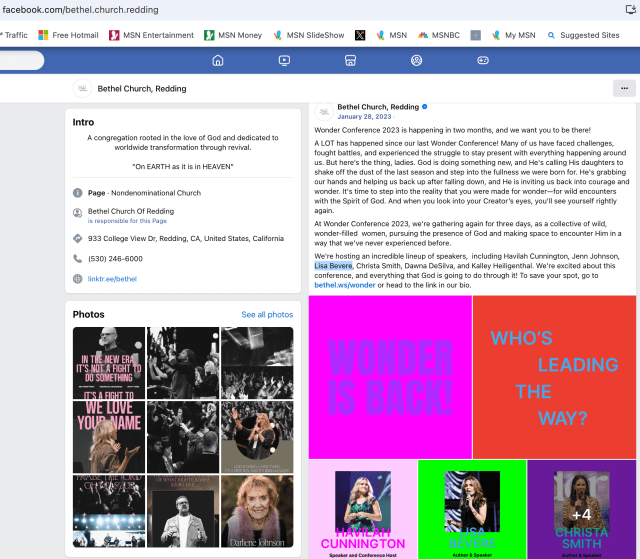
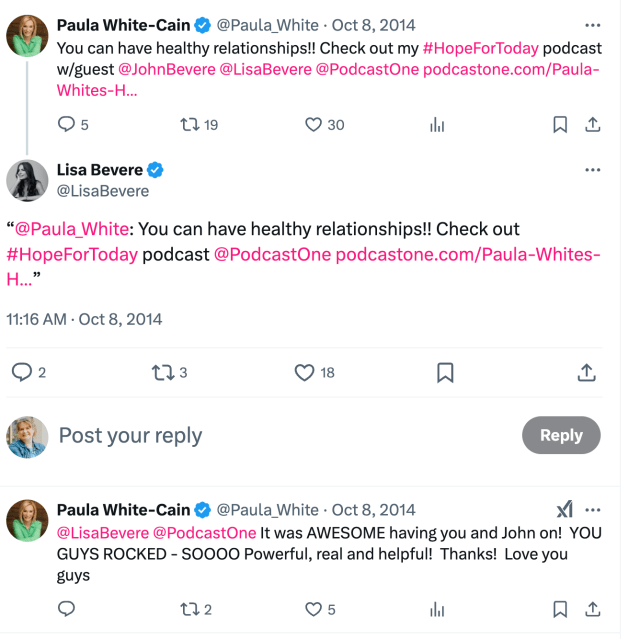
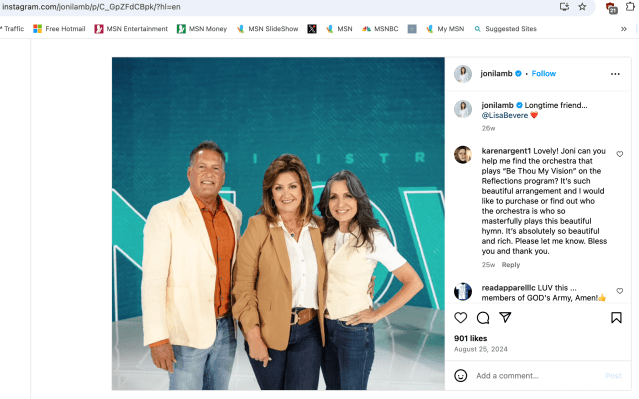
John and Lisa associate and partner in ministry almost exclusively with some of the worst of the worst false teachers. Here are just a handful of hundreds of examples:
Benny Hinn (NAR, faith healer):
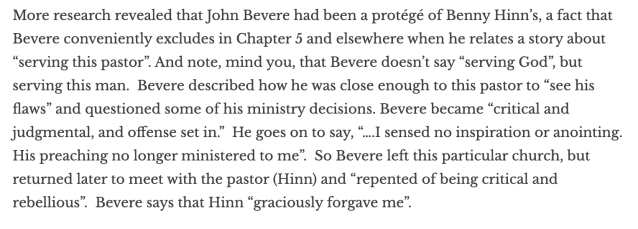
Early in his ministry, John served in various pastoral capacities under his pastor, Benny Hinn. Because this was in the 1980’s-90’s (pre-Internet), and because John has attempted to distance himself from this fact, there appears not to be any hard online proof (links, pictures, screenshots, etc.) readily available, but it is common knowledge and can be researched offline.
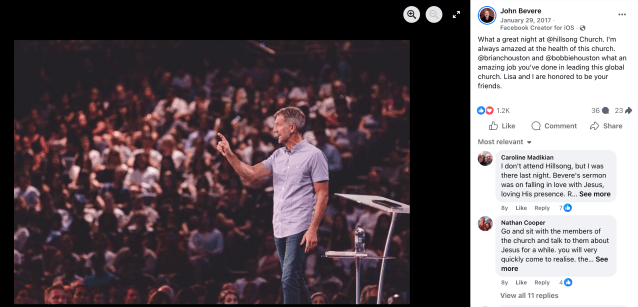
John has preached at Hillsong multiple times: “What a great night at @hillsong Church. I’m always amazed at the health of this church. @brianchouston and @bobbiehouston what an amazing job you’ve done in leading this global church. Lisa and I are honored to be your friends.”
A who’s who of false teachers and heretics have written endorsements for Lisa’s books. Just one example: Without Rival carries written endorsements from: “Pastor” Holly Wagner, Chris Hodges, Sheila Walsh, “Pastor” Caroline Barnett, “Pastor” Charlotte Gambill, “Pastors” Steven and Holly Furtick, “Pastor” Victoria Osteen, Kris Vallotton, James Robison, Jenn Johnson, Sarah Bessey, Lisa Harper, “Pastors” Brian and Bobbie Houston, Jentezen Franklin, Christine Caine, and Mark Batterson.