
Christmas

Christmas Mythbusters

Was Jesus really born in a barn? Did the angels actually sing? How many wise men were there, really?

There are lots of components of the Christmas story that we’ve come to accept as gospel truth, but that the Bible doesn’t actually teach. Here are some great resources to help us better understand the details surrounding the biblical account of the birth of Christ.

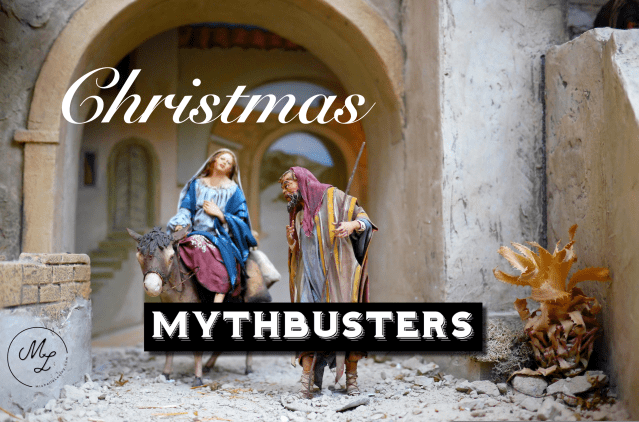
Did Mary ride a donkey to Bethlehem?

The Bible doesn’t tell us, so we don’t know for sure. She could have ridden a donkey. She could have ridden in a cart. She could have walked. All Scripture tells us is that Mary and Joseph went to Bethlehem. It doesn’t say how they got there.

Was Mary in active labor when she and Joseph arrived in Bethlehem?

It makes for dramatic nativity movies, but it’s very unlikely. God Himself had given Joseph the enormous and grave task of taking care of Mary and Jesus. You’ve seen first time dads and the weight of responsibility they feel to protect and provide for their wives and their own babies. This was God’s Son. Joseph must have been quaking in his sandals to make sure he got everything right. He certainly would not have waited until Mary was near her due date and risked her delivering the baby in the open country on the trip (not to mention outside of Bethlehem, which would have failed to fulfill prophecy).

Luke 2:6 says:

And while they were there [in Bethlehem], the time came for her to give birth.

“While they were there,” not “as soon as they got there.” “The time came,” not “IT’S TIME, JOSEPH! Find me a room NOW!” The phraseology of this verse suggests that Mary and Joseph spent some time in Bethlehem before Jesus was born. Rather than taking Mary to Bethlehem at the last minute, it’s much more likely that Joseph carefully prepared for the trip, made sure to get there with plenty of time to spare, and made arrangements to stay in Bethlehem until the baby was born.

Was Jesus born in a barn or stable? And what about that innkeeper?

Luke 2:7 tells us:

And she gave birth to her firstborn son and wrapped him in swaddling cloths and laid him in a manger, because there was no place for them in the inn.

To our western minds, an inn is like a hotel – a business that rents rooms to travelers.  But in biblical times, the cultural rules of hospitality dictated that travelers stay with family, friends, or anyone who would extend hospitality to them. Thus, there was no hotel-like “inn” in Bethlehem, and, of course, no innkeeper.

The Greek word kataluma, usually rendered as “inn” in Luke 2:7 is more accurately rendered “guest room” or “upper room” (of a home) – the same sort of “upper room” Jesus used for the Last Supper. One of Joseph’s relatives would have welcomed him and Mary into their home when they got to Bethlehem. But because Bethlehem was packed with visitors arriving for the census, the guest room of the home they stayed in was likely already full. So instead of giving birth in the crowded upper room of the home, Mary moved to the lower room. This lower room would have had space for the animals to be brought in at night, complete with a feed trough (manger), giving her a convenient cradle for the little Lord Jesus to lay down His sweet head. Jesus was not born in the kind of barn or stable we think of in America and usually see in traditional nativity scenes.

Once more: Jesus was not born in a stable by Ian Paul

Born in a Barn (Stable)? at Answers in Genesis

Jesus Was Born in a Stable? at When We Understand the Text

Did Mary ride a donkey to Bethlehem? Was she in active labor when she arrived? Was Jesus born in a barn/stable? And what about that innkeeper? Time to bust some popular Christmas myths!

Did Jesus cry as a baby?

The cattle are lowing, the baby awakes
But little Lord Jesus, no crying He makes

Until I started researching this article, I didn’t realize that some people think Jesus never cried as a baby because of these two lines from the Christmas carol Away in a Manger.

I don’t think that was the hymnist’s intent. The stanza reads as though, in that particular moment when He woke up, Jesus was content and happy, not that He never ever cried.

Furthermore, we know from Scripture that Jesus was not only fully God, He was also fully human. Human babies cry when they’re hungry or tired or sick or in pain or a thousand other scenarios. That’s how they communicate. Jesus was a real live human baby who cried, nursed, spit up, burped, needed His diaper changed, fell down when He was learning to walk, and had to be potty trained. The only type of crying we know He never did was sinful crying – because He didn’t get His own way, because He was angry and frustrated, etc. – since we know Jesus was without sin.

Hark! Did the “herald angels” actually sing?

It’s possible, but we don’t know for sure. We know that the gloria in excelsis deo proclamation was spoken to the shepherds because Luke 2:13-14 says.

And suddenly there was with the angel a multitude of the heavenly host praising God and saying, โ€œGlory to God in the highest, and on earth peace among those with whom he is pleased!โ€

But it also says they were praising God. In the Bible, though praise can be expressed in many ways, singing is one of the most common and natural ways of praising God. So while we know the angels weren’t singing exclusively, there’s no reason they couldn’t have been singing at some point.

Hark! The Herald Angels Said? at Answers in Genesis

Do Angels Sing? at Got Questions

How many wise men were there, exactly?

At least two (because the Bible speaks of them in the plural), but possibly a whole passel of them. Our minds are set to “three” because the Bible mentions that they brought three gifts: gold, frankincense, and myrrh, because of Christmas carols like We Three Kings, and because every nativity set comes equipped with three wise men. But it’s just as possible that two wise men gave three gifts, or that three gifts were given corporately by a larger group of wise men.

We Three Kings at Answers in Genesis

What does the Bible say about the three wise men (Magi)? at Got Questions

How many wise men came after Jesus was born? at CARM

Did Jesus cry as a baby? Hark! Did the “herald angels” actually sing? Just how many wise men *were* there, exactly? Ready to bust some Christmas myths? Check this out!

Were Anna and Simeon married to each other?

Nope. Not even a little bit.

The end of Luke 2 tells us the story of Mary and Joseph taking Jesus to the temple to offer the appropriate sacrifice for Him as “the first male to open the womb”. While they’re there, Simeon shows up and prophesies over Jesus and Mary. And “at that very hour” Anna also “began to give thanks to God and to speak of him to all who were waiting for the redemption of Jerusalem.” But nowhere does the passage even hint that they were married to each other, or that they even knew one another.

I think a lot of people mentally marry Anna to Simeon because their stories are back to back, because they showed up at the temple at the same time, and because we tend to assume they were both elderly. (Anna was at least 84, but, technically, we’re never told Simeon’s age or that he was elderly.) But verse 37 clearly tells us that Anna “lived as a widow”. She wasn’t married to anyone, including Simeon.

Who was Simeon in the Bible? at Got Questions

Who was Anna the prophetess in the Bible? at Got Questions

How many babies were murdered in the slaughter of the innocents?

Matthew 2:16 tells us that an enraged King Herod “sent and killed all the male children in Bethlehem and in all that region who were two years old or under” in an attempt to murder Jesus. We tend to think of scores, even hundreds, of babies being murdered in this event which has come to be known as “The Slaughter [or Massacre] of the Innocents.” But as the beloved Christmas carol states, it’s “O little town of Bethlehem”. Bethlehem had a population of approximately 1500. Statistically speaking, scores or hundreds of baby boys age two and under in a population that size would have been impossible. Twelve to fifteen – still a horrifying tragedy- would be more accurate.

Truth or Fiction: Did Herod Really Slaughter Baby Boys in Bethlehem? by Paul Maier

Were Anna and Simeon married to each other? How many babies were murdered in the slaughter of the innocents? Let’s bust some Christmas myths!

Does Christmas have pagan origins, and does that mean Christians shouldn’t celebrate it?

No, and no. Christians celebrating the incarnation of Christ is Christian, not pagan, and Christians are free to celebrate (or not) Christ’s incarnation any day of the year, including December 25.

Do some aspects of the celebration of Christmas find their origin in millennia-old paganism? Possibly. But are you participating in that paganism if you put up a tree or give gifts at Christmas? Probably not. The โ€œChristmas is paganโ€ lore is so ancient and uncertain that most people arenโ€™t even aware of it. How could you possibly be participating in paganism if youโ€™re not even aware of its existence, you have no intention of participating in it, and it has nothing to do with your reasons for celebrating?

Read more: Is Christmas Pagan?

Does Christmas have Catholic origins, and does that mean Christians shouldn’t celebrate it?

Maybe you’ve heard people say that the word โ€œChristmasโ€ means โ€œChristโ€™s mass,โ€ so Christmas is Roman Catholic and Christians shouldnโ€™t celebrate it or use the word โ€œChristmasโ€.

Itโ€™s true that the word โ€œChristmasโ€ is a shortened form of โ€œChristโ€™s massโ€. It first appeared in English usage as Crฤซstesmรฆsse in 10381, and, at that time, it did refer to the Roman Catholic mass celebrating the birth of Christ.

Youโ€™ll note that 1038 was long before the Protestant Reformation. In 1038, Roman Catholicism was the primary manifestation of any form of Christianity. There was no other church. So, at that time, if you were going to refer to a religious observance of the birth of Christ, you naturally would have couched it in Catholic vernacular. You would not have had any other frame of reference for Christianity.

But the word โ€œChristmasโ€ has come a long way in the last thousand years. It no longer refers exclusively or primarily to a Roman Catholic mass. It refers to all kinds of things surrounding December 25 and the birth of Christ, from a Christmas worship service at your own doctrinally sound church to Christmas sales, presents, trees, carols, 5Ks, parties and everything else under the sun that takes place this time of year. Itโ€™s perfectly fine for Christians to use the word โ€œChristmasโ€. I mean, โ€œThursdayโ€ started out as โ€œThorโ€™s Day“. Itโ€™s actually named after a false god, and none of us bat an eye when it rolls around every week, so why would โ€œChristmasโ€ be problematic?

But if you have a sensitive conscience and it bothers you to use the word โ€œChristmas,โ€ why not try on โ€œIncarnation Dayโ€ and see how it fits? Or maybe โ€œNoelโ€? It derives from Old French and means โ€œbirthโ€ or โ€œbirthdayโ€1.

As for celebrating Christmas, itโ€™s not required by Scripture, so you donโ€™t have to observe the day if you donโ€™t want to, but I would plead with you, donโ€™t use โ€œbecause itโ€™s Catholicโ€ as your reason. Donโ€™t dignify that evil, apostate religious system โ€“ which has sent millions to Hell โ€“ with the power to be a factor in your spiritual decision making. Donโ€™t let it keep you from celebrating the birth of your Lord in the biblical way of your choosing. They donโ€™t have that right, and you shouldnโ€™t give them that power. I would encourage you to read my article Is Christmas Pagan?. Everything in it applies to Catholicism as well.

1Christmasโ€“ Wikipedia

Does Jeremiah 10:3-4 (and other passages) prohibit Christmas trees?

for the customs of the peoples are vanity.
A tree from the forest is cut down
    and worked with an axe by the hands of a craftsman.
They decorate it with silver and gold;
    they fasten it with hammer and nails
    so that it cannot move.
Jeremiah 10:3-4

Itโ€™s imperative to look to Scripture to make sure that none of our Christmas traditions conflict with Godโ€™s Word. But we need to make sure we’re handling God’s Word rightly and in context. 

If we read all of Jeremiah 10, it’s very clear that the entire chapter is talking about idol worship. The English Standard Version even has a little heading at the top that says, โ€œIdols and the Living Godโ€.

Verses 3-4 of Jeremiah 10 are not referring to Christmas trees. They’re talking about ancient pagans – not Christians – chopping down trees to create wooden idols to worship, not chopping down a tree and decorating it – as is – in honor of the birth of Christ, or for any other reason. Itโ€™s talking about the crafting of wooden idols. 

We know this because of the phrase in verse 3, “worked by the hands of a craftsman”. Some translations render it “a craftsman shapes it with his chisel”. The craftsman carved a piece of wood into an idol which was then often dipped into or plated with gold or silver. This is exactly whatโ€™s being described in verses 8-9:

the instruction of idols is but wood!
Beaten silver is brought from Tarshish,
    and gold from Uphaz.
They are the work of the craftsman and of the hands of the goldsmith;
    their clothing is violet and purple; [the clothing the craftsman would dress the idols in]    
they are all the work of skilled men.

Idol worship is the “custom of the peoples (pagans) that is vanity,โ€ as it says in verse 3, and that is what God prohibits in this passage, not Christmas trees.

Neither do the passages of Scripture that refer to idol worship taking place under โ€œevery green treeโ€ prohibit Christmas trees. I can only surmise this false belief came into being because โ€œevery green treeโ€ sounds like โ€œevergreen tree,โ€ which is what Christmas trees are. There are several verses that use this phrase, โ€œevery green tree.โ€ Hereโ€™s one of them:

You shall surely destroy all the places where the nations whom you shall dispossess served their gods, on the high mountains and on the hills and under every green tree. Deuteronomy 12:2

Again, all of the verses that use this phrase are talking about idol worship, because thatโ€™s apparently where the idol worship took place. The tree itself wasnโ€™t intrinsically evil, itโ€™s the fact that people were using it in their idol worship.

So, unless you’re worshiping your Christmas tree as an idol, or youโ€™re using your Christmas tree as some sort of altar from which to worship an idol, your Christmas tree itself isnโ€™t evil. You donโ€™t have to have a Christmas tree in your house if you donโ€™t want one, but you canโ€™t use these Scripture passages to justify your choice or to bind the consciences of other Believers.

Are Christmas Trees Pagan? at When We Understand the Text

Should Christians have Christmas trees? by John MacArthur

Isn’t using the term “X-mas” somehow taking Christ out of Christmas?

No. But itโ€™s kind of understandable that people would think that the โ€œXโ€ in X-mas is removing Christ or genericizing Christmas. We use the letter X as an unknown variable in math. We might see a detergent commercial in which one of the bottles is labeled โ€˜brand Xโ€™ instead of its real name. So it can kind of seem like X is a place-filler or that it can stand for practically anything. 

But thatโ€™s not the case with the X in X-mas. That X has a finite value. X = 1, the One and only, Jesus Christ. How do we know that?

In the term X-mas, rather than the letter X taking Christ out of Christmas, the letter X actually stands for Christ.

Read more: The Mailbag: Merry “X-mas”?

Christmas is pagan, or Catholic? Scripture forbids Christmas trees? X-mas takes Christ out of Christmas? These Christmas myths are BUSTED!

There are lots of myths about Christmas flying around out there. And there are lots of sentimental and striking details of the Christmas story we’ve come to embrace over the years. But it’s imperative that we get our theology from the Bible, not Christmas carols, traditions, and assumptions. Yet even more important than donkeys and stables and trees is why Jesus came – to save sinners like you and me.


Additional Resources:

Christmas Mythbusters at A Word Fitly Spoken

25 Christmas Myths and What the Bible Says by Gabe Hughes


Please note, I am not thoroughly familiar with the theology of every site linked above. I have only vetted the specific articles that are linked. I do not endorse anything at the sites above that conflict with my theology as outlined in my “Statement of Faith” and “Welcome” tabs at the top of this page. Please reject any theology you may come across at these sites that conflicts with God’s Word.

Mailbag

The Mailbag: Potpourri (Discernment resources… Recommended podcasts… Approaching church leadership about false teachers… Magi: Astrologers?… Heaven after suicide?… Permission to email?)

Welcome to another โ€œpotpourriโ€ edition of The Mailbag, where I give short(er) answers to several questions rather than a long answer to one question.

I like to take the opportunity in these potpourri editions to let new readers know about my comments/e-mail/messages policy. Iโ€™m not able to respond individually to most e-mails and messages, so here are some helpful hints for getting your questions answered more quickly. Remember, the search bar (at the very bottom of each page) can be a helpful tool!

Or maybe I answered your question already? Check out my article The Mailbag: Top 10 FAQs to see if your question has been answered and to get some helpful resources.


Hey just curious why when I click on Sean Feucht it just sends me to a Justin Peters video on him from 2 months ago? Is that a glitch?

I think you’re referring to my link to Sean Feucht at my Popular False Teachers & Unbiblical Trends tab (in the blue menu bar at the top of the blog), right?

It’s not a glitch. The link is taking you right where I meant for it to take you. I’m not sure if you’re asking because you expected all of the links to go an article I had written or if there was another reason, but not all of the links on that page go to an article I wrote.

The main reason for this is that I usually don’t have on hand the 10-20ish hours it takes to write a thorough discernment article on everybody. But I know y’all need information on these teachers now, so if I come across a good resource from someone else, I’ll go ahead and link it up for you. Also, most of those outside resources I’ve linked are so thorough and well done that I don’t feel the need to re-invent the wheel. I’m very thankful for the handful of brothers and sisters out there who are doing a great job of exposing false teachers and false doctrine. It lightens the load for all of us who do discernment work.

In addition to Sean Feucht, over the last few months I’ve also added resources for baptismal regeneration, Shawn Bolz, Core Group/Jenny Weaver, Eastern Orthodox, Kathryn Krick, Greg Laurie, Rebecca McLaughlin, Kristi McLelland, the New Apostolic Reformation, Right Now Media, Heidi St. John, and Wesleyanism. Check it out if you haven’t stopped by recently!


Other than yours, are there any podcasts you can recommend for women? Age wise 40-50โ€™s. Thank you!

Thank you so much for listening to A Word Fitly Spoken! Yes, I would recommend, regardless of age, the podcast of anyone listed at the Recommended Bible Teachers, Authors, etc. tab in the blue menu bar at the top of this page. (Don’t limit yourself to female podcasters, teachers, etc. There are a lot more doctrinally sound men out there than women.)

A few more that aren’t listed there (only because I haven’t had time to update that page in a while) that I listen to are:

The G3 Podcast
Transformed with Dr. Greg Gifford
Your Calvinist with Keith Foskey (If you’re not a Calvinist or don’t like Calvinism, don’t let the title scare you. It’s usually not about Calvinism. Give it a good faith try.)
Conversations that Matter
The Lovesick Scribe

The Studio Revue with Sam Reid (This one isn’t Christian content, it’s just wholesome fun. I got hooked on it earlier this year.)


Iโ€™m wondering what/how would be the best way to approach my pastor about Jennie Allen and other doctrinally weak/unsound women whose studies are currently being taught at the church Iโ€™m a member of. At the risk of appearing obtuse or haughty, Iโ€™m hesitant to share these insights with the women (who I esteem more spiritually mature than I) who are overseeing the womenโ€™s Bible studies, especially as they continue to choose these authors who clearly are unsound or weak in theology and doctrine.ย 

Iโ€™m so sorry this is happening at your church. I hope it will help you to know that youโ€™re not alone. Iโ€™ve been in the same situation myself, and Iโ€™ve heard from hundreds of other women over the years who have also been in this situation. Sadly,ย my article The Mailbag: How should I approach my church leaders about a false teacher theyโ€™reย introducing? is the one I most often have to share with readers.

And listen, if these women are following false teachers, they are not the spiritually mature ones, no matter how they seem or how they present themselves. If youโ€™re discerning enough to understand from Scripture that theyโ€™re following false teachers, and you love them and your church enough to try to help, you are the spiritually mature one in this situation. Thatโ€™s not haughty, thatโ€™s simple, objective, biblical fact.

I have taken a moment to pray for you, and I wish you well.


Iโ€™ve heard that Christians shouldnโ€™t read horoscopes or get involved with astrology, but werenโ€™t the wise men who came to see Jesus astrologers? Maybe thereโ€™s something to astrology.

Well, if we were to say that, then we could also say maybe thereโ€™s something to stealing, too. Because, after all, thatโ€™s what got the thief on the cross to Jesus, and Jesus said that he would be with Him in Paradise that day. And maybe thereโ€™s something to persecuting and murdering Christians, too, because thatโ€™s how Paul came to encounter Jesus. But we donโ€™t say those things because thatโ€™s not the way we rightly handle and apply Scripture.

There are two broad categories of Scripture: descriptive passages and prescriptive passages. Descriptive passages are descriptions of something that happened, like the story of the wise men visiting Jesus, or Noah and the ark, or David and Goliath. Prescriptive passages could also be called commands or direct instructions, โ€œthou shaltsโ€ and โ€œthou shalt nots.โ€

When we have a question about whether or not itโ€™s OK with God for us to do something, say, consulting horoscopes and astrologers, we look first at the relevant prescriptive passages, like this one:

When you come into the land that the Lord your God is giving you, you shall not learn to follow the abominable practices of those nations. There shall not be found among you anyone who burns his son or his daughter as an offering, anyone who practices divination or tells fortunes or interprets omens, or a sorcerer or a charmer or a medium or a necromancer or one who inquires of the dead, for whoever does these things is an abomination to the Lord. And because of these abominations the Lord your God is driving them out before you. You shall be blameless before the Lord your God, for these nations, which you are about to dispossess, listen to fortune-tellers and to diviners. But as for you, the Lord your God has not allowed you to do this.

Deuteronomy 18:9-14

While this passage was obviously written as a command to Old Testament Israel, we can still draw out some applicable principles for today by asking ourselves why โ€œthe Lord your God has not allowed you to do this.โ€ God calls these practices an โ€œabominationโ€ several times and links them to paganism. Verse 14 is reminiscent of 2 Corinthians 6:14-18 and 1 John 2:15-17, which tell us not to love or partner with the dark things of the world and to separate ourselves from such things.

This is a clear, prescriptive passage that answers our questions about following horoscopes and astrology, so this is where we get our instruction, not from a descriptive passage about someone who was an astrologer.

Additionally, thereโ€™s good reason to believe that the wise men who went to see Jesus were not astrologers in the same horoscope/tarot card/palm reading/fortune teller sense in which we use the word “astrology” today. The Greek word translated as โ€œwise menโ€ isย magosย (magi). Its primary meaning is โ€œOriental scientist,โ€ a term which was also applied to teachers, priests, and physicians, among others. It would seem that the wise men were much more akin to astronomers than astrologers, and were learned in the Old Testament messianic prophecies as well.

Additional Resources:

Should a Christian Consult Horoscopes? at Got Questions

Astrology and the Visit of the Wise Men at Truth Magazine

Were the Wise Men Astrologists? at The Baptist Bulletin


Will a Believer who commits suicide still go to Heaven?

Yes. The key word here is โ€œBeliever.โ€ People who are genuinely born again Christians spend eternity in Heaven when they die. It is not a particular sin that sends people to Hell, but rather that they die in a state of lostness and unbelief. If you think about it, because sin is so sneaky and pervasive most Christians will have some unconfessed sin in our lives at the moment of our death, whether that sin is suicide, unforgiveness, lust, a lie, or whatever. At the moment of salvation, Christโ€™s death, burial, and resurrection pays for ALL of a Believerโ€™s sins, from cradle to grave. While we should always strive to repent of any known sin in our lives, we must also trust in Godโ€™s grace, mercy, and forgiveness towards His children.

Additional Resources:

If a Christian commits suicide, is he/she still saved?ย at Got Questions

Sunday School Lesson ~ 6-1-14 (Scroll down to โ€œFollow up: Can a Christian be forgivenโ€ฆโ€)

The Mailbag: Can unforgiveness cause you to you lose yourย salvation?


Is it OK if I email you/private message you on social media about…

Yes. You do not need to ask my permission before emailing or DM-ing me. Just go ahead and send me the email/DM. The only thing is, you need to understand that I will probably not answer your email or DM personally (unless it’s related to a speaking engagement). I answer readers’ questions via The Mailbag. I’ve explained why at the Contact and Social Media tab (All together, class: “…in the blue menu bar at the top of this page.”).


If you have a question about: a Bible passage, an aspect of theology, a current issue in Christianity, or how to biblically handle a family, life, or church situation, comment below (Iโ€™ll hold all questions in queue {unpublished} for a future edition of The Mailbag) or send me an e-mail or private message. If your question is chosen for publication, your anonymity will be protected.

Christmas

Christmas Mythbusters

Was Jesus really born in a barn? Did the angels actually sing? How many wise men were there, really?

There are lots of components of the Christmas story that we’ve come to accept as gospel truth, but that the Bible doesn’t actually teach. Here are some great resources to help us better understand the details surrounding the biblical account of the birth of Christ.

Did Mary ride a donkey to Bethlehem?

The Bible doesn’t tell us, so we don’t know for sure. She could have ridden a donkey. She could have ridden in a cart. She could have walked. All Scripture tells us is that Mary and Joseph went to Bethlehem. It doesn’t say how they got there.

Was Mary in active labor when she and Joseph arrived in Bethlehem?

It makes for dramatic nativity movies, but it’s very unlikely. God Himself had given Joseph the enormous and grave task of taking care of Mary and Jesus. You’ve seen first time dads and the weight of responsibility they feel to protect and provide for their wives and their own babies. This was God’s Son. Joseph must have been quaking in his sandals to make sure he got everything right. He certainly would not have waited until Mary was near her due date and risked her delivering the baby in the open country on the trip (not to mention outside of Bethlehem, which would have failed to fulfill prophecy).

Luke 2:6 says:

And while they were there [in Bethlehem], the time came for her to give birth.

“While they were there,” not “as soon as they got there.” “The time came,” not “IT’S TIME, JOSEPH! Find me a room NOW!” The phraseology of this verse suggests that Mary and Joseph spent some time in Bethlehem before Jesus was born. Rather than taking Mary to Bethlehem at the last minute, it’s much more likely that Joseph carefully prepared for the trip, made sure to get there with plenty of time to spare, and made arrangements to stay in Bethlehem until the baby was born.

Was Jesus born in a barn or stable? And what about that innkeeper?

Luke 2:7 tells us:

And she gave birth to her firstborn son and wrapped him in swaddling cloths and laid him in a manger, because there was no place for them in the inn.

To our western minds, an inn is like a hotel – a business that rents rooms to travelers.  But in biblical times, the cultural rules of hospitality dictated that travelers stay with family, friends, or anyone who would extend hospitality to them. Thus, there was no hotel-like “inn” in Bethlehem, and, of course, no innkeeper.

The Greek word kataluma, usually rendered as “inn” in Luke 2:7 is more accurately rendered “guest room” or “upper room” (of a home) – the same sort of “upper room” Jesus used for the Last Supper. One of Joseph’s relatives would have welcomed him and Mary into their home when they got to Bethlehem. But because Bethlehem was packed with visitors arriving for the census, the guest room of the home they stayed in was likely already full. So instead of giving birth in the crowded upper room of the home, Mary moved to the lower room. This lower room would have had space for the animals to be brought in at night, complete with a feed trough (manger), giving her a convenient cradle for the little Lord Jesus to lay down His sweet head. Jesus was not born in the kind of barn or stable we think of in America and usually see in traditional nativity scenes.

Once more: Jesus was not born in a stable by Ian Paul

Born in a Barn (Stable)? at Answers in Genesis

Jesus Was Born in a Stable? at When We Understand the Text

Did Mary ride a donkey to Bethlehem? Was she in active labor when she arrived? Was Jesus born in a barn/stable? And what about that innkeeper? Time to bust some popular Christmas myths!

Did Jesus cry as a baby?

The cattle are lowing, the baby awakes
But little Lord Jesus, no crying He makes

Until I started researching this article, I didn’t realize that some people think Jesus never cried as a baby because of these two lines from the Christmas carol Away in a Manger.

I don’t think that was the hymnist’s intent. The stanza reads as though, in that particular moment when He woke up, Jesus was content and happy, not that He never ever cried.

Furthermore, we know from Scripture that Jesus was not only fully God, He was also fully human. Human babies cry when they’re hungry or tired or sick or in pain or a thousand other scenarios. That’s how they communicate. Jesus was a real live human baby who cried, nursed, spit up, burped, needed His diaper changed, fell down when He was learning to walk, and had to be potty trained. The only type of crying we know He never did was sinful crying – because He didn’t get His own way, because He was angry and frustrated, etc. – since we know Jesus was without sin.

Hark! Did the “herald angels” actually sing?

It’s possible, but we don’t know for sure. We know that the gloria in excelsis deo proclamation was spoken to the shepherds because Luke 2:13-14 says.

And suddenly there was with the angel a multitude of the heavenly host praising God and saying, โ€œGlory to God in the highest, and on earth peace among those with whom he is pleased!โ€

But it also says they were praising God. In the Bible, though praise can be expressed in many ways, singing is one of the most common and natural ways of praising God. So while we know the angels weren’t singing exclusively, there’s no reason they couldn’t have been singing at some point.

Hark! The Herald Angels Said? at Answers in Genesis

Do Angels Sing? at Got Questions

How many wise men were there, exactly?

At least two (because the Bible speaks of them in the plural), but possibly a whole passel of them. Our minds are set to “three” because the Bible mentions that they brought three gifts: gold, frankincense, and myrrh, because of Christmas carols like We Three Kings, and because every nativity set comes equipped with three wise men. But it’s just as possible that two wise men gave three gifts, or that three gifts were given corporately by a larger group of wise men.

We Three Kings at Answers in Genesis

What does the Bible say about the three wise men (Magi)? at Got Questions

How many wise men came after Jesus was born? at CARM

Did Jesus cry as a baby? Hark! Did the “herald angels” actually sing? Just how many wise men *were* there, exactly? Ready to bust some Christmas myths? Check this out!

Were Anna and Simeon married to each other?

Nope. Not even a little bit.

The end of Luke 2 tells us the story of Mary and Joseph taking Jesus to the temple to offer the appropriate sacrifice for Him as “the first male to open the womb”. While they’re there, Simeon shows up and prophesies over Jesus and Mary. And “at that very hour” Anna also “began to give thanks to God and to speak of him to all who were waiting for the redemption of Jerusalem.” But nowhere does the passage even hint that they were married to each other, or that they even knew one another.

I think a lot of people mentally marry Anna to Simeon because their stories are back to back, because they showed up at the temple at the same time, and because we tend to assume they were both elderly. (Anna was at least 84, but, technically, we’re never told Simeon’s age or that he was elderly.) But verse 37 clearly tells us that Anna “lived as a widow”. She wasn’t married to anyone, including Simeon.

Who was Simeon in the Bible? at Got Questions

Who was Anna the prophetess in the Bible? at Got Questions

How many babies were murdered in the slaughter of the innocents?

Matthew 2:16 tells us that an enraged King Herod “sent and killed all the male children in Bethlehem and in all that region who were two years old or under” in an attempt to murder Jesus. We tend to think of scores, even hundreds, of babies being murdered in this event which has come to be known as “The Slaughter [or Massacre] of the Innocents.” But as the beloved Christmas carol states, it’s “O little town of Bethlehem”. Bethlehem had a population of approximately 1500. Statistically speaking, scores or hundreds of baby boys age two and under in a population that size would have been impossible. Twelve to fifteen – still a horrifying tragedy- would be more accurate.

Truth or Fiction: Did Herod Really Slaughter Baby Boys in Bethlehem? by Paul Maier

Were Anna and Simeon married to each other? How many babies were murdered in the slaughter of the innocents? Let’s bust some Christmas myths!

Does Christmas have pagan origins, and does that mean Christians shouldn’t celebrate it?

No, and no. Christians celebrating the incarnation of Christ is Christian, not pagan, and Christians are free to celebrate (or not) Christ’s incarnation any day of the year, including December 25.

Do some aspects of the celebration of Christmas find their origin in millennia-old paganism? Possibly. But are you participating in that paganism if you put up a tree or give gifts at Christmas? Probably not. The โ€œChristmas is paganโ€ lore is so ancient and uncertain that most people arenโ€™t even aware of it. How could you possibly be participating in paganism if youโ€™re not even aware of its existence, you have no intention of participating in it, and it has nothing to do with your reasons for celebrating?

Read more: Is Christmas Pagan?

Does Christmas have Catholic origins, and does that mean Christians shouldn’t celebrate it?

Maybe you’ve heard people say that the word โ€œChristmasโ€ means โ€œChristโ€™s mass,โ€ so Christmas is Roman Catholic and Christians shouldnโ€™t celebrate it or use the word โ€œChristmasโ€.

Itโ€™s true that the word โ€œChristmasโ€ is a shortened form of โ€œChristโ€™s massโ€. It first appeared in English usage as Crฤซstesmรฆsse in 10381, and, at that time, it did refer to the Roman Catholic mass celebrating the birth of Christ.

Youโ€™ll note that 1038 was long before the Protestant Reformation. In 1038, Roman Catholicism was the primary manifestation of any form of Christianity. There was no other church. So, at that time, if you were going to refer to a religious observance of the birth of Christ, you naturally would have couched it in Catholic vernacular. You would not have had any other frame of reference for Christianity.

But the word โ€œChristmasโ€ has come a long way in the last thousand years. It no longer refers exclusively or primarily to a Roman Catholic mass. It refers to all kinds of things surrounding December 25 and the birth of Christ, from a Christmas worship service at your own doctrinally sound church to Christmas sales, presents, trees, carols, 5Ks, parties and everything else under the sun that takes place this time of year. Itโ€™s perfectly fine for Christians to use the word โ€œChristmasโ€. I mean, โ€œThursdayโ€ started out as โ€œThorโ€™s Day“. Itโ€™s actually named after a false god, and none of us bat an eye when it rolls around every week, so why would โ€œChristmasโ€ be problematic?

But if you have a sensitive conscience and it bothers you to use the word โ€œChristmas,โ€ why not try on โ€œIncarnation Dayโ€ and see how it fits? Or maybe โ€œNoelโ€? It derives from Old French and means โ€œbirthโ€ or โ€œbirthdayโ€1.

As for celebrating Christmas, itโ€™s not required by Scripture, so you donโ€™t have to observe the day if you donโ€™t want to, but I would plead with you, donโ€™t use โ€œbecause itโ€™s Catholicโ€ as your reason. Donโ€™t dignify that evil, apostate religious system โ€“ which has sent millions to Hell โ€“ with the power to be a factor in your spiritual decision making. Donโ€™t let it keep you from celebrating the birth of your Lord in the biblical way of your choosing. They donโ€™t have that right, and you shouldnโ€™t give them that power. I would encourage you to read my article Is Christmas Pagan?. Everything in it applies to Catholicism as well.

1Christmasโ€“ Wikipedia

Does Jeremiah 10:3-4 (and other passages) prohibit Christmas trees?

for the customs of the peoples are vanity.
A tree from the forest is cut down
    and worked with an axe by the hands of a craftsman.
They decorate it with silver and gold;
    they fasten it with hammer and nails
    so that it cannot move.
Jeremiah 10:3-4

Itโ€™s imperative to look to Scripture to make sure that none of our Christmas traditions conflict with Godโ€™s Word. But we need to make sure we’re handling God’s Word rightly and in context. 

If we read all of Jeremiah 10, it’s very clear that the entire chapter is talking about idol worship. The English Standard Version even has a little heading at the top that says, โ€œIdols and the Living Godโ€.

Verses 3-4 of Jeremiah 10 are not referring to Christmas trees. They’re talking about ancient pagans – not Christians – chopping down trees to create wooden idols to worship, not chopping down a tree and decorating it – as is – in honor of the birth of Christ, or for any other reason. Itโ€™s talking about the crafting of wooden idols. 

We know this because of the phrase in verse 3, “worked by the hands of a craftsman”. Some translations render it “a craftsman shapes it with his chisel”. The craftsman carved a piece of wood into an idol which was then often dipped into or plated with gold or silver. This is exactly whatโ€™s being described in verses 8-9:

the instruction of idols is but wood!
Beaten silver is brought from Tarshish,
    and gold from Uphaz.
They are the work of the craftsman and of the hands of the goldsmith;
    their clothing is violet and purple; [the clothing the craftsman would dress the idols in]    
they are all the work of skilled men.

Idol worship is the “custom of the peoples (pagans) that is vanity,โ€ as it says in verse 3, and that is what God prohibits in this passage, not Christmas trees.

Neither do the passages of Scripture that refer to idol worship taking place under โ€œevery green treeโ€ prohibit Christmas trees. I can only surmise this false belief came into being because โ€œevery green treeโ€ sounds like โ€œevergreen tree,โ€ which is what Christmas trees are. There are several verses that use this phrase, โ€œevery green tree.โ€ Hereโ€™s one of them:

You shall surely destroy all the places where the nations whom you shall dispossess served their gods, on the high mountains and on the hills and under every green tree. Deuteronomy 12:2

Again, all of the verses that use this phrase are talking about idol worship, because thatโ€™s apparently where the idol worship took place. The tree itself wasnโ€™t intrinsically evil, itโ€™s the fact that people were using it in their idol worship.

So, unless you’re worshiping your Christmas tree as an idol, or youโ€™re using your Christmas tree as some sort of altar from which to worship an idol, your Christmas tree itself isnโ€™t evil. You donโ€™t have to have a Christmas tree in your house if you donโ€™t want one, but you canโ€™t use these Scripture passages to justify your choice or to bind the consciences of other Believers.

Are Christmas Trees Pagan? at When We Understand the Text

Should Christians have Christmas trees? by John MacArthur

Isn’t using the term “X-mas” somehow taking Christ out of Christmas?

No. But itโ€™s kind of understandable that people would think that the โ€œXโ€ in X-mas is removing Christ or genericizing Christmas. We use the letter X as an unknown variable in math. We might see a detergent commercial in which one of the bottles is labeled โ€˜brand Xโ€™ instead of its real name. So it can kind of seem like X is a place-filler or that it can stand for practically anything. 

But thatโ€™s not the case with the X in X-mas. That X has a finite value. X = 1, the One and only, Jesus Christ. How do we know that?

In the term X-mas, rather than the letter X taking Christ out of Christmas, the letter X actually stands for Christ.

Read more: The Mailbag: Merry “X-mas”?

Christmas is pagan, or Catholic? Scripture forbids Christmas trees? X-mas takes Christ out of Christmas? These Christmas myths are BUSTED!

There are lots of myths about Christmas flying around out there. And there are lots of sentimental and striking details of the Christmas story we’ve come to embrace over the years. But it’s imperative that we get our theology from the Bible, not Christmas carols, traditions, and assumptions. Yet even more important than donkeys and stables and trees is why Jesus came – to save sinners like you and me.


Additional Resources:

Christmas Mythbusters at A Word Fitly Spoken

25 Christmas Myths and What the Bible Says by Gabe Hughes


Please note, I am not thoroughly familiar with the theology of every site linked above. I have only vetted the specific articles that are linked. I do not endorse anything at the sites above that conflict with my theology as outlined in my “Statement of Faith” and “Welcome” tabs at the top of this page. Please reject any theology you may come across at these sites that conflicts with God’s Word.