Idolatry, Old Testament, Sunday School, Worship

Israel Is Exiled ~ Sunday School Lesson ~ 7-20-14

PicsArt_1405907394797

These are my notes from my ladies’ Sunday School class this morning. I’ll be posting the notes from my class here each week. Click here for last week’s lesson.

Through the Bible in 2014 ~ Week 29 ~ July 13-19
2 Chronicles 27-31, Isaiah 9-27, Micah, 2 Kings 16-18:8, Psalm 48
Israel is Exiled

2 Kings 17:1-20
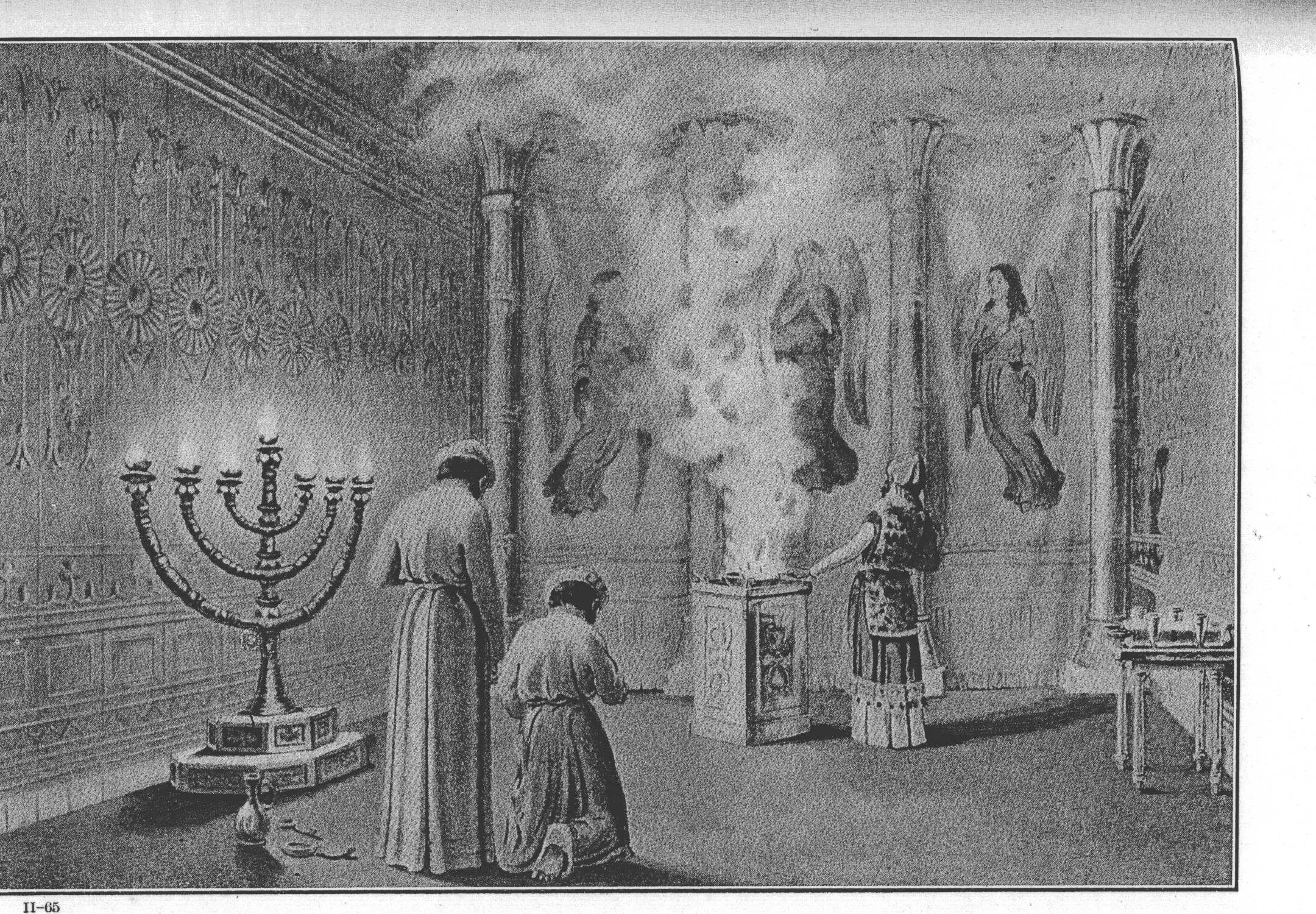
Second Kings 17 is sort of the “Cliff Notes” version of Israel’s era of the kings. We have read about each king of Israel, all of whom “did what was evil in the sight of the Lord.” Second Kings 17 sums up the effect these evil kings had on Israel’s relationship with God and the consequences for their idolatry.

Israel’s Sin
The sin that brought God’s judgment upon Israel was idolatry. Israel participated in idolatry in two different ways, usually at the same time:

They worshiped false gods instead of the true God. (12,16-17)
As Israel got to know her pagan neighbors, she began to worship some of their false gods such as Ashera, Baal, Molech, and the stars and planets. This was expressly forbidden by God in the 10 Commandments and throughout the Old Testament. While other nations often worshiped many gods, Israel was to be holy and set apart to the one true God and serve only Him.

They worshiped the true God in false ways. (16, 1 Corinthians 14:40, 2 Corinthians 9:7, 1 Corinthians 5, 1 Timothy 2:12-14, 1 Timothy 3, Titus 1, 1 Corinthians 11:17-33)
You will recall the two golden calves Jeroboam had set up in the north and south for the people to worship. He wanted to keep the Israelites from traveling out of Israel into Judah to worship at the temple because he did not want the people to turn their loyalty back to the throne of David. So he took the worship and festivals God had set up for Himself and transferred them to these two calves. The calves were basically a stand in for God.

God was very specific about how, when, and where He was to be worshiped. When we studied Exodus and Leviticus, we saw hundreds of instructions about God’s house, the utensils, the men who served as priests and Levites, the offerings and sacrifices, cleansing rituals, and on and on. God requires that He be worshiped in certain ways. His ways. He did not leave it up to His people to worship Him freestyle.

Even today, God has given us specific instructions about worship that we are to obey. For example, He tells us that, in the church, all things are to be done decently and in order (1 Cor. 14), that we are to give our offerings cheerfully and not reluctantly or under compulsion (2 Cor. 9), that we are to discipline, not tolerate, unrepentant sin in the church (1 Cor. 5), that women are not to instruct or hold authority over men in the church (1 Tim. 2), the qualifications for pastors and elders (1 Tim. 3, Tit. 1), instructions about the Lord’s Supper (1 Cor. 11), and so many more things. Although God has given us freedom in some areas of worship, as long as they do not violate any specific instructions He has given us (music style, order of service, what we wear to church, etc.), He has not turned us loose to worship Him in any way we please. We must be careful not to do this as the Israelites did.

God’s Patience (1 Peter 3:20, 2 Timothy 4:1, 2 Peter 3:9, Romans 2:4, 2 Corinthians 6:2)
After Solomon died, Israel and Judah split into two separate kingdoms. In the 209 years between Solomon and the exile (931-722 B.C.), Israel had twenty kings, all of whom participated in and promoted idol worship among the people of Israel. During that time period, God sent at least seven prophets (Ahijah, Jehu, Elijah, Micaiah, Elisha, Amos, and Hosea) to warn Israel to turn back from her idolatry and the consequences if she would not. Two hundred and nine years. That’s a lot of chances God gave His people to repent and turn back to Him.

God has a track record of patience. First Peter 3:20 tells us “God’s patience waited in the days of Noah, while the ark was being prepared.” God stayed His hand of judgment for 120 years while Noah was building the ark, preaching repentance with every swing of the hammer. In His mercy, God was giving the people of Noah’s day a chance to repent and turn to Him before the flood, but none did, except Noah’s family.

In the same way, God has been patient with mankind for the last 2000+ years since He provided the way of salvation for us through Jesus.

Second Timothy 4:1 tells us that Christ will return to judge the living and the dead, but what’s taking Him so long?

Second Peter 3:9 says: “The Lord is not slow to fulfill his promise as some count slowness, but is patient toward you, not wishing that any should perish, but that all should reach repentance.”

He wants everyone to turn to Him in repentance, but we are not to take advantage of His patience and continue in sin. Romans 2:4 says, “Or do you presume on the riches of his kindness and forbearance and patience, not knowing that God’s kindness is meant to lead you to repentance?”

“For he says, ‘In a favorable time I listened to you, and in a day of salvation I have helped you.’ Behold, now is the favorable time; behold, now is the day of salvation.” (2 Corinthians 6:2). In the same way that Israel should have repented immediately because they didn’t know how long God’s patience with them would last, we must turn to Him now instead of later because we do not know when He is coming back. And once He does, it will be too late for those who have not put their trust in Christ.

God’s Judgment (18-20)
God’s time of patience with the ungodly always comes to an end. It happened with Noah, and here we see it happening with Israel. God’s judgment fell upon Israel. He allowed them to be torn apart by enemy nations, and, finally, exiled from the Promised Land to Assyria. Judah held out for a while with a few good kings, but eventually, she followed in Israel’s footsteps and was exiled to Babylon in 605 B.C.

But even in exile, there were those few faithful Israelites and Judahites whom God saved: Daniel, Nehemiah, Esther, Ezra, and many others whose names we don’t know. Today, despite persecution and rampant sin in the visible church, God is still preserving a remnant of Christians who are faithful, whom He will preserve when He brings the final judgment upon the earth. Until that time, the words of Jesus are just as relevant today as when He said them 2000 years ago:

“The time is fulfilled, and the kingdom of God is at hand; repent and believe in the gospel.” Mark 1:15

Idolatry, Old Testament, Salvation, Sunday School

The King and I(srael) ~ Sunday School Lesson ~ 4-13-14

sunday school

These are my notes from my ladies’ Sunday School class this morning. I’ll be posting the notes from my class here each week. Click here for last week’s lesson.

Through the Bible in 2014 ~ Week 14 ~ Apr. 6-12
Judges 19 – 1 Samuel 17
The King and I(srael)

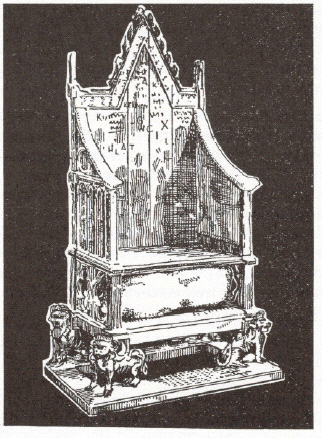
Up until now, Israel has been under the leadership of Moses, Joshua, and a string of judges, including current prophet/judge, Samuel. But some of the elders have decided it’s time for a king. Why? Let’s take a look.

1 Samuel 8; 10:17-24

Why did Israel demand a king?

The cycle of the judges:
Israel was in a cycle in which: they would have a judge for several years and everything would go smoothly for them. throne1God would give them victory in battle (or peace), their harvests would be bountiful, etc. Then, the judge would die, Israel would get into idolatry again, things would go badly for several years, they would cry out to the Lord, the Lord would raise up another judge, and the cycle would start all over again.

Israel likely thought it was the lack of succession from one judge to another that was the cause of all the turmoil, and that if they had a kingship (with built in succession) the chaotic years would cease, and things would go smoothly from there on out. What they failed to realize was that it was their obedience to God that brought peace during the lives of the judges, not a seamless changing of the guard.

The appearance of strength:
Another reason Israel may have wanted a king was that it gave the appearance of strength to other nations. Without a king, neighboring nations probably viewed Israel as weak and vulnerable, leading to more attacks. Of course, this would lead Israel to depend more on the Lord, and that’s exactly what He wanted.

“Everybody else is doing it”:
Finally (8:5), they wanted a king “like all the nations.” Whether this was because they admired the other nations’ structure of government, economy, large armies, etc., or, because Israel wanted to look more prestigious (or stronger- see above) in the eyes of other nations, they were blind to the fact that they would have had things so much better under God’s Kingship.


Why didn’t God want Israel to have a king?

God was already their king.
Israel didn’t need a human king. God was far more capable than any human king of winning battles, providing for them, ensuring a good economy, establishing and enforcing law and order, etc.

God wanted Israel to look to Him for everything.
We tend to look to the President and Congress for worshipgovernance, the grocery store for food, our jobs for paychecks, our doctors for healthcare. God wanted Israel to look to Him for every aspect of their lives: government, provision, health, food, everything. Because He is sovereign over all that happens on earth and in heaven, He wants us to recognize that we should be looking to Him for these things as well. He wants us to realize that we are completely dependent on Him.

Israel’s desire for a king was another rejection of God, which brought Israel ever closer to severe judgment. (Isaiah 28:21, Ezekiel 18:23,32, 2 Peter 3:9)
Even though Israel deserved judgment for her many rebellions against God, judgment is a last, undesirable resort for Him. Isaiah tells us that judgment is God’s “strange work”. Ezekiel reminds us that God takes no pleasure in the death of the wicked. Peter writes that God is not willing that any should perish but that all should come to repentance.

Small rebellions can lead to bigger rebellions. A loving parent knows this and tries to keep this from happening by disciplining his child. With a small rebellion, we might start out with a small discipline, such as taking away dessert. As the rebellions get bigger or more frequent, bigger discipline, stock_scales_justice2such as spanking or grounding might be appropriate.

Most children learn to control their behavior through these moderate forms of discipline, but a few may eventually become so destructive, addicted, or abusive that parents have to go to the extreme end of “tough love” by throwing them out of the house or turning them over to the authorities. It’s all done in love and all in an effort to bring the child home. This is exactly what was happening with the Israelites.

This is why God did everything necessary to keep Israel from His severe judgment. He carefully and specifically laid out the Law, promised them blessings for obedience and described the consequences for disobedience in gory detail, made examples out of people who disobeyed, offered forgiveness for repentance, gave them (initially) good and godly leaders (Moses, Joshua, the judges), and performed miracles to help them believe in Him. All this in an effort to stop their slide into total rejection of Him and the consequence of final judgment.


One last chance (8:10-18)

Israel could never say she hadn’t been warned. In these verses God told them directly and specifically exactly what their new king would be like, how he would treat them, and the consequences that would follow: confiscation of private property, slavery, God turning a deaf ear to their pleas for help. But still they demanded a king. This king God had just described. They were at the point of no return, and they plunged ahead despite the warning. Why?


Hearts of Stone (Ezekiel 11:19, Romans 1:22-25)
Just as a small rebellion can lead to bigger and bigger rebellions, a small hardening of the heart can eventually lead to a complete hardening of the heart.

In the movie Frozen, Elsa (the snow queen), accidentally frozen-anna-elsashoots an icicle ray (or whatever you call it) at her sister’s (Anna) heart, which causes Anna’s heart to slowly begin freezing bit by bit. If Anna doesn’t receive “an act of true love” before her heart completely freezes, she will turn into an ice statue forever.

This is similar to what was happening with Israel. Their continual rebellion was hardening their hearts against God bit by bit, until they would eventually be completely hardened against Him. Romans tells us that when people persist in ungodliness despite the many opportunities for mercy, grace, and salvation God has offered them, He eventually “gives them over” to a hardened heart. He gives them what they want: life without Him.


What does all this have to do with me? (Isaiah 55:9)

Everything. We are just like Israel in so many ways. We’re born into this world having already been shot through the heart with Satan’s “icicle” of sin, the sin nature we inherited from Adam and Eve. We spend our lives rebelling against God, our hearts slowly hardening, bit by bit, looking for another king (usually ourselves), so we can be just like everybody else, because what the world has to offer looks desirable to us.

But God doesn’t want us to have another king, because He’s already THE King, and He’s far better and more capable than any other king we could put on the throne of our lives. He wants us to look to Him for salvation, provision, comfort, strength, everything. So, God extends grace and mercy to us in a variety of ways, some pleasant, some not, to turn us towards the cross and Christ for salvation. He does this so that we can repent and turn to Him instead of facing the final judgment of hell in eternity.

Sometimes, we also see a similarity to Israel’s demand for a king in our prayer lives. We can ask, beg, and plead with God for things He doesn’t want us to have, and even get mad at Him when He doesn’t give us what we want. We must always keep in mind that His ways are higher than our ways and that what He wants for us is always better than what we want. Let us never get to the point in our prayer lives where our will is more important to us than God’s will. Israel’s way was, “No! But there shall be a king over us!” Jesus’ way was, “Nevertheless, not my will, but yours, be done.” Let’s take our example, not from Israel, but from the the King of Israel, King Jesus.

Faith, Justice, Tough Passages

Shall Not the Judge of all the Earth Do What Is Just?

Now therefore, kill every male among the little ones, and kill every woman who has known man by lying with him.

Numbers 31:17

That’s a pretty tough verse, isn’t it?

Married women. Widows. Little boys.

When I read that verse, I think of somebody like me. Or, somebody like my ten year old. It’s hard for me to put myself in a Midianite woman’s sandals and imagine the Israelites coming for my son. My son, who’s basically a good kid, and certainly hasn’t done anything worthy of an army coming after him to execute him.

Do you ever follow criminal trials in the news? With 24-hour news channels and courtroom TV channels, we’ve probably all watched for the verdicts of a few. Have you ever been surprised by a jury’s verdict or a judge’s sentence? Maybe you were certain the defendant was guilty, but the jury acquitted him. Or, you figured a life sentence was a sure thing but only a few years were handed down.

It’s easy to lambaste a judge or jury for making what we consider to be the wrong decision. But, think about it: that judge and jury sat through hours of testimony, legal arguments, instruction on the law, and presentation of evidence. They know much more about the case and all the players in it than we do. They know things we don’t know. And those things we’re ignorant about are likely the very things that led them to make a different decision than we, with our limited knowledge of the case, would have made.

What if your spouse, parent, or best friend had been a juror in one of those cases in which you were appalled at the verdict, and he had voted opposite the way you thought he should have? What if he told you, “Look, I’ve been told not to discuss the case, but, trust me, this was the right decision.”? Would you trust him?

It’s the same way with God.

We come to passages like this one, and our first reaction is righteous indignation. How could God make a decision like this? It seems so unjust. An arbitrary, capricious, and callous verdict. It’s easy to throw stones thousands of years later.

But, if God is God, He is, by definition, absolutely perfect in justice, perfect in love, perfect in mercy, perfect in patience, perfect in wisdom, and perfect in His knowledge of every detail of every situation on earth, ever, including people’s thoughts and intentions. He never makes a wrong decision. If He were lacking one iota in any of these areas, He would cease to be God, and there would be no reason to trust Him.

But He isn’t. So we can.

We generally trust human judges and juries to carry out justice in the cases they’re assigned, despite the fact that we know of cases of judges who have been bribed, juries that have been tampered with, defendants who have been framed, and jurors who vote guilty based on race, sex, status, or some other irrelevant condition.

But God doesn’t fall into any of those categories. He is the perfect Judge, able to mete out perfect justice, because He’s also the perfect eyewitness. He knew everything about the case of the Midianites because He saw each of them, and everything that was going on in the world around them, inside and out.

I can’t say that about my knowledge of this case. Can you?

God’s not discussing the case of the Midianites with us, but, “Trust Me,” He says, “This was the right decision.”

He’s got a pretty good track record of being right. I’m going to trust Him on this one since I don’t know all the details. How about you?

Far be it from you to do such a thing, to put the righteous to death with the wicked, so that the righteous fare as the wicked! Far be that from you! Shall not the Judge of all the earth do what is just?”

Genesis 18:25
Evangelism, Faith, Forgiveness, Gospel, Heaven, Hell, Homosexuality, Legislation, Marriage, Salvation, Sin

From the ERLC: “Your Church and the Same Sex Marriage Decisions”

erlc_logo0501


The ERLC has come out with a helpful fact sheet on the recent Supreme Court decisions on same sex “marriage.” It can be distributed or even used as a bulletin insert at your church, (it’s a free PDF download available in both English and Spanish). Anyone is free to use it– it’s not just for Southern Baptists. It’s really a great resource, so I wanted to share it with you.

I think there’s one point of clarification that needs to be made, though. Under the heading “What Hasn’t Changed,” we find this statement:

“Jesus Christ is still alive, and ultimately will bend history toward His kingdom.”

I read that, then read it again, then turned it over in my mind several times, then tried to recall a verse of Scripture that says anything about Jesus ultimately “bending history towards” His kingdom. Nada. Bupkis. Zilch.

I’m still not exactly sure what the fact sheet writer meant by this phrase. All I can figure (and perhaps I’m misunderstanding his intent) is that he’s referencing Christ’s return and the coming judgment.  When I read Scriptures referencing Christ’s return, I see things like Revelation 19:15:

“From his mouth comes a sharp sword with which to strike down the nations, and he will rule them with a rod of iron. He will tread the winepress of the fury of the wrath of God the Almighty.”

and Matthew 21:44:

“And the one who falls on this stone will be broken to pieces; and when it falls on anyone, it will crush him.”

Not exactly a soft summer breeze gently bending a stalk of golden grain, is it? At least that’s the mental picture I get when I read a phrase like “bending history toward His kingdom.”

Judgment is coming for all of us, lost and saved, regardless of sexual preference. It’s going to be fast and furious and without any second chances to change your mind. The wheat is going to be gathered into the barn and the tares burned up. The sheep are going to be placed on the right, and the goats on the left. Period. End of story. That’s all she wrote.

Sounds scary, doesn’t it?

It should. And that’s a good thing.

As Christians, it should scare us enough for ourselves that we do what 2 Corinthians 13:5 says to do: examine ourselves– our hearts and the fruit of our lives –against Scripture and make certain we are, indeed, saved. (If you’re not sure where to start with that, here’s an excellent tool that I’ve found very helpful.)

It should also scare us for our lost friends and loved ones. It’s a hard, cold, frightening fact, but anyone who does not repent of his sin and place His faith in Christ’s atoning sacrifice for his sin is going to spend eternity in hell when he dies. There’s no Purgatory. There’s no god who just forgives everybody and lets everybody into heaven.

Does that scare you for your children, your parents, your siblings, your spouse, your best friend?

Yeah, me too. And it makes me want to plead with them to repent and believe the gospel so they can escape that terrible fate and we can all spend eternity together with the Lord.

So use these fact sheets at church and share them with your friends. They’re good! They’re informative! But forget the “bending” and remember the sword, the fury, the wrath, and the crushing that are coming, and let them ignite a passion within you to love your lost neighbors enough to plead with them to flee to the cross for cleansing, forgiveness, and eternal life.