Sanctification, Throwback Thursday

Throwback Thursday ~ Six Cliches Christians Could Can (Or at Least Re-think)

Originally Published March 29, 2014


Have you ever noticed we use a lot of expressions without giving much thought to their origin or what they really mean? For example, why do we use the phrase, “in a (pretty) pickle” to mean “experiencing a difficult situation”?

Here are six cliches we often use as Christians that could stand to be replaced or at least re-thought:
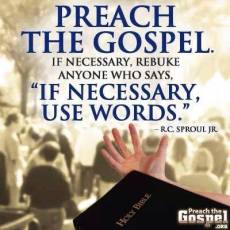
1795610_10153768796270386_733462403_n1. Preach the gospel. If necessary, use words.
It’s necessary. Use words. While our behavior should certainly prove out our testimony, nobody’s going to see us working at a soup kitchen or eschewing barhopping and somehow magically understand that he has broken God’s law and needs to repent and put His faith in Christ’s death, burial, and resurrection for the forgiveness of his sin unto eternal life. That has to be explained. Clearly. By us. From the Bible. With words.

 

tombstone-159792_6402. Rest in peace/God rest his soul
If the person who died was saved, he’s already resting in peace by the time you can get these words out. (2 Corinthians 5:6-8)

If the person who died wasn’t saved, unfortunately, he’s in a place of eternal torment and suffering, and no amount of asking God to rest his soul will give him a respite. Worse, when Christians say this about someone they know was not saved, they reinforce the false idea many lost people have that the dead are “resting” in some sort of spiritual coma, or that they simply cease to exist (annihilationism) , or that everybody automatically goes to Heaven (universalism).

Maybe “I’m praying for you,” or “I’m bringing you dinner,” would be better.

and speaking of which…

 

th3. Sending positive thoughts/energy your way.
Thoughts and energy are not things you can wrap up in brown paper, haul down to the post office, and mail to somebody. You can’t send them and the other person can’t receive them, and they can’t actually accomplish anything, and everybody knows this. But, commendably, atheists, New Agers, and other non-Christians wanted to have something compassionate to say to people who are hurting, and since they can’t say, “I’m praying for you,” this is the best they can do.

Christians, we’ve got something better. We can say, “I’m praying for you.” We have an open line to the almighty God of the universe who is listening to us and can actually do something about the situation. Pray for that hurting person. Put your arms around her. Listen to her. Do whatever you can to help. Show her Jesus, not empty words.

 

RNR084. Christianity isn’t a religion, it’s a relationship.
The only people running around today saying that Christianity is not a religion are Christians. Everybody else in the world considers Christianity a religion. And up until this little humdinger materialized, so did Christians.

Usually, what people mean by this is that true Christianity is not an institutionalized system of rote obedience to dead and meaningless rituals. It’s a reconciliation with the only true God by means of being redeemed by His Son, Jesus Christ, who propitiated and expiated God’s wrath against us in our sin through His death, burial, and bodily resurrection, and is, therefore, a dynamic and living interpersonal relationship.

But that’s too long to fit into a tweet or a hashtag.

Our relationship with God through Christ is our religion- the only true religion. And that’s not a bad thing.

 

ttgpt231112b5. Don’t judge someone just because he sins differently than you do.
I find this one confusing, but I think the sentiment behind this is something along the lines of, “I may be an adulterer, but you’re not any less of a sinner just because you only tell the occasional white lie.  Therefore, you have no right to call me to repentance.”

This is a lovely casserole of simultaneous truth and falsehood, and it all hinges on the word “judging,” which has been tossed around so much that even Christians scarcely know what it means anymore. No, we’re not to berate someone for his sin while pompously pretending we’re sin-free. All have sinned, after all, and if we say we have no sin, we lie. But does that mean we should never call anyone to repentance? Of course not! We’re to walk in repentance ourselves and seek to help the lost find forgiveness in Christ and help our Christian brothers and sisters who have fallen into sin to be reconciled to Christ. Scripture doesn’t say we can never call people out of sin because we have a log in our own eye. It says first remove the log and then help your brother.
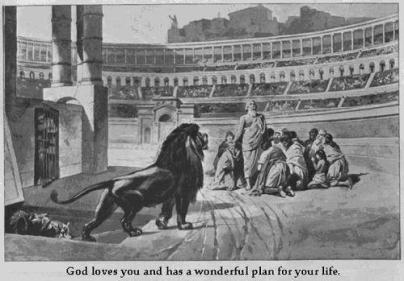
 

69475_10102578902186220_955102342_n6. God loves you and has a wonderful plan for your life.
This is actually true, it’s just that our idea of a “wonderful plan” doesn’t always match up with God’s idea of a “wonderful plan”.

Our desire is to be healthy, wealthy, and blissfully comfortable with never a family problem, fender bender, lost love, or bankruptcy. God’s desire is for us to be holy. He wants to root the sin out of our lives, show us how to be completely dependent on Him, lead us to trust Him more, build our character and endurance, give us boldness to share the gospel, make us kinder and more merciful, teach us what it means to extend grace and forgive. Most of those lessons are learned only through hardship and suffering. Just ask the apostles or the early church martyrs or our brothers and sisters being persecuted across the globe today.


What are some expressions Christians commonly use that you think we should replace or re-think?

Sanctification

Six Cliches Christians Could Can (Or at Least Re-think)

Have you ever noticed we use a lot of expressions without giving much thought to their origin or what they really mean? For example, why do we use the phrase, “in a (pretty) pickle” to mean “experiencing a difficult situation”?

Here are six cliches we often use as Christians that could stand to be replaced or at least re-thought:

1795610_10153768796270386_733462403_n1. Preach the gospel. If necessary, use words.
It’s necessary. Use words. While our behavior should certainly prove out our testimony, nobody’s going to see us working at a soup kitchen or eschewing barhopping and somehow magically understand that he has broken God’s law and needs to repent and put His faith in Christ’s death, burial, and resurrection for the forgiveness of his sin unto eternal life. That has to be explained. Clearly. By us. From the Bible. With words.


tombstone-159792_6402. Rest in peace/God rest his soul
If the person who died was saved, he’s already resting in peace by the time you can get these words out. (2 Corinthians 5:6-8)

If the person who died wasn’t saved, unfortunately, he’s in a place of eternal torment and suffering, and no amount of asking God to rest his soul will give him a respite. Worse, when Christians say this about someone they know was not saved, they reinforce the false idea many lost people have that the dead are “resting” in some sort of spiritual coma, or that they simply cease to exist (annihilationism) , or that everybody automatically goes to Heaven (universalism).

Maybe “I’m praying for you,” or “I’m bringing you dinner,” would be better.

and speaking of which…


th3. Sending positive thoughts/energy your way.
Thoughts and energy are not things you can wrap up in brown paper, haul down to the post office, and mail to somebody. You can’t send them and the other person can’t receive them, and they can’t actually accomplish anything, and everybody knows this. But, commendably, atheists, New Agers, and other non-Christians wanted to have something compassionate to say to people who are hurting, and since they can’t say, “I’m praying for you,” this is the best they can do.

Christians, we’ve got something better. We can say, “I’m praying for you.” We have an open line to the almighty God of the universe who is listening to us and can actually do something about the situation. Pray for that hurting person. Put your arms around her. Listen to her. Do whatever you can to help. Show her Jesus, not empty words.


RNR084. Christianity isn’t a religion, it’s a relationship.
The only people running around today saying that Christianity is not a religion are Christians. Everybody else in the world considers Christianity a religion. And up until this little humdinger materialized, so did Christians.

Usually, what people mean by this is that true Christianity is not an institutionalized system of rote obedience to dead and meaningless rituals. It’s a reconciliation with the only true God by means of being redeemed by His Son, Jesus Christ, who propitiated and expiated God’s wrath against us in our sin through His death, burial, and bodily resurrection, and is, therefore, a dynamic and living interpersonal relationship.

But that’s too long to fit into a tweet or a hashtag.

Our relationship with God through Christ is our religion- the only true religion. And that’s not a bad thing.


ttgpt231112b5. Don’t judge someone just because he sins differently than you do.
I find this one confusing, but I think the sentiment behind this is something along the lines of, “I may be an adulterer, but you’re not any less of a sinner just because you only tell the occasional white lie.  Therefore, you have no right to call me to repentance.”

This is a lovely casserole of simultaneous truth and falsehood, and it all hinges on the word “judging,” which has been tossed around so much that even Christians scarcely know what it means anymore. No, we’re not to berate someone for his sin while pompously pretending we’re sin-free. All have sinned, after all, and if we say we have no sin, we lie. But does that mean we should never call anyone to repentance? Of course not! We’re to walk in repentance ourselves and seek to help the lost find forgiveness in Christ and help our Christian brothers and sisters who have fallen into sin to be reconciled to Christ. Scripture doesn’t say we can never call people out of sin because we have a log in our own eye. It says first remove the log and then help your brother.


69475_10102578902186220_955102342_n6. God loves you and has a wonderful plan for your life.
This is actually true, it’s just that our idea of a “wonderful plan” doesn’t always match up with God’s idea of a “wonderful plan”.

Our desire is to be healthy, wealthy, and blissfully comfortable with never a family problem, fender bender, lost love, or bankruptcy. God’s desire is for us to be holy. He wants to root the sin out of our lives, show us how to be completely dependent on Him, lead us to trust Him more, build our character and endurance, give us boldness to share the gospel, make us kinder and more merciful, teach us what it means to extend grace and forgive. Most of those lessons are learned only through hardship and suffering. Just ask the apostles or the early church martyrs or our brothers and sisters being persecuted across the globe today.


What are some expressions Christians commonly use that you think we should replace or re-think?

Obedience, Old Testament, Sovereignty of God, Sunday School

David and God’s Big Picture ~ Sunday School Lesson ~ 5-11-14

sunday school

These are my notes from my ladies’ Sunday School class this morning. I’ll be posting the notes from my class here each week. Click here for last week’s lesson.

Through the Bible in 2014 ~ Week 19 ~ May 4-10
1 Chronicles 13-18, 2 Samuel 5:11-9, Psalm 1-2, 15, 22-25, 47, 68, 89, 96, 100-101, 105, 132, 29, 33, 36, 39, 50, 53, 60, 75
David and God’s Big Picture

2 Samuel 7/1 Chronicles 17
This passage is the institution of the Davidic covenant: God’s promise to establish the throne of David forever through the eventual birth and reign of Jesus. God, in His sovereignty, had a plan that David was part of. A plan with farther reaching impact than just David’s life. But God’s call on David’s life was the same as His call on our lives: to love and serve Him faithfully wherever He has put us.

crown-and-thorns

2 Samuel 5:12
Right from the beginning of David’s reign, he recognized two very important things about his life that we should also recognize:

1. God is sovereign (1 Samuel 16:1-13, 1 Peter 2:9).
It was God who had made David king over Israel, not anything intrinsically worthy in David himself. Remember that when God chose David to be king back in 1 Samuel 16, David was just a shepherd in his late teens or early 20s. Nothing special. Just an average guy. In fact, God told Samuel not to pay attention to outward signs of “specialness” in David’s older brothers. He had his own reasons for choosing David.

In the same way, when God calls us out of darkness and into His marvelous light (1 Pet.) for salvation, it’s not because there’s anything intrinsically good in us. In fact, everything’s bad about us because we are drenched in sin. But for His own reasons, whatever they are, God has called us out to save us.

2. David’s life was not his own (1 Corinthians 6:19-20, Matthew 20:28)
The second half of this verse does not say that “David knew… that the Lord had…exalted his kingdom” so David would be happy or comfortable or have a life of purpose. God established David’s kingdom “for the sake of His people Israel.” While God certainly blessed David along the way, God is about God. His main objective is His plans, His purposes, and His glory, not our happiness and contentment. This, of course, doesn’t mean He doesn’t care about us individually—far from it!

blurry-sky-cross1 Corinthians tells us our lives are not our own because we were bought with a price (the blood of Christ). We no longer belong to Satan, slaves of our sinful natures, living to gratify our own desires, pawns in his plan of trying to thwart God’s will. We belong to God to use as He sees fit for His plans and purposes.

One of the pitfalls of the American mindset is that it has taught us to focus on ourselves as individuals, often to the exclusion of what is good for our neighbors, our community, our state, nation, and world. We think in terms of “my rights,” “my enjoyment,” and “How will this affect me?” (Just so you know, I’m not a communist or a socialist when it comes to government. I’m just talking about this “me-centered” mentality.) This crosses over into our Christian lives. We often get so focused on our own lives, what we think God is or isn’t doing in them or with them, and how whatever He is doing is affecting us personally, that we forget that God has a huge plan for the entirety of human history and the universe. Whatever He’s up to right now may be about someone else, not you or me. We need to be more aware of God’s “big picture.”

As with David, God gives us our authority and circles of influence for the good of others, to bless them and serve them, even as Jesus came, not to be served but to serve, and to give His life for others (Matt. 20). The good news is that when we are on board with this, we get something much better than fleeting things like earthly happiness and comfort. We get eternal joy, peace, and a glimpse of the glory of God as we obey and cooperate with His plan.

You can’t always get what you want (2 Samuel 7:1- 7, 1 Samuel 13:14)
Because our lives are not our own, cooperating with God’s big picture plans sometimes means that we don’t get to do what we want to do, even if what we want to do is good and godly.

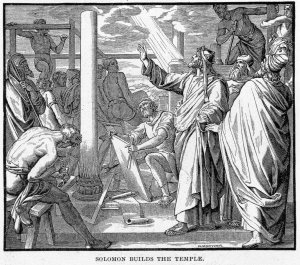
www-St-Takla-org--110--Solomon-Builds-the-Temple-3David was a “man after God’s own heart.” He loved the Lord and wanted to thank and honor Him by building Him a temple. What he wanted to do was an honorable and worshipful thing, and the motives of his heart were pure. But that was not the role God wanted David to play in the unfolding of His plan, nor was it the right time. The person God wanted to fulfill that part of His plan, at a later time, was Solomon.

As we discussed last week, seeking godly counsel is an important part of making godly decisions. David did this by consulting Nathan, the prophet. However, praying and asking for God’s guidance and wisdom is also essential before taking on something like building a temple, and both David and Nathan neglected to do so.

Graciously, even though they hadn’t come to God, God came to Nathan and explained things. God pointed out that in all this time, He had never asked anyone to build Him a permanent house. God had been just fine in a tent up to this point, and would be just fine until He decided it was time for Solomon to build the temple.

Sometimes, even if something is godly and part of God’s plan, He wants someone else to do it.

But you can always get what you need (2 Samuel 7:8-17, Luke 2: 26-33)
What David needed and what we need, is to be faithful and obedient to God wherever He has placed us. This doesn’t mean God will necessarily have us in the same place all our lives (though He might). After all, He took David from shepherd to warrior to king. But David served God faithfully in each of those positions for as long as God had him in those positions.

Ultimately, the role God wanted David to play in His plan was to be the king through whom God initiated the Davidic Covenant. Though David sought to build God a house, it was God who would build David a house (11, Luke 2). It would be an eternal house, first through his descendants who would be temporal kings, and, finally, through the Messiah, Jesus, who would reign forever and whose kingdom would know no end.

David’s Response (2 Samuel 7:18-29)

Humility (18-20)
David was overwhelmed by the fact that, though he wanted to do something big for God, God was going to do something big through him.

Exaltation (21-24)
David again recognized that it was God’s sovereignty that brought all this about, not his own awesomeness (21). He praised God’s greatness, holiness, and superiority to all else (22). He recounted God’s mighty deeds of the past and how He glorified Himself through His chosen people, Israel (23-24)

I’m in! (25-29)
David didn’t express doubt or hesitate to jump in with both feet. He didn’t whine that what he really wanted to do was build the temple. He embraced God’s plan obediently and joined in thankfully and wholeheartedly.

David glorified God for His “macro” plan (25-26) – the coming of the Messiah and everything leading up to it – and also for His “micro” plan (27-29) – realizing that if he cooperated with God’s plan, he and his family would be blessed along the way. Notice that David (29) did ask for God to bless his house and descendants, but not for personal/family gain. He asked that God would bless his family to fulfill and cooperate with God’s plan.

When God places us in any situation, whether blessing or hardship, our response should mirror David’s. We should be obedient to God, never stepping outside of His word to pursue things He doesn’t want for us, even if they seem godly. And, with humility and praise, we should embrace God’s plan, cooperating with Him joyfully.

What about all the non-Davids? (Exodus 12:37, Mark 7:37, 1 Thessalonians 4:9-12)
Sometimes when we read the Bible, we come to stories like David, Moses, Joshua, Noah, and Paul, and we can get the impression that God calls everyone to do great big things for Him as part of his plan. We tend to forget that when the Israelites left Egypt, there were likely 1.5 to 2 million of them. And only one Moses. By David’s time, there were likely several million Israelites. And only one David. What about the millions of Israelites who were born, grew up, got married, went to blue collar jobs every day, and died, having the-israelites-withoutlived lives of quiet faithfulness to God but never having had God make a covenant with them or being called to kill a giant or part a sea? Did God love them less? Value their love for Him less?

Why does God use some people in big, visible, fame-creating ways, and some in invisible ways? The answer, as is often the case when we’re dealing with God is, “I don’t know.” That’s one of the things that makes Him God and us not God. It’s his business, not ours. We trust that He does all things well (Mark 7) and that when He says that we are to “live quietly, and to mind your own affairs, and to work with your hands” (1 Thess. 4), He means it, and that lives of quiet faithfulness are precious in His eyes.


God has a plan. All of us who are His children have a part to play in that plan. Our part, whether big and visible or quiet and invisible, is to love and trust Him more each day and live obediently and faithfully wherever He places us.