
In Case You Were Wondering

Is 2 Chronicles 7:14 God’s Promise to American Christians Today?

Is 2 Chronicles 7:14 God’s promise to American Christians today?

“if my people who are called by my name humble themselves, and pray and seek my face and turn from their wicked ways, then I will hear from heaven and will forgive their sin and heal their land.”
2 Chronicles 7:14

This verse is often quoted as a call to prayer and revival for American Christians, suggesting that if we pray, repent, and humble ourselves, God will turn America around and make it โ€œone nation under Godโ€ again. Since the 4th of July is coming up, you’ll probably be seeing this verse all over social media, but is it really a promise to us today about America?

Not this particular verse, no. Here’s why:

1. This verse is only part of a sentence (you can tell by the way it starts with a lowercase letter). In order to rightly handle God’s word (2 Timothy 2:15), it’s imperative that we consider a verse’s immediate context as well as the way it fits in with the big picture of the entire Bible. Even adding just verses 13 and 15 shows us that this verse was written about Old Testament Israel, not America. Reading all of chapter 7 sheds even more light on this verse, and if we throw in chapter 6, especially 6:26-31, we can clearly see that 7:14 is part of God’s specific answer to Solomon’s prayer at the dedication of the temple.

2. There are no supporting Scriptures in the New Testament (remember, Believers are in the church era under the new covenant of grace) that imply that if Christians humble themselves and repent that God will give them a nation governed by biblical laws and leaders and that we will have a society that behaves itself, morally. In fact, in the New Testament, in the early church, we see the exact opposite. The more the church prayed, humbled itself, and spread the gospel, the more Rome persecuted Christians. And yet, we never hear of them claiming 2 Chronicles 7:14 as Godโ€™s promise to them that He would turn things around if they would only humble themselves and seek His face more. The New Testament, even Jesus Himself, says that we will be persecuted for godly living (John 15:20, Matthew 10:22, 2 Timothy 3:12-13).

3. We canโ€™t claim the promise without claiming the punishment. Look again at verse 13. It specifies that pestilence and the agricultural hardships of drought and locust infestation are the ones that God promises to heal. It is a promise of literal healing of the land so that crops will grow unharmed, game will be plentiful, and people will be healthy and able to eat, not a promise of a metaphorical โ€œhealingโ€ of a nationโ€™s immorality.

If we claim that this โ€œhealing of the landโ€ applies to us today, then we also have to claim that God will punish our disobedience with those very things He promises to heal (drought, locusts, and pestilence), because thatโ€™s what these verses are talking about.

4. The reason this passage sounds like it applies to us is because there are some principles in this verse that do apply to us. How do we know? Because they are supported by other clear and direct Scriptures:

Are we Godโ€™s people who are called by His nameโ€? Yes (Acts 11:26)

Should we humble ourselves? Yes (1 Peter 5:6)

Should we pray and seek Godโ€™s face? Yes (1 Thessalonians 5:17)

Should we turn from any wicked ways we practice? Yes (Acts 3:19)

Will God hear from Heaven if we do these things? Yes (1 John 5:14-15)

Does God promise to heal our land of bad morals or the agricultural problems He has punished our disobedience with if we do these things? No.

Asking God to fulfill His promises and thanking Him for those already fulfilled is a wonderful and worshipful way to pray. But, if we truly want to pray โ€œin the name of Jesusโ€ and pray rightly for Godโ€™s will to be done, we must use wisdom, discernment, and the tools God has given us to discover exactly what He has promised us.


Additional Resources:

Properly Praying the Promises

What is the meaning of 2 Chronicles 7:14? at Got Questions?
In Case You Were Wondering

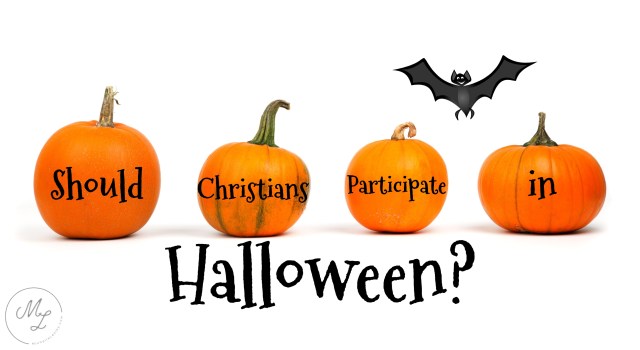
Should Christians Participate in Halloween? 7 Scriptures to Consider

(This article, originally written October 24, 2014, is periodically updated.)

I have re-run this article every year for ten years. And every year, people who call themselves Christians fly into a rage and say all sorts of verbally abusive things to and about me simply because I don’t call down fire from Heaven upon everything about October 31 outside of locking yourself in your home with the lights turned off.

It’s been ten years. It should be obvious by now that I’m not going to do that. My reasons should also be obvious from even a casual reading of the article. But since reading comprehension skills seem to be on life support these days, let me attempt to spell it out as clearly as possible:

  • There is a difference between the words participate and celebrate. Take a moment to ponder that difference. Then, read the article and notice I’ve used the word “participate” (referring to Christians) throughout.
  • Whether you like it or not, there are non-sinful aspects of, and activities surrounding Halloween. Many of these include evangelism. Evangelism is never sinful. If you condemn Christians for sharing the gospel on Halloween or any other day, you need to follow 2 Corinthians 13:5‘s admonition to examine yourself and see if you are in the faith.
  • As I stated in the article, participating in non-sinful aspects of Halloween (or pretty much anything else) is an issue of Christian liberty. If you don’t know what that is, you need to learn (see the “Additional Resources” section at the end of the article). Scripture does not permit you to bind other Christians’ consciences to yours.
  • Perhaps you, years ago, already studied the relevant Scriptures, prayed through the issue, and arrived at a godly and wise decision about Halloween for your family. That doesn’t mean every other Christian has. There are new Christians, and Christians who have only recently been brought by God to the place in their sanctification where they now realize they need to think this issue through biblically. This article is a teaching and discipleship moment for those Christians. The biblical way to make decisions is not to make a knee-jerk determination based on what I (or anyone else) have decided according to my conscience. The biblical way is to search the Scriptures, pray for wisdom, and then make the most godly decision possible according to your own conscience. That is the purpose of this article. Give people the space and the grace to do that.
  • After ten years, I have heard all the legalistic lambasting I can take on this subject, and no one is coming up with any unique arguments. Therefore (per policy), I will not be reading or publishing legalistic (or antinomian, for that matter) rants or verbally abusive comments here or on my social media platforms, and such emails and social media messages will be immediately deleted without response.

For more, listen in to this episode of The Plumb Line radio show, Halloween with Michelle Lesley, which is based on the following article.

Should Christians participate in Halloween? 

Since there is no specific Bible verse that says, “Thou shalt/shalt not participate in Halloween and its related activities,” this is an area of Christian liberty that must be decided by each individual or couple on the basis of scriptural principles and prayer. If there are non-sinful Halloween activities available to you that do not violate scriptural principles or your conscience or cause you to become a stumbling block to someone weaker in the faith (which may even be your spouse or child), you are free to participate in those aspects of Halloween.

(Please understand that when I say “Halloween-related activities,” I am including things like handing out candy and tracts to your neighborhood trick-or-treaters, participating in your church’s trunk or treat {assuming no sin is being committed and the gospel is being shared}, etc.)

Here are some Scriptures and principles that may be of help as you make your decision:

1 Corinthians 10:23:
“All things are lawful,โ€ but not all things are helpful. โ€œAll things are lawful,โ€ but not all things build up.

Is it helpful? Does it build you/your family up?

1 Corinthians 10:24-30:
Let no one seek his own good, but the good of his neighbor. 25 Eat whatever is sold in the meat market without raising any question on the ground of conscience. 26 For โ€œthe earth is the Lord’s, and the fullness thereof.โ€ 27 If one of the unbelievers invites you to dinner and you are disposed to go, eat whatever is set before you without raising any question on the ground of conscience. 28 But if someone says to you, โ€œThis has been offered in sacrifice,โ€ then do not eat it, for the sake of the one who informed you, and for the sake of conscienceโ€” 29 I do not mean your conscience, but his. For why should my liberty be determined by someone else’s conscience? 30 If I partake with thankfulness, why am I denounced because of that for which I give thanks?

Who is watching what your family does? Are you serving your neighbor and drawing him closer to Christ by the activities you participate in?  

1 Corinthians 10:31:
So, whether you eat or drink, or whatever you do, do all to the glory of God.

Are you glorifying God by participating in the activity you’re considering?

Philippians 4:8:
Finally, brothers, whatever is true, whatever is honorable, whatever is just, whatever is pure, whatever is lovely, whatever is commendable, if there is any excellence, if there is anything worthy of praise, think about these things.

Does the activity exemplify and cause you to think about things that are pure, lovely, etc.?

Ephesians 5:11-12-
Take no part in the unfruitful works of darkness, but instead expose them. 12 For it is shameful even to speak of the things that they do in secret.

Is the activity spiritually unfruitful, a work of darkness, shameful? Are you taking part in evil or exposing it?

Isaiah 5:20:
Woe to those who call evil good and good evil, who put darkness for light and light for darkness, who put bitter for sweet and sweet for bitter!

Does the activity celebrate, honor, or make light of sin, evil, and darkness?

1 Corinthians 15:54b-55:
Death is swallowed up in victory.โ€
โ€œO death, where is your victory?
O death, where is your sting?โ€

Christ died to put death to death. Does the activity you’re considering glorify death?


Additional Resources:

Christian Liberty at A Word Fitly Spoken

Christian Liberty with Michelle Lesley at Echo Zoe Radio

Christians: When Halloween Comes Knocking at A Word Fitly Spoken

Halloween Statement for Christians by Marcia Montenegro

Should Christians Celebrate Halloween? from Answers in Genesis

Halloween and the Gospel of Life from Answers in Genesis

Halloween Articles from Answers in Genesis

Should Christians Celebrate Halloween from Got Questions

If your church is planning a trunk or treat, or any outreach event ever, really, or even if your church just ever has visitors, please read this X post from Eric and remember that hospitality isn’t just providing food, a venue, and an event, it’s welcoming others as Christ welcomes us.

In Case You Were Wondering

In Case You Were Wondering: Should Christians Participate in Boycotts?

Boycott

Ladies- if you havenโ€™t joinedย Satisfaction Through Christโ€™s Community Group on Facebook, Iโ€™d like to encourage you to do so. Itโ€™s a great group for Christian women. One of our weekly features isย Tough Questions Tuesday. Each week, I answer a tough biblical or spiritual question sent in by one of our readers. From time to time, Iโ€™ll be reprinting those questions and answers here under the title,ย In Case You Were Wondering.

Should Christians boycott businesses or charities that financially support abortion, homosexual marriage, or other unbiblical things?

This question has gotten a lot of attention lately because of the ice bucket challenge and the ALS charity that funds embryonic stem cell research. I think whether or not to boycott a business or charity is something every Christian needs to decide for herself based on Scripture and her own conscience. Some good Scriptures to study to help with your decision are 1 Corinthians 8 and 10:23ff, and Romans 14:5-12.

Since there’s no one right answer to this question, I’d like to just share with you how I have come to handle it in my life, in case it might be helpful.

I used to do boycotts (I was on an e-mail list that was basically a constant call to boycott this or that business), but it got to the point where there were so many companies and subsidiaries of those companies that donate here and there to unacceptable causes that it was impossible to track all of them down and keep up with them all. Since I would have felt like a hypocrite for boycotting one company but not another, I amended my “policy” on boycotting:

1. I don’t boycott places where I get necessities for my family–phone company, grocery stores, gas stations, etc. If there were a very big public splash about one of these places supporting something unacceptable and I had another option, I might reconsider a boycott.

2. If there’s an alternative to a “boycottable” business, I take it. For example, I would not donate to Komen because they support Planned Parenthood, but I might donate to another cancer/breast cancer charity that doesn’t.

3. If it’s not a necessity and there’s no alternative, I probably wouldn’t donate/buy/shop there. For example, within the last 5 years, Starbucks has, among other very publicized pro-homosexuality actions, filed a brief against DOMA (the Defense of Marriage Act) and worked to support legislation in Washington state to legalize same sex “marriage.” Starbucks isn’t a necessity, and if there weren’t an alternative coffee place in my area, I would just do without. (Full disclosure- Starbucks is expensive and several miles from my house. My coffee maker is cheap and only several yards from my bed. So, I don’t go to Starbucks, but it’s because I’m broke and lazy, not because I’m boycotting.)

My way isn’t the perfect way, and there’s probably still some hypocrisy in it that I can’t see or reconcile, but it works for me.

For further reading:
Should Christians boycott companies that support anti-Christian policies? from Got Questions
Should Christians Boycott Boycotting?ย from The Gospel Coalition

Do you boycott any businesses for certain reasons?
How did you arrive at your decision to boycott?