Idolatry, Old Testament, Sunday School, Worship

Israel Is Exiled ~ Sunday School Lesson ~ 7-20-14

PicsArt_1405907394797

These are my notes from my ladies’ Sunday School class this morning. I’ll be posting the notes from my class here each week. Click here for last week’s lesson.

Through the Bible in 2014 ~ Week 29 ~ July 13-19
2 Chronicles 27-31, Isaiah 9-27, Micah, 2 Kings 16-18:8, Psalm 48
Israel is Exiled

2 Kings 17:1-20
Second Kings 17 is sort of the “Cliff Notes” version of Israel’s era of the kings. We have read about each king of Israel, all of whom “did what was evil in the sight of the Lord.” Second Kings 17 sums up the effect these evil kings had on Israel’s relationship with God and the consequences for their idolatry.

Israel’s Sin
The sin that brought God’s judgment upon Israel was idolatry. Israel participated in idolatry in two different ways, usually at the same time:

They worshiped false gods instead of the true God. (12,16-17)
As Israel got to know her pagan neighbors, she began to worship some of their false gods such as Ashera, Baal, Molech, and the stars and planets. This was expressly forbidden by God in the 10 Commandments and throughout the Old Testament. While other nations often worshiped many gods, Israel was to be holy and set apart to the one true God and serve only Him.

They worshiped the true God in false ways. (16, 1 Corinthians 14:40, 2 Corinthians 9:7, 1 Corinthians 5, 1 Timothy 2:12-14, 1 Timothy 3, Titus 1, 1 Corinthians 11:17-33)
You will recall the two golden calves Jeroboam had set up in the north and south for the people to worship. He wanted to keep the Israelites from traveling out of Israel into Judah to worship at the temple because he did not want the people to turn their loyalty back to the throne of David. So he took the worship and festivals God had set up for Himself and transferred them to these two calves. The calves were basically a stand in for God.

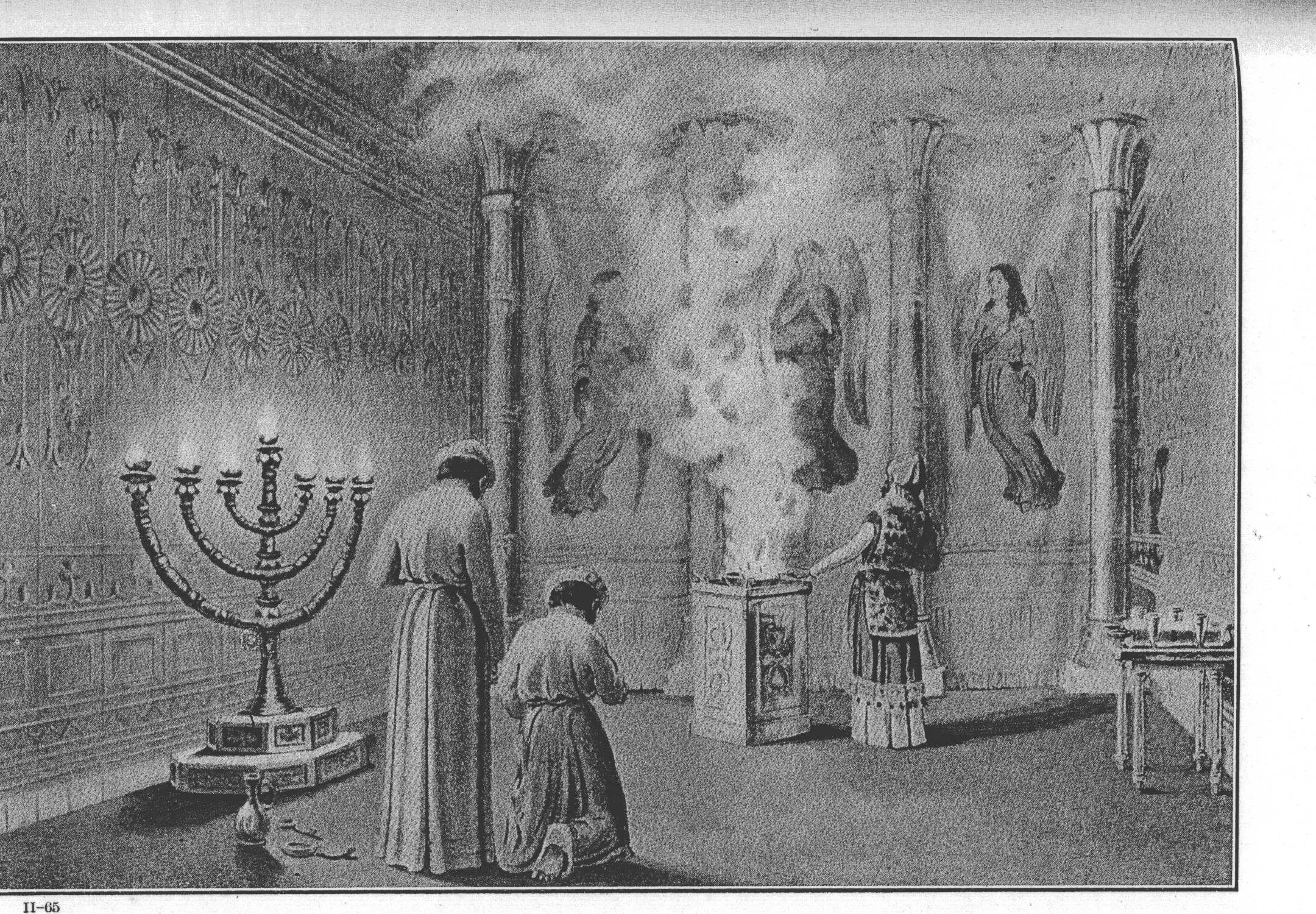
God was very specific about how, when, and where He was to be worshiped. When we studied Exodus and Leviticus, we saw hundreds of instructions about God’s house, the utensils, the men who served as priests and Levites, the offerings and sacrifices, cleansing rituals, and on and on. God requires that He be worshiped in certain ways. His ways. He did not leave it up to His people to worship Him freestyle.

Even today, God has given us specific instructions about worship that we are to obey. For example, He tells us that, in the church, all things are to be done decently and in order (1 Cor. 14), that we are to give our offerings cheerfully and not reluctantly or under compulsion (2 Cor. 9), that we are to discipline, not tolerate, unrepentant sin in the church (1 Cor. 5), that women are not to instruct or hold authority over men in the church (1 Tim. 2), the qualifications for pastors and elders (1 Tim. 3, Tit. 1), instructions about the Lord’s Supper (1 Cor. 11), and so many more things. Although God has given us freedom in some areas of worship, as long as they do not violate any specific instructions He has given us (music style, order of service, what we wear to church, etc.), He has not turned us loose to worship Him in any way we please. We must be careful not to do this as the Israelites did.

God’s Patience (1 Peter 3:20, 2 Timothy 4:1, 2 Peter 3:9, Romans 2:4, 2 Corinthians 6:2)
After Solomon died, Israel and Judah split into two separate kingdoms. In the 209 years between Solomon and the exile (931-722 B.C.), Israel had twenty kings, all of whom participated in and promoted idol worship among the people of Israel. During that time period, God sent at least seven prophets (Ahijah, Jehu, Elijah, Micaiah, Elisha, Amos, and Hosea) to warn Israel to turn back from her idolatry and the consequences if she would not. Two hundred and nine years. That’s a lot of chances God gave His people to repent and turn back to Him.

God has a track record of patience. First Peter 3:20 tells us “God’s patience waited in the days of Noah, while the ark was being prepared.” God stayed His hand of judgment for 120 years while Noah was building the ark, preaching repentance with every swing of the hammer. In His mercy, God was giving the people of Noah’s day a chance to repent and turn to Him before the flood, but none did, except Noah’s family.

In the same way, God has been patient with mankind for the last 2000+ years since He provided the way of salvation for us through Jesus.

Second Timothy 4:1 tells us that Christ will return to judge the living and the dead, but what’s taking Him so long?

Second Peter 3:9 says: “The Lord is not slow to fulfill his promise as some count slowness, but is patient toward you, not wishing that any should perish, but that all should reach repentance.”

He wants everyone to turn to Him in repentance, but we are not to take advantage of His patience and continue in sin. Romans 2:4 says, “Or do you presume on the riches of his kindness and forbearance and patience, not knowing that God’s kindness is meant to lead you to repentance?”

“For he says, ‘In a favorable time I listened to you, and in a day of salvation I have helped you.’ Behold, now is the favorable time; behold, now is the day of salvation.” (2 Corinthians 6:2). In the same way that Israel should have repented immediately because they didn’t know how long God’s patience with them would last, we must turn to Him now instead of later because we do not know when He is coming back. And once He does, it will be too late for those who have not put their trust in Christ.

God’s Judgment (18-20)
God’s time of patience with the ungodly always comes to an end. It happened with Noah, and here we see it happening with Israel. God’s judgment fell upon Israel. He allowed them to be torn apart by enemy nations, and, finally, exiled from the Promised Land to Assyria. Judah held out for a while with a few good kings, but eventually, she followed in Israel’s footsteps and was exiled to Babylon in 605 B.C.

But even in exile, there were those few faithful Israelites and Judahites whom God saved: Daniel, Nehemiah, Esther, Ezra, and many others whose names we don’t know. Today, despite persecution and rampant sin in the visible church, God is still preserving a remnant of Christians who are faithful, whom He will preserve when He brings the final judgment upon the earth. Until that time, the words of Jesus are just as relevant today as when He said them 2000 years ago:

“The time is fulfilled, and the kingdom of God is at hand; repent and believe in the gospel.” Mark 1:15


Discernment, False Teachers, Idolatry, Old Testament, Sunday School

Micaiah: True Prophet vs. False Prophets ~ Sunday School Lesson ~ 7-6-14

Photos courtesy of cristoraul.com, Joyce Meyer Ministries, TD Jakes Ministries, and TBN
Photos courtesy of cristoraul.com, TBN, Joyce Meyer Ministries, and TD Jakes Ministries

These are my notes from my ladies’ Sunday School class this morning. I’ll be posting the notes from my class here each week. Click here for last week’s lesson.

Through the Bible in 2014 ~ Week 27 ~ June 29- July 5
1 Kings 22-2 Kings 13, 2 Chronicles 18-24, Obadiah, Psalm 82-83
Michaiah: True Prophet vs. False Prophets

1 Kings 22:1-40

Setting the Stage
Ahab was one of the most wicked kings ever to sit on the throne of Israel. The previous chapter (21:25) says “There was none who sold himself to do what was evil in the sight of the Lord like Ahab”. He has just been confronted by Elijah for his numerous abominations, and has humbled himself and repented.

Getting back what’s mine (1-4, 20:34)
Israel had had peace for three years, but it was bothering Ahab that Syria still had control of the city of Ramoth-gilead, when Ben-hadad (Syria’s king) had promised to return all of the cities Syria had captured during his father’s reign as part of his terms of surrender (20:34). Ahab asked Judah’s king, Jehoshaphat, to join him in recapturing the city, and Jehoshaphat agreed.

Not just any prophet will do (5-12, 18:1ff, 20:26)
Jehoshaphat was a godly man and knew that the right thing to do would be to inquire of the Lord before going into battle. Why do you think Ahab didn’t suggest this? What do we know about Ahab’s walk with the Lord? We know from 20:26 that he was an idolator, from chapter 18 that he was a Baal worshiper and had led Israel into Baal worship, and that he also supported the golden calf worship centers that Jeroboam had set up. So, when Ahab summoned 400 of his favorite prophets in order to appease Jehoshaphat, do you think they were true prophets of the Lord, or false prophets of idolatry? They were false prophets.

Tell him what he wants to hear
Was Ahab’s desire to hear and obey the word of the Lord? Was it the desire of the 400 prophets to truly hear and accurately report the word of the Lord? We can answer a resounding “no” to both questions. Ahab’s desires were, a) to hear what would make him happy, b) to make Jehoshaphat happy by granting his request and calling up so called “prophets of the Lord” and c) for Jehoshaphat to hear that they wold be successful so that Jehoshaphat would agree to go into battle with him. The “prophets'” desire was to keep the king happy and thus stay alive and prosper in their positions.

How do you spot a false prophet?
The 400 prophets certainly seemed to be prophets of the Lord. They brought a positive, encouraging message and made Ahab happy. Zedekiah (11) even prefaced his message with “Thus says the Lord,” the same words all true prophets of the Lord used. And all the prophets predicted triumph and that the Lord would give the battle into the king’s hand, words spoken on many previous occasions to other kings by true prophets of the Lord. So, why would Jehoshaphat think these were not true prophets of the Lord?

1. Where they were coming from (Deuteronomy 13:1-5)
Jehoshaphat knew that these guys were coming from a temple to a false god, even if they called those golden calves “God”. They were idolators so they were breaking God’s law in word and in practice. Deuteronomy 13:1-3a, 5a says:

If a prophet or a dreamer of dreams arises among you and gives you a sign or a wonder, and the sign or wonder that he tells you comes to pass, and if he says, ‘Let us go after other gods,’ which you have not known, ‘and let us serve them,’ you shall not listen to the words of that prophet or that dreamer of dreams…. But that prophet or that dreamer of dreams shall be put to death, because he has taught rebellion against the Lord your God,

When it came to the office of prophet, true prophets stayed true to the one true God of the Bible, and His word, in what they proclaimed as well as what they practiced in their daily lives and in their jobs as prophets (Isaiah and Jeremiah are good examples of true prophets). It did not matter how many times a person claimed to speak for God or used godly sounding terminology. If he led people to worship idols, he was a false prophet.

2. Whom they were prophesying for
Sometimes (but not always) the person the being prophesied for was an indication of whether or not the prophet was a true prophet. In this case we have Ahab, who we know was not genuinely seeking the Lord. Ahab was about Ahab, and nobody else. We can look at his life and see that he would not be seeking out the type of prophet who would be telling him the truth of God’s word. He was merely using the appearance of seeking the Lord to get what he wanted. False prophets are always happy to oblige such people.

3. Did the message come true? (Deuteronomy 18:21-22)
Deuteronomy 18:21-22 tells us:

And if you say in your heart, ‘How may we know the word that the Lord has not spoken?’— when a prophet speaks in the name of the Lord, if the word does not come to pass or come true, that is a word that the Lord has not spoken; the prophet has spoken it presumptuously. You need not be afraid of him.

If a prophet’s message did not come true, he was not to be believed, because he was a false prophet. He was also to be put to death. As we see later in this chapter, these prophets’ predictions of victory for Ahab did not come true.

Today’s false prophets
False prophets are not relegated to the Old Testament. We also find them in the New Testament and throughout history. We have many false prophets today. While some actually claim the title of “prophet,” most go by the title of “pastor,” “Bible teacher,” or “Christian author.” False prophets such as Joyce Meyer, Joel and Victoria Osteen, and TD Jakes, to name some of the most popular ones, preach encouraging messages to make people happy, use Bible verses (usually twisted and/or out of context) and other Christian sounding terminology, and tell you that you’ll be victorious over life’s problems, or that you’ll be successful or wealthy or healed. But how do they measure up against the false prophet test, above?

1. Where are they coming from?
Meyer, Jakes, and the Osteens (and numerous others) all preach the prosperity gospel in one form or another. They teach that it is never God’s will for you to be sick or poor, that if you are experiencing suffering it’s because of your lack of faith, and that because we are little gods, we have the same power God has to speak things (like health and wealth) into existence.

Additionally, TD Jakes is a modalist (a false view of the Trinity), Joyce Meyer has a number of false soteriological beliefs, and all of them, because they are teaching people to believe in a golden calf of their own making that they call Jesus, are leading people into idolatry.

2. Who are they prophesying for?
In most cases, people who follow false teachers today are not like Ahab. They think what they’re getting from these false teachers is biblical Christianity. Sometimes, however, what they’re really looking for isn’t Christ, but the “stuff” (happiness, encouragement, healing, a better life, money) they think Christ will give them. And when you look to Christ for stuff instead of looking to Christ for Christ, you’re probably going to end up following a false teacher, because that’s what they promise. 2 Timothy 4:3-4 says:

For the time is coming when people will not endure sound teaching, but having itching ears they will accumulate for themselves teachers to suit their own passions, and will turn away from listening to the truth and wander off into myths.

3. Does the message come true?
People like Meyer, Jakes, and the Osteens have millions of followers whom they promise health, wealth, and the realization of all their dreams and goals on a weekly basis. Out of all those millions of listeners, how many do you think are always healthy? How many get terminal diseases and aren’t healed? How many send in their “seed offering” and still can’t pay their bills? How many have failed businesses or never see their dreams come true? If one of these preachers promises anyone, even once, that “God says…” and it doesn’t come true, he is a false prophet.

Just because someone says what we want to hear (as the 400 prophets did for Ahab) doesn’t mean he is telling us the truth of God’s word.

Micaiah: True Prophet of the Lord (13-28)
A number of things tell us that Micaiah was a true prophet of the Lord:

True prophets don’t bow to what’s popular (13-14)
Do you find it interesting that Ahab didn’t want to summon Micaiah because he knew Micaiah’s message would be against him (8)? The messenger (13) also seemed to know this. Perhaps it was because Ahab (and the messenger) already knew he was living in constant sin and that the Lord’s hand was against him. The messenger, already sensing what Micaiah’s prophecy would be, tried to get him to go along with the crowd, but Micaiah would have none of it. He would only speak the truth of God’s word.

Today it’s popular to go along with the crowd that preaches that God wants everybody to be happy and successful, that you can have God and still hang on to your sin, etc. But today’s true prophet will only speak the truth of God’s word, even if it isn’t the popular thing to do.

True prophets speak the truth even when the truth is unpleasant (15-18)
It would have been much easier for Micaiah to just parrot what the other prophets had said. He knew that what he had to tell Ahab was not going to be what Ahab wanted to hear and that he was risking his life by upsetting him, but Micaiah still boldly gave God’s entire message.

Today’s true prophets can be heard saying unpleasant things such as “Jesus is the only way of salvation,” “Homosexuality is a sin,” and “God uses suffering to make you more like Christ.” They might be risking their jobs, but they don’t leave out of their sermons the parts of the Bible that are uncomfortable for people.

True prophets warn people about, and confront, false prophets (19-25)
It wasn’t enough for Micaiah just to speak the word of the Lord concerning the outcome of the battle. God, in yet another act of mercy towards Ahab, wanted Ahab to know that he was being lied to by these false prophets so that he could repent and believe the true word of the Lord.

Today’s true prophets don’t just proclaim God’s word, they warn fellow Christians about false doctrine and false teachers so that they can repent of their false belief and believe the true word of the Lord.

True prophets will risk everything for the truth of God’s word (26-28)
Micaiah knew his life was on the line, but he knew something even more important. God’s word is true, and he was willing to stake his life on it. He would not compromise the truth or attempt to soften his message just to save his own skin.

True prophets of today, especially those who live in countries hostile to the gospel, stake their lives and their families’ lives on the gospel. Often, they are martyred for their faith, but they refuse to compromise the truth or soften God’s word just to save their own skin, their jobs, or anything else.

God will accomplish His word (29-40, 21:19)
Ahab arrogantly tried to subvert God’s word by disguising himself, hoping that if a king were to die that day, it would be Jehoshaphat. But in the end, we see that God’s word always prevails. Not only did Micaiah’s prophecy come true, so did Elijah’s (21:19).

We can trust that God’s word — both the unpleasant parts and His glorious promises– will always be accomplished.

Additional Resources:
Joyce Meyer at carm.org
The False Teachers: TD Jakes at challies.com
TD Jakes at carm.org
Joel Osteen and “Joel-likeness” at challies.com
Lessons I’ve Learned from False Teachers at challies.com

Christian women, Idolatry, Sanctification, Women

Little Women

I’d rather have Jesus than men’s applause
I’d rather be faithful to His dear cause
I’d rather have Jesus than worldwide fame
I’d rather be true to His holy name

We sang this lovely hymn in church the other day, and it was perfect timing. For the past couple of weeks, I’ve been thinking about women I’ve known across the years, women I’ve known of (but not personally) across the years, and the woman I’ve known best across the years, me. And I’ve been thinking about how and where we find our worth, fulfillment, and contentment and where we should find it: in Christ.

I don’t know about you, but one of the sins I constantly struggle against is coveting. It’s a sin we don’t think about very much. A private one that, often, nobody knows about except God and me.

Coveting is a sin we don’t think about very much. A private one that, often, nobody knows about except God and me.

And you know what I covet? What I think we all covet? Men’s applause. Worldwide fame. Or, at least, fame in my little corner of the world.

When we were children in Sunday school, coveting was sometimes explained to us as “wanting for ourselves what someone else has.” Her new doll. His fancier bike. It’s a decent kid-level definition, but in the same way that Jesus reminded us that the root sin of murder is hate and the root sin of adultery is lust we need to mature in our understanding of coveting, and realize that it also has a root sin: discontentment. Sometimes, it’s discontentment with what we have (greed), and sometimes it’s discontentment with who we are.

And who are we?

As Believers, we are children of the God of the universe who, despite our sin and rebellion against Him, loved us enough to lay down His own life to rescue us. He listens to us. He accepts us. He provides for us. And don’t even get me started on Heaven.

And if contemplating all that isn’t enough, the Bible tells us to be content. So why aren’t we? Why woud we rather have Jesus and men’s applause, and worldwide fame?

Because, as John Calvin so aptly put it, “Man’s nature, so to speak, is a perpetual factory of idols.” Our sinful flesh is always looking to gratify itself rather than glorify God. Any time our hearts say, “God’s not enough. I want more,” we’re committing idolatry, because whatever the “more” is, it’s other than God and lesser than God, and we’re seeking it instead of seeking God. And, as women, one of the biggest “more” idols we seek is feeling good about ourselves, or feeling worthy of love and acceptance.

Our sinful flesh is always looking to gratify itself rather than glorify God.

But instead of looking to Christ and letting Him define for us a right perspective of ourselves, we hit the crack pipe of the praise of men. It’s fast. It’s cheap. It’s easy. And the high is nearly instantaneous.

Instead of looking to Christ and letting Him define for us a right perspective of ourselves, we hit the crack pipe of the praise of men. It’s fast. It’s cheap. It’s easy. And the high is nearly instantaneous.

How? Allow me to introduce you to some frenemies of mine:

Mother and Daughter Hugging

Marla MegaMom- Marla lives for and through her kids. Their successes are her successes. Their failures, her failures. She subtly or overtly pressures her kids to achieve because if they fail she’s afraid others won’t see her as a good mom. And being a failure as a mom means being a failure in life.

Woman Singing

Dina Diva- Dina literally seeks the applause of others. She’s the top church soloist and the star of every Christmas production. She’s a public speaker or an instrumentalist or an actress, anything that can be done on a stage. Dina doesn’t feel good about herself unless people are clapping for her.

woman-164299_640-1978279293

Veronica Victim- Poor Veronica. Everything in her life is always going wrong at home, at work, at church, with friends, with her health, with her car, with her dog. Nobody understands just how hard Veronica has it, so she makes it her life’s mission to let people know. In every story she tells, Veronica is the victim, and somebody else (or everybody else) is the bad guy. Please feel sorry for Veronica, because that’s the only way she can feel better about herself.

woman_angel_costume_kindlephoto-8131448

Helen the Heroine- Helen is Veronica’s cousin. In every story Helen tells, she’s the heroine, the paragon of virtue, the one who did everything right – short of severing a limb – to make everything work out, and somebody else is the bad guy. Helen is divorced and the bad guy is usually her ex-husband, but she’s versataile enough to apply her story telling skills to situations at work, church, with friends, etc. Helen thinks if you don’t see her as a heroine, she’s worthless.

super-woman-halloween-adult-costume-aef98eb9
Photo courtesy of CostumeCollection.com.au

Sally Superwoman- Sally does everything, and she does it superbly. She’s employee of the year at work and world’s best wife and mom at home. She’s a gourmet cook, flawlessly recreates every cake and craft on Pinterest, and her house looks like a photo shoot for Better Homes and Gardens. Other women know she’s got it all together, so she keeps all her plates spinning at a furious pace, because if one of them fell where would she be?

MP900178801

Popular Polly- Polly is everybody’s friend. She’s one of the sweetest people you’ll ever meet with never a cross word for, or about, anybody. She agrees with (or at least doesn’t obviously disagree with) whatever is being said by the person she’s talking to at the moment, so it can be hard to pin down what she really believes. When someone unfriends/unfollows Polly on social media, she takes it personally, wondering what she did wrong. She only likes herself if enough other people like her.

reading-216862_640

Know It All Nettie- Maybe she’s got multiple degrees, or maybe she’s just well read, but Nettie is an expert. In everything. She sees it as her calling to educate people, starting a lot of sentences with, “Well, actually…” and rarely asking questions that would reveal her lack of knowledge on a subject. Ignorance is a weakness in Nettie’s mind, and she wants to be seen as strong.

MP900427741_kindlephoto-8317786

Maisy the Martyr- Whenever there’s a request for helpers at church, someone to pull overtime or fill in for a co-worker, volunteers at the soup kitchen, the fulfillment of the smallest need of her family, Maisy will be there, working tirelessly. She secretly gets angry when no one recognizes her for all her hard work or when people take advantage of her, but she’s afraid to say no because she’s afraid people will be upset with her, and what kind of person would she be then?

Woman Doing Sit-ups

Let’s Get Physical Phyllis- Whether she’s one to wear revealing clothes so all the men stare or she’s an organic, vegan workout queen, or she’s a clotheshorse, Phyllis is all about one thing: her body and how it looks. Did a construction worker whilstle at her today? A co-worker compliment her outfit? If not, maybe Phyllis had better lose a few more pounds or get that plastic surgery she’s been considering. After all, if people stop looking, she’s nothing.

man-315069_640

Man-datory Maude- Maude always has a man. Always. Preferably an awesome one, but even a mediocre or lousy man is better than no man at all. Why? It’s tangible proof somebody wants her. Otherwise, how will people be able to see she’s a worthwhile person?

MP900289528

Take Charge Tallulah- Follow? You must be joking, darling. Tallulah was born to lead and plays second fiddle to no one. She’s the chair of every committee she’s on, and always the one to round up the worker bees and start doling out orders. No points for second place. If you’re not first, you’re last. Tallulah needs the submission of others to feel self confident.

Are you one of these women? Or, if you’re as Sybil as I am, maybe you’re all of these women to one extent or another. Little women, all. Little, because Maisy, Helen, Sally, and all the rest are coveting and settling for crumbs of approval from others when God is offering them the whole bakery of His delight in them. Little, because they’re zeroing in on one tiny aspect of their lives to earn the praise of men instead of lifting their eyes to the broad expanse of Heaven and focusing on the Christ who loves them and has set them free to rest in His acceptance of them through His shed blood.

There’s nothing wrong with eating right or being friendly, or serving, singing, or teaching. Those are all good things. But just as God can take the most evil things and use them for good, we, because of our sinful nature, have a tendency to take good things and use them for evil. And evil isn’t too strong a word when we’re talking about taking the good gifts and talents God has given us and using them to pursue idolatry.

Just as God can take the most evil things and use them for good, we, because of our sinful nature, have a tendency to take good things and use them for evil.

So what can we do? Romans 12:21 tells us, “Do not be overcome by evil, but overcome evil with good.” When that evil coveting of praise and notoriety rears its ugly head:

  • Overcome it by confessing your coveting and idolatry and asking God to forgive you for it.
  • Overcome it by asking God to help you do everything for His glory, so that men will praise Him and make His name famous instead of yours.
  • Overcome it by letting go and saying no. If you’re Dina, it’s OK to let somebody else have the leading role. If you’re Maude, it’s OK to stay home on date night. If you’re Veronica and someone asks how you’re doing, it’s OK to smile and say, “Fine.”
  • Overcome it by preaching the gospel to yourself. Remember how big God is, how small and weak you are and the lengths of love that He went to to save you anyway. Not because of who you are, but because of who He is. Rest in that, and praise and thank God for it.

And let’s have no more of these little women.

Idolatry, Old Testament, Salvation, Sunday School

The King and I(srael) ~ Sunday School Lesson ~ 4-13-14

sunday school

These are my notes from my ladies’ Sunday School class this morning. I’ll be posting the notes from my class here each week. Click here for last week’s lesson.

Through the Bible in 2014 ~ Week 14 ~ Apr. 6-12
Judges 19 – 1 Samuel 17
The King and I(srael)

Up until now, Israel has been under the leadership of Moses, Joshua, and a string of judges, including current prophet/judge, Samuel. But some of the elders have decided it’s time for a king. Why? Let’s take a look.

1 Samuel 8; 10:17-24

Why did Israel demand a king?

The cycle of the judges:
Israel was in a cycle in which: they would have a judge for several years and everything would go smoothly for them. throne1God would give them victory in battle (or peace), their harvests would be bountiful, etc. Then, the judge would die, Israel would get into idolatry again, things would go badly for several years, they would cry out to the Lord, the Lord would raise up another judge, and the cycle would start all over again.

Israel likely thought it was the lack of succession from one judge to another that was the cause of all the turmoil, and that if they had a kingship (with built in succession) the chaotic years would cease, and things would go smoothly from there on out. What they failed to realize was that it was their obedience to God that brought peace during the lives of the judges, not a seamless changing of the guard.

The appearance of strength:
Another reason Israel may have wanted a king was that it gave the appearance of strength to other nations. Without a king, neighboring nations probably viewed Israel as weak and vulnerable, leading to more attacks. Of course, this would lead Israel to depend more on the Lord, and that’s exactly what He wanted.

“Everybody else is doing it”:
Finally (8:5), they wanted a king “like all the nations.” Whether this was because they admired the other nations’ structure of government, economy, large armies, etc., or, because Israel wanted to look more prestigious (or stronger- see above) in the eyes of other nations, they were blind to the fact that they would have had things so much better under God’s Kingship.


Why didn’t God want Israel to have a king?

God was already their king.
Israel didn’t need a human king. God was far more capable than any human king of winning battles, providing for them, ensuring a good economy, establishing and enforcing law and order, etc.

God wanted Israel to look to Him for everything.
We tend to look to the President and Congress for worshipgovernance, the grocery store for food, our jobs for paychecks, our doctors for healthcare. God wanted Israel to look to Him for every aspect of their lives: government, provision, health, food, everything. Because He is sovereign over all that happens on earth and in heaven, He wants us to recognize that we should be looking to Him for these things as well. He wants us to realize that we are completely dependent on Him.

Israel’s desire for a king was another rejection of God, which brought Israel ever closer to severe judgment. (Isaiah 28:21, Ezekiel 18:23,32, 2 Peter 3:9)
Even though Israel deserved judgment for her many rebellions against God, judgment is a last, undesirable resort for Him. Isaiah tells us that judgment is God’s “strange work”. Ezekiel reminds us that God takes no pleasure in the death of the wicked. Peter writes that God is not willing that any should perish but that all should come to repentance.

Small rebellions can lead to bigger rebellions. A loving parent knows this and tries to keep this from happening by disciplining his child. With a small rebellion, we might start out with a small discipline, such as taking away dessert. As the rebellions get bigger or more frequent, bigger discipline, stock_scales_justice2such as spanking or grounding might be appropriate.

Most children learn to control their behavior through these moderate forms of discipline, but a few may eventually become so destructive, addicted, or abusive that parents have to go to the extreme end of “tough love” by throwing them out of the house or turning them over to the authorities. It’s all done in love and all in an effort to bring the child home. This is exactly what was happening with the Israelites.

This is why God did everything necessary to keep Israel from His severe judgment. He carefully and specifically laid out the Law, promised them blessings for obedience and described the consequences for disobedience in gory detail, made examples out of people who disobeyed, offered forgiveness for repentance, gave them (initially) good and godly leaders (Moses, Joshua, the judges), and performed miracles to help them believe in Him. All this in an effort to stop their slide into total rejection of Him and the consequence of final judgment.


One last chance (8:10-18)

Israel could never say she hadn’t been warned. In these verses God told them directly and specifically exactly what their new king would be like, how he would treat them, and the consequences that would follow: confiscation of private property, slavery, God turning a deaf ear to their pleas for help. But still they demanded a king. This king God had just described. They were at the point of no return, and they plunged ahead despite the warning. Why?


Hearts of Stone (Ezekiel 11:19, Romans 1:22-25)
Just as a small rebellion can lead to bigger and bigger rebellions, a small hardening of the heart can eventually lead to a complete hardening of the heart.

In the movie Frozen, Elsa (the snow queen), accidentally frozen-anna-elsashoots an icicle ray (or whatever you call it) at her sister’s (Anna) heart, which causes Anna’s heart to slowly begin freezing bit by bit. If Anna doesn’t receive “an act of true love” before her heart completely freezes, she will turn into an ice statue forever.

This is similar to what was happening with Israel. Their continual rebellion was hardening their hearts against God bit by bit, until they would eventually be completely hardened against Him. Romans tells us that when people persist in ungodliness despite the many opportunities for mercy, grace, and salvation God has offered them, He eventually “gives them over” to a hardened heart. He gives them what they want: life without Him.


What does all this have to do with me? (Isaiah 55:9)

Everything. We are just like Israel in so many ways. We’re born into this world having already been shot through the heart with Satan’s “icicle” of sin, the sin nature we inherited from Adam and Eve. We spend our lives rebelling against God, our hearts slowly hardening, bit by bit, looking for another king (usually ourselves), so we can be just like everybody else, because what the world has to offer looks desirable to us.

But God doesn’t want us to have another king, because He’s already THE King, and He’s far better and more capable than any other king we could put on the throne of our lives. He wants us to look to Him for salvation, provision, comfort, strength, everything. So, God extends grace and mercy to us in a variety of ways, some pleasant, some not, to turn us towards the cross and Christ for salvation. He does this so that we can repent and turn to Him instead of facing the final judgment of hell in eternity.

Sometimes, we also see a similarity to Israel’s demand for a king in our prayer lives. We can ask, beg, and plead with God for things He doesn’t want us to have, and even get mad at Him when He doesn’t give us what we want. We must always keep in mind that His ways are higher than our ways and that what He wants for us is always better than what we want. Let us never get to the point in our prayer lives where our will is more important to us than God’s will. Israel’s way was, “No! But there shall be a king over us!” Jesus’ way was, “Nevertheless, not my will, but yours, be done.” Let’s take our example, not from Israel, but from the the King of Israel, King Jesus.

Idolatry, Old Testament, Sunday School

For the Love of God, Flee Idolatry ~ Sunday School Lesson ~ 3-16-14

sunday school

These are my notes from my ladies’ Sunday School class this morning. I’ll be posting the notes from my class here each week. Click here for last week’s lesson.

Through the Bible in 2014 ~ Week 11 ~ Mar. 9-15
Numbers 33- Deuteronomy 13
For the Love of God, Flee Idolatry

What is idolatry? What did idolatry mean in OT times, and what does it mean now? Does an idol have to be tangible? Do we have to physically bow down to an object or do outward acts of worship to it for it to be an idol? Can our wishes, opinions, behaviors, or even other people be idols?

Old Testament Idolatry (Deuteronomy 4:15-19, Genesis 31:19ff, 1 Samuel 5:1-5, Daniel 3:1ff)
In the OT (NT, too), the word “idolatry” would have brought to mind the ideas outlined in 4:15-19: the worship of a carved figure in the likeness of a created being, or the worship of the heavenly bodies. Many idols/gods are mentioned in the OT, including Baal, Ashera, Molech, and Dagon, among others. Some of them were figures small enough to be kept in the home (Gen. 31). Some were larger statues in their own temples (1 Sam. 5). Some were enormous outdoor statues (Dan. 3). People physically bowed down to them, prayed to them, brought them sacrifices, served them, and did other things to try to appease them, get what they wanted out of them, and steer clear of their anger. Idolatry was simply to worship, serve, and love a created thing instead of, or more than, God.

“Pay no attention to that man behind the curtain!” (Deuteronomy 32:16-17, 1 Corinthians 8:4-6, Isaiah 44:14-17)
Was there really a pantheon of gods out there, independent of God, but with similar powers? No. 1 Cor. clearly declares that this cadre of gods does not exist. Is. 44 focuses on the ridiculousness of worshiping something made by man’s own hand, and out of the same material he uses for building a fire.

In The Wizard of Oz, Dorothy saw an image on a screen, but there was no real “wizard” behind the image. It turned out to be her friendly neighborhood computer nerd. So, who’s “the man behind the curtain” when it came to OT idols? Deut. 32 says it’s not some fictional “god”; demons are pulling the strings. Satan draws people away from God, then, he and his demons continue to pull them down further and further into sin, degradation, and ungodliness as they worship “idols.”

What is idolatry today? (Colossians 3:5, 1 Corinthians 2:16, Matthew 4:9-10)
Col. 3 tells us that covetousness- wanting anything we’re not supposed to want- is idolatry. Since “we have the mind of Christ” (1 Cor. 2), desiring that doesn’t conform to what Christ thinks and says is idolatry. In other words, any sin. Some type of idolatry is at the root of every sin. In Matt. 4, Jesus says we’re to worship and serve only God, so anything we put our trust in, make ungodly sacrifices for, serve, or allow to control us is an idol.

What are some of our idols today? Do they have to be tangible to be idols? While there are certainly religions that worship tangible gods (Buddha, third world idols), idolatry today is much subtler. For any non-Christian, his idol is ultimately himself, regardless of his religion or lack thereof. Even Christians (or people who claim to be Christians) can be guilty of idolatry.

What about constantly missing church in order to do something else we prefer? How about “loving” our children more than God (Ex: Staying home from church because your child doesn’t want to go, or so your child can play sports. Choosing to disbelieve or twist what Scripture says about homosexuality because your child becomes a homosexual.). What about giving more attention to Facebook, TV, a hobby, or a club than we do to God or to the other things He has told us to do?

What about worshiping a false “Jesus” we carve out with our minds, one who doesn’t match up with the biblical Jesus? (“The Jesus I worship would never send people to hell, want IMG_2618Christians to be sick or poor, say that X, Y, or Z is a sin, etc.”) What about our opinions and philosophies that conflict with Scripture? (“I don’t believe homosexuality is a sin.” “Women should be pastors.”) What about any area of our lives we refuse to have Christ conform to His likeness? (“I refuse to stop swearing, going out to the boats, submit to my husband, etc.”)

Any practice, opinion, or philosophy we cling to, despite what God’s word says about it, is an idol.

Where and how does idolatry start? (Psalm 14:1, Matthew 12:33-35)
Is idolatry merely an outward act, or does it go deeper? What causes the outward worship of idols? (Ps. 14) says, “The fool has said in his heart there is no God.” Jesus said (Matt. 12) it’s our hearts that map the course for our actions. Idolatry, like any other sin, starts with the bent of the heart. Are our hearts bent towards God or away from God? Our actions will follow. Godly actions follow a godly heart, and sinful actions follow an idolatrous heart.

For the Love of God: The Commandment (Deuteronomy 5:6-21, 6:4-6; Mark 12:28-30)
Because God knows that idolatry begins with the condition of the heart, His primary Commandment to Israel and to us is not about our outward behavior, but about our hearts. It’s not a “don’t” but a “do.” Love (Deut. 6). What did Jesus say about this Commandment? (Mark 12). We are to set all of our affections on God and exalt Him above everything else.

This is why God’s first Commandments in the 10 Commandments (as well as the Great Commandment) deal with idolatry. If our hearts are God’s alone, the other 8 Commandments will fall into place. But if our hearts love anything instead of or more than God:

We will revere something else more than God’s name and will take it in vain (11)

Whatever we love more than God will be more important to us than worshiping God (12)

Whatever we love more than God, we will naturally love more than our parents, spouses, and neighbors, so what would be the big deal about dishonoring our parents, murdering, committing adultery, stealing, lying, or coveting what someone else owns? (12-21)

Our actions follow our hearts.

What’s the solution to our idolatry? (Galatians 3:2-3, Hebrews 13:20-21, Philippians 2:13)
Since some form of idolatry is at the root of every sin, we’re all guilty of idolatry multiple times a day. What can we do about it? Nothing. Not a thing. We can’t just make a decision not to commit idolatry anymore. It doesn’t work. We’re going to keep sinning.

The ONLY one who can do anything about our idolatry is Christ. He died for our sin of idolatry and set us free from its power to enslave us. We are saved by His grace, and it is His grace that sanctifies us (makes us more like Him). While we can cooperate with Him by obeying what His word tells us and resisting temptation as we are empowered to do so by the Holy Spirit, we cannot “pull ourselves up by our bootstraps” and clean ourselves up from our idolatry and do better next time by our own effort. But as Christ works in us, He conforms us to His likeness.

When we commit idolatry, we must run to the one true God, throw ourselves on His mercy in repentance, and receive His forgiveness and cleansing.