Faith, Old Testament, Parenting, Prayer, Sunday School, Trust

Meet the Parents (of Samson) ~ Sunday School Lesson ~ 4-6-14

sunday school

These are my notes from my ladies’ Sunday School class this morning. I’ll be posting the notes from my class here each week. Click here for last week’s lesson.

Through the Bible in 2014 ~ Week 14 ~ Mar. 30-Apr. 6
Judges 1-18
Meet the Parents (of Samson)

In this week’s reading, we said goodbye to Joshua and met up with a variety of Israel’s lesser known judges. We also read about three better known characters in Israel’s history, judges Deborah, Gideon, and Samson. Often, when we come to passages like this, it’s like a treasure hunt. We focus on the valuables that are in plain sight. But, if we dig just a little, we can find more gems just beneath the surface. Today, we’re taking a look at two godly people who had a profound impact on Samson’s life: his parents.

Judges 13-14

Mr. and Mrs. Manoah
It’s always interesting to me that, just as we saw last week with the two spies, some of the most faithful of God’s servants are ordinary people like you and me serving God as they go about their daily tasks. And, just as with the two spies, in many cases, we never find out their names.  Samson’s mother was just this kind of nameless, faithful servant. Though we know little about her husband, Manoah, the most important thing about him—his faith—comes through loud and clear.

Barrenness (13:2-3)
Mrs. Manoah was barren. Have you ever noticed how many “big names” in the Bible had mothers who were previously barren or who conceived miraculously? Joseph (Rachel), Samuel (Hannah), John the Baptist (Elizabeth), even Jesus (Mary), just to name a few. Things are different today, but, in manoah-wife-angel-offering the Bible, a miraculous conception was often a sign that the child would grow up to be a mighty man of God.
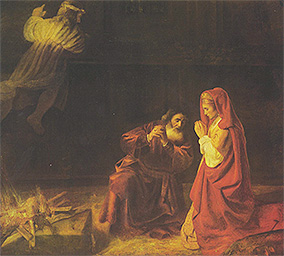
Barrenness was usually seen by others in the community as a curse by God or a punishment for sin (and sometimes it was: 2 Samuel 6:23). During that time in history, the only way for women to achieve status and be considered successful was by marrying and having children- particularly sons. A woman’s entire self-worth—in her own eyes, her husband’s eyes, and the eyes of her community—was at stake. So it’s easy to see why women and their husbands would have spent a great deal of time crying out to the Lord in prayer and seeking to be obedient to Him in hopes that He would grant their request for a child. We see this most clearly in the case of Hannah (1 Samuel 1), and it’s reasonable to surmise that this was likely also the case for Manoah and his wife.

Belief, Not Doubt (13:3-8)
It’s interesting that both times the angel of the Lord appeared to deliver His message, He initially appeared, not to the man, Manoah, but to the woman, his wife. Was it because she was praying at the time, or because her faith was stronger than her husband’s? This passage doesn’t tell us, so we don’t know. But, notice Mrs. Manoah’s reaction to the news that she would conceive. Did she laugh in disbelief like Sarah and Abraham did (Genesis 17:17,18:12)? Did she doubt like Zechariah (father of John the Baptist: Luke 1:18)? No, Mrs. Manoah believed. And, as a godly wife should, the first person she shared the news with and sought direction from was her husband.

Now let’s consider the reaction of Manoah to his wife’s news. Did he think her desire for a child had sent her over the edge or that she was making this up? No. He believed her without question. What does this tell us about the character, faith, and influence on her husband of Mrs. Manoah? “The heart of her husband trusted in her” (Proverbs 31:11) because she was a godly, trustworthy woman.

A Household of Faith (13)
In addition to spending time praying for a child, Mr. and Mrs. Manoah probably prayed regularly, like many other faithful Israelites, for deliverance from the Philistine oppressors, and here, we find them in prayer again.

Manoah not only trusted his wife, he had faith that the Lord would fulfill His promise. His first reaction was to believe and ask God the best way to obey Him. “And God listened to the voice of Manoah…” and answered his prayer of faith. He came back—to Manoah’s wife. Again, Manoah believed her without question and followed her out to meet the angel of the Lord.

When they met up with the angel, we see further evidence of this couple’s godliness. Though the angel had appeared and spoken twice with Mrs. Manoah, she, as a godly wife, does not take control of the situation or assert superiority over her husband. She takes a step back and, as a godly husband and leader of his home, Manoah steps up to the plate to assume the responsibility for his family and receive God’s instructions.

Manoah’s conversation with the Lord is fraught with faith. He doesn’t ask how or why they’re suddenly being blessed with a miracle child even though they’re just ordinary people. He simply accepts that it will happen. Manoah is confident that God is telling the truth and will keep His promise when he says, “When [not if] your words come true…” (12, 17). He believes God’s word that Samson will “begin to save Israel from the hand of the Philistines,” (5) when he asks about “the child’s manner of life, and…his mission” (12) so that he and Mrs. Manoah could prepare him to do so. He trusted in the www-St-Takla-org--12-Angel-Visits-Manoah-and-His-Wifecharacter of God, “the one who works wonders,” (19) and worshiped Him as such. He and Mrs. Manoah feared and trusted in God’s holiness as they fell on their faces at His departure (20).
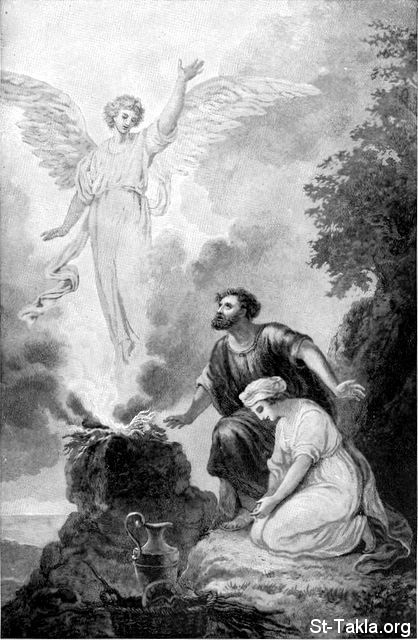
Without a total grasp of the situation (22), Manoah believed God’s word that, “no man can see Me and live” (Exodus 33:20). Only later (21) did Manoah understand that He had been speaking with the angel of the Lord (Jesus – theophany: an appearance of the pre-incarnate Christ – {“My name…is wonderful” (18)- see Isaiah 9:6}—this is how people could “see God and live” even though God had said, “you cannot see Me and live.” They could not live through seeing God the Father, but they could live through seeing God the Son. Also a piece of supporting evidence for the Trinity). Jesus, the true deliverer and judge came personally to announce the birth of this temporal deliverer and judge who would point ahead to Christ.

Finally, we come full circle to Mrs. Manoah’s quiet trust in the Lord. Even with a strong faith like Manoah had, there can be moments of confusion. How could God say to Moses –the greatest leader Israel had ever known, the friend of God!—“you cannot see My face, for man shall not see me and live,”—yet here he and his wife were, having seen Him, but somehow still unscathed? How could anyone understand this?

But Mrs. Manoah shows us that faith means trusting God’s word even when we don’t fully understand His actions. Yes, it was true that God had said that people couldn’t live through seeing Him, but it was also true that He had visited them and told them they were going to have a son who would be a deliverer for Israel. How could both of those things be true at the same time? She probably couldn’t understand it either, but she encouraged her husband to trust God even in their confusion (23). And God kept His promise (24-25)

Trusting Despite the Circumstances (14:1-10)
Kids grow up, and as broken, sinful human beings, they sometimes make foolish decisions despite being raised in a godly home. That’s what Samson seems to have done here. While the Philistines were not one of the seven nations the Israelites were specifically forbidden to intermarry with, the principle behind God’s forbidding of intermarriage with those other nations was the same for the Philistines: they were idolaters and enemies of God and His people.

As godly parents, Mr. and Mrs. Manoah tried to steer their adult son to a godly choice of a wife. They reminded him that he was one of God’s people, and surely wanted him, as a leader in Israel, to set a good example for the people. Once again, they were seeking to be faithful to God.

thInstead of honoring his parents, Samson chose poorly. Or so it seemed. Either Samson was operating solely on lust and God sovereignly used the situation to His own advantage, or Samson, moved by God, was intentionally trying to infiltrate the Philistines by marrying in. The passage doesn’t make this precisely clear to us.

And, it wasn’t clear to Samson’s parents, either. So, perhaps thinking that they could influence the girl’s family or hoping Samson would change his mind, they went along with his decision and accompanied him to meet the new in laws. Once again, though the circumstances were worrisome and hard to understand, Mr. and Mrs. Manoah trusted that the God who had already worked so many wonders in their lives could handle this situation. They had faithfully obeyed what God had asked them to do and raised Samson in a godly home. Now, they had to sit back and watch God take care of the rest. And He did. Again, God kept His promises.

And we know that for those who love God all things work together for good,
 for those who are called according to his purpose. Romans 8:28

Homosexuality, Law- Old Testament, Old Testament, Sunday School

Law and Order: CVI (Christians Vs. Israel) ~ Sunday School Lesson ~ 3-23-14

sunday school

These are my notes from my ladies’ Sunday School class this morning. I’ll be posting the notes from my class here each week. Click here for last week’s lesson.

Through the Bible in 2014 ~ Week 12 ~ Mar. 16-22
Deuteronomy 14-34, Psalm 91
Law and Order: CVI (Christians Vs. Israel)

th

About a month ago we took a look at the Law in the Old Testament, and talked about why God gave the Law to Israel in the first place. Christians are often accused of “picking and choosing” which laws to obey (like the prohibitions against homosexuality) and which not to obey (laws about clothes, food, etc.), so, today, we’ll be talking about why Israel had to obey all the laws but Christians can’t and shouldn’t.

Deuteronomy 31:9-13
Did God consider His Law to be important? How can you tell from this and the rest of the book of Deuteronomy, Leviticus, and other passages we’ve read? Why did God consider His Law to be important?

All Laws Are Not Created Equal
While all laws are equally holy because they were all set forth by a holy God, there are different kinds of laws and different penalties for breaking various laws. The three main categories of Law are: civil, ceremonial, and moral.

Civil Law (22:1,8; 23:19; 24:5-6; 21:15-17; 14:28-29)
At this time in history, Israel had a unique form of civil government: theocracy. This meant that, while they had human leaders such as Moses, elders, and tribal leaders, God was their king and lawgiver. This included civil or societal “law and order” types of laws as well as inheritance laws, property regulations, taxes, etc. These laws were similar to the laws our local, state, and federal governments make for us today. All citizens of Israel were bound by them, and violation of these laws required punishment and/or restitution.

Christians and the Civil Law (Romans 13:1-2)
Which country are we citizens of? Are citizens of other nations bound by U.S. law (in their own nations)? Are we, living in the U.S., bound by the laws of other nations? This is why Christians are not bound by OT Israel’s civil laws, and it is not a problem for us to wear clothes made of two types of fabric, or build houses without parapets around the roofs (unless our own government decides to make these things law). Those laws were for the citizens of that nation at that time in history. We are bound by our city, parish, state, and federal laws at this time in our history.

After Christ’s ascension, the gospel was opened up to people of all nations and God’s people –Christians – began to spread all over the earth. We are no longer under a theocracy, but various forms of government in various nations. This is why Romans 13 tells us to obey those in authority over us, not to obey OT civil law. We are to obey the laws of our own country as long as they do not conflict with anything God has stated in His word.

Ceremonial Law (16:1-17; 26:1-2)
The ceremonial laws mostly had to do with making sacrifices, feasts, “unclean” laws, and who could or could not serve in God’s house. Again, all of these laws applied to Old Testament Israelite Jews (many of them also applied to sojourners in Israel, especially those who wanted to embrace Judaism). They did not apply to other religions, other nations, or non-Israelites outside of Israel. All of these laws, regulations, and practices pointed to the coming of the Messiah, who would fulfill them. Ceremonial law was always intended to be temporary and limited.

Christians and the Ceremonial Law (Hebrews 10:1, 11-14)
Christians are not OT Jews under the Mosaic Covenant. We are NT Christians under the covenant of grace (which is also why the blessings for obedience and curses for disobedience in Deut. 28 do not apply to us). All of the ceremonies, sacrifices, even the temple itself, were a picture and foreshadow of what was to come: Christ. Because Christ was the perfect, once for all, sacrifice for our sin, we no longer need to make sacrifices. If we did, it would almost be like preferring to read the menu than actually eat the steak, or preferring to stand out in the theater lobby looking at movie posters instead of going in and watching the movie.

Actually, it would be a slap in God’s face for Christians to go back to the OT ceremonial laws and ways of worship because it would be like saying, “I prefer the imperfect blood of bulls and goats covering my sin to the perfect sacrifice of Your precious Son which can take away my sin.”

Moral Law (Exodus 20:1-17; Leviticus 11:45, Romans 2:14-15)
The moral portion of the law covers behaviors, thoughts, and attitudes that are intrinsically right or wrong: lying, murder, coveting, adultery, helping the disadvantaged, etc. Because God is good and holy, His people are to portray His goodness and holiness to a watching world. We constantly see God telling Israel, “Be holy for I am holy.” The moral laws reflect the nature and character of God. God is truth, so do not lie. God is loving, so do not hate. God is faithful, so do not be unfaithful. God is generous and giving, so do not steal.

Moral Law is “transcendent,” which means that it applied even before it was codified (Remember when Cain killed Abel? Murder was still wrong then even though the Law would not be given until Exodus 20.), and will continue to apply until Christ returns. Moral Law applies to all people everywhere. God says this Law is written on our hearts; we know basic right from wrong by our consciences. As we discussed last week, the first and highest moral law was to love God only, and love Him above all else. When God holds first place in a person’s life, obedience to His moral law is a natural overflow of the heart.

Christians and the Moral Law (1 Peter 1:14-16; 1 John 2:4-6)
While Christians cannot and should not obey the OT ceremonial or civil laws, we are to obey the moral laws, most of which are restated somewhere in the NT. Often, Jesus reminds us that God is not after behavior modification, rather, He’s after our hearts. It’s not enough to restrain yourself from murdering someone; Jesus says to love our enemies and pray for those who persecute us. It’s not enough to refrain from adultery; Jesus tells husbands to love their wives to the point of laying down their lives for them and wives to respect and submit to their husbands. This kind of selfless love for God and others was always the intent behind the OT moral laws. It becomes clearer in the NT through the teaching and sacrificial example of Jesus. We follow His example of love for God, obedience to God, laying down His life for others, and serving others.


Jesus and the Law (Matthew 5:17-18)
Jesus Himself said that He did not come to abolish the Law, but to fulfill it. He did this by perfectly obeying the civil, ceremonial, and moral law. He further fulfilled the ceremonial law by concluding it. When Jesus said, “It is finished,” it was. The final sacrifice had been made, once for all. When Jesus died, the veil of the temple that separated people from the Holy of Holies—the very presence of God—was split in two, signifying that, through the final sacrifice, Jesus, we may now enter into God’s presence and be reconciled to Him.


Additional Resource:
The Gospel by Numbers by Ligon Duncan at the 2014 Together for the Gospel conference (This is one of the best sermons I’ve ever heard. I encourage everyone to take the time to listen to it.)

Apologetics, Idolatry, Justice, Old Testament, Sunday School, Tough Passages

Tackling Tough Issues: Genocide in the Old Testament ~ Sunday School Lesson ~ 3-9-14

sunday school

These are my notes from my ladies’ Sunday School class this morning. I’ll be posting the notes from my class here each week. Click here for last week’s lesson.

Through the Bible in 2014 ~ Week 10 ~ Mar. 2-8
Numbers 16-32
Tackling Tough Issues: Genocide in the Old Testament

Genocide: It’s defined (by dictionary.com) as, “the deliberate and systematic extermination of a national, racial, political, or cultural group.” This week in our reading, we dealt with a passage in which God commanded the Israelites to kill nearly all of the Midianites, even those we might consider “innocent.” Was God being cruel or capricious? How could a loving God command such a thing?

Numbers 31:1-18
This is the first time (but won’t be the only time) we’ve seen God command Israel to wipe out a certain nation or people group. How do we make sense of this?

1. Hermeneutics principle: Clear passages interpret unclear passages. (2 Timothy 2:15)
Simply put, biblical hermeneutics is the proper application of 2 Timothy 2:15- a systematic and careful way of diligently studying God’s word so as to rightly understand and handle it. One of the principles of hermeneutics is that when you have a passage that’s confusing or could possibly be interpreted in more than one way, you dig into other biblical passages that address the same issue, but more clearly. In Numbers 31 we see a situation that is confusing because it seems like God is being cruel or unfair. We need to take a look at some clearer passages to help us understand this one.

2. What do we know about the nature and character of God?
On the surface of this passage, God seems to be acting in a way that goes against what we know about Him from the rest of the Bible. That thought itself tells us that the rest of the Bible describes God in certain ways, and that “cruel” and “unfair” are not among those certain ways. We also know that, because God is perfect, He never goes against His own character. How does the Bible describe God?

God is good. (Psalm 100:5)
Some people go so far as to declare that (because God has commanded genocide) God is evil. But God’s word clearly states in many places that He is good.

God is love. (1 John 4:8)
As parents, it’s easy to understand that there are many different ways our love for our children plays out. We smile and hug our children to express our joy in them. We cuddle and comfort them when they’re hurt. We play and celebrate with them. We sacrificially provide for them. But we also love them in “tough” ways sometimes. We discipline them when they’ve disobeyed. We yank them out of harm’s way to protect them. We take them for vaccinations to prevent them from getting sick. We lock the doors to keep bad guys from getting to them. God’s love for us is similar. He loves His children in many ways, some of them, “tough love” ways.

God is patient. (Romans 2:4, 1 Peter 3:20, Psalm 103:14)
God made people, so He understands that we are “dust,” weak, and completely vulnerable to sin. He extends patience and kindness to people over and over again to lead them to repentance and faith in Him. He exhibits patience for a very long time before He executes judgment.

God takes no pleasure in the death of the wicked. (Ezekiel 18:23,32, 2 Peter 3:9)
Going back to the parent/child analogy, no good parent gets joy out of punishing her children. We would much rather the child obey so that we can be at peace with each other, love them in the “non-tough” ways, and because obedience is what’s best for the child. God’s love for people is infinitely deeper than our love for our children. He never wants to punish people for their sin, but rather wants them to repent and turn to Him. He has even mercifully provided us a way to be rescued from the punishment for our sin: He punished His own Son on the cross in our place! God is patient with disobedience and rebellion, but eventually, as any good parent would, He has to punish it.

God is just. (Genesis 18:25, 1 Peter 2:23)
God is the only completely just judge because of His omnipresence (He’s present everywhere, always) and His omniscience (all knowingness). He sees every action, even those where there is no other witness, and He knows every secret motive and intent of the heart. Because of this, all of His “verdicts” are always right.

3. How do these character traits fit in with and explain God’s command to destroy most of the Midianites?

Genocide is evil. Doesn’t that make God evil? (Deuteronomy 32:39)
No. Genocide is evil when unjust, sinful men take it upon themselves to kill people for evil and selfish reasons. God is, by definition, good, so if He initiates the judgment of genocide, it cannot be evil. As mentioned above, He is abundantly patient before He exercises judgment, and, due to His omniscience and omnipotence, His verdicts are always just. Therefore, when God uses genocide, it is not evil, nor is He.

What had the Midianites done to be worthy of God’s judgment? (Numbers 31:16, 22:6-7, Revelation 2:14, Isaiah 14:12-15)

Note the locations of Midian, Moab, and Shittim.

Note– 31:3 makes clear this is God’s judgment on Midian, not Israel deciding on its own to annihilate them. God used Israel to carry out his sentence of judgment.

King Balak of Moab and the leaders of Midian conspired to pay Balaam to curse Israel (22:6-7). When Balaam couldn’t curse them, he instructed Balak to entice Israel into idolatry instead (Rev. 2:14).

Moab and Midian worshiped Baal. According to mythology, Baal was son of the chief god, El, but rose to power above El, who was considered weak and impotent. (This is very similar to the story we read in Isaiah about how Satan fell.) Baal was a fertility god, so “worship” consisted of sexual perversion including prostitution, and, often, the sacrifice of the first born thson. The religion of Baal took everything good and holy from God’s story (God’s name- El-elyon, El-shaddai, Satan’s attempt to overthrow God, Satan’s contempt for God, and God’s sacrifice of His firstborn Son) and turned it inside out for Satan’s glory. This is what the Midianites were strategically drawing Israel into so that they could either defeat them or turn them into allies.

God showed His goodness by deciding to put an end to evil. He showed His love for Israel by protecting them from both Midian’s schemes and from idolatry and its consequences. God showed His justice by punishing the rebellion of Midian.

Why didn’t God just warn Midian and Israel to stop their evil ways? (Numbers 25, Exodus 20:2-6, Leviticus 26:30, Deuteronomy 4:3)
He did. And, he started with Israel, not Midian. Israel knew better. God had repeatedly told them idolatry was a gross sin (1st and 2nd Commandment) and that it was punishable by death (Lev. 26:30). He had all the Israelite chiefs impaled who had led the people into idolatry. He sent a plague that 1898234_10152272211290761_266294837_ndestroyed the 24,000 people who had bowed the knee to Baal. And, He showed, graphically, through Phinehas that God would not tolerate Israel joining itself to Midian. Finally, he gave the Midianites a taste of what was to come when He had Israel attack (but not annihilate) them at the end of chapter 25.

God would have much preferred both Israel and Midian repent of their idolatry than to put any of them to death here or in chapter 31. He was patient with them and continued to let them live and experience common grace in order that they might repent and turn to Him.

Why did God command Israel to kill “innocent” women and children? (Psalm 51:1, Romans 3:10, 6:23, Samuel 12:22-23)
Note– Those women and children were not innocent. Every human is born in sin and rebellion against God.

The married women would have been adults, just as responsible for their sin of idolatry as the adult males who were killed. Had they been permitted to live, they would have continued to train their children in the ways of Baal worship, and the problem would have remained.

Though the male children may have suffered for a moment, we believe that they are in Heaven with Christ. Had they lived, they would have grown up (trained by their mothers) to be Baal worshipers, and as heads of their households, would have re-instituted Baal worship in Midian. Midian would have remained a threat (even more so because of the desire for revenge on Israel) militarily and in tempting Israel to idolatry.

The unmarried, young girls were allowed to live and marry Israelite men (even though they, too, were supposed to have been killed 31:15) because they would have had to conform to their husbands’ religion, the worship of Yahweh.

God showed His goodness in protecting the Israelites from Midian, in taking the male children to Heaven, and in sparing the young girls and allowing them to come to know Him through their marriage into Israel.

God’s exercising genocide on a people is a difficult issue to come to terms with. And, if it’s difficult for us, we can only imagine how difficult it must be for God. He created these people. He loves them and desires to save them so much that He sent His Son to rescue them from His wrath. Genocide is not a flippant decision by a God who kills people casually, but a heart rending last resort for putting an end to evil so rampant that the people will not turn back from it.

Additional Resources:
What is Biblical Hermeneutics? by GotQuestions.org

Who Was Baal? by GotQuestions.org

Prayer, Sanctification, Worship

Great Expectations

expectgreatthings-necklace (1)

Do we expect too much from God? Is that even possible?

No.

Yes.

Well, kinda.

You see, I’m not talking about expecting something and God being unable to deliver it. That’s just plain silly when talking about our omnipotent God. No, what I’m talking about is whether or not the expectations we come up with are grounded in biblical reality.

What do we mean when we talk about “praying expectantly” or coming to a time of corporate worship, study, or prayer, and “expecting God to do something”? Just what is it we are expecting God to do?

Could it be that He’s already doing something and we’re just not seeing it?

Sometimes, when we read God’s word, we expect God to do something just as “big” as He did in Moses’, Paul’s, or some other Bible hero’s life. We forget that the Bible is sort of like a “highlight reel” of the events in the lives of a handful of people that God drafted to be part of His visible activity at that moment in history.

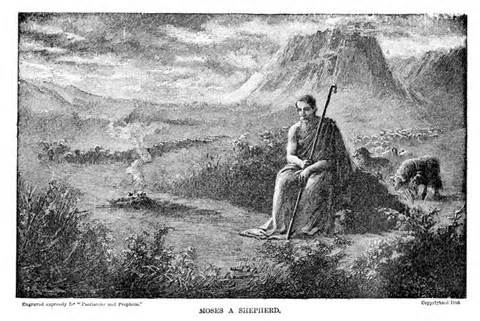
We focus on the moments Moses had at the burning bush or walking through the Red Sea, and that’s what we want, too. r643167_4468740But we forget that Moses’ life wasn’t like that every day. We forget about the eighty years he spent wandering around the desert, half in the day to day monotony of shepherding on the back side of Midian, the other half, wandering around the wilderness with the people of Israel.

Eighty years of nothing special. Day after day of ordinary. Week after week of God not “showing up” and doing something amazing. Eighty years. That’s a lifetime for most of us.

Was God any less at work in Moses’ eighty years of desert thwandering than He was when He gave Moses the Law or spoke to him face to face or sent manna? Of course not. During those days, God was protecting Moses from the heat and wild animals, providing food and shelter for him, blessing him with a wife and children, directing his steps, teaching him obedience and trust.

Just like He does for us.

Have you read a Bible passage this week that allowed you to see more of God’s glory? God is doing something. He’s revealing Himself to you.

Are you praying for someone’s salvation? God is doing something. He’s working on the heart of that person.

Did you have a place to sleep last night and food on your table today? God is doing something. He’s providing for your needs.

Do you leave church on Sundays having been fed the truth of God’s word by your pastor? God is doing something. He’s growing you to spiritual maturity.

Is it possible that we’re expecting God to do something in our lives that isn’t in His particular plan for us? You aren’t Moses, and neither am I. Neither were the million or so other Israelites Moses led out of Egypt, and neither have the billions of other people been who have inhabited earth since Creation. Moses was Moses. You are you. God doesn’t have the same plan for your life He had for Moses’ life.

And, by the way, have you ever noticed that most of the people in the Bible through whom God did something “big” were not expecting it or asking for it? Moses wasn’t expecting God to show up in that burning bush. David wasn’t asking God to do great things in his life when Samuel dropped by to anoint him as the next king. Both of them were hanging out with the sheep when God called them. Paul thought he was already an awesome servant of God when he got knocked off his high horse. Mary wasn’t expecting to be expecting. She was just a teenage girl growing up and learning how to run a household.

1 Thessalonians 4:10b-12 says:

But we urge you, brothers to do this more and more, and to aspire to live quietly, and to mind your own affairs, and to work with your hands, as we instructed you, so that you may walk properly before outsiders and be dependent on no one.

That’s what all of those Bible characters were doing when God chose them. Just regular people living regular lives doing regular work. Just like billions of other people through whom God has not chosen to do anything big and spectacular.

keep-calm-god-is-at-workBut that doesn’t mean God hasn’t been “doing something” in all of our lives. In fact, the vast majority of the work God does in our lives every single day goes unnoticed and unappreciated.

So, instead of setting our expectations on those very rare “wow factor” works of God that seem so appealing, maybe we should be asking Him to open our eyes to, and make us thankful for, all of the things He’s already doing in our lives. Instead of having great expectations of things that God has never promised us, maybe we should ask Him for, and expect Him to, do what He has promised:

Forgiveness for our sin

Christ-likeness

Provision for our needs

Endurance

The ability and opportunity to help others

Faithfulness

Humility

Patience

The opportunity to share the gospel

Because “all the promises of God find their Yes in him.” You can expect it.

Forgiveness, Gospel, Salvation, Sunday School, Types and Shadows

Joe & Moe: Delivery Boys ~ Sunday School Lesson ~ 2-2-14

sunday schoolThese are my notes from my ladies’ Sunday School class this morning. I’ll be posting the notes from my class here each week.Click here for last week’s lesson.

 Through the Bible in 2014 ~ Week 5 ~ Jan. 26- Feb. 1
Genesis 41 – Exodus 9
Joe (Joseph) & Moe (Moses): Delivery Boys (Part 1)


→         ┼     ←→    II
Old Testament                     Gospels         Acts-Revelation    (Christ’s Return)

All of the Old Testament points to Christ. Throughout the OT, we see Israel, a people in need of deliverance, and throughout the OT, we see God use men as types and shadows of Christ, each pointing out a facet of the way He would deliver His people from their bondage to sin.

Let’s look back at some of the people we’ve studied so far and how they are types of (symbolize) Christ. Look at these people through the lenses of Jesus’ life.

Adam– One Man (Romans 5:17)
As sin entered the world through the first/only begotten son, so salvation entered the world through God’s only begotten Son.

Abel– Death of the innocent (Hebrews 12:22-24)
We see the good, obedient, innocent shepherd, betrayed by his brother and killed for no crime of his own.

Noah– The only righteous man (Genesis 6:9, 1 Peter 3:18)
We see salvation take place through the only righteous man on earth, scorned by sinners. We see the death of sin, the burial (at sea), and the resurrection to new life.

Job– The Suffering Servant (Isaiah 53:3,10)
In Job, we see Christ, the innocent, misunderstood and accused by those who should have been His friends, suffering, not for His own sin, but for God’s greater plan: that God might be glorified.

Abraham– The Obedient Son (Philippians 2:5-8)
Abraham left the comfort and position of his homeland in exchange for a life of sojourning in a land not his home. He was obedient to God whatever the cost to himself. So, Christ emptied Himself of His position and comfort in Heaven to sojourn on earth and live in obedience to God, whatever the cost.

Isaac– The Promised Son (Genesis 3:15) and The Lamb of God (Genesis 22:8,14, John 1:29)
God told Abraham He would send him a son, and after many years, the promise came true. The son of the Abrahamic Covenant was born in a miraculous way. In Genesis, God promised to send His Son, and after many years, and many reminders of God’s promise to Israel, the Son of the new covenant was born in a miraculous way.

Lamb of God- He was the only acceptable sacrifice. He took the wood for the sacrifice upon his back and walked up the hill to his place of death. “God will provide for himself the lamb for a burnt offering, my son.” “On the mount of the Lord it shall be provided.” That mountain, Mt. Moriah, turned out many years later to be Calvary. “Behold, the Lamb of God, who takes away the sin of the world!”

Jacob– Cornerstone (Matthew 19:28)
Jacob through his twelve sons/tribes, was the foundation of God’s people, Israel. Jesus, delegating through His twelve disciples, is the foundation of God’s people, the church.

Joseph– Deliverance Through Forgiveness (Genesis 50:20, Acts 5:31) (Genesis 45:5,7-8; 50:15-21, Luke 23:33-34, 1 John 1:5-9)
Joseph was a deliverer, as was Christ. His life shows us one aspect of Christ’s delivering us from our sin: forgiveness. I did a study on this a while back and wrote a blog article about it. It’s like one of those optical illusion pictures where if you look at it one way, it’s an old, ugly woman, but if you look at it another way, it’s a young, pretty woman. This is a “story optical illusion.” See if you can see Joseph and Jesus at the same time.

QueretaroCrossShadow1In the Shadow of the Son

And after all this: hating him, taking him away from his family and all he knew, selling him as a slave, working his way up only to lose everything again when he was falsely accused of rape and imprisoned for years for a crime he didn’t commit, forgotten by the cupbearer for two years, unsure how his brothers were treating Benjamin or his father, not even knowing if his father was still alive, Joseph forgave his brothers and gave them a new start, a new life.

When Joseph’s brothers saw that their father was dead, they said, “It may be that Joseph will hate us and pay us back for all the evil that we did to him.” So they sent a message to Joseph, saying, “Your father gave this command before he died: ‘Say to Joseph, “Please forgive the transgression of your brothers and their sin, because they did evil to you.”’ And now, please forgive the transgression of the servants of the God of your father.” Joseph wept when they spoke to him. His brothers also came and fell down before him and said, “Behold, we are your servants.” But Joseph said to them, “Do not fear, foram I in the place of God? As for you, you meant evil against me, but God meant it for good, to bring it about that many people should be kept alive, as they are today.So do not fear; I will provide for you and your little ones.” Thus he comforted them and spoke kindly to them.
Genesis 50:15-21

And when they came to the place that is called The Skull, there they crucified him, and the criminals, one on his right and one on his left.  And Jesus said, “Father, forgive them, for they know not what they do.” And they cast lots to divide his garments.
Luke 23:33-34

As Jacob forgave his brothers and Christ forgave his executioners, this is exactly what Christ does for us. We repent, and He forgives us for our sin. He gives us a new life.

This is the message we have heard from him and proclaim to you, that God is light, and in him is no darkness at all. If we say we have fellowship with him while we walk in darkness, we lie and do not practice the truth. But if we walk in the light, as he is in the light, we have fellowship with one another, and the blood of Jesus his Son cleanses us from all sin. If we say we have no sin, we deceive ourselves, and the truth is not in us. If we confess our sins, he is faithful and just to forgive us our sins and to cleanse us from all unrighteousness.
1 John 1:5-9

The story of Joseph is a beautiful story of a man rejected, betrayed, and done away with, only to live again victoriously, and forgive and save his betrayers. Just like Jesus.