Christmas

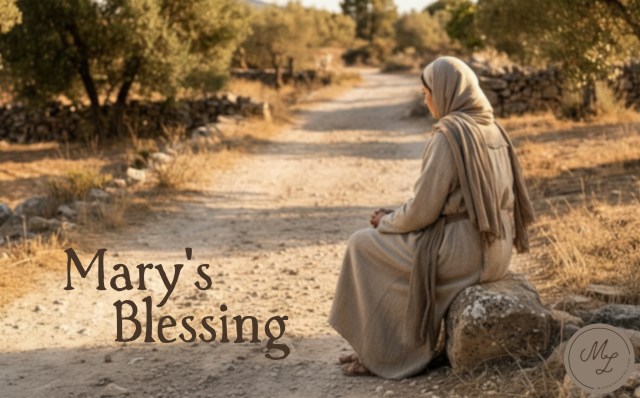
Mary’s Blessing

In the sixth month the angel Gabriel was sent from God to a city of Galilee named Nazareth, to a virgin betrothed to a man whose name was Joseph, of the house of David. And the virgin’s name was Mary. And he came to her and said, “Greetings, O favored one, the Lord is with you!” 

But she was greatly troubled at the saying, and tried to discern what sort of greeting this might be. And the angel said to her, “Do not be afraid, Mary, for you have found favor with God. And behold, you will conceive in your womb and bear a son, and you shall call his name Jesus. 

And Mary said to the angel, “How will this be, since I am a virgin?”
Luke 1:26-31

Mary was just an average, godly young woman, probably in her teens. She had kept herself sexually pure, and she had submitted herself to what was, undoubtedly, her parents’ choice of a husband for her.

Twice in this passage, Gabriel tells Mary she is “favored” by God. This is the same Greek word translated as “blessed” in Ephesians 1:6:

In love, He predestined us for adoption to Himself as sons through Jesus Christ, according to the purpose of His will, to the praise of His glorious grace, with which He has blessed us in the Beloved.
Ephesians 1:6

God blesses us by bestowing His grace upon us to bring us to the Savior, Jesus – for His own reasons, not based on any merit of our own. And God blessed, graced, and favored Mary to bring the Savior, Jesus, to her. For His own reasons, not based on any merit of her own.

God blessed, graced, and favored Mary to bring the Savior, Jesus, to her. For His own reasons, not based on any merit of her own.

And as incomprehensible to Mary as this news was, her response was not, “No, this can’t be,” but, “How will this be?”. Like Elizabeth before her, Mary believed God. 

Like Elizabeth before her, Mary believed God. 

But even as she believed God’s word to her, she must have had a million fears and questions: Would Joseph believe her? Would her parents believe her? Would anyone believe her? 

In that time, Old Testament law demanded that women be stoned to death for adultery, and for the average Israelite to believe a far fetched story -from a woman, no less- about her child being conceived by the Holy Spirit, well, that must have seemed about as likely to Mary as the virgin birth itself.

Maybe she feared for her life and her safety, but Mary still believed what God said and submitted herself completely to Him: “Behold, I am the handmaiden of the Lord; let it be to me according to your word.”

“I am Your slave, Lord. I’m at Your mercy, to do with as You will. Do whatever You want with me, to me, in me, and through me.” This should always be the prayer of every godly woman.

Next, God sends Mary to visit Elizabeth. 

And when Elizabeth heard the greeting of Mary, the baby leaped in her womb. And Elizabeth was filled with the Holy Spirit, and she exclaimed with a loud cry, “Blessed are you among women, and blessed is the fruit of your womb! And why is this granted to me that the mother of my Lord should come to me? For behold, when the sound of your greeting came to my ears, the baby in my womb leaped for joy. And blessed is she who believed that there would be a fulfillment of what was spoken to her from the Lord.”
Luke 1:41-45

In addition to finding a safe place to hide out from those who might seek to put her to death, Mary needed some good, old fashioned Titus 2 discipleship from a godly older woman. And just look at Elizabeth’s godliness!

Mary needed some good, old fashioned Titus 2 discipleship from a godly older woman. And just look at Elizabeth’s godliness!

Elizabeth could have been jealous of Mary. She could have bitterly rehashed all those years begging God for a child, and here, God just showed up and gave Mary a child without her even asking! And not just a child, but the Messiah. Mary got that honor, not her. That could have been Elizabeth’s attitude. But was it? Not a chance. 

Elizabeth was filled with the Holy Spirit. She was humble and honored that Mary would come to visit. She was joyful, and she blessed Mary. And most importantly, she reassured Mary with the truth of the word of God. Her words lined up with God’s word spoken to Mary by the angel:

  • Blessed are you among women
  • Blessed is the fruit of your womb
  • You are the mother of my Lord. 

“And blessed is she who believed that there would be a fulfillment of what was spoken to her from the Lord.”

Yet again, Elizabeth is such a wonderful example to us of how mature, godly women should think and behave. She shows us how to disciple younger women in kindness, humility, and joy, using Scripture and our God-given wisdom born of the experiences He has brought us through. And she and Mary both showcase the beauty of believing God even in the midst of unbelievable circumstances.

Elizabeth and Mary both showcase the beauty of believing God even in the midst of unbelievable circumstances.

And look at this amazing picture God paints for us in the next passage, contrasting the beauty of Elizabeth’s spiritual maturity and wisdom with Mary’s youthful innocence, awe, and wonder in worship:

Mary said,

My soul magnifies the Lord,
and my spirit rejoices in God my Savior,
for he has looked on the humble estate of his servant.
For behold, from now on all generations will call me blessed;
for he who is mighty has done great things for me,
and holy is his name.
Luke 1:46-49

This is personal. My soul, my spirit, my Savior. All generations will call me blessed. He has done great things for me. We can sometimes regard Mary as merely a conduit for bringing our Savior to us. But this was her life.

We can sometimes regard Mary as merely a conduit for bringing our Savior to us. But this was her life.

God sees us and knows us as His unique, one of a kind daughters, and He is our personal Father. Just as it was right and fitting for Mary to have this intimate moment worshiping her Father for what He had done in her life, and giving him all the glory, it is right and fitting for us to worship Him in quiet moments all alone, giving Him all the glory for what He has done in our lives.

But Mary knew that all of this wasn’t just about her, and as she continues to worship she expands her thoughts to include others:

And His mercy is for those who fear Him
from generation to generation.
He has shown strength with His arm;
He has scattered the proud in the thoughts of their hearts;
He has brought down the mighty from their thrones
and exalted those of humble estate;
He has filled the hungry with good things,
and the rich He has sent away empty.
He has helped His servant Israel,
in remembrance of His mercy,
as He spoke to our fathers,
to Abraham and to his offspring forever.
Luke 1:50-55

In this brief song of worship, Mary quotes from – or alludes to – several passages in Psalms, Isaiah, Habakkuk, and other Old Testament books. She knows who God is and what He has done for His people. She understands His nature and character. She knows His precepts, promises, and covenants. Mary was a woman of godly character, because she was a woman of the Word. 

God blessed Mary, and through her godly example she, in turn, blesses us. May God make us all worshipful women of the Word, like Mary.

God blessed Mary, and through her godly example she, in turn, blesses us. May God make us all worshipful women of the Word, like Mary.


Christmas

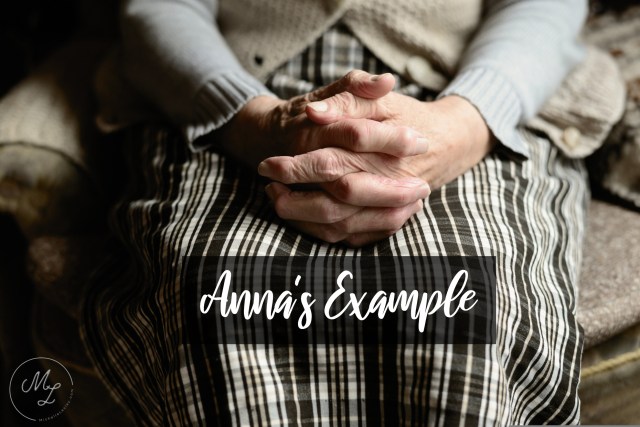
Anna’s Example

Originally published December 23, 2021

Remember Anna? She’s one of our often overlooked sisters from Scripture. As with Elizabeth, we don’t usually hear much about Anna, except sometimes, once a year, at Christmas.

When Jesus was about a month old, Mary and Joseph took Him to the temple to fulfill the requirement of the Levitical law of purification. And that’s where they encountered Anna.

Now, just a little lagniappe here, the purification ceremony where we meet Anna was completely separate from Jesus’ circumcision ceremony.

Circumcision took place when the baby was eight days old, probably in the parents’ home or possibly in the local synagogue (the synagogue was sort of a “branch campus” of the temple in towns that were outside of Jerusalem). Mary would not have been able to enter the synagogue in Bethlehem or the temple in Jerusalem for Jesus’ circumcision since she would still have been ceremonially unclean from His birth.

The purification ceremony that made her ritually clean again took place when Jesus was 33 days old at the temple in Jerusalem. A sacrifice was offered for Mary’s cleansing and Jesus was dedicated to the Lord. (see Leviticus 12)

I spell this all out because, if you’re like me, and you hear the Luke 2 account of Jesus’ birth every year, you tend to let it wash over you without really thinking about it. I never really gave much thought to the fact that these were two different events in two different places until I was studying about Anna.

And Luke 2 presents all of these events in kind of a machine gun fashion so it can practically feel like everything in that chapter is happening on the same day, and we can conflate things we shouldn’t. For example, many people think that Simeon and Anna were married just because their stories appear back to back in Luke 2. As we’re about to see, that wasn’t the case.

Let’s take a look at Anna’s story:

And there was a prophetess, Anna, the daughter of Phanuel, of the tribe of Asher. She was advanced in years, having lived with her husband seven years from when she was a virgin, and then as a widow until she was eighty-four. She did not depart from the temple, worshiping with fasting and prayer night and day. And coming up at that very hour she began to give thanks to God and to speak of him to all who were waiting for the redemption of Jerusalem.

Luke 2:36-38

Anna had a lot of strikes against her in life:

She was a woman. In Anna’s day, women were “low man on the totem pole” so to speak. They were regarded as less than men in practically every way- intelligence, abilities, worth, and so on. They couldn’t testify in court because their testimony wasn’t considered credible. And, maybe you’ve even heard of the daily prayer that Jewish men still say today, thanking God for not creating them a gentile…a slave…or a woman.

She was a widow, and possibly childless. A woman of that time without a husband or grown children to take care of her would have been in very real danger of poverty.

She was old. Average life expectancy in Anna’s day was 55. She was 84. When you’re 84 in ancient times with no modern medicine, you’re feeling it.

So, Anna was a woman, she was a widow, and she was old. She had some disadvantages. But Anna didn’t let those things stop her from serving the Lord full throttle. In fact, she took some of those supposed disadvantages and put them to work for her.

Anna didn’t let disadvantages stop her from serving the Lord full throttle. In fact, she took some of those supposed disadvantages and put them to work for her.

If Anna had had a husband to care for or children to raise, she wouldn’t have had the time or the energy to serve the Lord full time. And she wouldn’t have had the opportunity either, because no one in that culture would have thought it appropriate for a woman with a husband and children to abandon them to stay in the temple.

Also, in a culture that respected its elderly, it’s likely that more people – especially younger women – would have listened to her than if she had not been so advanced in years.

So Anna turned these disadvantages into opportunities. And what did she do with those opportunities? She used them to serve God and to tell people about Jesus.

That’s what the Christian life is all about – serving God and telling others about Jesus – whatever your station in life.

Maybe you’re single like Anna, and God has blessed you with the time and freedom to serve Him full time – or at least fuller time than you’d otherwise be able to.

Maybe you do have a husband and children- and God has given you the opportunity to serve Him by serving them: pouring the gospel into your children, being a godly helpmate to your husband, and being a faithful, serving member of your church.

Maybe you’re older, and instead of using your golden years for travel or hobbies or shopping, God is leading you to teach younger women or throw yourself into ministry in some way.

Anna’s example to us is to bloom where God plants us and grab hold of every opportunity to serve Him and tell others about Jesus.

Anna’s example to us is to bloom where God plants us and grab hold of every opportunity to serve Him and tell others about Jesus.


Christmas

Anna’s Example

Remember Anna? She’s one of our often overlooked sisters from Scripture. As with Elizabeth, we don’t usually hear much about Anna, except sometimes, once a year, at Christmas.

When Jesus was about a month old, Mary and Joseph took Him to the temple to fulfill the requirement of the Levitical law of purification. And that’s where they encountered Anna.

Now, just a little lagniappe here, the purification ceremony where we meet Anna was completely separate from Jesus’ circumcision ceremony.

Circumcision took place when the baby was eight days old, probably in the parents’ home or possibly in the local synagogue (the synagogue was sort of a “branch campus” of the temple in towns that were outside of Jerusalem). Mary would not have been able to enter the synagogue in Bethlehem or the temple in Jerusalem for Jesus’ circumcision since she would still have been ceremonially unclean from His birth.

The purification ceremony that made her ritually clean again took place when Jesus was 33 days old at the temple in Jerusalem. A sacrifice was offered for Mary’s cleansing and Jesus was dedicated to the Lord. (see Leviticus 12)

I spell this all out because, if you’re like me, and you hear the Luke 2 account of Jesus’ birth every year, you tend to let it wash over you without really thinking about it. I never really gave much thought to the fact that these were two different events in two different places until I was studying about Anna.

And Luke 2 presents all of these events in kind of a machine gun fashion so it can practically feel like everything in that chapter is happening on the same day, and we can conflate things we shouldn’t. For example, many people think that Simeon and Anna were married just because their stories appear back to back in Luke 2. As we’re about to see, that wasn’t the case.

Let’s take a look at Anna’s story:

And there was a prophetess, Anna, the daughter of Phanuel, of the tribe of Asher. She was advanced in years, having lived with her husband seven years from when she was a virgin, and then as a widow until she was eighty-four. She did not depart from the temple, worshiping with fasting and prayer night and day. And coming up at that very hour she began to give thanks to God and to speak of him to all who were waiting for the redemption of Jerusalem.

Luke 2:36-38

Anna had a lot of strikes against her in life:

She was a woman. In Anna’s day, women were “low man on the totem pole” so to speak. They were regarded as less than men in practically every way- intelligence, abilities, worth, and so on. They couldn’t testify in court because their testimony wasn’t considered credible. And, maybe you’ve even heard of the daily prayer that Jewish men still say today, thanking God for not creating them a gentile…a slave…or a woman.

She was a widow, and possibly childless. A woman of that time without a husband or grown children to take care of her would have been in very real danger of poverty.

She was old. Average life expectancy in Anna’s day was 55. She was 84. When you’re 84 in ancient times with no modern medicine, you’re feeling it.

So, Anna was a woman, she was a widow, and she was old. She had some disadvantages. But Anna didn’t let those things stop her from serving the Lord full throttle. In fact, she took some of those supposed disadvantages and put them to work for her.

Anna didn’t let disadvantages stop her from serving the Lord full throttle. In fact, she took some of those supposed disadvantages and put them to work for her.

If Anna had had a husband to care for or children to raise, she wouldn’t have had the time or the energy to serve the Lord full time. And she wouldn’t have had the opportunity either, because no one in that culture would have thought it appropriate for a woman with a husband and children to abandon them to stay in the temple.

Also, in a culture that respected its elderly, it’s likely that more people – especially younger women – would have listened to her than if she had not been so advanced in years.

So Anna turned these disadvantages into opportunities. And what did she do with those opportunities? She used them to serve God and to tell people about Jesus.

That’s what the Christian life is all about – serving God and telling others about Jesus – whatever your station in life.

Maybe you’re single like Anna, and God has blessed you with the time and freedom to serve Him full time – or at least fuller time than you’d otherwise be able to.

Maybe you do have a husband and children- and God has given you the opportunity to serve Him by serving them: pouring the gospel into your children, being a godly helpmate to your husband, and being a faithful, serving member of your church.

Maybe you’re older, and instead of using your golden years for travel or hobbies or shopping, God is leading you to teach younger women or throw yourself into ministry in some way.

Anna’s example to us is to bloom where God plants us and grab hold of every opportunity to serve Him and tell others about Jesus.

Anna’s example to us is to bloom where God plants us and grab hold of every opportunity to serve Him and tell others about Jesus.