
Sanctification, Throwback Thursday

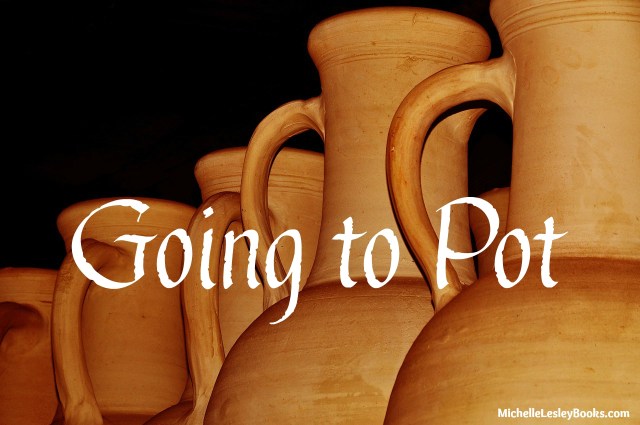
Throwback Thursday ~ Going to Pot

When the wine ran out, the mother of Jesus said to Him, “They have no wine.” Now there were six stone waterpots set there for the Jewish custom of purification, containing twenty or thirty gallons each. Jesus said to them, “Fill the waterpots with water.” So they filled them up to the brim. And He said to them, “Draw some out now and take it to the headwaiter.” So they took it to him. When the headwaiter tasted the water which had become wine, and did not know where it came from (but the servants who had drawn the water knew), the headwaiter called the bridegroom, and said to him, “Every man serves the good wine first, and when the people have drunk freely, then he serves the poorer wine; but you have kept the good wine until now.”
John 2:3-10

Much has been said, and many words written, about Jesus’ first miracle– the turning of the water into wine at the wedding of Cana. Why was this first miracle a miracle that put Jesus in the position of a caterer? Why not a healing? What did the disciples think? Was it really wine or just grape juice? And so on.

But I don’t believe I’ve ever heard anybody look at this account from the perspective of the waterpots.

What was it about those waterpots that made Jesus decide to use them? People used the water in them for washing their hands and possibly their dishes. They were common. Utilitarian. Probably not very clean. Why didn’t Jesus call for golden pitchers or silver goblets for the fine wine He was making?

The waterpots were close to Jesus.

The wedding Jesus was attending was in a small town, in an average home. It was likely that the hosts didn’t even own goblets or pitchers made of silver or gold. If they did, they certainly didn’t own enough large ones to hold all the wine Jesus was about to make. Gold and silver containers would have been far away in a palace or a wealthy home. The waterpots were close to Him, ready and available.

The waterpots had a great capacity for being filled.


We’re talking 120-180 gallons here. Your bathtub holds about 60 gallons when completely filled, so this would have been the equivalent of two to three completely full bathtubs of wine. Pitchers and goblets wouldn’t cut it.

The waterpots were willing to get dirty so others could get clean.

(Ok, so I realize I’m anthropomorphizing, but just go with me for a minute.) Those waterpots stood there year after year providing clean water for dirty people. They didn’t consider themselves too good to be used for handwashing. They didn’t pick and choose how or when they were used. They just stood there and fulfilled their purpose thanklessly, without complaint that they were being used or getting dirty. They were willing to take on a humble task, and Jesus took them and did a great work through them.

The waterpots were usable.


When Jesus told the servants to fill the waterpots with water, no one said, “Oh no, that’s the good china! You can’t use those!” The waterpots themselves were accustomed to being used. That’s what they were made for.

The waterpots also didn’t put up a fuss when Jesus wanted to use them for a new purpose. They didn’t say, “We’re too old to change,” or “We’ve been doing this for years. Who are You to tell us to do somethng new?” They were at their Master’s bidding.

What about us? Sometimes we want God to do great things through us like He did with the waterpots, but we don’t want to be like the waterpots. We want to be gold pitchers or silver goblets. We want to be special, not humble. Pretty, not getting dirty. Served, not serving. Our way, not His way.

Are you close to Jesus?

Do you, through prayer and study of the Word, have a great capacity for being filled?

Are you willing to get dirty so others can be cleansed by the gospel?

Are you usable?

Maybe “going to pot” isn’t such a bad thing after all.
Poetry, Sanctification

How a Little Acorn Helped Reassure a Nut Like Me

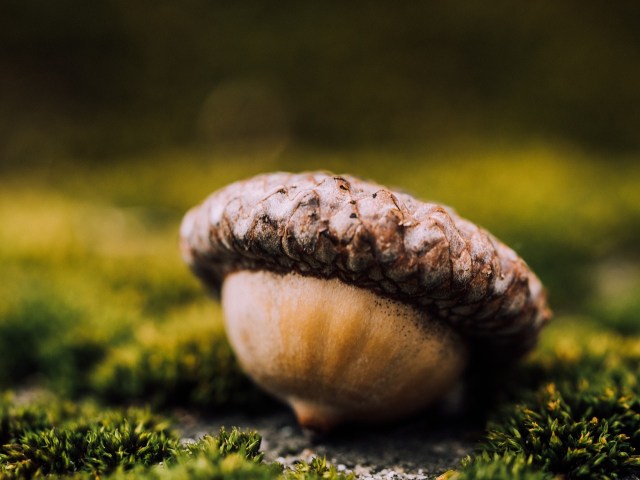
acorn-1030819_1280

There are two kinds of people in this world, throwers and savers (or hoarders, if your saving has breached the clinical level). I’m a thrower married to a saver, which means I have thrown out some stuff I later wished I’d kept, and my husband has saved a lot of stuff we haven’t used in ages and probably never will. But, recently, I came across something I’m really glad I kept all these years.

I was going through a box of old papers, happily doing my “thrower” thing, when I discovered a manilla folder marked, in my handwriting, “Michelle’s Misc. Creative Writing.” Whatever it was, I didn’t remember saving the folder, nor what it might contain. I opened it up to find a two inch thick sheaf of, well…my miscellaneous writings from years gone by. Sermon notes, creative writing assignments and essays for English classes, poems, song lyrics, short stories, even what looked like the manuscript to a devotional I’d started on.

Fortunately, I had dated most of the papers, so I could see that the bulk of them were written when I was between the ages of about 14 to 21. As I leafed through pages of adolescent script alternating with dot matrix printing, I started noticing a common thread. Nearly all of this writing was about God, faith, the Bible, worship, wanting to know Him more. To be sure, the faith was childlike (if not downright childish), and the theology was often immature and somewhat unbiblical.

But it was there. And all these years I’d wondered whether or not that faith had existed back then at all.

You see, I was raised in a Christian home, and, although I was most definitely a depraved little wretch, my outward behavior was fairly decent compared with some of the other kids my age. I got good grades, never had behavior problems in school, was at church every time the doors were open, never tried sex, drugs, cigarettes, crime, or anything else teens sometimes get into. Overall, I was your basic goodie two shoes. So, when I prayed a prayer for salvation at age 12, there was no great big radical lightning bolt change in my life. Things continued pretty much as usual. Had my heart changed? Looking back all those years later as an adult with terrible recollective abilities, I couldn’t really remember.

But as I skimmed through page after page of longing for God, love for God, wanting to please God, something I told a reader not long ago -who was concerned she might not be saved – hit me like a ton of bricks:

Lost people don’t have that kind of “want to.”

I didn’t have all my doctrine straight or walk in Christian maturity, and I wouldn’t have known an apologetic from an apostate, but I wanted God. I loved Him as best I knew how at the time. I had that “want to.” I was saved. God had used a dusty box of old papers to reassure me and put those doubts to rest. It was one of those precious moments alone with the Lord that you never forget.

So to sort of celebrate that little moment in my walk with the Lord, I wanted to share with you one of the poems I found in that folder. It was undated, but I think I wrote it when I was in high school or college. Now, I’m just going to warn you up front, it’s long and it’s lame and it’s (a)corny, and some of the cadence is off and so is the doctrine, and it just plain needs a lot of editing. But I had a good laugh over it, and I thought you might, too. (Hint- it’s funnier if you read it out loud.)

I Am a Little Acorn

I am a little acorn,
A fact that’s plain to see,
But remember that the might oak
Was once a nut like me.

When I was a baby bud,
I burst forth from a limb,
I grew a little every day,
Out from my little stem.

As I grew older day by day,
An identity crisis hit me.
I searched my heart and searched my soul
To find out just what I should be.

I did not want to be a nut.
I cried, “I cant! I won’t!”
Because sometimes you feel like a nut,
Sometimes you don’t.

I tried to be a button,
And a rolling tumbleweed.
I tried to be a jelly bean,
But still did not succeed.

Oprah, Geraldo, Sally, and Phil*
All let me spill my guts.
“Something other than an acorn?” they asked,
“You can’t! You must be nuts!”

My fame and fortune quickly spread,
I was known both far and wide.
But no one knew my secret dark,
I was lost and scared inside.

Then finally, one day, I turned to the Lord,
And cried out with all my might,
“Why, oh why, do I continue to fail?
Why won’t something go right?”

“Remember to whom you are speaking,” said He,
“I am the Great I Am,
But I’m also the root of David,
And the seed of Abraham.”

“From small beginnings come great things,
This fact is tried and true,
The mighty oak could never be,
Without an acorn like you.”

“All are given different gifts,
And must do as best they can,
To find a way to channel them
According to God’s plan.”

“So cheer up little acorn,
And learn the secret known by few:
Be content with what you’re given,
And let God work through you.”

“I’ll be the best acorn ever!” said he.
“I’ll do as God has led.”
Then standing bold and brave and tall,
The acorn proudly said:

“I am a little acorn,
A fact that’s plain to see,
But remember that the mighty oak
Was once a nut like me.”

(*You’ve probably heard of Oprah. Geraldo Rivera, Sally Jessie Raphael, and Phil Donohue all used to host talk shows, too.)

Don’t despair if you’re still a little acorn in your faith. You keep pursuing that “want to” for God, and He’ll grow you into a mighty oak in Christ.

How do I know? Because He’s doing just that for a nut like me. 🌰