Christmas

Pondering God’s Promises

But Mary treasured up all these things,
pondering them in her heart. Luke 2:19

Ponder. It isn’t a word we use very often, is it? It means to spend some time in reflection, considering, thinking deeply about things. Christmas is a time for pondering, and no one knew that better than Mary.

Luke 2:19 finds Mary, Joseph, and Jesus alone in the stable, at the culmination of a whirlwind of mind-boggling events.

Think about all Mary had been through in the last few months…

  • After 400 years of silence from God, between the close of the Old Testament and, now, the opening of the New, an angel showed up – a staggering event in and of itself – and brought her a nearly incomprehensible message. Mary was going to be the mother of God’s promised Messiah. And that’s not all. She would be the only woman ever to conceive by the Holy Spirit.
  • At some point Mary had to break the news to her parents that she was pregnant. Were they godly people of faith, as quick to believe as Mary had been? Or, did Mary fear they might be skeptical and shocked?
  • Next to hear the news was her betrothed, Joseph. Incredulous, his first thought was to obtain a quiet divorce. But God sent another angel and reassured him personally.
  • How did Mary’s friends, loved ones, and community react to her pregnancy? Did she have to endure long months of whispers, stares, and gossip? Was she in danger of stoning or other punishment as prescribed by Levitical law?
  • A visit to Elizabeth’s house yielded even more amazement as Mary’s cousin related her own incredible pregnancy story.
  • Next on the agenda was a long, uncomfortable trip to Bethlehem and the pain and danger that came with first century childbirth.
  • Before she was anywhere near ready for visitors, the shepherds arrived and regaled the little family with their fantastic story of a sky full of angels proclaiming the birth of the Savior to them.
  • And to top it all off, lying in her arms was a brand new, precious baby- her first. All of us who are moms remember the weightiness, and sometimes, panic, of holding our first baby. “What do I do first? How will I take care of this child? What if I mess it all up?” And Mary’s first child was God incarnate. King of the universe. Savior of the world. Think she felt a tad inadequate?

Mary’s had quite a year, to put it mildly. And now the shepherds have left and she has a moment to catch her breath and reflect on all these events that led up to God fulfilling His promises to her, to Israel, and to the whole world. The promise of the Messiah- Jesus.

And just as Mary pondered the fulfillment of God’s promises in Christ, Christmas time is an oh-so-appropriate time for us to ponder the promises He has made to us in Christ.

Sometimes, it can be difficult to know exactly what God has promised us. If you peruse the books at your local Christian retailer or flip on your TV or radio to many of the “Christian” stations, you’ll hear all sorts of things that God has supposedly promised us, things like: a bigger house, a better job, healing from every disease, that you’ll be able to hear God’s voice speaking to you, miracles, restored relationships, a better life…

But does God really promise us all these things?

How do we find out what God has really promised us? We go straight to the source- God’s word. It is the only truly trustworthy source for knowing what God has promised us.

But there are a lot of promises in the Bible. Some of them are for us today and some of them aren’t. For example, did God promise you that you would conceive by the Holy Spirit and give birth to the Messiah? No. That promise was only for Mary. Did God promise the United States Army that if they would go march around an enemy city and blow some horns that the city walls would fall down and they would conquer that city? No. That was for only for Joshua and Israel, and only that one time.

We learn which promises are for us by being good students of God’s word. By picking up our Bibles (and I would urge you, the best way to learn God’s word is to study God’s word, not somebody else’s book). We pick up our Bibles and study them in context, in a systematic way, rightly dividing the Word of truth, paying attention to who God is talking to in each passage.

So, as it’s Christmas time and we reflect back on the Christmas story – maybe even pondering some of the same things that Mary did – what are some of the things God has promised us in Christ?

God has promised us forgiveness from our sin in Christ

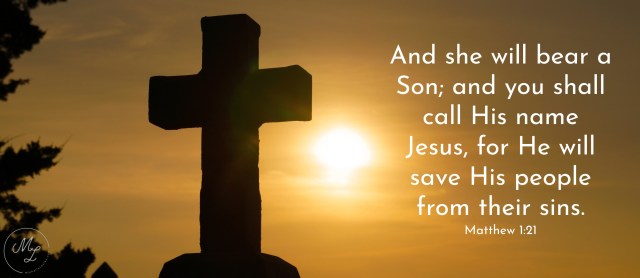
When the angel came to visit Joseph and told him to go ahead and take Mary as his wife, the angel said:
Romans 5:8 says:

but God shows his love for us in that while we were still sinners, Christ died for us.

And 1 John 1:9 says:

If we confess our sins, he is faithful and just to forgive us our sins and to cleanse us from all unrighteousness.

The Bible says that all of us are dirty, rotten, wretched sinners. None is righteous, no not one. And since all of our good deeds – never mind the bad ones – are like filthy rags, there’s no way we could ever hope to make up for our sin by being a good person or doing good things.

And God, in His beautiful mercy and grace, doesn’t even require us to try. He reached down into our filth and sent His own Son to take the death penalty you and I deserve for our sin. He absorbed God’s wrath toward us, so that we can stand before God clean if we’ll just repent and trust what Christ did for us on the cross. God promises to remove our sins as far as the east is from the west, to drop them in the depths of the sea, and to remember them no more. God promises us forgiveness in Christ.

God promises us trials and persecution

Doesn’t sound very Christmasy, does it? But perhaps we’ve forgotten the part of the Christmas story in which Mary and Joseph had to take Jesus and flee to Egypt because Herod wanted to kill Him.

And just as Jesus faced persecution and hardship, we can expect to face it too. Second Timothy 3:12 tells us:

Indeed, all who desire to live a godly life in Christ Jesus will be persecuted,

And John 16:33 says:

In this world you will have tribulation.

Just as Herod hated Christ, the world will hate us because of Christ. Just as Christ suffered because He was born into a broken and sinful world, so, we will suffer various trials and tribulations. In this world, you will have tribulation. But is that the end of that verse? No – praise God! – it is not.

The remainder of John 16:33 says “But take heart; I have overcome the world.” The trials and tribulations and persecutions we face are all just light and momentary afflictions, because Christ has overcome the world- and our hope is not in this world.

One day, we will shuffle off this mortal coil and see Christ Jesus face to face. And when we look upon the beautiful face of Christ, if we even remember the troubles of this world, we won’t complain or whine or ask, “Why did You allow me to go through those things?” or “Why didn’t you give me my best life now?”  

We’ll say:

It was worth it.

And in the meantime, God promises to walk through that suffering with us. “I will never leave you nor forsake you,” He says, “Lo, I am with you always, even to the ends of the age.” God promises us trials and persecution, but He promises to walk through them with us.

God promises us joy

When the angel appeared to the shepherds to announce the birth of Christ, he said:

“All the people.” That’s us, too! When we think about the good news of the gospel, it should bring us great joy.

Galatians 5:22 tells us that joy is part of the fruit that comes from the Holy Spirit indwelling us:

But the fruit of the Spirit is love, joy…

First Peter 1:8 says:

Though you have not seen him, you love him. Though you do not now see him, you believe in him and rejoice with joy that is inexpressible and filled with glory.

And why is that joy “inexpressible and filled with glory”? Why is it joy that will never fade away? Because our joy is found in Christ: who He is and what He has done for us. Joy isn’t found in temporary circumstances- when you’re healthy, when you have a lot of money in the bank, when your kids are all successful, when your job is going well. Those things can all be taken away in the blink of an eye.

But if your heart, your mind, and your life have been transformed by the good news of the gospel, you can have joy even in the midst of devastation and heartbreak, because Christ isn’t going anywhere. He will always hold you and keep you and comfort you. He hears you when you pray and does what’s best for you. He takes care of you. He allows you to draw close to Him and discover more and more about Him through the study of His word. He gives you fellowship with your brothers and sisters in Christ.

That is the kind of joy God promises us in Christ.

God promises to provide for us

I wonder if Mary, while she was pondering all of these amazing things, reflected on the many ways God had provided for her. He provided a husband to take care of her, a cousin to encourage her, protection throughout her pregnancy, and a place to stay in Bethlehem.

God promises to provide for us, too. Philippians 4:19 says:

And my God will supply every need of yours according to his riches in glory in Christ Jesus.

And Jesus said in Matthew 6:31-33:

Therefore do not be anxious, saying, ‘What shall we eat?’ or ‘What shall we drink?’ or ‘What shall we wear?’ For the Gentiles seek after all these things, and your heavenly Father knows that you need them all. But seek first the kingdom of God and his righteousness, and all these things will be added to you.

God is a good and loving Father. He knows all of our needs even better than we do. He wants us to work hard and ethically, make wise financial decisions, and be good stewards of the resources He has given us, but He wants us to trust Him and depend on Him – not a paycheck or a job or insurance or a savings account – to take care of us.

God provided manna in the wilderness every day. He owns the cattle on a thousand hills. The earth is the Lord’s and the fullness thereof. And He has promised to provide for us.

Those are just a few of the wonderful things God has promised us. One of the great things about His promises is that there are so many of them. I could go on and on about God’s promises of peace, contentment, hope, love, Heaven, justice…

But I’d like to close with my favorite promise. It’s the promise that is foundational to all of God’s other promises:

All of God’s promises from Genesis to Revelation are fulfilled in Christ. God keeps His promises, and He keeps them in Christ.

As Mary pondered all the things God had promised her about Jesus, she didn’t have to wonder if they were true or not. She had seen them come true with her own eyes.

How can we know that God keeps His promises to us in Christ? Because He proved it to us. He backed up His word with action:

Jesus Christ- the second Person of the Trinity, creator and ruler of the universe, King of Kings, Lord of Lords, the prince of Heaven, worshiped by angels, all powerful, all mighty, all knowing, worthy of all glory, honor, and praise – did not consider these things as things to be grasped or held tightly to.

But He emptied Himself and took on the form of a servant, being born in the likeness of men. Born, not into wealth, power, prestige, or position; not into a mansion or a palace, but born to plain, simple, anonymous people. And in humility, for most of His years, He lived a plain, simple, anonymous life. Resisting every temptation in thought, word, and deed, that He might become the perfect sacrifice for our sin.

And in the fullness of time, He was despised and rejected by men. Subjected to a kangaroo court, he was tried and convicted for crimes he did not commit, and sentenced to death- even death on a cross

Harsh, sinful men took Jesus out and smashed a crown of thorns down on His head. They mocked and scorned Him. They pulled His beard out. They pummeled Him with their fists. And then they whipped Him nearly to death.

They laid the rough, splintery cross beam across Jesus’ bruised and bloodied shoulders and led Him in humiliation through the streets of His beloved Jerusalem, outside the city gates, to be executed like a common criminal.

Those evil men used the very hands Jesus Himself had knit together in their mothers’ wombs to reach down, pick up hammers, and drive spikes through wrists and feet of their Creator.

And Jesus hung there on that cross for hours in excruciating pain to to endure the holy, just, and righteous wrath of God toward our sin, to take the punishment that we deserve- and He did not.

Later that day, while Mary mourned, and the disciples scattered, and Satan thought he had finally conquered the God he hated, they took Jesus’ bloody, broken body down off the cross, laid him in a cold, dark, lonely cave, and rolled a stone across the opening.

Friday…

Saturday…

But Jesus didn’t stay there, did He?

On that bright, beautiful, first Easter Sunday, Jesus left behind the sting of the grave and the bonds of death, and He walked out of that tomb conquering sin, death, hell, and the grave FOREVER.

FOREVER.

And He did it for you, and He did it for me. And any God who goes to those lengths for you and for me can be trusted to keep His promises. ALL of His promises.

God’s word is true, ladies- all of it. God can be trusted- He proved it in Christ. You can stake your life on His promises. You can stake your eternity on His promises. 

Ponder that.

Prayer, Sanctification, Throwback Thursday, Worship

Throwback Thursday ~ Great Expectations

Originally published February 6, 2014expectgreatthings-necklace (1)

Do we expect too much from God? Is that even possible?

No.

Yes.

Well, kinda.

You see, I’m not talking about expecting something and God being unable to deliver it. That’s just plain silly when talking about our omnipotent God. No, what I’m talking about is whether or not the expectations we come up with are grounded in biblical reality.

What do we mean when we talk about “praying expectantly” or coming to a time of corporate worship, study, or prayer, and “expecting God to do something”? Just what is it we are expecting God to do?

Could it be that He’s already doing something and we’re just not seeing it?

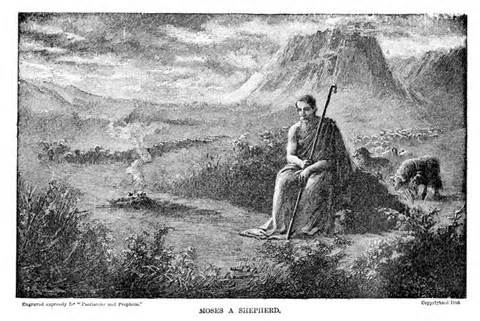
Sometimes, when we read God’s word, we expect God to do something just as “big” as He did in Moses’, Paul’s, or some other Bible hero’s life. We forget that the Bible is sort of like a “highlight reel” of the events in the lives of a handful of people that God drafted to be part of His visible activity at that moment in history.

We focus on the moments Moses had at the burning bush or walking through the Red Sea, and that’s what we want, too. r643167_4468740But we forget that Moses’ life wasn’t like that every day. We forget about the eighty years he spent wandering around the desert, half in the day to day monotony of shepherding on the back side of Midian, the other half, wandering around the wilderness with the people of Israel.

Eighty years of nothing special. Day after day of ordinary. Week after week of God not “showing up” and doing something amazing. Eighty years. That’s a lifetime for most of us.

Was God any less at work in Moses’ eighty years of desert thwandering than He was when He gave Moses the Law or spoke to him face to face or sent manna? Of course not. During those days, God was protecting Moses from the heat and wild animals, providing food and shelter for him, blessing him with a wife and children, directing his steps, teaching him obedience and trust.

Just like He does for us.

Have you read a Bible passage this week that allowed you to see more of God’s glory? God is doing something. He’s revealing Himself to you.

Are you praying for someone’s salvation? God is doing something. He’s working on the heart of that person.

Did you have a place to sleep last night and food on your table today? God is doing something. He’s providing for your needs.

Do you leave church on Sundays having been fed the truth of God’s word by your pastor? God is doing something. He’s growing you to spiritual maturity.

Is it possible that we’re expecting God to do something in our lives that isn’t in His particular plan for us? You aren’t Moses, and neither am I. Neither were the million or so other Israelites Moses led out of Egypt, and neither have the billions of other people been who have inhabited earth since Creation. Moses was Moses. You are you. God doesn’t have the same plan for your life He had for Moses’ life.

And, by the way, have you ever noticed that most of the people in the Bible through whom God did something “big” were not expecting it or asking for it? Moses wasn’t expecting God to show up in that burning bush. David wasn’t asking God to do great things in his life when Samuel dropped by to anoint him as the next king. Both of them were hanging out with the sheep when God called them. Paul thought he was already an awesome servant of God when he got knocked off his high horse. Mary wasn’t expecting to be expecting. She was just a teenage girl growing up and learning how to run a household.

1 Thessalonians 4:10b-12 says:

But we urge you, brothers to do this more and more, and to aspire to live quietly, and to mind your own affairs, and to work with your hands, as we instructed you, so that you may walk properly before outsiders and be dependent on no one.

That’s what all of those Bible characters were doing when God chose them. Just regular people living regular lives doing regular work. Just like billions of other people through whom God has not chosen to do anything big and spectacular.

keep-calm-god-is-at-workBut that doesn’t mean God hasn’t been “doing something” in all of our lives. In fact, the vast majority of the work God does in our lives every single day goes unnoticed and unappreciated.

So, instead of setting our expectations on those very rare “wow factor” works of God that seem so appealing, maybe we should be asking Him to open our eyes to, and make us thankful for, all of the things He’s already doing in our lives. Instead of having great expectations of things that God has never promised us, maybe we should ask Him for, and expect Him to, do what He has promised:

Forgiveness for our sin

Christ-likeness

Provision for our needs

Endurance

The ability and opportunity to help others

Faithfulness

Humility

Patience

The opportunity to share the gospel

Because “all the promises of God find their Yes in him.” You can expect it.

Discernment, Old Testament, Prayer, Sunday School

Properly Praying the Promises ~ Sunday School Lesson ~ 6-15-14

PicsArt_1402888803113

These are my notes from my ladies’ Sunday School class this morning. I’ll be posting the notes from my class here each week. Click here for last week’s lesson.

Through the Bible in 2014 ~ Week 24 ~ June 8-14
Proverbs 16-24, 1 Kings 5-8, 2 Chronicles 2-7, Psalm 136
Properly Praying the Promises

There are lots of different ways of praying, and Solomon’s prayer at the dedication of the completed temple shows us several. Today, we’re going to take a look at the way Solomon addressed God’s promises in his prayer, and how we can do the same.

2 Chronicles 6:12-7:17

Humility (12-15) Solomon begins his prayer by humbling himself before the Lord. His physical posture is an outward, visible-to-the-people indication of his inward attitude of the heart and sets an example for the people, that they should humble themselves before God as well. When we pray, we are to approach God in humility.

As Solomon did, we:

  • confess God’s uniqueness, magnitude, and supremacy above all else, (14- “there is no God like you in heaven or on earth”).
  • confess God’s faithfulness and fulfillment of promises to His people (14-15- “keeping covenant and showing steadfast love to your servants…You spoke with your mouth, and with your hand have fulfilled it this day.”) What are some promises God has made to Christians that you have seen fulfilled?
  • ask God to keep His promises not yet fulfilled (16- “keep for your servant David my father what you have promised him,” 17- “Now…let your word be confirmed, which you have spoken”), not because there is any doubt that He will, but:
  1. as a way to call to mind and confess God’s faithfulness to keep His promises in the past. Seeing God’s track record of keeping His promises builds our faith and trust that He will continue to do so.
  2. as another way of acknowledging God’s attributes. He is faithful, sovereign, trustworthy, and a promise keeper.
  3. as a reminder to us to give God thanks, praise, and glory for His faithfulness and promise keeping.
  4. as a way of declaring our trust in Him. We ask Him to keep His promises, not hoping that He might, but knowing that He will.
  5. as a way of submitting ourselves to God, agreeing with Him about what He has spoken, rather than asking Him to agree with us about what we have spoken.
  6. as a way of praying in God’s will and in Jesus’ name. Often, when we pray, we’re not certain precisely what God wants to do (His will) in a given situation. When we ask Him to fulfill His promises, we can be certain we are praying for His will to be done and that He will do it.

cross-106416_640-1


What’s a promise, anyway?

When thanking God for fulfilling His past promises, or asking Him to fulfill as yet unfulfilled promises, we need to make sure we understand what constitutes a promise (and what does not) and which promises are for us as Christians (and which are not).

Not a Promise (Proverbs 22:6):
For example, we are in the middle of reading Proverbs. The proverbs aren’t promises (to us or anyone else). They are general rules of thumb. We can think of exceptions to many of them. “Raise up a child in the way he should go and when he is old he will not depart from it,” is generally true, but we have all certainly known of godly parents here and there who did their best to raise their child biblically, and then the child rebelled as a teenager or young adult and never came back to the faith.

Just because something is stated in the Bible doesn’t mean it is a promise that God is bound to. We have to discern between promises and other types of statements.

I Never Promised YOU a Rose Garden:
We also have to discern between promises that are meant for us as Christians and promises that were meant for another individual or group of people by studying God’s word in context.

Hi, my name is not David:
It’s easy to see, for example, in v. 16, that God’s promise, “You shall not lack a man to sit before me on the throne of Israel…” was made specifically to David, and not to us. First of all, Solomon clearly says, “keep for your servant David my father what you have promised him.” But even if it didn’t say that, it’s clear in other ways: Israel no longer has a king, you and I are not citizens of Israel, and there are no other Scriptures which indicate that God promises every Christian a line of heirs who will be kings of Israel.

“If my people…” Which people? (2 Chronicles 7:11-18)

tumblr_mo0ykqaNjr1ron0poo1_500


However, just one chapter over, is a verse that is often misunderstood to be a direct promise for Christians. 2 Chronicles 7:14 says:

if my people who are called by my name humble themselves, and pray and seek my face and turn from their wicked ways, then I will hear from heaven and will forgive their sin and heal their land.

Now, you’ve seen this verse on memes and bumper stickers and coffee cups. What do you think people usually mean when quoting this verse today? This verse is often quoted as a call to prayer and revival for American Christians, with the promise that if we pray, repent, and humble ourselves, God will turn America around and make it “one nation under God” again. We’ll have a Christian president and legislators who make moral laws. Abortion and homosexual “marriage” will be made illegal, and Christian prayer will be reinstituted in public schools. But is that really what this verse is promising, and is it promised to us as 21st century American Christians? Let’s take a look.

The first thing to notice about this verse is the very first letter. What kind of letter does it start with? A lowercase one. What does that indicate? It’s not the first word of a sentence. Verse 14 starts in the middle of a sentence.

If I gave you a recipe that consisted only of, “whip until frothy, adding the sugar gradually,” and told you to make the dish, you’d have a lot of questions. What am I making? Whip what? How much sugar? What else goes in the dish? What do I do before and after whipping and adding the sugar? In the same way that we can’t fully understand a recipe by just seeing one line of it, we don’t just rip one line or verse of Scripture out of the Bible without looking at the whole “recipe,” or context, or we won’t have an accurate picture of what it’s saying.

Let’s back up just one verse to the beginning of this sentence. Verse 13 says:

When I shut up the heavens so that there is no rain, or command the locust to devour the land, or send pestilence among my people, 14- if my people who are called by my name humble themselves, and pray and seek my face and turn from their wicked ways, then I will hear from heaven and will forgive their sin and heal their land.

This gives us a little better picture of what’s going on. Who is “I” and “my” here? Obviously God, because He’s the only one with the power to shut up the heavens, etc. But who is “my people” in both of these verses? Israel? All Christians for the past 2000 years? 21st century American Christians? Well let me ask you a couple of questions:

Supporting Scriptures:
Are there any other verses of Scripture that would support that this is a direct promise to all Christians for the past 2000 years or to 21st century American Christians? I don’t know of any other supporting passages that imply that if Christians humble themselves and repent that God will give them a nation governed by biblical laws and leaders and that we will have a society that behaves itself, morally.

In fact, in the New Testament, in the early church, we see the exact opposite. The more the church prayed, humbled itself, and spread the gospel, the more Rome persecuted Christians. Thousands were crucified, burned alive, thrown to the lions, and otherwise tortured and martyred. And yet, we never hear of them claiming 2 Chronicles 7:14 as God’s promise to them that He would turn things around if they would only humble themselves and seek His face more.

We have Jesus Himself saying, “If they persecuted me, they will also persecute you” (John 15:20) and, “you will be hated by all for my name’s sake.” (Matthew 10:22). In 2 Timothy 3:12-13, Paul says: “Indeed, all who desire to live a godly life in Christ Jesus will be persecuted, while evil people and impostors will go on from bad to worse, deceiving and being deceived.”

We can see the same thing today in countries like North Korea, Pakistan, and others that persecute Christians. Things are getting worse for Christians in those countries, not better (as 2 Timothy said), and none of those governments are turning around and embracing Christian ways.

Pestilence, anyone? (2 Chronicles 6:26-30)
When was the last time America experienced widespread drought, locust infestation, or pestilence? Verse 13 specifies that these agricultural hardships are the ones that God promises to heal. It is a promise of literal healing of the land so that crops will grow unharmed, game will be plentiful, and people will be able to eat, not a promise of a metaphorical “healing” of a nation’s immorality.

Now, if we claim that this “healing of the land” applies to us today, then we also have to claim that God will punish our disobedience with those very things He promises to heal (drought, locusts, and pestilence), because that’s what these verses are talking about. The people would disobey, God would punish them with these things, they would repent, and God would heal the land.

We can’t claim the promise without claiming the punishment.

And that’s not the way God disciplines Christians, as a whole, today. If it were, we’d see a lot more agricultural problems in our country. So, if we give it a little thought and a little context, we can see that verse 14 does not apply to Christians. Who does it apply to? Who is the “my people” God is talking about? Let’s read verses 11-18 and 6:26-30.

Now, it’s very clear that these are specific instructions to Solomon by God after the dedication of the temple, and a specific answer to Solomon’s prayer, and that the people that both Solomon and God are referring to is the people of Israel.

But it just sounds like it’s for us!
It may sound like this passage is a promise to us, but it isn’t. Just because something sounds good to us doesn’t mean it applies to us.

The reason this passage sounds like it applies to us is because there are some principles in this verse that do apply to us. How do we know? Because they are supported by other clear and direct Scriptures that we know apply to us.

Are we God’s people who are called by His name”? Yes (Acts 11:26)

Should we humble ourselves? Yes (1 Peter 5:6)

Should we pray and seek God’s face? Yes (1 Thessalonians 5:17)

Should we turn from any wicked ways we practice? Yes (Acts 3:19)

Will God hear from Heaven if we do these things? Yes (1 John 5:14-15)

Does God promise to heal our land of the agricultural problems He has punished our disobedience with if we do these things? No. He hasn’t. They don’t exist. He won’t. And there are no other supporting Scriptures that say He will.

Asking, as Solomon did, for God to fulfill His promises and thanking Him for those already fulfilled is a wonderful and worshipful way to pray. But, if we truly want to pray “in the name of Jesus” and pray rightly for God’s will to be done, we must use wisdom, discernment, and the tools God has given us to discover exactly what He has promised us.

And this is the confidence that we have toward him, that if we ask anything according to his will he hears us. And if we know that he hears us in whatever we ask, we know that we have the requests that we have asked of him.
1 John 5:14-15

Prayer, Sanctification, Worship

Great Expectations

expectgreatthings-necklace (1)

Do we expect too much from God? Is that even possible?

No.

Yes.

Well, kinda.

You see, I’m not talking about expecting something and God being unable to deliver it. That’s just plain silly when talking about our omnipotent God. No, what I’m talking about is whether or not the expectations we come up with are grounded in biblical reality.

What do we mean when we talk about “praying expectantly” or coming to a time of corporate worship, study, or prayer, and “expecting God to do something”? Just what is it we are expecting God to do?

Could it be that He’s already doing something and we’re just not seeing it?

Sometimes, when we read God’s word, we expect God to do something just as “big” as He did in Moses’, Paul’s, or some other Bible hero’s life. We forget that the Bible is sort of like a “highlight reel” of the events in the lives of a handful of people that God drafted to be part of His visible activity at that moment in history.

We focus on the moments Moses had at the burning bush or walking through the Red Sea, and that’s what we want, too. r643167_4468740But we forget that Moses’ life wasn’t like that every day. We forget about the eighty years he spent wandering around the desert, half in the day to day monotony of shepherding on the back side of Midian, the other half, wandering around the wilderness with the people of Israel.

Eighty years of nothing special. Day after day of ordinary. Week after week of God not “showing up” and doing something amazing. Eighty years. That’s a lifetime for most of us.

Was God any less at work in Moses’ eighty years of desert thwandering than He was when He gave Moses the Law or spoke to him face to face or sent manna? Of course not. During those days, God was protecting Moses from the heat and wild animals, providing food and shelter for him, blessing him with a wife and children, directing his steps, teaching him obedience and trust.

Just like He does for us.

Have you read a Bible passage this week that allowed you to see more of God’s glory? God is doing something. He’s revealing Himself to you.

Are you praying for someone’s salvation? God is doing something. He’s working on the heart of that person.

Did you have a place to sleep last night and food on your table today? God is doing something. He’s providing for your needs.

Do you leave church on Sundays having been fed the truth of God’s word by your pastor? God is doing something. He’s growing you to spiritual maturity.

Is it possible that we’re expecting God to do something in our lives that isn’t in His particular plan for us? You aren’t Moses, and neither am I. Neither were the million or so other Israelites Moses led out of Egypt, and neither have the billions of other people been who have inhabited earth since Creation. Moses was Moses. You are you. God doesn’t have the same plan for your life He had for Moses’ life.

And, by the way, have you ever noticed that most of the people in the Bible through whom God did something “big” were not expecting it or asking for it? Moses wasn’t expecting God to show up in that burning bush. David wasn’t asking God to do great things in his life when Samuel dropped by to anoint him as the next king. Both of them were hanging out with the sheep when God called them. Paul thought he was already an awesome servant of God when he got knocked off his high horse. Mary wasn’t expecting to be expecting. She was just a teenage girl growing up and learning how to run a household.

1 Thessalonians 4:10b-12 says:

But we urge you, brothers to do this more and more, and to aspire to live quietly, and to mind your own affairs, and to work with your hands, as we instructed you, so that you may walk properly before outsiders and be dependent on no one.

That’s what all of those Bible characters were doing when God chose them. Just regular people living regular lives doing regular work. Just like billions of other people through whom God has not chosen to do anything big and spectacular.

keep-calm-god-is-at-workBut that doesn’t mean God hasn’t been “doing something” in all of our lives. In fact, the vast majority of the work God does in our lives every single day goes unnoticed and unappreciated.

So, instead of setting our expectations on those very rare “wow factor” works of God that seem so appealing, maybe we should be asking Him to open our eyes to, and make us thankful for, all of the things He’s already doing in our lives. Instead of having great expectations of things that God has never promised us, maybe we should ask Him for, and expect Him to, do what He has promised:

Forgiveness for our sin

Christ-likeness

Provision for our needs

Endurance

The ability and opportunity to help others

Faithfulness

Humility

Patience

The opportunity to share the gospel

Because “all the promises of God find their Yes in him.” You can expect it.