Christmas, Guest Posts

Guest Post: The Gospel in Handel’s Messiah

If your theology pretty much matches up with mine (as outlined in my โ€œWelcomeโ€ and โ€œStatement of Faithโ€ tabs in the blue menu bar at the top of this page) and youโ€™d like to contribute a guest post, drop me anย e-mail, and letโ€™s chat about it.

The Gospel in Handel’s Messiah
by Alexandra Thomas

In early December 2017 I attended a performance of Handelโ€™s Messiah with my parents. It was my first time experiencing the entire piece. I did not know it well, but I came home and listened to it during Advent with my Bible open. Did you know that Messiah is composed entirely of Scripture? Do you know that it tells the gospel from start to finish? Read on to be encouraged again by the gospel that saved you or to hear Godโ€™s heart for you if you have never heard the gospel before. May you be challenged to use what you learn to share the gospel this Christmas season.ย 

Part 1: O Come O Come, Emmanuel

Part one of Messiah references Old Testament prophecies of the coming Messiah then tells the story of Jesusโ€™ birth and early ministry. It opens with โ€œComfort ye, comfort ye my people, saith your Godโ€ (Isaiah 40:1) and goes on to the prophet to come before Jesus, John the Baptist (see Matthew 3:1-3).

The voice of him that crieth in the wilderness, prepare ye the way of the Lord; make straight in the desert a highway for our God (Isaiah 40:3; Matt 3:3)

Handel emphasizes Godโ€™s heart for the nations throughout the first part of Messiah. God said to Abraham in Genesis 22:18 that through him all the nations of the earth would be blessed. Handel highlights how the glory of the Lord will be revealed (Isaiah 40:5) and the desire of all peoples will be fulfilled in His coming (Haggai 2:6). The nations shall come to the light (Isaiah 60:3) and when this King comes He will speak peace to the nations (Zech 9:9-10). 

Here comes the Christmas story! The coming King would be born through a virgin (Isaiah 7:14). God promised this coming King would bring light to people walking in darkness. He would be called Wonderful, Counselor, Mighty God, Everlasting Father, and the Prince of Peace (Isaiah 9:2,6). The โ€œgood news of great joyโ€ was first told to shepherds by an angel of the Lord, and glory and praise were given to God (Luke 2:8-11,13-14).

The first section of Messiah ends with prophecies pointing to Jesusโ€™ ministry (Isaiah 35:5-6) and a look at the character of this Messiah. We know from the Gospel accounts that Jesus healed those who were blind (Matt. 9:27-31), restored speech to those who were mute (Matt. 9:32-33), restored the bodies of those who were paralyzed (Matt. 9:1-7), and opened the ears of those who were deaf (Mark 7:31-37). 

โ€œ…they brought Him all the sick, those afflicted with various diseases and pains, those oppressed by demons, those having seizures, and paralytics, and He healed them.โ€ (Matthew 4:24)

In John 10:11 Jesus says, โ€œI am the Good Shepherd. The Good Shepherd lays down his life for the sheep.โ€ Handel returns to Isaiah 40, describing how God cares for His people like a shepherd feeding His flock, gathering the lambs in His arms, and gently leading those who are with young. Part one concludes the same as it began. โ€œComfort yeโ€ of Isaiah 40:1 is seen fulfilled in Christ in the closing songs taken from Matthew 11:28-30:

Come unto Him, all ye that labor, that are heavy laden, and He will give you rest

Take His yoke upon you, and learn of Him; for He is meek and lowly of heart; and ye shall find rest unto your souls.

His yoke is easy and His burden is light.

Part Two: The Cross and the Empty Tomb

Part two of Messiah opens with the words of John the Baptist from John 1:29:

Behold the Lamb of God, that taketh away the sins of the world.

The music turns to more sorrowful melodies as Handel walks us through the sufferings of our Savior as prophesied in Isaiah 53:3-6, Psalm 22:7-8, Psalm 69:20, and Lamentations 1:2. You can read fulfillment of these prophecies in Lukeโ€™s account of Jesusโ€™ arrest and crucifixion in Luke 22 and 23.

He was despised and rejected of men; a man of sorrows and acquainted with grief.

He hid not His face from shame and spitting.

He was wounded for our transgressions; He was bruised for our iniquities.

All they that see Him, laugh Him to scorn

He looked for some to have pity on Him, but there was no man; neither found He any to comfort Him

Behold, and see if there be any sorrow like unto His sorrow.

Why do we need our sins taken away? Why did our Savior need to suffer? This section includes Isaiah 53:6, which explains that โ€œall we like sheep have gone astray; we have turned- every one- to his own way; and the Lord has laid on Him the iniquity of us all.โ€ Though not every verse of Isaiah 53 is sung in Messiah, a close reading of this chapter tells us so much about the gospel. It was Godโ€™s will to allow Jesus to suffer (โ€œto crush himโ€ v.10). By this Jesus was made an โ€œoffering for guiltโ€ (v.10) so that those who repent and put their trust in Him can be โ€œaccounted righteousโ€ (v.11) because โ€œHe shall bear their iniquitiesโ€ (v.11). These prophecies and their fulfillment are summarized so well by the Apostle Peter:

โ€œWhen He was reviled, He did not revile in return; when He suffered, He did not threaten, but continued entrusting Himself to Him who judges justly. He Himself bore our sins in His body on the tree, that we might die to sin and live to righteousness. By His wounds you have been healed. For you were straying like sheep, but have now returned to the Shepherd and Overseer of your souls.โ€ (I Peter 2:23-25)

Handel refers to Isaiah 58:8 to note Jesusโ€™ death: โ€œHe was cut off out of the land of the livingโ€ฆโ€ then introduces Jesusโ€™ resurrection with Psalm 16:10: โ€œBut thou didst not leave His soul in hell; nor didst thou suffer thy Holy One to see corruption.โ€ From here part two takes on brighter sounds with quicker tempos to paint a โ€œsound picture.โ€ The tide has turned from sorrow to celebration. He is victorious over sin and death!

Lift up your heads, O ye gates; and be ye lifted up, ye everlasting doors; and the King of glory shall come in.

Who is this King of glory? The Lord strong and mighty, the Lord mighty in battle.

The Lord of hosts, He is the King of glory. (Ps 24:7-8,10) 

Part two has shown the suffering of our Savior and His glorious victory over sin and death. Before concluding the section, Handel includes a reminder that the news of the resurrection is meant to be shared.

How beautiful are the feet of them that preach the gospel of peace, and bring glad tidings of good things. (Rom 10:15)

Their sound is gone out into all lands, and their words unto the ends of the world. (Rom 10:18; Ps 19:4)

Finally, the most well known song from Messiah, the โ€œHallelujah Chorus.โ€ It is written using Revelation 19:6,16 and Revelation 11:15. Traditionally the audience stands when this song is played. This began when Englandโ€™s King George II stood during the song in 1743, and the custom continues today.

Hallelujah! for the Lord God omnipotent reigneth. The kingdom of this world is become the kingdom of our Lord, and of His Christ; and He shall reign for ever and ever.

Part Three: The “So What?” of Part Two

The final part of Messiah does not have the familiar tunes of the Christmas story or the iconic โ€œHallelujah Chorus.โ€ I call this section the โ€œSo what?โ€ because it dives into the impact of the cross and empty tomb. It begins with โ€œI know that my Redeemer livethโ€ (Job 19:25-26) then spends considerable time in 1 Corinthians 15 to declare that:

Because Jesus died, we can be made alive in Him (1 Corinthians 15:20-22)

We who know Christ will not all sleep [die] but we shall be raised up again (1 Corinthians 15:51-54)

Because Christ is risen from the dead, death is swallowed up in victory (1 Corinthians 15:34)

O death, where is thy sting? O grave, where is thy victory? (1 Corinthians 15:55)

The next to last song of Messiah is one I consider a tender lullaby from God to His people. It summarizes the gospel: Jesus died and was raised, through Him we are no longer condemned, but He intercedes for us at the right hand of God. This song brings me great comfort in times of struggle as I meditate on these verses from Romans 8:31,33-34.

If God be for us, who can be against us? Who shall lay anything to the charge of Godโ€™s elect?

It is God that justifieth, who is he that condemneth?

It is Christ that died, yea rather, that is risen again, who is at the right hand of God, who makes intercession for us.

Messiah closes with a picture of the throne room of Heaven from Revelation 5:12-14. The cross and empty tomb lead Godโ€™s people here: reconciliation with God through Jesus Christ and an eternity in right relationship with our Maker, our Savior, and our God. Though King George II stood for the โ€œHallelujah Chorus,โ€ this final song makes me want to stand and lift my arms and voice to sing:

Worthy is the lamb that was slain, and hath redeemed us to God by His blood, to receive power and riches, and wisdom, and strength, and honor, and glory and blessing

Blessing and honor, glory and power, be unto Him that sitteth upon the throne, and unto the Lamb, for ever and ever. Amen.

Share the Gospel with Handel’s Messiah

If you happen to come across Messiah this Christmas season, I would encourage you to use the opportunity to share the gospel.ย  Here are some ways to refresh your heart with the gospel and use this musical work for gospel conversations:

1. Listen to Messiah during Advent with your Bible open. Remind yourself of the gospel and praise God for saving you through Christ.ย 

2. Consider learning songs from Messiah to help you memorize Scripture.

3. If you hear the โ€œHallelujah Chorusโ€ on the radio, use it as a chance to talk about the gospel in Messiah to anyone who is listening too.

4. If you have the chance to go to a Messiah performance, (1) share the gospel with those around you and (2) be sure to pray for the performers. I have met individuals who know the whole work from start to finish and never saw or responded to the gospel. Pray that as the performers sing, the Lord would use the scriptures to prepare them to respond in repentance and faith to the risen Lord Jesus.

I recall Philipโ€™s question to the Ethiopian eunuch in Acts 8:30: โ€œDo you understand what you are reading?โ€ He replies, โ€œHow can I, unless someone guides me?โ€ (Acts 8:31). Do you know what he was reading? Isaiah 53, which we saw in part two. It shows the suffering of our Savior and the marvelous work of salvation as Jesus took the punishment for our sins upon Himself. Many will hear the gospel through Messiah this season. Let the Apostle Paulโ€™s words encourage you to share this Good News of great joy!

How then will they call on Him in whom they have not believed? And how are they to believe in Him of whom they have never heard? And how are they to hear without someone preaching?  And how are they to preach unless they are sent? As it is written, โ€œHow beautiful are the feet of those who preach the good news!โ€ (Romans 10:14-15)


Alexandra is a wife and mother to three boys (two of whom are twins). She spends her time caring for her family and home much of the week and works part time as a pediatric occupational therapist. Alexandra loves music, crafting, books, baking, and recently cake decorating. She and her husband regularly pray for opportunities to share the gospel and love encouraging others to do the same.

Abortion, Christmas, Guest Posts

Guest Post: Mary’s “Unplanned” Pregnancy

If your theology pretty much matches up with mine (as outlined in my โ€œWelcomeโ€ and โ€œStatement of Faithโ€ tabs in the blue menu bar at the top of this page) and youโ€™d like to contribute a guest post, drop me an e-mail, and letโ€™s chat about it.

Mary’s “Unplanned” Pregnancy
by Charlotte Staudt

Have you ever heard Jesusโ€™s birth described as an โ€œunplannedโ€ or โ€œunexpected pregnancy”? Unfortunately, Iโ€™ve heard that description several times, and it seems to be gaining traction among some conservative Christians. I first heard it when I worked for a Christian public policy group, but Iโ€™ve also seen it on Focus on the Familyโ€™s website, a pregnancy care center, and even on a car magnet. During this Christmas season, you may come across this description yourself, so I would like to offer a few points as to why this description is wrong and why we canโ€™t use the Biblical account of Mary or any part of Luke 1 to form pro-life arguments.ย 

Unhelpful, Cultural Euphemisms 

In todayโ€™s culture, “unplanned” and “unexpected” are usually used as euphemisms for pregnancies resulting from illicit relationships. There are exceptions, of course, but for the most part, this is the case. Since those words are generally used to describe pregnancies resulting from sin, should we use them to describe Maryโ€™s pregnancy with Jesus, the Son of God, by the Holy Spirit? Of course not! Using such descriptions is unhelpful to say the least, and it is certainly disrespectful of Godโ€™s sovereignty. While such disrespect is probably not intentional, it simply isnโ€™t beneficial to use cultural euphemisms to describe a part of Godโ€™s perfect plan of redemption for His people, which had been planned since before the beginning of time. 

Ignoring Biblical Context

When reading the Bible, we know that context matters. As we begin a book of the Bible, itโ€™s important to ask and understand answers to some of the classic grade school questions of who, why, when, etc. For this point, Iโ€™d like to focus on Lukeโ€™s reason for writing, his โ€œwhy.โ€ He states this himself at the very beginning of his work: โ€œto write an orderly account for you, most excellent Theophilus, that you may have certainty concerning the things you have been taughtโ€ (Luke 1:3-4). In other words, Luke is simply writing a complete account for a brother in Christ. He wants Theophilus to have โ€œan orderly accountโ€ or a reliable record of the life of Jesus, and in this account, he starts at the beginning, first with the announcement of the coming of John the Baptist, and then the announcement of the coming of Jesus. 

While using cultural euphemisms was merely unhelpful, using Luke 1 to argue a pro-life position is eisegetical, the practice of eisegesis. Merriam-Webster defines eisegesis as, โ€œThe interpretation of a text (as of the Bible) by reading into it one’s own ideas.โ€ Costi Hinn expands on this idea, writing, โ€œEisegesis takes a specific passage from the Bible and isolates it from its original meaning, the authorโ€™s original intention, and Godโ€™s original purpose.โ€ Thus, when reading this account, or any Bible passage, we canโ€™t make the text say anything the original author didnโ€™t. As we read about Mary, we canโ€™t project our 21st-century ideas and emotions onto the text. That would be eisegesis. We canโ€™t cast Mary as a scared young woman facing an โ€œunplanned pregnancyโ€ and wondering what to do about it. There is no indication of that in the text. In fact, the text indicates quite the opposite. She was โ€œtroubledโ€ when the angel first appeared to her, but once she hears his message, she asks one question, and simply responds, โ€œBehold, I am the servant of the Lord; let it be to me according to your wordโ€ (Luke 1:38).

Additionally, some pro-lifers will also cite Luke 1:41, โ€œAnd when Elizabeth heard the greeting of Mary, the baby leaped in her womb,โ€ to argue their position. In fact, Roland Warren, president and CEO of the pro-life ministry Care Net, states the following, โ€œIf youโ€™re a pro-choice Christian, what this actually does in Scripture is it tells you that late-term abortion and early-term abortion are both killing a life.โ€ Does the Biblical text give any indication of any of this? No. Remember, this is an account, a record of the life of Jesus. Thus, John the Baptistโ€™s leap is simply an action, not a foundation for an argument. 

Missing the Biblical Lessons 

Since Luke 1:26-45 does not provide us with pro-life arguments, what does it teach us? What lessons can we glean from the text? First, everyone in this passage recognized Jesus as God. Gabriel tells Mary that Jesus โ€œwill be great and will be called the Son of the Most Highโ€ (Luke 1:32). In other words, Jesus was God. John MacArthur explains this by saying, โ€œto identify Jesus as the Son of the Most High is to declare that He has the same essence as the Most High God.โ€ He also states, โ€œGabrielโ€™s announcement also affirms the deity of Christ.โ€ According to Lukeโ€™s narrative, Mary asks no questions regarding this and simply takes the angel at his word. Elizabeth and an unborn John the Baptist also recognize Jesus as God. In verse 43, Elizabeth calls Mary, โ€œthe mother of my Lord,โ€ meaning she realized the baby Mary was carrying was the Son of God. Elizabethโ€™s explanation of John the Baptistโ€™s leap in verse 44 shows that he also recognized Jesus in Maryโ€™s womb. How would they both know this? Verse 41 tells us that โ€œElizabeth was filled with the Holy Spirit.โ€ Thus, her understanding โ€œmust be attributed to the illuminating work of the Spirit,โ€ according to John MacArthur.1 Likewise, the response of John the Baptist was โ€œsupernaturally prompted by the Spirit of God.โ€2

The story of Mary also teaches us about trusting and submitting to God. Her reply, โ€œBehold, I am the servantof the Lord; let it be to me according to your word,โ€ shows complete submission to the will of God. John MacArthur uses โ€œwillinglyโ€ and โ€œgracefullyโ€ to describe her submission. R. C. Sproul refers to it as โ€œsubjection,โ€3 which Merriam-Webster defines as, โ€œone that is placed under authority or control.โ€ In other words, Mary not only recognized Godโ€™s authority over her, but she also trusted it. She didnโ€™t ask for a sign as Zechariah did (Luke 1:18), or doubt as many of us may struggle with from time to time. She understood Who God is and trusted Him because of it.  

In conclusion, as we read and ponder Luke 1 this Christmas, that reading shouldnโ€™t inspire us to pull verses out of context and argue our position. Rather, the accounts of Mary and Elizabeth should inspire us to glorify God for Who He is and what He has done. As we celebrate and enjoy the Christmas season, perhaps we would all do well to remember these words of R.C. Sproul, โ€œWe come at Christmastime, not to celebrate the birth of a baby. We come to celebrate the Incarnation of God.โ€  


1-2 MacArthur, John. โ€œLuke.โ€ In the John MacArthur Bible Commentary, 1274. Nashville, TN: Thomas Nelson. 

3 Sproul, R.C. โ€œThe Annunciation.โ€ In Luke: An Expositional Commentary, 22. Sanford, FL: Ligonier Ministries. ePub. 


Charlotte Staudt happily calls the South her home. On any given day, youโ€™ll most likely find her reading and researching, with her calico cat and a cup of tea close at hand. She doesnโ€™t have any social media to share, but she hopes you find her writing encouraging and helpful. 

Speaking Engagements

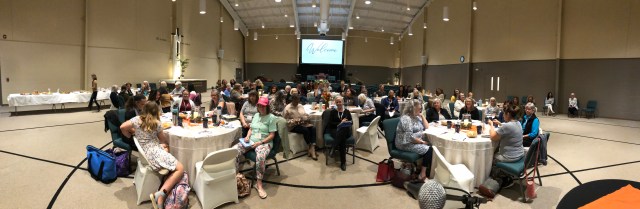
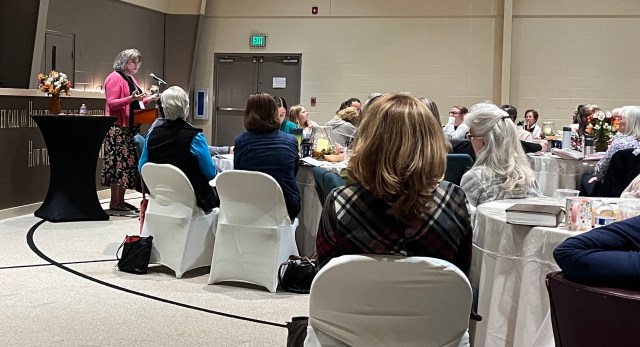
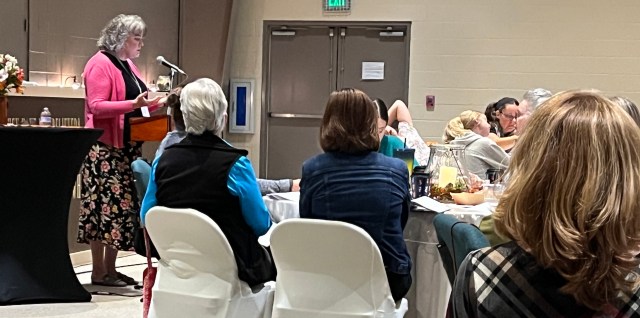
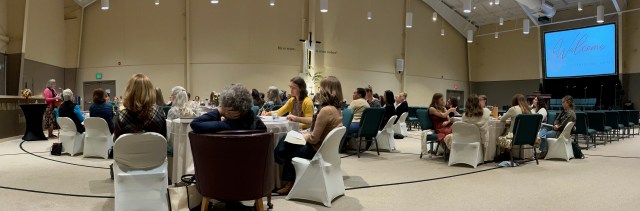
Report Back: Women’s Fall Conference, Trinity Bible Church


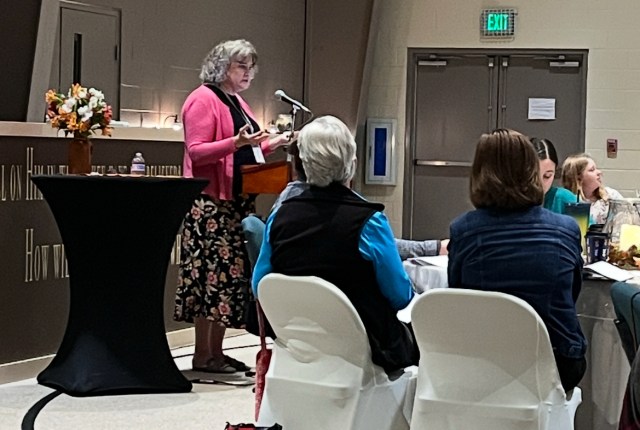
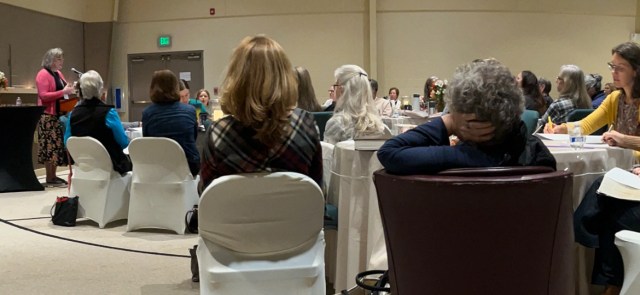
It was such a short trip, but it was wonderful to fellowship with the ladies of Fredericksburg, Virginia, and the surrounding area at Trinity Bible Church’s Women’s Fall Conference!

I landed in Richmond Friday evening after a fairly uneventful day of flying.

My sweet hostesses treated me to dinner at a great Mexican restaurant (I love shrimp tacos!), and then it was off to my hotel for a good night’s rest where I was greeted by a lovely hostess gift from the conference organizers.

Many of these darling gifts were from Painted Promises, Pastor Paul and Dawn’s small business. Check it out!

Saturday morning I had the pleasure of meeting Pastor Paul and his sweet wife, Dawn.

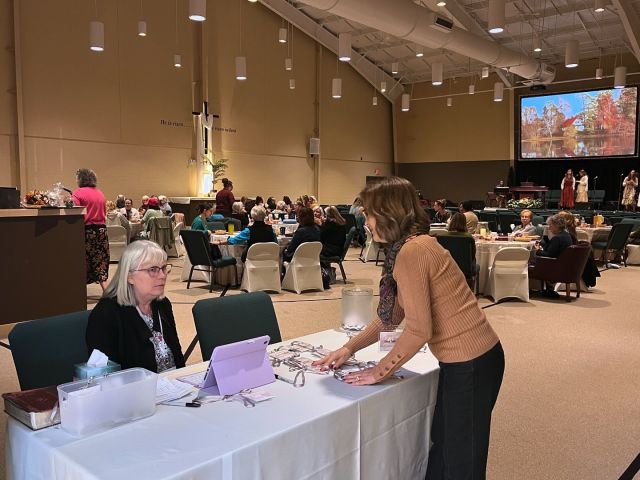
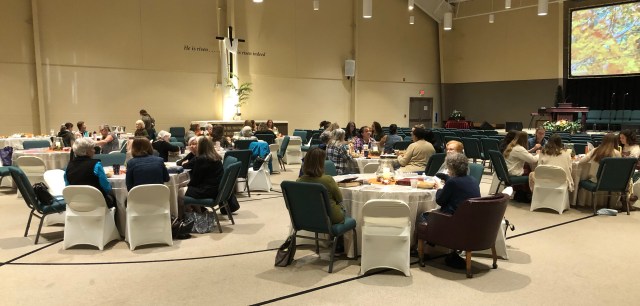
Doors open! Attendees were warmly greeted at registration…

Door prizes and swag…

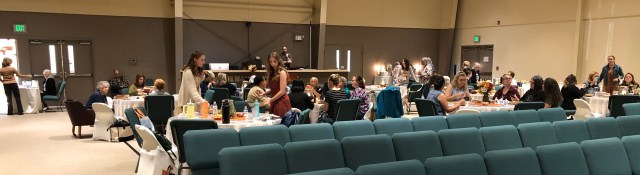
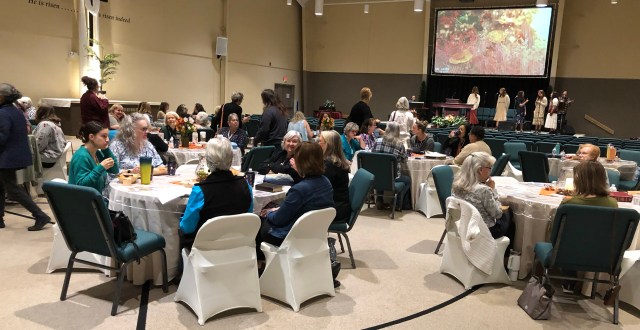
Fellowship and getting settled in…

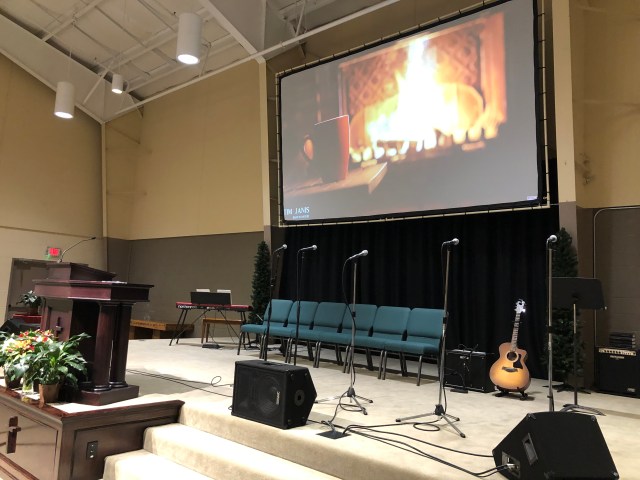
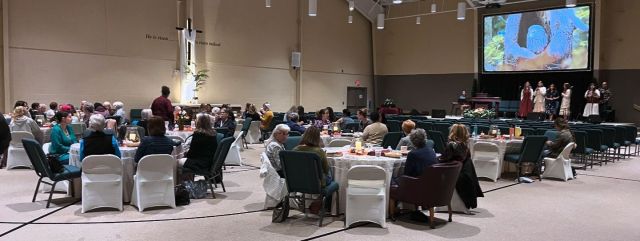
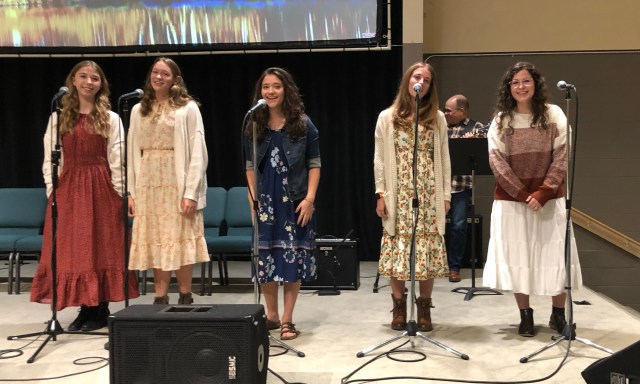
These sweet young ladies led our singing.

Our first teaching session was Foundations of Discernment. Christ is critical to discernment, Christ’s Word is crucial in discernment, and Christ’s Bride is central to discernment.

In session 2, Discernment 101, we talked about the various false doctrines and false teachers prevalent today, and practical, biblical ways to avoid them.

Our final session was a Q&A. These ladies are sharp and asked lots of insightful questions!

Picture time after the event is always lots of fun!

My wonderful hostesses and conference organizers, Carol and Dawn.

It was such a fantastic weekend with the ladies of Trinity Bible Church. Thanks so much to Carol, Dawn, Paul, and all the other brothers and sisters of TBC for making me feel right at home and working so hard to host a fantastic conference. If you’re ever in the area and need a good church to visit, make plans to spend the Lord’s Day with these wonderful brothers and sisters.


If your church or organization is ever in need of a speaker for a womenโ€™s event, Iโ€™d love to come share with your ladies as well. Click here for more information, or to find an upcoming event near you!


Photo Credits

Several of these photos were taken and contributed by conference attendees. You may assume that if they are good quality, or if I’m in them, that I didn’t take them. All other photos by Michelle Lesley.

Politics, Prayer

A Prayer for the President

Originally published January 20, 2009

First of all, then, I urge that entreaties and prayers, petitions and thanksgivings, be made on behalf of all men, for kings and all who are in authority, so that we may lead a tranquil and quiet life in all godliness and dignity. This is good and acceptable in the sight of God our Savior, who desires all men to be saved and to come to the knowledge of the truth.

1 Timothy 2:1-4

Yesterday, we, the people of the United States, elected a new President. As President Trump prepares to begin his tenure in the White House, God desires that we pray for him.

Pray for the President’s salvation-ย No one knows our hearts except God alone, but knowing how narrow the way is that leads to salvation (Matthew 7:13-14) and taking into consideration the President’s words and actions, it seems nearly certain that he is not saved. Our burden for his salvation should be two-fold, first, for his own soul and the salvation of his family, and second, that his salvation will enable him to be a Godly leader.

Pray for the President’s, and his family’s, safety and protection- His wife needs her husband, his children need their father, and our nation needs a leader.

Pray that God will help the President to be a godly husband and father- The presidency is a job that leaves little time for anything or anyone else. Pray that the President will have the time to spend with his family, leading them to godliness.

Pray that God will surround the President with wise and godly counsel- Proverbs 1:5 says: “A wise man will hear and increase in learning, And a man of understanding will acquire wise counsel”.

Pray that God will direct the President’s decisions- Proverbs 21:1 tells us: “The king’s heart is like channels of water in the hand of the LORD; He turns it wherever He wishes.”

Pray that, whatever the actions of the President, the gospel will spread and we will become a more godly nation- “Blessed is the nation whose God is the LORD, The people whom He has chosen for His own inheritance.” Psalm 33:12

May God bless our new President, and may God bless the United States of America.

Encouragement, Politics

Encouragement for Election Day

Originally published November 8, 2016

For those of us in the United States, by the end of the day, today, we will have a new President. Regardless of who wins, most Christians are anxious about how the next four years will go.

But Christ reminds us not to be worried or anxious. He wants us to remember that no matter what happens, we can trust Him to take care of us and carry us through. How can we keep that trust in God’s care and sovereignty at the forefront of our hearts and minds and not let worry creep in and take over? One of the ways I “reset” my mind is by rehearsing these truths through music. Here are some songs to remind us that God is sovereign and our one true King.

Lead on, O King Eternal

In Christ Alone

Because He Lives

ย Jesus Shall Reign Where’er the Sun

Rejoice, the Lord Is King

God Is in Control

The Hallelujah Chorus


I do not endorse any of these musicians insofar as they deviate from my Statement of Faith.