Calvinism, or Reformed theology (most people use the two terms interchangeably) is a theological framework, drawn from Scripture, for understanding the Bible, salvation, the nature of man, and the character of God. There are five basic tenets, or “points,” of Calvinism (also known as “the Doctrines of Grace”) which are often presented via the acronym “TULIP” (Please note that these are very brief, general descriptions. See the resources below for more nuanced information and scriptural support.):
Total Depravity: Due to the Fall (Adam’s sin in the Garden of Eden), all people are sinners from birth and in need of salvation.
Unconditional Election: God sovereignly predestines certain people to salvation. Whether or not a person is predestined, or “elect,” has nothing to do with her merit or good deeds. God’s reasons and criteria are known only to God. We have no way of knowing who is elect and who is not, only that people who are genuinely saved were predestined to it.
Limited Atonement: The atonement for sin that Christ made on the cross applies only to those who are, or will, in the future be, saved.
Irresistible Grace: Those who are predestined to salvation are drawn to Christ by God and will desire and accept, rather than reject, God’s offer of grace for their sin.
Perseverance of the Saints: (Sometimes called “eternal security,” or “once saved, always saved.”) Those who are truly saved will continue in the faith for the rest of their lives. Someone who “used to be a Christian” was never truly saved in the first place.
I don’t describe myself as a “Five Point Calvinist” or a “three pointer,” etc., because, while I pretty much agree with all five points (and don’t reject any of them outright), I simply think these doctrines are far more nuanced than they are often presented by Calvinists. We don’t have everything all cut-and-dried figured out about what’s going on in the mind of God about electing people. With regard to human will, we don’t know precisely what God does in a person’s heart, and how He does it, at the exact moment of regeneration. We believe what Romans 9 says about election while simultaneously believing 2 Peter 3:9, that it’s not God’s desire for anyone to perish.
And you know what? That’s OK. It’s OK to hold those things in tension while we’re here on earth. We believe what Scripture says God does, but, where the Bible is silent as to how He does it, His reasons for doing it, etc., well, we trust God and believe Scripture there, too, because it says:
The secret things belong to the Lord our God, but the things that are revealed belong to us and to our children forever, that we may do all the words of this law. Deuteronomy 29:29
So that’s where I am, theologically speaking (I’ve written a little more about it here.) I guess you could say I’m a Reformed gal who leaves room for the mysteries of the mind of God.
If you have a question about: a well known Christian author/leader, a Bible passage, an aspect of theology, a current issue in Christianity, or how to biblically handle a family, life, or church situation, comment below (I’ll hold all questions in queue {unpublished} for a future edition of The Mailbag) or send me an e-mail or private message. If your question is chosen for publication, your anonymity will be protected.
The Protestant Reformation. Outside of Biblically recorded events and the closing of the canon of Scripture, it is arguably the most important event in church history, and one of the most important events in world history as well, yet many Christians today are unaware of this landmark incident in their heritage which birthed the Protestant church.
The year was 1517. A monk named Martin Luther gripped his hammer and nailed a list of biblical grievances against the Roman Catholic Church to the door of Castle Church in Wittenberg, Germany, much like we might post a notice to a community bulletin board today. These 95 Theses protested the Catholic Church’s unbiblical policy of selling indulgences, part of an effort to raise funds for the building of St. Peter’s Basilica in Rome. The Catholic Church had created the idea of the Treasury of Merit, sort of a “bank account” of merit deposited by Christ, Mary, the saints, and others as a result of their good works. When church members sinned, they could purchase an indulgence, which was akin to asking the Church to “transfer funds” from the Treasury of Merit to the sinner’s account. The indulgence basically excused the sinner from a certain amount of time in purgatory and/or temporal punishment for that sin.
In addition to protesting the sale of indulgences, Luther’s 95 Theses called the Catholic Church to conform to Scripture by abandoning its unbiblical practices and teachings regarding the doctrines of salvation, religious authority, the nature of the church, and the essence of Christian living.
Luther’s calls for reform spread quickly throughout Europe, inspiring the likes of church fathers Ulrich Zwingli (Zurich), John Calvin (Geneva), and John Knox (Scotland) to join the effort in their own locales. As they worked to address the issues raised in Luther’s document, these men codified what we know today as the “Five Solas of the Reformation,” the basis of Protestant church doctrine. The five solas are:
1. Sola Scriptura– Scripture alone is the basis for all church doctrine, belief, and practice. (2 Timothy 3:16-17)
2. Sola Gratia– Salvation is by grace alone. It is an unmerited gift of God based solely on His goodness, not our own (because we don’t have any). (Ephesians 2:8-9)
3. Sola Fide– Salvation is through faith alone. Faith is a gift bestowed by God. We are saved only by placing that faith in Christ’s finished work on the cross, not by doing good works or by any other attempts to earn salvation. (Ephesians 2:8-9)
4. Solus Christus– Salvation is found in Christ alone. As Acts 4:12 says, “And there is salvation in no one else, for there is no other name under heaven given among men by which we must be saved.”
5. Soli Deo Gloria– God saves man for God’s glory alone, and Believers are to live our lives to glorify Him alone. (Romans 11:36)
One of Luther’s most cherished ideals, from which we still benefit today, was that common people should have access to both the Scriptures and worship services in their own language. Prior to the Reformation, the Bible was only available in Latin. Likewise, all masses and other church services were conducted in Latin. Luther translated the Bible into German, and was later followed by William Tyndale, Myles Coverdale, David Brainerd, and others who translated the Bible into various languages.
On Reformation Day, we commemorate the work, zeal, and sacrifices of Luther and the other reformers. Reformation Day is observed on October 31.
Read Part 2 of this article, “Keep On Keeping Up: 6 More Issues Christians Need Guidance About From Our Pastors” here.
“Ignorance? Of Benny Hinn? A man in Brown’s position claiming ignorance of Benny Hinn would be tantamount to an Olympic swimmer claiming ignorance of Michael Phelps or for a high level employee of Microsoft claiming ignorance of Bill Gates.”
Last week, I read a great article by Justin Peters entitled “Ignorance Is Not An Option.” In the article, Dr. Peters addresses a recent incident in which “charismatic theologian, author, and radio host Dr. Michael Brown” claimed not to know about the reputation and heresy of Benny Hinn, one of the most notorious false teachers in the Word of Faith movement. I know about him. You probably know about him. How could someone in Dr. Brown’s position not know at least the basics about Benny Hinn and why no Christian should endorse him?
It got me thinking- “ignorance is not an option” applies to far more than this one, isolated incident. We church members desperately need our pastors to keep up with at least the basics of current trends and thought in evangelicalism, and in theology and doctrine.
Why? There is a tsunami of materials, ideas, and personalities out there, and church members- even though we should seek to keep abreast, ourselves -need help sorting through it all. What’s biblical? What’s not? Also, pastors need to be informed about who and what they endorse (even tacitly), lest they encourage their church members to follow a person or doctrine that is not in line with God’s word.
So, what, specifically, are some of those current trends that we folks in the pew need our pastors to keep up with? Here are a few, along with some great resources to spare pastors some leg work:
Celebrity Pastors and Christian Authors: Do you know who Joyce Meyer, Matt Chandler, Rick Warren, Joel Osteen, John Piper, John MacArthur, Andy Stanley, Steven Furtick, Beth Moore, Mark Driscoll, Tony Campolo, David Platt, and Rachel Held Evans are (just to name a few)?
Do you know why your people should or shouldn’t be listening to/reading them? What about any controversies surrounding them? Do you have a general awareness of whether they have a track record of, and are currently teaching, sound doctrine or false doctrine?
Church members may not know the answers to these questions, but they’re walking into Christian bookstores and buying their books, re-tweeting them, and listening to their podcasts. If a church member comes and asks you about one of these pastors/authors, what will your recommendation be? We church members need our pastors not to go by the pastor/author’s popularity, whether what they write or say sounds pleasing to the ear, how many books they’ve sold, that their stuff is sold at a store you think is trustworthy, or how big their church is. Whether we know it or not, we need your deciding factor to be: Does what they teach consistently match up with God’s word (in context)?
*Resources: Fighting for the Faith: Listen regularly, or make good use of the search box. Chris Rosebrough has analyzed the teaching of nearly all of the people in the list above as well as many others. Apprising Ministries: While I sometimes feel Ken Silva’s tone is too sharp, his posts are saturated with links to articles and videos of questionable teachers (plus tons of other resources) that you can check out for yourself.
Complementarianism vs. Egalitarianism:In a nutshell, complementarianism is the view that God’s roles for men and women in marriage and in the leadership of the church are different, yet equally important. Wives are to submit to their husbands, and husbands are to lovingly lead their wives and children. The roles of pastor and elder are reserved to men, and women are not to teach the Bible to men or hold authority over men in the church.
Egalitarianism basically says that there are no gender restrictions on any positions in the church, including that of pastor, and that husbands and wives are to be “mutually submissive” to one another, removing any distinctive definition of headship.
The church, and women, especially, have been heavily influenced by culture on this issue, but what does God’s word say about it?
Cessationism vs. Continuationism:Did the “miracle” or “sign” gifts such as speaking in tongues/other languages, healing, visions, direct revelation from God, raising the dead, etc., come to an end with the closing of the canon or death of of the last apostle, or do these gifts continue in the same way today?
Resources: Strange Fire Conference audio from John MacArthur
Continuationism and Cessationism: An Interview With Dr. Wayne Grudem- Part 1 and Part 2 by Tim Challies
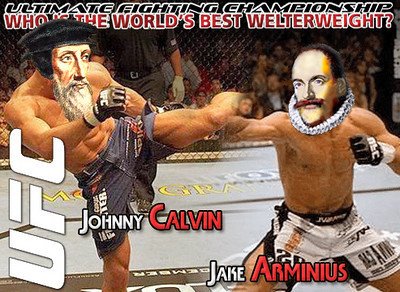
Calvinism vs. Arminianism: I don’t think I could boil down the tenets of Calvinism or Arminianism to a brief paragraph in any sort of way that wouldn’t have people on both sides hot under the collar. This has been a strenuously debated topic, particularly for Southern Baptists, for the last several years.
So, let me just say, and I’m sure everyone on both sides can agree, it is extremely important to knowwhatthe Bible says about our sin nature, free will, election and predestination, and whether or not a person can lose his salvation. These are weighty issues with eternal consequences that shouldn’t be dealt with lightly or in a way that seeks to reinforce our own opinions at the expense of what God’s word says.
Homosexuality In the Church:Homosexuality is certainly not the only sin out there, but it’s the sin that’s the hottest topic right now. Do you know the Scriptures that address homosexuality? Do you know how to answer the canard: “Christians say that homosexuality is against God’s law, yet they eat shellfish and wear garments of mixed fabrics, which is also against God’s law,”? What would you tell a church member who thinks it’s not loving to call homosexuals to repent of their sin and trust Christ or that godly “love” means we should validate their sin? Do you know how to help Christians who are former homosexuals deal with temptation to their old sins? Is it biblical to allow unrepentant, practicing homosexuals to serve in leadership positions in the church? Things like this may be going on in your own denomination, so it’s important for church members to be trained in what God’s word actually says.
*The resources given are obviously not an exhaustive list. For the most part, they are resources I have used myself, found to be helpful, and trust to be generally doctrinally sound. There are many other wonderful resources out there, but, naturally, our most important resource is to compare all things to God’s word in context.
Read Part 2 of this article, “Keep On Keeping Up: 6 More Issues Christians Need Guidance About From Our Pastors” here.
With all the debate going on out there about Calvinism vs. Arminianism, I thought I’d weigh in with where I stand. So here it is:
I stand on the Bible. I believe all of it. Every word.
The Bible tells us that we are all sinners who abide under the wrath of God, and that the only way to escape the just penalty for our sin –an eternity in hell—is to repent from our sin and place our faith in Christ’s finished work on the cross as payment for that sin, and in His bodily resurrection.
Precisely how God accomplishes salvation at the nanosecond of a human’s repentance and faith, and the minutiae involved in predestination that isn’t revealed in Scripture, along with some of the other fine points of disagreement between Calvinists and Arminians, are, and will remain, a mystery understood only by the mind of God. And no amount of debate will change that.
Scriptures concerning election, predestination, and free will are constantly tossed back and forth in this debate, but I don’t believe I’ve ever heard either side bring out:
Deuteronomy 29:29: “The secret things belong to the Lord our God, but the things revealed belong to us and to our sons forever, that we may observe all the words of this law.”
Isaiah 55:8-9: “For My thoughts are not your thoughts,
Nor are your ways My ways,” declares the Lord.
“For as the heavens are higher than the earth,
So are My ways higher than your ways
And My thoughts than your thoughts.”
I Corinthians 13:9,10,12: “For we know in part and we prophesy in part; but when the perfect comes, the partial will be done away. For now we see in a mirror dimly, but then face to face; now I know in part, but then I will know fully just as I also have been fully known.”
How are we doing on the things that have been clearly revealed to us in Scripture? Is the entire world evangelized? Is the church a pure and spotless bride ready for Christ’s return? Has false doctrine been eradicated? Is every widow and orphan cared for?
No?
Then we are to be about the business of “the things revealed” and leave “the secret things” to the Lord.
The truth is, when we get to Heaven, no matter where we land on the spectrum of Arminianism vs. Calvinism, we’re probably all going to find out that none of us had every single aspect of this theological construct precisely correct. What is the point of debating to the death something we may eventually find out we were wrong about?
Let us “Be diligent to present [ourselves] approved to God as a workman who does not need to be ashamed, accurately handling the word of truth,” (II Timothy 2:15) and, “work out [our] salvation with fear and trembling,” (Philippians 2:12) as we seek to work together to carry out the Great Commission.



 Whether or not a person is predestined, or “elect,” has nothing to do with her merit or good deeds. God’s reasons and criteria are known only to God. We have no way of knowing who is elect and who is not, only that people who are genuinely saved were predestined to it.