I’m glad there’s one less person on earth publicly sullying the name of Christ and dragging His holy Word through the mud.
What I’m not glad about is that, as far as we know, yesterday was the first day of his eternity in Hell.
Hell? But he claimed to be a Christian.
Fred Phelps and his kindred are a perfect example of the fact that you can claim whatever you want, but that doesn’t necessarily mean it’s true.
“Not everyone who says to me, ‘Lord, Lord,’ will enter the kingdom of heaven, but the one who does the will of my Father who is in heaven. On that day many will say to me, ‘Lord, Lord, did we not prophesy in your name, and cast out demons in your name, and do many mighty works in your name?’ And then will I declare to them, ‘I never knew you; depart from me, you workers of lawlessness.’ Matthew 7:21-23
And that’s not just the case for people like Fred Phelps whose lives seem to define the word “vile.” It’s also true for “nice” people. People you’d never put in the same category as Fred Phelps. People who volunteer at hospitals and run marathons to raise money for cancer research. Moms who’d do anything for their children. Men who are faithful to their wives. Your next door neighbor. Your brother. Your coworker.
Vile people don’t go to Heaven.
Nice people don’t go to Heaven.
Saved people go to Heaven.
The bad news is that you could never do enough good things to earn your way into Heaven. And, the good news is that you could never do enough bad things to forfeit Heaven.
Because being reconciled to God is not about what you do. It’s about what Christ has done.
We’re not always good. He was. We’re not always pleasing to God. He was. We don’t always do the right thing. He did. He lived the perfectly good, right, and pleasing-to-God life that we’d never be able to live. And then came the cross.
Some people refer to what happened at the cross as “the great exchange,” and, indeed it was the greatest exchange ever. At the cross, Christ suffered the execution that we deserve as the punishment for our crimes against God, and in exchange, we can have the perfect life He lived. His rap sheet for ours. Our guilty verdict for His innocent verdict. His death penalty for our exoneration. And it’s all ours if we’ll let go of the sin we cling to and throw ourselves on the mercy of the Judge.
Could someone as evil as Fred Phelps do that? Yes, and I hope he did before he died. Because no one who repents and trusts in Christ is beyond the reach of His saving grace. Not even a nice person like you.
These are my notes from my ladies’ Sunday School class this morning. I’ll be posting the notes from my class here each week. Click here for last week’s lesson.
Through the Bible in 2014 ~ Week 11 ~ Mar. 9-15 Numbers 33- Deuteronomy 13 For the Love of God, Flee Idolatry
What is idolatry? What did idolatry mean in OT times, and what does it mean now? Does an idol have to be tangible? Do we have to physically bow down to an object or do outward acts of worship to it for it to be an idol? Can our wishes, opinions, behaviors, or even other people be idols?
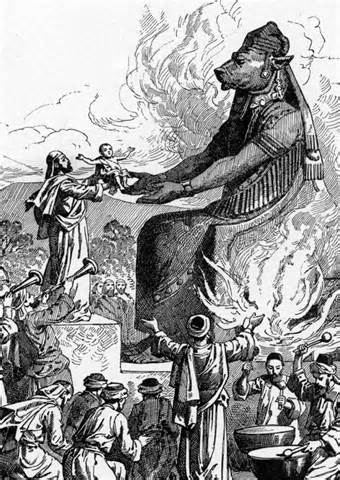
Old Testament Idolatry (Deuteronomy 4:15-19, Genesis 31:19ff, 1 Samuel 5:1-5, Daniel 3:1ff) In the OT (NT, too), the word “idolatry” would have brought to mind the ideas outlined in 4:15-19: the worship of a carved figure in the likeness of a created being, or the worship of the heavenly bodies. Many idols/gods are mentioned in the OT, including Baal, Ashera, Molech, and Dagon, among others. Some of them were figures small enough to be kept in the home (Gen. 31). Some were larger statues in their own temples (1 Sam. 5). Some were enormous outdoor statues (Dan. 3). People physically bowed down to them, prayed to them, brought them sacrifices, served them, and did other things to try to appease them, get what they wanted out of them, and steer clear of their anger. Idolatry was simply to worship, serve, and love a created thing instead of, or more than, God.
“Pay no attention to that man behind the curtain!” (Deuteronomy 32:16-17, 1 Corinthians 8:4-6, Isaiah 44:14-17) Was there really a pantheon of gods out there, independent of God, but with similar powers? No. 1 Cor. clearly declares that this cadre of gods does not exist. Is. 44 focuses on the ridiculousness of worshiping something made by man’s own hand, and out of the same material he uses for building a fire.
In The Wizard of Oz, Dorothy saw an image on a screen, but there was no real “wizard” behind the image. It turned out to be her friendly neighborhood computer nerd. So, who’s “the man behind the curtain” when it came to OT idols? Deut. 32 says it’s not some fictional “god”; demons are pulling the strings. Satan draws people away from God, then, he and his demons continue to pull them down further and further into sin, degradation, and ungodliness as they worship “idols.”
What is idolatry today? (Colossians 3:5, 1 Corinthians 2:16, Matthew 4:9-10) Col. 3 tells us that covetousness- wanting anything we’re not supposed to want- is idolatry. Since “we have the mind of Christ” (1 Cor. 2), desiring that doesn’t conform to what Christ thinks and says is idolatry. In other words, any sin. Some type of idolatry is at the root of every sin. In Matt. 4, Jesus says we’re to worship and serve only God, so anything we put our trust in, make ungodly sacrifices for, serve, or allow to control us is an idol.
What are some of our idols today? Do they have to be tangible to be idols? While there are certainly religions that worship tangible gods (Buddha, third world idols), idolatry today is much subtler. For any non-Christian, his idol is ultimately himself, regardless of his religion or lack thereof. Even Christians (or people who claim to be Christians) can be guilty of idolatry.
What about constantly missing church in order to do something else we prefer? How about “loving” our children more than God (Ex: Staying home from church because your child doesn’t want to go, or so your child can play sports. Choosing to disbelieve or twist what Scripture says about homosexuality because your child becomes a homosexual.). What about giving more attention to Facebook, TV, a hobby, or a club than we do to God or to the other things He has told us to do?
What about worshiping a false “Jesus” we carve out with our minds, one who doesn’t match up with the biblical Jesus? (“The Jesus I worship would never send people to hell, want Christians to be sick or poor, say that X, Y, or Z is a sin, etc.”) What about our opinions and philosophies that conflict with Scripture? (“I don’t believe homosexuality is a sin.” “Women should be pastors.”) What about any area of our lives we refuse to have Christ conform to His likeness? (“I refuse to stop swearing, going out to the boats, submit to my husband, etc.”)
Any practice, opinion, or philosophy we cling to, despite what God’s word says about it, is an idol.
Where and how does idolatry start? (Psalm 14:1, Matthew 12:33-35) Is idolatry merely an outward act, or does it go deeper? What causes the outward worship of idols? (Ps. 14) says, “The fool has said in his heart there is no God.” Jesus said (Matt. 12) it’s our hearts that map the course for our actions. Idolatry, like any other sin, starts with the bent of the heart. Are our hearts bent towards God or away from God? Our actions will follow. Godly actions follow a godly heart, and sinful actions follow an idolatrous heart.
For the Love of God: The Commandment (Deuteronomy 5:6-21, 6:4-6; Mark 12:28-30) Because God knows that idolatry begins with the condition of the heart, His primary Commandment to Israel and to us is not about our outward behavior, but about our hearts. It’s not a “don’t” but a “do.” Love (Deut. 6). What did Jesus say about this Commandment? (Mark 12). We are to set all of our affections on God and exalt Him above everything else.
This is why God’s first Commandments in the 10 Commandments (as well as the Great Commandment) deal with idolatry. If our hearts are God’s alone, the other 8 Commandments will fall into place. But if our hearts love anything instead of or more than God:
We will revere something else more than God’s name and will take it in vain (11)
Whatever we love more than God will be more important to us than worshiping God (12)
Whatever we love more than God, we will naturally love more than our parents, spouses, and neighbors, so what would be the big deal about dishonoring our parents, murdering, committing adultery, stealing, lying, or coveting what someone else owns? (12-21)
Our actions follow our hearts.
What’s the solution to our idolatry? (Galatians 3:2-3, Hebrews 13:20-21, Philippians 2:13) Since some form of idolatry is at the root of every sin, we’re all guilty of idolatry multiple times a day. What can we do about it? Nothing. Not a thing. We can’t just make a decision not to commit idolatry anymore. It doesn’t work. We’re going to keep sinning.
The ONLY one who can do anything about our idolatry is Christ. He died for our sin of idolatry and set us free from its power to enslave us. We are saved by His grace, and it is His grace that sanctifies us (makes us more like Him). While we can cooperate with Him by obeying what His word tells us and resisting temptation as we are empowered to do so by the Holy Spirit, we cannot “pull ourselves up by our bootstraps” and clean ourselves up from our idolatry and do better next time by our own effort. But as Christ works in us, He conforms us to His likeness.
When we commit idolatry, we must run to the one true God, throw ourselves on His mercy in repentance, and receive His forgiveness and cleansing.
I’ve been getting a lot of questions lately about women’s roles in ministry- specifically, about women teaching and having authority over men- so I thought I’d re-run this lesson I taught on that topic a few months ago. You can find part two of the lesson here: https://michellelesley.com/2014/01/05/sunday-school-lesson-12-29-13/
There are some additional resources at the end of each article if you’d like to do some additional study.
These are my notes from my ladies’ Sunday School class this morning. I’ll be posting the notes from my class here each week. They will be in outline form, so if you have any questions or need more details, please feel free to leave a comment below.
These are my notes from my ladies’ Sunday School class this morning. I’ll be posting the notes from my class here each week. Click here for last week’s lesson.
Through the Bible in 2014 ~ Week 10 ~ Mar. 2-8 Numbers 16-32 Tackling Tough Issues: Genocide in the Old Testament
Genocide: It’s defined (by dictionary.com) as, “the deliberate and systematic extermination of a national, racial, political, or cultural group.” This week in our reading, we dealt with a passage in which God commanded the Israelites to kill nearly all of the Midianites, even those we might consider “innocent.” Was God being cruel or capricious? How could a loving God command such a thing?
Numbers 31:1-18 This is the first time (but won’t be the only time) we’ve seen God command Israel to wipe out a certain nation or people group. How do we make sense of this?
1. Hermeneutics principle: Clear passages interpret unclear passages. (2 Timothy 2:15)
Simply put, biblical hermeneutics is the proper application of 2 Timothy 2:15- a systematic and careful way of diligently studying God’s word so as to rightly understand and handle it. One of the principles of hermeneutics is that when you have a passage that’s confusing or could possibly be interpreted in more than one way, you dig into other biblical passages that address the same issue, but more clearly. In Numbers 31 we see a situation that is confusing because it seems like God is being cruel or unfair. We need to take a look at some clearer passages to help us understand this one.
2. What do we know about the nature and character of God? On the surface of this passage, God seems to be acting in a way that goes against what we know about Him from the rest of the Bible. That thought itself tells us that the rest of the Bible describes God in certain ways, and that “cruel” and “unfair” are not among those certain ways. We also know that, because God is perfect, He never goes against His own character. How does the Bible describe God?
God is good. (Psalm 100:5)
Some people go so far as to declare that (because God has commanded genocide) God is evil. But God’s word clearly states in many places that He is good.
God is love. (1 John 4:8)
As parents, it’s easy to understand that there are many different ways our love for our children plays out. We smile and hug our children to express our joy in them. We cuddle and comfort them when they’re hurt. We play and celebrate with them. We sacrificially provide for them. But we also love them in “tough” ways sometimes. We discipline them when they’ve disobeyed. We yank them out of harm’s way to protect them. We take them for vaccinations to prevent them from getting sick. We lock the doors to keep bad guys from getting to them. God’s love for us is similar. He loves His children in many ways, some of them, “tough love” ways.
God is patient. (Romans 2:4, 1 Peter 3:20, Psalm 103:14)
God made people, so He understands that we are “dust,” weak, and completely vulnerable to sin. He extends patience and kindness to people over and over again to lead them to repentance and faith in Him. He exhibits patience for a very long time before He executes judgment.
God takes no pleasure in the death of the wicked. (Ezekiel 18:23,32, 2 Peter 3:9)
Going back to the parent/child analogy, no good parent gets joy out of punishing her children. We would much rather the child obey so that we can be at peace with each other, love them in the “non-tough” ways, and because obedience is what’s best for the child. God’s love for people is infinitely deeper than our love for our children. He never wants to punish people for their sin, but rather wants them to repent and turn to Him. He has even mercifully provided us a way to be rescued from the punishment for our sin: He punished His own Son on the cross in our place! God is patient with disobedience and rebellion, but eventually, as any good parent would, He has to punish it.
God is just. (Genesis 18:25, 1 Peter 2:23)
God is the only completely just judge because of His omnipresence (He’s present everywhere, always) and His omniscience (all knowingness). He sees every action, even those where there is no other witness, and He knows every secret motive and intent of the heart. Because of this, all of His “verdicts” are always right.
3. How do these character traits fit in with and explain God’s command to destroy most of the Midianites?
Genocide is evil. Doesn’t that make God evil? (Deuteronomy 32:39)
No. Genocide is evil when unjust, sinful men take it upon themselves to kill people for evil and selfish reasons. God is, by definition, good, so if He initiates the judgment of genocide, it cannot be evil. As mentioned above, He is abundantly patient before He exercises judgment, and, due to His omniscience and omnipotence, His verdicts are always just. Therefore, when God uses genocide, it is not evil, nor is He.
What had the Midianites done to be worthy of God’s judgment? (Numbers 31:16, 22:6-7, Revelation 2:14, Isaiah 14:12-15)
Note the locations of Midian, Moab, and Shittim.
Note– 31:3 makes clear this is God’s judgment on Midian, not Israel deciding on its own to annihilate them. God used Israel to carry out his sentence of judgment.
King Balak of Moab and the leaders of Midian conspired to pay Balaam to curse Israel (22:6-7). When Balaam couldn’t curse them, he instructed Balak to entice Israel into idolatry instead (Rev. 2:14).
Moab and Midian worshiped Baal. According to mythology, Baal was son of the chief god, El, but rose to power above El, who was considered weak and impotent. (This is very similar to the story we read in Isaiah about how Satan fell.) Baal was a fertility god, so “worship” consisted of sexual perversion including prostitution, and, often, the sacrifice of the first born son. The religion of Baal took everything good and holy from God’s story (God’s name- El-elyon, El-shaddai, Satan’s attempt to overthrow God, Satan’s contempt for God, and God’s sacrifice of His firstborn Son) and turned it inside out for Satan’s glory. This is what the Midianites were strategically drawing Israel into so that they could either defeat them or turn them into allies.
God showed His goodness by deciding to put an end to evil. He showed His love for Israel by protecting them from both Midian’s schemes and from idolatry and its consequences. God showed His justice by punishing the rebellion of Midian.
Why didn’t God just warn Midian and Israel to stop their evil ways? (Numbers 25, Exodus 20:2-6, Leviticus 26:30, Deuteronomy 4:3)
He did. And, he started with Israel, not Midian. Israel knew better. God had repeatedly told them idolatry was a gross sin (1st and 2nd Commandment) and that it was punishable by death (Lev. 26:30). He had all the Israelite chiefs impaled who had led the people into idolatry. He sent a plague that destroyed the 24,000 people who had bowed the knee to Baal. And, He showed, graphically, through Phinehas that God would not tolerate Israel joining itself to Midian. Finally, he gave the Midianites a taste of what was to come when He had Israel attack (but not annihilate) them at the end of chapter 25.
God would have much preferred both Israel and Midian repent of their idolatry than to put any of them to death here or in chapter 31. He was patient with them and continued to let them live and experience common grace in order that they might repent and turn to Him.
Why did God command Israel to kill “innocent” women and children? (Psalm 51:1, Romans 3:10, 6:23, Samuel 12:22-23) Note– Those women and children were not innocent. Every human is born in sin and rebellion against God.
The married women would have been adults, just as responsible for their sin of idolatry as the adult males who were killed. Had they been permitted to live, they would have continued to train their children in the ways of Baal worship, and the problem would have remained.
Though the male children may have suffered for a moment, we believe that they are in Heaven with Christ. Had they lived, they would have grown up (trained by their mothers) to be Baal worshipers, and as heads of their households, would have re-instituted Baal worship in Midian. Midian would have remained a threat (even more so because of the desire for revenge on Israel) militarily and in tempting Israel to idolatry.
The unmarried, young girls were allowed to live and marry Israelite men (even though they, too, were supposed to have been killed 31:15) because they would have had to conform to their husbands’ religion, the worship of Yahweh.
God showed His goodness in protecting the Israelites from Midian, in taking the male children to Heaven, and in sparing the young girls and allowing them to come to know Him through their marriage into Israel.
God’s exercising genocide on a people is a difficult issue to come to terms with. And, if it’s difficult for us, we can only imagine how difficult it must be for God. He created these people. He loves them and desires to save them so much that He sent His Son to rescue them from His wrath. Genocide is not a flippant decision by a God who kills people casually, but a heart rending last resort for putting an end to evil so rampant that the people will not turn back from it.
These are my notes from my ladies’ Sunday School class this morning. I’ll be posting the notes from my class here each week. Click here for last week’s lesson.
Through the Bible in 2014 ~ Week 9 ~ Feb. 23-Mar. 1 Numbers 1-15, Psalm 90 Trust and Obey
Not a grief or a loss, not a frown or a cross, but is blest if we trust and obey.
Trust and obey, for there’s no other way to be happy in Jesus, but to trust and obey.
Today, we’re taking a look at four incidents from this week’s reading which follow the paradigm above. All start out with a problem. We’ll look at how the people responded to that problem, how Moses and the other leaders responded, and how God responded, which will show us how we should respond to the dilemmas we face: with trust in, and obedience to, God.
A Generic Gripe (Numbers 11:1-3)
The Dilemma (11:1): This seems to have been a general discontent with the aggravations that come with marching around the desert. Various translations mention “hardships,” “adversity,” and “misfortunes.” We can’t tell from this verse whether these were hardships of their own making (as two of the subsequent problems were) or they were just things that came up outside their control.
Israel’s Response (11:1-2, Psalm 142:1-2): Israel’s response was to gripe. How was this different from Psalm 142:2, where David said, “I pour out my complaint before him; I tell my trouble before him.”? Check out verse 1: David said, “I cry out to the Lord…I plead for mercy to the Lord.” David was crying out to the Lord. Israel was crying out against the Lord (“in the hearing of the Lord”).
God’s Response (11:1): God’s anger was literally kindled. Why such a harsh response to a little complaining? We’ll see more clearly in the next incident.
Moses’ Response/God’s Response (11:2): Moses intercedes in a picture of the way Christ intercedes for us. He gets between the sinful people and God’s wrath and pleads their case before Him. God’s wrath abates, not because there’s anything righteous in the people, but because of the righteousness of the one interceding.
Where’s The Beef? (Numbers 11:4-35)
The Dilemma (11:4-9): “Waaah…we’re tired of the same old food day after day!” Notice, it wasn’t that they didn’t have food and were crying out to God to help them and keep them from starving. God had provided plenty of the food He thought best for them. He even delivered it right to their doorsteps—they didn’t have to go out and hunt! But that wasn’t good enough.
Israel’s Response (11:4-6,10, Philippians 3:19, Romans 1:25): Israel’s response to this dilemma (which wasn’t really a dilemma at all—this was about what they preferred—it was a problem of their own making) was to turn their noses up at what God had provided for them and cry out against Him.
Their complaint was a disdain for all God had done for them in delivering them from Egypt. They didn’t want to do things God’s way anymore. They actually preferred going back to (and thought they had it better under) slavery! And for what? Food. The kind of food they missed and preferred. The food of their old way of life. The fruit of slavery.
Their complaint was essentially a contempt for and rejection of God’s salvation because they were willing to toss it all aside for something as paltry as a different kind of food. “They worshiped and served the creation rather than the creator.”
What are some ways we do the same thing? (Thinking we had it better when we were lost and longing for the things we had back then.)
Moses’ Response (11:10-15, Philippians 4:13, Matthew 11:28): Moses had had it with these rebellious, childish people, and he cried out passionately to the Lord about it. This “friend of God” was not rejecting God or His ways. He was saying, “You’ve asked me to lead and care for this people, and I want to comply, but I can’t. It’s too hard. I need Your help!” His response was not to reject God (as was the case with the Israelites’ complaint), but to trust God and ask for His help in obeying Him.
When it is our desire to take up our cross daily, God has promised to either give us the strength to carry it (Phil. 4:13) or lift it off our backs permanently (Matt. 11:28).
God’s Response (11:16-35, Psalm 37:4): Two different complaints. Two different motives. Two different responses: God showed kindness to Moses, but anger towards the Israelites.
Yet, in a way, the same response. God gave both Moses and the people what they asked for. (Actually, He gave the people much more than they asked for!) When Moses got what he wanted, it was a blessing because He was asking according to God’s will and out of a desire to obey Him. This is what Ps. 37:4 is talking about when it says, “Delight yourself in the Lord, and He will give you the desires of your heart.” When the people got what they wanted, it was a curse because God gave them what they never should have wanted in the first place.
Power Play (Numbers 12)
The Dilemma (12:1-2): Miriam and Aaron were annoyed with Moses for some unclear-to-us reason having to do with Moses’ new wife. Whether they were opposed to her because she was a Cushite or because she had done something to tick them off, we don’t know.
Miriam and Aaron’s Response (12:1-2): Their annoyance led Miriam and Aaron to grumble against Moses. And once they started grumbling against him- which was really grumbling against God, because God had called Moses, placed him in authority, and spoke through him- it was easy enough to convince themselves that they should be in charge, or at least equal to Moses. “And the Lord heard it,” indicates that they were implicating God in their complaint. Here is another incident that’s a problem of the complainant’s own making.
God’s Response (12:4-10, 14-15): Again, God’s anger is “kindled.” He comes down personally, since they are denouncing Him personally by way of Moses, and sets them straight. “Yes, there is a difference between y’all and Moses. No, you’re not equal to him. Moses is the one I’ve put in this position, not either of you.” Miriam’s name being mentioned first (v.1) and the fact that God gave her leprosy but not Aaron, probably indicate that she was the instigator in this situation.
Moses’ Response (12:11-13): Again, Moses intercedes between the sinner and the wrath of God and asks, trusting in God’s grace, for Miriam’s healing. God grants his petition, but not right away. God wants Miriam to understand how serious her disobedience is, so He allows her to experience His chastening for a week. But after her time of discipline is over, God’s grace allowed her back into the camp to be reconciled to Moses and the people.
Ten Were Bad, Two Were Good (Numbers 13:25-14:35)
The Dilemma (13:25-33): The spies came back and gave an accurate report of what they saw. The land itself was awesome, but the people were strong, militarily, and the cities were strongly fortified. All of the spies and the people who heard their report were understandably afraid. This was not a problem of their own making.
Israel’s Response (14:1-4, Exodus 3:8): Again, the people’s immediate response to fear was not to trust in the Lord and obey Him, but to rebel. Again, their response was to quickly abandon and disdain all God had done for them. They tossed aside His salvation in favor of slavery and what they thought would be safety. They knew what God had promised (Ex. 3:8- compare to 13:29) and called Him a liar (14:3- compare to Ex. 3:8). Again, they cried out against the Lord instead of crying out to Him.
Joshua and Caleb’s Response (14:5-9, 13:30): Nowhere do we see Caleb and Joshua {13:30, 14:6-9} denying or minimizing the difficulty and scariness of the situation, but confirming it. They knew what people like the Hittites, et al, were capable of doing to their enemies. They were well aware of Israel’s military weakness and disadvantage.
Yet, instead of letting what they could see and experience determine reality, they trusted God’s word and promises to them to determine reality. They had seen what God was capable of doing to His enemies. They saw what He had done to Pharaoh’s army without their even having to fight, and trusted that, if He had promised them this land, He could do something like that again.
Moses’ Response (14:13-19): Again, Moses stands between the sinful people and God’s wrath- just like Jesus does for us- pleading with God to forgive them so that God’s name will be glorified. He calls God to act in accordance with His own character: slow to anger, steadfast love, forgiving.
God’s Response (14:20-35): Again, God grants the request of the intercessor (Moses), not because of the sinful people, but because of the righteousness of the one interceding, and because of His own character. Though they will still suffer the consequences of their sin, God pardons sinners.
What Can We Learn?
1. When we have a problem, need, or desire, God wants us to bring it to Him in prayer with a heart submissive to His will. He desires for us to cry out to him, not against Him.
2. Sometimes, we’re the problem. Sometimes we’re in anguish over a problem that’s not really a problem, but a selfish or ungodly desire we’re not even supposed to have.
3. When we face difficult situations, God wants us to calm down, trust His word and His promises, and obey Him, not reject Him in order to do things our own way. Like the song says, “there’s no other way to be happy in Jesus, but to trust and obey.”



 Fred Phelps died last night. And I’m glad.
 Some people refer to what happened at the cross as “the great exchange,” and, indeed it was the greatest exchange ever. At the cross, Christ suffered the execution that we deserve as the punishment for our crimes against God, and in exchange, we can have the perfect life He lived. His rap sheet for ours. Our guilty verdict for His innocent verdict. His death penalty for our exoneration. And it’s all ours if we’ll let go of the sin we cling to and throw ourselves on the mercy of the Judge.