
Politics

Seven Thoughts on Voting for the Lesser of Two Evils

It’s been said ad nauseam that, in polite company, it’s not wise to discuss religion or politics. They’re hot button issues that people often have strong, differing opinions about, which can lead to arguments, which can ruin a perfectly nice party, picnic, or wedding reception.

This is one of the reasons I’m loath to write about or discuss politics. To me, biblical Christianity and sound doctrine are worth going to the mattresses for. When it comes to politics, though, I’m usually fine with keeping my opinions about the governor, president, or candidate du jour to myself.

But in light of recent events, there are a lot of differing points of view even among Christians who are, theologically, very like-minded. Christians who want God to guide every aspect of their lives, including voting. And I think it’s a political conversation worth having.

Earlier this week, Ted Cruz suspended his candidacy for the office of the presidency, leaving Donald Trump as the heir apparent to the Republican nomination. Strong feelings, opinions, and hand wringing among Christians ensued.

Why? Well, laying aside the entire election for just a moment and evaluating Trump only on his personal character and personal opinions on issues such as abortion and homosexuality, biblically literate Christians would be hard pressed to describe him as a virtuous, godly man whom they have zero qualms about enthusiastically supporting. (Come to think of it, I don’t think I’ve ever voted for someone who fit that description. I’ve had at least a couple of qualms about everyone I’ve ever voted for. Haven’t you?) Quite the opposite, in fact. Most of the Christian people I hang with find Trump odious. Arrogant. Dishonest. A blowhard. Unkind. Immoral. And, now that it seems he will be the nominee, the lesser of two evils (the greater being Clinton or Sanders). But even the lesser of two evils is still evil, and nobody’s crazy about feeling she has no choice but to vote for someone she considers evil.

So what’s a Christian voter to do with Trump as the only “conservative” candidate who has a chance of winning the election? I’ve heard three predominate stances:

1. “I’m voting for Trump as the lesser of two evils. Assuming he adheres to at least some of what he has promised, fewer babies will be murdered under his administration, and the homosexual agenda will be stemmed at least a little more than it would be if Clinton or Sanders wins.”

2. “I just can’t, in good conscience, vote for someone whose character and policies are so ‘bottom of the barrel’. I don’t trust Trump to keep his promises, and I don’t see much, if any difference, between voting for him and voting for Clinton or Sanders. I’m sitting out this election.”

3. “I think it’s important to vote, but I can’t bring myself to vote for Trump. I’m voting third party/write in. I don’t like that it will probably give the White House to Clinton or Sanders, but at least I’ll be voting and the GOP will hear my voice and change its ways.”

I know good, godly Christian people who fall into all three of these categories. I have fluctuated back and forth among all three myself, and, to be honest, I’m still not sure where I’ll land come November. As I’ve begun to think about this issue, here are seven thoughts I’ve had about voting for the lesser of two evils:

1. If there’s a passage in the Bible that addresses voting in a democratic republic in an election for secular governmental officials, I haven’t run across it, and I don’t think anyone else has either. This makes sense if you think about it, because, in the Old Testament, God’s people lived under a theocracy (God was their king), and even during the period of the Old Testament kings, the people didn’t get to vote for the candidate of their choice. The New Testament was generally written to people under Roman rule who didn’t get to pick their leaders either. So, there’s really nothing specific in Scripture we can point to about voting as we know it today.

2. I’m starting to hear a new (to me, anyway) false teaching floating around: “God commands us to vote.” I don’t know which, if any, passage of Scripture is being mangled (and it would have to be mangled because the Bible doesn’t say this at all) to create this nonsensical notion, but the Bible doesn’t any more say God commands us to vote than it says God commands us to drive electric cars or observe Lent. If you’re following a preacher or teacher who’s pushing this junk theology, run away and don’t look back. God does not command that we vote. If you pray and study the Scriptures about it, and your conscience still prevents you from voting in November, you are notย sinning.

3. Because, in America, we do have the privilege of voting, Christians should take that responsibility soberly and vote in a way that best lines up with biblical principles. That means we do not vote for candidates who actively promote or encourage sin, for example, someone who promises to expand abortion, legislatively encourages and celebrates the sin of homosexuality, or endorses the persecution and prosecution of Christians and biblical values. If you’re on the fence about voting for Trump, you’ll have to do the research to see where he stands on the important issues, compare his stances to Scripture, and decide for yourself whether or not you can vote for him.

4. This is not something to break fellowship over or be judgmental towards brothers and sisters in Christ about. If you’re such a vehement proponent of view 1 (or 2 or 3) that you’re breaking ties with Christians who hold views 2 and 3, politics has become an idol for you and you need to repent. There are many Christians out there praying for wisdom, seeking to do what’s godly, and following their consciences according to biblical principles. They are not necessarily in the wrong because they come to a different conclusion from yours. If one botanist focuses on a daisy’s petals and another focuses on its leaves, that doesn’t make one right and one wrong. They’re just focusing on different aspects of the same flower.

5. I’ve seen this quote by Spurgeon posted all over social media:

“Of two evils, choose neither.”

I love Spurgeon as much as the next guy, and it’s a fine quote, but let’s be careful that we’re not subconsciously elevating this quote to the level of Scripture. It’s not. Spurgeon may have been the Prince of Preachers, but he wasn’t the King of Kings (and he’d be the first to tell you that).

6. Anything could happen between now and November. Trump could keel over and die of a heart attack. Clinton could go to jail. A conservative dark horse could emerge, get people excited, and run away with the election. A revival could sweep America and thousands of newly saved Christians could demand a godly candidate. Trump could get saved. Clinton could get saved. Sanders could get saved. (Let’s just daydream on that a little. Wouldn’t it be great to have the dilemma of trying to decide between two candidates who were both on fire for the Lord? Don’t think it can’t happen. After all, God saved Paul.) Matthew 6:34 says:

Therefore do not be anxious about tomorrow, for tomorrow will be anxious for itself. Sufficient for the day is its own trouble.

Pray, yes. Study, yes. But let’s not invest time in worrying about an election that’s still months away.

7. God is sovereign, and He is the one responsible for the outcome of every election. Romans 13:1b says:

…there is no authority except from God, and those that exist have been instituted by God.

Ultimately, however you decide to vote, you can’t mess up the results of the election. God has already decided which person He’s going to put in the Oval Office, and He’s not depending on your vote or anyone else’s to accomplish it. We seek to do what’s right and biblical in the voting booth because we love Christ and want to honor Him, and we trust God with the final results.

Give it some thought. Do some reasearch. Study your Bible. Ask God for wisdom. Then, make the wisest and most godly choice you can. And stop worrying. God’s in control of all of this, and He will have His way and continue to care for His people. Trust Him.


As I mentioned, politics is a hot button issue, so I’m going to be a little more restrictive on the comments on this article. Before commenting, please make sure you’ve read the entire article as well as the “comment parameters” section of the “Welcome” tab at the top of this page. Also, please recognize that the focus of this article is limited to the idea of voting for Trump as the lesser of two evils. There’s a time and place to debate policy, whether or not you think Clinton and Sanders are evil, problems in the Republican party, whether Clinton should go to jail, etc. This ain’t it. Please stick to the topic at hand. Thanks :0)

 

Christian women, Politics, Throwback Thursday

Throwback Thursday ~ How Should Christians Vote?

Originally published October 6, 2008

10730205_864190773621858_7293920273710529598_n

Election day, November 4, is right around the corner. How should Christians vote?

First things first. Christians, especially Christian women, should vote. Not voting would not only be an insult to the sacrifice of the dedicated men and women who have given their lives in the cause of freedom and suffrage over the years that we might have the luxury of having a voice in our governance, but voting is a gift from God. Should we treat this gift lightly by failing to exercise it?

If you have never had the opportunity to visit a country, such as those in the Middle East, in which basic freedoms and women’s rights are limited if in existence at all, I urge you to do so if at all possible. After I returned to the U.S. from a visit to the Middle East a few years ago, I realized just how much we take for granted what an enormous blessing it is that God has seen fit to place us in a land of liberty, abundance, and opportunity. When I vote, I see it as a way of returning thanks to God for the gift of freedom, and honoring those who have made the ultimate sacrifice to secure our liberties.

For whom should Christians vote? The Bible says in I Corinthians 10:31 that whatever we do, we should do all things for the glory of God. “Whatever” and “all things” includes voting. Christians should vote for the person they believe will bring the most glory to God. Considering the candidate options with which we’re often presented, this, at times, seems an impossible task.

How do we know which candidate to vote for? Like all other decisions in a Christian’s life, this one should be governed by God’s leading through prayer and Biblical principles. Ask God for wisdom (James 1:5) to make a Godly decision.

Study the candidate’s platform and where he stands on each issue. Is he a proponent of anything that clearly conflicts with Scripture? Would he push to legalize or undergird things God calls sin? Can we, as Christians– whose goal in life is supposed to be turning from sin and pursuing holiness –knowingly and intentionally disregard the fact that a candidate would stand in favor of sin rather than fighting against it, and give him our support?

Sometimes we lean towards voting for the candidate who would benefit us the most personally. Perhaps he has promised a tax cut for our particular bracket, or said he would improve the roads we use for traveling to work. In and of themselves, those are good things, but does his platform also include favoring things which would hurt others or be detrimental to the fabric of our society in general? In other words, should a Christian vote for something or someone who will benefit herself at the expense of harming others?

I don’t believe we can do that and remain true to Biblical principles such as:

Do nothing from selfishness or empty conceit, but with humility of mind regard one another as more important than yourselves; do not merely look out for your own personal interests, but also for the interests of others. Philippians 2:3-4

Now we who are strong ought to bear the weaknesses of those without strength and not just please ourselves. Each of us is to please his neighbor for his good, to his edification. For even Christ did not please Himself; Romans 15:1-3a

As is frequently the case these days, the person we vote for, believing he will make the most Christ-like decisions, loses the election. I don’t know about you, but I’m usually pretty disappointed when this happens.

I try to keep it in perspective, though. It’s within the realm of possibility that the person who won the election will get radically saved after taking office and make even more Godly decisions than the other candidate would have made. It’s also possible that he will unintentionally make the decisions God wants him to make for other reasons, such as political expediency or pleasing a particular special interest group. The Bible says in Proverbs 21:1, “The king’s heart is like channels of water in the hand of the LORD; He turns it wherever He wishes. ”

Not only should we pray before we vote, but we have a Biblical mandate to pray for the winner after the election is over:

First of all, then, I urge that entreaties and prayers, petitions and thanksgivings, be made on behalf of all men, for kings and all who are in authority, so that we may lead a tranquil and quiet life in all godliness and dignity. This is good and acceptable in the sight of God our Savior, who desires all men to be saved and to come to the knowledge of the truth.
I Timothy 2:1-4

Above all, we must remember that, while the upcoming elections may determine who will sit in the White House, the Congress, or the State House, they do not, nor will they ever, determine who sits on the throne of the universe as King.

Church, Faith, Politics

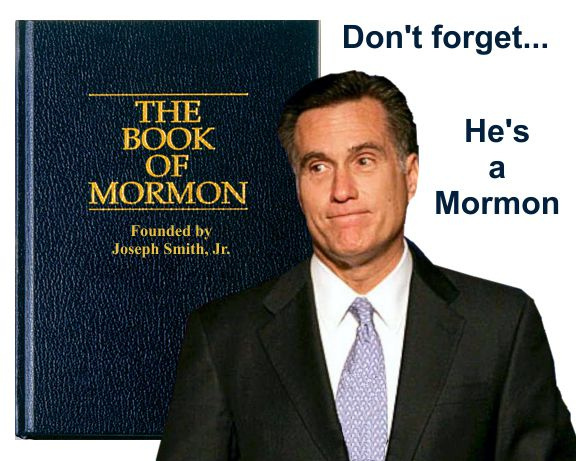
The Mormon Moment: Can Christians Biblically Vote for a Mormon?

Image


SPECIAL NOTE:ย The scope of this articleย isย limited.ย While all are welcome to read and consider it, the particular audience for this article is ONLY: Christians who are considering voting for Romney but are hesitant and wondering if it is biblically acceptable for a Christian to vote for a Mormon.

  • I am not attempting to convince Obama supporters to vote for Romney. This is a free country and you may vote for the candidate of your choice.
  • I am not addressing political issues such as taxes, the national debt, the military, etc. This article is of a theological, not political, nature.
  • I will not entertain any arguments as to whether or not President Obama is a Christian.ย Matthew 7:16, 20ย say, “You will know them by their fruits.” The president has clearly demonstrated by his words and actions that he is not a regenerate Christian. Neither is his verbal claim to being a Christian sufficient to prove that he has been born again.ย Matthew 7:22-23ย says, “Many will say to Me onย that day, โ€˜Lord, Lord…ย And then I will declare to them, โ€˜I never knew you…” Claiming to be a Christian doesn’t make a person a Christian any more than claiming to be a doctor makes a person a doctor. You are more than welcome to believe whatever you like about the state of the President’s soul, but it will not be argued in this venue.


It’s an issue American Christians have never had to deal with before: voting for a Mormon for President. Maybe you’re a Christian who has been considering voting for Mitt Romney, but you’re “theologically hesitant.” If you vote for him, are you, as a Christian, supporting an idolatrous and false religion? Will Romney’s winning the Presidency give legitimacy to Mormonism? Will it further deceive the lost into thinking Mormons are Christians? Will more lost people consider becoming Mormons? These are weighty issues and should be fully considered.

However, I’d like to offer you the opportunity to consider the biblical argument for the freedom to vote for Romney if you so choose. What are some reasons you can consider yourself free in Christ to vote for Romney?

1.ย Romney is running for president, not preacher.

Inย Matthew 22:15-22, the Pharisees came to Jesus asking if it were โ€œlawfulโ€ โ€“in other words, โ€œin keeping with Scriptureโ€โ€”to participate in a secular government by paying taxes. Jesusโ€™ response? โ€œRender to Caesar the things that are Caesarโ€™s; and to God the things that are Godโ€™s.โ€ (Matthew 22:21)

As in Jesusโ€™ time, our civil government in the United States is secular. It is not run by the church. It is not ruled by the Bible. And, usually (Matthew 7:14), it is not headed up by a genuinely born again Christian.

This isnโ€™t a theocracy. And Godโ€™s ok with that. After all, He is the One who, in His sovereignty, has allowed and maintained this republic for the last 200+ years, and has established the authority of every President weโ€™ve ever had (Romans 13:1).

So God gets -established, in fact- that thereโ€™s going to be one set of standards and requirements for civil governing authorities, and another set for those who are leaders in the church. For one thing, a leader in the churchย mustย be a genuinely regenerate Believer. Thereโ€™s no such requirement โ€“in the Bible or anywhere elseโ€”for Presidents. Thereโ€™s a whole list of requirements for pastors, deacons, and elders in I Timothy and Titus, but they necessarily, apply only to Christians who desire to be church leaders. They do not apply to non-Christians (or even Christians) who desire the presidency.

2.ย We have two choices for president, both unsaved. Does it matter which label they wear?

Romney is a Mormon. If he holds to Mormon doctrine, he is, by definition, not a Christian. Obama claims to be a Christian, but his own words and the fruit of his life belie this claim.

Jesus said that the way to life is narrow and there are few who find it (Matthew 7:14). Statistically speaking, if you have voted in any election, you have probably voted for a lost person, even if that candidate claimed to be saved. Simply saying youโ€™re a Christian doesnโ€™t make you one (Matt. 7:21-23), and being a Mormon doesnโ€™t make a person any โ€œlosterโ€ than being a lost person who calls himself a Christian.

While it would be wonderful to have the option of voting for a born again Believer in this election, we simply donโ€™t have that choice this time around.

3.ย Since we only have two choices in this election, and theyโ€™re on essentially equal spiritual footing, we have to look at externals.

We have two choices for president:

A.) Obama: A person who claims to be a Christian, yet encourages and promotes sin in the form of promoting the false doctrine ofย universalism, furthering the homosexual agenda, and promoting the pro-abortion agenda.

B.) Romney: A non-Christian who has pledged his support of the biblical definition of marriage and the pro-life side of reproductive issues.

The great Reformer Martin Luther may have summed it up best when he said, โ€œI’d rather be ruled byย aย competent Turk (Muslim)ย than anย incompetent Christian.โ€

4.ย Refusing to vote at all, or voting for a non-viable third party candidate has the same effect as voting FOR Obama.

We cannot afford to treat the question of whom we shall vote for in this election as merely a philosophical exercise or hypothetical question. There are real life consequences to our actions (or inaction) on November 6. For millions, this election is, quite literally, a matter of life and death. Sometimes we have to think of an election not as voting FOR a certain candidate, but as voting AGAINST a certain candidate by selecting his opponent.

As Edmund Burke said, “All that is necessary for theย triumphย ofย evilย is thatย good men do nothing.”

5.ย All governmental authority is established by God. And theyโ€™re not always Christians.

Romans 13:1ย says, โ€œEveryย person is to be inย subjection to the governing authorities. For there is no authority exceptย from God, and those which exist are established by God.โ€

Think back over the kings, presidents, emperors, dictators, and czars throughout history. Youโ€™ll come acrossโ€ฆ

Hitler. Attila the Hun. Idi Amin. Pol Pot. Ivan the Terrible. Caligula.

God putย thoseย guys in authority? Yep.

Now take a little journey through the Old Testament and look at some of the evil kings God allowed to ruleย his own chosen people.

Someone is going to win the election in November, and that someone is not going to be a Christian. Our only option is to vote for the person who, though not a Christian, is closer to lining up with what the Bible teaches.

6.ย A Mormon president will not cause hordes of people to become Mormons.

How many people do you know who became Catholics because JFK was elected? How many became Quakers when Nixon was elected? How many became โ€œChristiansโ€ (or, depending on your way of thinking, Muslims) when Obama was elected?

If anything, the nomination of Romney to the ticket has shone a glaring, and very public, spotlight on the many anti-biblical beliefs of Mormonism. Instead of viewing his election to the presidency as an endorsement of Mormonism, why canโ€™t Christians look at it as an opportunity to help others understand false Mormon doctrine and the truth of biblical doctrine? This is a wide open door for evangelism and the public exposure of deceptive teaching!


I believe biblical principles demonstrate that we, as Christians, have the freedom to vote for Romney. God has seen fit to orchestrate events so that we only have two viable choices in this election. Both are far from perfect, but Romney has demonstrated a willingness to uphold standards that are more closely in line with the Bible than those Obama upholds. If you’re still on the fence, give it some thought, give it some prayer, and consider for whom God would have you vote.