Obedience, Old Testament, Sanctification, Sovereignty of God, Sunday School, Trust

Decisions, Decisions ~ Sunday School Lesson ~ 5-4-14

sunday school

These are my notes from my ladies’ Sunday School class this morning. I’ll be posting the notes from my class here each week. Click here for last week’s lesson.

Through the Bible in 2014 ~ Week 18 ~ Apr. 27-May 3
1 Chronicles 6-12, 2 Samuel 5:1-10, Psalm 81, 88, 92-93, 102-104, 133, 106-107
Decisions, Decisions

We all face difficult and confusing times of decision in our lives. Should I marry this guy or not? Which job should I take? What’s the best plan of action in X situation? How can we know for sure which decision God wants us to make?

1 Samuel 8:4-7, 2 Samuel 5:1-10
In these two passages, we see Israel’s decision to have a king to rule over them. In the first passage, which we studied a few weeks ago, the leaders wanted Saul (they didn’t know his name yet, but they sure had his résumé!). In the second, they wanted David. Two times when the government of Israel was at a crossroads. Two times when Israel’s leadership wanted a king. Two kings coronated. Similar circumstances, the same desire, similar outcomes. But even though the situations were so similar, were both decisions made the right and godly way?

Let’s take a look at some principles for godly decision-making and see how these principles worked themselves out in the Israelites’ situations with Saul and David.

MH900390083

Principles for Godly Decision-Making:
One thing we need to be careful about with the following principles is that we are not using them to manipulate God into making us make the right decision. Any time we modify our behavior in order to try to make God do what we want, we’re guilty of idolatry, even if what we want seems to be godly. The principles listed below are all things we should be doing or believing on a daily/regular basis because they are part of the obedient Christian walk, not just because we have a big decision to make. Godly decisions are a side effect of this kind of walk, not the end goal.

1. In order to make godly decisions, you must be saved (1 Corinthians 2:14-16, 2 Corinthians 5:17).
People who are unsaved aren’t capable of making godly decisions, because the motivation behind making godly decisions is the desire, from the heart, to please and be obedient to God. God, in His grace, may lead an unsaved person via his circumstances to make a certain decision, but the motive of his heart will still not be to please God. We are not capable of that motive unless we are saved.

2. Delight yourself in the Lord (Psalm 37:3-4).
Because Christians are new creatures with the mind of Christ, we have an inborn desire to love God, His word, and the things of God (godly preaching, books, music, friends, etc.). But this desire must be cultivated (3- New American Standard Bible translation) through a daily walk with the Lord, spending time in His word and prayer, and intentionally seeking out godly influences.

It’s like one of those “miraculous” weight loss stories we often hear. An extremely obese person decides he’s going to lose weight. The desire of his heart is there—he’s fed up with his looks and poor health, and he wants to tackle the problem and get healthy. But if he doesn’t intentionally do something, the weight isn’t going to come off, despite the desire. He starts off slowly. Maybe he cuts out cokes and walks around the block three times a week. As he progresses, his desire to cut bad things from his diet, add good things, and exercise more, builds. Not only does he see results, but he begins to enjoy the healthier diet and exercise more and more, and becomes even more committed to them. Eventually, he loses the weight and maintains a healthy lifestyle.

That’s how it is with delighting in the Lord. Through the power of the indwelling Holy Spirit, Christ helps us to intentionally cultivate faithfulness, and we grow in our love and affection for the Lord. As a result, He gives us the desires of our heart—to be more Christlike.

With Saul, were the Israelites delighting in the Lord? Definitely not. In fact, it was their lack of delighting in the Lord that led them to demand a king against God’s wishes. With David? Israel had just been through the consequences of having Saul as king and they knew God had ordained that David be the next king, plus he was a great military leader. Which of these motivated them the most? It’s hard to tell, but it feels like they were acquiescing to the inevitable, and the practical desire for military strength rather than repenting and taking an affirmative step towards godliness.

3. God’s word is sufficient for our every need (Hebrews 1:1-3a, 2 Timothy 3:16-17).
Often, when we read the Bible, it’s easy to long for God to speak to us one on one, through a burning bush, a fleece, a prophet, or some other form of direct revelation. But now that we have God’s complete written Word, we no longer need direct revelation, nor does God want us to seek that. Hebrews and Timothy tell us that God no longer speaks that MH900410128way and that His word is sufficient for our every need. Additionally, we now have access to God’s word any time we need it. We don’t have to wait for Him to miraculously show up. Finally, if we were to rely on signs or “hearing God’s voice,” how could we be sure we’re really hearing from God and not our own sinful inner voice, or worse, Satan? God’s word is absolutely trustworthy. When we read it, we can be 100% certain we’re hearing from God. And remember, Israel (and others in the Bible) did hear directly from God, and they still often disobeyed.

4. Know God’s word and study God’s word in context as it applies to your situation (Psalm 119:11, Deuteronomy 17:14-15).
We must study God’s word daily; even memorize it, so that we can apply it to every aspect of our lives. As we do, it’s very important to study it in context so we can be sure we’re applying the correct biblical principles.

Did Israel know God’s word as it applied to the situation with Saul? Yes. They certainly knew Deuteronomy 17, which predicted they would demand a king, and outlined the regulations for a king of God’s choosing. They also knew that God was, and always had been, the only king they needed, and that He did not want them to demand a king.

With David? Yes. Through Samuel’s prophecy, Israel already knew David was to be the next king and that he had already been anointed.

5. Obey God’s word (1 Samuel 15:22).
As we can see with Israel’s demand for a king (Saul), knowing God’s word isn’t enough. We also have to obey it. Sometimes it can seem like sin is the most practical way out of a situation, but it is only a temporary fix. Even when we try to put a godly spin on our disobedience, as Saul did in 1 Samuel 15, it is still disobedience. As Saul learned the hard way, God wants us to be obedient to Him regardless of our circumstances. With David, Israel, whatever her motivations were, obeyed God and made David king.

6. Know your “bent” (Psalm 139:13-14).
God has created each of us uniquely. We are all “bent” Bent_eye_cranked_bolt_profiletoward certain things and away from others. One of the ways God may show us the things He wants us to do and not do is through the talents, tastes, and abilities He has given us. If you can’t carry a tune in a bucket, that’s a pretty good indication God doesn’t want you to sing for a living. If you love numbers, that may be God’s way of leading you into a math-related field. Other times, we may be thrust into a situation in which we have to learn a new skill. We might just discover a talent we didn’t know we had!

7. Pray, and ask others to pray with you about the situation, especially for wisdom and guidance (James 1:5-6).
Some things we don’t need to pray about because they are clearly taught in God’s word. We don’t need to pray about whether we should attend church regularly, be faithful to our spouses, help those in need, etc. But, some situations aren’t as clear. James tells us that if we lack wisdom, all we have to do is ask God for it in faith, and He will give it to us. It’s a promise. We may not feel very wise, but we don’t operate on feelings. We take God at His word and trust Him as we continue to take the next step and the next.

With Saul, did Israel pray about the situation or ask God for wisdom in selecting a king? No. And even though God tried to provide them with wisdom- spelling out the consequences of their demand- they insisted on disobeying Him. They did not need to pray about making David king. God had already made it clear that he was the next to take the throne.

8. God has given you (and others) a brain for a reason (Proverbs 11:14, 24:5-6, 18:15)
Seek counsel from godly people you trust. Take what they say, make sure it matches up with Scripture, and pray about it. In other situations, such as a medical diagnosis, you may need to do some research and gather information so you can make an educated decision. Finally, trust that God, our wonderful Creator has hard wired you with the ability to process information and make the best decision you can with His help and guidance.

With Saul, God directly gave Israel godly counsel and information through Samuel. They chose to reject it and disobey, and suffered the consequences. With David, Israel also had all the information they needed to make the right decision. This time, they obeyed.

9. Trust in God’s sovereignty to direct your steps and work things out for your good (Proverbs 3:5-6; 16:9, Psalm 37:23-24, Romans 8:28).
Sometimes our desire to do what God wants us to do is so strong that we become paralyzed by the fear that we’re going MH900448357to do the wrong thing. When we do that, our trust is no longer in God’s sovereignty over the situation. We have shifted our trust from God—where it should be—to ourselves—where it should not be.

God’s sovereignty over situations does not rest on our actions. We can clearly see this in Israel’s situation with Saul. Even though they didn’t desire to please God, He had complete control of the situation and worked it out for His will to be done in the long run. How much more can we trust God to take care of our situations, if it is our desire to please Him, since He promises to do so?

10. Trust that God understands and has compassion on the frailty of His children (Psalm 103:14).
You aren’t God. You aren’t omniscient, knowing all the ins and outs of your situation. In most cases there is at least some aspect of the situation in which you are powerless. Every time you make a decision, you do it with only partial knowledge and partial control (at best). God knows all of this better than we do. That’s why He tells us to love Him, seek to honor Him, ask Him for wisdom, and trust Him.


One of the natural outgrowths of walking with the Lord is making more godly decisions. We must use the resources He has given us: His word, godly counsel, information, prayer, and wisdom, and trust Him to work everything out for our good.


Additional Resources:
The Problem with Seeking God’s Will by Matt Papa
Easter, Forgiveness, Gospel, Old Testament, Salvation, Sunday School, Types and Shadows, Women

Easter with the King: The Story of Nabal, Abigail and David ~ Sunday School Lesson ~ 4-20-14

sunday school

These are my notes from my ladies’ Sunday School class this morning. I’ll be posting the notes from my class here each week. Click here for last week’s lesson.

Through the Bible in 2014 ~ Week 15 ~ Apr. 13-19
1 Samuel 18-31, Psalm 11, 59,7,27,31,34,52,56,120,140-142,17,35,54,63,18
Easter with the King: The Story of Nabal, Abigail and David


Since the whole Bible points to Jesus, the whole Bible tells the story of the gospel. Even the Old Testament. Even the story of David, Abigail, and Nabal.

1 Samuel 25:2-42

flock of sheep in israelFilthy Rich (2)
3000 sheep/1000 goats was definitely rich (even today it wouldn’t be too shabby). While cattle are more valued in our culture for their meat, milk, and leather, sheep and goats were more valued in Israel for these, and also for sacrifices. Sheep and goats were Israel’s “pantry on the hoof.”

I Pity the Fool (3)
The name “Nabal” means “fool.” As we have seen throughout the OT, names weren’t just random labels. They told something about the person’s character or life, where he was from, who he was related to, etc. Sometimes names were changed to reflect life circumstances: Ben-oni (son of my sorrow) to Benjamin (son of the right hand- Genesis 35:18), Naomi (pleasant) to Mara (bitter- Ruth 1:20), Simon (God has heard) to Peter (rock- Matthew 16:18).

It seems odd, even by Israel’s standards, to name an infant “fool,” but we have no way of knowing whether this was the case or whether he acquired this name later in life after earning it by his behavior.

“Abigail” means “My father is joy.”

An Offer You Can’t Refuse? (4-13, Deuteronomy 22:1-4, 18:7, 21:11, 15:7-8, Leviticus 19:10, 23:22)
This incident hits our Western ears as odd or inappropriate, even presumptuous or akin to extortion, but Middle Eastern hospitality etiquette and neighborliness, not to mention God’s Law was, and still is, much different from ours in many cases.

Nabal did not ask David to guard his shepherds and flocks. Indeed, he probably didn’t even know David was doing so unless the shepherds told him when they brought the sheep in for shearing. (And since “one cannot speak to him” {17} maybe they didn’t.) David, however, when he met up with the shepherds, took it upon himself, out of his own good will, to look out for them. Maybe he had sympathy for them because he had also been a shepherd.

michael-corleoneDavid and his men likely put their lives on the line numerous times protecting Nabal’s livelihood. And he didn’t do it with an “I scratch your back; you scratch mine” attitude, thinking he would later demand pay from Nabal. He also didn’t take advantage of the shepherds (such as extorting sheep/goats in exchange for protection) while they were with him. David was obeying the spirit of all those “good neighbor laws” we read about (ex: Deuteronomy 22:1-4). The law is not just “don’t harm your neighbor,” but also, “do good to your neighbor.”

Remember, these shepherds were alone out in the wilderness with the flocks. There was no police force or army to protect them from raiding bands of Philistines. If the Philistines saw a thousand goats and 3000 sheep and wanted them, they just took them and captured or killed the shepherds. No legal redress, no sheep insurance. Nabal’s entire portfolio was at stake. You would think once he found out what David had done –for free and out of the goodness of his heart—Nabal would be extremely grateful. But was he? Nope.

David’s men arrived, explained themselves, and asked politely for whatever food Nabal could spare (kind of hard to make groceries when you’re on the run living in caves). They did not demand his best, and they did not demand he provide enough for their entire company of 600 men. They had even come on a feast day when Nabal was celebrating his wealth, should have been in a good mood, and should have had plenty of extra food on hand. And notice this telling little phrase, “they said all this to Nabal in the name of David, and then they waited.” (9) Now here’s one way Middle Eastern culture is similar to Southern culture. If someone was standing there telling you about all those nice things he had done for you, how long would it take before you gleefully interrupted him and offered him everything under the sun in thanks? Well, Middle Easterners aren’t as shy about interrupting as we are, and furthermore, they would take it as the highest insult if you didn’t take everything they offered.

Not Nabal, though. First, he pretended not to know who David was. Pretty ridiculous, since David’s conquests were well known throughout Israel (18:7, 21:11- even outside Israel), not to mention the fact that he was next in line for the throne. Next, he insulted David’s men by accusing them of lying about working for David. Of course, if he had been interested in finding out whether or not that was true, he could have brought his shepherds in and asked them if these were the guys who had protected them.

David’s men went back and reported what had happened. David’s immediate response was for everyone to “strap on his sword.” It seems like kind of an extreme response to us, but we have to keep a few things in mind. First, the Law. Nabal was breaking both the letter and the spirit of it. While there was no specific law covering a band of mighty men coming to you and asking for food on a feast day, there were laws about taking care of people who were hungry and poor, such as the gleaning laws (Leviticus 19:10, 23:22).

Deuteronomy 15:7-8 says: “If among you, one of your brothers should become poor, in any of your towns within your land that the Lord your God is giving you, you shall not harden your heart or shut your hand against your poor brother, but you shall open your hand to him and lend him sufficient for his need, whatever it may be.”

When we read through Ruth, we saw Boaz doing a great job of fulfilling this law for Ruth and Naomi. Here, Nabal is showing the exact opposite of Boaz’s kindness and generosity.

Second, Nabal’s actions showed disregard and ingratitude for God’s provision and blessing. God blessed Nabal with wealth and protected that wealth (through David) without Nabal even knowing about it. Do we see any evidence that Nabal was humbled that God should do such a thing for him, or thankfulness to God for what He had provided? No. We see only selfishness, stinginess, and a blatant disregard for God as sovereign provider.

Finally, David’s response was likely an answer to Nabal’s accusations. “He wants to know who David is? He wants to know whether or not my men are lying? Well, let’s go show him the answer to his questions and see if he changes his tune.”

The Go-Between (14-31, John 12:14-15)
Abigail was quite a remarkable woman. This was not the first time Nabal had acted this way. He had a long standing history of being harsh and worthless (“son of Belial” is also applied to Satan in 2 Corinthians). And here, Abigail was going behind his back and defying him. This was no small thing for any wife in Israel. But for Abigail, it could have meant a beating or worse when Nabal found out. It’s possible she was even risking her life. And for what? To save him. Without his knowledge that she was saving him. Without his knowledge that he even needed saving.

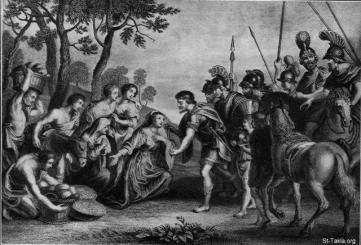
Why in the world would Abigail want to save someone who was probably making her life a living hell? She could have just let David and his men handle Nabal. Certainly he would have www-St-Takla-org--abigail-entreats-mercygotten what he deserved. But she stepped in because it was the right thing to do. It was right to obey God by providing for David and his men. It was even right to protect her husband from his own foolishness and bringing David’s wrath down upon himself. But even more, she did it because she loved God, and maybe even her husband, too.

She sent the gift on ahead (19) to appease David’s wrath, then presented herself to him on Nabal’s behalf. Notice that she got down off her donkey (23). Kings rode donkeys. Rich people and people of high standing rode donkeys. She left her wealth and position behind and got as low as she could get, bowing down, humbling herself, and submitting herself to David. For Nabal.

Then Abigail did something even more remarkable. She said (24-25), “On me alone, my lord, be the guilt. Please let your servant speak in your ears, and hear the words of your servant. Let not my lord regard this worthless fellow, Nabal, for as his name is, so is he.” She—a completely innocent party to Nabal’s sin (25)—voluntarily takes on the guilt and consequences of his sin. (Is this starting to sound familiar?) In v. 28, she asked David to “Please forgive the trespass of your servant.” It wasn’t her trespass, but Nabal’s. She was asking forgiveness for him.

The King’s Response (32-35)
David blessed Abigail, not just for her prudence and godliness, but also because she had satisfied his wrath and kept him from exercising it on Nabal. Her gift was sufficient, and David granted her petition to extend forgiveness to Nabal.

Happily Ever After (36-42)
Well, except for Nabal. Abigail had to tell Nabal what she had done. She’d been gone for a while and had taken quite a bit of food out of the house. No sense trying to cover it up. Hopefully Nabal would be grateful she saved him from certain death. When she told him, did he repent? Humble himself? The text doesn’t say that he did. It says “his heart died within him.” It’s generally believed this means that Nabal had a stroke (especially since it further says that he “became as stone” and lived for ten more days). Did he become enraged at what Abigail had done, and this physical exertion contributed to a stroke? We can’t know for certain. What seems unlikely is that he genuinely repented, because God “struck Nabal and he died.” As we’ll see later with David, while we usually do suffer the consequences of our sin, God shows mercy and forgiveness to the repentant.

David was thankful he had not taken matters into his own hands and that God had handled the situation. Justice had been served. And for her faithfulness, Abigail—who considered herself the lowliest of servants, only fit to wash the feet of other servants—ascended to the position of Queen. Back on her donkey where she belonged, exalted out of humility to sit at the right hand of the king.

The Backstage Gospel (Psalm 14:1, Philippians 2:6-8, 9-11)
Often, in stories like this, the characters aren’t just playing themselves, they’re playing out the parts of the gospel.

As with Nabal, God blessed His people richly with life, family, provisions, and all kinds of other blessings she wasn’t even aware of. The people didn’t ask God to do these things. God, the Good Shepherd, did these things for them out of the goodness of His own heart, the same way David had done for Nabal. But, as with Nabal the fool, “The fool says in his heart, ‘There is no God.’ They are corrupt, they do abominable deeds, there is none who does good.” (Ps. 14) The same way David presented himself to Nabal and told him what he had done for him, God, over and over, reminded Israel of the way He had protected and provided for them. But just as Nabal rejected David, so, Israel rejected God, and rebelled against Him in favor of their own sin and selfishness. And, like David, God’s wrath was inflamed.

Enter Jesus. Just as Abigail intervened on behalf of Nabal, Jesus intervened on behalf of Israel and all mankind. Just like Abigail, He laid down His life to save us. Before we ever knew Him. Before we ever knew we needed saving. Why? Why would He even want to save us Nabals? He could have let God exercise His wrath on us. We certainly deserve it. But in the same way that Abigail acted in love and in doing what was right, Jesus loved His Father and us enough to fulfill righteousness and to bring God glory by staying His hand of wrath.

In the same way that Abigail got down off her donkey, leaving behind all prestige and humbling herself to the lowest position possible—a servant only worthy of washing other hp-crossshadowservants’ feet— Jesus “though he was in the form of God, did not count equality with God a thing to be grasped, but emptied himself, by taking the form of a servant [one who washed other servants’ feet], being born in the likeness of men. And being found in human form, he humbled himself by becoming obedient to the point of death, even death on a cross.” (Phil. 2:6-8) And for whom? Us Nabals. “On me alone, my Lord, be the guilt,” Jesus said, even though, like Abigail, He was completely innocent. He voluntarily took on the guilt and consequences of our sin when He died in our place on the cross, and He did it to win forgiveness for us.

Jesus sent this offering of His life for the atonement of our sin on ahead of Himself to the Father, and God’s wrath was satisfied. Jesus’ offering was sufficient, and God granted His petition to extend forgiveness to the likes of us. And just as David picked Abigail up from her humility and she ascended to the position of queen, Jesus ascended to sit at the right hand of the King, and “God has highly exalted him [Jesus] and bestowed on him the name that is above every name, so that at the name of Jesus every knee should bow, in heaven and on earth and under the earth, and every tongue confess that Jesus Christ is Lord, to the glory of God the Father.” (Phil. 2:9-11)

This story didn’t have a happy ending for Nabal, because Nabal didn’t repent and submit himself to God. Nabal ended up taking the guilt and consequences for his sin himself (death) instead of gratefully humbling himself and being thankful for the gift of Abigail’s intervention and David’s forgiveness. But the rest of us Nabals can have a happy ending. Jesus has paid the price for our sin with His death, burial, and the resurrection we celebrate today. He completely satisfied the wrath of God on our behalf. It is finished. Forgiveness has been purchased with His blood. If we will humble ourselves, repent of our sin, and accept the beautiful gift of forgiveness God is extending to us at the request of His Son, we can be reconciled to God now and live happily in the ever after.

Idolatry, Old Testament, Salvation, Sunday School

The King and I(srael) ~ Sunday School Lesson ~ 4-13-14

sunday school

These are my notes from my ladies’ Sunday School class this morning. I’ll be posting the notes from my class here each week. Click here for last week’s lesson.

Through the Bible in 2014 ~ Week 14 ~ Apr. 6-12
Judges 19 – 1 Samuel 17
The King and I(srael)

Up until now, Israel has been under the leadership of Moses, Joshua, and a string of judges, including current prophet/judge, Samuel. But some of the elders have decided it’s time for a king. Why? Let’s take a look.

1 Samuel 8; 10:17-24

Why did Israel demand a king?

The cycle of the judges:
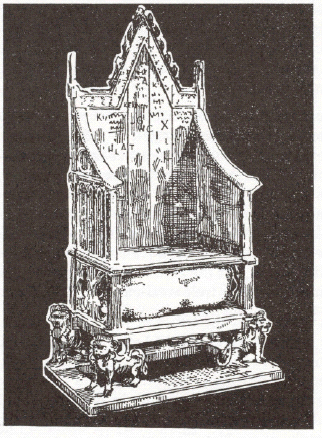
Israel was in a cycle in which: they would have a judge for several years and everything would go smoothly for them. throne1God would give them victory in battle (or peace), their harvests would be bountiful, etc. Then, the judge would die, Israel would get into idolatry again, things would go badly for several years, they would cry out to the Lord, the Lord would raise up another judge, and the cycle would start all over again.

Israel likely thought it was the lack of succession from one judge to another that was the cause of all the turmoil, and that if they had a kingship (with built in succession) the chaotic years would cease, and things would go smoothly from there on out. What they failed to realize was that it was their obedience to God that brought peace during the lives of the judges, not a seamless changing of the guard.

The appearance of strength:
Another reason Israel may have wanted a king was that it gave the appearance of strength to other nations. Without a king, neighboring nations probably viewed Israel as weak and vulnerable, leading to more attacks. Of course, this would lead Israel to depend more on the Lord, and that’s exactly what He wanted.

“Everybody else is doing it”:
Finally (8:5), they wanted a king “like all the nations.” Whether this was because they admired the other nations’ structure of government, economy, large armies, etc., or, because Israel wanted to look more prestigious (or stronger- see above) in the eyes of other nations, they were blind to the fact that they would have had things so much better under God’s Kingship.


Why didn’t God want Israel to have a king?

God was already their king.
Israel didn’t need a human king. God was far more capable than any human king of winning battles, providing for them, ensuring a good economy, establishing and enforcing law and order, etc.

God wanted Israel to look to Him for everything.
We tend to look to the President and Congress for worshipgovernance, the grocery store for food, our jobs for paychecks, our doctors for healthcare. God wanted Israel to look to Him for every aspect of their lives: government, provision, health, food, everything. Because He is sovereign over all that happens on earth and in heaven, He wants us to recognize that we should be looking to Him for these things as well. He wants us to realize that we are completely dependent on Him.

Israel’s desire for a king was another rejection of God, which brought Israel ever closer to severe judgment. (Isaiah 28:21, Ezekiel 18:23,32, 2 Peter 3:9)
Even though Israel deserved judgment for her many rebellions against God, judgment is a last, undesirable resort for Him. Isaiah tells us that judgment is God’s “strange work”. Ezekiel reminds us that God takes no pleasure in the death of the wicked. Peter writes that God is not willing that any should perish but that all should come to repentance.

Small rebellions can lead to bigger rebellions. A loving parent knows this and tries to keep this from happening by disciplining his child. With a small rebellion, we might start out with a small discipline, such as taking away dessert. As the rebellions get bigger or more frequent, bigger discipline, stock_scales_justice2such as spanking or grounding might be appropriate.

Most children learn to control their behavior through these moderate forms of discipline, but a few may eventually become so destructive, addicted, or abusive that parents have to go to the extreme end of “tough love” by throwing them out of the house or turning them over to the authorities. It’s all done in love and all in an effort to bring the child home. This is exactly what was happening with the Israelites.

This is why God did everything necessary to keep Israel from His severe judgment. He carefully and specifically laid out the Law, promised them blessings for obedience and described the consequences for disobedience in gory detail, made examples out of people who disobeyed, offered forgiveness for repentance, gave them (initially) good and godly leaders (Moses, Joshua, the judges), and performed miracles to help them believe in Him. All this in an effort to stop their slide into total rejection of Him and the consequence of final judgment.


One last chance (8:10-18)

Israel could never say she hadn’t been warned. In these verses God told them directly and specifically exactly what their new king would be like, how he would treat them, and the consequences that would follow: confiscation of private property, slavery, God turning a deaf ear to their pleas for help. But still they demanded a king. This king God had just described. They were at the point of no return, and they plunged ahead despite the warning. Why?


Hearts of Stone (Ezekiel 11:19, Romans 1:22-25)
Just as a small rebellion can lead to bigger and bigger rebellions, a small hardening of the heart can eventually lead to a complete hardening of the heart.

In the movie Frozen, Elsa (the snow queen), accidentally frozen-anna-elsashoots an icicle ray (or whatever you call it) at her sister’s (Anna) heart, which causes Anna’s heart to slowly begin freezing bit by bit. If Anna doesn’t receive “an act of true love” before her heart completely freezes, she will turn into an ice statue forever.

This is similar to what was happening with Israel. Their continual rebellion was hardening their hearts against God bit by bit, until they would eventually be completely hardened against Him. Romans tells us that when people persist in ungodliness despite the many opportunities for mercy, grace, and salvation God has offered them, He eventually “gives them over” to a hardened heart. He gives them what they want: life without Him.


What does all this have to do with me? (Isaiah 55:9)

Everything. We are just like Israel in so many ways. We’re born into this world having already been shot through the heart with Satan’s “icicle” of sin, the sin nature we inherited from Adam and Eve. We spend our lives rebelling against God, our hearts slowly hardening, bit by bit, looking for another king (usually ourselves), so we can be just like everybody else, because what the world has to offer looks desirable to us.

But God doesn’t want us to have another king, because He’s already THE King, and He’s far better and more capable than any other king we could put on the throne of our lives. He wants us to look to Him for salvation, provision, comfort, strength, everything. So, God extends grace and mercy to us in a variety of ways, some pleasant, some not, to turn us towards the cross and Christ for salvation. He does this so that we can repent and turn to Him instead of facing the final judgment of hell in eternity.

Sometimes, we also see a similarity to Israel’s demand for a king in our prayer lives. We can ask, beg, and plead with God for things He doesn’t want us to have, and even get mad at Him when He doesn’t give us what we want. We must always keep in mind that His ways are higher than our ways and that what He wants for us is always better than what we want. Let us never get to the point in our prayer lives where our will is more important to us than God’s will. Israel’s way was, “No! But there shall be a king over us!” Jesus’ way was, “Nevertheless, not my will, but yours, be done.” Let’s take our example, not from Israel, but from the the King of Israel, King Jesus.

Faith, Old Testament, Parenting, Prayer, Sunday School, Trust

Meet the Parents (of Samson) ~ Sunday School Lesson ~ 4-6-14

sunday school

These are my notes from my ladies’ Sunday School class this morning. I’ll be posting the notes from my class here each week. Click here for last week’s lesson.

Through the Bible in 2014 ~ Week 14 ~ Mar. 30-Apr. 6
Judges 1-18
Meet the Parents (of Samson)

In this week’s reading, we said goodbye to Joshua and met up with a variety of Israel’s lesser known judges. We also read about three better known characters in Israel’s history, judges Deborah, Gideon, and Samson. Often, when we come to passages like this, it’s like a treasure hunt. We focus on the valuables that are in plain sight. But, if we dig just a little, we can find more gems just beneath the surface. Today, we’re taking a look at two godly people who had a profound impact on Samson’s life: his parents.

Judges 13-14

Mr. and Mrs. Manoah
It’s always interesting to me that, just as we saw last week with the two spies, some of the most faithful of God’s servants are ordinary people like you and me serving God as they go about their daily tasks. And, just as with the two spies, in many cases, we never find out their names.  Samson’s mother was just this kind of nameless, faithful servant. Though we know little about her husband, Manoah, the most important thing about him—his faith—comes through loud and clear.

Barrenness (13:2-3)
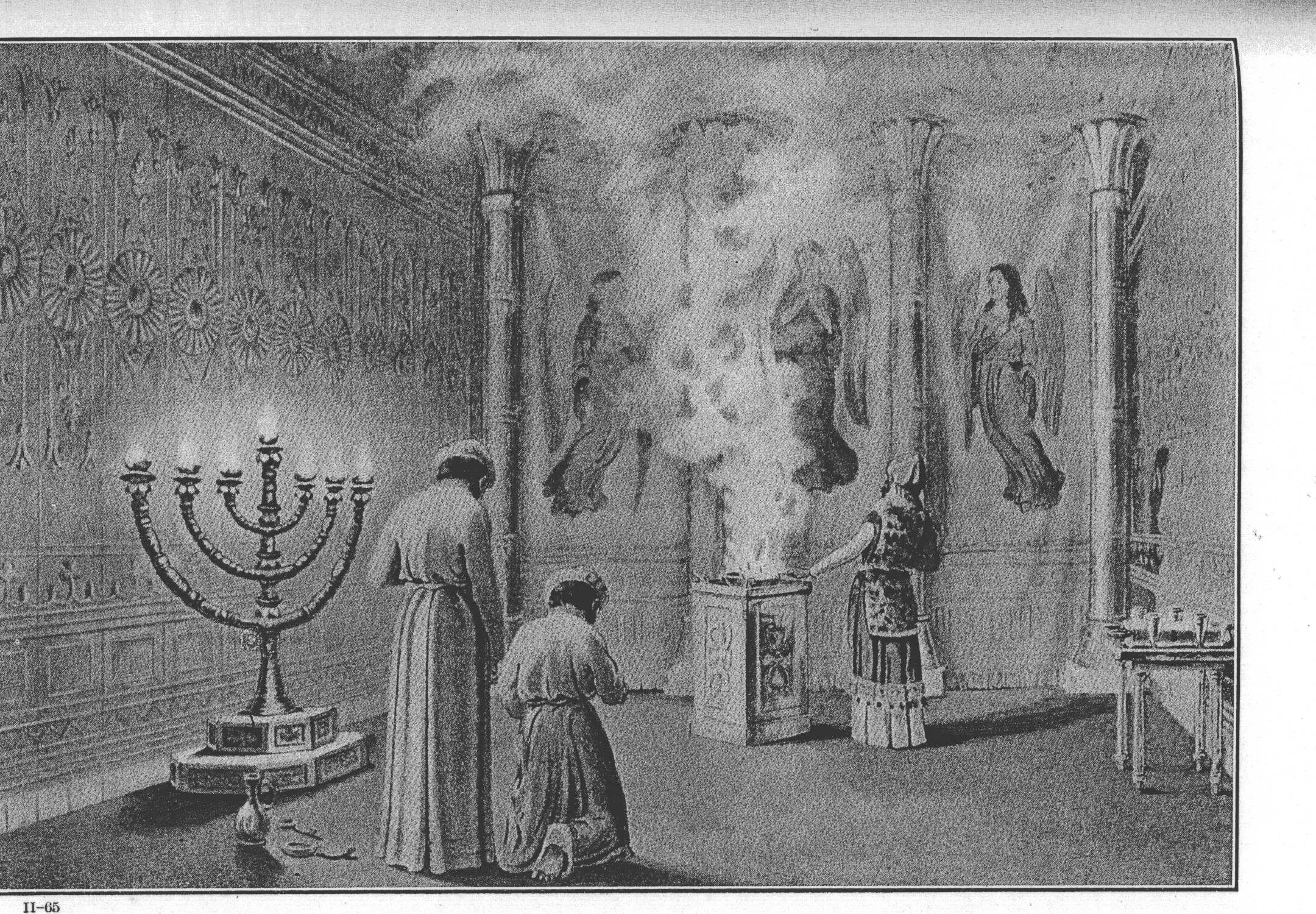
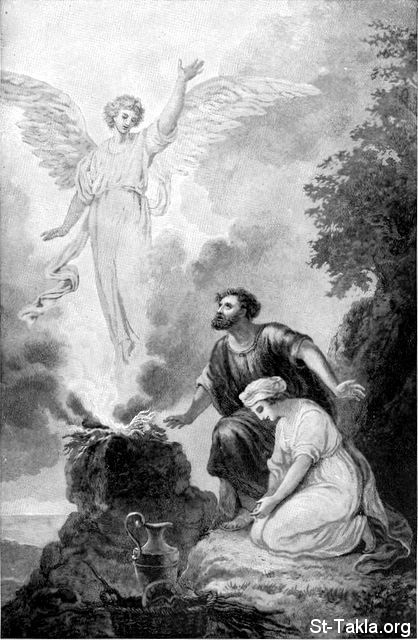
Mrs. Manoah was barren. Have you ever noticed how many “big names” in the Bible had mothers who were previously barren or who conceived miraculously? Joseph (Rachel), Samuel (Hannah), John the Baptist (Elizabeth), even Jesus (Mary), just to name a few. Things are different today, but, in manoah-wife-angel-offering the Bible, a miraculous conception was often a sign that the child would grow up to be a mighty man of God.

Barrenness was usually seen by others in the community as a curse by God or a punishment for sin (and sometimes it was: 2 Samuel 6:23). During that time in history, the only way for women to achieve status and be considered successful was by marrying and having children- particularly sons. A woman’s entire self-worth—in her own eyes, her husband’s eyes, and the eyes of her community—was at stake. So it’s easy to see why women and their husbands would have spent a great deal of time crying out to the Lord in prayer and seeking to be obedient to Him in hopes that He would grant their request for a child. We see this most clearly in the case of Hannah (1 Samuel 1), and it’s reasonable to surmise that this was likely also the case for Manoah and his wife.

Belief, Not Doubt (13:3-8)
It’s interesting that both times the angel of the Lord appeared to deliver His message, He initially appeared, not to the man, Manoah, but to the woman, his wife. Was it because she was praying at the time, or because her faith was stronger than her husband’s? This passage doesn’t tell us, so we don’t know. But, notice Mrs. Manoah’s reaction to the news that she would conceive. Did she laugh in disbelief like Sarah and Abraham did (Genesis 17:17,18:12)? Did she doubt like Zechariah (father of John the Baptist: Luke 1:18)? No, Mrs. Manoah believed. And, as a godly wife should, the first person she shared the news with and sought direction from was her husband.

Now let’s consider the reaction of Manoah to his wife’s news. Did he think her desire for a child had sent her over the edge or that she was making this up? No. He believed her without question. What does this tell us about the character, faith, and influence on her husband of Mrs. Manoah? “The heart of her husband trusted in her” (Proverbs 31:11) because she was a godly, trustworthy woman.

A Household of Faith (13)
In addition to spending time praying for a child, Mr. and Mrs. Manoah probably prayed regularly, like many other faithful Israelites, for deliverance from the Philistine oppressors, and here, we find them in prayer again.

Manoah not only trusted his wife, he had faith that the Lord would fulfill His promise. His first reaction was to believe and ask God the best way to obey Him. “And God listened to the voice of Manoah…” and answered his prayer of faith. He came back—to Manoah’s wife. Again, Manoah believed her without question and followed her out to meet the angel of the Lord.

When they met up with the angel, we see further evidence of this couple’s godliness. Though the angel had appeared and spoken twice with Mrs. Manoah, she, as a godly wife, does not take control of the situation or assert superiority over her husband. She takes a step back and, as a godly husband and leader of his home, Manoah steps up to the plate to assume the responsibility for his family and receive God’s instructions.

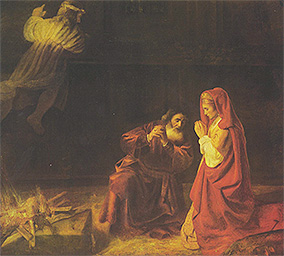
Manoah’s conversation with the Lord is fraught with faith. He doesn’t ask how or why they’re suddenly being blessed with a miracle child even though they’re just ordinary people. He simply accepts that it will happen. Manoah is confident that God is telling the truth and will keep His promise when he says, “When [not if] your words come true…” (12, 17). He believes God’s word that Samson will “begin to save Israel from the hand of the Philistines,” (5) when he asks about “the child’s manner of life, and…his mission” (12) so that he and Mrs. Manoah could prepare him to do so. He trusted in the www-St-Takla-org--12-Angel-Visits-Manoah-and-His-Wifecharacter of God, “the one who works wonders,” (19) and worshiped Him as such. He and Mrs. Manoah feared and trusted in God’s holiness as they fell on their faces at His departure (20).

Without a total grasp of the situation (22), Manoah believed God’s word that, “no man can see Me and live” (Exodus 33:20). Only later (21) did Manoah understand that He had been speaking with the angel of the Lord (Jesus – theophany: an appearance of the pre-incarnate Christ – {“My name…is wonderful” (18)- see Isaiah 9:6}—this is how people could “see God and live” even though God had said, “you cannot see Me and live.” They could not live through seeing God the Father, but they could live through seeing God the Son. Also a piece of supporting evidence for the Trinity). Jesus, the true deliverer and judge came personally to announce the birth of this temporal deliverer and judge who would point ahead to Christ.

Finally, we come full circle to Mrs. Manoah’s quiet trust in the Lord. Even with a strong faith like Manoah had, there can be moments of confusion. How could God say to Moses –the greatest leader Israel had ever known, the friend of God!—“you cannot see My face, for man shall not see me and live,”—yet here he and his wife were, having seen Him, but somehow still unscathed? How could anyone understand this?

But Mrs. Manoah shows us that faith means trusting God’s word even when we don’t fully understand His actions. Yes, it was true that God had said that people couldn’t live through seeing Him, but it was also true that He had visited them and told them they were going to have a son who would be a deliverer for Israel. How could both of those things be true at the same time? She probably couldn’t understand it either, but she encouraged her husband to trust God even in their confusion (23). And God kept His promise (24-25)

Trusting Despite the Circumstances (14:1-10)
Kids grow up, and as broken, sinful human beings, they sometimes make foolish decisions despite being raised in a godly home. That’s what Samson seems to have done here. While the Philistines were not one of the seven nations the Israelites were specifically forbidden to intermarry with, the principle behind God’s forbidding of intermarriage with those other nations was the same for the Philistines: they were idolaters and enemies of God and His people.

As godly parents, Mr. and Mrs. Manoah tried to steer their adult son to a godly choice of a wife. They reminded him that he was one of God’s people, and surely wanted him, as a leader in Israel, to set a good example for the people. Once again, they were seeking to be faithful to God.

thInstead of honoring his parents, Samson chose poorly. Or so it seemed. Either Samson was operating solely on lust and God sovereignly used the situation to His own advantage, or Samson, moved by God, was intentionally trying to infiltrate the Philistines by marrying in. The passage doesn’t make this precisely clear to us.

And, it wasn’t clear to Samson’s parents, either. So, perhaps thinking that they could influence the girl’s family or hoping Samson would change his mind, they went along with his decision and accompanied him to meet the new in laws. Once again, though the circumstances were worrisome and hard to understand, Mr. and Mrs. Manoah trusted that the God who had already worked so many wonders in their lives could handle this situation. They had faithfully obeyed what God had asked them to do and raised Samson in a godly home. Now, they had to sit back and watch God take care of the rest. And He did. Again, God kept His promises.

And we know that for those who love God all things work together for good,
 for those who are called according to his purpose. Romans 8:28

Christian women, Faith, Old Testament, Salvation, Sunday School, Women

Rahab: From Floozy to Faithful ~ Sunday School Lesson ~ 3-30-14

sunday school

These are my notes from my ladies’ Sunday School class this morning. I’ll be posting the notes from my class here each week. Click here for last week’s lesson.

Through the Bible in 2014 ~ Week 13 ~ Mar. 23-29
Joshua 1-24
Rahab: From Floozy to Faithful

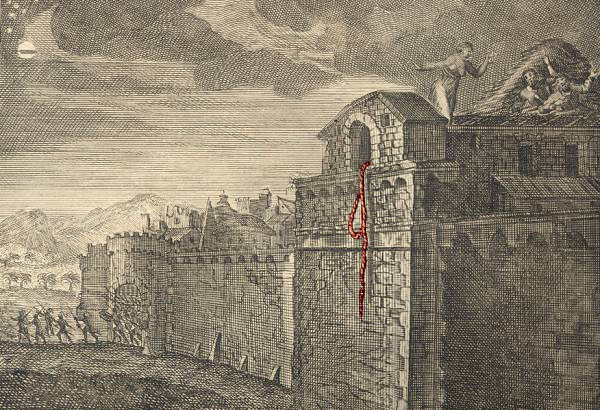
rahab-scarlet-thread

By faith Rahab the prostitute did not perish with those who were disobedient,
because she had given a friendly welcome to the spies.
Hebrews 11:31


Background- Joshua 1
Joshua 1 sets the stage for the story of Rahab and the spies. Moses had recently died, and God “promoted” Joshua to take his place. It was finally time for the Israelites to enter and take possession of the Promised Land. As God “installed” Joshua into his new position, He reminded Him:

  • Stay true to My word and you’ll be successful in what I command you to do.
  • Be strong and courageous (4 times in ch. 1); I will never leave you nor forsake you.
  • Here is the extent of the land I promised. I will keep my promise.

Cities had to be conquered, and first on the agenda was Jericho. Joshua began planning for the conquest by readying the people and by gathering intelligence about the city.

Joshua 2

Gathering Intel (1-2, 9-11, 24)
Do you remember one of the first stories we studied in which Joshua played a major role? He was one of the two spies in Numbers 13-14 who brought back a good report about taking the land of Canaan. I wonder if Joshua was thinking about that incident here, forty years later.

Joshua sent two spies, compared to the twelve who went to spy out Canaan, of which he was a part. Jericho was a much smaller area than Canaan, only two were needed, and a larger group would have been more easily discovered. Interestingly, unlike the story of Joshua and Caleb, we never discover the names of these brave spies who risked their lives and their reputations to bring back a good and faithful report. What did they find out and report back to Joshua about Jericho? (v. 9-11,24)

The Hiding Place (1-6)
Why would two nice, godly Jewish boys hide out in a prostitute’s house? Why not a nice, clean hotel? Well, first of all, they generally didn’t have hotels as we know them back then. When people traveled, they brought tents with them and camped out, stayed with friends or relatives, spent the night in the town square (Gen. 19:2), etc. And, sometimes, if it was immoral men traveling without their families, a prostitute’s house was a preferred option for a night’s lodging.

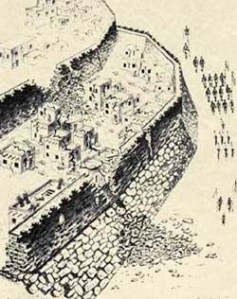
Rahab’s house would have been the perfect place for the spies 212wall_sketchto hide. They were foreigners, they were travelers, and it wouldn’t have been abnormal for them to be surreptitious (covering or disguising themselves) when entering and leaving her house. Plus, Rahab had men arriving and departing at all hours. Since she was a prostitute, many of the townspeople may have avoided her and her clientele, so it was probably the best option available for the spies.

Rahab’s house was built into the city wall. At that time, kings of various cities/countries would regularly attack each other, so many cities were built like fortresses with tall, thick walls around them and gates that could be opened or closed. The back wall of Rahab’s house was also the city wall and had a window the spies could escape from. After the gates had been shut, there would have been no other way to get out of the city.

The Faith of the Spies (24)
The main focus of this story is, rightfully, on Rahab’s faith. But, what about the faith of the spies? These men, out of faithfulness to God, and loyalty to Joshua and Israel could have been tortured and killed had they been discovered. They stayed in the home of an unclean prostitute, which was a BIG deal. (Think back over all the clean/unclean laws we just studied.) They followed the instructions of someone who was: a) a woman, b) a prostitute, c) an enemy and an pagan, and d) had no military/spy experience of her own that we know of. (Although, perhaps, in her profession, she was skilled in hiding men who were being hunted down by people on the warpath). They found an impossibly heavily fortified city. There was no human way to successfully attack it. And still, they were confident in their trust that God would somehow keep them safe and give Israel the city.

The Faith of Rahab (9-13, Romans 1:19-20, 2:14-15)
Rahab was a pagan. How could she have had faith in God? How did she even know about Him? The Bible tells us that ALL human beings have a basic knowledge of God in two ways: through creation (Rom.1) and through our consciences (Rom.2).

But Rahab knew some other things, too. She knew how God treated His children and His enemies. She had heard what God had done at the Red Sea (10)—how God had protected His children and destroyed the Egyptians. She knew how God had defeated the kings of Sihon and Og (10). She knew that out of all the gods she had ever heard of, this One was the real thing- God of heaven and earth. She knew, and she was afraid. Her fear and her defection prove her faith. If she had not believed in who God was, and that He was able to do all these things she would have had no reason to be afraid, nor would she have helped the spies and aligned herself with them against her own people.

Rahab became so convinced in her mind that God was indeed who He had shown Himself to be that she gambled everything on it. Think of what the king would have done to her if she had turned out to be wrong and had gotten caught. At the very least, she would have been killed. but as a traitor, she certainly would have been made and example of. She probably would have been publicly tortured to death, and maybe her family too. This was no small thing she did. She bet her life on a God she didn’t know. That’s the faith that saved her and led her to hide the spies and her other actions. The actions did not save her, it was the overwhelming belief in God which drove those actions.

Two Different Faiths Then (John 4:22, Luke 10:21, Deuteronomy 32:39)
There is a qualitative difference between the faith of the spies and the faith of Rahab. As Jesus said to the woman at the well, “You worship what you do not know; we worship what we know, for salvation is from the Jews.” (John 4)

The spies were God’s people. They knew Him personally. They were born into God’s house and grew up as obedient sons. They were chosen by Him and belonged to Him. They had seen Him work as eyewitnesses. They had, and knew, His word. They would have been like the older brother in the prodigal son story if he had been faithful.

Rahab, on the other hand, had none of that. She was the prodigal. She did not know God personally, but only, as an outsider, by reputation. She likely knew nothing of God’s love and promised blessings for obedience, but only of His wrath towards sinners. She was not born into God’s house; she was a pagan. She was not an obedient son; she was a woman, and as sinful a woman as she could be. She was not chosen by God and did not belong to Him. She was an outcast. She had no idea what God might do next. All she knew was that she didn’t want to die.

The spies knew. God had laid it all out for them. They were obeying God, not out of fear, but out of love.

Two Different Faiths Now
Rahab’s faith versus the spies’ faith reminds me of unchurched people coming to Christ versus churched people coming to Christ. We “spies” who were raised in church by Christian families grew up knowing all the Bible Stories, all the whys and wherefores of Jesus and salvation. It is the blessing of a godly heritage.

Rahab, like the unchurched, lived her whole life not knowing God, just doing what sinners do. When she finally heard about Him, all she had was the basics, and, knowing only that He was “Lord of Heaven and earth” (Luke) and “able to kill and make alive” (Deut.), she flung herself unashamedly on His mercy—which, at the time, she probably wasn’t sure would catch a woman like her—all because she wanted to live instead of die.

The Object and Outcome of Our Faith (Joshua 6:17, 22-25, Matthew 1:5, James 2:25)
But no matter our background or how we come to faith in Christ—Rahab or spies, unchurched or churched—the object of our faith is what matters, and the object of our faith is Christ. And because the object of our faith is the same, the outcome of our faith is also the same.

What was the outcome of this whole scenario for the spies? For Rahab? They were saved despite the destruction all around them. After it was over, they all lived in the Promised Land together. Rahab and her family became part of God’s family just like the spies were. She even got to be one of Jesus’ great, great…grandmothers (Matt.), was commended in the “Hall of Faith” (Heb. 11, above), and was cited as an example of good works giving evidence of our faith (Jas.).

God loves the prostitute just like He loves the good little girls. He sent His precious Son to save both of us and to display us as trophies of His grace.

Additional Resources
The Walls of Jericho by Answers in Genesis